Week 7 Genetic Circuits Part II
Assignment Part 1: Intracellular Artificial Neural Networks (IANNs)
1. What advantages do IANNs have over traditional genetic circuits, whose input/output behaviors are Boolean functions?
The advantages of IANNs over traditional circuits include:
(i) Continuous processing which allows them to constantly measure changes in concentration gradients of cellular inputs rather than just their absolute presence or absence.
(ii) Relatively easier to scale up. That is, new inputs can be programmed by integrating additional weighted connections to existing nodes without completely rewiring the circuit.
(iii) Better adapted to non-linear classifications. Given IANNs continuously process as opposed to a Boolean (On/Off) logic, they can respons better to complex cell-state classification (e.g. distinguishing highly specific cell types)
Britto Bisso F, Aguilar R, Shree D, Zhu Y, Espinoza M, Diaz B, Cuba Samaniego C. Pattern recognition in living cells through the lens of machine learning. Open Biol. 2025 Jul 16;15(7):240377. doi: 10.1098/rsob.240377
Moorman A. Machine learning inspired synthetic biology: neuromorphic computing in mammalian cells [thesis]. Cambridge (MA): Massachusetts Institute of Technology; 2020. Available from: https://dspace.mit.edu/handle/1721.1/129864
2. Describe a useful application for an IANN; include a detailed description of input/output behavior, as well as any limitations an IANN might face to achieve your goal.
From researching papers related to the application of IANNs, I came across some interesting papers working exploring the use of bacteria to act as biosensors in soil or any agricultural mediums. For example, a paper by Del Valle and colleagues looked to looked to engineer modular genetic circuits that allow microbes to process complex, multi-variable environmental signals from the soil matrix and dynamically convert them into measurable cellular outputs.
From researching papers related to the application of IANNs, I came across some interesting papers working exploring the use of bacteria to act as biosensors in soil or any agricultural mediums. For example, a paper by Del Valle and colleagues looked to engineer modular genetic circuits that allow microbes to process complex, multi-variable environmental signals from the soil matrix and dynamically convert them into measurable cellular outputs [1].
A potential idea could be to use engineering modular circuits to clean up arsenic in soil. Where, inputs would be:
X1 : Concertation of Arsenic to be measured by proteins such as the ArsR protein, which is a naturally occurring arsenic-responsive transcription factor often borrowed from E. coli or Chromobacterium violaceum) [2].
X2 : Soil pH, measured by pH-responsive promoters. As demonstrated by Bañares et al. [3], genetic sensors can be used to dynamically regulate cellular outputs based on changing pH levels. Here, we use pH sensors to create a “bandpass filter” for the circuit.
Process:
- IANNs will serve as weighted classifiers for that computes if Arsenic is high AND soil pH within a safe zone
- OUTPUT: If conditions are met, the network activates the ArsR protein.
- If soil increases above threshold pH, if it is too high the IANN turns OFF
Del Valle, I., Fulk, E. M., Kalvapalle, P., Silberg, J. J., Masiello, C. A., & Stadler, L. B. (2021). Translating New Synthetic Biology Advances for Biosensing Into the Earth and Environmental Sciences. Frontiers in Microbiology, 11. https://doi.org/10.3389/fmicb.2020.618373
Berset Y, Merulla D, Joublin A, Hatzimanikatis V, van der Meer JR. Mechanistic modeling of genetic circuits for ArsR arsenic regulation. ACS Synth Biol. 2017;6(5):862–874. doi:10.1021/acssynbio.6b00364
Bañares AB, Valdehuesa KNG, Ramos KRM, Nisola GM, Lee WK, Chung WJ. A pH-responsive genetic sensor for the dynamic regulation of D-xylonic acid accumulation in Escherichia coli. Applied Microbiology and Biotechnology. 2020 Mar;104(5):2097-2108. doi: 10.1007/s00253-019-10297-0.
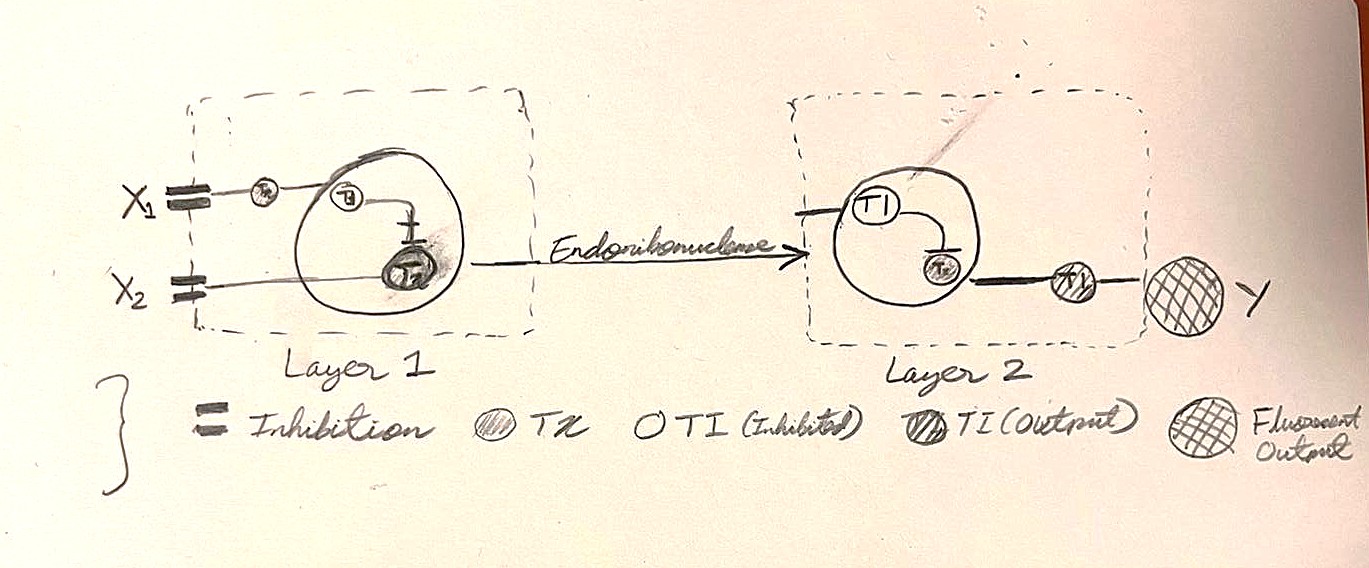
3. Below is a diagram depicting an intracellular single-layer perceptron where the X1 input is DNA encoding for the Csy4 endoribonuclease and the X2 input is DNA encoding for a fluorescent protein output whose mRNA is regulated by Csy4. Tx: transcription; Tl: translation.
Draw a diagram for an intracellular multilayer perceptron where layer 1 outputs an endoribonuclease that regulates a fluorescent protein output in layer 2.
Assignment Part 2: Fungal Materials
1. What are some examples of existing fungal materials and what are they used for? What are their advantages and disadvantages over traditional counterparts?
Some examples include:
(i) Mycelium bio-composites which include fungi-derived leather substitutes. The advantages of these are they allow to bypass the killing of animals and avoid microplastic pollution in the long term
(ii) In architecture and construction, there are mycelium panels and acoustic tiles. Companies that utilise mycelium include Biohm (https://www.biohm.co.uk/mycelium)
(iii) Protective packaging. MycoComposite is used by companies as a substitute to Styrofoam. Bentangan M, Greetham D, Ross R, Kaplan-Bie L. Recent technological innovations in mycelium materials as leather substitutes: a patent review. Front Bioeng Biotechnol. 2023;11:1204861. https://doi.org/10.3389/fbioe.2023.1204861
Advantages
Animal free production
Quick turnaround given mushrooms have quick growth
Minimise agricultural waste
Low density and eco-friendly for building materials
Disadvantages
Easily biodegradable
Production scalability is low compared to traditional counterparts
Sensitivity moisture may reduce applicability
2. What might you want to genetically engineer fungi to do and why? What are the advantages of doing synthetic biology in fungi as opposed to bacteria?
Using the heat and drought resistance in engineered mycelium strains by engineering the overexpression of stress-response genes to confer drought and heat resistance in mycelium-based materials. This would be helpful beyond controlled laboratory environments, making fungal material manufacturing feasible in hotter, drier climates such as those found across.
The advantages of this would be that, as they are eukaryotes, they possess the post-translational machinery needed to produce and properly fold complex structural proteins that bacteria is unable to do. There is minimum downstream costs as it would not have to be derived, as mycelium would be used.
Assignment Part 3: First DNA Twist Order
- Review Part 3: DNA Design Challenge of the week 2 homework. Design at least 1 insert sequence and place it into the Benchling/Kernel/Other folder you shared in the Google Form above. Document the backbone vector it will be synthesized in on your website.
Going back, I saw that after codon optimisation in week 2, there it did not start with “ATG”. I added it along with “CC” at the 3’ end (with help of claude.ai).
CCATGAGCCCGTTCAACAACCCGCTGCTGCGCCCGTTTCTGATTCTGTATGAACATTAAAAACATGATCCGGGCCGTGGCGCAGGTCGCGGCGGCGCGCCGCAGGAAGATCGTGGCGCACCGGGCTTACAGGCCGTGCTGGTTCCGCAGCCGCTGCTGCTGCCGGATCGCGGCCGTCGTCACCATGCCCTGCTGCCGGCGGCCCTGTGGTCGGATCGTCCGCAGCGTGAAGAATTTCCGCGCGATCTGAGCCTGATTAGCCCGCTGGCGCAGGCCGTGCGTAGCAGCAGCCGCACCCCGTCAGATAAACCGGTGGCGCACGTGGTGGCAAATCCGCAGGCCGAAGGTCAGCTGCAGTGGCTGAATCGTCGCGCGAATGCCCTGTTAGCCAATGGTGTGGAACTGCGCGATAATCAGCTGGTGGTGCCGTCAGAAGGTCTGTACCTGATCTATTCGCAGGTGCTGTTTAAAGGCCAGGGCTGTCCGAGCACCCATGTGCTGCTGACCCACACCATTAGCCGCATTGCGGTGAGCTACCAGACCAAAGTGAACCTGCTTTCTGCGATTAAAAGCCCGTGCCAGCGTGAAACCCCGGAAGGCGCGGAAGCGAAACCGTGGTACGAACCGATTTATCTGGGCGGCGTGTTCCAGCTGGAAAAAGGCGATCGTCTGAGCGCGGAAATTAATCGCCCGGATTATCTGGATTTTGCGGAAAGCGGTCAGGTGTATTTCGGCATTATTGCCTTGTAACTCGAG
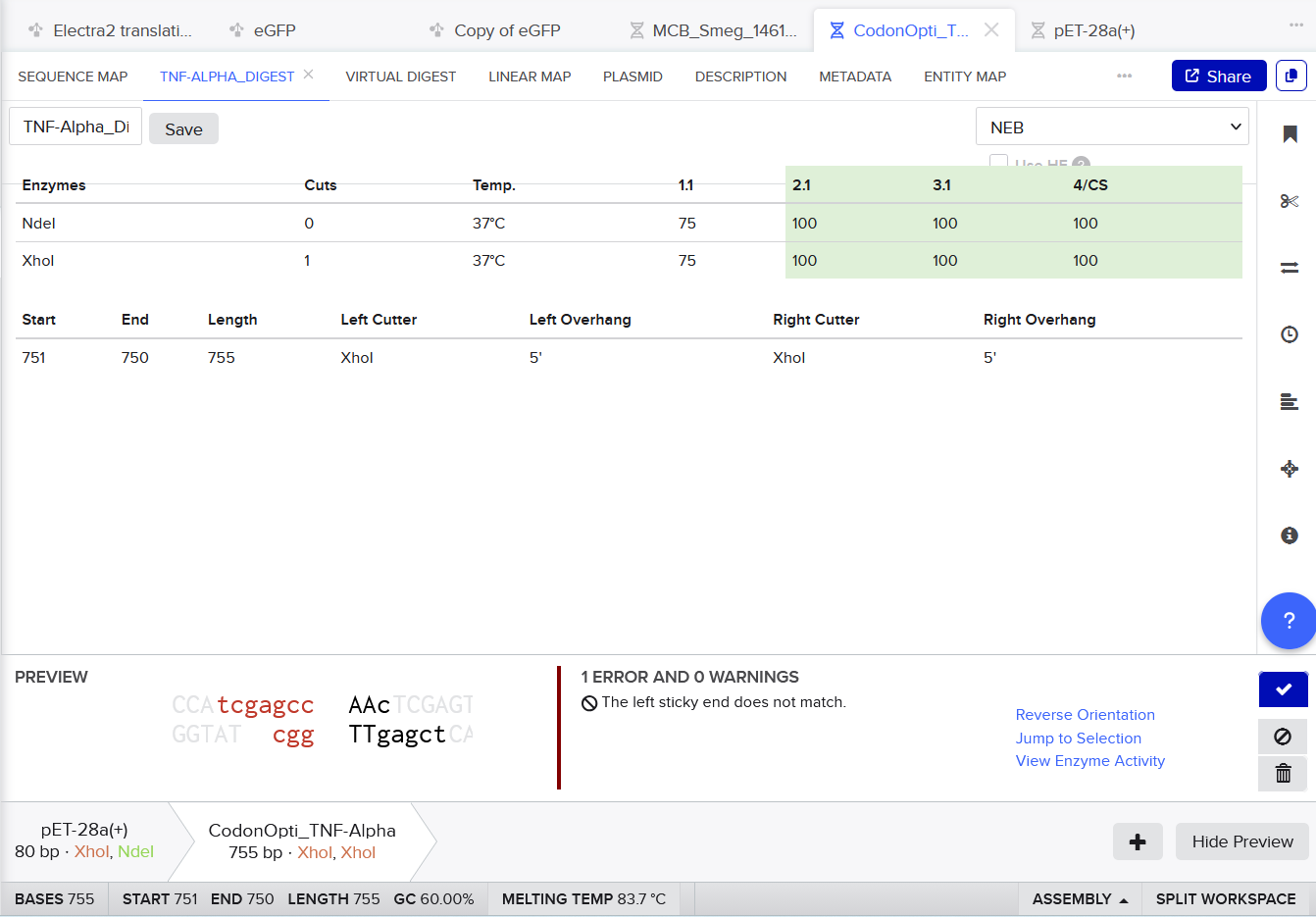
Having problems with inserting backbone with digest and ligate:
Initial restriction enzyme setup caused incompatibility because the TNF-α insert did not generate matching sticky ends (NdeI site absent or not properly cut), leading to “left sticky end mismatch” errors.
In Benchling Digest & Ligate, manual sequence selection was invalid; only enzyme-generated digest fragments could be used for backbone and insert assignment, causing assembly to remain disabled.
In Gibson assembly, incorrect fragment selection (partial backbone instead of full pET-28a(+) plasmid) led to unset components and failed assembly preview errors. Therefore, should I use full plasmid??
Would like some help on this