Week 11 HW: Bioproduction and Cloud Labs
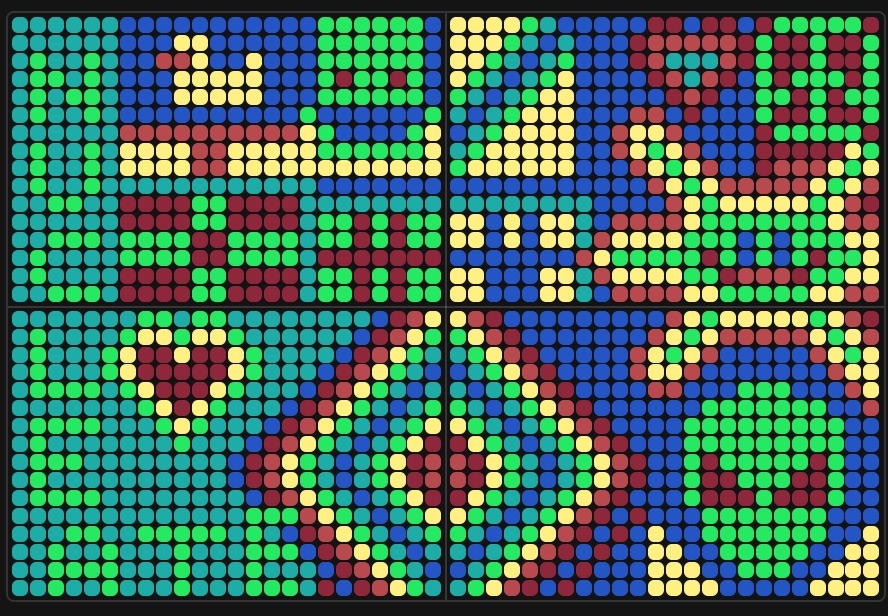
Everyone on the HTGAA network contributed to this global piece of artwork: https://rcdonovan.com/synbiobeta (I contributed by adding a few yellow cells in the bottom centre of the plate for the design. Shout out to Ronan Donovan our TA. I think its absolutely awesome turning biology into a medium for artistic expression!
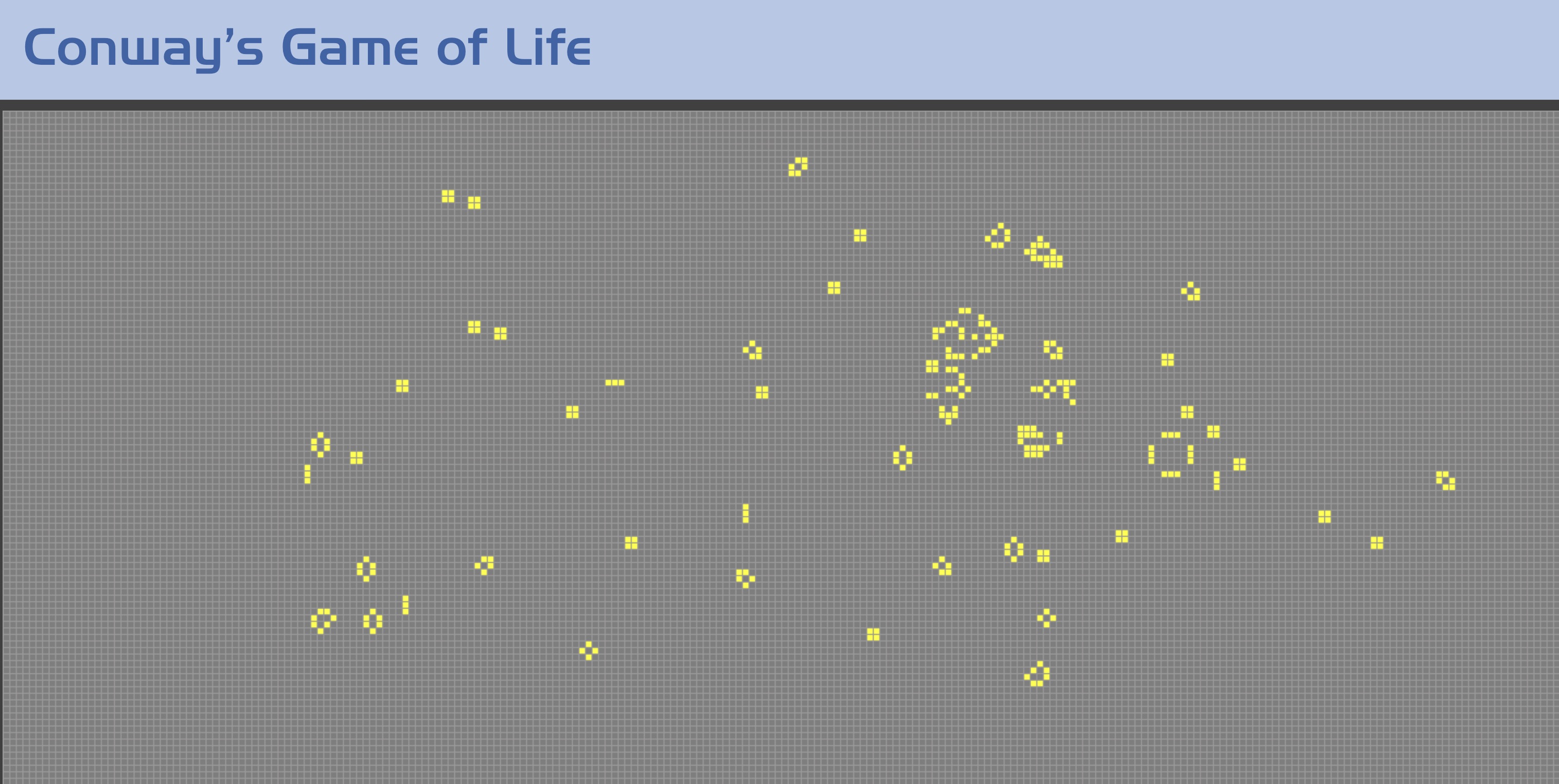
This gave me a fun idea - the pixel art aesthetic kind of reminds me of conway's game of life. What if we made a little simulation where cells of fluorescent proteins/bo pixels evolved over time using the rules from the game of life like a living fluorescent colony - might vibe code this up as a fun weekend project :)
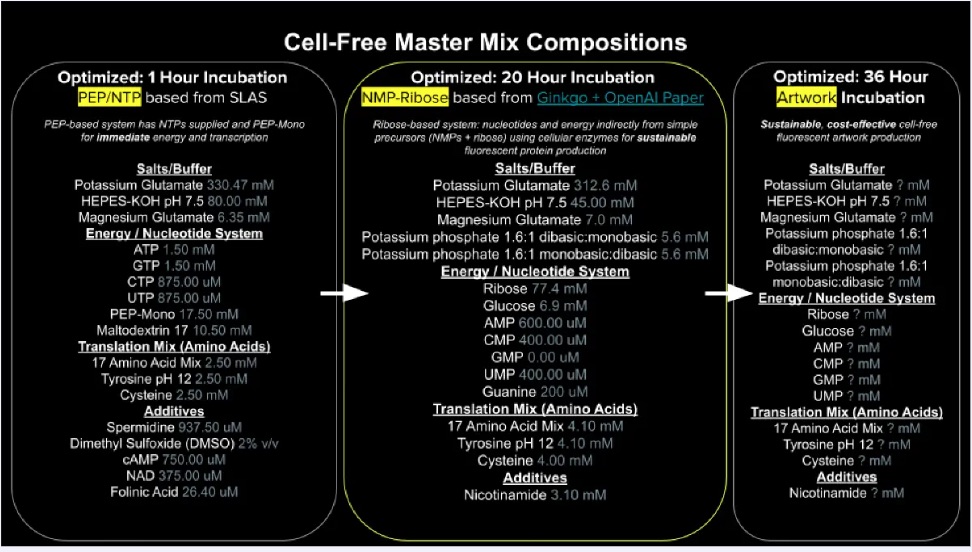
The lysate basically provides all the cellular machinery needed for protein production outside of living cells, including ribosomes, enzymes, and cofactors. It also contains T7 RNA polymerase, which transcribes the DNA template into mRNA using the T7 promoter system.
Potassium glutamate helps recreate the ionic conditions normally found inside cells, which keeps enzymes active and stabilizes ribosomes during transcription and translation.
HEPES-KOH acts as a buffer to keep the reaction at a stable physiological pH (~7.5), which is important because the transcription and translation enzymes work best under those conditions.
Magnesium ions are essential cofactors for many biological processes in the reaction, especially ribosome function and RNA polymerase activity.
Together, these phosphate salts help maintain pH balance and provide phosphate ions that are important for nucleotide metabolism and energy transfer.
Ribose and glucose act as energy and carbon sources that help regenerate nucleotides and ATP over time, allowing the reaction to continue for much longer incubations.
These nucleotide monophosphates serve as precursors that can be converted into ATP, CTP, GTP, and UTP, which are needed for transcription, translation, and energy metabolism.
Guanine can be salvaged by enzymes in the lysate and converted into GMP/GTP, helping replenish the guanosine nucleotide pool needed for transcription and translation.
The amino acid mix supplies the building blocks needed by ribosomes to synthesize proteins.
Tyrosine is added separately because it has poor solubility at neutral pH, while cysteine is separated because it is highly reactive and important for forming disulfide bonds in proteins.
Nicotinamide is a precursor to NAD+, which supports redox reactions and helps regenerate energy during the cell-free reaction.
Nuclease-free water is used to bring the reaction to the correct final volume without introducing RNases or DNases that could degrade the nucleic acids in the reaction.
The biggest difference is how they generate energy and nucleotides. The 1-hour PEP/NTP mix supplies ready-to-use NTPs and uses PEP as a fast, direct energy source, so the reaction starts quickly but doesn’t last very long. In contrast, the 20-hour NMP-ribose mix relies on NMPs, ribose, and glucose, which the lysate enzymes gradually convert into usable nucleotides and ATP, making the reaction slower but much more sustainable over long incubations.
The 1-hour system is optimized for rapid protein production, so it includes extra additives that boost transcription and translation efficiency immediately. The 20-hour system is designed for long-term stability, so it uses a simpler formulation with fewer additives.
Even though GMP is not directly added, the lysate can recycle guanine through the nucleotide salvage pathway. Enzymes convert guanine into GMP, which can then be phosphorylated into GTP and used for transcription.
sfGFP is engineered for extremely fast and robust folding, which makes it one of the most reliable fluorescent reporters in cell-free expression systems. Its fluorescence develops quickly and consistently even under less-than-ideal reaction conditions, although chromophore maturation still depends on oxygen availability.
mRFP1 has a relatively slow maturation time compared to newer red fluorescent proteins, so fluorescence often appears significantly later than the actual protein translation event. It is also less bright than modern red reporters, which can reduce signal sensitivity in low-yield reactions.
mKO2 is a very bright orange fluorescent protein, making it useful for strong signal detection in multiplexed experiments. However, its fluorescence can be sensitive to acidic pH shifts and photobleaching during long imaging experiments, which may reduce signal stability over time.
mTurquoise2 has an exceptionally high quantum yield and strong photostability, allowing sensitive fluorescence detection even at relatively low protein concentrations. It also matures rapidly, which helps produce fast fluorescence readouts in cell-free reactions.
mScarlet-I is one of the brightest monomeric red fluorescent proteins and matures faster than many earlier red reporters, making it highly effective for real-time fluorescence measurements. Like most fluorescent proteins, its chromophore formation requires oxygen, so low-oxygen conditions can limit fluorescence development.
Electra2 was engineered for high stability and rapid maturation, which allows fluorescence to closely track ongoing protein production in real time. Its blue fluorescence also provides good spectral separation from green and red proteins, making it useful for multicolor cell-free experiments.
Target Protein: mRFP1
Reagent Adjustment: Add a small amount of GMP and slightly increase cysteine in the 36-hour cell-free mastermix.
Hypothesis: Because mRFP1 has relatively slow maturation and lower brightness, adding GMP could improve GTP availability for sustained transcription, leading to more mRNA and more total protein production. Increasing cysteine may also help support proper folding, so together these changes should increase the amount of mature fluorescent mRFP1 produced over the 36-hour incubation.