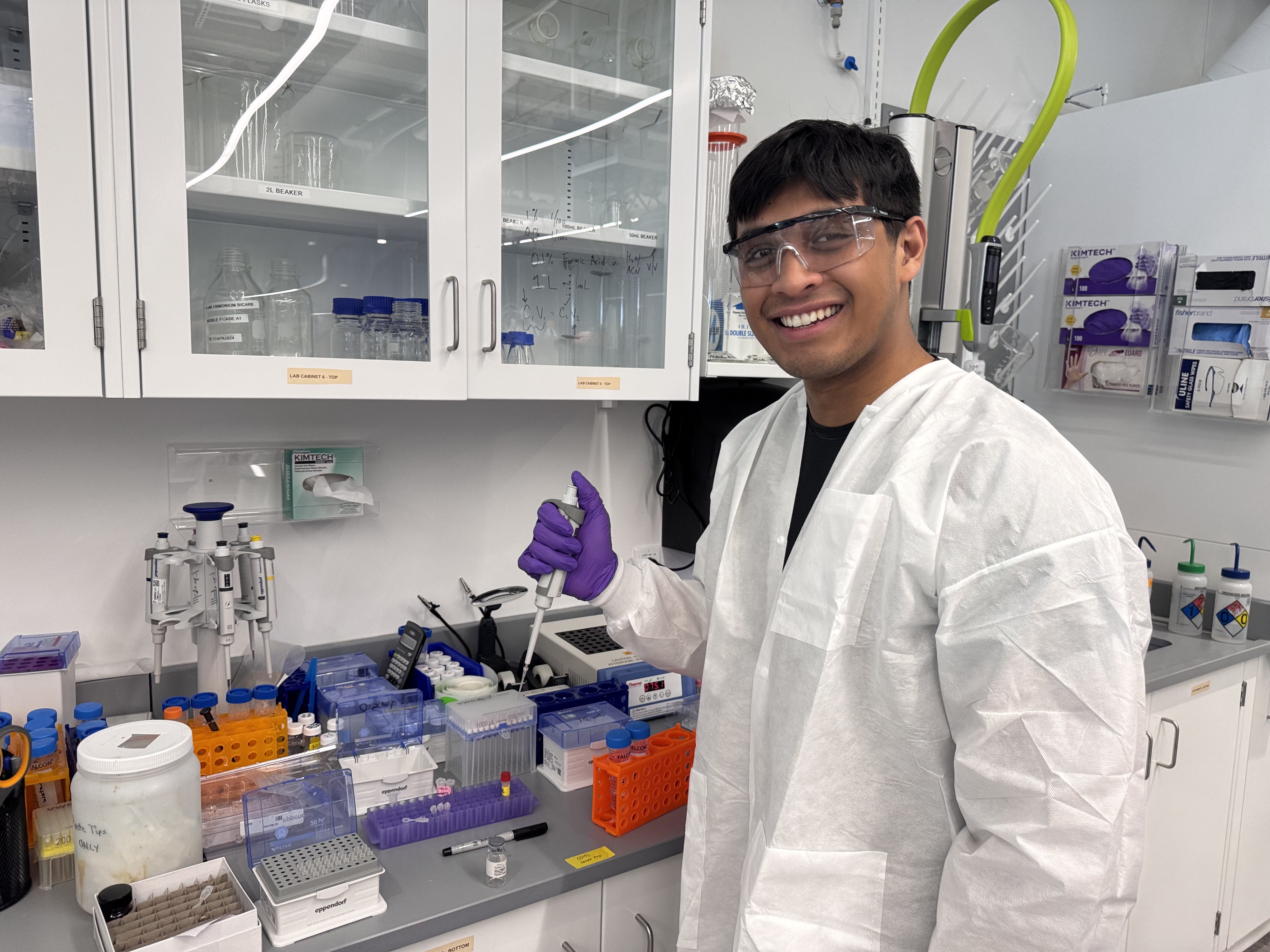
I’m Sami, a graduate student at MIT - my interests sit at the intersection of hardware, computation, and the physical sciences, especially the transition from bits to atoms.
A huge source of inspiration for me has been the ethos of the MIT Media Lab and the HTGAA community: people from completely different backgrounds colliding together to build weird but wonderful, ambitious, and sometimes slightly absurd ideas that challenge how we think about the world.
I believe this spirit represents the continuation of an epic lineage of ideas that traces back to the foundations of information theory and modern computation laid decades ago. Over time, many researchers began to see the sciences not as isolated disciplines, but as deeply interconnected fields converging toward questions surrounding artificial life, self-replication, programmable matter, and the possibility that computation could move beyond purely digital environments and begin interacting directly with matter itself. Ideas that once sounded like science fiction now feel increasingly tangible, and I find myself wondering whether biology and the underlying principles of nature may ultimately become the medium through which many of these ideas are realized.
First, describe a biological engineering application or tool you want to develop and why. This could be inspired by an idea for your HTGAA class project and/or something for which you are already doing in your research, or something you are just curious about. 🧬 Bio-Hybrid Fusion Blanket
Research Context:
I am currently a research assistant investigating Magnetohydrodynamics (MHD), specifically focusing on the complex interactions between magnetic fields and 150-million-degree plasma. My work involves optimizing plasma confinement within Tokamak reactors. At these extreme temperatures, the behaviour of the plasmas is governed by a delicate balance of magnetic pressure and fluid dynamics, creating an environment that is incredibly hostile to the physical structures surrounding it.
⚙️ 3.1 Choose a protein I chose the ATP synthase beta subunit because it’s essentially a biological motor and connects to my broader interest in energy systems:
Protons flow down their gradient across the mitochondrial membrane, almost like current moving through a circuit, and that flow physically spins part of the protein like a tiny turbine. That rotation drives changes in the beta subunits, which catalyze the formation of ATP from ADP and phosphate.
OpenTrons, Python and Hypotrochoid Patterns 🧪 We learned how to use the Opentrons Python API to write a protocol, essentially a set of instructions that controls the robot’s pipettes. Instead of manually pipetting, we defined coordinates, volumes, and movement steps in code so the robot could deposit liquid precisely into specific wells to create a defined pattern.
Also we could simulate the protocol before running it on the actual robot. This let us preview how the design would look, check for mistakes, and adjust the pattern in software first.
🔵 1. How many molecules of amino acids do you take with a piece of 500 grams of meat? (on average an amino acid is ~100 Daltons) Protein in 500 g of meat:
100 g → 26 g protein
500 g → 130 g protein
Mass of one amino acid:
1 Dalton = 1.66 × 10⁻²⁴ g
Average amino acid ≈ 100 Da
→ 100 × 1.66 × 10⁻²⁴ = 1.66 × 10⁻²² g
🧬 Part 1 Generate Binders with PepMLM Human SOD1 Sequence:
https://www.uniprot.org/uniprotkb/P00441/entryhttps://www.uniprot.org/uniprotkb/P00441/entry#sequences
SOD1 sequence
MATKAVCVLKGDGPVQGIINFEQKESNGPVKVWGSIKGLTEGLHGFHVHEFGDNTAGCTSAGPHFNPLS RKHGPKDEERHVGDLGNVTADKDGVADVSIEDSVISLGDHCIIGRTLVVHEKADDLGKGGNEESTKT GNAGSRLACGVIGIAQ SOD1 sequence with A4V mutation
MATKVVCVLKGDGPVQGIINFEQKESNGPVKVWGSIKGLTEGLHGFHVHEFGDNTAGCTSAGPHFNPLS RKHGPKDEERHVGDLGNVTADKDGVADVSIEDSVISLGDHCIIGRTLVVHEKADDLGKGGNEESTKT GNAGSRLACGVIGIAQ Here is a table with the binders ranked and compared against a known binder:
Rank Peptide Source Sequence Pseudo Perplexity 1 Reference (Experimental) FLYRWLPSRRGG 2.2833 2 PepMLM (Candidate 0) KLVPAVVLAHKX 7.4714 3 PepMLM (Candidate 1) KRSYPTALRHWX 10.1367 4 PepMLM (Candidate 2) WRYPVAABHGK 11.0383 5 PepMLM (Candidate 3) WHVYVVGLRHKE 25.8914 The perplexity metric measures how perplexed or “surprised” as it were, a model is by a sequence. Hence a lower score represents higher model confidence or predicted affinity. Here, the known binder FLYRWLPSRRGG acts as a benchmark, scoring 2.28 on the pseudo perplexity rating, which is significantly lower than the newly generated designs. As you can see, I have ranked the binders in order of their respective perplexity ratings.
🧬 1. What are some components in the Phusion High-Fidelity PCR Master Mix and what is their purpose? Phusion High-Fidelity PCR Master Mix contains several important components needed for accurate DNA amplification during PCR. The main component is Phusion DNA Polymerase, which is a highly accurate and thermostable enzyme that quickly copies DNA while minimizing mistakes. This makes it especially useful for applications such as cloning and DNA sequencing where precision is important.
🧠 1. What advantages do IANNs have over traditional genetic circuits, whose input/output behaviors are Boolean functions? Traditional genetic circuits based on Boolean logic work in a binary way, where genes are basically either on or off. In contrast, IANNs use analog signalling, meaning they can process information in a more continuous and brain-like way. Instead of just sensing whether a signal is there or not, they can also respond to how strong the signal is, which is important because biological systems are noisy and constantly changing.
🧪 Homework Part A: General and Lecturer-Specific Questions 🧬 1. Explain the main advantages of cell-free protein synthesis over traditional in vivo methods, specifically in terms of flexibility and control over experimental variables. Name at least two cases where cell-free expression is more beneficial than cell production. Cell-free protein synthesis essentially uses biology as an engineering tool without needing living cells. Traditional in vivo systems require cells to stay alive, meaning you constantly need to maintain the correct conditions such as nutrients, water, gases, temperature, pressure, and energy supply. In contrast, cell-free systems remove many of these constraints, giving much greater flexibility and control over experimental variables. Since there are no living cells, researchers can directly tune reaction conditions, add or remove components easily, and rapidly test biological circuits or protein designs without worrying about cell survival or toxicity.
🧪 Final Project 📋 For your final project: Please identify at least one (ideally many) aspect(s) of your project that you will measure. It could be the mass or sequence of a protein, the presence, absence, or quantity of a biomarker, etc. Please describe all of the elements you would like to measure, and furthermore describe how you will perform these measurements. What are the technologies you will use (e.g., gel electrophoresis, DNA sequencing, mass spectrometry, etc.)? Describe in detail. For my final project, I would measure whether GFP was successfully conjugated to magnetic beads and whether those GFP-coated magnetic beads can activate anti-GFP synNotch/SNIPR-style receptors in cells. The main thing I care about is whether magnetic presentation of the ligand changes receptor activation compared to normal soluble GFP.
🎨 The 1,536 Pixel Artwork Canvas Everyone on the HTGAA network contributed to this global piece of artwork: https://rcdonovan.com/synbiobeta (I contributed by adding a few yellow cells in the bottom centre of the plate for the design. Shout out to Ronan Donovan our TA. I think its absolutely awesome turning biology into a medium for artistic expression! This gave me a fun idea - the pixel art aesthetic kind of reminds me of conway's game of life. What if we made a little simulation where cells of fluorescent proteins/bo pixels evolved over time using the rules from the game of life like a living fluorescent colony - might vibe code this up as a fun weekend project :)
Subsections of Homework
Week 1 HW: Principles and Practices
1. First, describe a biological engineering application or tool you want to develop and why. This could be inspired by an idea for your HTGAA class project and/or something for which you are already doing in your research, or something you are just curious about. 🧬
Bio-Hybrid Fusion Blanket
Research Context: I am currently a research assistant investigating Magnetohydrodynamics (MHD), specifically focusing on the complex interactions between magnetic fields and 150-million-degree plasma. My work involves optimizing plasma confinement within Tokamak reactors. At these extreme temperatures, the behaviour of the plasmas is governed by a delicate balance of magnetic pressure and fluid dynamics, creating an environment that is incredibly hostile to the physical structures surrounding it.
Physics Problem: In a Deuterium-Tritium fusion reactor, the blanket is a critical component that lies in the interior of the reactor. It captures high energy neutrons released by fusion converting their kinetic energy into heat which generated electricity. It also contains lithium which when struck by those neutrons breeds tritium, the fuel we can recycle in the reactor.
Currently, these blankets are limited by severe material degradation. High-energy neutron bombardment causes metals to swell, become brittle, and crack from the inside out as waste reactants accumulate. Plasma is also a volatile fluid that is difficult to control with magnets; sudden disruptions can dump massive thermal loads onto the reactor walls. Since current materials are rigid and static, they cannot absorb or repair these shocks, leading to surface melting and catastrophic structural failures.
The proposal: The idea is to develop a bio-hybrid, self-healing blanket for the fusion reactor replacing rigid metal walls with a dynamic system where biology acts as both the architect and the maintenance crew.
One idea could be utilizing synthetic biology to grow the initial reactor structure. By using biology as a 3D template, we can grow a reactor structure that places lithium atoms with perfect accuracy. This creates a more efficient fuel-making system inside a heat-shield wall filled with tiny, vein-like cooling channels that traditional machines simply can’t build.
Another idea involves using the reactor’s downtime as a biological recovery phase. Once the system is cooled, the network of vascular channels becomes a highway for bespoke, bio-engineered cells designed to seek out and clear trapped helium waste. These cellular workers then secrete new mineral precursors to “re-grow” the scaffolding at the site of neutron-induced cracks, allowing the blanket to rejuvenate its structural integrity like a self-maintaining organ.
2. Governance or policy goals for an ethical future ⚖️
One goal would be to ensure the bio-hybrid blanket is easy to clean up. We want to avoid creating bio-nuclear waste that is harder to handle than regular blanket material.
Sub goal 1: Easy deconstruction – the biological structure should be non-toxic and easy to recycle and dissolve away after use; we should be able to filter out and recycle expensive metals used such as lithium.
Sub goal 2: Chemical safety – the maintenance cells must be engineered so they don’t produce harmful chemicals while they work, so the reactor process doesn’t require hazardous waste treatment.
3. Governance actions across actors 🏛️
Action 1: Digital DNA Registry (Technical Strategy) Actor: Researchers Purpose: Move away from secret, proprietary cell design to a shared public database of genetic blueprints. Design: Researchers must upload their genetic code of their cells to a registry so other people know how to handle and recycle them. Assumptions: Assumes labs will share blueprints, and that a global standard for DNA data would work. Risk of Failure: Bad actors could learn how to destabilise or reverse engineer cells since it’s public. Success: Any country could build and recycle their reactors and blankets.
Action 2: Green Fusion Tax Credits (Financial Incentive) Purpose: Reward reactors that prove they are highly recyclable. Design: The government would give extra funding or tax breaks to companies whose bio blankets leave minimal toxic waste behind. Assumptions: Assumes money is the biggest motivator for companies to prioritize over speed of reactor development. Risk of Failures: Companies might greenwash their data to get money without being clean. Success: Low waste reactors become the most profitable way to run and becomes industry standard.
Action 3: Biological Security (New Rule) Purpose: Prevent technology from being turned into a biological weapon that can survive extreme environments. Design: Require fusion labs to store biological material in high security facilities with background checks like those used for handling nuclear fuel. Assumptions: Assumes these bio engineered cells are dangerous. Risk of Failure: Expensive security could slow down science, so we never get to clean fusion energy. Success: Only good actors working on building innovative materials to help achieve clean energy get access to these biomaterials.
4. Scoring governance options 📊
Does the option:
Option 1: DNA Registry
Option 2: Green Tax Credits
Option 3: Bio-Security Rule
Enhance Biosecurity
By preventing incidents
3
2
1
By helping respond
1
3
2
Foster Lab Safety
By preventing incident
2
3
1
By helping respond
1
3
2
Protect the environment
By preventing incidents
2
1
2
By helping respond
1
2
3
Other considerations
Minimizing costs or burdens
1
2
3
Feasibility
2
1
3
Not impede research
2
3
1
Promote constructive applications
1
2
3
5. Recommended governance pathway 🎯
I would prioritize Action 3: Biological Security as the main requirement addressed to the U.S. Department of Energy and Defense. This is because we first and foremost should address the immediate risk of creating bioweapons that can withstand radiation and high temperatures. This ensures that the foundation of the industry is built on containment and control before scaling or commercialization. Once the technology is regulated in a similar manner to nuclear fuel, Action 1 should be incentivized serving as a long-term safety net, providing a transparent repair manual for materials once they are safely deployed.
Trade-offs and Uncertainties: Innovation vs. Security: The primary trade-off is that high security increases costs and can slow down academic research. There is a risk that over-regulating early-stage biology could delay clean fusion energy development. Assumption of Risk: This plan assumes these bio-engineered cells are dangerous enough to warrant military-grade security. If the cells are actually fragile outside the reactor, the security measures might be unnecessary.
Questions from Professor Jacobson 🧪
Error rate for polymerase is 1 in 106 bases. The human genome length is 3.2 × 10⁹ bases. Biology deals with the discrepancy using the MutS Repair system.
Average Human Protein: 1036bp = 345 amino acids Each amino acid can have 61 sense codons – so that’s 61^345 = huge number of different ways. Most codes don’t work in practice because differences in codon bias, mRNA and translation efficiency can disrupt expression, stability, or correct protein production.
Questions from Dr. LeProust 🧬
Phosphonamidite DNA Synthesis.
Due to the high error rate – 1 in 10^2 per base so errors and truncated products accumulate exponentially with each base addition cycle.
After 2000 chemical synthesis cycles, errors and incomplete couplings accumulate at each step, and because the process has no proofreading, nearly all strands become truncated or mutated, leaving virtually no correct full-length product.
Question from George Church 🧠
10 essential amino acids which can’t be synthesized in the body: Phenylalanine Valine Threonine Tryptophan Isoleucine Methionine Histidine Arginine Leucine Lysine
Since Lysine is one of the amino acids which can’t be synthesised, lysine contingency as a strategy for bio containment exploits this natural dependency to control.
Lysine Contingency is a biocontainment strategy where an engineered organism is made unable to synthesize lysine, so it can only survive if lysine is externally supplied.
Week 2 HW: DNA Design Challenge
⚙️ 3.1 Choose a protein
I chose the ATP synthase beta subunit because it’s essentially a biological motor and connects to my broader interest in energy systems:
Protons flow down their gradient across the mitochondrial membrane, almost like current moving through a circuit, and that flow physically spins part of the protein like a tiny turbine. That rotation drives changes in the beta subunits, which catalyze the formation of ATP from ADP and phosphate.
So it’s literally energy stored in a gradient being converted into mechanical motion and then into chemical energy. I find that idea really compelling, it’s molecular thermodynamics in action, where fundamental physics laws become something tangible inside living cells.
Multiple codons can code for the same amino acid, but different organisms prefer certain codons over others. So we have to optimize codon usage for that specific organism otherwise translation might be inefficient, we want to use tRNA’s that are plentiful – which bind to that specific codon attaching the specific amino acid.
I have chosen E.coli as the organism to optimize the protein sequence for. Since we use them in the fluorescent bacteria artwork lab!
Above is the entire mRNA sequence, but we need the coding sequence (CDS) – the mRNA sequence has additional information like a start and end codon and untranslated regions. We can go to the CDS record instead, obtain the coding sequence and then use our codon optimization on it.
🧫 3.4 What technologies could be used to produce this protein from your DNA?
We can use cell dependent expressions, like cloning the optimized DNA sequence into a plasmid vector and introducing it into a host organism such as E.coli. Once inside the promoter recruits RNA polymerase and transcribes the DNA sequence into mRNA. The ribosomes then binds to the mRNA and tRNA’s match codons and deliver amino acids. The amino acids are then linked together to form the protein. The bacteria would then produce ATP synthase beta subunit as part of their cellular machinery.
🧬 5.1 What DNA would you want to sequence and technologies used?
I would choose to sequence the DNA of extremophiles that thrive in high-radiation or high-temperature environments. By sequencing genes involved in radiation resistance, DNA repair, and protein stabilization, we could better understand the molecular mechanisms that allow biological systems to survive under extreme stress. This knowledge could help inform the engineering of radiation-resistant biological materials or bio-hybrid systems designed to operate in harsh energy environments. Studying these organisms connects molecular biology with broader challenges in advanced energy systems.
I would use Illumina sequencing to sequence the DNA since it provides high accuracy and high throughput and is well suited for whole-genome sequencing and variant detection. It’s a second generation technique, sequencing millions of short DNA fragments in parallel using sequencing-by-synthesis. Illumina sequencing reads DNA by copying it one base at a time and taking a picture after each base is added.
The input would be the extracted genomic DNA.
Preparation steps:
Fragment DNA into short pieces
Ligate sequencing adapters
PCR amplify fragments
Load onto flow cell for cluster amplification
Essential sequencing steps:
DNA fragments bind to flow cell
Bridge amplification forms clusters
Fluorescently labeled nucleotides are added one at a time
A camera detects the fluorescent signal for each incorporated base
The color signal determines the base
The output would be millions of short sequence reads containing nucleotide sequences and quality scores which can be assembled into a genome or aligned to a reference.
🧪 5.2 What DNA would you want to synthesize and technologies used?
I would want to synthesize a cluster of genes involved in enhanced DNA repair and protein stabilization from extremophiles and express them in a model organism. By combining multiple protective pathways, we could engineer cells with improved resistance to radiation and thermal stress. The idea would to use this to develop radiation-resistant biomaterials or biological components for extreme energy environments. We could build a genetic circuit that enables engineered bacteria to sense and respond to radiation stress. This circuit could include radiation response promoters, DNA repair genes and protective protein pathways that activate under high oxidative or ionizing radiation conditions.
To synthesize this genetic circuit, we could use Twist combined with phosphoramidite solid-phase DNA synthesis and Gibson Assembly for multi-fragment assembly.
Essential steps:
Design optimized DNA sequence computationally
Chemically synthesize short oligonucleotides (base-by-base addition)
Cleave and purify oligos
Assemble fragments into full-length gene (e.g., Gibson Assembly)
Clone into plasmid backbone
Sequence-verify construct
Limitations:
Length limits: Direct chemical synthesis is reliable only for short fragments with longer genes requiring assembly. There’s also base errors so we would need to do sequencing validation and it can be very expensive for large gene clusters and take a large amount of time.
✏️ 5.3 What DNA would you want to edit and why? What technologies?
I would edit the genomes of photosynthetic microorganisms such as algae to improve their efficiency in converting light energy into chemical fuels. I could target genes involved in photosystem efficiency, carbon fixation pathways, and hydrogen production.
Photosynthesis is essentially a natural solar energy conversion system, but it is quite inefficient. We could modify regulatory genes to reduce energy losses or redirect metabolic pathways toward hydrogen or biofuel production, so we could have biological systems that convert sunlight into storable chemical energy more efficiently.
I am interested as it connects directly to large-scale energy systems and treating living cells as programmable energy conversion platforms, similar to designing more efficient reactors or turbines.
WE could use CRISPR-Cas12a for genome editing in cyanobacteria.
How does it edit dna
Design guide RNAs targeting specific genes.
Deliver Cas12a and guide RNAs into the cells.
Cas12a cuts the DNA at precise locations.
The cell repairs the cut using a donor DNA template to insert optimized sequence
Design:
Identify metabolic bottlenecks in photosynthesis or fuel production.
Design guide RNAs.
Design donor DNA templates if inserting new sequences.
Inputs:
Cas enzyme
Guide RNAs
Donor DNA (if needed)
Host cells (e.g., cyanobacteria)
Limitations
Off-target edits may occur.
Large pathway rewiring is complex.
Efficiency gains may be modest due to thermodynamic constraints.
Week 3 HW: OpenTrons and Python
OpenTrons, Python and Hypotrochoid Patterns 🧪
We learned how to use the Opentrons Python API to write a protocol, essentially a set of instructions that controls the robot’s pipettes. Instead of manually pipetting, we defined coordinates, volumes, and movement steps in code so the robot could deposit liquid precisely into specific wells to create a defined pattern.
Also we could simulate the protocol before running it on the actual robot. This let us preview how the design would look, check for mistakes, and adjust the pattern in software first.
1. Importing the tools we need 🧰
from opentrons import types
import math
This protocol relies on two key libraries.
The math module provides the trigonometric functions ( sin , cos , pi ) needed to compute the hypotrochoid curve.
The Opentrons types module allows us to describe 3-dimensional positions on the robot deck. In particular, we use types.Point() to move the pipette relative to a reference point on the agar plate.
Together these allow us to convert mathematical coordinates into physical robot movements.
Each colored dye is stored in a specific well on the cold plate.
This dictionary creates a simple mapping between well locations and color names so that later in the protocol we can refer to colors directly (e.g., “blue”) rather than remembering the exact well coordinates.
Instead of drawing a single curve, the protocol draws multiple layers.
Each layer specifies:
• a color • a rotation angle • a scale factor • droplet size • spacing between droplets
By rotating and slightly scaling each layer, the curves weave together into a complex multi-color pattern.
11. Drawing the pattern ✏️
for color, rot_deg, scl, dot_ul, step_mm in layers:
    pts = scale_points(base_pts, scl)
    pts = rotate_points(pts, rot_deg)
    dispense_path(color, pts)
For each layer the protocol:
scales the base hypotrochoid
rotates it
sends the points to the dispensing routine
The robot then physically draws the pattern on the agar plate.
12. Adding a final decorative ring ✨
ring_pts = []
for i in range(80):
    t = 2 * math.pi * i / 80
    ring_pts.append((ring_r * math.cos(t), ring_r * math.sin(t)))
Finally, a small circular ring of yellow droplets is added at the center of the design.
This creates a visual “sparkle” effect and highlights the symmetry of the pattern.
Week 4 HW: Protein Design I
🔵 1. How many molecules of amino acids do you take with a piece of 500 grams of meat? (on average an amino acid is ~100 Daltons)
Protein in 500 g of meat: 100 g → 26 g protein 500 g → 130 g protein
Mass of one amino acid: 1 Dalton = 1.66 × 10⁻²⁴ g Average amino acid ≈ 100 Da → 100 × 1.66 × 10⁻²⁴ = 1.66 × 10⁻²² g
Number of amino acid molecules: 130 g ÷ 1.66 × 10⁻²² g ≈ 7.83 × 10²³ molecules
Convert to moles using Avogadro’s number: 7.83 × 10²³ ÷ 6.022 × 10²³ ≈ 1.30 mol
Final answer: ≈ 7.8 × 10²³ amino acid molecules ≈ 1.3 mol of amino acids
🔵 2. Why do humans eat beef but do not become a cow, eat fish but do not become fish?
When we eat beef or fish, the body breaks it down into basic building blocks like amino acids, so at that point it is no longer “cow” or “fish” but just raw materials that we use to build our own cells and proteins; the DNA in food is also broken down and cannot function in our bodies, and since our cells only follow human DNA instructions, we are simply using the materials rather than becoming what we eat.
🔵 3. Why are there only 20 natural amino acids?
It is not fully understood why there are only 20 natural amino acids. One idea, proposed by Francis Crick, is the frozen accident theory, which suggests that the genetic code is not perfectly optimized but instead came from an early, somewhat arbitrary setup that later became fixed. In that sense, the 20 amino acids we see today may have just been what happened to get locked in at the start of life. At the same time, studies suggest these amino acids cover a good spread of chemical properties—like charge, polarity, hydrophobicity, and size—so they are diverse enough to build a wide range of protein structures.
🔵 4. Can you make other non-natural amino acids? Design some new amino acids.
Yes you can create non-natural amino acids. A well known example is the work by Floyd E. Romesberg, particularly the paper A Genomically Recoded Organism with an Expanded Genetic Alphabet (Nature, 2014), which demonstrated that the genetic alphabet can be expanded by introducing unnatural base pairs. This allows cells to encode and incorporate non-natural amino acids into proteins by creating new codons.
🔵 5. Where did amino acids come from before enzymes that make them, and before life started?
Amino acids likely formed before life through simple chemistry on early Earth rather than through enzymes. A classic example is the experiment by Stanley Miller, who showed in his 1953 Science paper that if you simulate early Earth conditions (basic gases plus an energy source like lightning), amino acids can form spontaneously. This lines up with ideas going back to Charles Darwin, who speculated that life might have first emerged in a warm little pond with the right chemicals and energy. So the building blocks of life can arise from pretty simple ingredients without any biology involved, and interestingly, even now we still haven’t been able to create life itself from scratch.
🔵 6. If you make an α-helix using D-amino acids, what handedness (right or left) would you expect?
Because D-amino acids are mirror images of L-amino acids, they naturally form the opposite helix. So while normal L amino acids form right-handed α-helices, D-amino acids form left-handed ones.
🔵 7. Can you discover additional helices in proteins?
Yes, proteins can form additional types of helices beyond the standard α-helix. These include 3₁₀-helices and π-helices, which differ in how tightly they coil and in their hydrogen bonding patterns.
🔵 8. Why are most molecular helices right-handed?
Most molecular helices are right-handed because biological building blocks are chiral with L-amino acids and D-sugars favoring right-handed structures that minimize steric clashes and optimize hydrogen bonding. Exceptions like Z-DNA exist but are less common and form under specific conditions.
🔵 9. Why do β-sheets tend to aggregate? What is the driving force for β-sheet aggregation?
This happens because the edges of β-sheets can easily form hydrogen bonds with other strands, and many of the side chains involved are hydrophobic, so they cluster together to avoid water. The main driving force is therefore hydrophobic interactions, along with additional stabilization from hydrogen bonding between sheets.
🔵 10. Why do many amyloid diseases form β-sheets? Can you use amyloid β-sheets as materials?
Amyloid diseases form β-sheets because they are very stable, so misfolded proteins stack into insoluble “cross-β” fibrils that build up over time, as seen in Alzheimer’s Disease, Type 2 Diabetes, and Creutzfeldt–Jakob disease; that same stability also makes these structures useful as materials like nanofibers and scaffolds.
🧪 Part B: Protein Analysis and Visualization
🔵 1. Briefly describe the protein you selected and why you selected it.
I selected green fluorescent protein (GFP) because it is a well-known protein that clearly links structure to function. GFP naturally fluoresces due to a chromophore formed within its folded structure, which makes it widely used to track gene expression and protein location in cells. I also chose it because I’ve enjoyed working with fluorescent systems in biology so far, like in the Opentrons lab, so it feels familiar and intuitive while still being a powerful example of how protein structure leads to function.
🔵 2. Identify the amino acid sequence of your protein.
sp|Q15465|SHH_HUMAN Sonic hedgehog protein Results Length: 238 amino acids Most frequent: G (22 times, 9.2%)
How many protein sequence homologs are there for your protein?
Uniprot id: P42212 - 205 hits found
Does your protein belong to any protein family?
GFP belongs to the green fluorescent protein (GFP) family. This family includes a range of fluorescent proteins found in organisms like jellyfish and corals, all of which share a similar β-barrel structure and fluorescent chromophore but can emit different colors (e.g. green, blue, cyan, yellow, red).
The GFP structure (PDB ID: 1EMA) was solved in 1996, deposited on August 1 and released on November 8 by Ormo and Remington. It was determined using X-ray diffraction with a resolution of 1.90 Å, indicating a high-quality structure with well-resolved atomic positions. In addition to the protein, the structure includes water molecules and the chromophore (listed as a non-standard residue). Structurally, GFP belongs to the all-β β-barrel fold, commonly referred to as the GFP-like fold in classification systems such as SCOP.
🔵 3D Visualization
dss
color red, ss h
color yellow, ss s
color green, ss l
From the structure, we can infer that hydrophobic residues are predominantly located in the interior of the protein, forming a stable core, while hydrophilic residues are mainly exposed on the surface where they can interact with the surrounding aqueous environment. This distribution is consistent with typical protein folding and helps stabilize the β-barrel structure of GFP.
The protein appears mostly smooth and compact with no large exposed binding pockets on the exterior. There are only small surface indentations, but no obvious deep cavities. This suggests that GFP does not have a typical surface binding site; instead, its main “hole” is an internal cavity within the β-barrel, which is not visible from the outside surface.
🤖 Part C: Using ML-Based Protein Design Tools
At a high level, we are using a pretrained machine learning model to learn patterns from large numbers of protein sequences and then apply that knowledge to analyze a specific protein. In the deep mutational scan, we systematically mutate each position in the protein and use the model to estimate how likely or tolerated each mutation is, which helps identify important versus flexible regions of the protein. In latent space analysis, we convert entire protein sequences into vector embeddings and visualize them in a reduced-dimensional space, where proteins with similar structure or function cluster together. Together, these approaches let us explore both how individual mutations affect a protein and how whole proteins relate to each other, without directly simulating their physical behavior.
🧪 Deep Mutational Scans
The mutation scan heatmap shows how each possible amino acid substitution affects every position in the protein. The x-axis represents the position along the protein sequence (from residue 1 to ~238 for GFP), and the y-axis represents the 20 possible amino acids that could be substituted at each position. Each cell in the heatmap corresponds to a specific mutation (e.g. position i mutated to amino acid j), and the color indicates the model’s score or likelihood for that mutation: brighter colors (yellow/green) indicate mutations that are more likely or tolerated, while darker colors (blue/purple) indicate mutations that are unlikely and likely destabilizing.
By looking vertically at a single column (one position), we can see how sensitive that position is to mutation, columns that are mostly dark suggest highly conserved, functionally or structurally critical residues, whereas columns with many lighter colors indicate positions that are more flexible and tolerant to change. Patterns across the heatmap therefore reveal which regions of the protein are constrained (e.g. core or active regions) versus more variable (e.g. surface or loop regions), giving insight into the protein’s stability and function.
For example, at a position in the core of the protein (e.g. around residue ~65, near the chromophore region in GFP), most substitutions are dark (low likelihood), but mutations to similar amino acids (e.g. hydrophobic → hydrophobic) may be slightly less penalized. This suggests that the residue is highly conserved and structurally important, and changing it disrupts the local environment required for stability or function. In contrast, substituting with a chemically similar residue is less disruptive, which is why those mutations appear slightly more tolerated.
🌌 Latent Space Analysis
Each point represents a protein, and proximity reflects similarity in learned sequence features. After placing GFP into this space, its nearest neighbor was another GFP sequence, confirming the model correctly captures sequence similarity. However, other nearby proteins were functionally different and relatively distant, suggesting that GFP is somewhat isolated in this dataset due to a lack of closely related sequences. This indicates that while the latent space captures meaningful relationships, the dataset composition strongly influences the observed neighborhoods.
🧩 Protein Folding
Protein folding is important because a protein’s function is determined by its three-dimensional structure rather than just its amino acid sequence. The way a protein folds defines its active sites, binding interactions, and overall stability, which in turn controls how it behaves in a biological system. Misfolding can lead to loss of function or disease, while correct folding enables proteins to carry out roles such as catalysis, signaling, and structural support. Being able to understand and predict how a sequence folds therefore allows us to infer function, study the effects of mutations, and design new proteins or therapeutics without relying solely on experimental methods.
In this task, we used ESMFold to predict protein structure directly from sequence. The model is first pretrained as a protein language model (ESM-2), learning patterns from large datasets of sequences, and then passes this information into a folding module that outputs predicted 3D coordinates. In the diagram, the sequence is encoded into embeddings, processed through a series of network blocks, and iteratively refined to produce a final structure along with a confidence estimate. We then compare the predicted structure to known experimental structures and test how mutations affect folding, allowing us to explore how robust the protein’s structure is to changes in its sequence.
🧬 Protein Generation – Inverse Folding
Inverse protein folding is the process of starting with a desired 3D protein structure (its backbone shape) and designing an amino acid sequence that will fold into that structure. Instead of predicting structure from a sequence, you reverse the problem: given a fixed geometry, a model like ProteinMPNN selects residues that fit spatially, stabilize interactions, and satisfy physical constraints. Because many different sequences can produce the same structure, the goal is to find one (or several) that make the structure energetically stable. The designed sequence is then typically validated by folding it again with a model like ESMFold and checking whether it reproduces the original structure.
Here is a table with the binders ranked and compared against a known binder:
Rank
Peptide Source
Sequence
Pseudo Perplexity
1
Reference (Experimental)
FLYRWLPSRRGG
2.2833
2
PepMLM (Candidate 0)
KLVPAVVLAHKX
7.4714
3
PepMLM (Candidate 1)
KRSYPTALRHWX
10.1367
4
PepMLM (Candidate 2)
WRYPVAABHGK
11.0383
5
PepMLM (Candidate 3)
WHVYVVGLRHKE
25.8914
The perplexity metric measures how perplexed or “surprised” as it were, a model is by a sequence. Hence a lower score represents higher model confidence or predicted affinity. Here, the known binder FLYRWLPSRRGG acts as a benchmark, scoring 2.28 on the pseudo perplexity rating, which is significantly lower than the newly generated designs. As you can see, I have ranked the binders in order of their respective perplexity ratings.
🔬 Part 2: Evaluate Binders with AlphaFold3
Rank
Job Name
ipTM
pTM
Primary Binding Location
Target Engagement
1
SOD1 and KLVPAVVLAHK
0.58
0.82
N-terminus Groove
High (Pocket)
2
SOD1 and WHVYVVGLRHKE
0.49
0.81
Upper β-barrel Ridge
Moderate (Surface)
3
SOD1 and KRSYPTALRHW
0.44
0.90
β-barrel Loops
Moderate (Surface)
4
SOD1 and WRYPVAABHGK
0.39
0.83
Lower Dimer Interface
Low/Mod (Surface)
5
SOD1 and FLYRWLPSRRGG (Ref)
0.26
0.81
Surface Loops
Low (Transient)
Key
Confidence Level
pLDDT Range
Corresponding Color
Very High
pLDDT > 90
Dark Blue
Confident
90 > pLDDT > 70
Light Blue (Cyan)
Low
70 > pLDDT > 50
Yellow
Very Low
pLDDT < 50
Orange
Protein-peptide complex Models using AlphaFold3 and Residue Alignment Charts (Green)
They are ordered according to their ipTM score, with the first (KLVPAVVLAHK) having the greatest score (0.58) etc
AlphaFold 3 modelling supported the binding potential of the peptides generated using PepMLM. Notably, all four model-generated peptides outperformed the experimental reference peptide, FLYRWLPSRRGG, in terms of ipTM (interface confidence), despite the reference having the lowest pseudo-perplexity score.
Candidate 0, KLVPAVVLAHK, achieved the highest ipTM score of 0.58 and also exhibited the lowest pseudo-perplexity score of 7.4714. Its elevated ipTM score suggests a strong ability to dock deeply within the N-terminal groove of SOD1, specifically near the ALS-associated A4V mutation site. In contrast, the remaining peptides displayed differing binding preferences across the β-barrel region and dimer interface.
The second strongest binder was Candidate 3, WHVYVVGLRHKE, with an ipTM score of 0.49. Interestingly, this peptide also had the highest pseudo-perplexity score at 25.8914, indicating that although it demonstrates favourable binding to mutant SOD1, its sequence is less likely to occur naturally compared with the other generated candidates.
🧪 Part 3: Evaluate Properties of Generated Peptides in PeptiVerse
In the search for peptides capable of stabilizing the SOD1 protein, a major therapeutic target in ALS research, the focus shifts from structural prediction in AlphaFold 3 to therapeutic evaluation in PeptiVerse. While AlphaFold 3 provides insight into the three-dimensional binding structure of a peptide, the 11 profiling metrics generated by PeptiVerse offer a broader assessment of how each candidate may behave in a biological and therapeutic context. Shown below are the results of evaluating the four PepMLM-designed peptide candidates against the established reference binder, FLYRWLPSRRGG, ranked from highest to lowest ipTM score.
Metric / Property
KLVPAVVLAHK
WHVYVVGLRHKE
KRSYPTALRHW
WRYPVAABHGK
FLYRWLPSRRGG (Ref)
ipTM (Structural)
0.58
0.49
0.44
0.39
0.26
Solubility
1.000
1.000
1.000
1.000
1.000
Permeability
0.242
0.143
0.849
0.359
0.862
Hemolysis
0.032
0.052
0.022
0.010
0.047
Non-Fouling
0.285
0.297
0.549
0.480
0.666
Half-Life (hrs)
0.438
0.412
0.342
0.339
0.310
Binding (pKd)
5.528
5.919
5.965
5.300
5.968
Length (aa)
11
12
11
11
12
Mol. Weight (Da)
1174.5
1522.8
1414.6
1166.5
1507.7
Net Charge (pH 7)
+1.59
+0.94
+2.85
+1.85
+2.76
Isoelectric Point
10.00
8.60
11.00
9.99
11.71
GRAVY (Hydrophobicity)
1.02
-0.38
-1.44
-0.73
-0.71
The results revealed an interesting trade-off between structural binding confidence and therapeutic potential.
Although Candidate 0 (KLVPAVVLAHK) achieved the highest ipTM score of 0.58, indicating that AlphaFold 3 predicts a highly confident structural interaction with mutant SOD1, PeptiVerse’s therapeutic profiling identified Candidate 1 (KRSYPTALRHW) as the most promising overall candidate despite its lower ipTM score of 0.44.
This distinction likely arises from the balance between binding performance and drug-like properties. Candidate 1 exhibited one of the lowest pseudo-perplexity scores among the generated peptides at 7.4714, suggesting that its sequence remains relatively biologically plausible and potentially more nature-like. In addition, it achieved the highest predicted binding affinity of the generated candidates, with a pKd score of 5.965, alongside the strongest permeability score of 0.849, indicating an increased likelihood of penetrating cells and reaching intracellular mutant SOD1 targets.
Importantly, Candidate 1 also displayed the highest positive net charge of all tested peptides, including the reference peptide, with a score of +2.85. This characteristic may enhance its ability to cross the blood–brain barrier and interact with the negatively charged aggregates associated with mutant SOD1 pathology.
Taken together, these results suggest that while Candidate 0 demonstrates the strongest predicted structural fit, Candidate 1 offers the most balanced combination of binding capability, permeability, and therapeutic suitability, making it the strongest candidate for further investigation.
⚙️ Part 4: Generate Optimized Peptides with moPPIt
Run
Sequence
Affinity (pKd)
Solubility
Specificity
Motif Score
Hemolysis
#1
RFKCIVKVMVRR
8.881
0.500
0.615
0.553
0.944
#2
KRLQLYRKKCAE
7.193
0.750
0.737
0.634
0.964
#3
QRACDYFRDDED
7.783
0.833
0.679
0.059
0.895
#4
KEKEGPCWESEK
7.360
0.833
0.871
0.002
0.962
The PepMLM-generated peptides primarily emphasize high-confidence structural docking alongside balanced biophysical properties, resulting in a more conservative yet affinity-improving profile relative to the baseline reference. In contrast, the moPPIt-generated peptides explore a broader chemical space and place greater emphasis on targeted binding interactions.
Week 6 HW: Genetic Circuits I
🧬 1. What are some components in the Phusion High-Fidelity PCR Master Mix and what is their purpose?
Phusion High-Fidelity PCR Master Mix contains several important components needed for accurate DNA amplification during PCR. The main component is Phusion DNA Polymerase, which is a highly accurate and thermostable enzyme that quickly copies DNA while minimizing mistakes. This makes it especially useful for applications such as cloning and DNA sequencing where precision is important.
The mix also contains deoxynucleotide triphosphates (dNTPs), which are the building blocks used to create new DNA strands. In addition, there is an optimized reaction buffer that provides the ideal chemical environment for the polymerase to work efficiently by maintaining the correct pH and ionic strength, while also helping stabilize the enzyme during the high temperatures of PCR.
Another key component is magnesium chloride (MgCl₂). Magnesium ions act as essential cofactors for the polymerase, allowing it to catalyse DNA synthesis by helping form phosphodiester bonds between nucleotides. They also help primers anneal to the template DNA by reducing electrostatic repulsion between the negatively charged DNA strands.
🧪 2. What are some factors that determine primer annealing temperature during PCR?
Some of the main factors that determine primer annealing temperature during PCR include the primer’s melting temperature (Tm), primer length, GC content, primer concentration, and the ionic strength of the reaction buffer. Primers with higher GC content generally require higher annealing temperatures because GC base pairs form three hydrogen bonds compared with two in AT base pairs, making them more stable. Longer primers also tend to have higher melting temperatures. In addition, buffer conditions and salt concentration influence how strongly the primer binds to the template DNA, which can affect the optimal annealing temperature.
🧫 3. There are two methods from this class that create linear fragments of DNA: PCR, and restriction enzyme digests. Compare and contrast these two methods, both in terms of protocol as well as when one may be preferable to use over the other.
PCR and restriction enzyme digests both create linear DNA fragments, but they do so in very different ways and are used for different purposes. PCR is an additive process that amplifies a specific DNA sequence, essentially acting like a biological photocopier. It uses thermal cycling, DNA polymerase, primers, and dNTPs to generate millions of copies of a target DNA fragment. PCR is most useful when only a very small amount of DNA is available, such as from a cheek swab or ancient DNA, and when a specific gene or sequence needs to be isolated and amplified from an entire genome.
In contrast, a restriction enzyme digest is a subtractive process that cuts DNA at specific recognition sequences using restriction endonucleases, acting like biological scissors. The reaction is usually performed at a constant temperature, around 37°C, and produces multiple DNA fragments of different sizes. Restriction digests are mainly used to manipulate or verify existing DNA, particularly plasmids, such as checking whether a gene has been successfully inserted or cutting plasmids open for cloning and ligation. They were also historically important for genomic mapping techniques like RFLP analysis. Overall, PCR is primarily used for finding and amplifying DNA, whereas restriction enzyme digests are mainly used for cutting, modifying, and analysing DNA.
🧠 4. How can you ensure that the DNA sequences that you have digested and PCR-ed will be appropriate for Gibson cloning?
To ensure that DNA fragments produced through PCR and restriction enzyme digestion are suitable for Gibson cloning, several factors must be considered. First, the DNA should be purified using a PCR clean-up kit to remove residual enzymes, salts, and buffers that could interfere with the Gibson Assembly Master Mix. Gel electrophoresis should then be used to confirm that the correct DNA fragments and gene sizes were successfully generated. In addition, the fragments must contain overlapping regions of at least ~20 base pairs so they can anneal correctly during Gibson assembly. This is usually achieved by designing PCR primers with appropriate overlap tails that match the adjacent DNA fragment or vector sequence.
🦠 5. How does the plasmid DNA enter the E. coli cells during transformation?
Plasmid DNA enters E. coli cells during transformation by temporarily creating pores in the bacterial cell membrane. This can be achieved through heat shock or electroporation. In heat shock transformation, the cells are exposed to a sudden change in temperature, while electroporation uses a brief high-voltage electrical pulse. Both methods disrupt the membrane enough to allow plasmid DNA to diffuse into the cells.
After transformation, the E. coli cells are incubated in a nutrient-rich broth such as LB or SOB at 37°C to allow them to recover, begin multiplying, and express the antibiotic resistance gene carried by the plasmid. The cells are then plated onto agar containing antibiotics, so only bacteria that successfully took up the plasmid survive and form colonies. If the plasmid contains a reporter gene such as GFP, the transformed colonies may also display visible fluorescence or colour after incubation.
⚙️ 6. Describe another assembly method in detail (such as Golden Gate Assembly)
a. Explain the other method in 5 - 7 sentences plus diagrams (either handmade or online).
b. Model this assembly method with Benchling or Asimov Kernel!
Golden Gate Assembly is a cloning method that allows multiple DNA fragments to be assembled seamlessly in a single reaction using Type IIS restriction enzymes such as BsaI. Unlike standard restriction enzymes, Type IIS enzymes cut outside of their recognition sequence, creating custom 4-base overhangs that determine the exact order in which fragments join together. In a single tube, the DNA fragments, destination vector, restriction enzyme, T4 DNA ligase, and reaction buffer are combined and cycled through alternating temperatures for digestion and ligation. During the reaction, correctly assembled DNA loses the restriction sites, making it resistant to further cutting, while incorrect products continue to be digested. This makes the process highly efficient and scarless, meaning no unwanted sequences are left between assembled fragments. After the reaction is complete, the enzymes are heat-inactivated and the assembled plasmid can be transformed into E. coli for propagation.
Week 7 HW: Genetic Circuits II
🧠 1. What advantages do IANNs have over traditional genetic circuits, whose input/output behaviors are Boolean functions?
Traditional genetic circuits based on Boolean logic work in a binary way, where genes are basically either on or off. In contrast, IANNs use analog signalling, meaning they can process information in a more continuous and brain-like way. Instead of just sensing whether a signal is there or not, they can also respond to how strong the signal is, which is important because biological systems are noisy and constantly changing.
One major advantage of IANNs is that they allow much finer control over gene expression instead of relying on strict thresholds. They are also more robust to stochastic biological noise, making them better suited to real cellular environments. Unlike simple AND/OR logic gates, IANNs can integrate and weight multiple inputs at the same time, similar to artificial neural networks, allowing for much more complex decision-making. They can also perform these functions with fewer genetic components, which reduces metabolic burden on the cell. Overall, IANNs are more flexible, scalable, and capable of handling complex biological tasks than traditional Boolean genetic circuits.
🧬 2. Describe a useful application for an IANN; include a detailed description of input/output behavior, as well as any limitations an IANN might face to achieve your goal.
One useful application of an IANN would be cancer detection and targeted therapy. In the lecture, Rob Weiss discussed using around 10 different biomarkers to identify whether a cell is cancerous, which I found incredibly inspiring because it highlights how future cancer therapies could become far more precise and intelligent. Detecting cancer often depends on recognising complex patterns between many biomarkers rather than relying on a single signal, and this is where IANNs become especially powerful. They could process combinations of RNA expression, protein levels, mutations, and metabolic signals simultaneously to identify more nuanced cancer signatures that traditional genetic circuits might miss.
The output of the system could then trigger a therapeutic response only when the overall cellular profile strongly matches a cancerous state. For example, the circuit could activate apoptosis-inducing genes, release immune-signalling molecules, or express fluorescent markers for detection. Because these systems can integrate and weight multiple biological signals continuously, they could potentially reduce false positives and distinguish cancer cells from healthy cells more accurately. Rob Weiss also mentioned the possibility of tailoring these genetic networks to specific tumour profiles or patients in the future, allowing for even more targeted treatments.
However, there are still limitations. Biomarker expression is noisy and variable, making it difficult to perfectly tune the system across different cells and environments. Delivering these genetic circuits safely into the body and preventing unintended activation in healthy tissue also remains a major challenge. In addition, larger and more complex networks may place metabolic burden on the cell and become harder to engineer reliably.
🔬 3. Below is a diagram depicting an intracellular single-layer perceptron where the X1 input is DNA encoding for the Csy4 endoribonuclease and the X2 input is DNA encoding for a fluorescent protein output whose mRNA is regulated by Csy4. Tx: transcription; Tl: translation.
Draw a diagram for an intracellular multilayer perceptron where layer 1 outputs an endoribonuclease that regulates a fluorescent protein output in layer 2.
🍄 Assignment Part 2: Fungal Materials
🌱 1. What are some examples of existing fungal materials and what are they used for? What are their advantages and disadvantages over traditional counterparts?
Examples of fungal materials include mycelium-based composites and biocement. Mycelium materials are already being used for sustainable packaging, insulation, furniture, leather alternatives, and experimental building materials. In class, Renn also talked about her work with NASA exploring mycelium-based space habitats, which I thought was incredibly cool. The idea is that astronauts could potentially grow building materials directly in space instead of transporting heavy construction materials from Earth. Honestly, one day I would love to have space mushroom farmer as my LinkedIn title xD.
One of the main advantages of fungal materials is that they are biodegradable, sustainable, and can often be grown from agricultural or food waste. They are lightweight, easy to shape, and provide good thermal and acoustic insulation. Compared to traditional materials, they also tend to have a much lower environmental impact and require less energy to produce.
However, there are still limitations. Fungal materials are often weaker and more brittle than conventional materials like plastics, concrete, or metals. They can also be difficult to scale consistently because biological growth is sensitive to environmental conditions such as temperature and humidity. In addition, growing these materials takes time, making production slower than traditional manufacturing methods.
🧫 2. What might you want to genetically engineer fungi to do and why? What are the advantages of doing synthetic biology in fungi as opposed to bacteria?
One interesting goal would be to genetically engineer fungi to produce stronger, more flexible, and programmable materials that could be used in things like textiles, wearable technology, furniture, or even durable building components. Right now, many mycelium-based materials are lightweight and sustainable but can still be brittle compared to traditional materials. By modifying how the fungal cell wall is formed or introducing proteins that alter the mechanical properties of the mycelium network, it may be possible to create fungal materials with tunable strength, elasticity, or even responsive behaviours. I also think it would be fascinating to engineer fungi that could self-repair damage or adapt to different environmental conditions, especially for applications like sustainable architecture or even future space habitats.
One major advantage of using fungi for synthetic biology instead of bacteria is that fungi naturally grow as large interconnected networks of mycelium, making them much better suited for producing macroscopic structures and materials. Bacteria are generally better for producing small molecules or chemicals, whereas fungi can physically grow into complex 3D forms. Fungi can also grow on inexpensive agricultural waste and be shaped directly in moulds during growth, making fabrication relatively sustainable and low-cost. In addition, fungi are eukaryotic organisms, meaning they can carry out more complex post-translational modifications and biological processes than bacteria, which can be useful for engineering advanced material properties.
Week 9 HW: Cell Free Systems
🧪 Homework Part A: General and Lecturer-Specific Questions
🧬 1. Explain the main advantages of cell-free protein synthesis over traditional in vivo methods, specifically in terms of flexibility and control over experimental variables. Name at least two cases where cell-free expression is more beneficial than cell production.
Cell-free protein synthesis essentially uses biology as an engineering tool without needing living cells. Traditional in vivo systems require cells to stay alive, meaning you constantly need to maintain the correct conditions such as nutrients, water, gases, temperature, pressure, and energy supply. In contrast, cell-free systems remove many of these constraints, giving much greater flexibility and control over experimental variables. Since there are no living cells, researchers can directly tune reaction conditions, add or remove components easily, and rapidly test biological circuits or protein designs without worrying about cell survival or toxicity.
Another major advantage is portability and stability. Cell-free systems can be freeze-dried and stored for long periods, sometimes up to a year, then simply activated again by adding water. This makes them extremely useful for therapeutics on demand, rapid manufacturing, and applications where maintaining living cells would be difficult. They also have improved biosafety because there is less risk of engineered organisms escaping into the environment.
Cell-free expression is especially beneficial in environments such as space, where sustaining living cell cultures is difficult and resources are limited. It is also useful in developing regions or disaster zones where supply chains and laboratory infrastructure may not be reliable. Other important applications include rapid protein engineering, biosensors, metabolic engineering, and testing CRISPR or synthetic biology systems in a highly controlled environment.
⚙️ 2. Describe the main components of a cell-free expression system and explain the role of each component.
A cell-free expression system contains all the molecular machinery needed for transcription and translation without requiring living cells. One of the main components is the whole cell extract, which contains ribosomes, tRNAs, aminoacyl-tRNA synthetases, translation factors, and often RNA polymerase. Together, these provide the machinery required to transcribe mRNA and translate it into protein.
Another key component is the DNA template, usually in the form of a plasmid or linear PCR product. This acts as the blueprint for the desired protein because it contains the coding sequence as well as a promoter, such as a T7 promoter, which allows RNA polymerase to initiate transcription. Amino acids and nucleotides (NTPs) are also required because they serve as the building blocks for proteins and mRNA respectively.
Since there is no living metabolism present, the system also requires an external energy source such as ATP, GTP, phosphoenolpyruvate, and pyruvate kinase to power protein synthesis and regenerate ATP. In addition, salts and buffers are needed to maintain the correct chemical environment. For example, magnesium stabilises ribosomes and supports polymerase activity, potassium helps maintain ionic strength for enzyme activity and protein folding, and buffers such as HEPES maintain a stable pH. Finally, chaperones and protease inhibitors are often included to help proteins fold correctly and prevent them from being degraded during synthesis.
🔋 3. Why is energy provision regeneration critical in cell-free systems? Describe a method you could use to ensure continuous ATP supply in your cell-free experiment.
Energy provision and regeneration are critical in cell-free systems because there is no living cell metabolism to continuously produce ATP. Unlike living cells, cell-free systems do not contain mitochondria or other metabolic pathways that naturally regenerate energy, yet processes such as transcription and translation require large amounts of ATP and GTP. Without a continuous energy supply, protein synthesis would quickly stop.
One common method for maintaining ATP levels is using phosphoenolpyruvate (PEP) together with the enzyme pyruvate kinase (PK). PEP acts as a high-energy phosphate donor, while pyruvate kinase catalyses the transfer of a phosphate group from PEP onto ADP, regenerating ATP. As the ribosomes and other molecular machinery consume ATP during protein synthesis, ADP accumulates in the reaction mixture. Pyruvate kinase then converts this ADP back into ATP using the energy stored in PEP, allowing the system to continue functioning until the PEP supply is depleted.
🧫 4. Compare prokaryotic versus eukaryotic cell-free expression systems. Choose a protein to produce in each system and explain why.
Prokaryotic and eukaryotic cell-free expression systems each have different advantages depending on the type of protein being produced. Prokaryotic systems, most commonly based on E. coli extracts, are typically faster, lower cost, and capable of producing very high protein yields. They are therefore ideal for simple proteins and high-throughput screening applications. In contrast, eukaryotic systems such as rabbit reticulocyte, wheat germ, HeLa, or CHO cell extracts are slower, more expensive, and generally produce lower yields, but they are much better at handling complex protein folding and post-translational modifications such as glycosylation.
A good example of a protein suited for a prokaryotic cell-free system is GFP. GFP is a relatively robust and simple protein that does not require major post-translational modifications in order to function, making it ideal for rapid and inexpensive production in E. coli-based systems.
In contrast, a protein such as human erythropoietin (EPO) is much better suited to a eukaryotic cell-free system. Although EPO is not extremely large, it is a glycoprotein hormone that requires glycosylation to become biologically active and stable in the human body. Around 40% of its mass consists of carbohydrate chains. Standard prokaryotic systems cannot naturally perform these modifications, meaning the resulting protein would be non-functional in a medical context. Eukaryotic systems contain the necessary enzymes and endoplasmic reticulum-derived vesicles required for glycosylation and proper folding, allowing complex proteins like EPO to be produced correctly.
🧠 5. How would you design a cell-free experiment to optimize the expression of a membrane protein? Discuss the challenges and how you would address them in your setup.
To design a cell-free experiment for optimizing membrane protein expression, the main challenge is dealing with the hydrophobic parts of the protein. In a normal cell, these transmembrane regions are stabilised by the phospholipid bilayer, but in a cell-free extract there is no natural membrane environment. This means the protein can easily misfold, aggregate, or become insoluble.
To address this, I would add synthetic membrane-like systems directly into the cell-free reaction. For example, liposomes could be used to provide a membrane compartment for the protein to insert into, while nanodiscs could help keep the membrane protein soluble and properly stabilised. I would then test different concentrations and types of liposomes or nanodiscs to see which gives the highest yield of correctly folded protein.
I would also add molecular chaperones to help newly synthesised proteins fold into their correct 3D structure and reduce aggregation. Finally, I would optimize variables such as temperature, magnesium concentration, reaction time, and DNA template concentration, then check expression and folding using a fluorescence tag, Western blot, or activity assay. Overall, the goal would be to recreate enough of a membrane-like environment that the protein can fold and function properly outside of a living cell.
🛠️ 6. Imagine you observe a low yield of your target protein in a cell-free system. Describe three possible reasons for this and suggest a troubleshooting strategy for each.
A low yield in a cell-free system could happen for several reasons. One common issue is energy depletion. Protein synthesis uses a lot of ATP and GTP, and once these energy sources are used up, translation slows down or stops. Some energy systems also create inhibitory byproducts such as inorganic phosphate, which can disrupt the reaction. To troubleshoot this, I would switch to a cleaner energy regeneration system such as glucose or pyruvate, or use dialysis so fresh substrates can diffuse in while inhibitory byproducts diffuse out.
Another possible reason is template instability or poor template quality. If the DNA or mRNA template is degraded by nucleases in the extract, the ribosomes will not have enough time to produce the target protein. To fix this, I would use a circular plasmid instead of a linear PCR product, since plasmids are generally more resistant to nuclease degradation. I could also add RNase inhibitors or protect linear DNA using GamS protein or phosphorothioate-modified primers.
A third issue could be protein folding or solubility. The protein may be synthesised but then misfold, aggregate, or become insoluble, especially if it has hydrophobic regions or needs disulfide bonds. To troubleshoot this, I would lower the reaction temperature to slow down translation and give the protein more time to fold properly. I would also add chaperones such as DnaK/J or GroEL/ES, include mild detergents if needed, and adjust the redox environment with GSH/GSSG if the protein requires disulfide bond formation. Finally, I would check basic reaction conditions such as magnesium, potassium, pH, and codon usage, since poor tuning of these variables can also reduce yield.
🧲 Homework question from Kate Adamala
🧬 What would your synthetic cell do? What is the input and what is the output?
I would design a magnetically guided synthetic minimal cell that can sense a disease-like environment and produce a signal or therapeutic output. The input could be a small molecule associated with cancer or inflammation, such as high lactate. The output would first be something easy to measure, like sfGFP fluorescence, but later this could be replaced with a therapeutic protein.
🧪 Could this function be realized by cell-free Tx/Tl alone, without encapsulation?
Partly yes, but encapsulation makes it more useful because the membrane gives the system a cell-like boundary. It protects the reaction, allows communication with the environment, and makes the system behave more like a programmable artificial cell rather than just a test-tube reaction.
🦠 Could this function be realized by genetically modified natural cell?
Yes, but a synthetic minimal cell is safer and more controllable because it is not alive and cannot replicate. This is useful for therapeutic or environmental applications where you do not want engineered cells spreading.
🎯 Describe the desired outcome of your synthetic cell operation.
The desired outcome is that the synthetic cell only produces a fluorescent or therapeutic output when it detects the correct disease-associated signal. Ideally, it could also be guided or concentrated using magnetic particles.
🧫 2. Design all components that would need to be part of your synthetic cell
🫧 What would the membrane be made of?
The membrane could be made from a simple lipid vesicle using POPC and cholesterol, with a small amount of DOTAP to tune membrane charge and stability.
⚙️ What would you encapsulate inside? Enzymes, small molecules.
Inside, I would encapsulate an E. coli cell-free Tx/Tl system, DNA templates, ribosomes, tRNAs, amino acids, NTPs, ATP/GTP, an energy regeneration system, salts, buffer, and magnetic nanoparticles.
🧬 Which organism would your Tx/Tl system come from? Is bacterial OK, or do you need a mammalian system?
A bacterial E. coli Tx/Tl system would be fine for the first version because it is fast, cheap, and high-yield. Since the output is sfGFP or a simple protein, we do not need a mammalian system unless the protein requires complex folding, glycosylation, or mammalian promoters like Tet-ON.
🌍 How will your synthetic cell communicate with the environment?
Small molecules could enter through a membrane pore. A good example is α-hemolysin, encoded by the hla gene, which forms pores that allow small molecules to pass into the vesicle and activate the internal expression system.
🧪 3. Experimental details
🧬 List all lipids and genes.
The lipids would be POPC, cholesterol, and possibly DOTAP. The genes would include sfGFP as the reporter gene, a sensor-controlled promoter for the disease-associated input, and hla if I wanted the vesicle to express or contain α-hemolysin membrane pores.
📈 How will you measure the function of your system?
I would measure sfGFP fluorescence over time using a plate reader or fluorescence microscope. I would compare vesicles with and without the input signal, and also compare vesicles with and without α-hemolysin pores. If the system works, only vesicles exposed to the correct input should become fluorescent.
🤖 Homework question from Peter Nguyen
💡 Write a one-sentence summary pitch sentence describing your concept.
I would design a soft robotic skin embedded with freeze-dried cell-free systems that allows robots to chemically sense and respond to their environment like a form of synthetic biological touch.
🧠 How will the idea work, in more detail?
The idea would involve integrating freeze-dried cell-free biosensors directly into the flexible outer layer of a soft robot. When exposed to moisture or environmental chemicals, the embedded cell-free systems would activate and detect specific signals such as toxins, pH changes, bacterial contamination, or stress-related molecules. Depending on the detected input, the system could generate fluorescent outputs, trigger enzymatic reactions, or even alter the physical properties of the robotic material itself, such as stiffness, adhesion, or permeability. For example, a search-and-rescue robot could detect dangerous gas leaks or bacterial contamination in environments where traditional electronic sensors struggle. I think the exciting part is that instead of just giving robots electronic sensors, you are essentially giving them a programmable biochemical layer inspired by living tissue.
🌍 What societal challenge or market need will this address?
This could help address the need for safer and more adaptable robots in hazardous environments such as disaster zones, chemical spills, industrial sites, or healthcare settings. Traditional sensors are often rigid, power-intensive, and limited in the types of molecules they can detect. A biologically integrated robotic skin could allow robots to sense subtle chemical changes in real time while remaining lightweight and flexible. It could also reduce reliance on expensive sensor hardware and open up new possibilities for soft robotics and human-robot interaction.
🧊 How do you envision addressing the limitation of cell-free reactions (e.g., activation with water, stability, one-time use)?
The cell-free systems could be freeze-dried into hydrogel compartments or microcapsules embedded throughout the robotic skin, allowing them to remain stable until activated by water or environmental moisture. To address one-time use limitations, the robotic skin could contain replaceable sensing patches or layered compartments that activate sequentially over time. Stability could be improved using protective polymer coatings, antioxidants, and UV-resistant materials to protect the biological components during long-term operation.
🚀 Homework question from Ally Huang
Freeze-dried cell-free reactions have great potential in space, where resources are constrained. As described in my talk, the Genes in Space competition challenges students to consider how biotechnology, including cell-free reactions, can be used to solve biological problems encountered in space. While the competition is limited to only high school students, your assignment will be to develop your own mock Genes in Space proposal to practice thinking about biotech applications in space!
For this particular assignment, your proposal is required to incorporate the BioBits® cell-free protein expression system, but you may also use the other tools in the Genes in Space toolkit (the miniPCR® thermal cycler and the P51 Molecular Fluorescence Viewer). For more inspiration, check out https://www.genesinspace.org/ .
🛰️ Background information
Spaceflight exposes astronauts to microgravity and radiation, both of which can stress human cells and disrupt normal biological function. One major concern is DNA damage, since long-duration missions to the Moon or Mars will involve greater radiation exposure than life on Earth. Understanding how cells respond to DNA damage in space is important for astronaut health, cancer risk, and future space medicine. It is also scientifically interesting because space acts like an extreme biological environment, revealing how fundamental repair pathways behave when normal gravity and environmental conditions are removed.
🧬 Molecular or genetic target
The DNA damage response protein p53, encoded by the TP53 gene, using a p53-responsive fluorescent reporter in the BioBits® cell-free system.
🔭 Relationship to space biology question
p53 is a key regulator of the cellular response to DNA damage. When DNA damage occurs, p53 helps activate repair pathways, cell-cycle arrest, or apoptosis depending on the level of stress. Since radiation in space can damage DNA, studying p53-related activity provides a useful way to model how human cells might respond to spaceflight conditions. In a BioBits® cell-free system, a p53-responsive fluorescent reporter could provide a simplified, safe way to measure whether DNA-damage signalling is being activated without needing to culture living human cells in space.
🧪 Hypothesis or research goal
My research goal is to test whether a BioBits® cell-free system can be used as a simple biosensor for space-like DNA damage stress. I hypothesize that DNA templates exposed to radiation or simulated damage will produce a stronger fluorescent output from a p53-responsive reporter compared with undamaged controls. The reasoning is that p53 is one of the most important proteins involved in sensing and responding to DNA damage in human cells. If this pathway can be modelled in a freeze-dried cell-free reaction, it could become a portable tool for monitoring biological stress during space missions. This would be useful because cell-free systems are lightweight, stable, and do not require living cells, making them well-suited for constrained environments like spacecraft.
🧫 Experimental plan
I would test BioBits® reactions containing a p53-responsive fluorescent reporter. Samples would include an undamaged DNA template control, a radiation-exposed DNA template, and a positive control designed to strongly activate fluorescence. After adding water to activate the freeze-dried reactions, samples would be incubated using the miniPCR® thermal cycler if temperature control is needed. Fluorescence would be measured using the P51 Molecular Fluorescence Viewer. The main data collected would be fluorescence intensity over time, comparing damaged versus undamaged samples to determine whether the system can detect DNA-damage-related signalling.
Week 10 HW: Imaging & Measurement Technology
🧪 Final Project
📋 For your final project:
Please identify at least one (ideally many) aspect(s) of your project that you will measure. It could be the mass or sequence of a protein, the presence, absence, or quantity of a biomarker, etc.
Please describe all of the elements you would like to measure, and furthermore describe how you will perform these measurements.
What are the technologies you will use (e.g., gel electrophoresis, DNA sequencing, mass spectrometry, etc.)? Describe in detail.
For my final project, I would measure whether GFP was successfully conjugated to magnetic beads and whether those GFP-coated magnetic beads can activate anti-GFP synNotch/SNIPR-style receptors in cells. The main thing I care about is whether magnetic presentation of the ligand changes receptor activation compared to normal soluble GFP.
First, I would measure GFP attachment to the magnetic beads. I could do this by measuring the fluorescence of the supernatant before and after conjugation. If GFP successfully binds to the beads, the remaining supernatant should become less fluorescent because less free GFP is left in solution. I could also image the beads under a fluorescence microscope to see whether the magnetic particles show green fluorescence, although this is more qualitative. A more quantitative method would be using a plate reader to compare GFP fluorescence in the starting solution, wash fractions, and final bead fraction.
Second, I would measure whether the cells are actually receiving and expressing the synNotch receptor and reporter plasmids. This could be checked using fluorescence microscopy or flow cytometry if the system includes a reporter such as mNeonGreen, mKO2, or eBFP2. Flow cytometry would be especially useful because it would let me quantify what percentage of cells are fluorescent and how strong the signal is per cell.
Third, I would measure synNotch activation itself. The output would be reporter expression downstream of the UAS promoter, such as mNeonGreen or another fluorescent protein. I would compare cells exposed to soluble GFP, GFP-conjugated magnetic beads without a magnet, and GFP-conjugated magnetic beads with magnetic guidance. If the magnetic system works, I would expect stronger or more spatially localized reporter expression in the magnetic bead condition.
The main technologies I would use are fluorescence microscopy, plate reader fluorescence measurements, magnetic separation, and potentially flow cytometry. Fluorescence microscopy would show where the GFP-beads are located and whether reporter activation is spatially patterned. A plate reader would give a bulk quantitative measurement of GFP conjugation and reporter output. Flow cytometry would give a more precise single-cell measurement of activation across the cell population. Together, these measurements would let me test both parts of the project: whether the magnetic GFP ligand was made successfully, and whether it can control synthetic receptor activation in cells.
⚖️ Waters Part I Molecular Weight
1. Based on the predicted amino acid sequence of eGFP (see below) and any known modifications, what is the calculated molecular weight?
To calculate the theoretical molecular weight of eGFP, we used the full amino acid sequence provided, including the eGFP core protein, the LE linker, and the 6x-His purification tag. The sequence was entered into the ExPASy Compute pI/Mw tool, which calculates the predicted molecular weight based on the amino acid composition of the protein.
The calculated theoretical molecular weight was 27,988.97 Da. This value represents the expected mass of the intact eGFP protein before experimental measurement by mass spectrometry.
2. Calculate the molecular weight of the eGFP using the adjacent charge state approach
To experimentally determine the molecular weight of eGFP from the mass spectrum, we used the adjacent charge state method. In electrospray ionization mass spectrometry (ESI-MS), proteins acquire multiple positive charges, producing a series of peaks corresponding to different charge states. By selecting two adjacent peaks, we can calculate the charge state and then determine the molecular weight.
We selected two adjacent peaks from the spectrum:
Peak 1: 875.4421 m/z
Peak 2: 903.7148 m/z
2.1 Determine z for each adjacent pair of peaks
We used the charge state equation:
z = (m/zn+1 − 1.0078) / (m/zn+1 − m/zn)
Substituting the values:
z = (903.7148 − 1.0078) / (903.7148 − 875.4421)
z = 902.707 / 28.2727
z = 31.92
Rounding to the nearest integer gives a charge state of 32+ for the 875.4 peak and 31+ for the 903.7 peak.
2.2 Determine the molecular weight of the protein
Using the 32+ charge state:
MW = (m/z × z) − (z × 1.0078)
MW = (875.4421 × 32) − (32 × 1.0078)
MW = 28014.15 − 32.25
MW = 27981.90 Da
Therefore, the experimentally determined molecular weight of eGFP was 27,981.90 Da.
2.3 Calculate the accuracy of the measurement
To compare the experimental value to the theoretical value, we calculated the error in parts per million (ppm):
This shows that the experimentally measured molecular weight was very close to the predicted theoretical mass.
3. Can you observe the charge state for the zoomed-in peak in the mass spectrum for the intact eGFP? If yes, what is it? If no, why not?
No, the individual isotopic charge state peaks cannot be clearly resolved in the zoomed-in spectrum. This is because the protein is detected in a highly charged denatured state around 32+, meaning the isotopic peak spacing becomes very small:
1/z = 1/32 ≈ 0.03 m/z
At this spacing, the peaks are too close together for a mass spectrometer with a resolution of 30,000 to distinguish individually. Instead of separate isotopic peaks, the signal appears as a broad unresolved isotopic envelope.
🧬 Waters Part II — Secondary/Tertiary Structure
We will analyze eGFP in its native, folded state and compare it to its denatured, unfolded state on a quadrupole time-of-flight MS. We will be doing MS-only analysis (no liquid chromatography, also known as “direct infusion” experiments) on the Waters Xevo G3-QToF MS.
1. Based on learnings in the lab, please explain the difference between native and denatured protein conformations. For example, what happens when a protein unfolds? How is that determined with a mass spectrometer? What changes do you see in the mass spectrum between the native and denatured protein analyses (Figure 2)?
In the denatured state, the protein becomes unfolded, usually due to acidic solvents, organic solvents, or heat. This unfolding exposes many basic amino acid residues such as lysine, arginine, and histidine that were previously buried inside the protein structure. Because more protonation sites become accessible, the protein picks up many protons during electrospray ionization, leading to high charge states. As a result, the denatured protein appears at lower m/z values in the mass spectrum, typically in the ~500–1500 m/z range.
In the native state, the protein remains folded in its normal 3D conformation. For eGFP, this corresponds to its compact beta-barrel structure. Since many basic residues remain buried within the folded protein, fewer sites are available for protonation. Consequently, the protein acquires fewer charges and appears at higher m/z values in the mass spectrum, typically in the ~2000–4000 m/z range.
By comparing the spectra, we observe that the denatured spectrum contains a broad distribution of many highly charged peaks at low m/z, whereas the native spectrum contains fewer charge states shifted toward much higher m/z values. This reflects the difference between an unfolded and compact folded protein structure.
2. Zooming into the native mass spectrum of eGFP from the Waters Xevo G3 QTof MS (see Figure 3), can you discern the charge state of the peak at ~2800 m/z in Figure 3? What is it? How can you tell?
Yes. The charge state of the peak at ~2800 m/z is 10+.
To determine this, we examine the zoomed-in isotopic distribution shown in Figure 3. The individual isotopic peaks are clearly resolved, and the spacing between adjacent isotopes is approximately 0.1 m/z.
In mass spectrometry, isotopic peak spacing is equal to 1/z, where z is the charge state.
Since the observed spacing is ~0.1 m/z:
z = 1 / 0.1 = 10
Therefore the peak corresponds to a 10+ charge state.
🧪 Waters Part III — Peptide Mapping - primary structure
We will digest the eGFP protein standard into peptides using trypsin (an enzyme that selectively cleaves the peptide bond after Lysine (K) and Arginine (R) residues. The resulting peptides will be analyzed on the Waters BioAccord LC-MS to measure their molecular weights and fragmented to confirm the amino acid sequence within each peptide – generating a “peptide map”. This process is used to confirm the primary structure of the protein.
There are a variety of tools available online to calculate protein molecular weight and predict a list of peptides generated from a tryptic digest. We will be using tools within the online resource Expasy (the bioinformatics resource portal of the Swiss Institute of Bioinformatics (SIB)) to predict a list of tryptic peptides from eGFP.
1. How many Lysines (K) and Arginines (R) are in eGFP?
To determine how many trypsin cleavage sites exist in eGFP, we analyzed the amino acid sequence and counted the number of Lysine (K) and Arginine (R) residues, since trypsin specifically cleaves after K and R residues.
From the sequence analysis, eGFP contains:
20 Lysines (K)
6 Arginines (R)
These residues define the locations where trypsin can digest the protein into smaller peptide fragments.
2. How many peptides will be generated from tryptic digestion of eGFP?
To predict the number of peptides produced after digestion, we used the PeptideMass tool from ExPASy. The full eGFP amino acid sequence was entered into the program and digested in silico using trypsin with zero missed cleavages.
The prediction generated:
27 peptides
This represents the theoretical number of peptide fragments expected after complete tryptic digestion.
3. How many chromatographic peaks do you see between 0.5 and 6 minutes in Figure 5a?
We examined the Total Ion Chromatogram (TIC) shown in Figure 5a and counted peaks with greater than 10% relative abundance between 0.5 and 6 minutes retention time.
Approximately:
18 distinct chromatographic peaks were observed.
Each peak likely corresponds to one or more peptides eluting from the LC column during the separation.
4. Does the number of peaks match the number of peptides predicted?
No. The number of observed chromatographic peaks does not exactly match the predicted number of peptides.
Predicted peptides: 27
Observed peaks: 18
This difference is expected in LC-MS peptide mapping because some peptides may be too small to retain on the chromatography column, some may co-elute at the same retention time, and others may ionize poorly or fall below the detection threshold.
5. Identify the m/z and charge (z) of the peptide in Figure 5b. Calculate the mass of the singly charged form (MH+).
From Figure 5b, the most abundant peptide peak was observed at:
m/z = 525.76712
To determine the charge state, we examined the isotope spacing in the zoomed-in spectrum. The isotopic peaks were separated by approximately:
0.5 m/z
Since isotopic spacing equals 1/z, we calculate:
z = 2
Therefore, the peptide has a:
2+ charge state
To calculate the singly charged mass (MH+):
MH+ = (m/z × z) − (z − 1)(1.0078)
Substituting the values:
MH+ = (525.767 × 2) − 1.0078
MH+ = 1050.53 Da
Thus, the singly charged peptide mass is:
1050.53 Da
6. Identify the peptide and calculate the mass accuracy in ppm.
The experimentally measured peptide mass was compared with the predicted peptide list generated by PeptideMass.
The peptide was identified as:
FEGDTLVNR
The theoretical singly charged mass for this peptide is:
1049.52 Da
The experimental mass accuracy was calculated in parts per million (ppm):
This very small error indicates high confidence in the peptide identification.
7. What is the percentage of the sequence confirmed?
Using the peptide mapping results shown in Figure 6, the LC-MS analysis confirmed:
88% sequence coverage
This means that peptides corresponding to 88% of the amino acid sequence of eGFP were experimentally detected and identified.
8. Bonus: What is the sequence for the fragmentation spectrum in Figure 5c?
The fragmentation spectrum in Figure 5c corresponds to the peptide:
FEGDTLVNR
This was determined by matching the observed fragment ions to the expected b-ion and y-ion fragmentation pattern generated from this peptide sequence.
9. Bonus: Does the peptide map data make sense?
Yes. The peptide map data is highly consistent with the expected eGFP protein standard.
The experiment achieved:
High sequence coverage (88%)
High mass accuracy (5.7 ppm)
Matching fragmentation spectra for identified peptides
Together, these results strongly confirm that the analyzed protein is eGFP and demonstrate successful peptide mapping using LC-MS/MS.
🧬 Waters Part IV — Oligomers
We will determine Keyhole Limpet Hemocyanin (KLH)’s oligomeric states using charge detection mass spectrometry (CDMS). CDMS single-particle measurements of KLH allow us to make direct mass measurements to determine what oligomeric states (that is, how many protein subunits combine) are present in solution. Using the known masses of the polypeptide subunits (Table 1) for KLH, identify where the following oligomeric species are on the spectrum shown below from the CDMS (Figure 7):
7FU Decamer
8FU Didecamer
8FU 3-Decamer
8FU 4-Decamer
Based on the CDMS mass spectrum and the known KLH subunit masses, the oligomeric states can be assigned by multiplying the subunit mass by the number of subunits present.
The 7FU decamer contains 10 copies of the 7FU subunit. Since each 7FU subunit is 340 kDa, the expected mass is about 3.4 MDa, which matches the peak observed at 3.4 MDa.
The 8FU didecamer contains 20 copies of the 8FU subunit. Since each 8FU subunit is 400 kDa, the expected mass is about 8.0 MDa, which corresponds closely to the large peak observed at 8.33 MDa.
The 8FU 3-decamer contains 30 copies of the 8FU subunit, giving an expected mass of about 12.0 MDa. This matches the peak observed at 12.67 MDa.
The 8FU 4-decamer contains 40 copies of the 8FU subunit giving an expected mass of about 16.0 MDa. This would correspond to the lower-abundance peaks furthest to the right, around 16 to 17 MDa.
🟢 Waters Part V — Did I make GFP?
Please fill out this table with the data you acquired from the lab work done at the Waters Immerse Lab in Cambridge, or else the data screenshots in this document if you were unable to have lab work done at Waters.
Metric
Theoretical
Observed (Measured)
PPM Mass Error
Molecular weight (kDa)
27.989 kDa
27.982 kDa
252.6 ppm
Week 11 HW: Bioproduction and Cloud Labs
🎨 The 1,536 Pixel Artwork Canvas
Everyone on the HTGAA network contributed to this global piece of artwork: https://rcdonovan.com/synbiobeta (I contributed by adding a few yellow cells in the bottom centre of the plate for the design. Shout out to Ronan Donovan our TA. I think its absolutely awesome turning biology into a medium for artistic expression!
This gave me a fun idea - the pixel art aesthetic kind of reminds me of conway's game of life. What if we made a little simulation where cells of fluorescent proteins/bo pixels evolved over time using the rules from the game of life like a living fluorescent colony - might vibe code this up as a fun weekend project :)
🧪 Cell Free Protein Synthesis | Cell Free Reagents
🧫 What is the role of the BL21 (DE3) Star lysate?
The lysate basically provides all the cellular machinery needed for protein production outside of living cells, including ribosomes, enzymes, and cofactors. It also contains T7 RNA polymerase, which transcribes the DNA template into mRNA using the T7 promoter system.
🧂 Why is potassium glutamate included?
Potassium glutamate helps recreate the ionic conditions normally found inside cells, which keeps enzymes active and stabilizes ribosomes during transcription and translation.
🧪 What does HEPES-KOH do?
HEPES-KOH acts as a buffer to keep the reaction at a stable physiological pH (~7.5), which is important because the transcription and translation enzymes work best under those conditions.
⚙️ Why is magnesium glutamate important?
Magnesium ions are essential cofactors for many biological processes in the reaction, especially ribosome function and RNA polymerase activity.
🧬 What is the purpose of potassium phosphate monobasic and dibasic?
Together, these phosphate salts help maintain pH balance and provide phosphate ions that are important for nucleotide metabolism and energy transfer.
⚡ Why are ribose and glucose included in the energy system?
Ribose and glucose act as energy and carbon sources that help regenerate nucleotides and ATP over time, allowing the reaction to continue for much longer incubations.
🔬 What roles do AMP, CMP, GMP, and UMP play?
These nucleotide monophosphates serve as precursors that can be converted into ATP, CTP, GTP, and UTP, which are needed for transcription, translation, and energy metabolism.
🧬 Why is guanine added separately?
Guanine can be salvaged by enzymes in the lysate and converted into GMP/GTP, helping replenish the guanosine nucleotide pool needed for transcription and translation.
🧱 What is the purpose of the amino acid mix?
The amino acid mix supplies the building blocks needed by ribosomes to synthesize proteins.
🧪 Why are tyrosine and cysteine added separately?
Tyrosine is added separately because it has poor solubility at neutral pH, while cysteine is separated because it is highly reactive and important for forming disulfide bonds in proteins.
🔋 What does nicotinamide do?
Nicotinamide is a precursor to NAD+, which supports redox reactions and helps regenerate energy during the cell-free reaction.
💧 Why is nuclease-free water used?
Nuclease-free water is used to bring the reaction to the correct final volume without introducing RNases or DNases that could degrade the nucleic acids in the reaction.
⏱️ 2. What are the main differences between the 1-hour PEP/NTP mix and the 20-hour NMP-ribose mix?
The biggest difference is how they generate energy and nucleotides. The 1-hour PEP/NTP mix supplies ready-to-use NTPs and uses PEP as a fast, direct energy source, so the reaction starts quickly but doesn’t last very long. In contrast, the 20-hour NMP-ribose mix relies on NMPs, ribose, and glucose, which the lysate enzymes gradually convert into usable nucleotides and ATP, making the reaction slower but much more sustainable over long incubations.
The 1-hour system is optimized for rapid protein production, so it includes extra additives that boost transcription and translation efficiency immediately. The 20-hour system is designed for long-term stability, so it uses a simpler formulation with fewer additives.
🧬 Bonus question: How can transcription occur if GMP is not included but guanine is?
Even though GMP is not directly added, the lysate can recycle guanine through the nucleotide salvage pathway. Enzymes convert guanine into GMP, which can then be phosphorylated into GTP and used for transcription.
🌍 Planning the Global Experiment | Cell-Free Master Mix Design
🧬 1. Given the 6 fluorescent proteins we used for our collaborative painting, identify and explain at least one biophysical or functional property of each protein that affects expression or readout in cell-free systems. (Hint: options include maturation time, acid sensitivity, folding, oxygen dependence, etc) (1-2 sentences each)
🟢 sfGFP
sfGFP is engineered for extremely fast and robust folding, which makes it one of the most reliable fluorescent reporters in cell-free expression systems. Its fluorescence develops quickly and consistently even under less-than-ideal reaction conditions, although chromophore maturation still depends on oxygen availability.
🔴 mRFP1
mRFP1 has a relatively slow maturation time compared to newer red fluorescent proteins, so fluorescence often appears significantly later than the actual protein translation event. It is also less bright than modern red reporters, which can reduce signal sensitivity in low-yield reactions.
🟠 mKO2
mKO2 is a very bright orange fluorescent protein, making it useful for strong signal detection in multiplexed experiments. However, its fluorescence can be sensitive to acidic pH shifts and photobleaching during long imaging experiments, which may reduce signal stability over time.
🔵 mTurquoise2
mTurquoise2 has an exceptionally high quantum yield and strong photostability, allowing sensitive fluorescence detection even at relatively low protein concentrations. It also matures rapidly, which helps produce fast fluorescence readouts in cell-free reactions.
🌹 mScarlet-I
mScarlet-I is one of the brightest monomeric red fluorescent proteins and matures faster than many earlier red reporters, making it highly effective for real-time fluorescence measurements. Like most fluorescent proteins, its chromophore formation requires oxygen, so low-oxygen conditions can limit fluorescence development.
💙 Electra2
Electra2 was engineered for high stability and rapid maturation, which allows fluorescence to closely track ongoing protein production in real time. Its blue fluorescence also provides good spectral separation from green and red proteins, making it useful for multicolor cell-free experiments.
🧪 2. Create a hypothesis for how adjusting one or more reagents in the cell-free mastermix could improve a specific biophysical or functional property you identified above, in order to maximize fluorescence over a 36-hour incubation. Clearly state the protein, the reagent(s), and the expected effect.
Target Protein: mRFP1
Reagent Adjustment: Add a small amount of GMP and slightly increase cysteine in the 36-hour cell-free mastermix.
Hypothesis: Because mRFP1 has relatively slow maturation and lower brightness, adding GMP could improve GTP availability for sustained transcription, leading to more mRNA and more total protein production. Increasing cysteine may also help support proper folding, so together these changes should increase the amount of mature fluorescent mRFP1 produced over the 36-hour incubation.
Pipetting Basics 🧪 First time in a wet lab very exciting!
I learned about the different pipette ranges: P20 1–20 µL, P200 20–200 µL, P1000 100–1000 µL and when to use each one appropriately.
I also practiced proper pipetting technique holding the pipette vertically identifying the first and second stops when pressing the plunger and carefully controlling the release to ensure accurate and precise liquid handling.
Lab Overview 🧬 Restriction enzymes ✂️ In Lab 2 I learned how restriction enzymes can be used to cut DNA at very specific sequences, almost like precise molecular scissors. These enzymes recognize short DNA sequences called restriction sites and cleave the DNA at or near those locations, allowing us to deliberately fragment genetic material in a controlled way.
Opentrons 🧫 In Lab 3 I learnt about Opentrons and how lab automation can turn biology into something creative and visual. We used the Opentrons OT-2 pipetting robot to precisely deposit genetically engineered E. coli onto black charcoal agar plates. These bacteria were engineered to express fluorescent proteins in different colors, so when the plates were placed under UV light, the patterns we programmed glowed brightly.
🧬 PCR and Gibson Assembly Workflow In this two-day lab, we used PCR and Gibson Assembly to engineer mutations in the chromophore region of the purple Acropora millepora chromoprotein (amilCP) in order to generate a range of orange, pink, and blue colour variants. Two separate PCR reactions were performed to generate the DNA fragments required for Gibson Assembly. The insert PCR region extended from 24 base pairs upstream of the chromophore to just beyond the transcription terminator of the gene. The forward primer was specifically designed with an intentional mismatch to introduce a site-directed mutation into the mUAV plasmid DNA. After assembly, the mutated plasmids were transformed into chemically competent E. coli cells for expression and analysis of the resulting colour phenotypes.
🧠 Neuromorphic Circuits This two-day lab became a major source of inspiration for my final project! Using a library of plasmids from the Ron Weiss Lab and HEK293 cells, we designed and built an intracellular artificial neural network (IANN). Unlike traditional synthetic genetic circuits that are largely limited to digital logic, IANNs can perform analog computation and act as universal function approximators, meaning that with enough intracellular artificial neurons they can generate highly complex and tunable cellular responses.
This lab introduced the fundamentals of protein extraction and purification workflows commonly used in synthetic biology and bioengineering. It was particularly valuable for my final project, since our system required growing and extracting GFP protein before conjugating it to magnetic microparticles. It was also useful to understand how magnetic separation and purification methods can be integrated into biological systems, as my project similarly uses magnets both to purify ligand-conjugated particles and to actively control their interactions with cells. To isolate our protein of interest, we first grew the cells and then lysed them using a combination of B-PER (Bacterial Protein Extraction Reagent) and sonication, producing a lysate solution containing the total protein content of the cells.
This week we did a lab at Waters Corp on Liquid Chromatography Mass Spectrometry, one of the core technologies used for modern protein characterization. Their lab was so cool!! Using enhanced Green Fluorescent Protein (eGFP) as the model system, the lab showed how proteins can be analyzed at multiple levels ranging from overall molecular weight and folding state to their exact amino acid sequence. I found it especially interesting because the workflow progressively “breaks down” the protein from an intact structure into smaller peptide fragments, revealing different layers of biological information at each stage. We also briefly explored Charge Detection Mass Spectrometry (CDMS), which can analyze extremely large biological complexes that are too massive for conventional mass spectrometry techniques.
Subsections of Labs
Week 1 Lab: Pipetting
Pipetting Basics 🧪
First time in a wet lab very exciting!
I learned about the different pipette ranges: P20 1–20 µL, P200 20–200 µL, P1000 100–1000 µL and when to use each one appropriately.
I also practiced proper pipetting technique holding the pipette vertically identifying the first and second stops when pressing the plunger and carefully controlling the release to ensure accurate and precise liquid handling.
Gel Electrophoresis ⚡
I got a sneak peek at gel electrophoresis and how it can be used to separate DNA fragments.
Week 2 Lab: DNA Read Write Edit
Lab Overview 🧬
Restriction enzymes ✂️
In Lab 2 I learned how restriction enzymes can be used to cut DNA at very specific sequences, almost like precise molecular scissors. These enzymes recognize short DNA sequences called restriction sites and cleave the DNA at or near those locations, allowing us to deliberately fragment genetic material in a controlled way.
I also learned that restriction enzymes, or endonucleases, naturally come from bacteria. In their original context, they act as a defense mechanism by cutting up invading viral DNA, protecting the bacterial cell from infection. It was interesting to see how a biological immune strategy becomes a foundational lab tool.
We then discussed how CRISPR can be thought of as a generalized or programmable restriction enzyme. Instead of being limited to one fixed recognition site, CRISPR systems can be guided to almost any DNA sequence, making them far more flexible and powerful for gene editing.
Benchling and Virtual Digest 💻
I also learned how to use Benchling to simulate restriction enzyme digests in silico. We uploaded DNA sequences and tested different enzyme combinations to see how the DNA would be cut and what fragment sizes we would expect before actually running the gel.
To run a virtual digest, the DNA sequence has to be uploaded in a standard format, usually either FASTA or GenBank.
Gel Electrophoresis ⚡
I learned in more detail how gel electrophoresis works and why DNA moves through the gel the way it does. Because DNA has a negatively charged phosphate backbone, it migrates toward the positive electrode when an electric field is applied. The agarose gel acts like a molecular sieve, so smaller DNA fragments move faster and travel further than larger ones, allowing the fragments to separate by size.
Step 1 Preparing the agarose gel 🧪
I weighed out agarose and mixed it with 1x TAE buffer to make a 1 percent solution. I microwaved it in short bursts until it fully dissolved, let it cool slightly, added SYBR Safe stain, poured it into the gel tray with a comb inserted, and allowed it to solidify to form wells.
Step 2 Setting up the restriction digest 🧫
I prepared the DNA digestion mixture by combining lambda DNA, the correct enzyme buffer, the chosen restriction enzyme or enzymes, and nuclease free water. I then incubated the tubes at 37 degrees Celsius so the enzymes could cut the DNA into fragments.
Step 3 Loading and running the gel ⚙️
After the gel set, I removed the comb, filled the gel box with 1x TAE buffer, and mixed my DNA samples with loading dye. I carefully loaded each well without puncturing the gel and ran the gel at around 80 to 115 volts for about 45 minutes to separate the DNA fragments by size.
Step 4 Imaging the results 📸
Once the run was complete, I transferred the gel to a blue light transilluminator, and captured an image of the separated DNA bands to analyze the pattern of fragments - there was a lot of noise but the experiment was fun nonetheless.
Week 3 Lab Automation
Opentrons 🧫
In Lab 3 I learnt about Opentrons and how lab automation can turn biology into something creative and visual. We used the Opentrons OT-2 pipetting robot to precisely deposit genetically engineered E. coli onto black charcoal agar plates. These bacteria were engineered to express fluorescent proteins in different colors, so when the plates were placed under UV light, the patterns we programmed glowed brightly.
It was a cool mix of automation and biology. Instead of manually pipetting, we let the robot handle the precise liquid handling, which made it possible to create detailed, glowing bio-art designs. It felt like combining coding, synthetic biology, and art into one project, and it gave a glimpse of how automation can scale up much more serious biological experiments too.
Python api 💻
We learned how to use the Opentrons Python API to write a protocol, essentially a set of instructions that controls the robot’s pipettes. Instead of manually pipetting, we defined coordinates, volumes, and movement steps in code so the robot could deposit liquid precisely into specific wells to create a defined pattern.
Also we could simulate the protocol before running it on the actual robot. This let us preview how the design would look, check for mistakes, and adjust the pattern in software first.
One of the coolest parts of this lab was using Opentrons Art, a tool built by TA Ronan that turns lab automation into a creative platform. Instead of writing everything from scratch in Python, this interface dramatically simplifies the workflow for creating agar-based designs. You can literally paint directly onto a virtual plate or upload an image, and the tool converts it into a protocol-ready layout for the robot.
What makes it profound is it’s become a living archive of art created by HTGAA students over time. It transforms a liquid-handling robot into a medium for expression, blending synthetic biology, automation, and visual design!
Post lab questions ❓
Write a description about what you intend to do with automation tools for your final project. You may include example pseudocode or Python scripts, procedures you may need to automate, 3D printed holders you may need, and more.
I want to use the Opentrons to prototype my bio-self healing blanket idea by automating two core parts of the project. First, I could screen different conditions that encourage biological mineralization or coating formation on scaffold materials. Second, I could test simplified self-healing systems where engineered cells or cell-free reactions deposit repair material in response to specific chemical damage signals. The robot is useful because it can run large combinatorial matrices of pH, ions, nutrients, and precursor concentrations with precision and consistency, and it can repeat dosing, media swaps, and sampling over time without constant manual pipetting.
In the first automated pipeline, I would distribute different mineralization conditions across a multiwell plate containing scaffold coupons. At set times, the Opentrons would refresh media, add precursor doses, and take small aliquots for downstream measurements. In the second pipeline, I would generate gradients of damage cues such as ionic strength or pH and then introduce cells plus repair precursors to see whether deposition localizes to the most damaged regions. This becomes a fast, reproducible way to test both the “architect” build phase and the “maintenance crew” repair phase of the concept.
Find and describe a published paper that utilizes the Opentrons or similar automation tools to achieve novel biological applications (eg automated PACE)
The paper DNA-BOT: a low-cost, automated DNA assembly platform for synthetic biology shows how researchers used an Opentrons OT-2 robot to automatically assemble DNA instead of doing everything by hand. They built 88 different genetic constructs in parallel, mixing and matching promoters and genes to explore lots of combinations quickly and cheaply. The big takeaway is that you don’t need an expensive biofoundry anymore a relatively affordable lab robot can handle high-throughput DNA building for everyday research labs.
Refer to week 4’s homework section for this weeks lab :)
Week 5 Lab: Protein Design II
Refer to week 5’s homework section for this weeks lab :)
Week 6 Lab: PCR & Gibson Assembly
🧬 PCR and Gibson Assembly Workflow
In this two-day lab, we used PCR and Gibson Assembly to engineer mutations in the chromophore region of the purple Acropora millepora chromoprotein (amilCP) in order to generate a range of orange, pink, and blue colour variants. Two separate PCR reactions were performed to generate the DNA fragments required for Gibson Assembly. The insert PCR region extended from 24 base pairs upstream of the chromophore to just beyond the transcription terminator of the gene. The forward primer was specifically designed with an intentional mismatch to introduce a site-directed mutation into the mUAV plasmid DNA. After assembly, the mutated plasmids were transformed into chemically competent E. coli cells for expression and analysis of the resulting colour phenotypes.
🧪 Part 1: PCR
We prepared a backbone reaction alongside four color-specific reactions: Blue, Light Pink, Magenta, and Orange.
Setup the following PCR reactions:
After the reaction mixtures were prepared, the tubes were placed into thermocyclers. The plasmid backbone PCR was run using a specialized program, while the colour mutation PCR reactions were run using a separate optimized cycling program.
🧼 Part 1b: Purification and Quantification
We purified the PCR products using the Zymo DNA Clean & Concentrator Kit following the Zymo Research protocol based on silica adsorption.
We used Zymo-Spin purification columns to clean up the PCR products, performing two wash steps before eluting the purified DNA for storage. Since the provided protocol was designed for 50 μL PCR reactions, but our PCR reactions had a total volume of 25 μL, we used 20 μL of PCR product for purification while saving 5 μL separately, and scaled the remaining reagent volumes proportionally. Gel electrophoresis was then performed to verify successful DNA amplification.
As you can see from gel electrophoresis, the furthest left lane contained the DNA ladder, while Lane 1 contained the native plasmid control. Lanes 2–5 showed the expected PCR-amplified fragments for the Gibson Assembly, each appearing at approximately 650 bp. The gel results were very convincing, with strong bands at the expected fragment size and little to no evidence of primer dimers or nonspecific bands, indicating good PCR efficiency and high polymerase fidelity. The purified samples were then stored in the fridge until the following lab session.
🧩 Part 2: Gibson Assembly
On day 2, we took our PCR-generated DNA fragments and assembled them using Gibson Assembly. We diverged slightly from the standard protocol by using unpurified PCR products directly for the assembly reaction. This decision was made for a few reasons. First, we realized that we had very limited sample volumes for each colour mutant in both the purified and unpurified conditions, meaning we effectively had to choose between measuring concentration via NanoDrop or using the maximum possible amount of DNA for the assembly itself. In addition, several other groups reported extremely low, almost negligible, DNA concentrations after purification. Given our strong gel electrophoresis results, we felt it was reasonable to assume that the majority of DNA present in the reactions corresponded to the desired amplicon. We therefore proceeded with the unpurified PCR products while following the remainder of the Gibson Assembly protocol as written.
The reaction was incubated at 50°C in the thermocycler for 30 minutes.
🦠 Part 2b: Transformation
We compared two chemically competent E. coli strains: DH5α and 10-beta. After thawing the competent cells on ice, we mixed 20 μL of cells with 4 μL from each Gibson Assembly reaction and incubated the mixtures on ice for 30 minutes to allow the plasmid DNA to associate with the bacterial membranes.
We also prepared an additional transformation reaction using only the native mUAV plasmid in DH5α cells as a positive control for successful transformation. For this control, I used 1 μL of plasmid DNA in an attempt to roughly match the DNA concentration of the Gibson Assembly samples.
Next, we again diverged slightly from the standard protocol. Instead of performing heat shock directly in the original transformation mixture, we transferred each transformation reaction into PCR tubes containing 100 μL of SOC medium and carried out the heat shock step in the thermocycler. The heat shock itself lasted only 45 seconds, after which the cells were immediately returned to ice to stabilize the bacterial membranes.
Following this, the cells were incubated in SOC medium for outgrowth to allow recovery and expression of the antibiotic resistance gene carried by the plasmid. Although the protocol recommended a 60-minute recovery period, our samples were incubated for closer to 45 minutes. Since we did not have access to a standard shaking incubator, we improvised a makeshift shaker using a pipette tip box to keep the cultures gently agitated during incubation.
We plated the entire incubation volume (~124 μL) from each transformation reaction onto LB-agar plates containing chloramphenicol. Glass beads were then used to evenly spread the bacterial suspension across the surface of the plates to promote uniform colony growth.
📊 Results
After 72 hours of incubation, the results were highly successful. We observed the targeted chromophore mutations across both E. coli strains.
The positive control confirmed that the transformation process had worked effectively. While some purple colonies corresponding to the native plasmid were present on all plates, each plate also displayed distinct coloured colonies including orange, pink, blue, and magenta. This indicated successful Gibson Assembly, transformation, and expression of the mutated chromoprotein variants.
🧫 Control
🌸 Pink
💙 Blue
🟠 Orange
🟣 Magenta
Week 7: Neuromorphic Circuits and Mycelium
🧠 Neuromorphic Circuits
This two-day lab became a major source of inspiration for my final project!
Using a library of plasmids from the Ron Weiss Lab and HEK293 cells, we designed and built an intracellular artificial neural network (IANN). Unlike traditional synthetic genetic circuits that are largely limited to digital logic, IANNs can perform analog computation and act as universal function approximators, meaning that with enough intracellular artificial neurons they can generate highly complex and tunable cellular responses.
This directly inspired my project’s broader goal of combining externally controlled inputs, such as magnetic-field-guided receptor activation, with neuromorphic circuits to create more adaptive and dynamically programmable cellular systems.
Here were all the components we had available to us for the experiment.
Here is the circuit architecture I designed to run in the neuromorphic wizard:
The "Concentration" column will always be 50 ng/μL and the sum of all numbers in the "DNA wanted (ng)" column should never exceed 800.
On day 2, we visited the Weiss Lab, where Evan initiated the Opentrons workflow used to assemble our neuromorphic circuits. We also observed immortalized human cells under the microscope, which provided a firsthand introduction to experimental mammalian cell biology and the cellular systems underlying these genetic circuits.
Here was the results we obtained:
🍄 Mycelium-Based Biomaterials
In the spirit of how to grow, we actually grew something too - mycelium biomaterials following this set of instructions with Ren!
Week 9 Lab: Protein Purification
This lab introduced the fundamentals of protein extraction and purification workflows commonly used in synthetic biology and bioengineering. It was particularly valuable for my final project, since our system required growing and extracting GFP protein before conjugating it to magnetic microparticles. It was also useful to understand how magnetic separation and purification methods can be integrated into biological systems, as my project similarly uses magnets both to purify ligand-conjugated particles and to actively control their interactions with cells. To isolate our protein of interest, we first grew the cells and then lysed them using a combination of B-PER (Bacterial Protein Extraction Reagent) and sonication, producing a lysate solution containing the total protein content of the cells.
To purify the fluorescent proteins from the lysate, we explored two different purification strategies: magnetic bead-based purification and Ni-NTA spin column purification. Both methods selectively isolate His-tagged proteins from the complex lysate mixture, but they rely on different physical mechanisms for separation and recovery.
The first method used functionalized magnetic beads, where magnets were used to immobilize bead-bound proteins during washing and elution steps. The second method used Ni-NTA spin columns, where centrifugal force was instead used to move buffers through a nickel resin that selectively binds His-tagged proteins. Comparing both approaches was particularly valuable for my final project, since it highlighted how magnetic particle-based systems can integrate purification, localization, and external control into a single experimental framework.
This image shows us inspecting the plasmid construct in Benchling, including the location of the His₆-tag (histidine tag) attached to the fluorescent protein coding sequence. The His-tag is important because it acts as a molecular handle that enables protein purification. During purification, the string of histidine amino acids strongly binds to nickel ions on Ni-NTA resin or functionalized magnetic beads, allowing the target protein to be selectively isolated from the rest of the cell lysate through washing and elution steps.
🧲 Method 1: Magnetic Bead Protein Purification
Procedure:
1. Magnetic beads were added to the lysate solution, allowing the tagged proteins to bind to the bead surface.

2. A 500 μL sample of the mWatermelon lysate mixed with magnetic beads was placed onto a magnetic rack, causing the bead-bound proteins to collect tightly against the magnet.

3. The remaining supernatant, containing excess buffer and unbound proteins, was carefully removed by pipetting.

4. The beads were washed with 500 μL of wash buffer containing a low concentration of imidazole (20 mM) to remove non-specific and weakly bound proteins. The sample was mixed and returned to the magnetic rack before the wash solution was removed.

5. To release the purified protein, 200 μL of elution buffer containing a high concentration of imidazole (500 mM) was added to the beads.

6. Once the beads recollected against the magnet, the fluorescent protein-containing liquid was removed and collected as Solution 4.

7. A second elution step was performed with an additional 200 μL of elution buffer to recover remaining fluorescent protein, producing Solution 5.
⚗️ Method 2: Ni-NTA Spin Column Protein Purification
Procedure:
1. We combined 200 μL of Ni-NTA bead solution with 2 mL of cell lysate and incubated the mixture for approximately 30 minutes, allowing the His-tagged fluorescent proteins to bind to the nickel resin.

2. The mixture was transferred into a spin column and centrifuged at 8,000 RPM for 1 minute, producing a flow-through fraction that was collected for observation.

3. The resin was then washed with 500 μL of wash buffer and centrifuged again at 8,000 RPM for 1 minute to remove unbound and non-specific proteins.

4. To recover the purified protein, 200 μL of elution buffer was added to the column followed by a final centrifugation step at 8,000 RPM for 1 minute.

5. The final eluted fraction was analyzed to confirm the successful purification of the fluorescent protein.
Week 10 Lab: Mass Spectrometry
This week we did a lab at Waters Corp on Liquid Chromatography Mass Spectrometry, one of the core technologies used for modern protein characterization. Their lab was so cool!!
Using enhanced Green Fluorescent Protein (eGFP) as the model system, the lab showed how proteins can be analyzed at multiple levels ranging from overall molecular weight and folding state to their exact amino acid sequence. I found it especially interesting because the workflow progressively “breaks down” the protein from an intact structure into smaller peptide fragments, revealing different layers of biological information at each stage. We also briefly explored Charge Detection Mass Spectrometry (CDMS), which can analyze extremely large biological complexes that are too massive for conventional mass spectrometry techniques.
The lab was split into four rotating stations, each focused on a different stage of protein analysis:
⚖️ Station 1: Molecular Weight Determination on the Waters Xevo G3 QTof
In the first station, we used the Waters Xevo G3 QTof LC–MS system to analyze intact enhanced Green Fluorescent Protein (eGFP). The protein was first buffer-exchanged into ammonium acetate using spin columns before being run under denaturing LC conditions, allowing the mass spectrometer to determine its molecular weight from its mass-to-charge ratio (m/z) and charge states. I thought it was fascinating that proteins can essentially be “weighed” with such extreme precision using electrospray ionization and time-of-flight measurements.
The second part of the station explored how protein folding changes mass spectrometry behaviour. Instead of using chromatography, we directly infused eGFP into the Xevo G3 QTof using a syringe pump so the protein could remain in its native folded state. We then compared this against a denatured version created using formic acid. Folded proteins generate lower charge states because they are compact, while unfolded proteins expose more surface area and produce broader, higher charge state distributions. I found this especially interesting because it showed how mass spectrometry can probe protein structure and conformation, not just molecular weight.
🧩 Station 2: Peptide Mapping and Amino Acid Sequencing
In the second station, we moved into bottom-up proteomics using the Waters BioAccord LC–MS system. The eGFP protein was denatured, reduced, and digested with trypsin, which cuts proteins at lysine and arginine residues to generate smaller peptide fragments. These peptides were then fragmented further inside the mass spectrometer, allowing sections of the amino acid sequence to be reconstructed through peptide mapping. This was probably the most hands-on station and felt almost like molecular reverse engineering, rebuilding the protein sequence from fragmented spectral data.
🛰️ Station 3: Native Mass Spectrometry
The final station introduced Charge Detection Mass Spectrometry (CDMS) using the Waters Xevo CDMS system. Unlike conventional mass spectrometry, CDMS can directly measure both the charge and mass-to-charge ratio of individual ions, making it possible to analyze enormous biological assemblies that are too large for standard MS techniques. We used it to analyze Keyhole Limpet Hemocyanin (KLH), a huge multi-megadalton protein complex that exists in different oligomeric states. I thought this was one of the coolest stations because it showed how the same underlying physics can scale from relatively small proteins like GFP all the way up to molecular structures approaching the complexity of biological machines.
From Bits to Atoms “Life 3.0 is life that can design both its software and its hardware” — Max Tegmark In a strange, neon green lit corner at MIT, a group of engineers, artists, biologists and self proclaimed mad scientists are gathering together to build things that sound like science fiction.
Subsections of Blog Post
MIT Media Lab - Sami Syed
From Bits to Atoms
"Life 3.0 is life that can design both its software and its hardware"
— Max Tegmark
In a strange, neon green lit corner at MIT, a group of engineers, artists, biologists and self proclaimed mad scientists are gathering together to build things that sound like science fiction.
They are engineering glowing bacteria with robots, building DNA circuits and neural networks inside of cells. They are tinkering with genetic codes and building experimental biomachines and living materials.
No this is not a secret government lab. It is a class at the MIT Media Lab called How to Grow Almost Anything.
To understand how we got to growing almost anything, we have to look back at an epic lineage of ideas that emerged in the 20th century, starting right here at MIT.
💡 The Birth of the Bit
In 1937 Claude Shannon’s MIT master’s thesis, regarded by some as the most important master’s thesis ever written, showed that logic could be encoded in binary systems. Around the same time, Alan Turing formalized the meaning of computation, showing that a machine could follow rules to perform any calculable operation. Shannon then gave this abstraction a physical form, showing how logic could be built into electric circuits.
Fast forward World War II, information was no longer just something spoken or written; it could be encoded, moved through wires, and stored in machines. Allied code breaking at Bletchley Park showed that machines could alter the fate of nations, processing information at unprecedented speed to break German ciphers and help the Allies win the war.
As the war drew to a close, John von Neumann defined the architecture of the modern computer: a central processor, memory and instructions stored alongside data. Two years later, in 1947, John Tukey gave this new unit of reality its name: the bit. That same year, deep inside Bell Labs, William Shockley, John Bardeen, and Walter Brattain invented the transistor: the tiny switch that made digital logic scalable. Together, these breakthroughs laid the foundation for the Information Age.
🧬 The Code of Life
But these same ideas were also beginning to transform how scientists understood life. In his 1944 book What Is Life? Erwin Schrödinger argued that life must depend on some physical way of storing and passing on hereditary instructions from one generation to the next. A few years later, Von Neumann introduced the idea of self-reproducing automata in his 1948 lecture at Caltech, imagining machines that could contain instructions to build copies of themselves.
Around the same time in 1953, Watson and Crick’s discovery of DNA’s double-helix structure revealed the physical form of this biological code. Life was no longer understood only as chemistry, but as an encoded system: information written into molecules, copied across generations, and translated into living form. Crick later sharpened this idea through the central dogma of molecular biology, describing how information flows from DNA to RNA to protein. By the mid 1950’s, John McCarthy coined the term artificial intelligence.
It is no coincidence that the worlds of computation and biology began to converge. Once computation was understood as the manipulation of information, it became natural to ask whether life itself could be understood in similar terms. Could cells compute? Could DNA be programmed? Could biology become a design platform?
Over time, researchers began to see the sciences less as isolated disciplines and more as interconnected fields moving toward the same frontier: artificial life, self-replication, programmable matter, and the possibility that computation could move beyond screens and silicon into the physical world.
⚛️ From Bits to Atoms
In 1959, Richard Feynman pushed this vision even further in his famous lecture, There’s Plenty of Room at the Bottom. He imagined a future in which humans could arrange atoms with precision. Biology had already proven that molecules could store instructions and build living systems. Feynman suggested that humans might one day learn to work at that same scale, turning matter itself into something programmable, from bits to atoms.
Decades later, this vision began to take material form through people like Neil Gershenfeld at MIT’s Center for Bits and Atoms. Gershenfeld gave the idea its modern twist through digital fabrication, where information becomes physical objects and ordinary people learn to build almost anything. His iconic course, How to Make Almost Anything, grew out of this world.
George Church carried the same logic into biology, building on the central dogma of molecular biology by treating DNA not only as something to read, but as something to write, edit, and program. His work helped transform DNA from a code scientists could decode into a medium they could program, contributing to the rise of modern synthetic biology. Joseph Jacobson pushed the idea into programmable matter, inventing E Ink and exploring how computation could be embedded directly into materials themselves.
Together, they created another strange and ambitious course at MIT: How to Grow Almost Anything.
Today, HTGAA is one of the most unique classes at MIT: a living continuation of ideas that trace back to the foundations of information theory, computer science, and molecular biology. It is a melting pot of people from radically different backgrounds all coming together to build weird, wonderful, ambitious, and sometimes slightly absurd projects that challenge how we think about life, matter and computation.
🌱 How To Grow Almost Anything
Hi, I’m Sami, a graduate student at MIT working on plasma physics. I started working at Goldman Sachs out of high school before coming to MIT, where my work has taken me from research on magnetic confinement simulations for fusion reactors to nano-fabrication, robotics and AI research. At the core, my interests sit at the intersection of computation, hardware, and the physical sciences: how information becomes matter, how code becomes machinery, and how we can use engineering to better understand and redesign the physical world.
This semester, I took How to Grow Almost Anything, and it quickly became one of the most ambitious and deeply hands-on educational experiences I have ever had.
Each week introduced us to a different frontier of modern biology and bioengineering. We were not just reading about synthetic biology, we were designing DNA, thinking about how to write and edit biological systems, working with lab automation, exploring protein design, building genetic circuits, learning about cell-free systems, imaging technologies, mass spectrometry, bioproduction, and automated cloud labs. The format was intense and inspiring: a lecture from leading experts, recitation, and then a lab session where the ideas became real through experiments, protocols, failures, discussions, and late-night documentation.
A major part of the class was the final project, where we had to take the tools and ideas we had learned throughout the semester and push them toward an original biological device or system. This was one of the coolest parts of HTGAA: it was not just a survey of modern bioengineering, but an invitation to actually imagine and build with it. MIT generously supported us with access to equipment, lab space, reagents, and even custom-designed DNA plasmids that could be ordered and used in our experiments. In a very real sense, the class gave us the tools to move from what if to let’s try to grow it.
For my final project, I wanted to bring together my interests in magnetic confinement systems used in fusion and synthetic biology. I ended up working on magnetically controlled neuromorphic computation: a project exploring whether magnetic fields could be used to spatially control biological signalling and computation inside engineered mammalian cells. In simple terms, I was asking whether we could use magnets as a remote control for living cells. Check it out here! https://pages.htgaa.org/2026a/sami-syed/projects/individual-final-project/index.html
The project was very ambitious for a single semester, but that was exactly what made it so exciting. It pushed me to think across scales: from reading cutting-edge papers and finding my own angle, to editing DNA plasmids, designing synthetic receptors, working through protein conjugation chemistry with magnetic nanoparticles, building magnetic actuation devices, and using fluorescence, flow cytometry, and microscopy to understand what was actually happening. It felt like exactly the kind of project HTGAA was built for: slightly crazy, technically difficult, deeply interdisciplinary, and only possible in an environment where biology, hardware, computation, and imagination are allowed to collide.
What also makes HTGAA so special is that it is not just a class at MIT. It is a global classroom. Led by David Kong, the course brings together students at MIT and Harvard with a much larger international community of global learners, nodes, and community labs around the world. It felt like a living example of what MIT and the Media Lab do at their best: democratizing access to frontier knowledge, decentralizing expertise, and inviting people from radically different backgrounds to participate in the future of science.
One of the most meaningful parts of the class for me was how open and accessible it felt. In fact, I was so excited by the course that I got my sister involved as well. She took HTGAA from the London node through Lifefabs, while I took it at MIT. Catching up with her each week, comparing what we had learned, and talking through the lectures and lab material virtually became one of my favorite parts of the semester. It was a surprisingly personal way to bring my family into the MIT network and to share in the strange, wonderful world of synthetic biology together.
The course was also made special by the people around it. Learning from figures like George Church and Joseph Jacobson, alongside David Kong’s energy and vision, gave the class a sense of history and ambition. But just as important were the TAs and course staff. Ronan’s incredible bio artwork experiments and a living gallery of MIT creations was awesome, https://opentrons-art.rcdonovan.com/gallery.
I spent many days working with Evan on my final project at the Weiss Lab and learnt so much. Alex, Suvin, Ice, Ren, and the rest of the team were there each week in the labs, answering questions, debugging protocols, and turning confusing ideas into chalkboard sessions, conversations, and actual experiments.
HTGAA is one of a kind because it is patient with people from any background while still being intellectually fearless. It invites you into biology not as something fixed and distant, but as something you can learn to read, write, design, automate, measure, and grow. For someone like me, it opened up an entirely new way of thinking about engineering. It made biology feel less like a separate discipline and more like the next great medium for building.
Magnetically Controlled Neuromorphic Computation 📚 Contents Abstract
Technical Terms
Project Aims
Experimental Aim
Development Aim
Visionary Aim
Background and Literature Context
How does SNIPR work?
Engineering Material-to-Cell Signalling with synNotch Systems
Neuromorphic Circuits
Novelty and Innovation
Why This Project Matters and Potential Impact
Ethical Implications
Experimental Design
Produce and purify GFP
Conjugate GFP to magnetic nanoparticles
Build the magnetic actuation device
Design the synthetic SNIPR and neuromorphic circuit plasmids
Transfect mammalian cells across different circuit configurations
This project explores whether magnetic fields can be used to spatially localize, focus, and control biological computation inside mammalian cells.
Many signalling and gene expression processes in synthetic biology rely on diffusion, where molecules randomly spread through space before interacting with their targets. As a result, we have very limited control over where receptor activation and downstream cellular computation actually occur. This raises an interesting question: what if we could spatially control signalling interactions with microscale precision inside multicellular systems?
In this project, we explore whether magnetic nanoparticles may provide a solution by actively guiding signalling molecules toward engineered cellular receptors. By using external magnetic fields to localize these interactions, we aim to shape where signalling and cellular computation occur. More broadly, the goal is to explore magnets as a targeted external control layer for programmable biological systems, enabling more precise, localized, and dynamically tuneable cellular behaviour.
If successful, this work could introduce an entirely new way of controlling biology through externally applied physical fields. The ability to localize signalling and computation with magnetic precision could fundamentally change how engineered cells are programmed, coordinated, and controlled within living systems. Rather than cells passively responding to random molecular encounters, magnetic fields could allow biological computation to be dynamically focused in space and time, opening the door to programmable tissues, adaptive cell therapies, remotely tunable biological systems, and future forms of biological computation that blur the boundary between physical control systems and living matter.
To explore this idea, the project combines engineered cellular receptors, magnetic nanoparticles, and neuromorphic genetic circuits to convert external magnetic inputs into biological responses. Signalling proteins attached to magnetic nanoparticles are used to interact with synthetic receptors on mammalian cells, triggering receptor cleavage and downstream gene activation. These signals are then processed through a neuromorphic genetic circuit capable of producing graded, nonlinear responses rather than simple binary outputs.
The central hypothesis is that magnetically localized signalling can alter receptor activation compared to standard diffusion-driven interactions.
To test this, we will use protein conjugation protocols to generate protein-coated magnetic nanoparticles, engineer synthetic receptor and genetic circuit plasmids, transfect mammalian cells, and build magnetic actuation systems to control nanoparticle localization. We will then measure changes in spatial activation patterns and downstream circuit behaviour using fluorescence microscopy and flow cytometry.
📘 Technical Terms
click to expand
Mammalian cells (HEK cells) Cells grown in the lab that come from mammals (often human-derived cell lines). HEK cells are a common “workhorse” cell type because they are easy to grow and easy to genetically modify.
Cell culture Growing cells in dishes/plates with warm nutrient media so experiments can be run in a controlled environment.
DNA, RNA, and proteins (the “flow of information”) DNA stores genetic instructions. RNA is the message copied from DNA. Proteins are the functional molecules built from RNA instructions (including receptors, enzymes, and fluorescent reporters).
Gene expression The process of turning a gene “on” to make RNA (transcription) and then protein (translation). In this project, “more expression” often means “brighter fluorescence.”
Signalling How cells detect an input (like a ligand binding a receptor) and convert it into an internal response (like gene expression).
Diffusion Random spreading of molecules in liquid. If GFP is free in solution, diffusion largely determines how often it reaches and binds receptors.
synNotch vs SNIPR (Synthetic Notch receptors) Engineered receptors based on the Notch pathway that convert an external binding event into gene expression. Ligand binding + mechanical pulling triggers proteolytic cleavage, releasing an intracellular transcription factor that turns on a chosen promoter.
Receptor (and receptor activation) A receptor is a protein “sensor” on the cell surface. Activation means the receptor has bound its ligand (and, for Notch-like systems, experienced the physical force needed to trigger cleavage).
Mechanosensitive Force-sensitive. synNotch/SNIPR receptors don’t just need binding — they typically need a small physical pull/tension to trigger the cleavage step.
Ligand A molecule presented outside the cell that binds the receptor. In this project, GFP is used as a “designer ligand” and is either free in solution or immobilized on magnetic beads to control spatial presentation.
GFP (Green Fluorescent Protein) A protein that glows green under the right light. Here it plays two roles: (1) a ligand the receptor can recognize, and (2) a fluorescent tag you can directly see/measure.
Magnetic nanoparticles / microparticles Magnetic beads that can be functionalized with proteins (GFP) and repositioned with external magnets. They act as a physically steerable scaffold for ligand presentation rather than a soluble signal.
Carboxylated beads (–COOH surface) Magnetic beads whose surfaces have carboxyl groups that make it easier to chemically attach proteins like GFP.
External magnetic field A magnetic force applied from outside the dish (using permanent magnets). It can pull magnetic beads up, down, or to the side depending on where the magnet is placed.
Spatial localization (magnetic localization) Controlling where in space ligand–receptor interactions occur (or do not occur). Here, magnets can concentrate particles near cells (activation) or pull/suspend particles away from the cell layer (inhibition), changing effective receptor engagement.
“Inhibition” vs “activation” by magnets (in this experiment) Activation would mean magnets concentrate ligand-coated particles near cells to increase receptor engagement. Inhibition (the strategy used here) means magnets pull particles away from the cell layer to reduce engagement and toxicity.
Protein conjugation (EDC coupling; “EDC/NHS chemistry”) Covalent attachment of proteins to carboxylated bead surfaces. EDC activates surface –COOH groups (often stabilized by NHS in similar protocols) so they react with protein amines, producing stable GFP-coated beads.
Covalent bond A strong chemical bond that permanently links molecules. Covalent attachment helps keep GFP stuck to beads during washes and experiments.
PBS and MES buffer Common lab buffers that keep pH and salt conditions stable. PBS is cell-friendly; MES is often used for EDC coupling reactions.
Washing / magnetic separation Using a magnet to pull beads to the side of a tube so liquid can be removed and replaced. This removes unbound GFP and leftover reagents after conjugation.
Mammalian cell transfection (poly-transfection) Delivery of plasmid DNA into mammalian cells (e.g., HEK cells), typically using lipid reagents. Poly-transfection forms separate DNA–lipid complexes for different plasmids to create a distribution of component ratios across single cells.
Lipid transfection (Lipofectamine) A method that packages DNA into tiny lipid particles that fuse with cell membranes, delivering DNA into cells.
Plasmid Circular DNA used to encode the receptor, response program, and computational layer. Including constitutive fluorescent markers helps identify which cells received which components.
Promoter A DNA “switch” that controls when a gene is expressed. Some promoters are always on (constitutive); others only turn on when a transcription factor binds (inducible/regulated).
Transcription factor (Gal4-VP64) and UAS Gal4-VP64 is the released activator domain in the receptor design. It binds UAS (Upstream Activating Sequences) to drive a minimal promoter, converting receptor cleavage into transcription of the response cassette.
Proteolytic cleavage Cutting a protein at a specific site. For synNotch/SNIPR, cleavage releases the transcription factor from the membrane so it can enter the nucleus.
Nucleus The cell compartment containing DNA. Many transcription factors must enter the nucleus to turn genes on.
Minimal promoter + Kozak sequence A weak promoter that becomes active mainly when the upstream transcription factor is present. The Kozak sequence improves translation initiation of the downstream protein in mammalian cells.
Reporter fluorescent proteins (mNeonGreen, mKO2, eBFP2, mMaroon) Fluorescent markers used either as the circuit output (e.g., mNeonGreen) or as constitutive markers to track expression of specific plasmids and enable gating/normalization in flow cytometry.
mNeonGreen (output readout) A very bright green fluorescent protein used here as the main “how activated is the circuit?” output.
Neuromorphic genetic circuit A genetic circuit designed to produce graded / nonlinear input–output responses (rather than simple ON/OFF logic), conceptually inspired by neural computation.
Csy4 + Csy4 target site Csy4 is an RNA-processing endonuclease that recognizes a specific hairpin target sequence embedded in transcripts. By placing a Csy4 site in the response transcript, expression of the output can be tuned post-transcriptionally, shaping the circuit’s transfer function.
Post-transcriptional regulation Control that happens after RNA is made (but before or during translation into protein). Csy4 is used here to shape how much protein gets produced from the RNA message.
Dose / concentration (e.g., mg/mL) How much of a substance is present per volume of liquid. Higher concentration generally means more potential binding events (unless limited by toxicity or saturation).
Toxicity / cell viability Whether the experimental conditions damage or kill cells. Magnetic particles can be toxic if they accumulate on cells or create stressful physical/chemical conditions.
Flow cytometry (FSC/SSC; fluorescence channels) Single-cell fluorescence measurement used to quantify circuit activation distributions and cell health. FSC/SSC reflect size/complexity (helpful for viability/debris gating); fluorescence channels read out each reporter.
FSC and SSC (scatter signals) “Shadows” of each cell measured by the instrument. FSC roughly relates to cell size; SSC relates to internal complexity/granularity. They help distinguish healthy cells from debris.
Gating The process of selecting the subset of events that are real, healthy cells (and excluding debris/dead cells) before comparing fluorescence between conditions.
Fluorescence microscopy Imaging used to qualitatively inspect spatial patterns (e.g., particle distribution, apparent reporter expression) before or alongside cytometry.
🎯 Project Aims
🧪 Experimental Aim
The first aim of my final project is to test whether magnetic fields can act as a control input for receptor activation by comparing standard diffusion-driven signalling against magnetically localized signalling in engineered mammalian cells.
This will be achieved using ligand-coated magnetic nanoparticles, SNIPR receptors, and a Csy4-based neuromorphic genetic circuit capable of producing graded nonlinear responses rather than simple binary outputs. The project will involve protein conjugation protocols, mammalian cell transfection, plasmid engineering, magnetic actuation systems, fluorescence microscopy, and flow cytometry to measure how magnetic localization changes receptor activation and downstream genetic circuit behaviour.
🛠️ Development Aim
The second aim of this project is to develop a more spatially precise and controllable magnetic signalling system beyond the scope of this course. This includes exploring engineered or biologically derived magnetic particles with improved localization properties, optimizing magnetic field architectures for finer spatial control, and developing methods for rigorously tuning receptor activation strength in space and time. Ultimately, this would enable highly targeted control of signalling interactions and biological computation within complex multicellular environments.
🌌 Visionary Aim
The long-term vision of this project is to create remotely programmable and continuously tuneable living systems that bridge external physical control with biological computation. If fully realized, magnetic fields could become a programmable control layer for biology, enabling cells to compute, communicate, and respond in spatially organized ways directed by external fields rather than passive molecular diffusion alone.
One potential application is adaptive cell therapies, where engineered immune cells could be remotely activated only at specific regions within the body using magnetic localization, reducing off-target effects and enabling dynamically adjustable therapeutic responses in real time. Rather than cells remaining permanently ON or OFF after administration, magnetic control could allow therapies to be spatially focused, modulated, or reprogrammed after delivery depending on the patient’s condition.
Another possibility is programmable tissues, where external magnetic fields organize how groups of cells signal, differentiate, and interact across space. Instead of tissues behaving as static engineered structures, magnetic localization could allow cellular behaviour and computation to be dynamically patterned over time, enabling responsive biomaterials and living systems whose properties can be externally adjusted after formation.
More broadly, this points toward a new paradigm of field-controlled biology, where physical systems such as magnetic fields act as external control architectures for living matter, blurring the boundary between biological systems, computation, and programmable physical control.
📚 Background and Literature Context
One major limitation in cellular engineering is that traditional receptor systems are difficult to precisely program and control. Most receptors rely on endogenous signalling pathways, meaning they feed into the cell’s natural communication networks which evolved for complex biological behaviour rather than clean engineered outputs. For example, immune cells use receptors and antibodies to recognize antigens such as viruses or abnormal proteins, but once activated, these signals propagate through large interconnected networks involving many genes, signalling cascades, and feedback loops simultaneously. As a result, receptor activation often produces broad and difficult-to-predict downstream responses rather than precise programmable behaviour.
A major development addressing this limitation has been the creation of synthetic Notch receptor systems such as SNIPRs (Synthetic Notch Intramembrane Proteolysis Receptors). Unlike traditional receptor systems, SNIPRs are engineered to convert external binding events directly into customized gene expression outputs. When a ligand binds to the receptor, mechanical pulling forces trigger receptor cleavage, releasing an intracellular transcription factor which enters the nucleus and activates specific engineered genes chosen by the researcher. This allows cells to execute highly programmable responses to external signals with much cleaner input-output control. The recent paper Engineering precise cell-therapeutic function via synthetic Notch receptors demonstrates how synthetic Notch systems can be engineered to tightly control cellular therapeutic behaviour and programmable responses.
🔐 How does SNIPR work?
Figure 1: Programmable SNIPR cell
A ligand is simply a molecule that binds to a receptor, similar to how a key fits into a lock. In biology, ligands are often proteins or signalling molecules that tell cells when to activate certain behaviours. Natural ligands are the molecules cells normally encounter inside the body, while designer ligands are engineered molecules created by researchers to intentionally control cellular behaviour.
This diagram shows a programmable SNIPR cell. The receptor sticking out from the surface of the cell is the SNIPR receptor itself. The outside part of the receptor acts like a sensor and is designed to recognize a specific ligand, either natural or engineered. In this project, an example ligand is GFP attached to magnetic nanoparticles.
When the ligand binds to the receptor, it physically activates the SNIPR system. This causes the receptor to be cleaved, meaning part of it is cut and released inside the cell. The released component is the transcription factor (TF) shown in the diagram.
A transcription factor is a protein that controls gene expression by binding to DNA and turning specific genes ON or OFF. You can think of it like a biological switch or control signal for the cell’s genetic program. In SNIPR systems, the transcription factor acts as the messenger connecting an external event outside the cell to a programmed response inside the nucleus.
After being released from the receptor, the transcription factor travels into the nucleus, where the cell stores its DNA. Once inside, it binds specific engineered DNA sequences and activates genes chosen by the researcher. These genes can produce fluorescent proteins, therapeutic molecules, or other programmed cellular behaviours.
The key idea behind SNIPRs is that they decouple sensing from the cell’s natural signalling systems. Instead of triggering large messy biological pathways, ligand binding directly activates a clean programmable output, allowing researchers to engineer cells with much more precise input-output behaviour.
🧫 Engineering Material-to-Cell Signalling with synNotch Systems
In the paper, researchers attached signalling ligands directly onto materials such microparticles and extracellular matrix scaffolds (structural protein networks that surround and support cells in tissues) so that cells expressing synNotch receptors would only activate when they physically touched or came very close to regions containing the ligand. Rather than targeting individual cells directly, they controlled where signalling occurred by controlling where the ligands were positioned within the material itself. Cells located near different patterned regions encountered different ligands, activated different synNotch programs, and produced different cellular behaviours depending on their position. This allowed the researchers to spatially organize gene expression and cellular differentiation patterns across the tissue with microscale precision.
A major takeaway from this work is that spatial organization itself can act as a powerful control mechanism in biology. However, in the original paper, signalling interactions still largely depended on passive diffusion and static material positioning.
In this work, the researchers demonstrated conjugating GFP proteins onto magnetic microparticles using EDC/NHS coupling chemistry. The microparticles first contained carboxyl (-COOH) groups on their surface. EDC/NHS chemistry converted these carboxyl groups into reactive NHS esters, creating chemically active attachment sites. GFP proteins, which contain primary amine groups (-NH₂), were then added and covalently bound to the particle surface, producing stable GFP-coated microparticles.
These GFP-coated particles then interacted with mammalian cells expressing anti-GFP synNotch receptors. When GFP bound the receptor, mechanical pulling forces triggered receptor cleavage, releasing a tTa transcription factor which activated a TRE promoter and turned on downstream mCherry gene expression. In effect, the physical interaction between the particle and the receptor became directly converted into programmable gene activation inside the cell.
The paper demonstrated that localized ligand presentation could directly shape gene expression patterns and cellular organization with microscale precision. However, although magnetic microparticles were used, their magnetic properties were primarily used for preparation and separation rather than active biological control. Once positioned within the material environment, signalling still relied largely on passive diffusion and cell-generated pulling forces.
Our project extends this concept by investigating whether external magnetic fields can actively manipulate these magnetic nanoparticles in space and time to directly influence signalling interactions and the dynamics of a synNotch system. Rather than using the particles as static signalling materials, we explore whether magnetic control can dynamically localize, focus, and modulate receptor activation itself.
🧠 Neuromorphic Circuits
Another important paper for our project is Synthetic neuromorphic computing in living cells. This paper introduced a way to build genetic circuits that behave less like simple ON/OFF switches and more like biological computing units capable of processing graded inputs.
Neuromorphic genetic circuits are engineered gene-regulation systems that behave more like analog computing elements than binary logic gates. A useful way to think about them is as single computing units that can be tuned so the cell produces a wide range of input-to-output relationships. In this sense, they act like biological versions of function-approximating systems, where a cell can process an input signal and convert it into a more complex output response.
In our project, the synNotch/SNIPR receptor provides the input. When the receptor binds to its ligand, it releases a transcription factor that activates gene expression. That transcriptional signal is then passed into a neuromorphic genetic circuit, which shapes the final output.
The neuromorphic unit can be understood as having two opposing sides:
Figure 3: Neuromorphic Unit
Positive terminal:
The expression-driving side of the circuit. This terminal contains the reporter gene, such as mNeonGreen, along with a Csy4 target site built into its RNA transcript. When the positive terminal is transcribed, it produces mRNA that could be translated into fluorescent protein. However, because that mRNA contains the Csy4 target site, it can also be recognized and cleaved by Csy4 from the negative terminal.
Negative terminal:
The inhibitory side of the circuit. The input to this terminal could be, for example, Csy4, an RNA-processing enzyme that directly regulates the output from the positive terminal. Csy4 recognizes a specific target sequence placed on the positive-terminal mRNA and cleaves that transcript. Once the mRNA is cut, it becomes less stable or less efficiently translated, reducing how much mNeonGreen protein is ultimately produced.
By combining these two terminals, the circuit compares an expression-driving signal against an inhibitory RNA-processing signal. The final level of mNeonGreen depends on the balance between how much transcript is produced and how much of that transcript is repressed, cleaved, or destabilized. This allows the system to convert different levels of receptor activation into graded or nonlinear fluorescence outputs, rather than behaving like a simple binary reporter.
This is important because receptor activation in our system is unlikely to be purely ON or OFF. Magnetic particle positioning, ligand density, receptor engagement time, and local receptor clustering can all vary continuously, creating different levels of transcriptional activation. A simple reporter circuit could show whether activation occurred, but a neuromorphic circuit allows the cell to process the magnitude of that activation and convert it into a programmable graded or nonlinear output. In this way, the circuit does not just detect receptor activation; it interprets it. This makes the system better suited for field-controlled biology, where the input signal may vary spatially and temporally rather than behaving like a clean binary switch.
💡 Novelty and Innovation
This project is novel because it proposes using magnetic nanoparticles not simply as passive ligand carriers, but as an active and dynamically controllable signalling system. Existing synNotch and SNIPR systems rely heavily on diffusion-driven interactions, meaning researchers have limited control over where signalling and computation occur once ligands are introduced into a biological environment. In contrast, this project explores whether external magnetic fields can spatially direct signalling interactions with microscale precision, potentially allowing biological computation itself to be focused and organized in space.
The project is also innovative because it combines magnetic control systems with neuromorphic genetic circuits. Instead of producing only binary ON/OFF outputs, the system integrates neuromorphic computation capable of generating graded and nonlinear responses. This creates the possibility of continuously tuneable biological systems where external physical fields dynamically shape cellular computation and behaviour.
More broadly, the project challenges the assumption that biological signalling must primarily rely on passive diffusion. By introducing programmable magnetic localization as an external control layer, the work expands synthetic biology toward more physically programmable and spatially organized living systems.
🌍 Why This Project Matters and Potential Impact
If we are able to fully control biological signalling using magnetic fields, it could introduce an entirely new paradigm for how engineered cells and therapies interact with the body. Instead of cells passively responding to random molecular encounters through diffusion, magnetic fields could allow signalling and cellular computation to be dynamically focused in space and time with much greater precision. This could make engineered biological systems externally programmable in ways that are currently very difficult to achieve.
One potential application is adaptive cell therapy. Imagine a patient receiving engineered therapeutic cells or magnetic nanoparticle-based treatments through an injection, and then later passing through a localized magnetic field system capable of concentrating signalling interactions only at a diseased region of the body. Rather than activating therapies everywhere, magnetic localization could potentially focus cellular activation only near specific tissues, injuries, or tumour sites. Similar concepts could eventually be explored for spatially targeted cancer therapies, where engineered immune or signalling systems activate preferentially near localized cancerous regions while minimizing effects on surrounding healthy tissue.
More broadly, the project contributes to the growing intersection between synthetic biology, computation, and physical control systems. Even at a small experimental scale, demonstrating magnetically localized signalling would expand current technical capabilities for controlling multicellular behaviour and spatial organization inside living systems. In the long term, this could contribute toward programmable tissues, externally tuneable biomaterials, and future biological systems where physical fields directly organize and control cellular computation.
⚖️ Ethical Implications
This project raises important ethical questions surrounding the engineering and external control of living systems. One concern involves non-maleficence, particularly whether remotely controllable biological systems could behave unpredictably or produce unintended effects if eventually translated into therapeutic settings. Because the project introduces external magnetic control over cellular signalling, it is important to carefully evaluate how engineered cells respond under different conditions and whether unintended activation or off-target interactions could occur. The project also raises broader questions about how far synthetic biology should move toward programmable living systems and what responsibilities researchers have when designing technologies capable of externally manipulating cellular behaviour.
To ensure the research is conducted ethically, the project remains entirely within controlled in vitro laboratory environments using standard mammalian cell culture systems and established synthetic biology methods. Experimental validation, controls, and reproducibility are important because one major uncertainty is whether magnetic localization will meaningfully influence signalling dynamics at all. It is possible that magnetic fields may not produce sufficient mechanical or spatial control to significantly alter receptor activation compared to normal diffusion-driven interactions. Alternative approaches, such as optogenetic or chemically inducible signalling systems, already exist and may ultimately prove more practical for certain applications. The broader goal of this work is therefore exploratory: to responsibly investigate whether magnetic fields can become a useful new control modality for synthetic biological systems while carefully considering long-term safety, governance, and societal implications.
🧪 Experimental Design
Our experimental design tests whether magnetic fields can localize GFP-based signalling and change activation of a synthetic SNIPR/neuromorphic circuit in mammalian cells.
1. Produce and purify GFP
Express GFP in bacteria, lyse the cells, and purify the protein through elution so it can be used as the signalling ligand.
2. Conjugate GFP to magnetic nanoparticles
Attach purified GFP onto magnetic nanoparticles using protein conjugation chemistry, creating magnetic signalling particles that can bind anti-GFP receptors.
3. Build the magnetic actuation device
Construct a device capable of dynamically moving magnets around the cell culture environment to control where the magnetic nanoparticles localize.
4. Design the synthetic SNIPR and neuromorphic circuit plasmids
Design plasmids encoding the anti-GFP SNIPR receptor, downstream reporter outputs, and the Csy4-based neuromorphic circuit.
5. Transfect mammalian cells across different circuit configurations
Introduce the SNIPR and circuit plasmids into mammalian cells, then expose them to GFP-coated magnetic nanoparticles under magnetic and non-magnetic conditions. Test different circuit conditions with and without magnetic fields, including diffusion-only controls, magnetic nanoparticle controls, receptor/no-receptor controls, and reporter controls.
6. Measure activation and compare outcomes
Use fluorescence microscopy and flow cytometry to compare spatial activation patterns and circuit outputs across the different experimental conditions.
🟢 1. Produce and purify GFP
To generate the signalling ligand for our system, we expressed His-tagged GFP in bacteria and purified it using nickel affinity purification with Ni-NTA resin
1. Prepare the buffers
Prepare binding, wash, and elution buffers using PBS, NaCl, and different imidazole concentrations.
Binding buffer: 10 mM imidazole
Wash buffer: 30 mM imidazole
Elution buffer: 250 mM imidazole
Figure 4: Buffer PreparationFigure 5: Using a serological pipette to create buffers
2. Pellet the bacterial cells
Centrifuge the bacterial culture to collect the cells and discard the supernatant.
Figure 6: Centrifuging the bacterial culture
3. Lyse the cells
Resuspend the pellet in B-PER and binding buffer to break open the cells and release GFP into solution.
4. Clarify the lysate
Centrifuge the lysed sample and collect the clear GFP-containing supernatant.
5. Prepare the Ni-NTA resin
Equilibrate the nickel affinity resin using binding buffer so it is ready to capture His-tagged GFP.
6. Bind GFP to the resin
Incubate the cleared lysate with the Ni-NTA resin, allowing the His-tagged GFP to bind to the nickel surface.
Figure 7: Tube rotator used to incubate
7. Wash the resin
Wash the resin multiple times using wash buffer to remove non-specific proteins and contaminants.
8. Elute purified GFP
Add elution buffer containing high imidazole concentration to release purified GFP from the resin and collect the fluorescent green fractions.
Figure 8: Purified GFP fractions visualized using the E-Gel
🧲 2. Conjugate GFP to magnetic nanoparticles
To implement magnetically controlled ligand presentation, we adapted the conjugation strategy used in the paper.
The original paper used Magsphere MCA5UM magnetic microparticles to attach GFP ligands onto particle surfaces for synNotch activation experiments. In our project, we substituted these with MagnaBind Carboxyl Derivatized Beads from Thermo Fisher, which provide similar surface carboxyl (–COOH) chemistry for protein attachment while also possessing the properties required for downstream magnetic manipulation experiments.
The conjugation process began by washing the magnetic beads several times with PBS to remove storage solution and prepare the bead surface. Purified GFP protein was then added to the beads. To chemically attach the GFP, EDC coupling chemistry was used to activate the carboxyl groups on the bead surface, creating reactive intermediates capable of binding the primary amine groups naturally present on GFP proteins. This forms stable covalent bonds between the GFP and the magnetic particle surface.
After incubation, we used neodymium n52 magnets to isolate the GFP-coated beads from the surrounding solution. The beads were washed multiple times with PBS to remove unbound protein and residual reagents, leaving purified GFP-conjugated magnetic nanoparticles ready for downstream signalling experiments with the synNotch/SNIPR system.
🧪 Conjugation Steps
1. Wash the magnetic beads
Wash MagnaBind magnetic beads multiple times with PBS to remove storage solution and prepare the bead surface.
Figure 9: MagnaBind beads vs n52 neodymium magnets
2. Prepare the GFP solution
Dissolve purified GFP protein in conjugation buffer at the appropriate concentration.
Figure 10: Creating the MES conjugation buffer
3. Mix GFP with the magnetic beads
Add the GFP solution to the washed magnetic beads and gently agitate to evenly distribute the protein around the particles.
FIgure 11: Adding the GFP + MES buffer solution to beads.
4. Activate the bead surface using EDC chemistry
Freshly prepare EDC solution in MES buffer and add it to the GFP-bead mixture. EDC activates the carboxyl groups on the bead surface, allowing them to react with amine groups on GFP proteins.
Figure 12: Preparing the EDC solution in the fume cupboard
5. Incubate the conjugation reaction
Incubate the mixture at room temperature to allow covalent attachment of GFP onto the magnetic nanoparticles.
6. Magnetically separate the GFP-coated beads
Use n52 neodymium magnets to isolate the GFP-conjugated magnetic nanoparticles from the surrounding solution.
Figure 13: Separating magnetic nanoparticles using N52 neodymium magnets
7. Wash away excess reagents and unbound GFP
Wash the GFP-coated magnetic nanoparticles multiple times with PBS to remove residual chemicals and unconjugated protein.
8. Collect the final GFP-conjugated magnetic nanoparticles
The purified GFP-coated magnetic nanoparticles are then ready for downstream synNotch/SNIPR signalling experiments and magnetic localization studies.
Figure 14: Magnetically Conjugated GFP under E-Gel
⚙️ 3. Build the magnetic actuation device
A major goal of this project was to use magnetic fields as a dynamic external control layer for synNotch receptor activation. To achieve this, we designed an orbiting magnetic actuation system where strong N52 neodymium magnets rotate around the cell culture dish using a motorized circular track. This setup allows magnetic fields to continuously move around the cells, dynamically repositioning GFP-coated magnetic nanoparticles within the culture environment.
The design was motivated by the mechanosensitive nature of synNotch receptors, where receptor activation depends on physical ligand-receptor interactions and pulling forces. By orbiting the magnets around the dish, we aimed to spatially localize the magnetic nanoparticles near engineered cells and increase the probability of repeated ligand-receptor engagement over time. In principle, this allows the magnetic field to influence where signalling interactions occur and potentially increase downstream synNotch activation and cellular computation.
Figure 15: Soldering the motor Figure 16: Internal Electronics of the device
Figure 17: Fabricated Orbiting Track Design
During development, we also explored an alternative magnetic control strategy based on inhibition rather than activation. Instead of concentrating nanoparticles near the cells, magnets could also be positioned to spatially separate or suspend the GFP-coated magnetic nanoparticles away from the cell surface, reducing ligand-receptor interactions. We ultimately focused on this inhibitory approach because it provided a cleaner and more experimentally controllable way to test whether magnetic localization could directly influence synNotch signalling dynamics.
🧬 4. Design the synthetic SNIPR and neuromorphic circuit plasmids
To implement the system, we designed a set of plasmids that define each layer of sensing, signalling, and computation within the engineered cellular circuit. Together, these plasmids create a single-cell neuromorphic system capable of converting external magnetic signalling inputs into programmable genetic outputs.
1. Sensor Plasmid
The sensor plasmid encodes an anti-GFP synNotch/SNIPR receptor fused to an intracellular transcription factor. This allows engineered mammalian cells to detect GFP-coated magnetic nanoparticles and convert ligand binding into downstream gene activation. The plasmid also constitutively expresses mMaroon as a fluorescent marker, allowing us to identify cells that successfully received the receptor plasmid during transfection. We can simply use the plasmid from the engineering programmable materials https://www.addgene.org/79127/
2. Response Program Plasmid
The response plasmid contains a synNotch-responsive promoter that drives expression of mNeonGreen after receptor activation. This construct also contains a Csy4 target site, allowing downstream post-transcriptional regulation of the output signal by the neuromorphic circuit. A constitutive BFP marker is included to identify cells successfully expressing this plasmid independently of receptor activation. This plasmid is a lot more custom and will require some thoughtful plasmid design.
3. Computation / Neuromorphic Circuit Plasmid
The final plasmid encodes the Csy4 processing enzyme, which acts as the computational layer of the system. Csy4 interacts with the target site on the response plasmid to regulate mNeonGreen expression and generate graded, nonlinear circuit behaviour rather than simple binary ON/OFF outputs.
The fluorescent marker proteins are important because mammalian cell transfection is inherently variable, not every cell receives every plasmid equally. By including constitutive fluorescent markers on each construct, we can identify which cells successfully received specific plasmids and distinguish true circuit behaviour from failed transfection events using flow cytometry. This allows more accurate interpretation of signalling and computation within the engineered cellular system.
Figure 18: Circuit Architecture of our system
🧬 Response Program Plasmid Design
To construct the response layer of our neuromorphic synNotch system, we designed a custom response program plasmid based on the pHR_5x Gal4 UAS backbone from Addgene and modified it using Benchling.
The 5x Gal4 UAS region acts as the transcription factor binding site for the synNotch-released Gal4 transcription factor. Once synNotch activation occurs, the released transcription factor binds the UAS region and activates the downstream minimal promoter, initiating expression of the response cassette.
1. Identify the synNotch-responsive activation region
We first identified the 5x Gal4 UAS sequence within the template plasmid. This region contains repeated Gal4 transcription factor binding sites and acts as the programmable entry point for synNotch-driven activation. Downstream of this region sits the minimal promoter, which remains largely inactive until Gal4 binding occurs.
During synthesis preparation, we found that Twist Bioscience flagged the highly repetitive UAS regions as difficult to synthesize due to sequence repetition and instability concerns. To address this, we slightly modified the repeated UAS sequences while preserving their overall Gal4 binding functionality. This allowed the plasmid to remain compatible with DNA synthesis constraints while maintaining the intended synNotch-responsive behaviour.
Figure 19: Identified UAS sequence in Benchling
2. Locate the insertion region
Next, we identified the multiple cloning site (MCS), a dense restriction-site region designed for inserting new genetic payloads. This served as the insertion point for our custom response module. Importantly, the insertion region was chosen upstream of the WPRE regulatory sequence so downstream regulatory elements within the plasmid backbone remained intact.
Figure 20: Identification of MCS
3. Insert the response module and output cassette
The original insert region was then replaced with our engineered response module:
The Csy4 target site was positioned directly upstream of the Kozak sequence so that the downstream transcript could later be regulated by the Csy4 neuromorphic circuit layer. The Kozak sequence was included to ensure efficient translation initiation in mammalian cells, while mNeonGreen acts as the fluorescent reporter output for synNotch activation.
Figure 21: Custom Insert in our Benchling sequence
The final plasmid therefore converts synNotch receptor activation into a fluorescent mNeonGreen output while also enabling downstream post-transcriptional regulation through the Csy4 neuromorphic circuit. The completed plasmid design was then prepared (removed backbone and replaced) and then submitted to Twist Bioscience for synthesis and assembly
🧫 5. Transfect mammalian cells across different circuit configurations
🧫 Day 1 Preparation of Mammalian Cells
To prepare the mammalian cells for transfection, cell culture medium was first warmed using metal bead baths to bring the media to physiological temperature before handling the cells. Maintaining proper temperature is important to reduce stress on the cells and preserve healthy growth conditions during the experiment.
Figure 23: Metal bead bath for mammalian cells media
Mammalian cells were then detached from the bottom of the culture flask using trypsin, an enzyme that breaks down the adhesion proteins holding the cells to the surface. After detachment, the cells were resuspended in fresh culture medium and transferred into tubes for downstream preparation.
Figure 24: Using trypsin to detach mammalian cells
The cells were inspected under a microscope. Cell concentration and viability were then measured using an automated cell counter, which estimates how many cells are alive and suitable for the experiment ~5,280,000.
Figure 25: Mammalian cells under microscope and automated cell counter
Following cell counting, the mammalian cells were mixed with fresh medium and plated into multi-well culture plates across different experimental circuit configurations. The plates were then incubated overnight
Figure 26: Mammalian cell medium Figure 27: Mammalian cells incubation
🧪 Circuit Configurations
Figure 28: Experiment Notes
We designed the experiment around two plates: one plate without magnets and one plate exposed to magnets. This allowed us to compare normal diffusion-driven signalling against magnetically influenced signalling.
Non-magnetic plate
The non-magnetic plate included several control conditions:
GFP + circuit
Tests whether free GFP alone activates the circuit without magnetic particles.
Magnetic beads + circuit
Tests whether the magnetic beads themselves affect the cells or circuit without GFP attached.
Neuromorphic circuit alone
Baseline control to measure circuit behaviour without GFP or magnetic beads.
MagGFP + circuit
Tests whether GFP-conjugated magnetic particles activate the circuit under normal diffusion-driven conditions without an external magnet.
Magnetic plate
The magnetic plate included wells containing:
MagGFP + circuit with weaker magnetic exposure
MagGFP + circuit with stronger magnetic exposure
Both wells used GFP-conjugated magnetic nanoparticles with the circuit, but different magnet strengths or positions were applied to test whether magnetic localization changed receptor activation.
We started with GFP at 2 mg/mL and conjugated it to 60 µL of magnetic beads. Assuming complete conjugation, this gave an estimated effective MagGFP concentration of about 8.3 mg/mL on the beads. Based on this concentration, we calculated that each MagGFP condition could receive up to 332 µL per well.
🧬 Day 2 Circuit Transfection
On the second day of the experiment, we transfected the mammalian cells with our synNotch and neuromorphic circuit plasmids using a lipid nanoparticle-based transfection method.
Because the plasmids arrived freeze-dried, they first needed to be resuspended in nuclease-free water to a working concentration of approximately 50 ng/µL. The tubes were briefly vortexed and centrifuged to ensure the DNA fully dissolved and collected at the bottom of the tube before use. Different plasmid combinations were then prepared for the various experimental controls and circuit configurations.
Figure 29: Vortexing the freeze dried DNA with nuclease-free water
To introduce the plasmid DNA into the mammalian cells, we used a lipid nanoparticle-based transfection system. These reagents work by encapsulating DNA inside microscopic lipid particles which can fuse with the cell membrane and deliver the genetic material into the cell interior. To prepare the transfection mixtures, plasmid DNA and lipid reagents were first diluted separately in Opti-MEM reduced-serum media, since full-serum media can interfere with lipid nanoparticle formation and reduce transfection efficiency.
Figure 30: Plasmid DNA and lipid reagents
Reagents such as P3000 and L3000 were then combined with the plasmid mixtures to promote formation of the lipid-DNA complexes and improve cellular uptake efficiency. Different plasmid combinations were prepared across the experimental circuit conditions, including fluorescent marker controls, synNotch receptor plasmids, response program plasmids, and Csy4 neuromorphic circuit components.
Figure 31: Transfection preparation table showing plasmid combinations, fluorescent control markers, and lipid nanoparticle reagent conditions used across the experimental circuit configurations.
Instead of mixing all plasmids into the same lipid complex, separate lipid-DNA complexes were formed for different plasmids before being added simultaneously to the cells. This creates a wider distribution of plasmid uptake across the cell population, allowing different cells to receive different relative amounts of each circuit component.
Figure 32: Poly-Transfection into Mammalian cells
This approach is particularly useful for synthetic biology circuits because it allows more flexible exploration of how varying receptor, response, and computational plasmid ratios influence downstream circuit behaviour. Once the lipid nanoparticles were formed, the transfection mixtures were added into the mammalian cells across the different experimental well configurations and returned to the incubator for recovery and expression.
Figure 32: Overview and comparison of plasmid delivery with a single transfection, co-transfection of two plasmids, or poly-transfection of two plasmids.
After incubation, the self-assembled lipid nanoparticles containing the plasmid DNA were added directly into the plated mammalian cells across the different experimental circuit configurations. Depending on the condition, additional signalling components such as free GFP, magnetic beads alone, or GFP-conjugated magnetic beads (MagGFP) were also introduced alongside the circuit plasmids to test how different signalling inputs influenced synNotch activation and downstream circuit behaviour.
Figure 33: Experimental circuit configurations used for the non-magnetic plate. The top row contains fluorescent colour controls used for flow cytometry calibration and gating. The second row contains the main experimental conditions: GFP + circuit, magnetic beads + circuit, circuit-only control, and GFP-conjugated magnetic beads (MagGFP) + circuit.
Originally, our magnetic plate was designed to use the motorized magnetic actuation device to dynamically vary magnetic localization across the cell culture and potentially increase synNotch receptor activation. However, during testing the actuation device short-circuited, so we adapted the experimental design to test an alternative magnetic configuration.
Instead of trying to increase receptor activation through moving magnetic fields, we explored whether magnetic fields could inhibit signalling by spatially pulling GFP-conjugated magnetic nanoparticles (MagGFP) away from the cells. In this setup, neodymium magnets were suspended above selected wells to attract the magnetic nanoparticles upward and reduce ligand-receptor interactions at the cell surface.
To vary the magnetic field strength, we positioned the magnets at different distances from the wells. For the weaker magnetic condition, plastic spacers were placed between the magnet and the plate to increase the distance and reduce the magnetic field experienced by the particles. For the stronger magnetic condition, the magnets were placed directly against the plate without spacing. The hypothesis was that stronger magnetic fields would pull more MagGFP particles away from the cells, resulting in lower synNotch receptor activation compared to the weaker field condition.
🧲 Magnetic Field Configurations
Figure 34: Weak magnetic field configuration using spacers on the bottom left well. Strong magnetic field on the top right well Figure 35: Underside view of the magnetic plate showing reduced magnetic nanoparticle accumulation at the bottom of the well under the stronger magnetic field condition, consistent with particles being pulled upward toward the magnet.
The plates were then returned to the incubator to allow the cells to recover and begin expressing the engineered synNotch and neuromorphic circuit plasmids.
Figure 36: Incubation of our magnetic plate
📊 Results & Quantitative Expectations
🔬 Fluorescent Microscopy Results
After incubating the transfected mammalian cells overnight, we used fluorescent microscopy to qualitatively analyze circuit activation, GFP localization, and overall cell viability across the different experimental configurations. Fluorescent microscopy allows specific fluorescent proteins to be visualized inside living cells using different excitation and emission wavelengths. In our system, green fluorescence corresponded to GFP or mNeonGreen-related outputs, while red fluorescence acted as a marker for successfully transfected and viable mammalian cells. By comparing fluorescence patterns across the different well conditions, we could begin evaluating how magnetic nanoparticles and magnetic field exposure influenced cellular behaviour.
Figure 37 GFP + circuit microscopy results
Under the GFP + circuit well, we observed strong green fluorescence alongside clear red-labelled mammalian cells, indicating successful transfection and healthy cell growth. The green fluorescence confirms that free GFP was there and able to interact with the anti-GFP synNotch system and activate downstream circuit output, while the red fluorescence demonstrates that a large population of mammalian cells remained alive throughout the experiment.
Figure 38: Magnetic beads + circuit - similar MagGFP + circuit microscopy results
In contrast, the magnetic beads + circuit and MagGFP + circuit conditions initially produced very limited visible fluorescence under the microscope. Several explanations may account for this observation. One possibility is that the magnetic nanoparticles interfered with optical imaging by scattering or blocking light, making it difficult to visualize fluorescence clearly. Another possibility is that the GFP conjugation to the magnetic nanoparticles was inefficient, preventing effective receptor activation. Additionally, the magnetic nanoparticles themselves may have negatively affected mammalian cell viability, reducing the number of observable fluorescent cells.
Figure 39: MagGFP + circuit with stronger magnetic exposure microscopy results
Interestingly, under strong magnetic exposure in the MagGFP + circuit condition, green fluorescence became clearly visible again. This strongly suggests that the magnetic GFP conjugation protocol was successful and that GFP remained attached to the magnetic nanoparticles. A likely explanation is that the stronger magnetic field pulled many of the magnetic nanoparticles upward toward the top of the well, reducing optical interference near the microscope focal plane and allowing the GFP signal to become visible. However, despite the visible GFP signal, relatively little red fluorescence was observed, suggesting some of the mammalian cells were killed by the magnetic nanoparticles.
Figure 40: MagGFP + circuit with weaker magnetic exposure
Under weaker magnetic exposure, GFP fluorescence was still detectable. Similar to the strong field condition, very limited red fluorescence was observed, again suggesting either reduced cell survival or continued optical obstruction caused by suspended magnetic nanoparticles. While fluorescence microscopy provided useful qualitative observations, more precise quantitative analysis was required to distinguish between these possibilities. We therefore used flow cytometry to further analyze cell viability and circuit activation across the different experimental conditions.
📈 Flow Cytometry Results
Flow cytometry is a high-throughput technique that rapidly passes individual cells through lasers to measure fluorescence intensity and light scattering properties on a cell-by-cell basis. Unlike fluorescence microscopy, which provides mainly qualitative visual observations, flow cytometry allows precise quantitative measurement of how strongly each engineered cell is expressing specific fluorescent outputs.
Our experimental design used multiple fluorescent protein markers to track the different plasmids introduced during poly-transfection. The synNotch receptor plasmid was associated with the mMaroon marker, the Csy4 plasmid used the mKO2 fluorescent marker, and the response program plasmid used a BFP marker. The final mNeonGreen output acted as the primary readout of synNotch circuit activation. During flow cytometry analysis, different laser and detector channels were used to isolate each fluorescent signal independently. For example, the FITC-A channel was used to measure mNeonGreen fluorescence, the PE-Texas Red-A channel measured mKO2, the Pacific Blue-A channel measured BFP, and the Alexa Fluor 700-A channel detected mMaroon-associated fluorescence.
Figure 41: Flow Cytometer
Focusing specifically on the FITC-A channel of the flow cytometer, we were able to isolate and measure the mNeonGreen fluorescence output from our engineered synNotch/neuromorphic circuits. Since mNeonGreen acts as the final downstream output of circuit activation, the FITC-A channel provides a direct quantitative readout of how strongly the engineered cells responded under each experimental condition.
📈 Flow Cytometry Distribution Plot
For every experimental well, the flow cytometer measured thousands of individual cells one-by-one as they passed through the laser system. Each cell therefore produced its own mNeonGreen fluorescence value depending on how strongly its circuit was activated. Because poly-transfection creates variability in plasmid uptake across the cell population, not all cells expressed the circuit components equally. Some cells received high amounts of plasmid DNA, some received lower amounts, and some received incomplete circuit combinations. Rather than producing a single fluorescence value for an entire well, this generated a broad distribution of fluorescence intensities across the population.
To visualize this, we constructed a density plot of mNeonGreen fluorescence output. In this plot, the x-axis represents mNeonGreen fluorescence intensity (MEF), while the y-axis represents the relative density of cells at each fluorescence level. Importantly, density does not represent fluorescence itself it reflects how many cells fall within a particular fluorescence range. Peaks in the curve therefore correspond to fluorescence values shared by large numbers of cells.
Figure 42: Flow Cytometry distribution plot
The blue distribution represents the baseline circuit-only control without magnetic GFP signalling input. This population is shifted significantly further to the right, indicating substantially higher mNeonGreen fluorescence across the majority of cells. This suggests strong baseline activation of the circuit in the absence of magnetic nanoparticle modulation.
The orange and green distributions represent cells exposed to GFP-conjugated magnetic nanoparticles under strong-field and weak-field magnetic conditions respectively. Both magnetic conditions are shifted leftward relative to the control, indicating substantially reduced mNeonGreen output and therefore lower downstream activation of the synNotch/neuromorphic system when magnetic localization of the nanoparticles was introduced.
Importantly, the weak-field and strong-field conditions also display slightly different fluorescence distributions from one another. The weak-field condition appears modestly shifted relative to the strong-field condition, suggesting that varying magnetic field strength may influence nanoparticle positioning, receptor accessibility, and downstream signalling dynamics. One possible interpretation that we intended is that stronger magnetic fields more effectively pulled GFP-conjugated nanoparticles away from the cell surface, reducing receptor engagement and limiting synNotch activation.
Overall, these results support the central hypothesis that magnetic manipulation of GFP-coated nanoparticles can influence downstream signalling behaviour within the engineered synNotch/neuromorphic system. Although additional controls and replicates would be required for definitive conclusions, the observed shifts in fluorescence distributions suggest that external magnetic fields may provide a mechanism for dynamically modulating cellular computation and receptor activation in space and time.
🔬 Additional Analysis
In addition to measuring fluorescent circuit activation, we also analyzed how the magnetic nanoparticles affected the overall mammalian cell population by examining the SSC-A and FSC-A channels from flow cytometry.
During flow cytometry, cells pass individually through a focused laser beam. As the laser interacts with each cell, light is scattered in different directions depending on the physical structure of the cell. Forward scatter (FSC-A) measures light scattered in the forward direction and is generally correlated with cell size, while side scatter (SSC-A) measures light scattered sideways and is associated with internal cellular complexity or granularity.
Healthy mammalian cells typically cluster within a characteristic FSC-A and SSC-A region because they maintain relatively consistent size and internal structure. In contrast, dead cells, damaged cells, or cellular debris scatter light differently and often appear outside the main population distribution.
Figure 43: Flow Cytometry Plot of forward scatter vs side scatter with varied magnetic conditions
The flow cytometry graph separates the experiment into four conditions: healthy control cells, lowest nanoparticle exposure, moderate nanoparticle exposure, and highest nanoparticle exposure. Using the healthy control, we can identify the characteristic FSC-A and SSC-A region where viable mammalian cells normally cluster. In the graph, this living-cell population is highlighted in dark blue, while the lighter blue points represent non-living material, dead cells, debris, or background noise.
The highest exposure condition corresponds to the MagGFP + circuit condition without a magnetic field. We call this “highest exposure” because there is no magnetic field pulling the nanoparticles away from the cells. The particles are therefore free to settle directly onto the cell layer at the bottom of the well and interact continuously with the cellular environment. In this condition, very little material remains within the viable-cell region. Instead, most events shift outside the normal mammalian cell cluster. This suggests that the magnetic GFP nanoparticles may have caused substantial cellular stress or toxicity, resulting in widespread loss of viable mammalian cells.
In the moderate exposure condition, which corresponds to the weak magnetic field, a partial viable-cell population begins to reappear within the expected FSC-A and SSC-A range. This suggests that applying even a weak magnetic field may reduce some of the harmful nanoparticle-cell interactions, allowing a subset of mammalian cells to remain viable.
Most interestingly, the lowest exposure condition, which corresponds to the strong magnetic field, shows a much larger population overlapping with the viable-cell region identified by the healthy control. This suggests substantially improved cell survival compared to the no-field condition. One possible explanation is that the stronger magnetic field more effectively pulled or suspended the magnetic nanoparticles away from the cell layer at the bottom of the well, reducing nanoparticle-cell interaction and limiting toxicity.
Together, these results suggest that increased exposure to the magnetic nanoparticles is likely toxic to mammalian cells. In the no-field condition, where the MagGFP nanoparticles were free to settle directly onto the cells, very few viable mammalian cells remained within the normal FSC-A and SSC-A region. Applying magnetic fields appeared to partially reduce this toxicity by physically redistributing the nanoparticles away from the cell layer. The weak-field condition showed partial recovery of viable cells, while the strong-field condition preserved a substantially larger healthy cell population.
This has important implications for future therapeutic applications. If systems like this were ever to be used in engineered cell therapies or programmable biological implants, significantly more biocompatible and non-toxic magnetic nanoparticles would likely need to be developed. Otherwise, prolonged nanoparticle exposure could damage or destroy the engineered cells themselves.
Importantly, despite the strong-field condition showing a larger surviving mammalian cell population, the mNeonGreen activation output in the FITC-A density plot was still lower than the weak-field condition. This is a particularly important observation because it suggests the reduced circuit activation was not simply caused by having fewer living cells. Instead, it supports our central hypothesis that magnetic manipulation of the GFP-conjugated nanoparticles was directly altering receptor activation dynamics. In the stronger magnetic field, more nanoparticles were likely pulled away from the cell surface, reducing synNotch receptor engagement and therefore decreasing downstream mNeonGreen activation, even though more cells remained viable overall.
🚀 Future work (Summer 2026 and Beyond)
Working on this project has been one of the most exciting and intellectually inspiring experiences I have had so far. The ability to directly interface physical fields with engineered biological systems feels like an entirely new way of thinking about computation and control in living matter. Throughout this work, I became increasingly fascinated by the broader idea of field-controlled biology using external physical forces such as magnetism to dynamically organize, regulate, and program cellular behaviour in real time. I am extremely excited to continue expanding these ideas with the Weiss Lab and further explore the concept of magnetically controlled ligand presentation within synNotch and SNIPR systems.
What makes this direction particularly exciting is that it feels conceptually analogous to how modern electronics operate. In traditional computers, electric fields are used to precisely control the movement of electrons through circuits to perform computation. In biology, cells already process information through receptor interactions, signalling cascades, and gene regulation networks. Magnetically controlling ligand localization and receptor activation therefore feels like a natural bridge between physical field control and cellular computation. Rather than statically engineering cells once, this approach opens the possibility of dynamically programming living systems in space and time using externally controllable physical signals.
In the short term, an important next step will be to repeat the experiments and expand the number of biological replicates to confirm that the observed effects are reproducible. We also plan to revisit the original magnetic actuation device design, which aimed to dynamically move magnetic fields around the culture environment in real time. This would allow us to test whether actively changing magnetic localization patterns can produce more precise spatial and temporal control over synNotch receptor activation.
Medium-term work will focus on improving the biocompatibility of the system itself. Our results strongly suggest that the current magnetic nanoparticles introduce substantial toxicity to mammalian cells, particularly when particles accumulate directly on the cell layer. To make systems like this viable for real biological applications, we will likely need to develop alternative magnetic materials, coatings, or conjugation strategies that are naturally synthesizable, biologically stable, and significantly less toxic to mammalian cells while still maintaining strong magnetic responsiveness.
Longer term, I believe systems like this could eventually evolve into highly precise platforms for programmable cellular computation. If magnetic fields can be used to dynamically localize ligands, organize signalling patterns, and control receptor activation with fine spatial precision, it may become possible to build biological systems that can be externally programmed in ways somewhat analogous to electronic circuits. Such technologies could eventually enable entirely new approaches to tissue engineering, adaptive therapeutics, synthetic developmental systems, and programmable multicellular behaviour.
Special shout out to Evan Holbrook, Ronan Donovan, and David S. Kong, who really made HTGAA such a great experience. David did an incredible job leading the course and creating an environment that genuinely captured the MIT Media Lab spirit. Ronan constantly went above and beyond for students. I still fondly remember staying late debugging DNA plasmids with him before placing our orders. Coming from a background of late-night production code debugging at Goldman Sachs, it honestly felt surreal and incredibly exciting to suddenly be staying up late debugging plasmid designs and engineering DNA instead almost sci-fi like. It was one of those moments where I genuinely felt how much the world is changing and how accessible these powerful technologies are becoming!
Evan was also amazing to work with throughout the semester, especially during my final project. I probably learnt the most from him overall, and his patience, openness, and willingness to help made a huge impact on my experience in the course.