Week 07 HW -Genetic Circuits Part II: Neuromorphic Circuits
‘Week 7 — Genetic Circuits Part II: Neuromorphic Circuits’
Documentation
Homework: Genetic Circuits Part II: Neuromorphic Circuits
Assignment Part 1: Intracellular Artificial Neural Networks (IANNs)
Answer these questions about the protocol in this week’s lab:
https://www.sciencedirect.com/science/article/pii/S0303264724000492
IANNs = Intracellular Artificial Neural Networks
細胞内人工ニューラルネットワーク

入力 = ある DNA や RNA の量
計算 = 分子どうしの制御
出力 = 蛍光タンパク質など
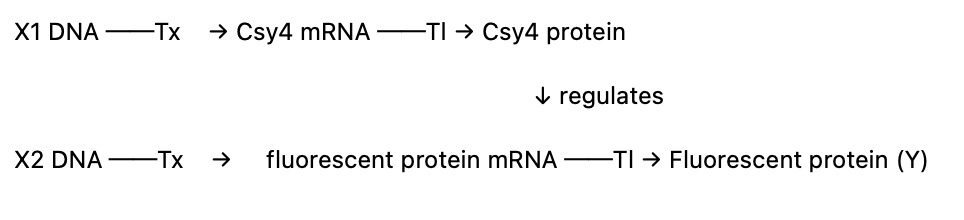
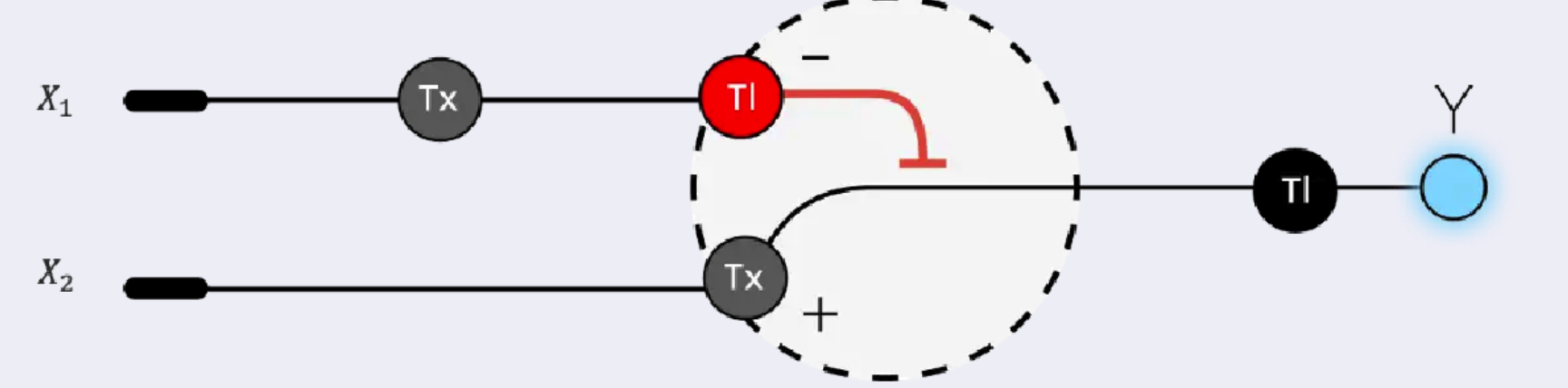
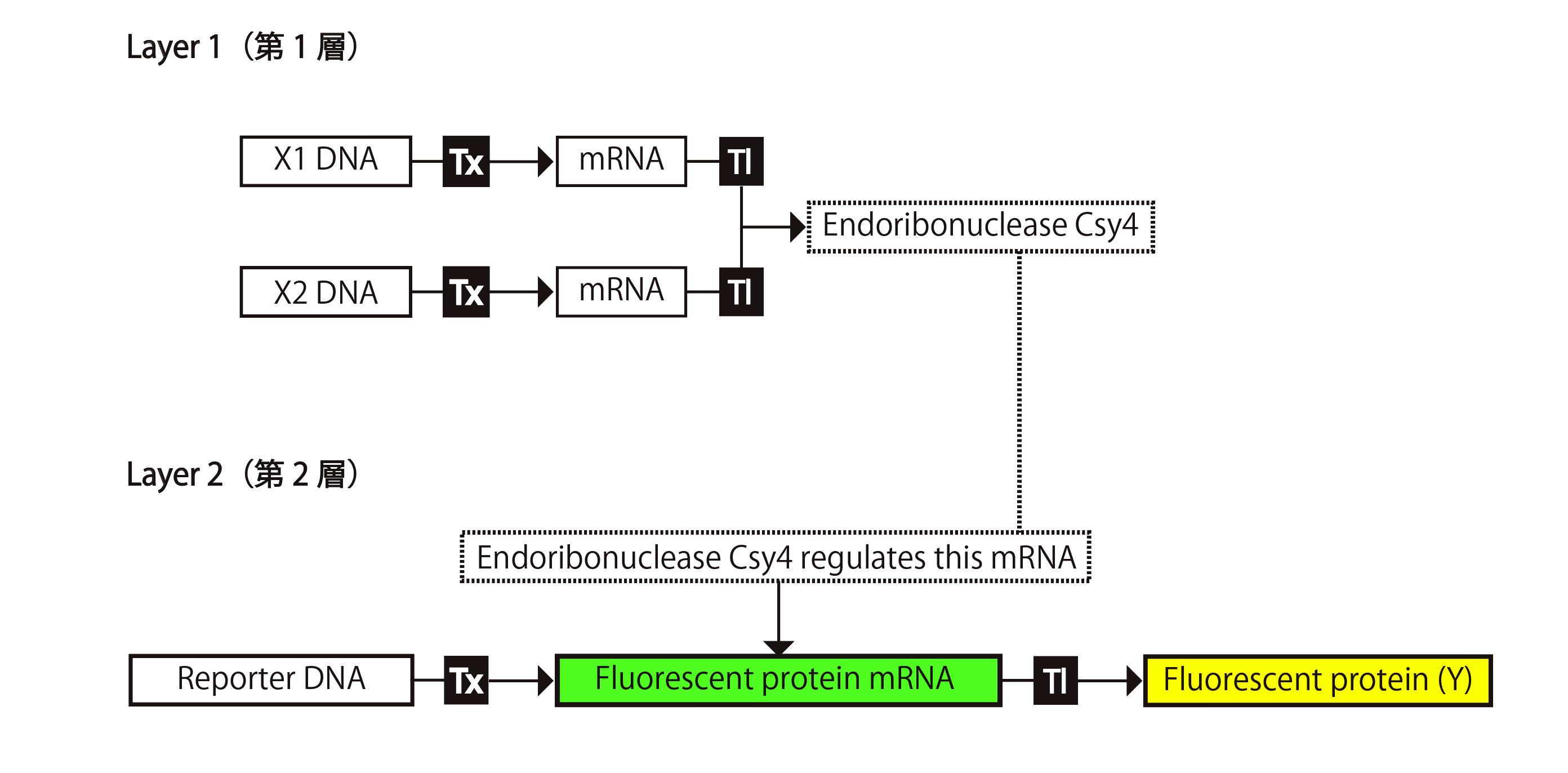
・Tx = transcription(転写)
・Tl = translation(翻訳)
コンピュータのニューラルネットワークのような計算を、細胞の中で DNA・RNA・タンパク質を使って行う遺伝子回路。
従来の遺伝子回路が Boolean 的な ON/OFF 回路として扱われるのに対し、
IANNs は 重み付き入力の統合や、しきい値的な応答のような、ニューラルネットワーク的な計算を目指すもの
IANNs は、従来の Boolean 型遺伝子回路よりも、複数の入力を重み付きで統合し、連続的で柔軟な出力を出せる点が利点である。
さらに、多層化によって、単純なON/OFF論理では難しい複雑な判定やパターン認識が可能になる。
IANNs have advantages over traditional Boolean genetic circuits because they can integrate multiple inputs with different weights and produce continuous, flexible outputs. In addition, by using multilayer architectures, they can perform more complex decision-making and pattern recognition that would be difficult to achieve with simple ON/OFF logic alone.
Robust and tunable signal processing in mammalian cells via engineered covalent modification cycles
https://pmc.ncbi.nlm.nih.gov/articles/PMC8971529
Sensing and guiding cell-state transitions by using genetically encoded endoribonuclease-mediated microRNA sensors
https://pubmed.ncbi.nlm.nih.gov/38982158/
Small RNAs, big potential: Engineering microRNA-based synthetic gene circuits
https://www.sciencedirect.com/science/article/pii/S1367593126000013
IANN の応用例として、特定の細胞状態を見分けるセンサーが考えられる。
入力として複数の miRNA や RNA マーカーを使い、それらを重み付きで統合して、条件を満たしたときだけ蛍光タンパク質を出力する。
この方法は、1つのマーカーだけでなく、複数のシグナルの組み合わせで細胞を判断できる点が有用である。
一方で、細胞ごとのばらつき、漏れ発現、部品間干渉、細胞への負荷などが限界となる。
As an application of IANNs, a sensor that identifies specific cell states can be envisioned.
It would use multiple miRNAs or other RNA markers as inputs, integrate them with different weights, and produce a fluorescent protein output only when the required conditions are met.
This approach is useful because it can evaluate a cell based on a combination of signals rather than relying on a single marker.
On the other hand, its limitations include cell-to-cell variability, leaky expression, crosstalk between parts, and cellular burden.
https://www.nature.com/articles/s41467-022-30172-3
Assignment Part 2: Fungal Materials
Mushroom Packaging by Ecovative
https://mushroompackaging.com/
ecovative.com
https://ecovative.com/
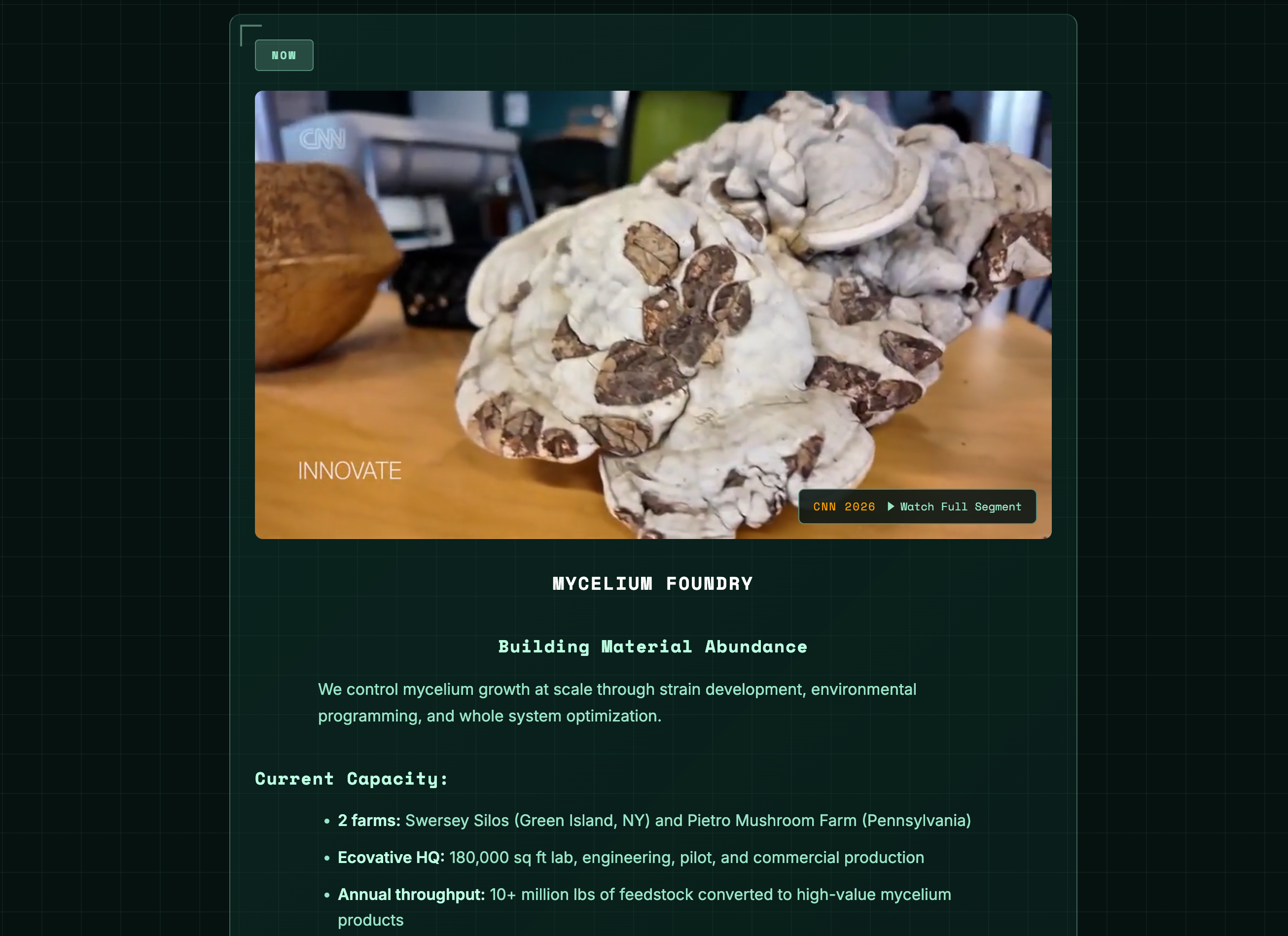
Existing examples of fungal materials 既存の fungal materials の代表例
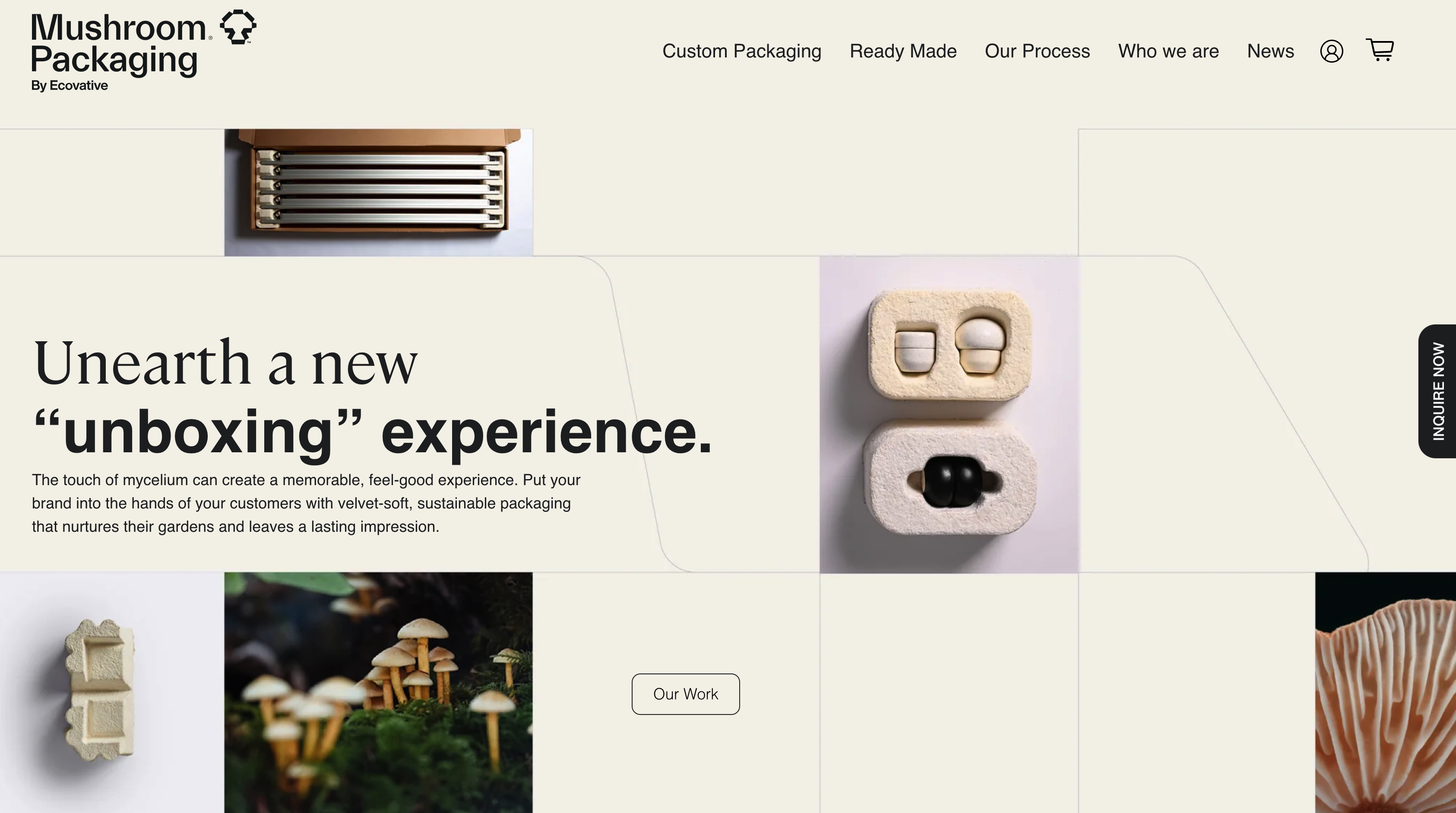
・Mycelium-based materials used for packaging, insulation, decorative elements, furniture, wall coverings, and textiles.
・There is also Mushroom® Packaging, which can be used as an alternative to Styrofoam and plastic, and fungal materials are also being developed for insulation applications.
・菌糸体ベース材料として packaging、insulation、decorative elements、furniture、wall coverings、textiles などに使われている。 ・発泡スチロールやプラスチックの代替として使えるMushroom® Packagingがあり、断熱用途の材料も扱っている。
Critical review of mycelium-bound product development to identify barriers to entry and paths to overcome them
https://www.sciencedirect.com/science/article/abs/pii/S0959652624013076
Mycelium-based composites: An updated comprehensive overview
https://www.um.edu.mt/library/oar/bitstream/123456789/130645/1/Mycelium_based_composites_an_updated_comprehensive_overview%282025%29.pdf
・Advantages: They can be grown from renewable feedstocks and agricultural waste, are lightweight, biodegradable and recyclable, and generally require relatively low energy for production. In particular, they are expected to serve as alternatives to petroleum-based foams in applications such as packaging and insulation.
・長所: 再生可能な原料や農業廃棄物を使って育てられること、軽量であること、生分解性やリサイクル性があること、製造エネルギーが比較的低いことである。
特に梱包材や断熱材では、石油由来フォームの代替として期待されている。
・Disadvantages: They are often vulnerable to water and moisture, can show variability in strength and durability, and are difficult to standardize and scale up for mass production. Although mycelium-based materials are promising, major challenges still include insufficient optimization of manufacturing conditions, maintaining consistent quality control, and achieving large-scale production.
・短所: 水や湿気に弱くなりやすいこと、強度や耐久性のばらつき、標準化や大量生産の難しさである。
菌糸体材料は有望だが、製造条件の最適化不足や一貫した品質管理、スケールアップが大きな課題だとされている。
I would like to engineer fungi to produce building materials that are better suited to Japan’s hot and humid climate, with improved water resistance, fast drying, and the ability to signal deterioration when moisture levels become too high.
This is important because humidity and condensation in Japan often lead to mold growth, and building materials also need to withstand the heavy rains of the rainy season and typhoon season.
Compared with bacteria, fungi are more suitable for this purpose because their three-dimensional mycelial networks can themselves be grown into material structures, and they can also make use of plant-based waste.
For these reasons, fungi are a promising platform for synthetic biology in building materials.
日本の高温多湿な気候に合うように、耐水性と速乾性が高く、湿気が多いと劣化を知らせる菌類建材を作るように菌類を改変したい。
日本では湿気や結露がカビの原因になりやすく、梅雨や台風の時期の大雨にも対応できる建材が重要だからである。
菌類は細菌よりも、三次元の菌糸ネットワークそのものを材料として育てられ、植物系廃棄物も利用しやすいので、建材の合成生物学に向いていると考える。
Unlocking the magic in mycelium: Using synthetic biology to optimize filamentous fungi for biomanufacturing and sustainability
https://pmc.ncbi.nlm.nih.gov/articles/PMC9900623