THREE Final Project Ideas
IDEA 1: YOKAI Interface
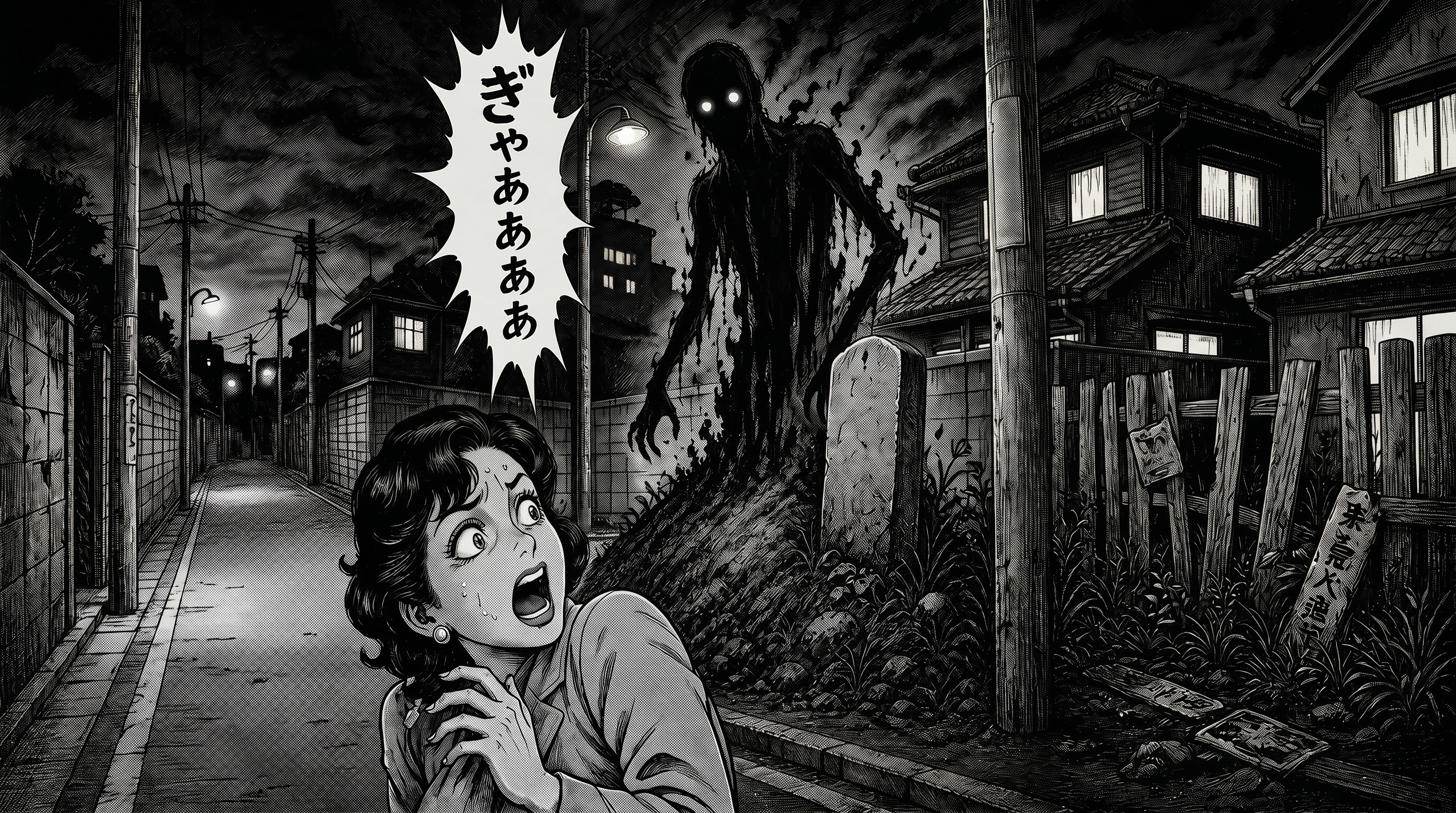
Image:DeeVid AI Agent
Concept:
ENG:
Traditionally in Japan, yokai have been described as presences that emerge when the boundaries between natural phenomena, humans, animals, objects, and places begin to waver.
The uncanny is not something that is always “there,” but rather an emergence that occurs when a person, a place, and a set of conditions rarely align.
The human body is not only a microclimate that emits heat, humidity, breath, and volatile compounds, but also carries an individual-specific microbiome.
Therefore, the presence of a person in a place does not merely interfere temporarily with its local ecology;
it also leaves an accumulating trace of microbial relations.
Yokai Interface imagines a site in which such invisible accumulations of relation rise, at certain moments, into uncanny presence.
JPN:
古くから日本では、妖怪は自然現象、人間、動物、物、場所の境界が揺らぐときに現れる存在として語られてきた。
怪異は、そこに常に「いる」ものではなく、人と場所と条件がまれに重なったときに起きる出現である。
人間の身体は、熱、湿度、呼気、揮発成分を放つ超微気象であるだけでなく、個体ごとに異なる常在菌叢を伴っている。
そのため、人がある場所にいることは、その場の生態系に一時的に干渉するだけでなく、微生物的な関係の痕跡を蓄積させることでもある。
Yokai Interface は、そうした見えない関係の堆積が、ある瞬間に怪異として立ち上がる場を構想する。
Point 1 “The Body as a Microclimate” 「超微気象」としての身体
I think of the human body as a “microclimate” that constantly emits heat, humidity, breath, volatile compounds, and disturbances in airflow.
This microclimate affects the microorganisms that inhabit the body from within, while outwardly, a person’s mere presence subtly alters local environmental conditions.
In other words, simply by being there, a person rewrites the “climate” of a place for the biological materials that inhabit it.
These bodily emissions do not merely accompany the human body;
they subtly reshape the local conditions under which microbes survive, grow, move, and accumulate.
私は、人間の身体を、熱、湿度、呼気、揮発成分、気流の乱れを絶えず放出する「超微気象」として捉えている。
その超微気象は、身体の内側では人体に棲む微生物に影響を及ぼし、身体の外側では人がそこにいるだけで局所的な環境条件をわずかに変化させる。
つまり人は、存在するだけで、その場の生物学的素材にとっての「気候」を書き換えているのである。
こうした身体からの放出は、人に付随する現象であるだけでなく、微生物が生存し、増殖し、移動し、蓄積するための局所条件そのものをわずかに書き換えている。
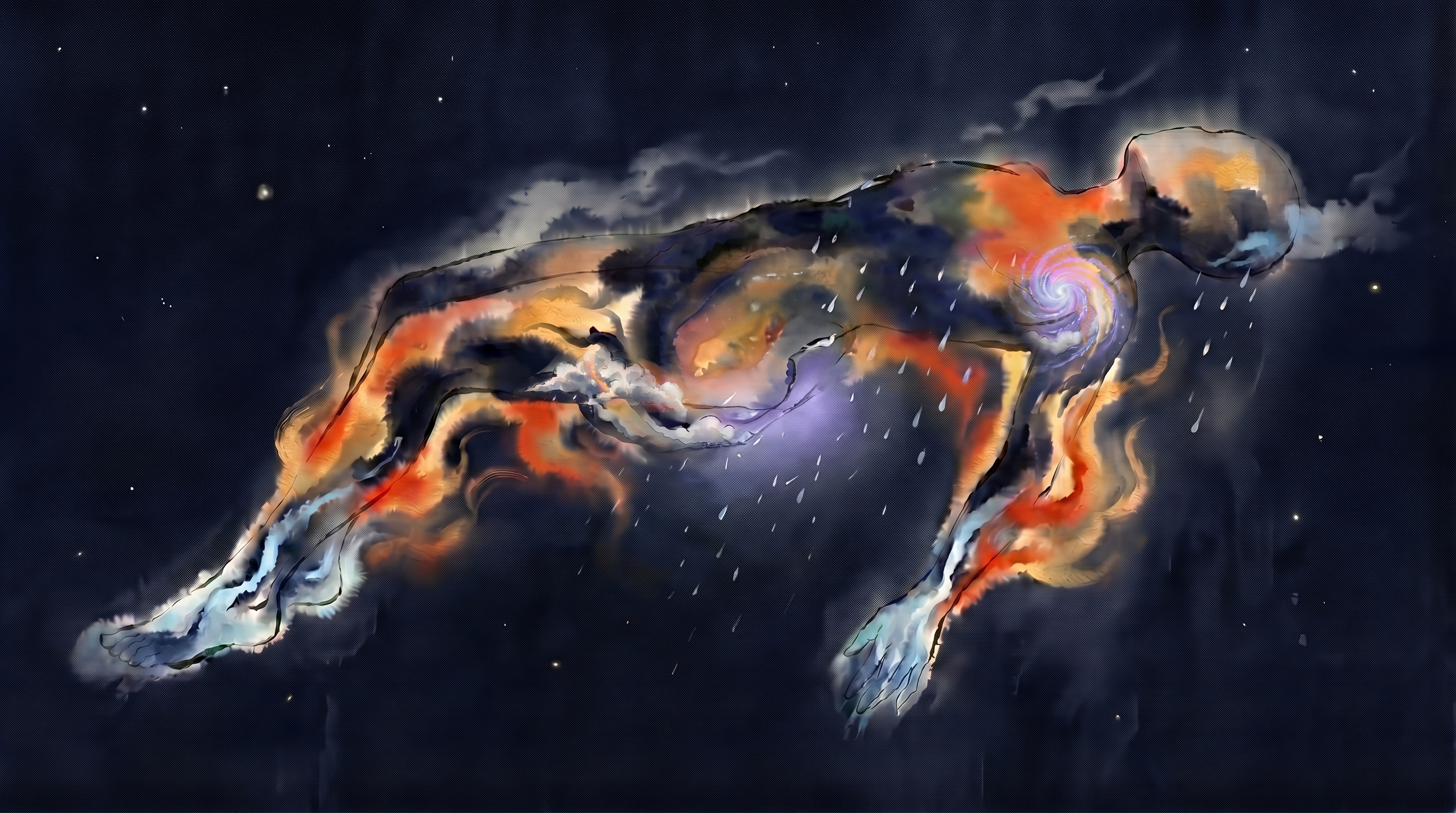
Image:DeeVid AI Agent
Point 2 “The Body as a Carrier of a Distinct Microbiome” 固有の常在菌叢を伴う身体
Each human body carries its own distinct microbiome. Therefore, when a person occupies a place, they do not merely interfere temporarily with the environment;
they also leave microbial traces of relation within it.
Through breath, contact, movement, and duration of stay, the microorganisms they bring—and the effects they produce—interact with the ecology already present in that place, giving rise to selection, exclusion, competition, and coexistence.
These processes gradually accumulate as a history of relations between the person and the place.
人間の身体は、それぞれ固有の常在菌叢を伴っている。
つまり、人がある場所に存在するということは、単に一時的に環境へ干渉するだけではなく、その場に微生物的な関係の痕跡を残すことでもある。
呼吸、接触、移動、滞在を通して持ち込まれた微生物やその影響は、その場にもともとある生態系とのあいだで、選択、排除、競合、共存を引き起こし、
場所と人の関係の履歴として少しずつ蓄積していく。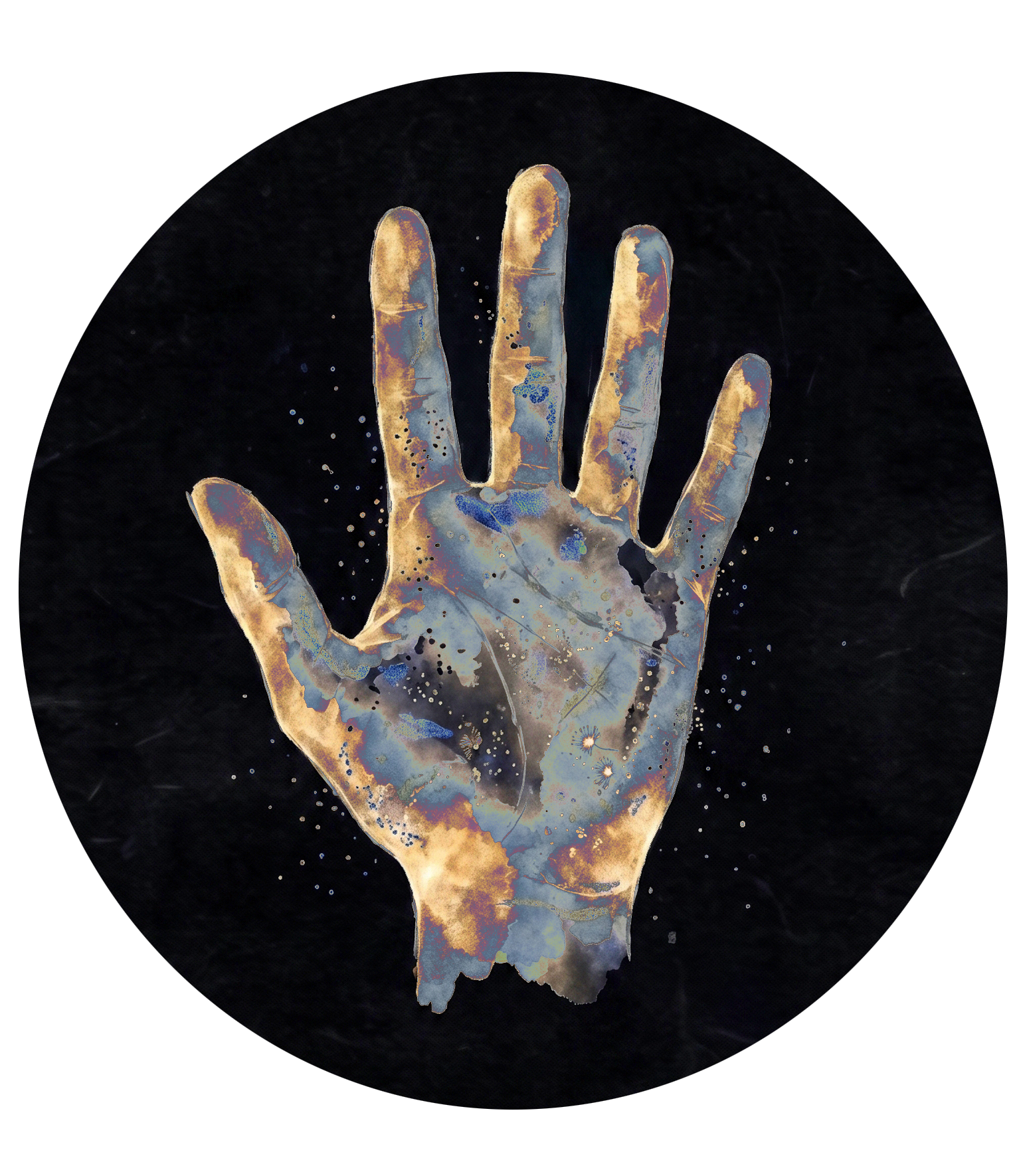
Point 3 “The Uncanny Emerging as an Accumulation of Relations” 関係の堆積として浮かび上がる怪異
Yokai Interface imagines a site—an uncanny emergence—in which the microclimatic and microbial relations accumulated between a person and a place rise temporarily into sensory phenomena once a certain threshold is crossed.
The uncanny is not something intentionally produced by someone, but a fleeting sense of presence that emerges only when a person, a place, and environmental conditions rarely align.
Yokai Interface は、人と場所のあいだに蓄積した超微気象的・微生物的関係が、ある閾値を越えたときに、感覚的現象として一時的に立ち上がる場(怪異)を構想する。 怪異は、誰かが意図して起こすものではなく、人、場所、環境条件がまれに整列したときにのみ、一時的な存在の気配として立ち上がる。
Input
Accumulated human-associated microbiome × Local environmental conditions × Immediate bodily presence
1. Accumulated human-associated microbiome
・human-associated microbial traces accumulated in the site
・residual breath and volatile compounds
・microbial history left through repeated occupation
2. Local environmental conditions
・temperature
・humidity
・light
・airflow
・CO₂ / VOCs
・time of day
3. Immediate bodily presence
・breath
・skin temperature
・perspiration
・motion / stillness
・touch
・bodily proximity
Output
1. Immediate sensory emergence
Sensory phenomena perceived first by the body, such as blurring, haze, faint luminescence, scent, and slight shifts in temperature.
2. Material transformation
Changes in the state of the material itself, such as shifts in opacity, surface whitening, pigment deposition, and changes in texture.
3. Residual trace
A temporary memory that remains after the emergence, such as a fading halo, a delayed stain-like mark, or other short-lived traces.
Technical components
Aim 1
Design and implement a multi-input cell-free system or engineered living material that produces a temporary visible output only when bodily and environmental inputs such as breath, temperature, and humidity align, and test whether an emergence can arise as a sensory phenomenon such as blurring, haze, or faint luminescence.
呼気・温度・湿度などの身体/環境入力が重なったときにのみ一時的な可視出力を生じる、多入力型の cell-free または engineered living material を設計・実装し、にじみ・曇り・微弱発光などの感覚的現象として出現が立ち上がるかを検証する。
Possible technical components:
multi-input threshold logic, cell-free expression or engineered living materials, and sensory outputs such as haze, faint luminescence, or surface change.
多入力型の閾値ロジック、cell-free 発現または engineered living material、にじみ・微弱発光・表面変化などの感覚的出力
the first version of the proposal
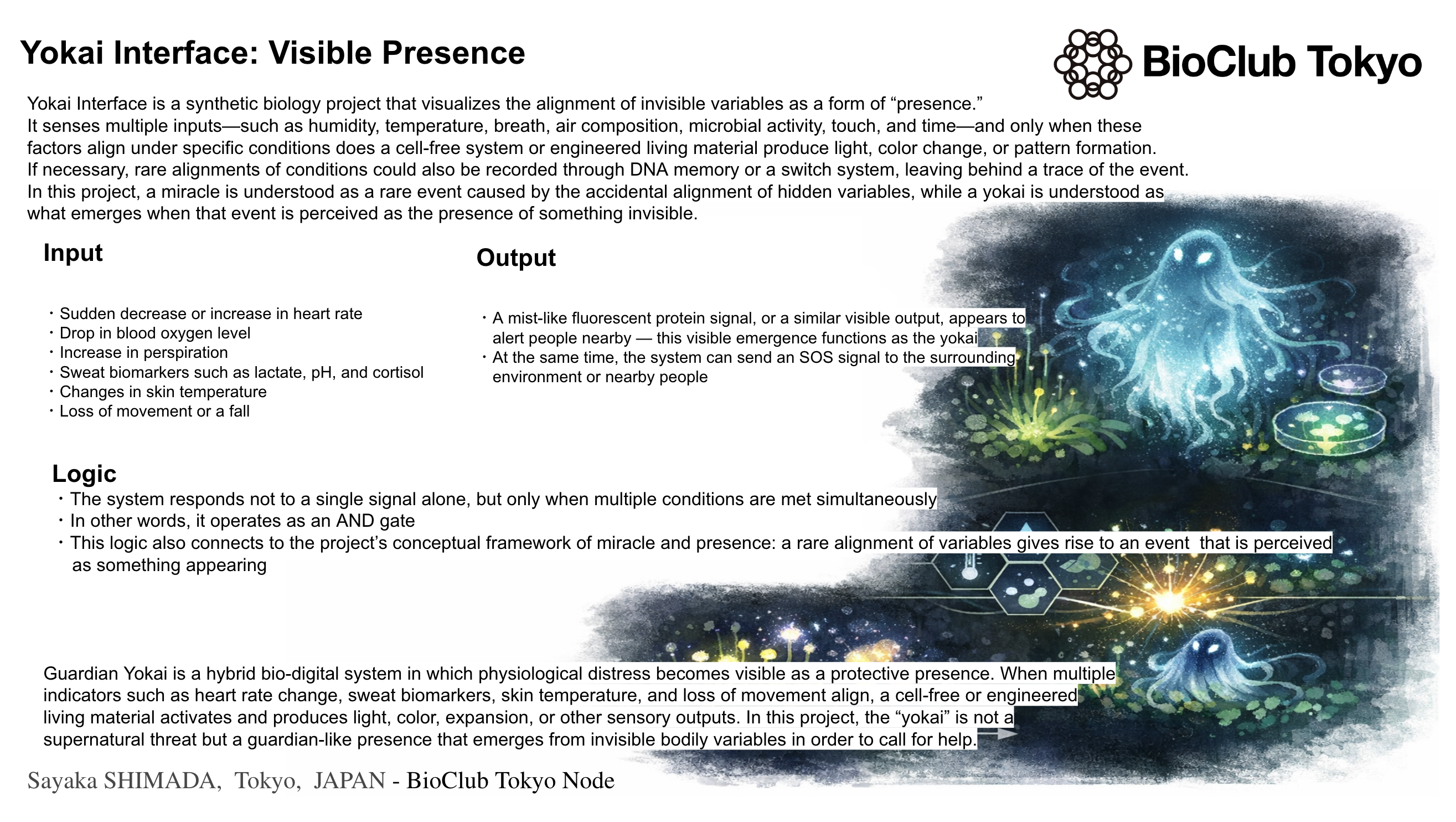
IDEA 2: The Archive That Wants to Die
Concept:
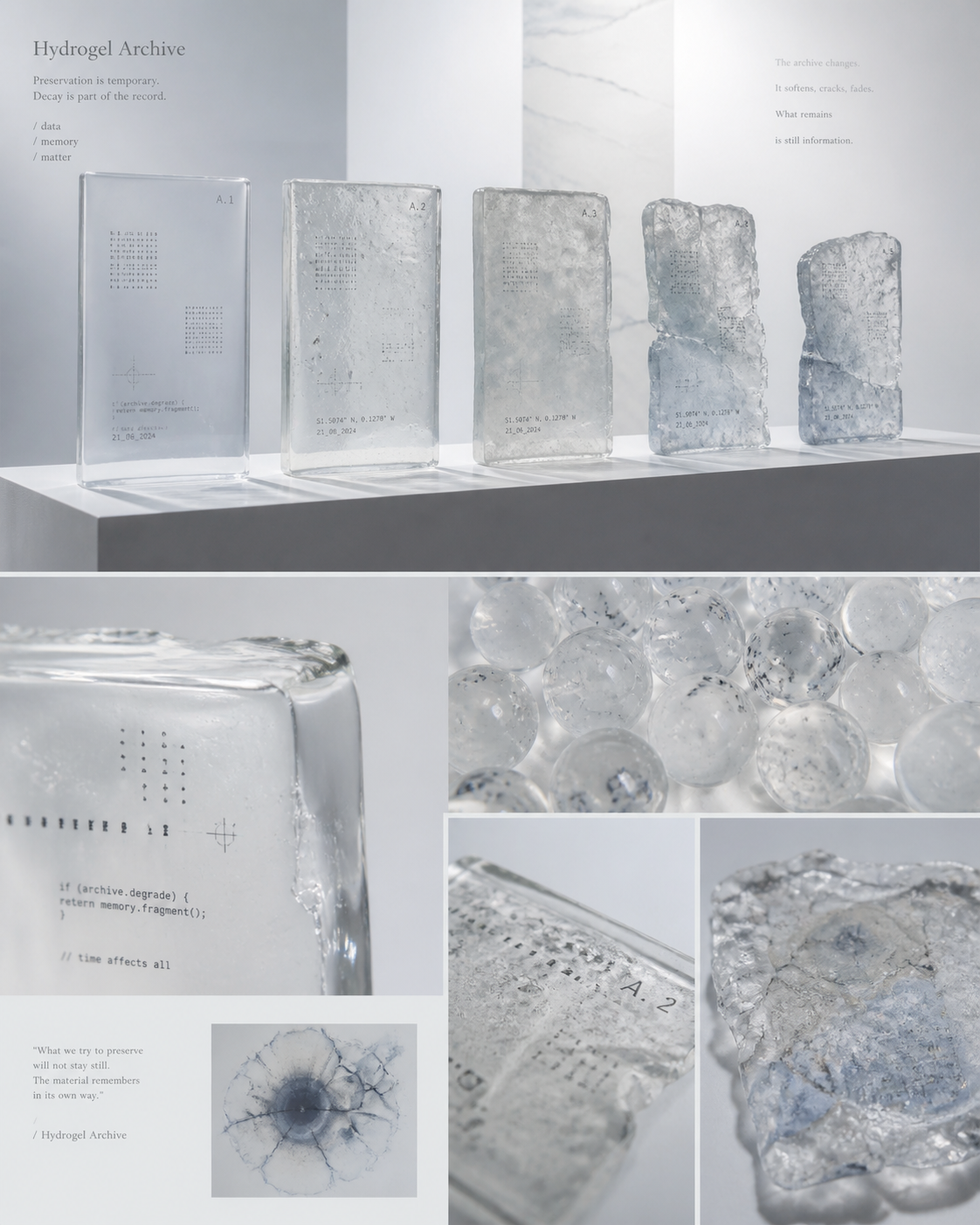
ENG:
The Archive That Wants to Die is a speculative living material designed for data that was stored for management, not memory.
The project focuses on traces accumulated in the cloud: location histories, metadata, abandoned drafts, duplicate images, screenshots, access logs, and files that remain only because deletion feels impossible.
These fragments are not preserved as memories. They are residues of control, prediction, indecision, and automatic storage.
By embedding such data into a self-decomposing living material, the project transforms deletion from an invisible digital command into a visible ecological process.
The archive does not protect data from disappearance. It gives data a body that can decay.
JPN:
《死にたがるアーカイブ》は、記憶のためではなく、管理のために保存されたデータを対象とする、思弁的なリビング・マテリアルのプロジェクトである。
本作が扱うのは、クラウドに蓄積された痕跡である。
位置情報、メタデータ、放置された下書き、重複した画像、スクリーンショット、アクセスログ、といった残す理由もなく保存され続けるファイル。
それらは、思い出として保存されたものではなく、管理、予測、自動保存などによって残された、記録の残滓である。
本プロジェクトでは、こうしたデータを自己分解するリビング・マテリアルに埋め込み、削除という不可視のデジタル操作を、可視的で生態的なプロセスへと変換する。
アーカイブはデータを消滅から守るのではなく、データが朽ちるための身体を持つ。