Week 7: Genetic Circuits Part II: Neuromorphic Circuits
Assignment Part 1: Intracellular Artificial Neural Networks:
- What advantages do IANNs have over traditional genetic circuits, whose input/output behaviors are Boolean functions?
Graded Response vs. Binary Logic: Traditional circuits work like a light switch (ON or OFF). IANNs work like a dimmer switch; they can process analog signals, allowing the cell to respond to varying concentrations of a molecule rather than just its presence or absence.
Signal Integration (Weighting): In a perceptron model, different inputs can have different “weights.” This means the cell can prioritize one environmental signal (like a toxin) over another (like a nutrient) before making a final decision.
Noise Filtering: Biological environments are “noisy.” IANNs are more robust because they require a specific threshold of combined signals to fire, preventing the cell from reacting to random molecular fluctuations.
- Describe a useful application for an IANN; include a detailed description of input/output behavior, as well as any limitations an IANN might face to achieve your goal.
- Application: Selective Cancer Cell Classification.Input/Output Behavior: The inputs ($X_1, X_2, X_3$) are specific intracellular biomarkers (like certain miRNAs or transcription factors) that are only high in cancer cells.
- The output ($Y$) is a “kill switch” protein (like BAX or Caspase) that triggers apoptosis.
- The Logic: The IANN calculates the sum of these markers. If the combined “score” exceeds a set threshold, the cell is identified as cancerous and the kill switch is activated.
- Metabolic Burden: Running a complex neural network inside a cell consumes a lot of energy and ribosomes, which might slow down the cell’s natural growth.
- Crosstalk: Synthetic components might accidentally interact with the cell’s native pathways, leading to “leaky” expressions (the output turning on when it shouldn’t).
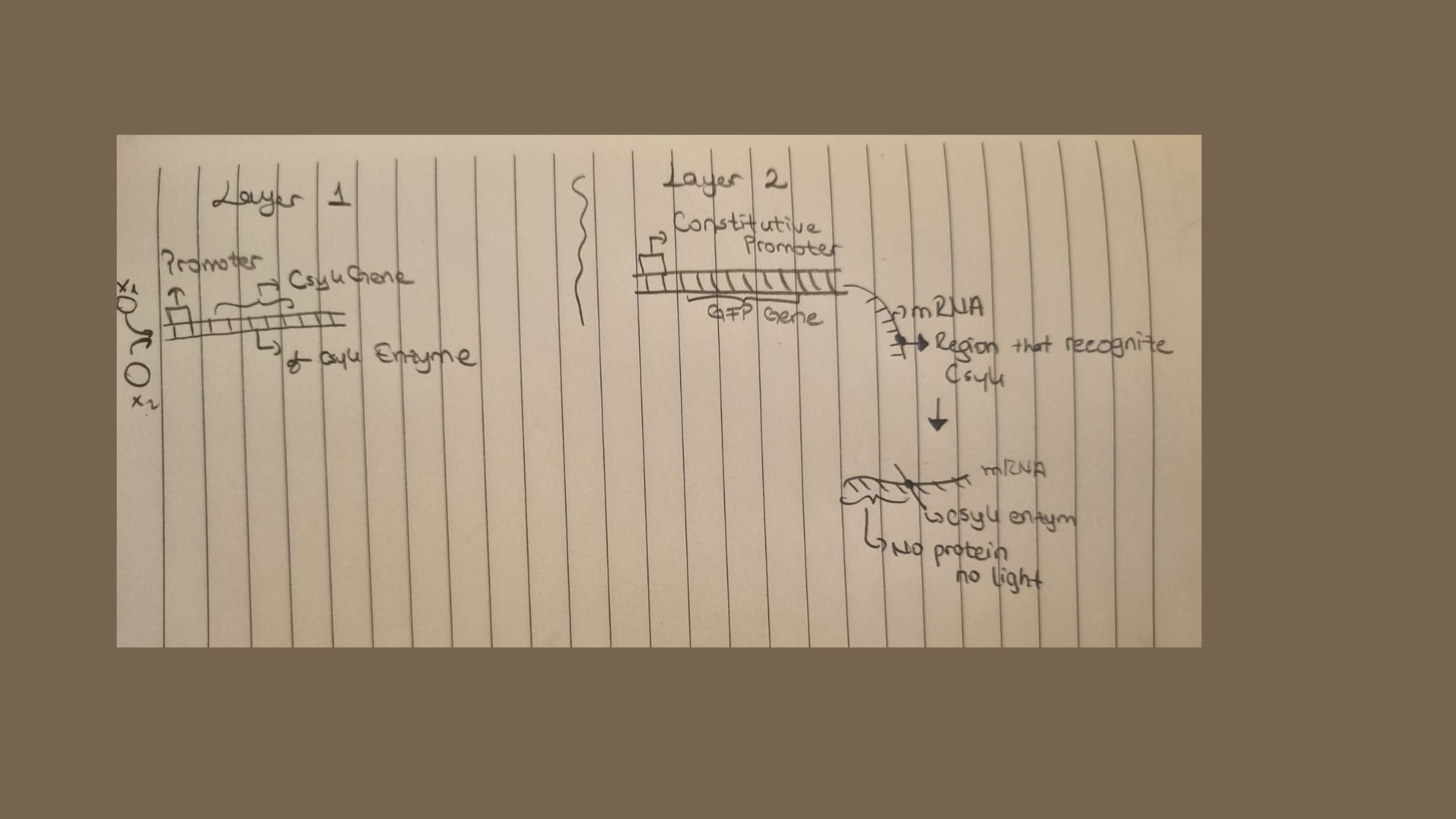
- Below is a diagram depicting an intracellular single-layer perceptron where the X1 input is DNA encoding for the Csy4 endoribonuclease and the X2 input is DNA encoding for a fluorescent protein output whose mRNA is regulated by Csy4. Tx: transcription; Tl: translation
Assignment Part 2: Fungal Materials
What are some examples of existing fungal materials and what are they used for? What are their advantages and disadvantages over traditional counterparts?
Examples: Mycelium-based packaging (used as a Styrofoam alternative), fungal leather (like Reishi™ or Mylo™), and acoustic insulation panels.
Advantages: They are 100% biodegradable, carbon-negative (they capture CO2 as they grow), and can be grown on agricultural waste (like sawdust or straw).
Disadvantages: They are generally more hydrophilic (absorb water) than plastics and have lower tensile strength. Also, achieving a consistent texture and growth rate at an industrial scale is challenging.
What might you want to genetically engineer fungi to do and why? What are the advantages of doing synthetic biology in fungi as opposed to bacteria?
- Engineering Goal: We could engineer fungi to secrete specialized enzymes that break down plastic waste or to incorporate minerals into their cell walls to create “self-healing” bio-concrete.
Why Fungi?
- Post-Translational Modifications: As eukaryotes, fungi can perform complex protein folding and glycosylation that bacteria ($E. coli$) cannot.
- Secretory Power: Fungi are natural “secretory machines.” They are much better at pumping large amounts of proteins directly into the surrounding media, making harvesting easier.
- Structural Integrity: Unlike a liquid culture of bacteria, mycelium forms a physical, fibrous matrix that can be molded into 3D s.
Assignment Part 3: First DNA Twist Order Review Part 3: DNA Design Challenge of the week 2 homework. Design at least 1 insert sequence and place it into the Benchling/Kernel/Other folder you shared in the Google Form above. Document the backbone vector it will be synthesized in on your website. For my final project, I am developing “Sentinel Microbes,” a modular bacterial biosensor designed for the early detection of Salmonella. Due to limited wet-lab access, my focus is on high-fidelity in-silico design, protein modeling, and circuit simulation.
Genetic Circuit Design: I designed a synthetic gene circuit consisting of four standardized biological parts (BioBricks):
Promoter (pLsr): A Salmonella-specific responsive element that triggers expression in the presence of AI-2 signaling molecules.
RBS (BBa_B0034): A strong ribosome binding site to ensure efficient translation.
Reporter (sfGFP): A superfolder Green Fluorescent Protein to provide a clear optical output upon pathogen detection.
Terminator (BBa_B0015): A high-efficiency double terminator to prevent transcriptional leakage.
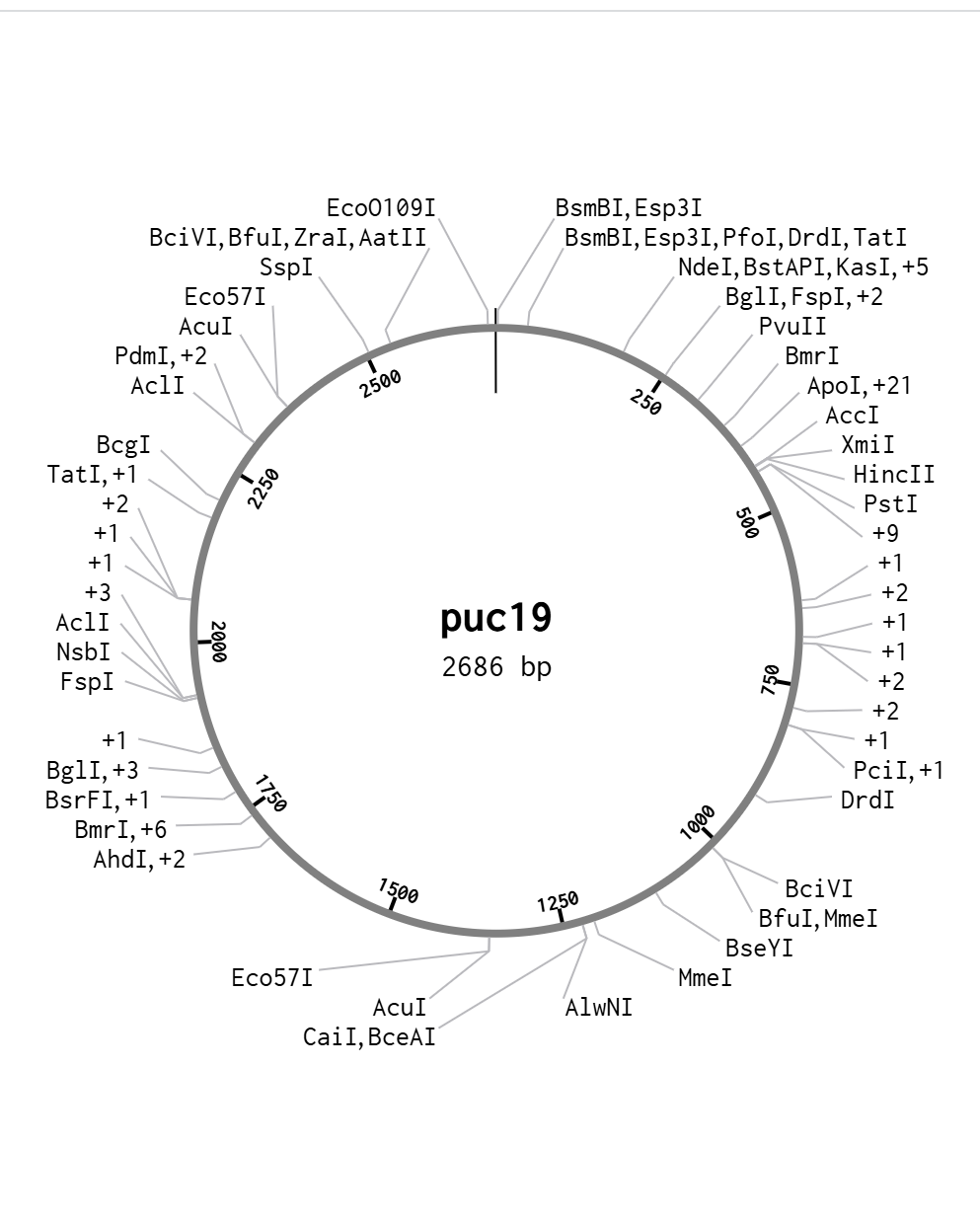
Plasmid Construction: The finalized 2.7kb+ genetic insert was virtually cloned into a pUC19 backbone (selected for its high copy number and robust performance in E. coli). The circular map below confirms the successful integration of the “Sentinel” cassette into the Multiple Cloning Site (MCS).