Individual Final Project

Sentinel Microbes: Target-Specific Intestinal Biosensors for Real-Time Gut Environment Monitoring
Section 1: Abstract
The human intestinal tract is a highly dynamic and complex ecosystem where imbalances in metabolite levels, inflammation markers, and pathogen signals heavily dictate systemic health. Traditional diagnostic modalities often rely on invasive procedures or episodic stool samples, which lack the temporal resolution required to capture transient physiological shifts. Furthermore, classical diagnostic assays are frequently prone to sample degradation during processing and cannot provide real-time, in situ analytical feedback.
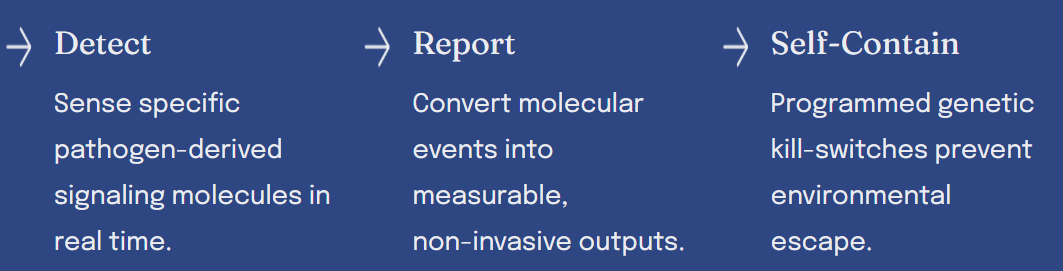
The goal of the Sentinel Microbes project is to engineer target-specific living biosensors tailored exclusively for the mammalian gut environment. Instead of relying on non-specific wearable modalities or static detection systems, this project utilizes genetically modified commensal or probiotic bacterial backbones to actively sense, process, and record localized molecular cues inside the intestine. The hypothesis is that a target-specific genetic circuit engineered within a stable cellular chassis can autonomously detect biomarkers of interest with high precision and convert these inputs into clear, non-invasive diagnostic readouts.
To achieve this, the project involves designing modular genetic circuits with tight promoter regulations, performing codon optimization for the designated bacterial chassis, and validating structural and expression criteria using advanced computational models like AlphaFold and ESMFold. Ultimately, this research explores whether engineered living diagnostics can serve as a robust, continuous, and highly selective alternative to classical diagnostic methods in complex internal environments.
Section 2: Project Aims
Aim 1: Experimental Aim The first aim of this project is to computationally design and evaluate target-specific genetic circuits tailored for micro-environmental sensing in the intestine. Synthetic biological networks, including precise promoter configurations and reporter genes, will be designed and codon-optimized for a suitable bacterial chassis (such as Escherichia coli or Lactobacillus strains). Advanced structural prediction tools, including AlphaFold and ESMFold, will be deployed to analyze the conformation and stability of the sensory proteins and transcriptional regulators. The core goal is to verify sequence integrity and validate that the engineered sensory machinery retains high structural stability under simulated physiological constraints before physical synthesis.
Aim 2: Development Aim The second aim focuses on shifting from computational modeling to in vitro and in vivo wet-lab validation at the local research node. The synthetic gene circuits will be assembled, cloned into high-copy expression vectors, and transformed into the designated bacterial host. Following successful colony validation and quality control, bacterial culturing will be established to measure circuit induction dynamics in response to varying concentrations of target intestinal biomarkers. Furthermore, the performance, kinetic response, and cross-reactivity of the living biosensors will be thoroughly tested under matrix conditions that mimic the complex, chemically diverse environment of the mammalian gut.
Aim 3: Visionary Aim The third and long-term aim of the Sentinel Microbes project is to pioneer an autonomous, real-time diagnostic platform that continuously maps internal physiological states without clinical intervention. If the living biosensors demonstrate strong environmental tolerance and high signal fidelity, they can be adapted to output clear colorimetric, fluorescent, or downstream chemical signals. In the future, this approach could lay the groundwork for non-invasive, over-the-counter proactive screening tools, shifting healthcare from reactive disease management to real-time, preventative monitoring of metabolic and inflammatory gut disorders.
Section 3: Background & Literature Context
Recent breakthroughs from leading synthetic biology groups, such as the Baker Lab and researchers at the Wyss Institute, demonstrate that living cellular systems can be programmatically rewired to serve as intelligent diagnostics and therapeutics (Quijano-Rubio et al., 2021). By leveraging modular transcription factors and synthetic riboswitches, engineered microbes can monitor chemical fluxes within living organisms. However, executing these computational designs inside the gastrointestinal tract introduces significant hurdles. Most engineered biosensors lose their structural integrity or fail to maintain stable expression due to the highly acidic, low-oxygen, and enzymatically aggressive environment of the intestine.
Furthermore, engineered microbes face a profound physiological bottleneck when distinguishing between structurally homologous metabolites, leading to false-positive or leaky circuit readouts. Consequently, a distinct gap remains between theoretical genetic circuit design and the engineering of robust, target-specific living systems capable of reliable operation in vivo.
Bioethical, Safety, and Public Health Considerations Deploying genetically modified microorganisms (GMOs) inside an animal or human intestinal tract introduces vital bioethical and biosafety responsibilities. In alignment with the principal of non-maleficence, we must prevent unintended consequences such as the horizontal gene transfer of synthetic antibiotic resistance markers to wild-type gut flora. To safeguard public health and environment, the design incorporates autonomous containment strategies, ensuring the microbes cannot survive outside the target host matrix.
From a justice perspective, this biotechnology should be designed with cost-effective bioproduction workflows in mind to guarantee equitable global access once translated. Responsibility also mandates that diagnostic outputs are precise and clear, avoiding patient misinterpretation of multifaceted physiological stress or inflammation parameters.
Section 4: Experimental Design & Workflow
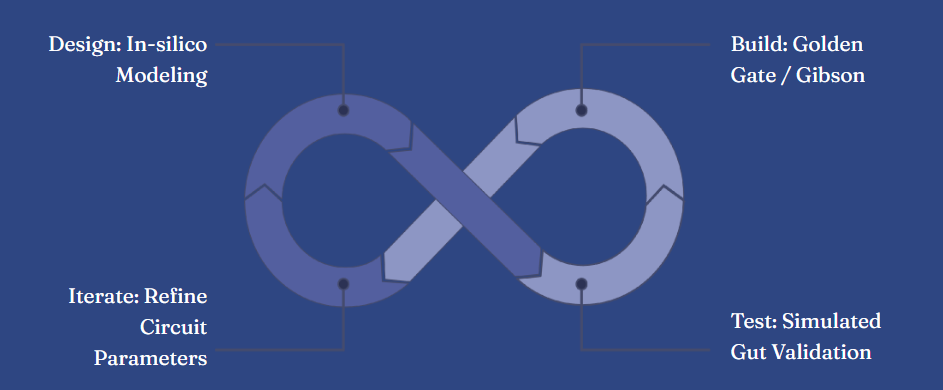
The optimized DNA sequences comprising the sensory promoters, transcription factors, and reporter modules will be synthesized and cloned into high-copy expression plasmids via commercial synthesis providers (such as Twist Bioscience). The physical constructs will be delivered to the local laboratory node for execution.
☐ Pipetting & Basic Liquid Handling
☑ Lab Safety & Biosafety Level 1/2 Protocols
☑ Bioethical & Environmental Risk Considerations
☑ DNA Construct Design & Codon Optimization
☑ Digital Sequence Databases (NCBI, UniProt, Benchling)
☑ Vector Cloning & Plasmid Mapping via Benchling
☑ Bacterial Transformation & Culturing (E. coli / Probiotics)
☑ Cell Processing (Centrifugation, Lysis, Quality Control)
☑ Secondary Structure & Transcriptional Profiling
☑ Machine Learning-Driven Protein Design (AlphaFold / ESMFold)
DNA Construct Design: The primary molecular technique centers on synthetic gene network engineering. Sensory promoters and transcription factors are mapped, and their codon usage is optimized for efficient expression in the target chassis, preventing translational bottlenecks. Sequences are formatted in Benchling to verify reading frames and eliminate unwanted restriction sites before physical Twist order submission.
Bacterial Processing and Characterization: Following vector transformation, the cellular chassis will be cultured in selective liquid media. Induced cells will undergo centrifugation and structural lysis to isolate reporter proteins, ensuring quantitative monitoring of structural stability and circuit kinetics.
Section 5: Results & Quantitative Expectations
In the preliminary phases of the Sentinel Microbes framework, the modular genetic components were designed, computationally assembled, and structurally verified. The wild-type transcriptional regulators and designed sensor configurations were evaluated via computational folding.
Computational Protocol
Sequence Identification: Retrieved native sensory sequences from the NCBI and UniProt databases.
Codon Optimization: Back-translated the protein segments into DNA optimized for metabolic efficiency within the selected bacterial host.
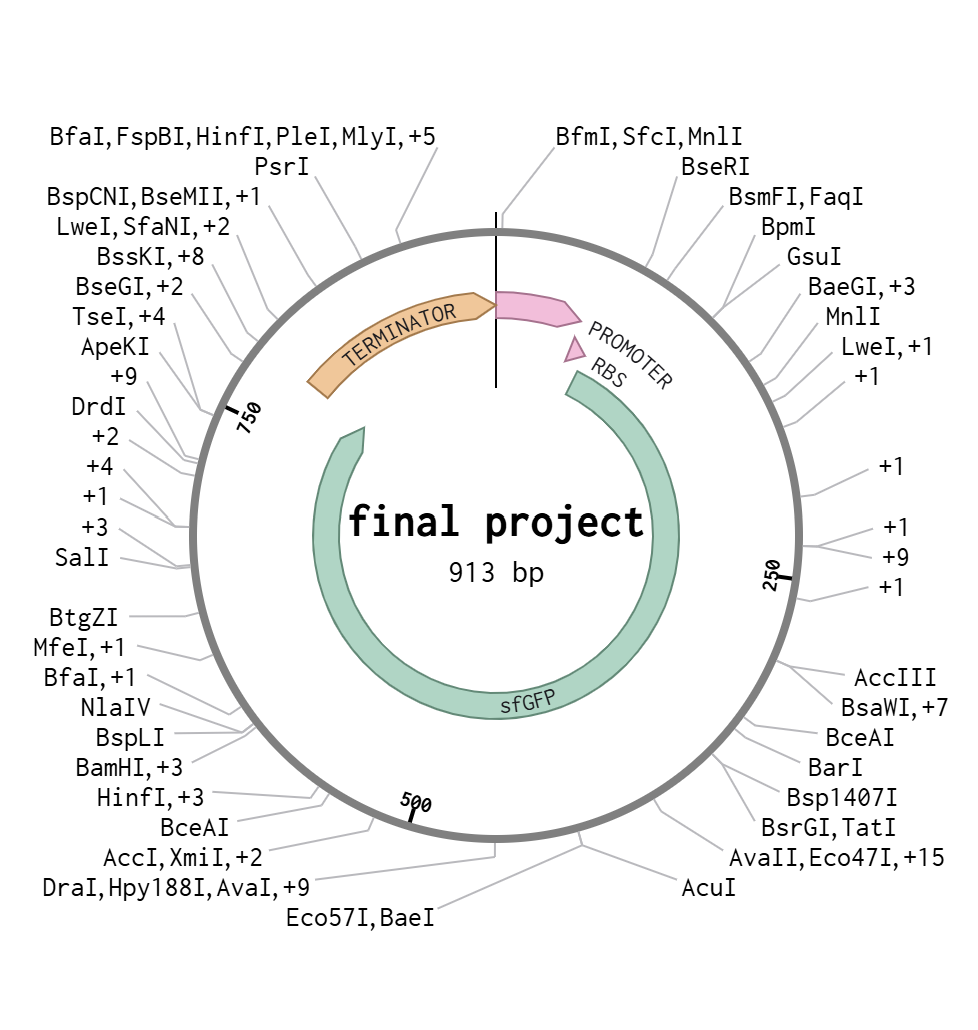
Circuit Validation: Imported the genetic components into Benchling to map structural boundaries and check overlapping frames.
Structural Prediction: Modeled the interaction loops and receptor backbones using AlphaFold and ESMFold to confirm that synthetic tags do not induce structural misfolding or steric clashes.
Synthesis Preparation: Finalized the 777+ bp modular constructs for array synthesis and vector integration.
Challenges & Limitations
A primary limitation is that current findings are strictly based on computational predictions and sequence design. In vitro expression in bacterial hosts can occasionally result in inclusion body formation or poor protein solubility under stressful micro-environmental conditions. To mitigate these risks, alternative chaperone co-expression or down-regulated promoter strategies will be explored if structural instability is observed experimentally.
Section 6: Additional Information & Project Metadata
References :
Quijano-Rubio, A., Yeh, H. W., Park, J., et al. (2021). De novo design of modular and tunable protein biosensors. Nature, 591(7850), 485–491. https://doi.org/10.1038/s41586-021-03258-z
Riglar, D. T., & Silver, P. A. (2018). Engineering diagnostics and therapeutics for the gut. Nature Reviews Microbiology, 16(4), 214–225. https://doi.org/10.1038/s41579-018-0001-1
Mimee, M., Tucker, A. C., Voigt, C. A., & Lu, T. K. (2015). Programming a human commensal bacterium, Bacteroides thetaiotaomicron, to sense and respond to stimuli in the murine gut. Cell Systems, 1(1), 62–71. https://doi.org/10.1016/j.cels.2015.06.001
Charbonneau, M. R., Isabella, V. M., Li, N., et al. (2020). Developing a synthetic biology platform for live biotherapeutic products in humans. Nature Biotechnology, 38(10), 1216–1224. https://doi.org/10.1038/s41587-020-0488-2
Courbet, A., Endy, D., Renard, E., Molina, F., & Bonnet, J. (2015). Detection of medical biomarkers with synchronized bacterial cell amplifiers. Science Translational Medicine, 7(289), 289ra83. https://doi.org/10.1126/scitranslmed.aaa3601
Supplies & Estimated Cost
Custom Gene Synthesis (Twist Bioscience Modular Blocks): ~$350
Competent Bacterial Host Strains (Chassis Selection): ~$120
Selective Media, Reagents, and Growth Additives: ~$90
Circuit Induction Chemicals & Biomarker Analogs: ~$60
Plasmid Extraction and Lysis Purification Kits: ~$130
Assay Plates & Optical Consumables: ~$110
General Molecular Biology Consumables (Tips, Tubes, Gels): ~$150
Estimated Total Project Budget: ~$1,010