Week 1 HW: Principles and Practices
 GammaShroom
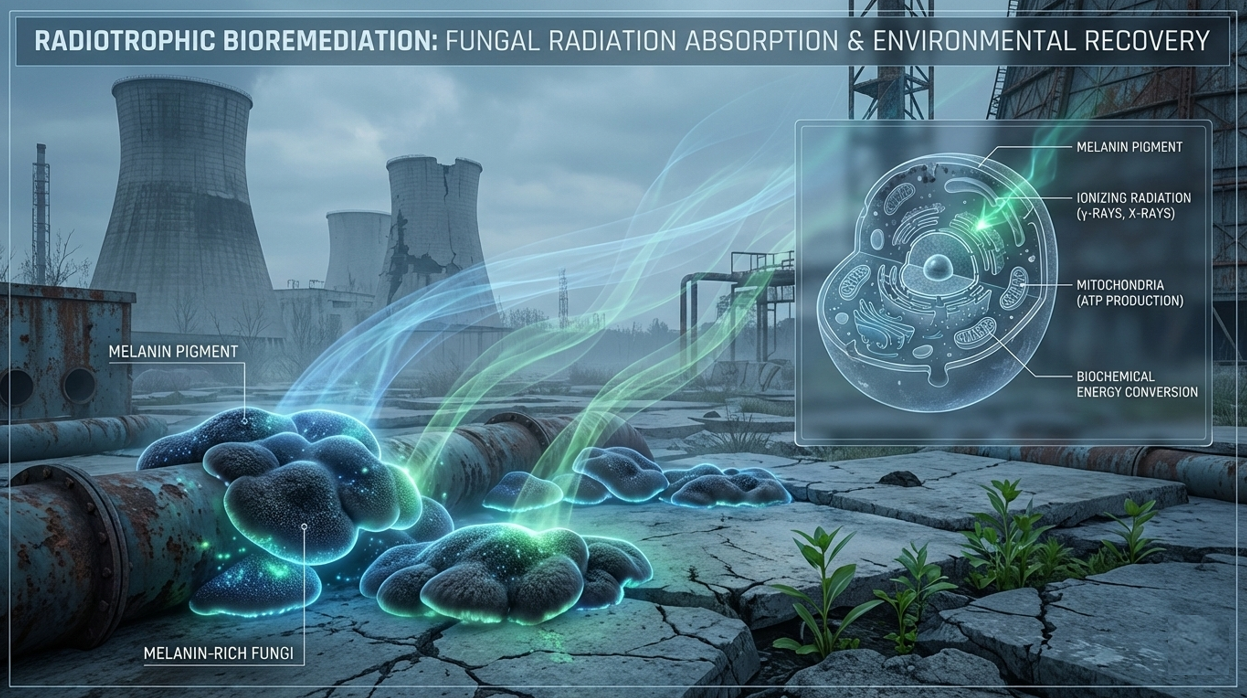
1. First, describe a biological engineering application or tool you want to develop and why. This could be inspired by an idea for your HTGAA class project and/or something for which you are already doing in your research, or something you are just curious about.
The project I want to develop is called “GammaShroom”, a biological engineering platform that uses radiation-absorbing fungi to help remediate and protect environments exposed to nuclear radiation. This idea is inspired by the discovery of radiotrophic fungi found in places like Chernobyl, where certain species are able to survive and even grow in high-radiation environments by using melanin to interact with ionizing radiation.
The goal of this project is to engineer or optimize these fungi so they can be used as living biological tools for radiation shielding and environmental cleanup. For example, they could be deployed in contaminated sites, nuclear waste storage facilities, or even future space missions where radiation protection is critical. I am interested in this application because it combines microbiology, synthetic biology, and environmental engineering to address a real-world problem. It also represents a sustainable alternative to traditional chemical or mechanical radiation barriers, using biological systems that can self-repair and adapt to harsh conditions.
2. Next, describe one or more governance/policy goals related to ensuring that this application or tool contributes to an “ethical” future, like ensuring non-malfeasance (preventing harm). Break big goals down into two or more specific sub-goals. Below is one example framework (developed in the context of synthetic genomics) you can choose to use or adapt, or you can develop your own. The example was developed to consider policy goals of ensuring safety and security, alongside other goals, like promoting constructive uses, but you could propose other goals for example, those relating to equity or autonomy.
It’s important to have clear that RadiomycoShield involves releasing or using engineered microorganisms in sensitive environments, it is important to establish governance goals that prioritize safety, environmental protection, and responsible innovation. One major goal is to ensure biosafety and environmental containment. This means preventing unintended ecological disruption if engineered fungi were to spread beyond their intended location. A related sub-goal is to develop strict monitoring systems that track how these organisms behave over time in real environments.
Another crucial governance goal is to promote beneficial and equitable use of the technology. Since radiation contamination affects communities worldwide, access to this technology should not be limited only to wealthy countries or private corporations. A sub-goal here is to encourage international collaboration and shared standards so that remediation tools can be safely and fairly distributed. Together, these goals aim to balance innovation with ethical responsibility, ensuring that the technology reduces harm while maximizing its positive environmental and social impact.
3. Next, describe at least three different potential governance “actions” by considering the four aspects below (Purpose, Design, Assumptions, Risks of Failure & “Success”). Try to outline a mix of actions (e.g. a new requirement/rule, incentive, or technical strategy) pursued by different “actors” (e.g. academic researchers, companies, federal regulators, law enforcement, etc). Draw upon your existing knowledge and a little additional digging, and feel free to use analogies to other domains (e.g. 3D printing, drones, financial systems, etc.).
Purpose: What is done now and what changes are you proposing?
Design: What is needed to make it “work”? (including the actor(s) involved - who must opt-in, fund, approve, or implement, etc)
Assumptions: What could you have wrong (incorrect assumptions, uncertainties)?
Risks of Failure & “Success”: How might this fail, including any unintended consequences of the “success” of your proposed actions?
- International Safety Framework for Radiotrophic Fungal Engineering
Purpose
-Current Situation: Research on radiation-absorbing fungi is still emerging and is regulated under general biosafety frameworks that were not designed specifically for organisms deployed in radioactive environments.
-Proposed Change: Develop a specialized international safety framework focused on engineered radiotrophic fungi used for environmental remediation, including stricter evaluation before field deployment.
Design
-Actors: International environmental agencies (e.g., IAEA, UNEP), national biosafety regulators, academic research institutions, and biotech companies.
-Implementation:
-Require environmental risk assessments before outdoor fungal deployment.
-Establish standardized containment and monitoring protocols.
-Create certification systems for laboratories working with engineered fungi.
-Promote international collaboration to harmonize safety standards.
Assumptions
-Specialized regulation will improve safety without severely slowing innovation.
-Researchers and companies will comply with new international standards.
-Environmental impact can be reasonably predicted through controlled testing.
Risks of Failure & “Success”
-Failure Risks: Inconsistent enforcement across countries and regulatory loopholes.
-Unintended Consequences of Success: Excessive regulation may discourage research investment and slow the adoption of beneficial remediation technologies.
- Funding Incentives for Sustainable Radiation Bioremediation Technologies
Purpose
-Current Situation: Development of fungal bioremediation technologies is limited by high research costs and uncertain commercial returns.
-Proposed Change: Introduce financial incentives and public funding programs to support safe and sustainable fungal remediation technologies.
Design
-Actors: Government science agencies, environmental ministries, international funding organizations, and biotech startups.
-Implementation:
-Offer research grants for radiation bioremediation projects.
-Provide tax incentives for companies developing eco-friendly remediation tools.
-Support public-private partnerships to scale pilot projects.
-Fund long-term safety and environmental impact studies.
Assumptions
-Financial support will accelerate innovation and responsible development.
-Companies will prioritize sustainability when incentives are aligned.
-Governments can effectively evaluate project impact.
Risks of Failure & “Success”
-Failure Risks: Misallocation of funds or exaggerated sustainability claims.
-Unintended Consequences of Success: Overinvestment in one technology could reduce funding for alternative remediation approaches.
- Global Open Environmental Monitoring Network for Fungal Remediation
Purpose
-Current Situation: Monitoring of radioactive remediation sites is fragmented and data is often inaccessible across institutions.
-Proposed Change: Create a shared international platform that tracks fungal remediation performance and environmental safety indicators in real time.
Design
-Actors: Academic institutions, environmental agencies, international organizations, and data scientists.
-Implementation:
-Develop a centralized open-access monitoring database.
-Use standardized sensors and reporting protocols.
-Establish international data-sharing agreements.
-Apply AI tools to analyze environmental trends.
Assumptions
-Institutions will be willing to share environmental data.
-Cybersecurity systems can protect sensitive information.
-Standardized data collection can be widely adopted.
Risks of Failure & “Success”
-Failure Risks: Limited participation and inconsistent data quality.
-Unintended Consequences of Success: Open environmental data may raise security or geopolitical concerns.
4. Next, score (from 1-3 with, 1 as the best, or n/a) each of your governance actions against your rubric of policy goals. The following is one framework but feel free to make your own:
| Does the option: | Option 1: International Safety Framework | Option 2: Funding Incentives | Option 3: Global Monitoring Network |
|---|---|---|---|
| Enhance Biosecurity | |||
| • By preventing incidents | 1 (Strict safety standards reduce accidental release risks) | 3 (Funding does not directly prevent incidents) | 2 (Monitoring detects risks but doesn’t prevent them) |
| • By helping respond | 2 (Regulatory coordination helps but may be slow) | 3 (Financial tools don’t support emergency response) | 1 (Real-time data enables rapid response) |
| Foster Lab Safety | |||
| • By preventing incident | 1 (Mandatory lab certifications improve safety) | 3 (Incentives don’t directly affect lab safety) | 2 (Shared safety data improves practices indirectly) |
| • By helping respond | 2 (Oversight structures support incident reporting) | 3 (No emergency response function) | 1 (Monitoring network helps detect and track incidents) |
| Protect the environment | |||
| • By preventing incidents | 1 (Pre-deployment risk assessments protect ecosystems) | 2 (Encourages safer design but doesn’t regulate) | 2 (Environmental tracking supports prevention indirectly) |
| • By helping respond | 2 (Regulatory bodies coordinate cleanup) | 3 (No direct response mechanism) | 1 (Early detection supports rapid mitigation) |
| Other considerations | |||
| • Minimizing costs and burdens to stakeholders | 3 (Compliance costs may be high) | 1 (Financial support reduces burden) | 2 (Infrastructure is costly but shared) |
| • Feasibility? | 2 (Requires international cooperation) | 1 (Funding programs already exist in many countries) | 2 (Technical and coordination challenges) |
| • Not impede research | 3 (Strict rules may slow experimentation) | 1 (Encourages research investment) | 2 (Data sharing may raise IP concerns) |
| • Promote constructive applications | 2 (Encourages responsible development) | 1 (Accelerates innovation and scaling) | 1 (Knowledge sharing expands applications) |
5. Last, drawing upon this scoring, describe which governance option, or combination of options, you would prioritize, and why. Outline any trade-offs you considered as well as assumptions and uncertainties. For this, you can choose one or more relevant audiences for your recommendation, which could range from the very local (e.g. to MIT leadership or Cambridge Mayoral Office) to the national (e.g. to President Biden or the head of a Federal Agency) to the international (e.g. to the United Nations Office of the Secretary-General, or the leadership of a multinational firm or industry consortia). These could also be one of the “actor” groups in your matrix.
I would prioritize a hybrid governance strategy that combines the Global Open Environmental Monitoring Network with targeted funding incentives for responsible innovation, supported by limited international safety regulations for high-risk deployments. The monitoring network is essential because it enables early detection of ecological risks and provides transparency about how radiotrophic fungal systems behave in real environments. At the same time, financial incentives encourage researchers and companies to invest in safer and more effective remediation technologies. Focused international regulations should act as a safeguard for projects involving environmental release, ensuring that innovation proceeds responsibly.
The main trade-off in this approach is balancing rapid technological progress with precautionary oversight. Too much regulation could slow innovation, while insufficient oversight could increase ecological risks. This recommendation assumes that sustained international cooperation and funding are achievable, although both remain uncertain. My recommendation is directed toward international environmental and nuclear governance organizations such as the International Atomic Energy Agency and the United Nations Environment Programme, which are positioned to coordinate global monitoring and safety standards.
Weekly Assignment
Reflecting on what you learned and did in class this week, outline any ethical concerns that arose, especially any that were new to you. Then propose any governance actions you think might be appropriate to address those issues. This should be included on your class page for this week.
Reflecting on this week’s material, I developed a deeper understanding of how modern biological engineering builds complexity using modular design principles similar to engineering systems. The concept of design cores and universality showed how complex biological circuits can be assembled hierarchically from composable elements, allowing systems to scale in sophistication while remaining controllable. At the same time, biology introduces a unique layer of complexity through self-replication, meaning engineered systems are not static machines but living programs that can grow and evolve. Learning about advances in protein design, genetic circuits, and large-scale genome engineering highlighted how synthetic biology is rapidly expanding our ability to design biological functions from scratch.
This technical power raises important ethical concerns. One major issue is the intentional release of engineered organisms into complex ecosystems. Even systems designed for remediation or beneficial purposes could disrupt microbial communities or behave unpredictably because living systems replicate and interact dynamically with their environments. Another concern is how access to advanced biological technologies may become uneven, especially for communities most affected by environmental disasters.
To address these challenges, governance strategies should include mandatory long-term ecological monitoring of deployed organisms, transparent reporting of experimental and environmental data, and international cooperation to ensure equitable access to beneficial technologies. Integrating modular engineering principles with ethical oversight can help ensure that increasing biological complexity leads to safer and more responsible innovation.
Assignment (Final Project)
As part of your final project, design one or more strategies to ensure that your project, and what it enables, contributes to growing an ethical biological future.
My final project requires a multi-faceted strategy to ensure that the development of radiation-absorbing fungal technologies contributes to an safe and ethical biological future. The first key approach is integrating biosafety engineering directly into the fungal system, including biological containment strategies and long-term ecological monitoring to minimize unintended environmental effects. The second approach is establishing transparent and secure data-sharing practices that allow researchers and regulatory bodies to evaluate performance and risks while protecting sensitive information from misuse. The third approach is promoting equitable and sustainable deployment by prioritizing access for communities affected by nuclear contamination and ensuring that remediation efforts do not create new ecological burdens. Together, these strategies support a research framework that balances innovation with responsibility, fostering environmental protection, social fairness, and public trust in emerging biotechnologies.
Prompt used for the task (they told us to put it, I think, just in case sjsjs)
I would like to clarify that I did use AI for this work, but as you will see, it was mainly for information organization, because I did the research myself, as well as improving the writing to make it more comfortable for the reader. This is evident in the prompts I used. Thank you very much for reading.
For the pictures:
“A futuristic scientific illustration of radiotrophic fungi absorbing radiation in a post-nuclear environment inspired by Chernobyl. Show dark melanin-rich fungi growing on cracked concrete and metallic surfaces, glowing softly as they absorb invisible radiation waves represented by subtle blue and green energy streams. Include a cross-section view where fungal cells convert radiation into biochemical energy, with stylized mitochondria and molecular structures inside. The scene should blend realism and sci-fi aesthetics, with atmospheric lighting, high detail, and a clean scientific visualization style. Add a sense of environmental recovery, with small plants growing nearby to symbolize bioremediation. Use a cool color palette with luminous accents, high resolution, cinematic lighting, and a professional scientific poster style.”
“A futuristic biotech logo featuring a stylized mushroom inspired by radiation-absorbing fungi, glowing with soft neon green and purple energy. The mushroom cap resembles a subtle mushroom cloud shape but abstract and scientific, not violent. Clean minimal design, smooth vector style, centered composition. Include subtle radiation symbol elements integrated into the mushroom texture. Modern biotech aesthetic, sleek typography reading “GammaShroom” below the icon. White or dark gradient background, high contrast, professional scientific branding style.”
For the homework:
“I am developing a research project on a fungal platform for radiation attenuation and environmental bioremediation. Below is a curated set of academic and institutional sources related to fungal radiation resistance, synthetic biology, environmental remediation, and governance frameworks.
Please synthesize and organize the information from all the provided links into a structured analytical report. The goal is to create a clear, evidence-based overview that helps consolidate current knowledge and identify how each source informs the development of my project.
Organize the response into the following sections:
Overview of Sources Provide a concise summary of each link individually. For each source, identify its main focus, key findings, and relevance to fungal bioremediation or synthetic biology. Explain how it contributes to the broader understanding of the field.
Scientific and Technical Foundations Integrate the sources to describe the core biological and engineering principles involved, including mechanisms of radiation resistance in fungi, bioremediation processes, and relevant synthetic biology tools.
Current Applications and Research Landscape Summarize existing case studies, experimental systems, or technological applications described in the sources. Identify demonstrated capabilities and remaining technical gaps.
Governance, Safety, and Ethical Context Extract and synthesize information related to biosafety, environmental governance, and ethical considerations. Explain how these frameworks relate to responsible project development.
Integrated Insights for Project Development Based on the combined evidence from all sources, summarize key insights that are most relevant to refining and strengthening the project. Highlight opportunities, limitations, and areas requiring further investigation.
The report should maintain an academic tone, use clear scientific language, and explicitly reference how the sources relate to one another. Focus on synthesis and organization rather than speculation.
Sources: Fungal Radiation Attenuators
Melanized fungi thrive on radiation. Studies of Chernobyl isolates and other radiotrophic fungi show that dense melanin layers in cell walls absorb and transduce ionizing radiation. In effect, melanin-rich fungi can “harvest” gamma rays much like plants harvest light. This underpins the idea that engineered, melanized fungal biomass could serve as a living radiation shield.
Space-grown fungi reduce ambient radiation. An ISS experiment with Cladosporium sphaerospermum found that the fungal lawn grew rapidly in microgravity and caused a measurable drop in radiation beneath it compared to a no-fungus control. In quantitative terms, fungal biomass attenuated the local gamma dose rate on orbit. This real-world result supports using fungi as bio-shielding in high-radiation settings.
Directed growth toward radiation (radiotropism). Research notes that some fungi actively grow toward radiation sources (positive radiotropism) and use melanin as an “energy transporter” for metabolism. For example, Chernobyl black molds express more melanin near strong sources and grow faster under irradiation. These observations imply that a radiation-biased growth stimulus could help a bioremediation platform concentrate fungi in hotspot areas.
Fungal Bioremediation Cases
Accumulation of radionuclides. Fungal mycelium naturally binds metals and radionuclides. DOE studies note that fungi accumulated substantial 90Sr, 137Cs and other isotopes in Chernobyl soils. In fact, a 2003 DOE primer explicitly states “fungi are also known to accumulate metals, particularly radionuclides (as observed following the 1986 Chernobyl accident)”. This natural bioaccumulation suggests engineered fungi could be tuned to sequester radioisotopes from contaminated media.
Engineered radiation-resistant strains. Screening of extreme environments has yielded fungi tolerating both radiation and toxins. For instance, Rhodotorula taiwanensis MD1149 (isolated from a contaminated site) grows under 36 Gy/h of gamma radiation at pH 2.3 and survives acute 2.5 kGy doses. It also forms robust biofilms in the presence of mercury and chromium. Such traits make MD1149 a promising chassis for fungal bioremediation of mixed radioactive/heavy-metal wastes. (The genome of MD1149 is sequenced, enabling genetic engineering for enhanced uptake or melanin production.)
Cost‐effective mycoremediation. Fungi are abundant and fast-growing, offering a low-cost cleanup strategy. The DOE primer notes that mycoremediation could rival plant-based phyto-remediation and be deployed on contaminated soils with added nutrients. In practice, researchers have demonstrated fungal biosorption of U, Pu, and other metals in lab reactors. While large-scale field trials remain limited, these case studies show feasibility. Together, these findings motivate designing fungal bioreactors or biofilters for nuclear waste sites.
Synthetic Biology Governance (Risk and Ethics)
Precautionary risk assessment. Reviews of synthetic biology governance emphasize anticipating environmental hazards. For example, Bohua et al. (2023) propose an ethical framework that prioritizes the precautionary principle and rigorous environmental risk assessment before release. This includes analyzing gene flow, competition with native species, and other non-target effects. Applying such frameworks means a fungal bioremediation platform would require case-by-case safety studies and stakeholder input prior to deployment.
Anticipatory and agile regulation. Policy experts argue that regulation must co-evolve with technology. Kim et al. (2025) call for a “co‐evolutionary” governance model based on OECD guidelines: combining R&D with strategic foresight, public engagement, rapid regulatory adaptation, and international cooperation. In practice, this suggests regulators should work alongside scientists developing radiotrophic fungi—setting provisional guidelines for field use (e.g. containment measures) as the tech develops.
Codes of conduct and “safety-by-design.” International efforts have produced nonbinding standards to foster responsible research. The OECD report highlights the “Tianjin Biosecurity Guidelines” and other biosafety codes that encourage researchers to embed ethics and self-monitoring in their work. For example, an engineered fungus could be designed with genetic “kill switches” or metabolic dependencies to limit persistence. Upholding these principles would be part of an ethical development plan (consistent with many national synthetic biology roadmaps).
International Guidelines and Policies
UN Convention on Biological Diversity (CBD). The CBD has explicitly considered synthetic biology. A 2015 CBD Secretariat report notes that engineered microbes (including fungi) are being developed for bioremediation and pollution control. It also underlines that existing regulatory regimes – notably the Cartagena Protocol on Biosafety – cover “living modified organisms.” In essence, any engineered fungus released into the environment would fall under international biosafety rules requiring risk assessment and notification. This supports governance by tying fungal bioremediation to the same safety processes used for GMOs.
Cartagena Protocol on Biosafety. This UN treaty (under the CBD) mandates that Parties assess and consent to the cross-border transfer or intentional release of any living modified organism (LMO). An engineered radio-attenuating fungus would be considered an LMO. Thus, developing such a platform must follow the Protocol’s risk assessment and public consultation procedures. Compliance ensures that bioremediation deployments meet internationally agreed safety standards.
IAEA and nuclear remediation standards. The International Atomic Energy Agency issues safety guides on radioactive waste and site cleanup. Though not always specific to biotech, IAEA documents (e.g. Policy and Strategies for Environmental Remediation) stress systematic planning, multi-stakeholder oversight, and comparisons of remediation options. A fungal platform would fit into these guidelines as a novel remediation method; IAEA frameworks would require demonstrating its effectiveness and safety relative to conventional methods.
WHO and other agencies. The World Health Organization has historically guided biosafety of medical and agricultural biotech (e.g. risk assessment of GM foods and drugs), and would advocate evaluating any health impacts of environmental releases. WHO’s “One Health” approach also emphasizes that environmental and human health are linked, reinforcing the need for ecological risk checks. Global bodies like the OECD and UN also call for transparency and public engagement on emerging biotechnologies. In sum, international policies urge that a radiation‐absorbing fungal system be developed under strong biosafety oversight – integrating ecological risk assessments, containment planning, and emergency response strategies from the outset.
Sources: Peer-reviewed studies and institutional reports provide the above insights. For example, lab and spaceflight experiments confirm fungi’s radiotrophic capabilities. Bioremediation research identifies metal-accumulating strains and genomic tools for engineering them. Governance analyses and UN documents outline the ethical, legal, and procedural frameworks (precautionary principle, Cartagena Protocol, OECD anticipatory governance, etc.) needed to safely develop and release engineered organisms. Each source thus helps shape a science-based, policy-informed approach to a radiation-absorbing fungal bioremediation platform.”
“I am providing a draft document that contains research notes and project descriptions. Please revise and improve the text while preserving its original meaning and technical content.
Your task is to:
• Correct grammar, spelling, and punctuation errors • Improve clarity, flow, and sentence structure • Replace repetitive or informal wording with appropriate academic synonyms • Strengthen the professional and scientific tone • Ensure consistency in terminology and style throughout the document • Maintain the original intent, arguments, and factual content without adding new information
If any sections are unclear or ambiguous, rewrite them for precision while keeping the author’s meaning intact. Avoid unnecessary complexity; prioritize readability and academic professionalism.”