Louisa, Jasmine, Yutong and I worked on this lab together.
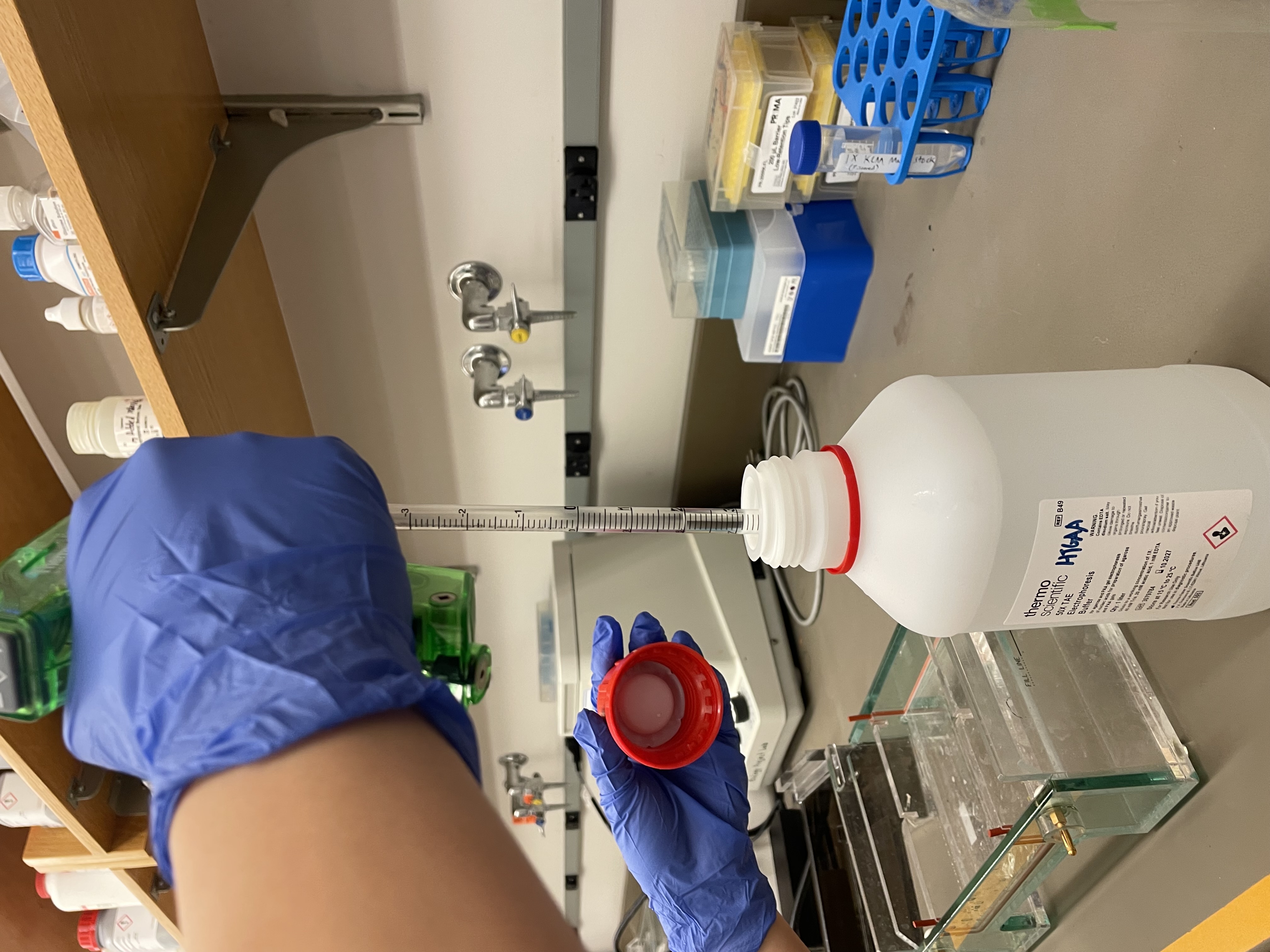
TAE Buffer Preparation We mixed 8mL of TAE (50% concentration) with 492mL of deionized water to make 500mL of TAE buffer (1% concentration). We also added dye to the buffer to make the electrophoresis process traceable.
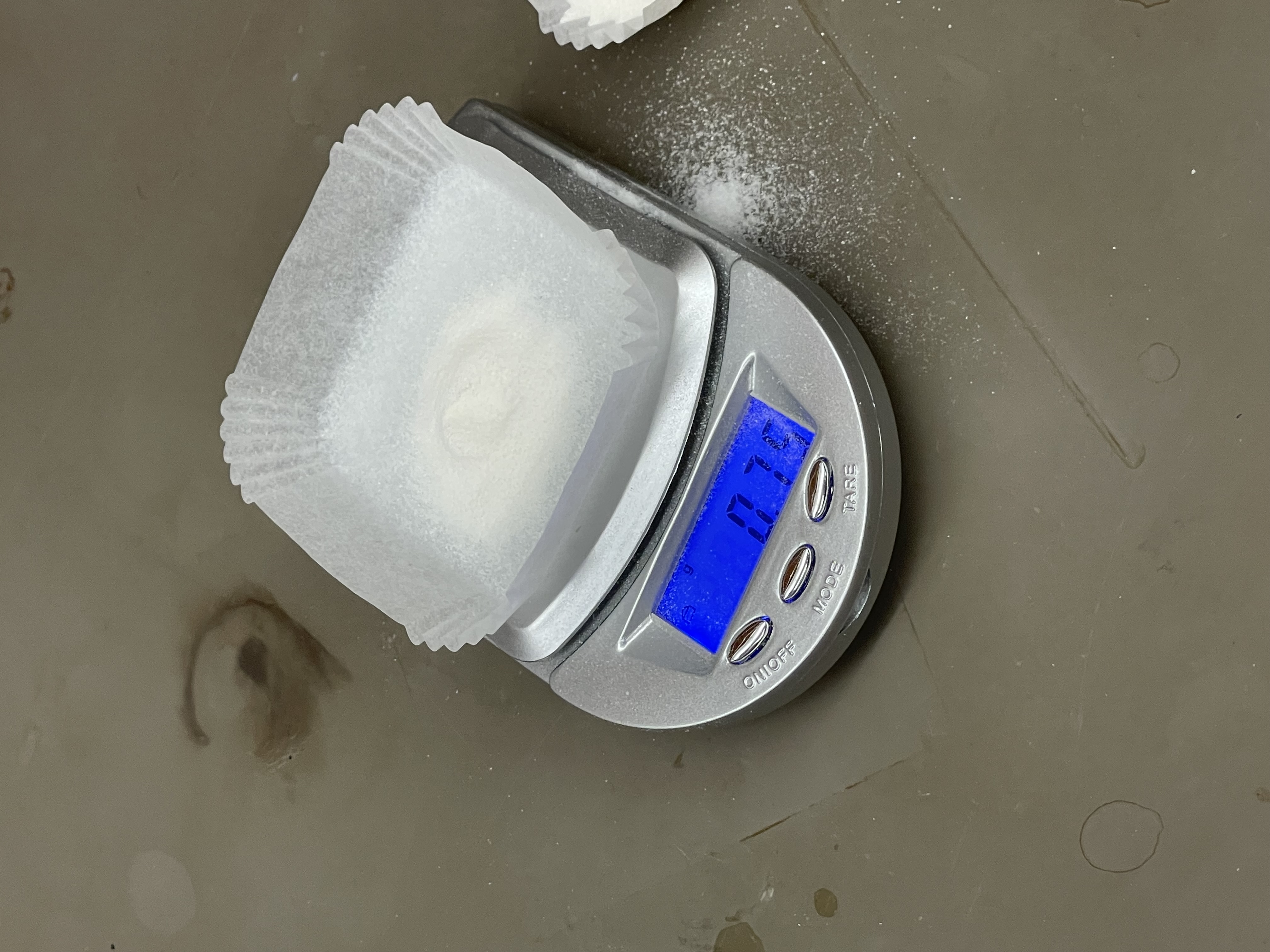
Agarose Electrophoresis Gel Preparation First, we added 0.75g of agarose powder and 75mL of TAE buffer into a microwavable flask. We shaked the flask to mix the powder and the buffer.
Louisa, Yutong, Jasmine and I worked together to complete this lab.
Day 1: PCR and DNA Purification PCR First, we performed PCR to amplify the backbone and color DNA fragments. We prepared the PCR reactions according to the tables below, and ran the PCR program on the thermocycler.
Louisa, Yao, and I worked together to complete this lab.
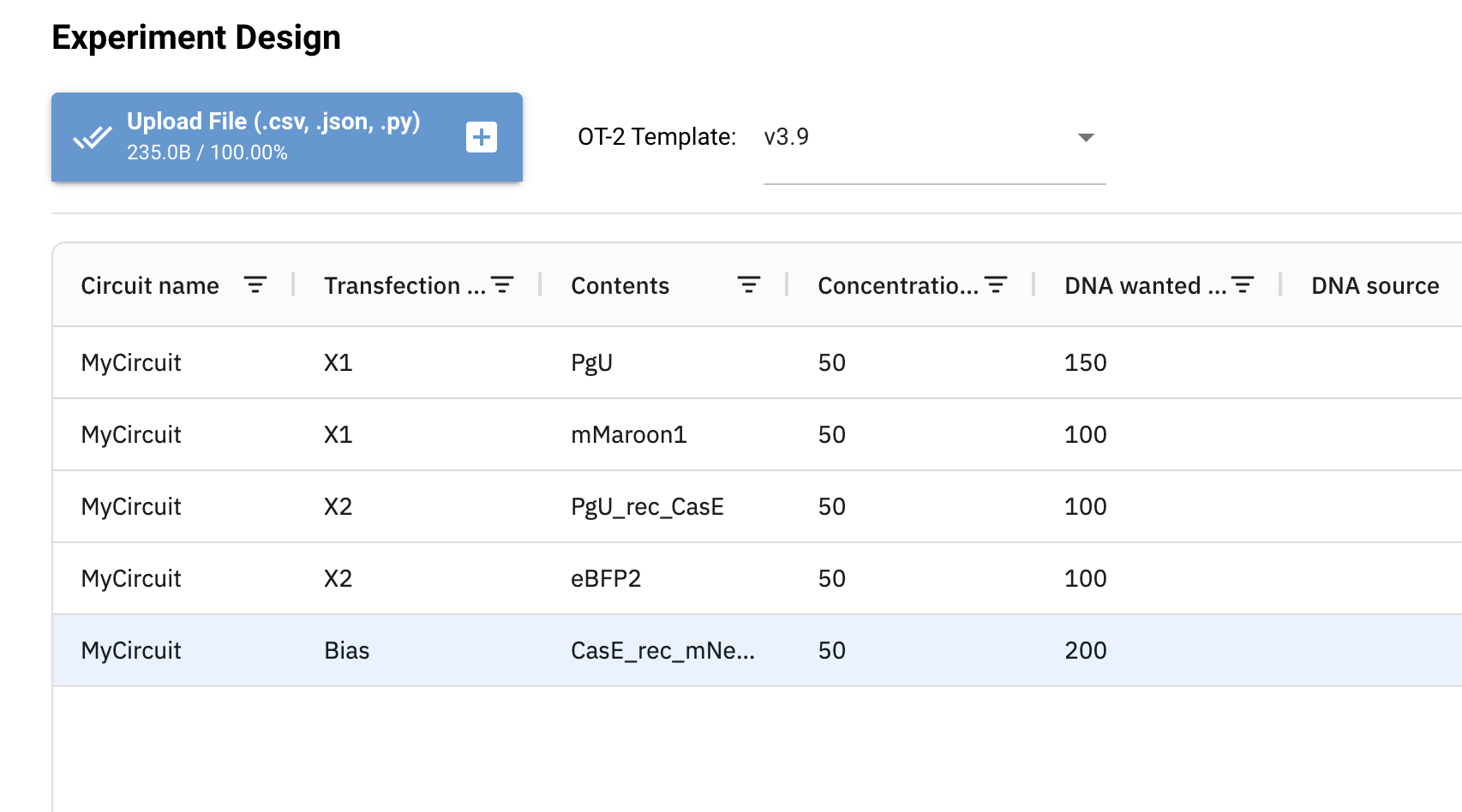
Below is the design of the neuromorphic circuit. The first input signal X1 is PgU, and the second input signal X2 is PgU_rec_CasE. When PgU is high, it will repress CasE, and when CasE is repressed, mNeon will be high.
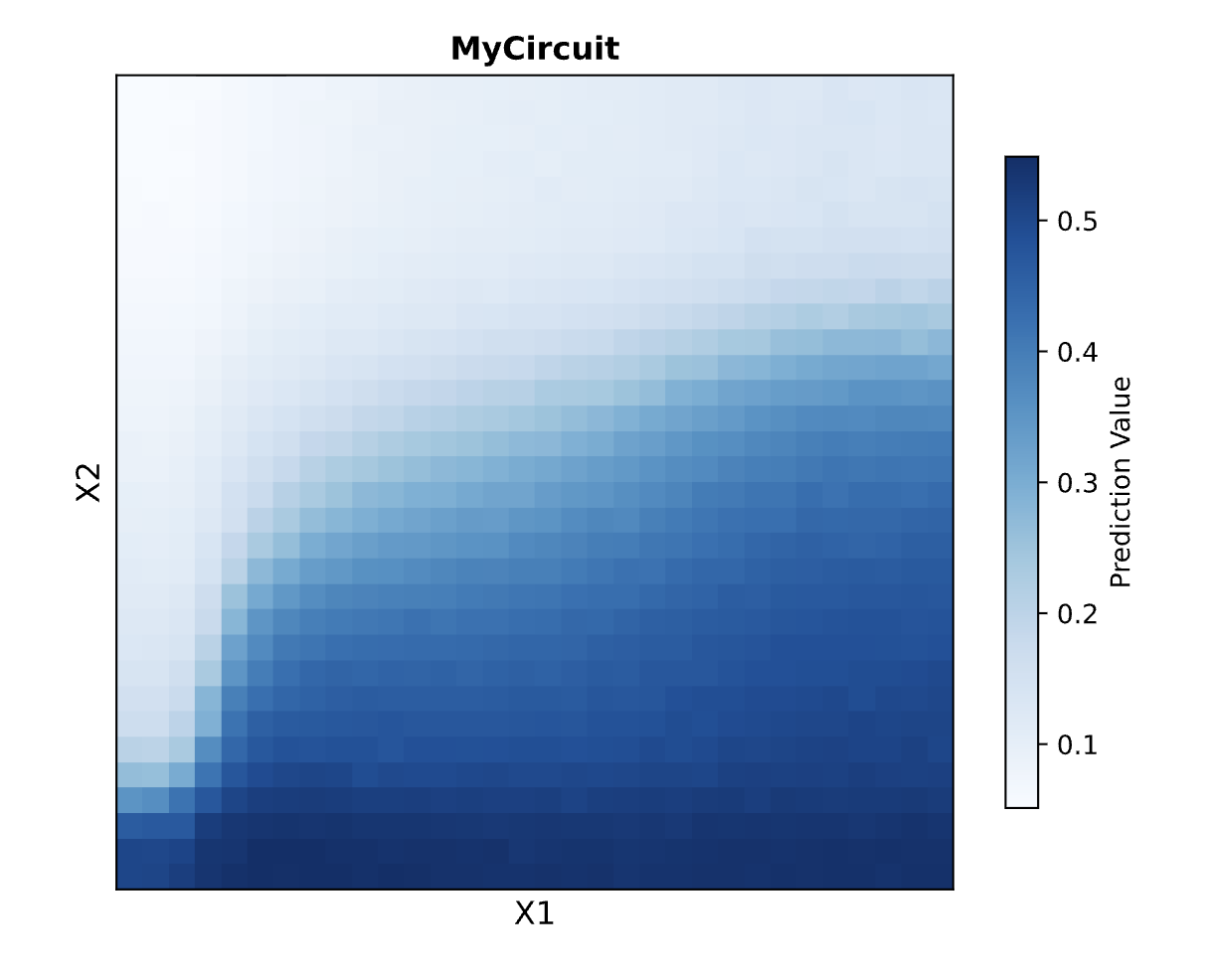
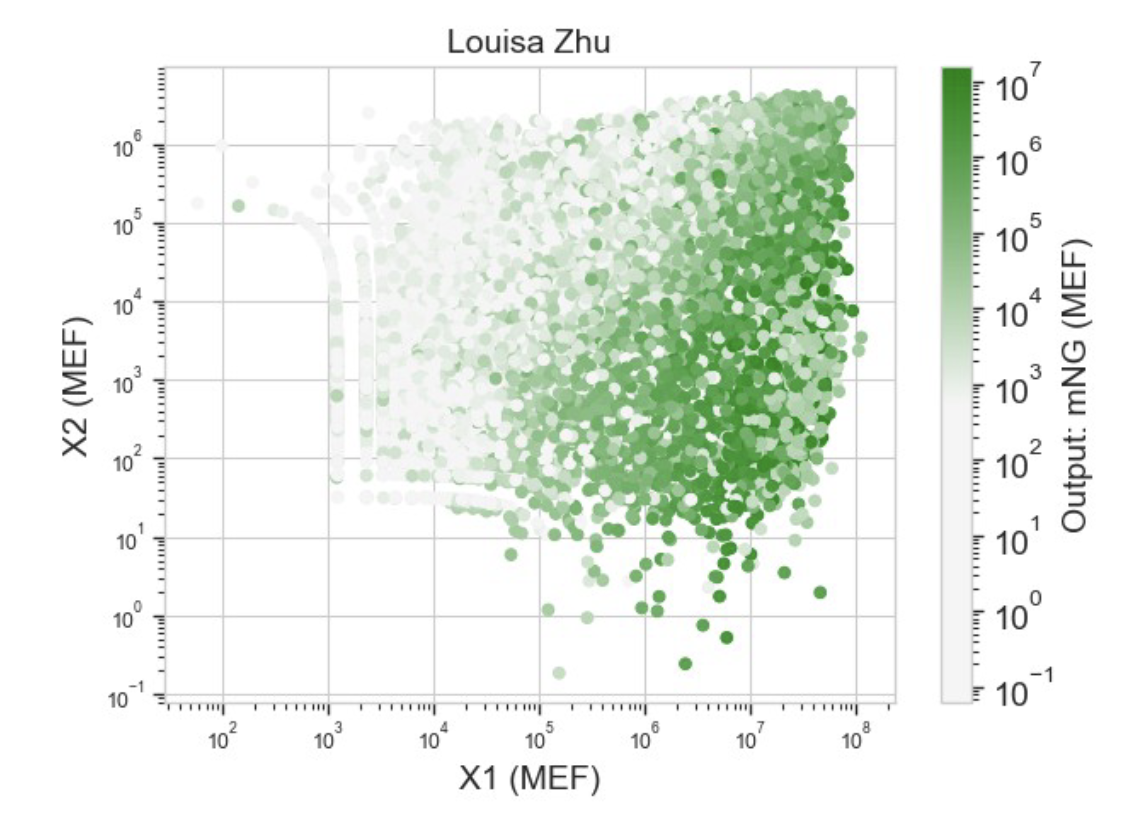
Below are the simulation and results of the neuromorphic circuit.
Simulation Result
Subsections of Labs
Week 1 Lab: Pipetting
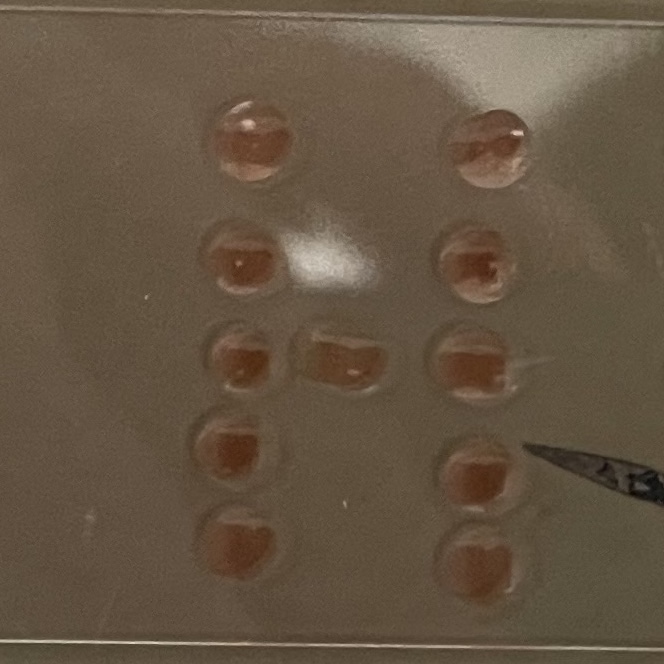
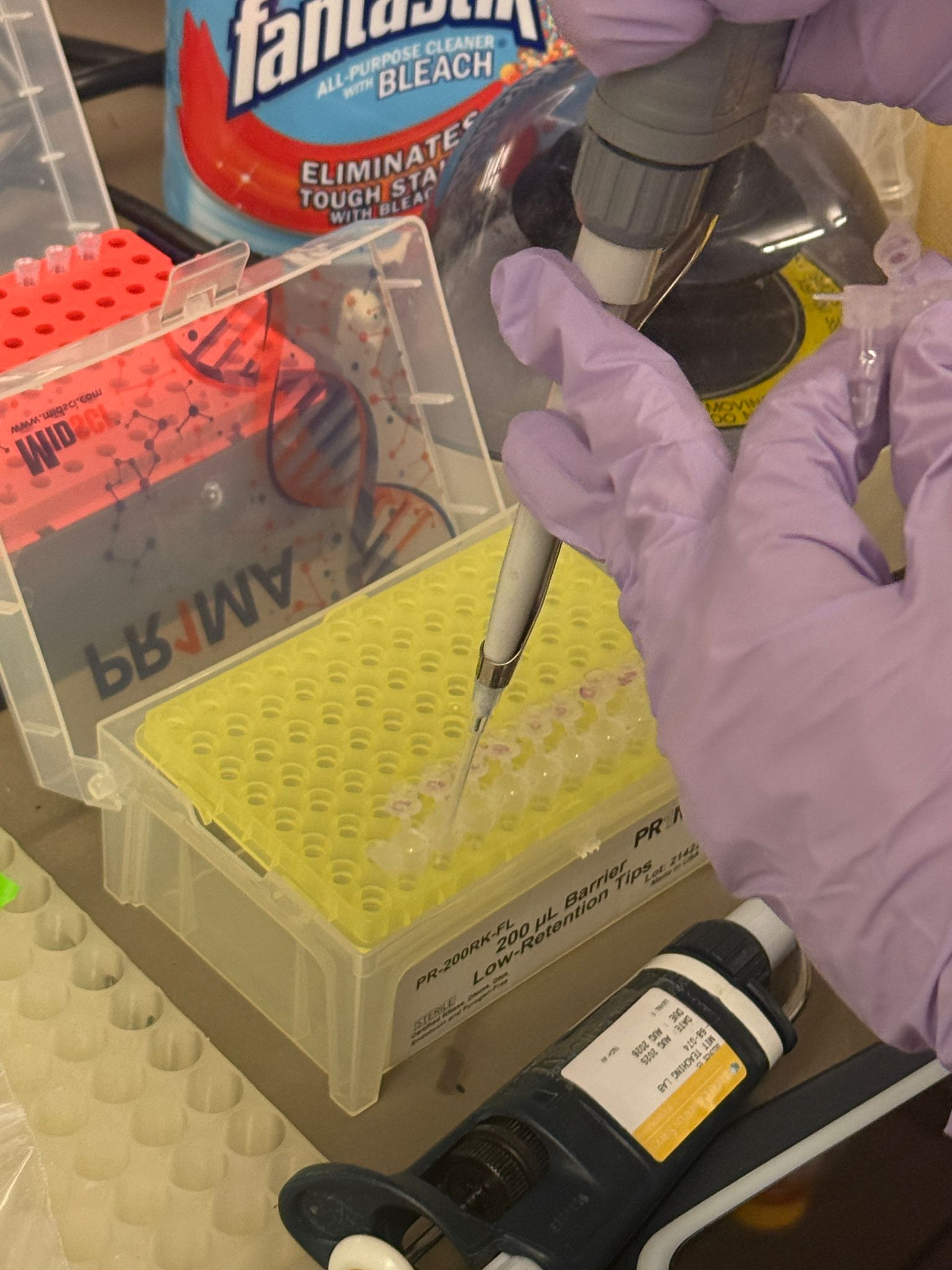
I used P20 (1-20uL) pipettes to create a letter “H” pattern with red food coloring solution contained in an Eppendorf tube.
Week 2 Lab: DNA Gel Art
Louisa, Jasmine, Yutong and I worked on this lab together.
TAE Buffer Preparation
We mixed 8mL of TAE (50% concentration) with 492mL of deionized water to make 500mL of TAE buffer (1% concentration). We also added dye to the buffer to make the electrophoresis process traceable.
Agarose Electrophoresis Gel Preparation
First, we added 0.75g of agarose powder and 75mL of TAE buffer into a microwavable flask. We shaked the flask to mix the powder and the buffer.
Next, we microwaved the flask for multiple rounds of 20 seconds each until the agarose powder was completely dissolved.
After that, we waited for the agarose solution to cool down for about 20 minutes. We then added 7.5uL of SYBR Safe DNA stain to the solution.
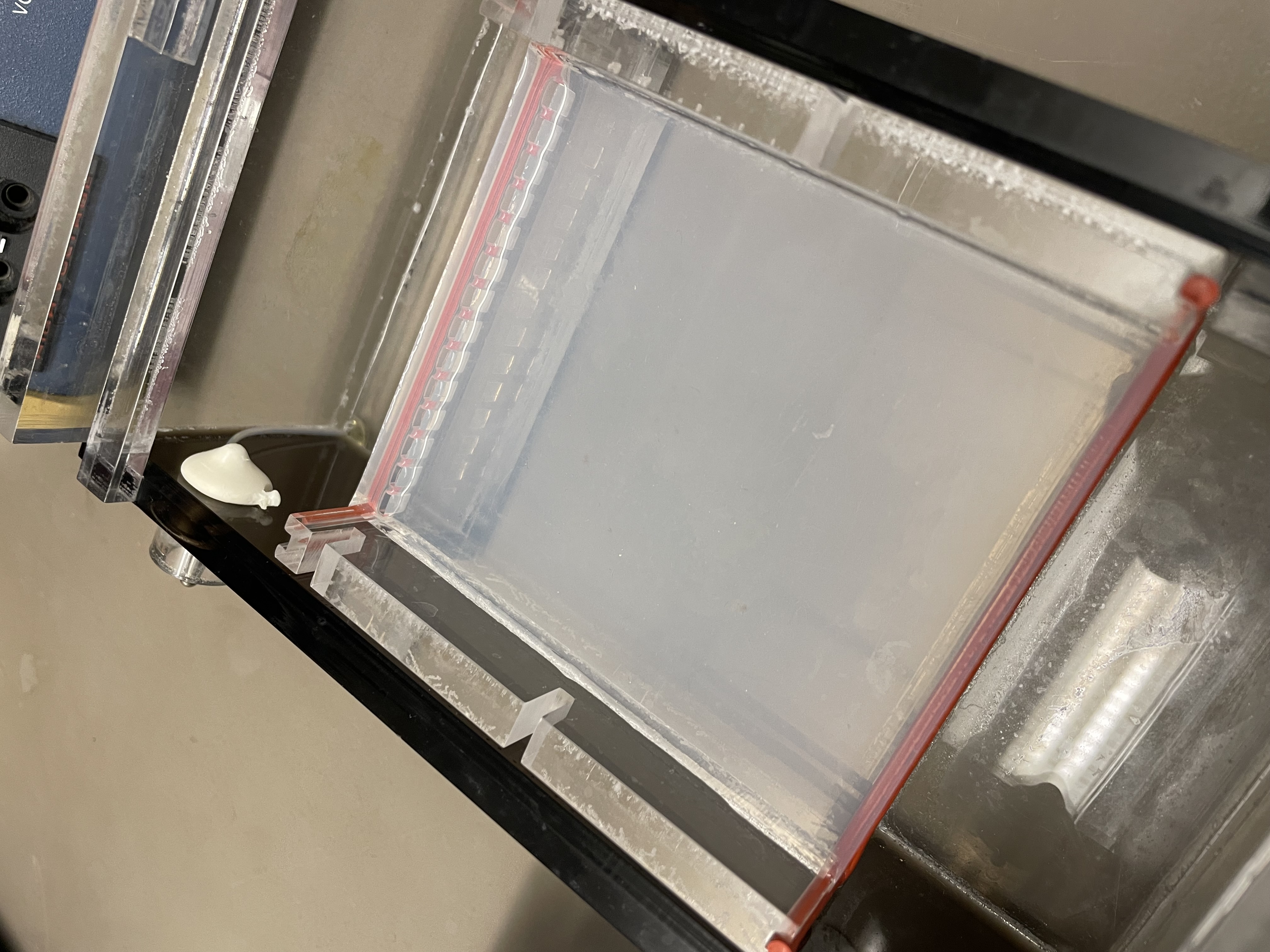
Finally, we poured the agarose solution into a gel mold, inserted the comb, and let it solidify for about 30 minutes. After the gel solidified, we removed the comb and placed the gel.
Digestion
According to the gel art designed, we used EcoRV, SacI, BamHI, and KpnI. We created the mixture of Lambda DNA, the restriction enzyme, and the buffer according to the protocol. After mixing the solution, we incubated it at 37C for 30 minutes to allow the digestion to occur.
Running the Gel
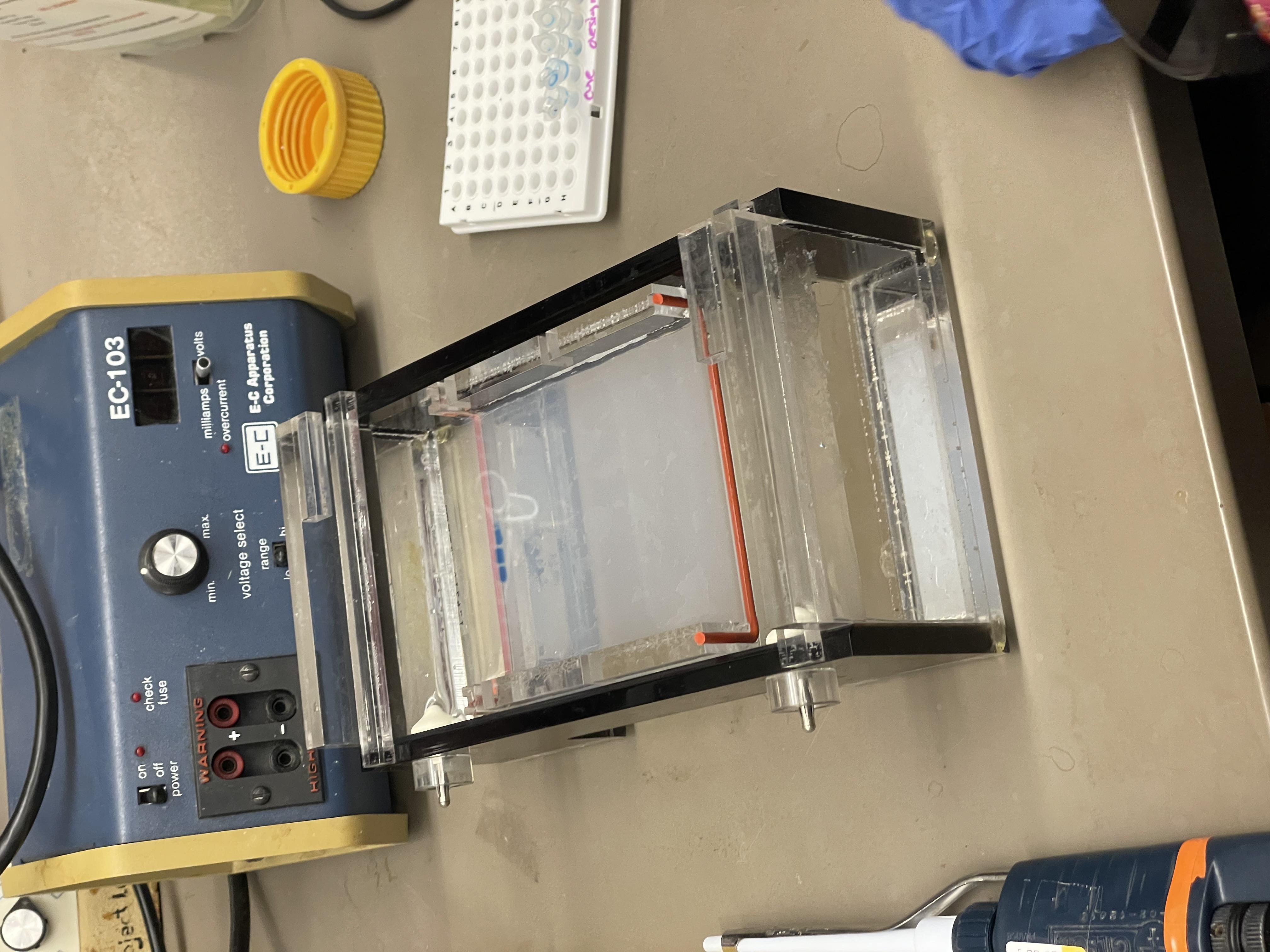
First, we poured the TAE buffer into the gel box until the gel was submerged. Next, we pipetted the digested DNA samples into the wells of the gel.
We then connected the gel box to the power supply and ran the gel at 120V for about 30 minutes.
Result
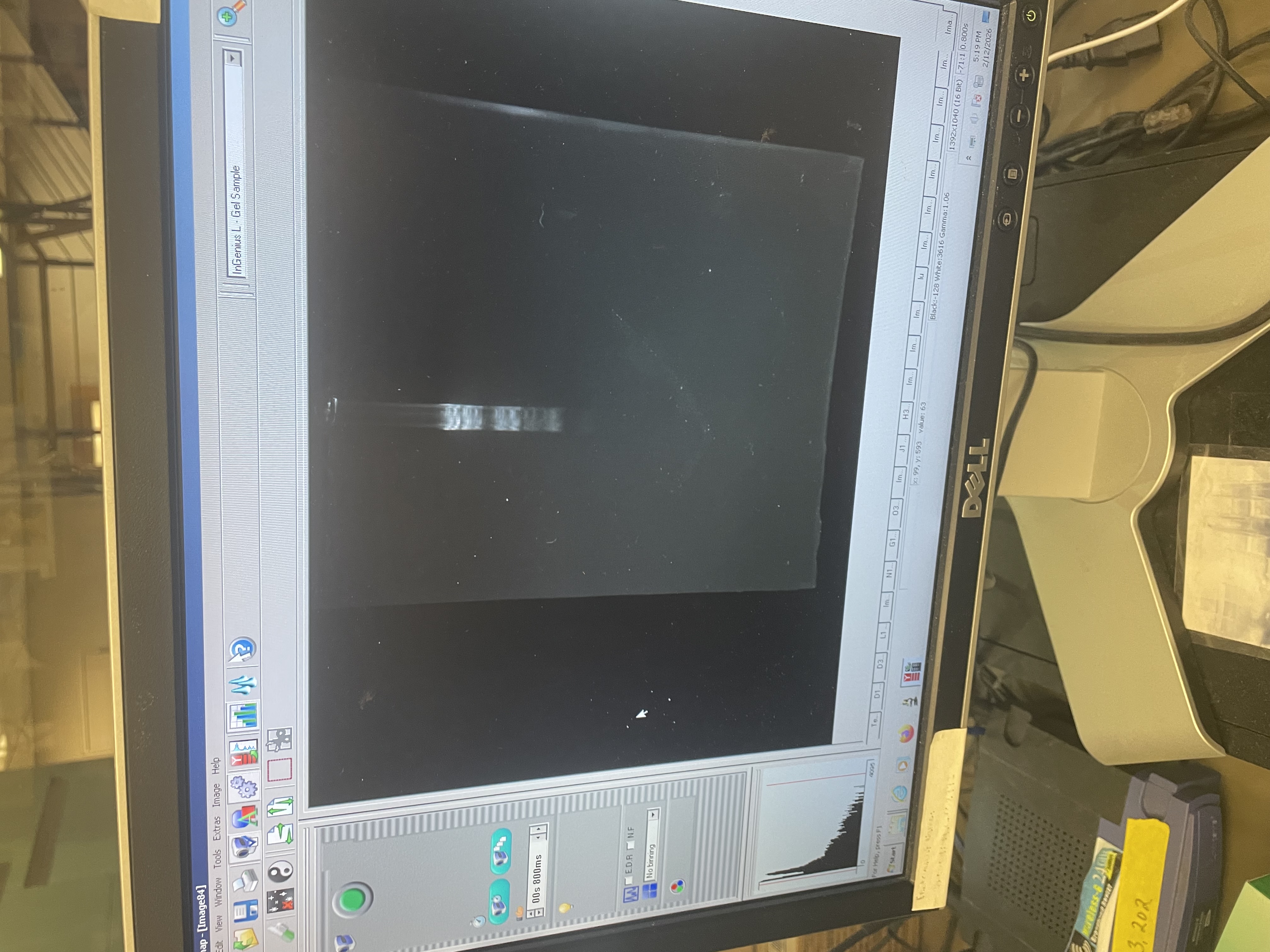
Finally, we visualized the gel in the imaging system. The gel art is shown below. It does not look exactly like the design we created, but at least we gave it a try and had fun in the process!
Week 3 Lab: Opentrons Art
Python Script for Opentrons Artwork
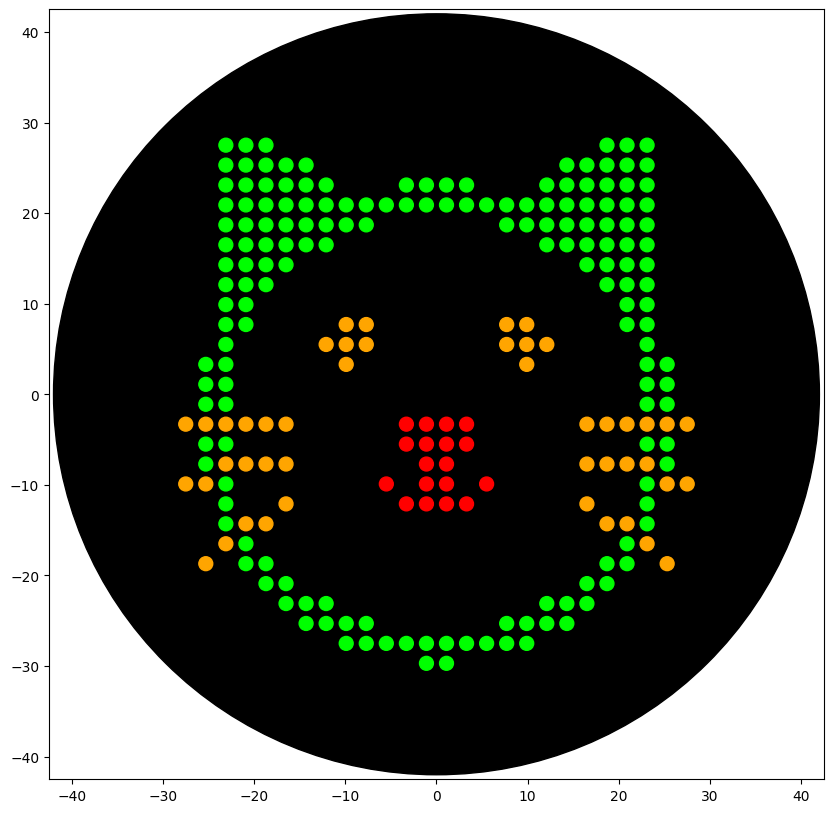
I created a design using opentrons-art.rcdonovan.com
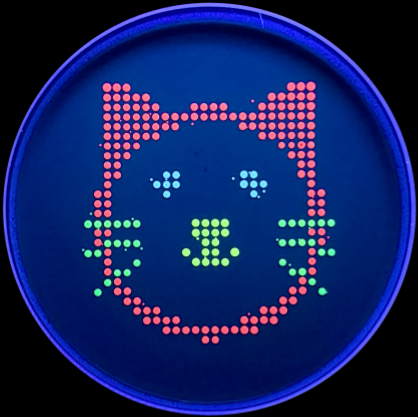
With the help of our TA Ronan, the art was printed with an Opentrons robot. The result is shown below:
Week 4 Lab: Protein Design Part I
See Homework 4.
Week 5 Lab: Protein Design Part II
See Homework 5.
Week 6 Lab: Gibson Assembly
Louisa, Yutong, Jasmine and I worked together to complete this lab.
Day 1: PCR and DNA Purification
PCR
First, we performed PCR to amplify the backbone and color DNA fragments. We prepared the PCR reactions according to the tables below, and ran the PCR program on the thermocycler.
Ice bucket
Phusion HF PCR Master Mix
Primers (5 uM stock)
UltraPure Water
PCR tubes
Thermocycler
P20 pipette and 10uL tips
P200 pipette and 200uL tips
Backbone DNA Fragment (Primers: Backbone Fwd and Backbone Rev)
Reagent
Stock Conc.
Desired Conc.
Volume (uL)
Template mUAV Plasmid
38.5
20
0.8
Backbone Forward Primer
5 uM
0.5 uM
2.5
Backbone Reverse Primer
5 uM
0.5 uM
2.5
Phusion HF PCR Mix
2X
1x
12.5
Nuclease-free water
6.8
Total Volume
25.0
Color DNA Fragment (Primers: Color Fwd and Color Rev)
Reagent
Stock Conc.
Desired Conc.
Volume (uL)
Template mUAV Plasmid
38.5
20
0.8
Color Forward Primer
5 uM
0.5 uM
2.5
Color Reverse Primer
5 uM
0.5 uM
2.5
Phusion HF PCR Mix
2X
1x
12.5
Nuclease-free water
6.8
Total Volume
25.0
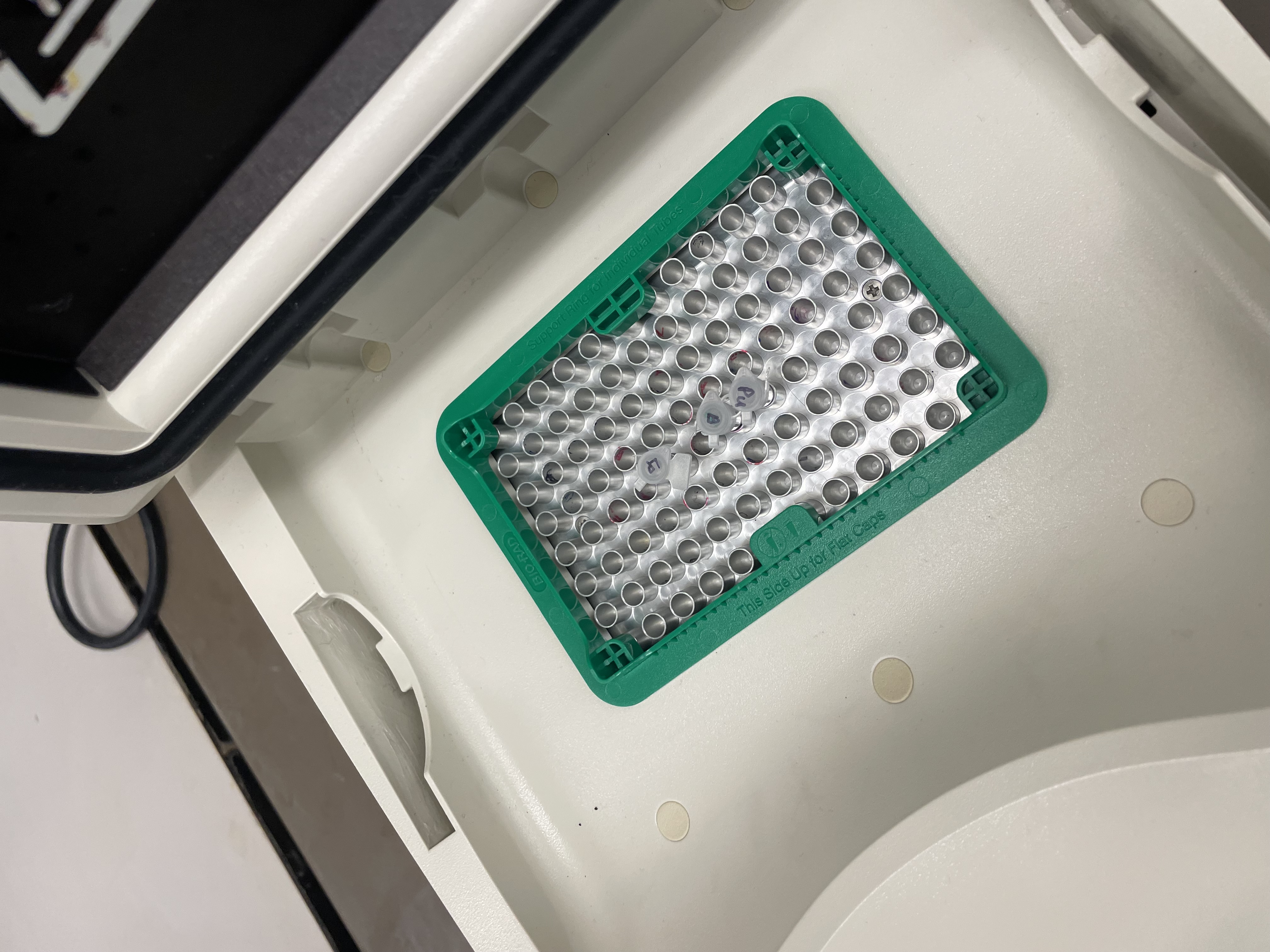
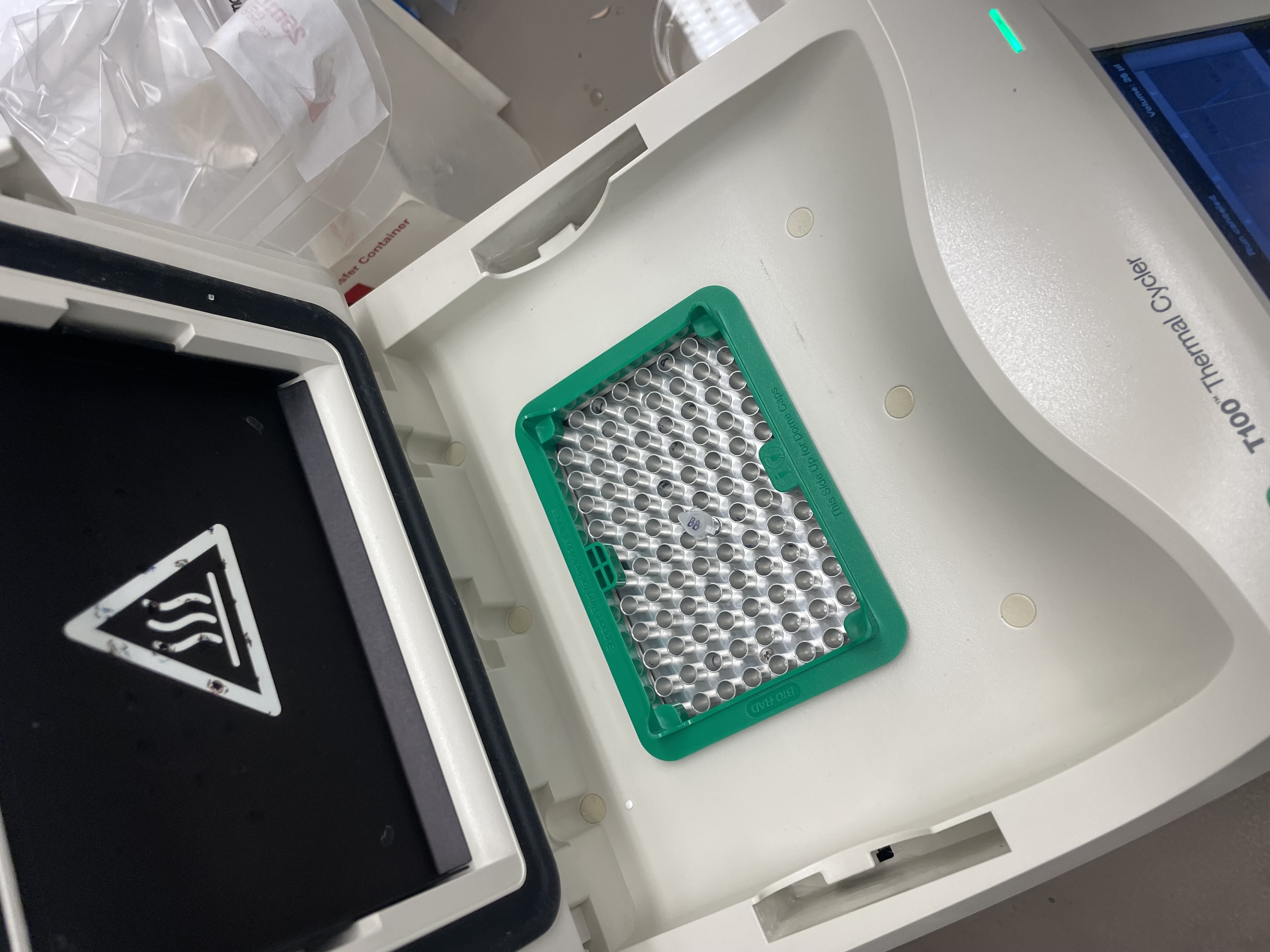
Below are the photos of the PCR tubes in the thermocycler:
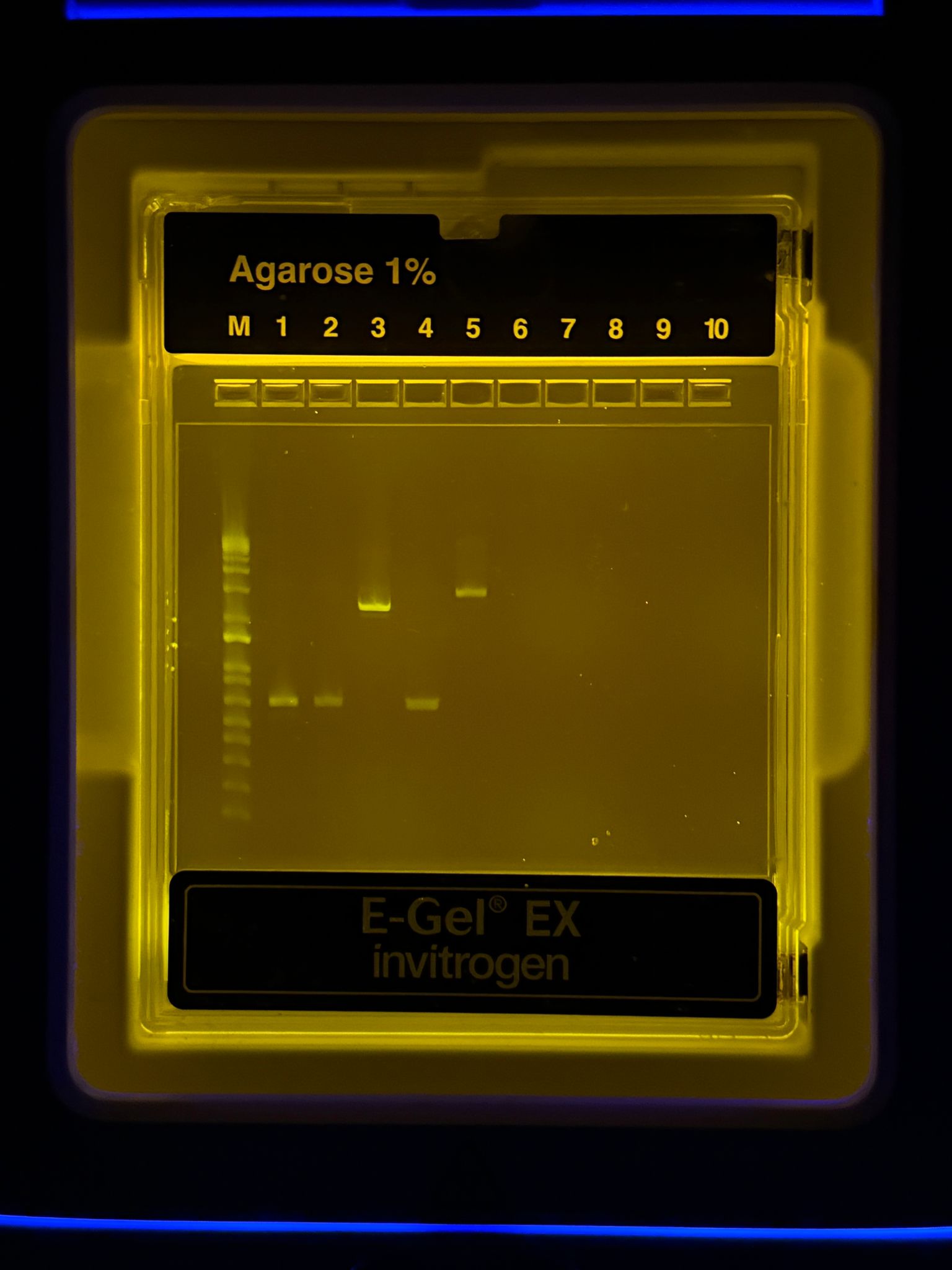
After the PCR program was completed, we ran the E-gel. We observed clear bands at the expected sizes for both the backbone and color fragments, indicating that the PCR was successful.
DNA Purification:
PCR products
Zymo DNA Clean & Concentrator
UltraPure Water
1.5ml microcentrifuge tubes
50ml Falcon tube for liquid waste
Centrifuge (Set to 13,000 rpm, or roughly 17,900 x g)
Nanodrop/Qbit
P200 pipette with 200uL tips
P20 pipette with 20uL tips
Day 2: Gibson Assembly and Transformation
Gibson Assembly
Backbone fragment purified, Color fragment(s) purified
Gibson Assembly Master Mix
PCR tubes
UltraPure Water
Thermal Cycler
P20 pipette and 10uL tips
Ice Bucket
** Reagent**
Stock Conc. (ng/uL)
Desired Conc (ng/uL)
Volume (uL)
Backbone Fragment
50
25
0.5
Color fragment (Single)
50
50
1.0
Gibson Assembly Mix
2X
1X
5
Nuclease-free water
3.5
Total Volume
10
Transformation
Result
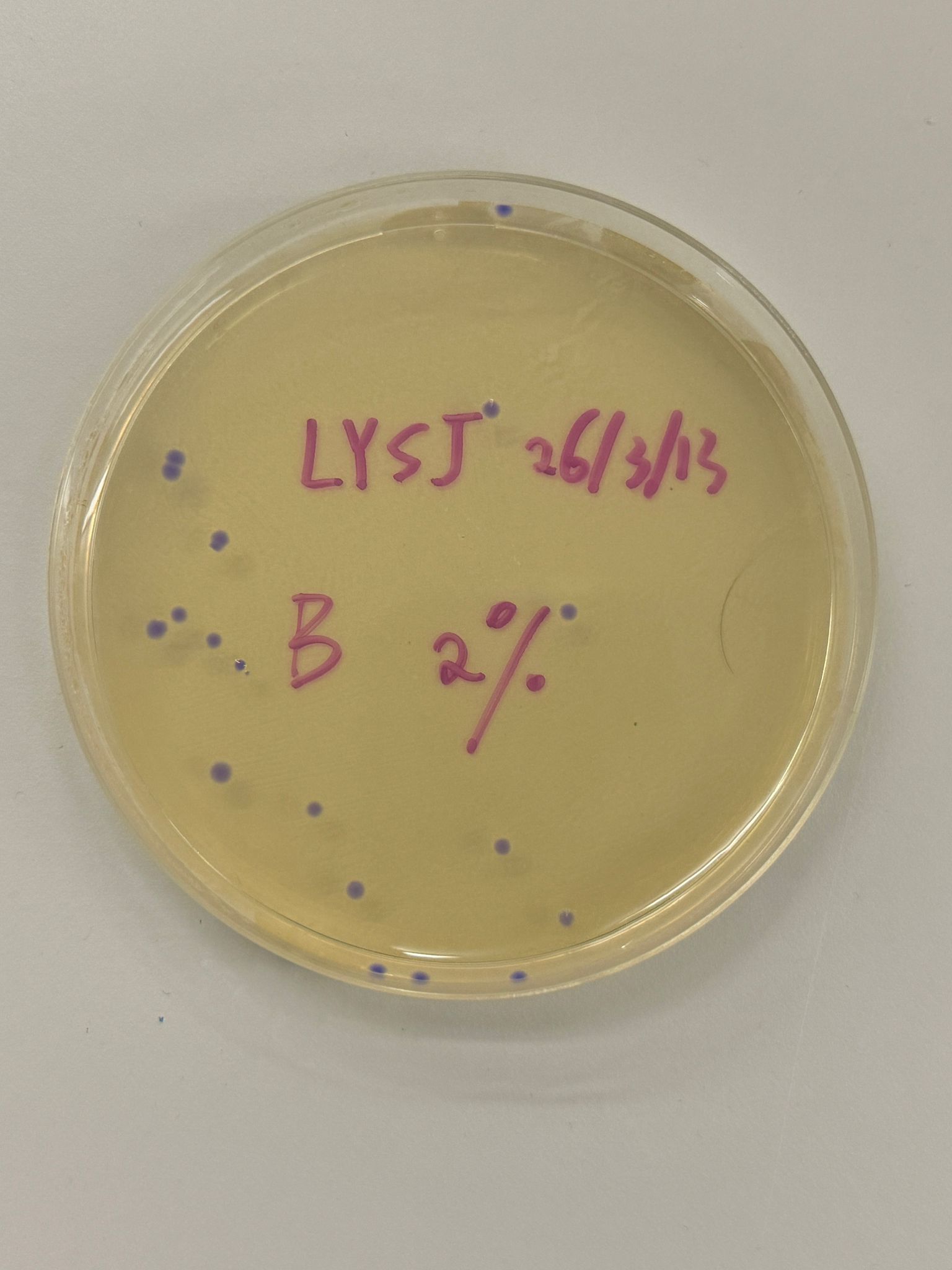
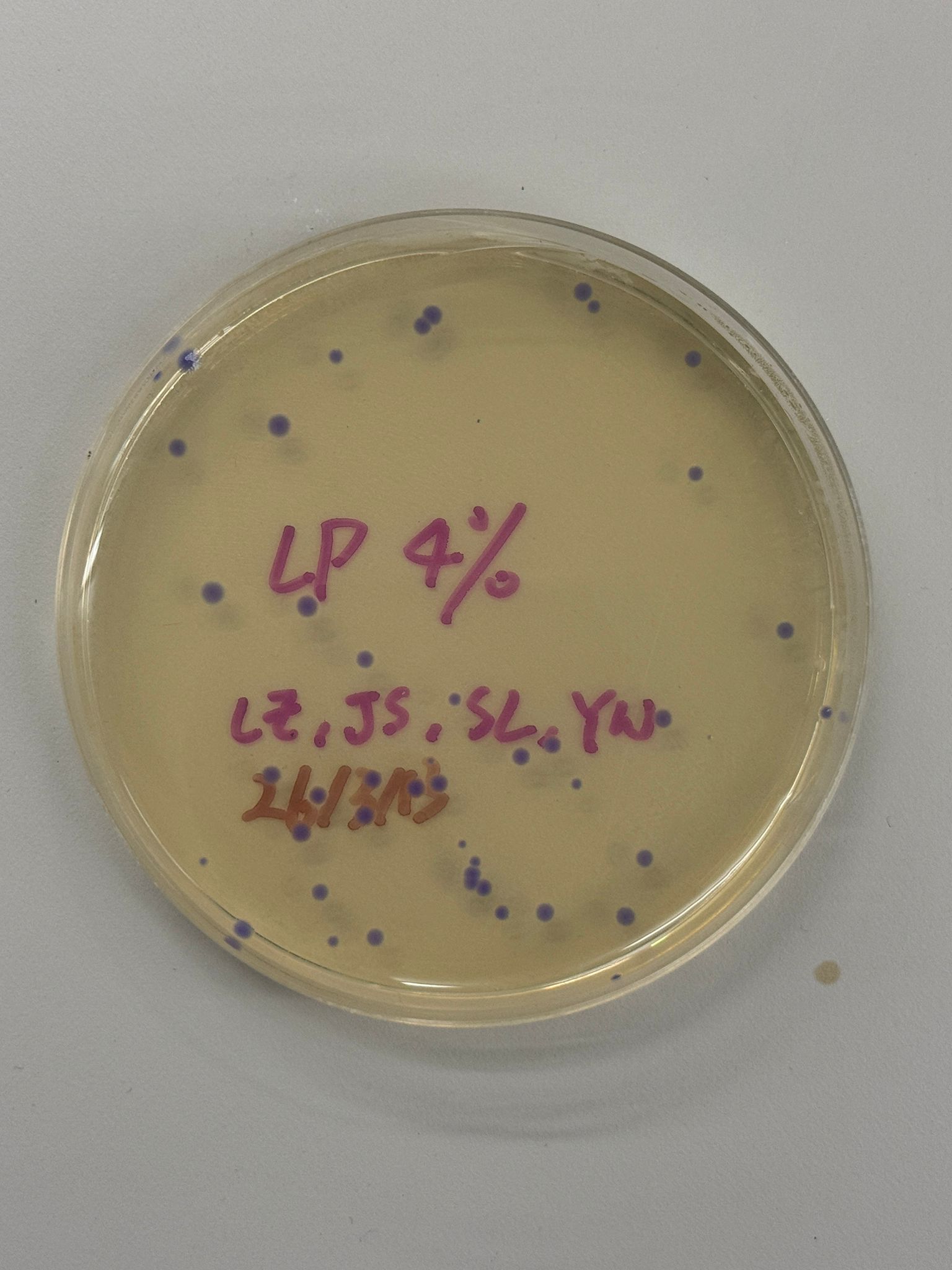
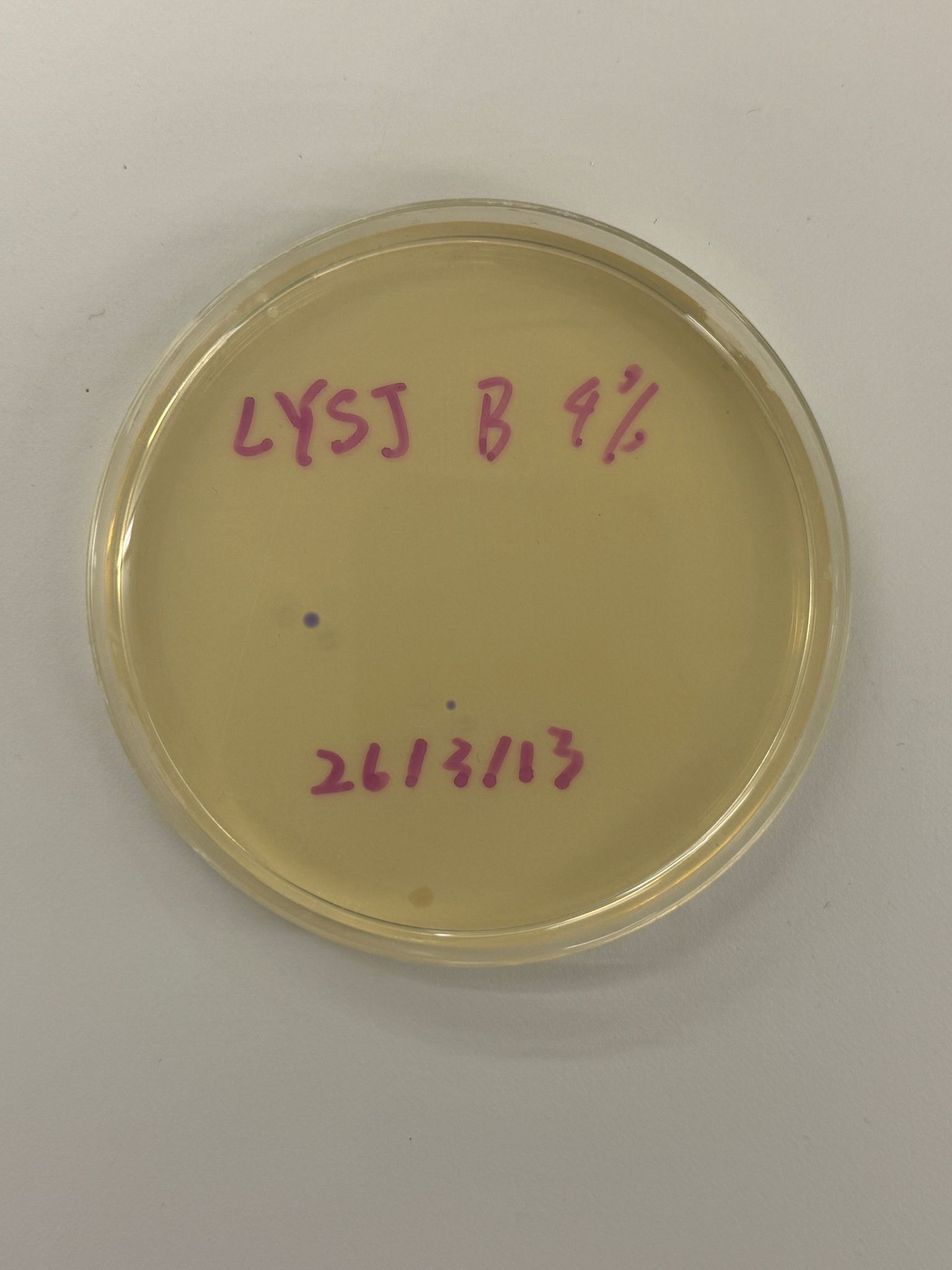
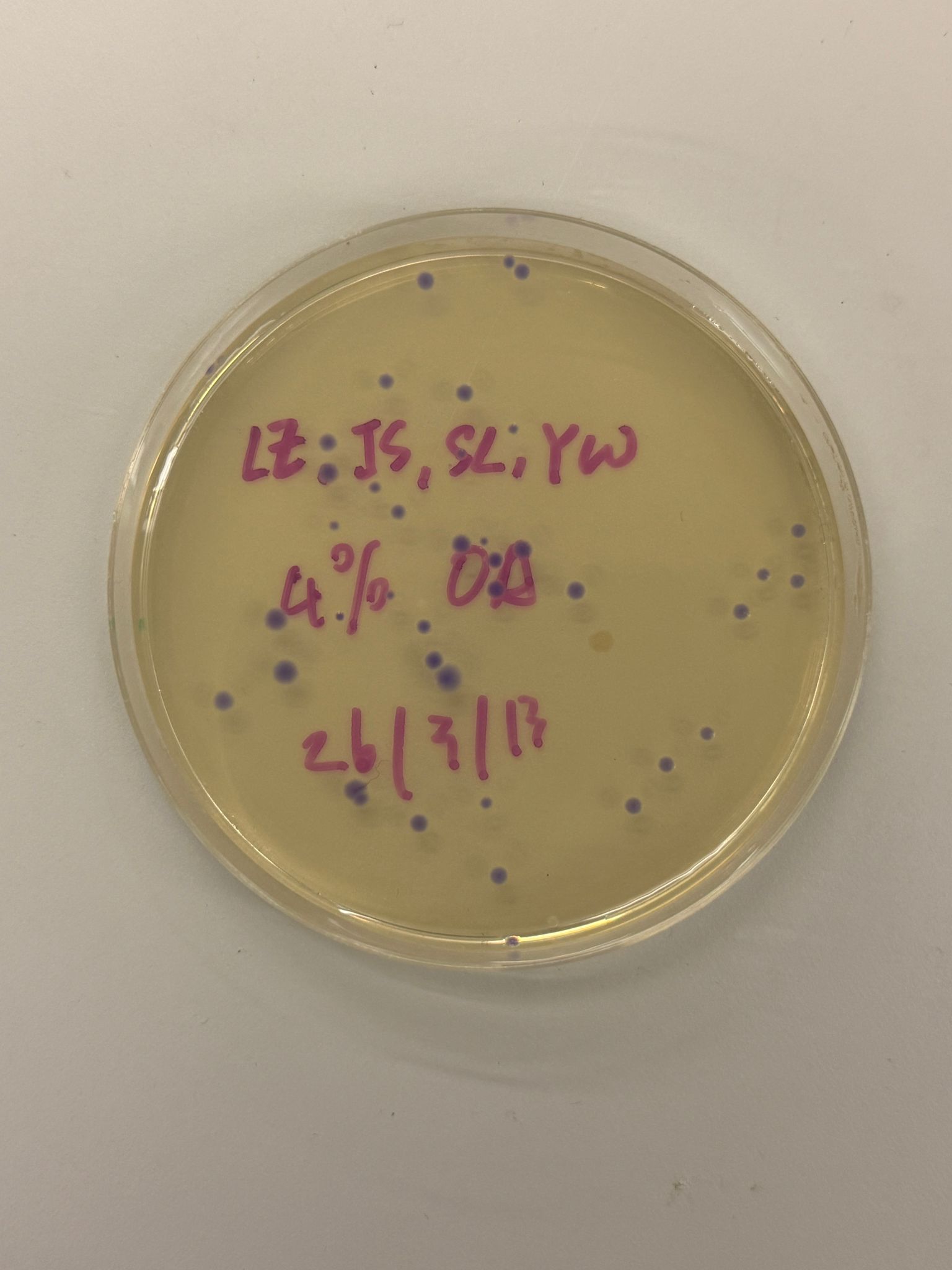
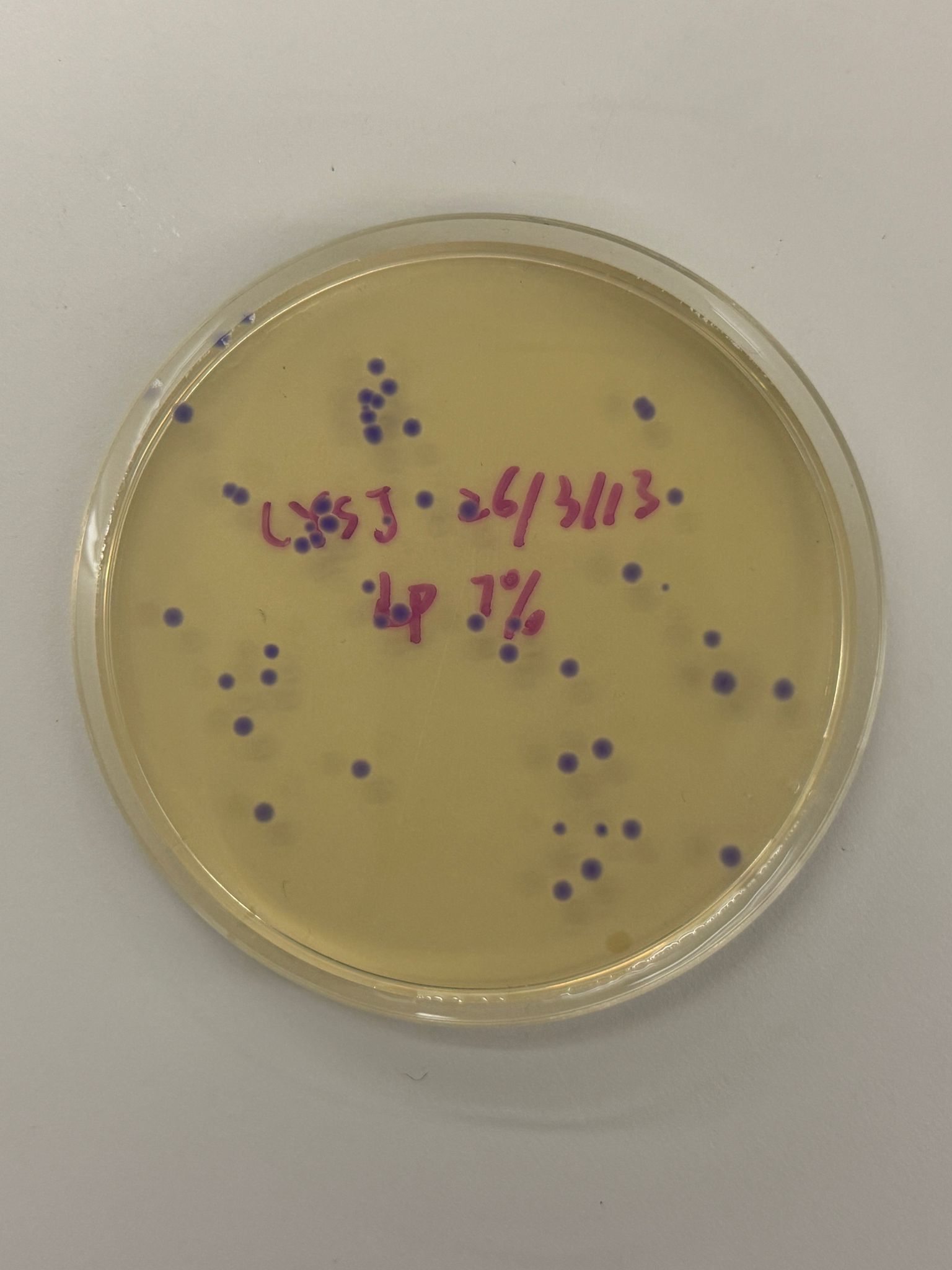
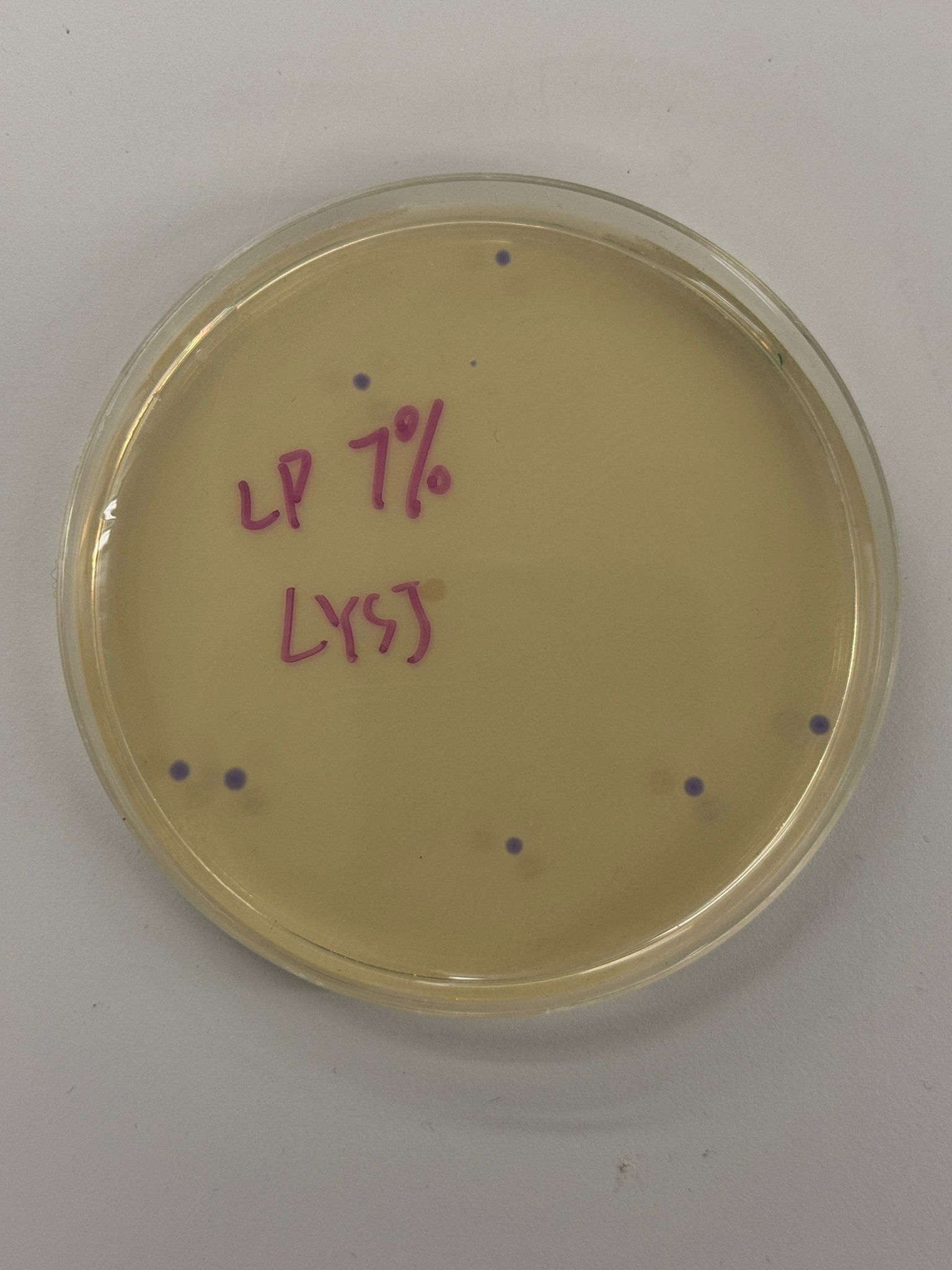
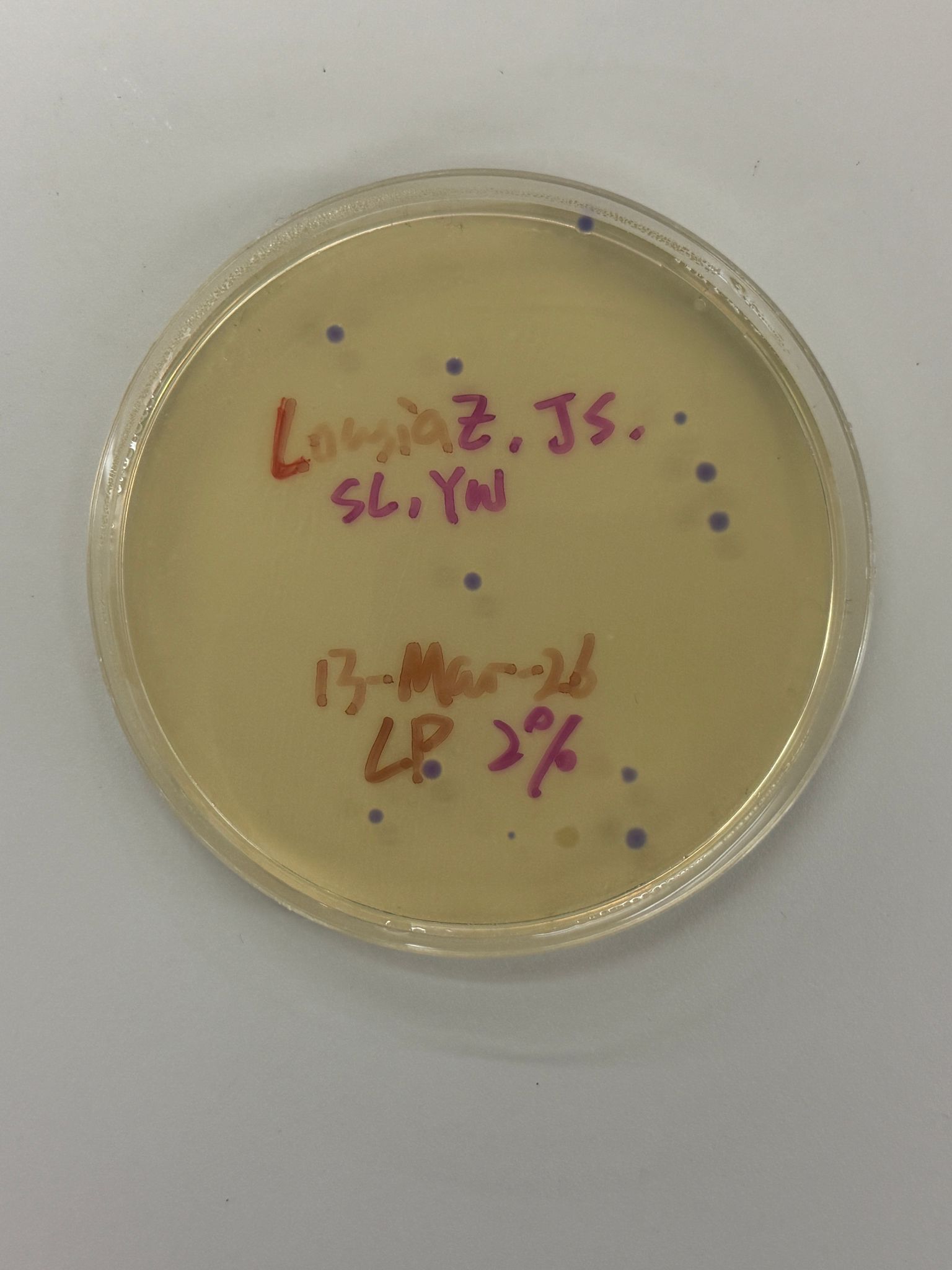
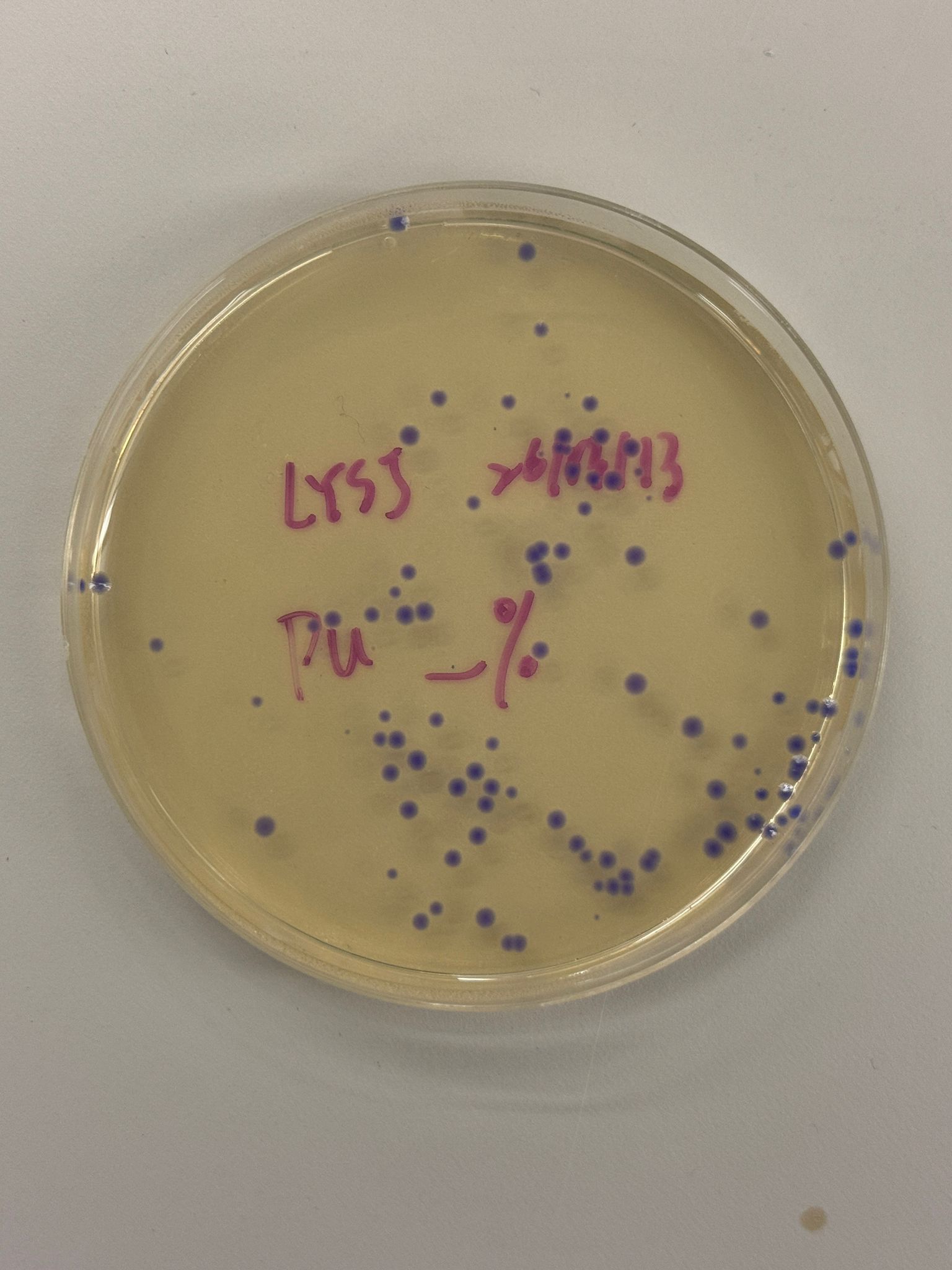
After 72 hours of incubation:
Week 7 Lab: Neuromorphic Circuits
Louisa, Yao, and I worked together to complete this lab.
Below is the design of the neuromorphic circuit. The first input signal X1 is PgU, and the second input signal X2 is PgU_rec_CasE. When PgU is high, it will repress CasE, and when CasE is repressed, mNeon will be high.
Below are the simulation and results of the neuromorphic circuit.