Shruti Pawar — HTGAA Spring 2026

About me
I’m a maker
I’m a maker
Week 1 HW: Principles and Practices
Reflecting on what you learned and did in class this week, outline any ethical concerns that arose, especially any that were new to you. Then propose any governance actions you think might be appropriate to address those issues. This should be included on your class page for this week.
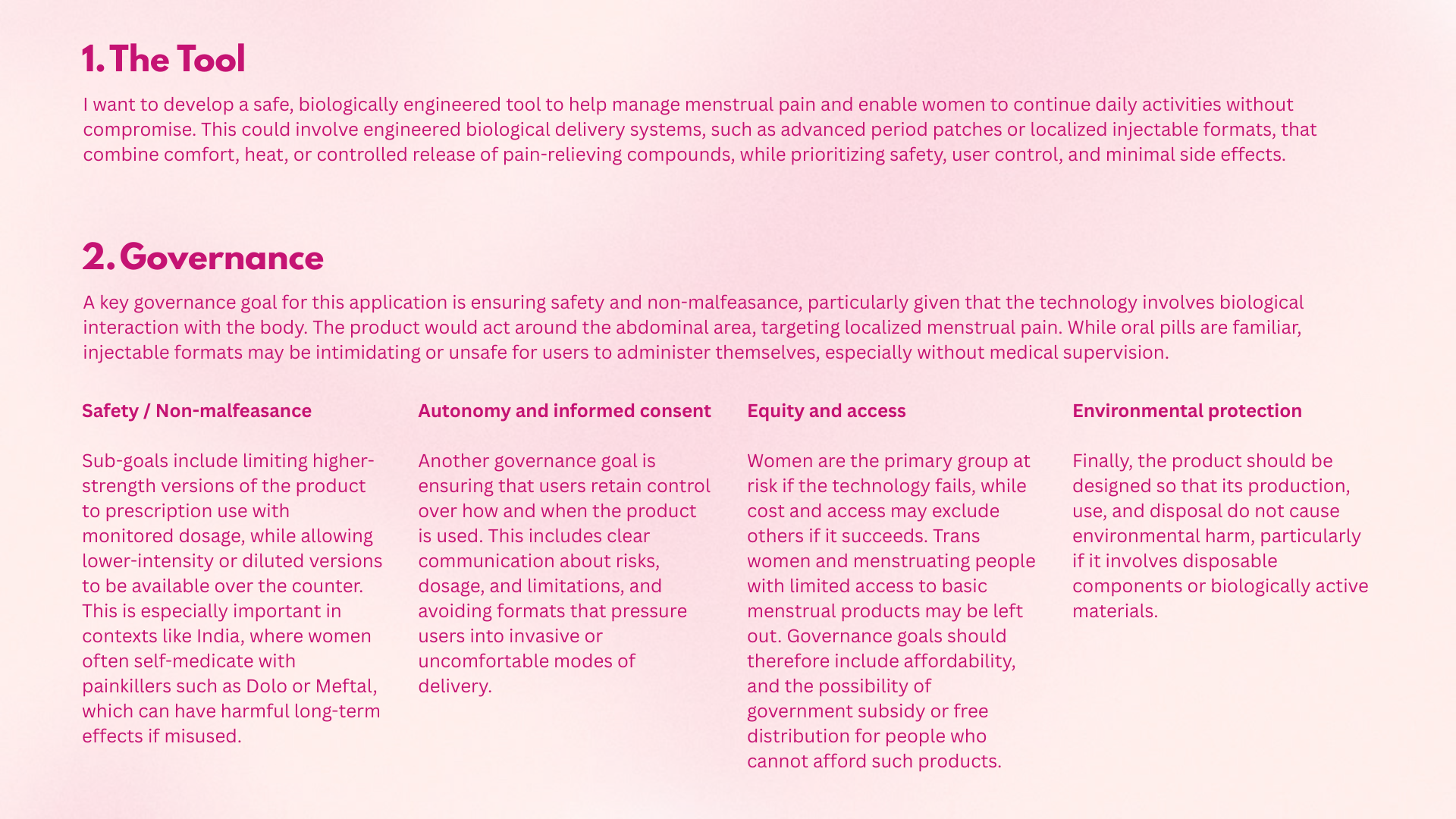
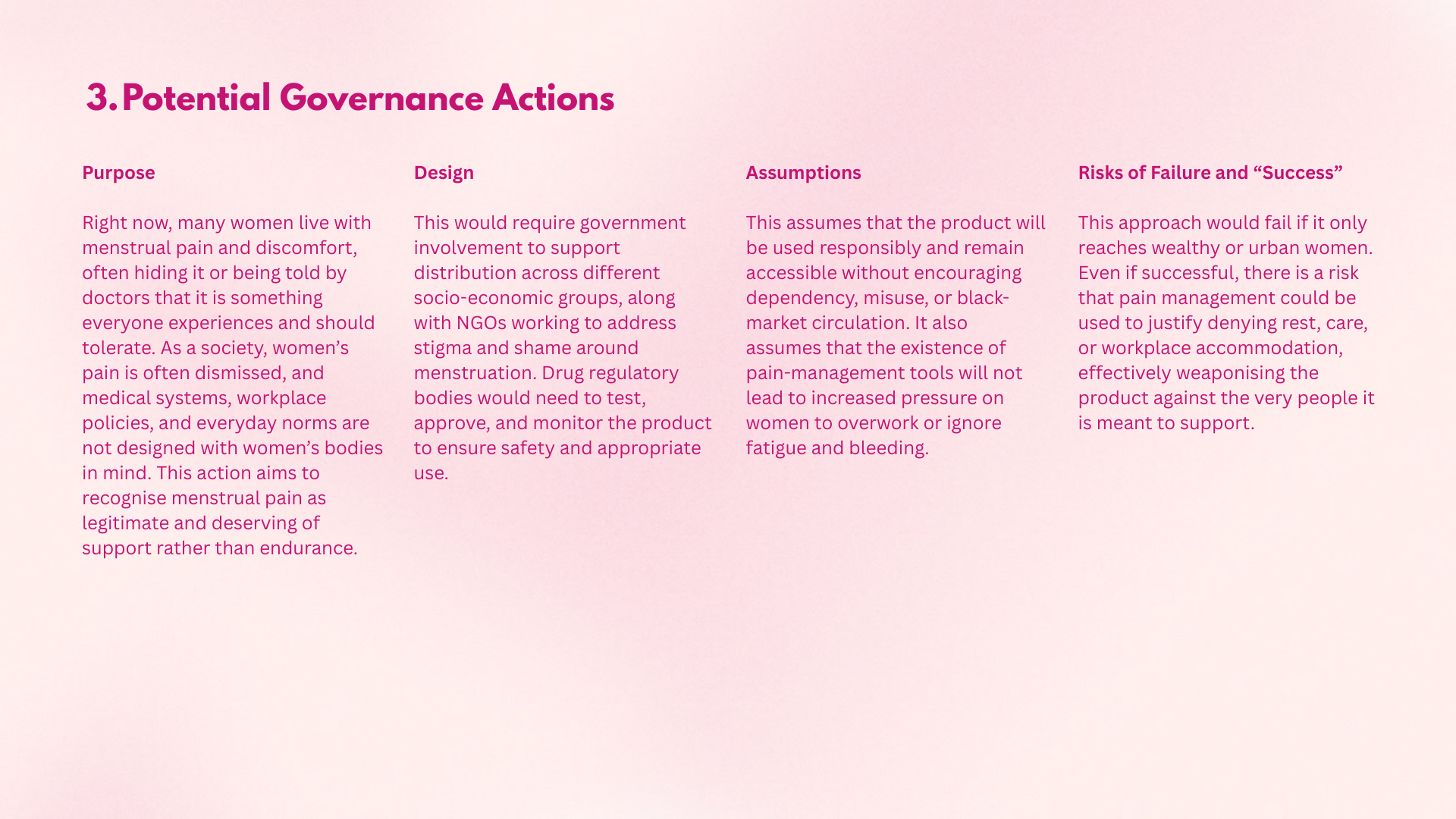
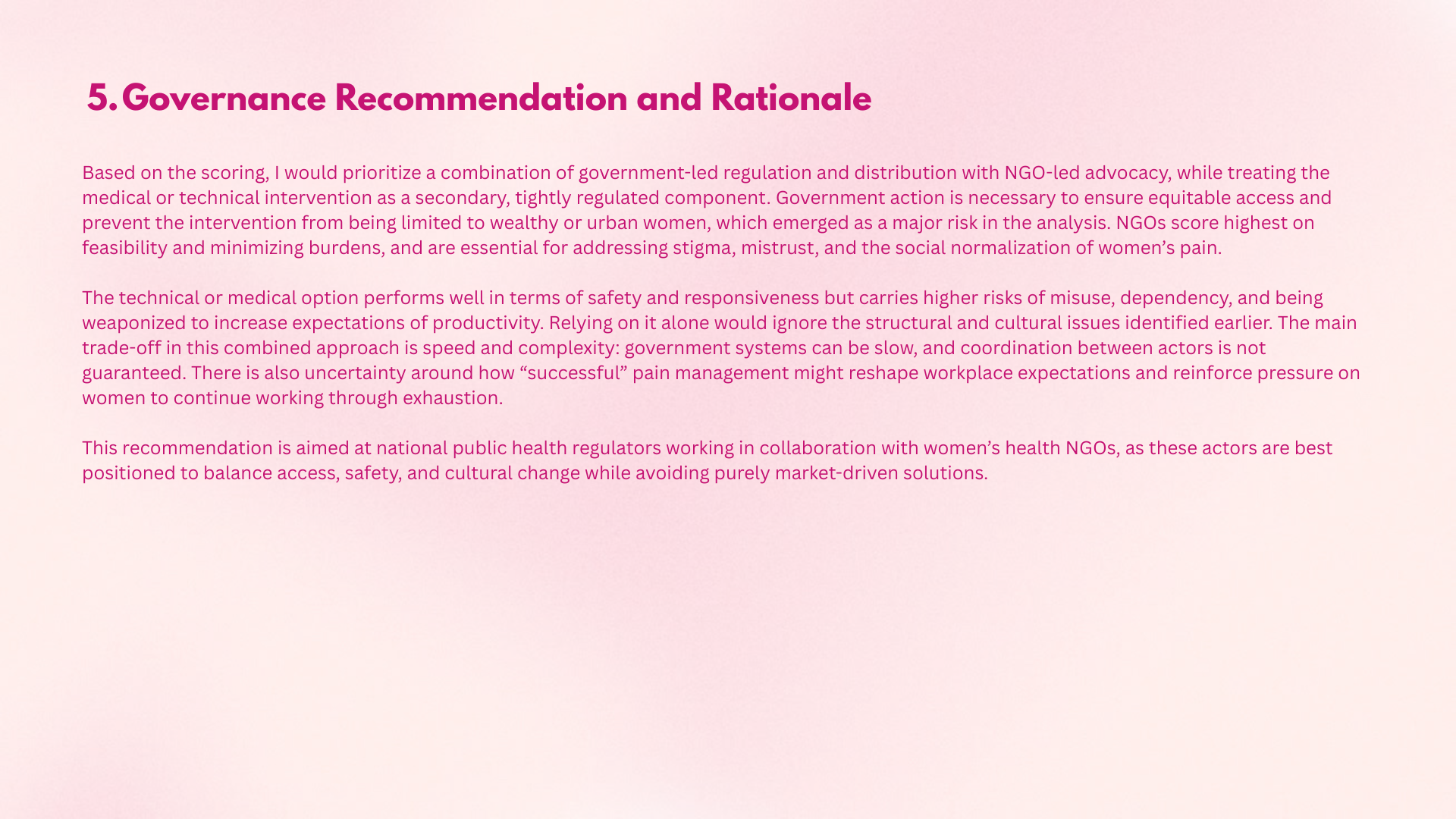
Reflecting on what you learned and did in class this week, outline any ethical concerns that arose, especially any that were new to you. Then propose any governance actions you think might be appropriate to address those issues. This should be included on your class page for this week.
Reflections:
Reflecting on this week’s class, one major ethical concern for me was how much gene modification should be allowed. Genes are fundamental units of life, and altering them means altering life itself. Historically, when humans try to control or “improve” life systems to suit our needs, it does not always end well. That makes me question how far we should intervene, even with good intentions.
Another concern is where to draw the line. What problems are serious enough to justify synthetic biology? Who decides what is critical versus what is too extreme? The boundary between necessary medical intervention and excessive manipulation feels unclear.
I also thought about respect for life forms. Even when working with plants, algae, fungi, or microbes, they are still living systems. They should not be treated merely as lab tools or lesser lives. There should be some ethic of care in how we approach them.
Finally, accessibility stood out to me. Synthetic biology can help develop important medical treatments and drugs, which is positive. But if these tools become too accessible, misuse becomes a real risk. So the question becomes: how accessible should synthetic biology be?
In terms of governance, I think we need clear regulations around therapeutic versus enhancement uses, strong biosecurity measures for gene synthesis and distribution, and ethical oversight that includes scientists as well as public and policy voices. Innovation should continue, but with responsibility and respect for life.
Week 2 Lecture Prep Homework Questions from Professor Jacobson
1.What is the error rate of polymerase? How does this compare to the human genome? How does biology deal with that discrepancy?
Answer-High-fidelity DNA polymerases have a final error rate of approximately 10⁻⁸ to 10⁻¹⁰ errors per base per replication after proofreading and repair. The raw error rate without proofreading is closer to 10⁻⁵. The human genome is about 3 × 10⁹ base pairs, so even at 10⁻⁹, a few mutations can occur per cell division. Biology manages this through multiple safeguards: Proofreading (3′→5′ exonuclease activity), mismatch repair systems, genetic code redundancy (silent mutations), diploidy (two gene copies), and apoptosis of severely damaged cells. These mechanisms keep mutation rates low enough for stability while still allowing evolutionary variation.
2.How many different ways are there to code for an average human protein? Why don’t all work in practice?
Answer-Because the genetic code is degenerate (61 codons for 20 amino acids), most amino acids have multiple synonymous codons. For an average 400–amino acid protein, there are roughly ~3⁴⁰⁰ possible DNA sequences that could encode the same protein, assuming ~3 codons per amino acid on average. This is an astronomically large number. In practice, many sequences fail due to codon bias, limited tRNA availability, mRNA secondary structure, GC content constraints, embedded regulatory signals, and effects on translation speed and protein folding. Thus, only a subset of theoretically possible sequences yields proper expression and function.
Homework Questions from Dr. LeProust
1.What’s the most commonly used method for oligo synthesis?
Answer-The standard method is solid-phase phosphoramidite synthesis, which uses stepwise nucleotide addition on a solid support through repeated cycles of deprotection, coupling, capping, and oxidation.
2.Why is it difficult to make oligos longer than 200 nt via direct synthesis?
Answer-Each nucleotide addition is less than 100% efficient (typically ~99%). Because yield compounds exponentially, a 200 nt oligo made at 99% efficiency per step yields only about 13% full-length product. Errors and truncated products accumulate, making purification and accuracy increasingly difficult beyond ~200 nt.
3.Why can’t you make a 2000 bp gene via direct oligo synthesis?
Answer-At 99% efficiency per step, (0.99)²⁰⁰⁰ ≈ ~0 full-length product. Cumulative errors and truncations make direct synthesis impractical. Instead, long genes are built by synthesizing shorter oligos (150–200 nt) and assembling them using PCR or Gibson Assembly, followed by sequencing and error correction.
Homework Question from George Church
1.What are the 10 essential amino acids in all animals and how does this affect your view of the “Lysine Contingency”?
Answer-Animals cannot synthesize certain amino acids de novo and must obtain them from diet. The ten commonly listed essential amino acids in animals are Arginine, Histidine, Isoleucine, Leucine, Lysine, Methionine, Phenylalanine, Threonine, Tryptophan, and Valine. In adult humans, nine are strictly essential; arginine is often considered conditionally essential during growth or stress. Sources: WHO/FAO/UNU (2007); Wu (2013), Amino Acids; LibreTexts Veterinary Nutrition. Lysine is universally essential because animals lack the biosynthetic pathway to produce it. Unlike nonessential amino acids, its absence cannot be compensated metabolically. As a result, lysine availability directly limits protein synthesis and growth. This strengthens the idea of a “Lysine Contingency” in three ways: Metabolic bottleneck: protein synthesis halts without lysine, regardless of other amino acid abundance. Ecological dependency: animals depend on plants or microbes for lysine production, reinforcing trophic interdependence. Engineering leverage: lysine auxotrophy can serve as a robust biocontainment strategy in synthetic biology. Because lysine represents a hard biochemical dependency, it functions as a controllable constraint in both natural and engineered systems. AI Prompt Used: “What are the 10 essential amino acids in animals? Please include distinctions between essential and conditionally essential amino acids and cite standard nutrition sources.”
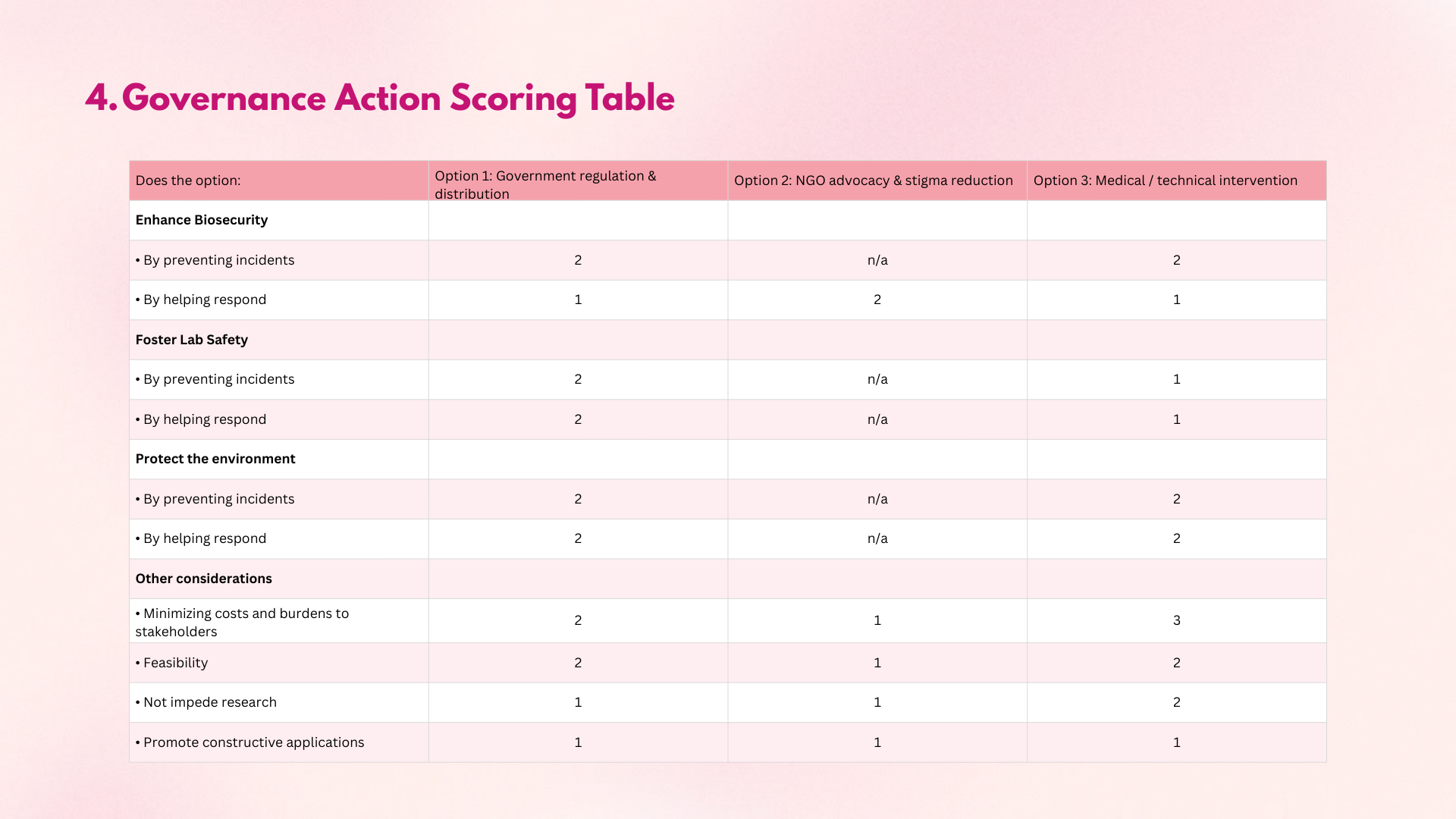
| Does the option: | Option 1 | Option 2 | Option 3 |
|---|---|---|---|
| Enhance Biosecurity | |||
| • By preventing incidents | |||
| • By helping respond | |||
| Foster Lab Safety | |||
| • By preventing incident | |||
| • By helping respond | |||
| Protect the environment | |||
| • By preventing incidents | |||
| • By helping respond | |||
| Other considerations | |||
| • Minimizing costs and burdens to stakeholders | |||
| • Feasibility? | |||
| • Not impede research | |||
| • Promote constructive applications |