Week 7 homework
Genetic circuits-Part II: Neuromorphic circuits and fungal biomaterials ⚙️
Part 1: Intracellular artificial neural networks (IANNs) 🧠
1. What advantages do IANNs have over traditional genetic circuits, whose input/output behaviors are Boolean functions?
IANNs offer several advantages over traditional genetic circuits, which are governed by Boolean logic, as they can integrate multiple inputs simultaneously to produce an output. Similar to biological brains, they can process information in a more adaptive manner, as they are capable of learning from cellular environments that constantly change, thus responding faster to fluctuations in their surroundings than conventional gene-regulation systems 1. Another one of their advantages is that they significantly improve decision-making accuracy inside cells by reducing noise in gene expression 2. This way, they also enable more complex computational tasks within living cells, in turn allowing the design of highly sophisticated cellular behaviors 3. This degree of scalability and control, along with their versatility, renders IANNs particularly well-suited for numerous applications in Synthetic Biology, especially in targeted therapies and personalized medicine, where the level of fine-tuning and precision that can be achieved with a genetic circuit plays a tremendously important role 2 3.
2. Describe a useful application for an IANN. Include a detailed description of input/output behavior, as well as any limitations an IANN might face to achieve your goal.
An important application for an IANN would be the development of a programmable “artificial pancreas” for autonomous diabetes treatment. In this system, engineered mammalian cells would contain a synthetic genetic circuit capable of sensing multiple physiological signals associated with blood glucose regulation and integrating them through neural-network-like computation 4 5. Unlike simple one-input genetic switches, this IANN could process combinations of glucose concentration, insulin levels, inflammatory cytokines, stress hormones such as cortisol, and metabolic indicators over time. The goal would be to mimic the decision-making behavior of pancreatic β-cells, while improving precision and adaptability in insulin delivery. Such a system could provide a long-term therapeutic treatment, especially for patients with Type 1 diabetes, reducing the need for continuous glucose monitoring devices and repeated insulin injections.
The input behavior of the IANN would involve multiple biological sensors embedded within the engineered mammalian cells. A glucose-sensitive promoter system, potentially based on carbohydrate-responsive transcription factors, such as ChREBP 6 or synthetic glucose-responsive elements, would detect elevated blood glucose levels. Additional sensors could detect inflammatory markers like IL-6 or TNF-α, since inflammation influences insulin sensitivity, while cortisol-responsive promoters could account for stress-induced glucose fluctuations. These signals would activate layered neural-network-like synthetic genetic circuits, designed to integrate weighted regulatory interactions between transcription factors, CRISPR interference mechanisms (such as the one mediated by Csy4 3, recombinases, and RNA regulators simultaneously rather than respond to glucose alone 4 5. The system could therefore distinguish between situations such as exercise, infection, stress, or fasting, each of which alters glucose metabolism differently.
Based on all the above, the primary output of the “artificial pancreas” IANN would be tightly controlled insulin production and secretion. When the integrated network determines that blood glucose is abnormally high and conditions are appropriate for insulin release, the engineered cells would express and secrete human insulin or insulin analogs 7. Additional outputs could include glucagon suppression factors or GLP-1-like peptides to improve glycemic control 8. The system could also include fluorescent or circulating reporter molecules that allow clinicians to monitor circuit activity noninvasively. Importantly, the network would ideally demonstrate dynamic learning-like behavior through adaptive regulatory thresholds, enabling more personalized glucose management over time. This would fundamentally improve traditional synthetic circuits that operate with rigid ON/OFF responses.
However, several limitations currently prevent IANNs from fully achieving this goal. One major challenge is the complexity of reliably engineering large intracellular genetic networks without unintended crosstalk, mutation, or metabolic burden on the host cell. Mammalian cells also exhibit noisy gene expression 9, which may result in excessive insulin production and increase the risk of hypoglycemia. Another constraint would be response speed: natural pancreatic β-cells regulate insulin secretion within minutes, whereas transcriptionally regulated synthetic circuits often respond much more slowly due to delays in transcription, translation, and protein secretion. Long-term stability is another concern, since implanted engineered cells may lose functionality or become immunogenic. Lastly, achieving true “learning” behavior analogous to computational neural networks mostly remains elusive because biological circuits exhibit limited memory capacity and constrained scalability 10.
3. Below is a diagram depicting an intracellular single-layer perceptron, where the X1 input is DNA encoding for the Csy4 endoribonuclease and the X2 input is DNA encoding for a fluorescent protein output whose mRNA is regulated by Csy4 (Tx: transcription; Tl: translation). Draw a diagram for an intracellular multi-layer perceptron where layer 1 outputs an endoribonuclease that regulates a fluorescent protein output in layer 2.
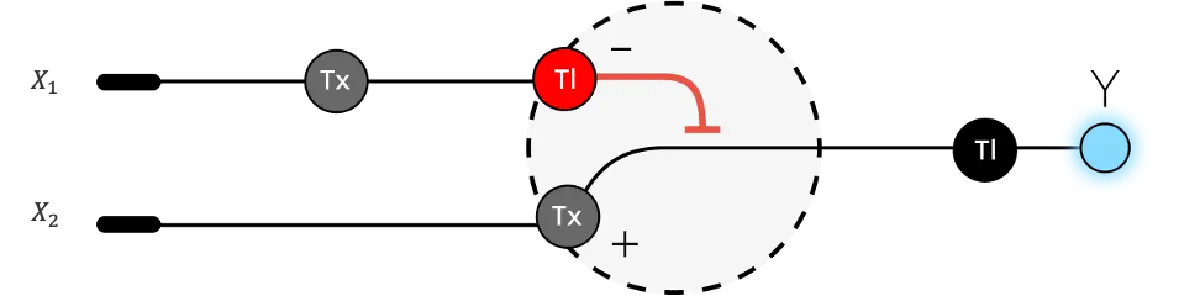 Figure 7.1 Schematic depiction of a single-layer intracellular perceptron regulated by the Csy4 endoribonuclease.
To design an intracellular mutli-layer perceptron as described in this exercise, I will need to incorporate two different endoribonucleases, regulating one layer each. The first layer will very closely resemble the neuromorphic circuit in Figure 7.1. The sole discrepancy will be that, in this case, instead of a fluorescent protein, the output will be a second endoribonuclease, more specifically one that recognizes a different RNA secondary structure than Csy4, for instance Cse3 (also known as CasE) 11 12, to ensure the orthogonality of the system. Therefore, in a system designed like that, input X1 will trigger the synthesis of Csy4, which, in turn, will repress the expression of Cse3 from input X2 (Figure 7.2, purple). On the second layer now, induced by input Y1, the amount of produced Cse3 from the first layer will affect (meaning allow or repress) (Figure 7.2, yellow) the expression of its output, a blue fluorescent protein (Figure 7.2, blue), by sequestering the respective RNA molecules.
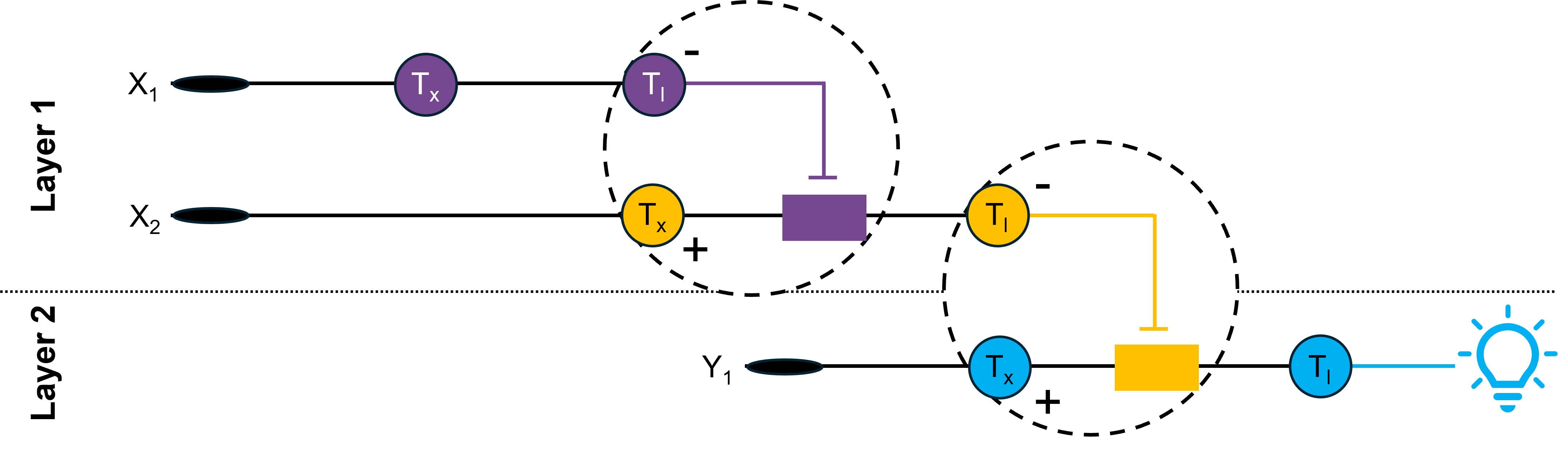 Figure 7.2 Schematic illustration of a two-layer neuromorphic circuit, where the output of the first layer (yellow) influences the output of the second layer (blue).
Part 2: Fungal materials 🍄
1. What are some examples of existing fungal materials and what are they used for? What are their advantages and disadvantages over traditional counterparts?
In general, fungal materials display several advantages compared to their conventional counterparts, mostly related to their sustainable production practices and biodegradability. Many types of “myco-materials”, as they are often called, are grown by recycling agricultural waste or other discarded organic substrates, contributing to a more sustainable circular bioeconomy with a notably lower carbon footprint than similar animal- and petroleum-based products. Unless they have undergone additional processing, they can also be biodegraded very quickly. On the other hand, many materials derived from fungi show lower durability than their traditional counterparts and may need to be enhanced with synthetic layers, ultimately rendering them less biodegradable. Another drawback involves significant challenges with their production, with costs remaining high and large-scale manufacturing still presenting limitations in particular.
More specific examples of existing fungal materials, along with their individual uses, as well as pros and cons compared to their conventional counterparts, include:
- Mycelium leather: It is a mycelium-derived biomaterial, meaning it is composed of a root-like network of fungal hyphae. Its production generally requires less water, land, and energy and is faster than traditional leather, while it prevents animal slaughter, as well as the intensive use of toxic chemical compounds employed in tanneries. After the initial myco-material is generated, it is processed into sheets that resemble animal leather in texture and thickness, two features of its overall appearance that can be easily customized. Mycelium leather is mainly utilized in the fashion industry (for clothing, but also for the fabrication of other accessories, such as handbags and wallets), in footwear production, as well as in furniture and automotive interior spaces 13 14, although its long-term aging properties are still being studied.
- Mycelium acoustic panels: They are manufactured from mycelium-derived biomaterials, grown as breviously described. As the resulting composite myco-material has sound-absorbing qualities, it can be molded into a much wider range of shapes, forms, and aesthetic designs compared to conventional acoustic insulation panels. Furthermore, they are naturally more lightweight than their conventional counterparts and can be used for the quenching of sounds in offices and studios, for noise reduction in public spaces, but also simply in sustainable interior architecture as eco-friendly decorative materials 15. Nevertheless, they often lack in mechanical strength compared to synthetic materials and their performance consistency may vary depending on fungal growth conditions.
- Mycelium bricks: They are biodegradable construction materials in which mycelium acts as a natural binder, forming lightweight solid blocks after drying and heat treatment. Their lower weight compared to conventional concrete or fired clay bricks helps reduce transportation and structural loads, while they also provide good thermal insulation. Additionally, they require far less energy expenditure than their conventional counterparts and can be used in temporary architectural structures, interior walls, insulation blocks, as well as in eco-friendly design installations 16. Mycelium bricks exhibit, however, lower compressive strength than traditional bricks, while building regulations for fungal materials are still limited in many areas across the world. On top of that, they are significantly less resistant to moisture and long-term weather exposure, which leads to their shorter lifespan in demanding outdoor conditions.
- Fungal chitosan: It is a biodegradable and biocompatible polymer obtained from the cell walls of fungi, especially species from the genera Aspergillus and Mucor. This biopolymer is chemically similar to chitosan derived from crustacean shells, as they mostly contain the same biochemical compound, chitin, but is considered a more sustainable and vegan-friendly alternative. As it does not rely on animal sources (shellfish), it presents a lower risk of shellfish allergen contamination and can be produced independently of seasonal seafood waste availability than conventional chitosan. Another advantage pertains to its quality, which is generally more consistent than shellfish-derived biopolymers due to controlled fungal cultivation. Fungal chitosan is used for biomedicine, for example, drug delivery systems and wound dressings, for cosmetics and skincare products, for food preservation and packaging, as well as for water purification 17. Nonetheless, material properties can vary depending on fungal species and extraction methods, while commercial availability is still notably lower compared to conventional chitosan products.
2. What might you want to genetically engineer fungi to do and why? What are the advantages of doing synthetic biology in fungi as opposed to bacteria?
Fungi can be genetically engineered to biosynthesize an arsenal of useful compounds. Since fungi can naturally produce a wide variety of complex secondary metabolites, their rich repertoire of metabolic pathways can be further genetically modified and used for many Synthetic Biology applications, such as to synthesize medical compounds, including antibiotics, anticancer drugs, and therapeutic proteins 18 19 20. This contribution of fungi to the biosynthesis of pharmaceuticals is especially useful considering that, unlike most bacteria, fungal cells can perform advanced post-translational modifications to the proteins they produce. Such complex post-translational modifications, especially glycosylation patterns, render fungi-synthesized therapeutic substances more stable and ensure specificity, along with proper activity of the pharmaceutical, while being more compatible with animal cells and, therefore, less likely to trigger toxic immune responses or allergies upon consumption by human patients. Another application of genetically engineered fungi concerns environmental cleanup and bioremediation, as genetically engineered fungi can break down plastics, oil, or other toxic pollutants 19. In agriculture, modified fungi can help plants absorb nutrients or resist diseases more effectively 19, while, in food technology, they can be utilized for generating alternative proteins or meat substitutes. Fungi hold significant potential as platforms for industrial production too, for example, in the production of biofuels 19. Compared to other hosts used for heterologous protein biomanufacturing, such as bacteria, fungi can generally tolerate harsher industrial conditions, such as low pH environments. In addition, engineered fungi can be employed for industrial production of enzymes, which, unlike bacteria, they readily and efficiently secrete in large amounts into their environment, facilitating the purification process 19 20. Lastly, compared to bacterial microorganisms used in biotechnology, fungi can be easily cultivated on inexpensive agricultural waste, thus reducing production costs and promoting sustainability. Taking into account that fungal filamentous growth allows them to colonize solid substrates as well, modified fungi can also be harnessed for the biomanufacturing of biomaterials and biopolymers for packaging and construction, as analyzed in the previous question.
Halužan Vasle A, Moškon M. Synthetic biological neural networks: From current implementations to future perspectives. BioSystems. 2024;237:105164. doi:10.1016/j.biosystems.2024.105164 ↩︎
Chen YY, Galloway KE, Smolke CD. Synthetic biology: advancing biological frontiers by building synthetic systems. Genome Biol. 2012;13(2):240. doi:10.1186/gb-2012-13-2-240 ↩︎ ↩︎
Jones RD, Qian Y, Siciliano V, et al. An endoribonuclease-based feedforward controller for decoupling resource-limited genetic modules in mammalian cells. Nat Commun. 2020;11(1):5690. doi:10.1038/s41467-020-19126-9 ↩︎ ↩︎ ↩︎
Pandi A, Koch M, Voyvodic PL, et al. Metabolic perceptrons for neural computing in biological systems. Nat Commun. 2019;10(1):3880. doi:10.1038/s41467-019-11889-0 ↩︎ ↩︎
Saltepe B, Kehribar EŞ, Su Yirmibeşoğlu SS, Şafak Şeker UÖ. Cellular Biosensors with Engineered Genetic Circuits. ACS Sens. 2018;3(1):13-26. doi:10.1021/acssensors.7b00728 ↩︎ ↩︎
Ortega-Prieto P, Postic C. Carbohydrate sensing through the transcription factor CHREBP. Frontiers in Genetics. 2019;10:472. doi:10.3389/fgene.2019.00472 ↩︎
Chouhan R, Goswami S, Bajpai AK. Recent advancements in oral delivery of insulin: from challenges to solutions. In: Elsevier eBooks. ; 2017:435-465. doi:10.1016/b978-0-323-47720-8.00016-x ↩︎
Zhang J, Zheng Y, Martens L, Pfeiffer AFH. The regulation and secretion of glucagon in response to nutrient composition: unraveling their intricate mechanisms. Nutrients. 2023;15(18). doi:10.3390/nu15183913 ↩︎
Raj A, van Oudenaarden A. Nature, nurture, or chance: stochastic gene expression and its consequences. Cell. 2008;135(2):216-226. doi:10.1016/j.cell.2008.09.050 ↩︎
Yehl K, Lu T. Scaling computation and memory in living cells. Curr Opin Biomed Eng. 2017;4:143-151. doi:10.1016/j.cobme.2017.10.003 ↩︎
Niewoehner O, Jinek M, Doudna JA. Evolution of CRISPR RNA recognition and processing by Cas6 endonucleases. Nucleic Acids Res. 2014;42(2):1341-1353. doi:10.1093/nar/gkt922 ↩︎
Parikh SJ, Terron HM, Burgard LA, et al. Targeted Control of Gene Expression Using CRISPR-Associated Endoribonucleases. Cells. 2025;14(7):543. doi:10.3390/cells14070543 ↩︎
Mycoworks. What is ReishiTM - MycoWorks. MycoWorks. Published April 4, 2023. https://www.mycoworks.com/blog/reishi-mycelium-material ↩︎
Markoulakis S. Meet Mylo: Bolt Threads’ latest textile that looks and feels like leather. SFGATE. https://www.sfgate.com/style/article/Meet-Mylo-Bolt-Threads-latest-textile-that-12861807.php. Published April 25, 2018. ↩︎
Paola. Mogu Acoustic Panels with Mycelium. Mogu. Published November 11, 2025. https://mogu.bio/mycelium-acoustic-panels/ ↩︎
The Living. Mycelium Brick. 2014 | MOMA. The Museum of Modern Art. https://www.moma.org/collection/works/188561 ↩︎
Epic. Vegetal & Fungal Chitosan manufactured in Europe - KitoZyme. KitoZyme. Published October 3, 2025. https://www.kitozyme.com/en/ingredients/chitosan/ ↩︎
Devi R, Kaur T, Guleria G, et al. Fungal secondary metabolites and their biotechnological applications for human health. In: Elsevier eBooks. ; 2020:147-161. doi:10.1016/b978-0-12-820528-0.00010-7 ↩︎
Meyer V, Basenko EY, Benz JP, et al. Growing a circular economy with fungal biotechnology: a white paper. Fungal Biol Biotechnol. 2020;7:5. doi:10.1186/s40694-020-00095-z ↩︎ ↩︎ ↩︎ ↩︎ ↩︎
Nielsen J, Keasling JD. Engineering Cellular Metabolism. Cell. 2016;164(6):1185-1197. doi:10.1016/j.cell.2016.02.004 ↩︎ ↩︎