Targetting Mycobacterium tuberculosis DnaA Domain 4 for novel antitubercular drug discovery using an in silico approach This image was generated with the help of NotebookLM AI tool.
Abstract Tuberculosis is one of the leading causes of death in the world, which is caused by Mycobacterium tuberculosis. A lot of struggles exist in treating TB, mainly due to persisters and drug resistance in TB. Currently many strategies are being researched to improve the treatment effectiveness and efficiency. My project aims to target a particular domain from a new protein from M. tuberculosis and find potential inhibitors against it to contribute to TB treatments. My protein of choice is DnaA, the essential replication initiator in M.tuberculosis. This underexplored, biologically validated protein is particularly exciting, given that it is essential for replication of the genome and has no known human homologs, thus targeting a protein where developing resistance could be difficult and have minimal to no off target effects. The domain of choice is Domain 4 - the DNA binding domain, chosen for the same features: essential and highly conserved.
Targetting Mycobacterium tuberculosis DnaA Domain 4 for novel antitubercular drug discovery using an in silico approach
This image was generated with the help of NotebookLM AI tool.
Abstract
Tuberculosis is one of the leading causes of death in the world, which is caused by Mycobacterium tuberculosis. A lot of struggles exist in treating TB, mainly due to persisters and drug resistance in TB. Currently many strategies are being researched to improve the treatment effectiveness and efficiency. My project aims to target a particular domain from a new protein from M. tuberculosis and find potential inhibitors against it to contribute to TB treatments. My protein of choice is DnaA, the essential replication initiator in M.tuberculosis. This underexplored, biologically validated protein is particularly exciting, given that it is essential for replication of the genome and has no known human homologs, thus targeting a protein where developing resistance could be difficult and have minimal to no off target effects. The domain of choice is Domain 4 - the DNA binding domain, chosen for the same features: essential and highly conserved.
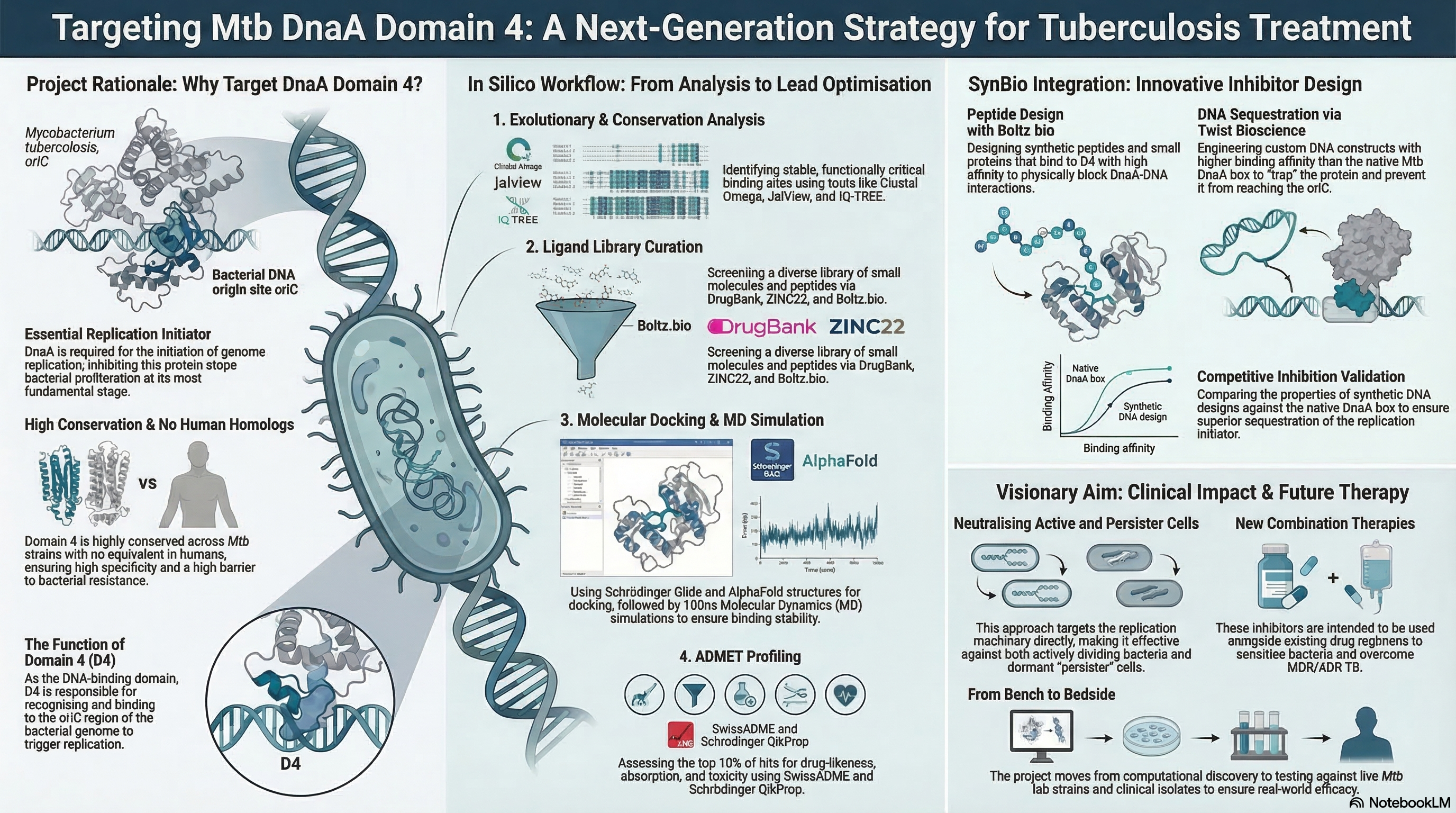
The key steps of this project include:
Evolutionary and Conservationary Analysis of the protein
Curation of a ligand library
Docking ligands to target protein
Molecular Dynamics Simulations
ADMET Profiling
Lead Optimization of Hits.
This image was created with the help of NotebookLM AI tool.
Milestones include
Screen and rank potential inhibitors for domain IV via molecular docking using the PDB structure.
Spot optimal conformations with favorable interactions for hits using MD simulations.
Assess drug-likeliness of hits through ADMET filtering and perform lead optimization of hits.
Analyze and report how leads can result in replication inhibition in silico.
Project Aims
Aim1: Experimental Aim:
The aim of my project is to discover potential inhibitors for the Domain 4 (D4) of Mtb.DnaA by utilising a standard drug discovery workflow while also incorporating synthetic biology principles such as protein design and DNA editing and design. Aim 2: Developmental Aim:
To implement the best hits obtained from the computational workflow in live M.tuberculosis bacteria,synthesizing the hits and using them against live M.tuberculosis (first lab strains, and if successful, progress to clinical isolates) to test their efficacy and develop them further depending on results. Aim 3: Visionary Aim:
If fully realized, this inhibitor can be made into a drug, which can then be used in combination therapies against TB. It can work on both active and persister cells alike, inhibiting replication initiation and stopping proliferation, and also sensitising them to existing drug regimens.
Background
This project aims to explore an underexplored, biologically validated target in M.tuberculosis and if fully realized, it could lead to the formation of new combination therapies that can target DnaA along with other proteins to effectively neutralize the bacterium in host. It will also be relatively hard to gain resistance against this inhibitor, because the protein is highly conserved and any mutations in D4 can be difficult or lethal to the bacteria, since that would directly impact the affinity of DNA binding and ultimately replication initiation. Thus it can be very effective against latent infections and MDR/XDR TB. Upon the success of the first aim of this project, it can be taken forward and developed by experts to obtain a drug that can bring about massive progress in clinical treatments, taking this research from bench to bedside for the betterment of patients.
Ethical Implications:
This project, while focused on targeting the DnaA for therapeutic benefit, is within a dual-use framework where obtained insights into inhibitor design could be misapplied. Examples include:
Facilitating resistance or unintended biological disruption.
By adhering to strict institutional biosafety protocols, ensuring secure handling of computational and experimental data, limiting distribution of sensitive details, and maintaining a clear therapeutic intent aligned with biosecurity norms, we can reduce risks and effectively mitigate them while preserving the scientific value.
The project also prioritizes ethical integrity through citation practices, transparent and responsible use of AI-assisted tools, and the generation of reproducible, unbiased data for computational modeling, supported by institutional oversight and guidelines from global organisations like the WHO. Its broader implications are in contributing to effective tuberculosis therapies and ensuring that advancements are communicated responsibly and translated well, thus supporting scientific progress and societal well-being.
Experimental Design, Techniques, Tools and Technology
Curate a ligand library including small molecules and designed peptide, DNA constructs. (Drugbank, Boltz, Twist Bioscience, ZINC22)
Dock them against the target domain’s PDB structure and Alphafold structure. (Schrodinger Glide, Diffdock)
Perform MD simulation on the top 10% hits. (Desmond, Gromacs)
Perform ADMET profiling for the top 10 % hits in MD simulations. (SwissADME, Schrodinger Qikprop)
Perform lead optimization (if time permits) (Schrodinger)
Analyze how this can be further refined and developed.
Protocol for Protein Binder Design:
Through the BoltzBio platform, target protein to be input and active site residues to be specified.
Select the type of binder: peptide, antibody or nanobody. (I chose nanobody binders)
Provide specifications for the type of nanobody binders to be designed including motifs to include/exclude, etc..
Run the experiment.
Gather the top designs and evaluate their properties.
Protocol for DNA Design:
Obtain sequence of the wild-type DnaA-box DNA sequence, which is complexed with the ligand.
Mutate the sequence using random mutagenesis tools.
Redock the wild-type and mutated DNA sequences back to the protein target.
Analyze the binding affinities and properties of the docked structures to identify a mutated sequence with better binding affinity than the original DNA.
Techniques Relevant to my project
Bioethical Considerations
DNA Editing
DNA Construct Design
Databases
Plasmid Preparation
Quality Control/ Analysis
Designing a Twist Order
Protein Design
Use of Boltz/PepMLM
Description of 2 techniques relevant to my project:
I would use Protein Design, to design synthetic peptides or small proteins, that can bind to the D4 of DnaA instead of small molecules with high affinity to inhibit DnaA-DNA interactions.
I would use DNA Editing and Construct design to design a DNA which would have a higher binding affinity to the DBD than the M.tuberculosis’s DnaA box, which can sequester the DnaA, preventing it from binding to the oriC region.
HTGAA Industry Council Companies Involved:
Boltz.bio
Twist Bioscience
Kernel Asimov
Results and Quantitative Expectations
Validation
I choose to validate the DNA design part of my project. I will do this by designing the molecule, obtaining its properties and comparing it with that of the MtDnaA box to see if it will have a relatively better binding affinity to inhibit DnaA D4. The synbio techniques I used in this validation are DNA Editing and Constructing and Databases.
The protocol will involve, designing the DNA, performing protein-DNA docking with both the designed and the wild-type DNA as ligands and finally, interpreting the results to analyze for better binding affinities of the designed DNA with respect to that of the wild-type DNA.
Potential problems during validation include docking of constructs into a dynamic target, which is mistakenly assumed to be static, solvent and ion interference, cross reactivity testing. They can be overcome by using MD refinement for at least 100ns, performing MM-PBSA calculations and reverse docking respectively.
Results
The results of this research, focused on targeting the Domain IV of the Mycobacterium tuberculosisDnaA protein, are summarized in the following subsections:
1. Evolutionary & Conservation Analysis
Domain IV (the DNA-binding domain) exhibited an exceptionally high average conservation score of 10.67 out of 11, significantly higher than the overall protein average of 9.876.
Analysis identified a “Pathogenic Core” (including M. tuberculosis and M. bovis) with nearly zero divergence, indicating intense evolutionary pressure to maintain replication fidelity.
The DNA-recognition residues in the helix-turn-helix motif were found to be identical across the entire genus, validating Domain IV as a stable target for broad-spectrum intervention with a low risk of resistance.
2. Binding Site Prediction
The research identified a hydrophilic, shallow DNA-binding pocket defined by eight critical residues: Pro434, Lys436, Ala441, Arg444, Gln445, Arg468, Thr472, and Tyr475.
Lys436 and Tyr475 were prioritized as the most vital targets because they provide the base selectivity required for the protein to recognize the chromosomal origin of replication (oriC).
3. Molecular Docking & Small-Molecule Hits
Virtual screening identified five high-affinity compounds with binding energies ranging from -10.805 to -14.99 kcal/mol.
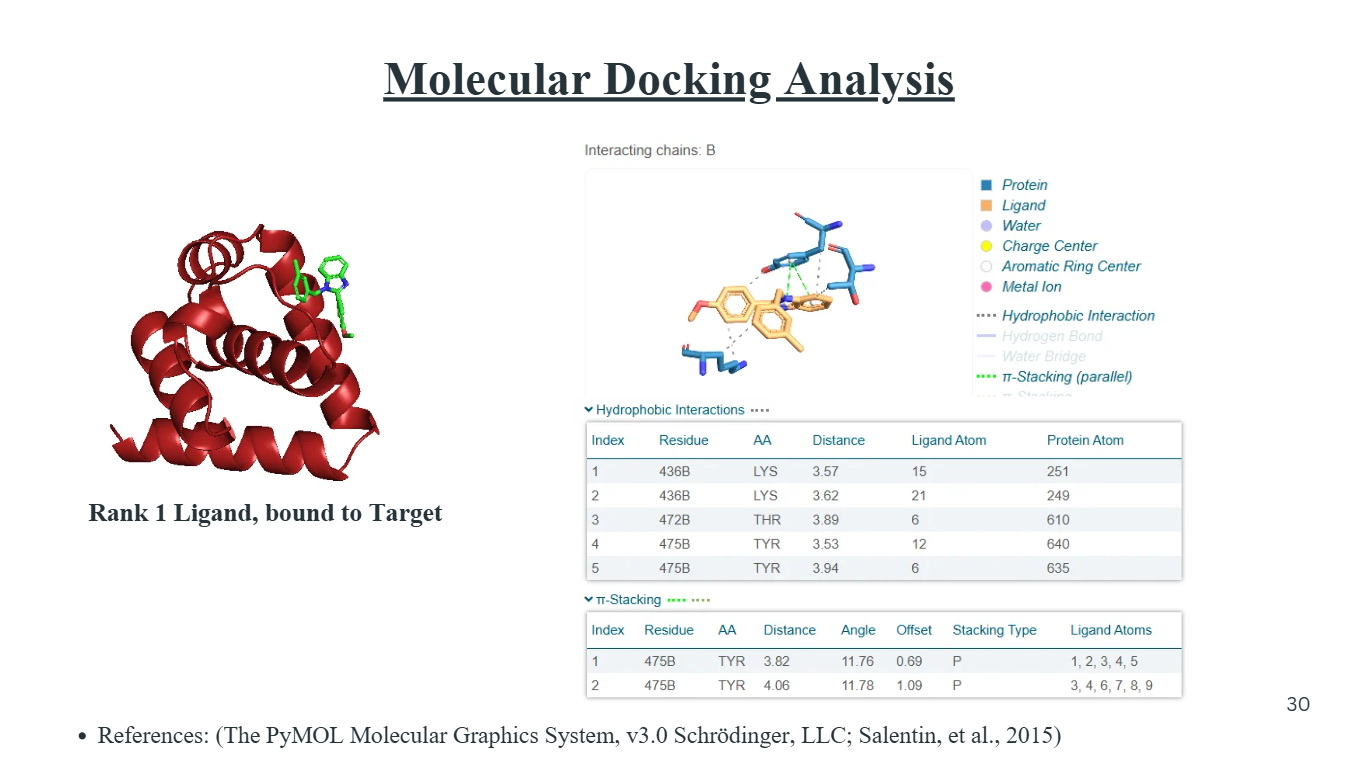
Compound 1 was the most potent binder (-14.99 kcal/mol), utilizing five hydrophobic interactions and parallel pi-stacking with Tyr475.
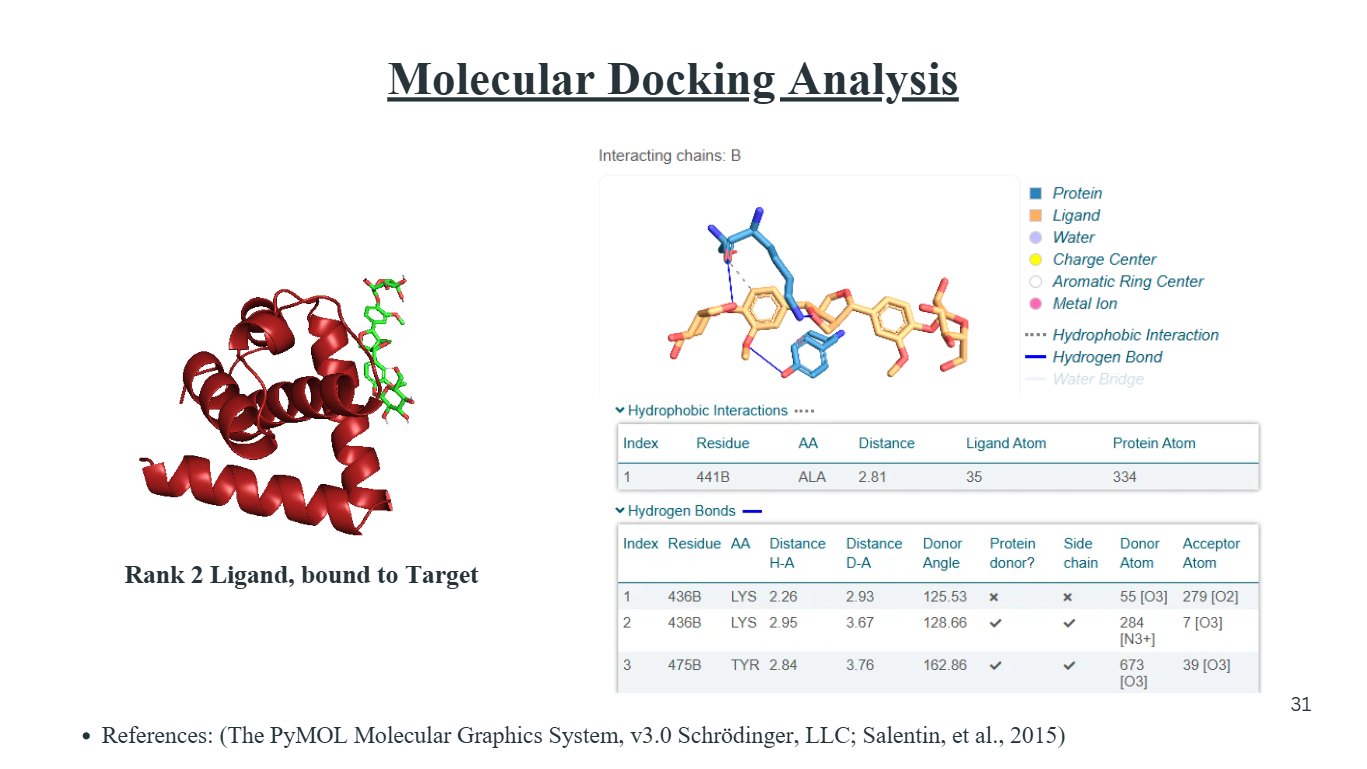
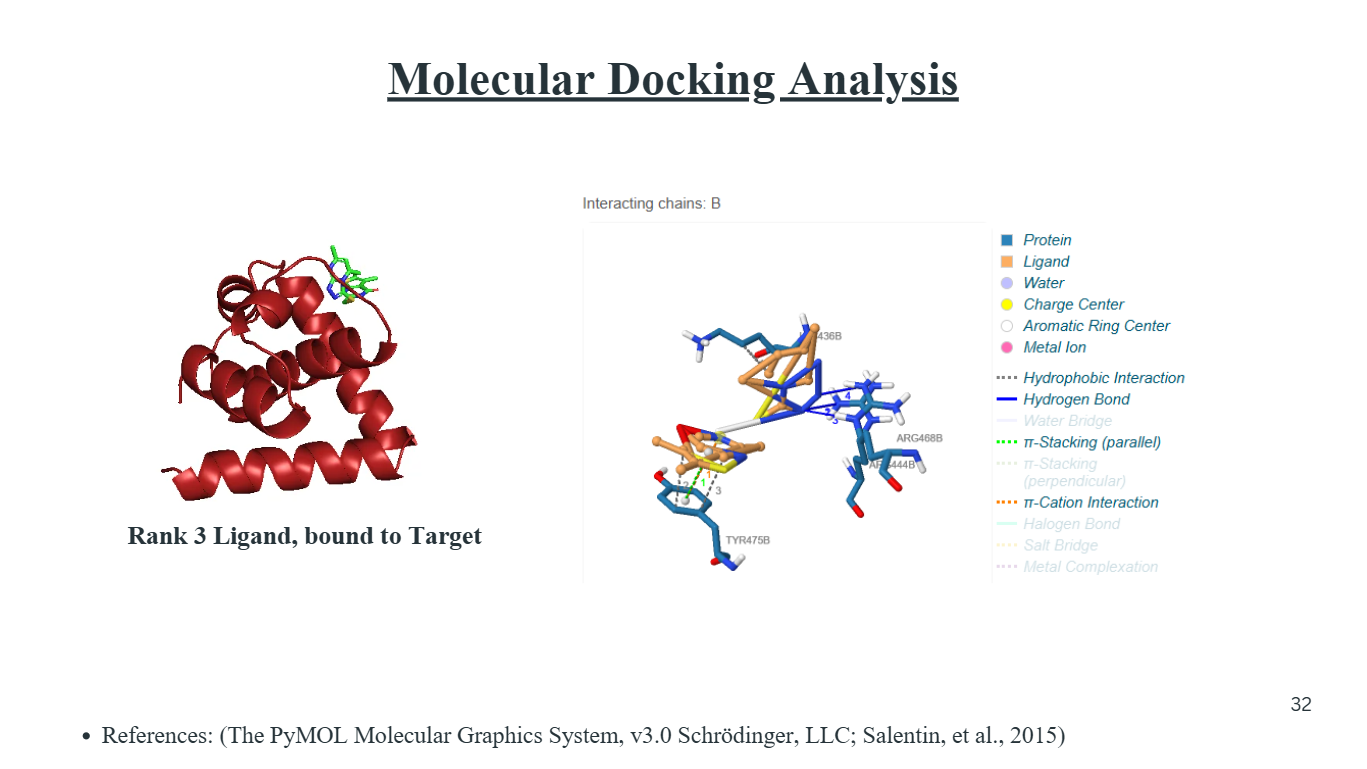
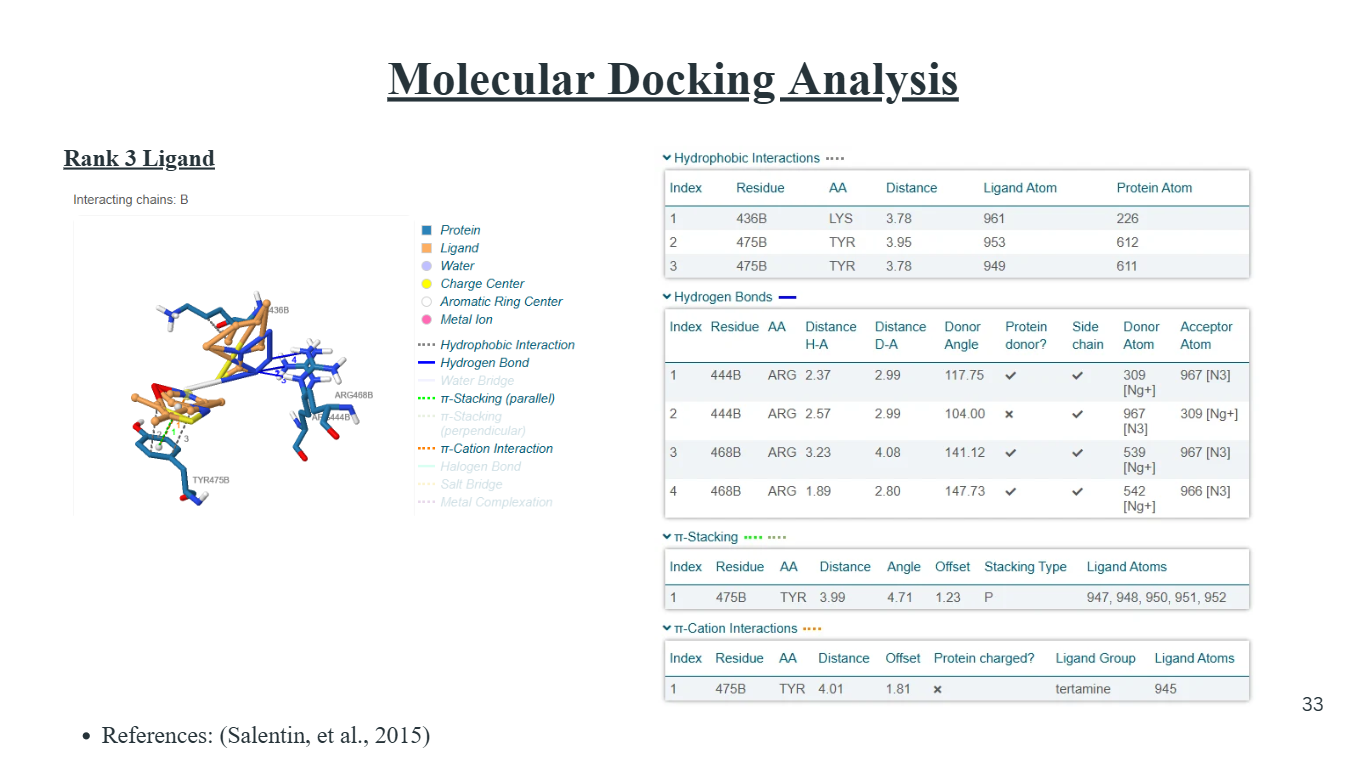
The identified hits effectively target the key base-selective residues (Lys436 and Tyr475) via hydrogen bonding and pi-stacking, acting as competitive inhibitors to block replication initiation. The top 3 protein-ligand complexes and their interactions are shown below:
Top 1 rank ligand complex
Top 2 rank ligand complex
Top 3 rank ligand complex
4. ADMET Profiling & Safety Filtering
From an initial 235 docking hits, 20 compounds were prioritized based on their pharmacokinetic and safety profiles.
Two primary candidates were identified as the most viable, showing zero Lipinski violations, low cardiotoxicity risk, and favorable metabolic profiles.
Despite having the highest affinity, Compound 1 was reclassified to Tier 4 (Moderate Risk) due to specific pharmacokinetic flags compared to Tier 3 candidates.
5. De novo Nanobody Design
Addressing the challenges of targeting a flat DNA-binding interface, 14,235 potential ligands were designed using BoltzBio.
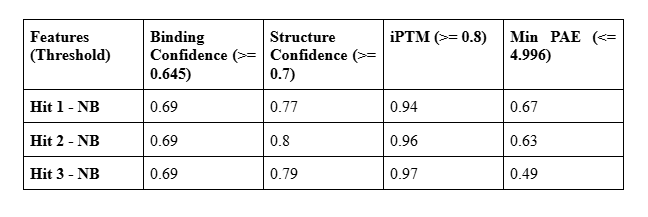
The screening process successfully narrowed the library to 11 top-ranked nanobodies (116–121 amino acids long) that surpassed rigorous structural success thresholds.
These nanobodies are designed to achieve complete replication arrest by effectively masking the essential residues Lys436 and Tyr475.
The parameters of the top 3 binders are shown here:
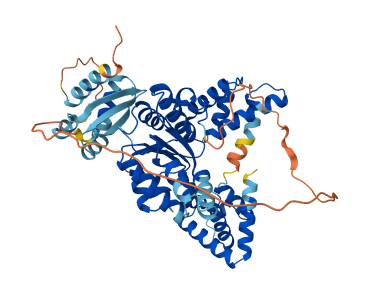
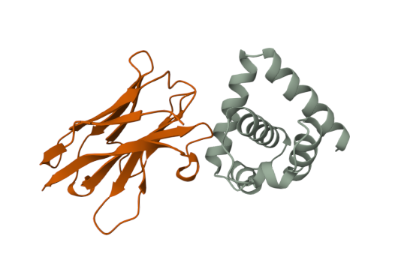
The top binder is shown below:
The orange protein is the designed binder, whereas the grey protein is the target.
6.DNA Designs
DNA decoys were engineered to target the DnaA Domain IV, with the top-ranked design achieving a robust PyDockDNA score of -93.383 driven by strong electrostatics.
The most optimal configuration utilizes a 45-bp mutated DnaA box featuring three tandem repeats integrated into the pMV261 plasmid vector.
This strategy competitively sequesters the initiator protein, effectively preventing oriC recognition and inducing complete chromosomal replication arrest.
This image is a snapshot of the docking results obtained.
References
Alsayed SSR, Gunosewoyo H. Tuberculosis: Pathogenesis, Current Treatment Regimens and New Drug Targets. Int J Mol Sci. 2023 Mar 8;24(6):5202.
Bahuguna A, Rawat DS. An overview of new antitubercular drugs, drug candidates, and their targets. Med Res Rev. 2020; 40: 263-292. https://doi.org/10.1002/med.21602
Cagiada M, Bottaro S, Lindemose S, Schenstrøm SM, Stein A, Hartmann-Petersen R, et al. Discovering functionally important sites in proteins. Nat Commun. 2023 Jul 13;14(1):4175.
Goverdhan Lanka, Darakhshan Begum, Suvankar Banerjee, Nilanjan Adhikari, Yogeeswari P, Balaram Ghosh, Pharmacophore-based virtual screening, 3D QSAR, Docking, ADMET, and MD simulation studies: An in silico perspective for the identification of new potential HDAC3 inhibitors, Computers in Biology and Medicine, Volume 166, 2023, 107481, ISSN 0010-4825, https://doi.org/10.1016/j.compbiomed.2023.107481.
Hansen FG and Atlung T (2018) The DnaA Tale. Front. Microbiol. 9:319. doi: 10.3389/fmicb.2018.00319
Palomino, J. C., & Martin, A. (2014). Drug Resistance Mechanisms in Mycobacterium tuberculosis. Antibiotics, 3(3), 317–340.
Tsodikov, O. V., & Biswas, T. (2011). Structural and thermodynamic signatures of DNA recognition by Mycobacterium tuberculosis DnaA. Journal of molecular biology, 410(3), 461–476. https://doi.org/10.1016/j.jmb.2011.05.007
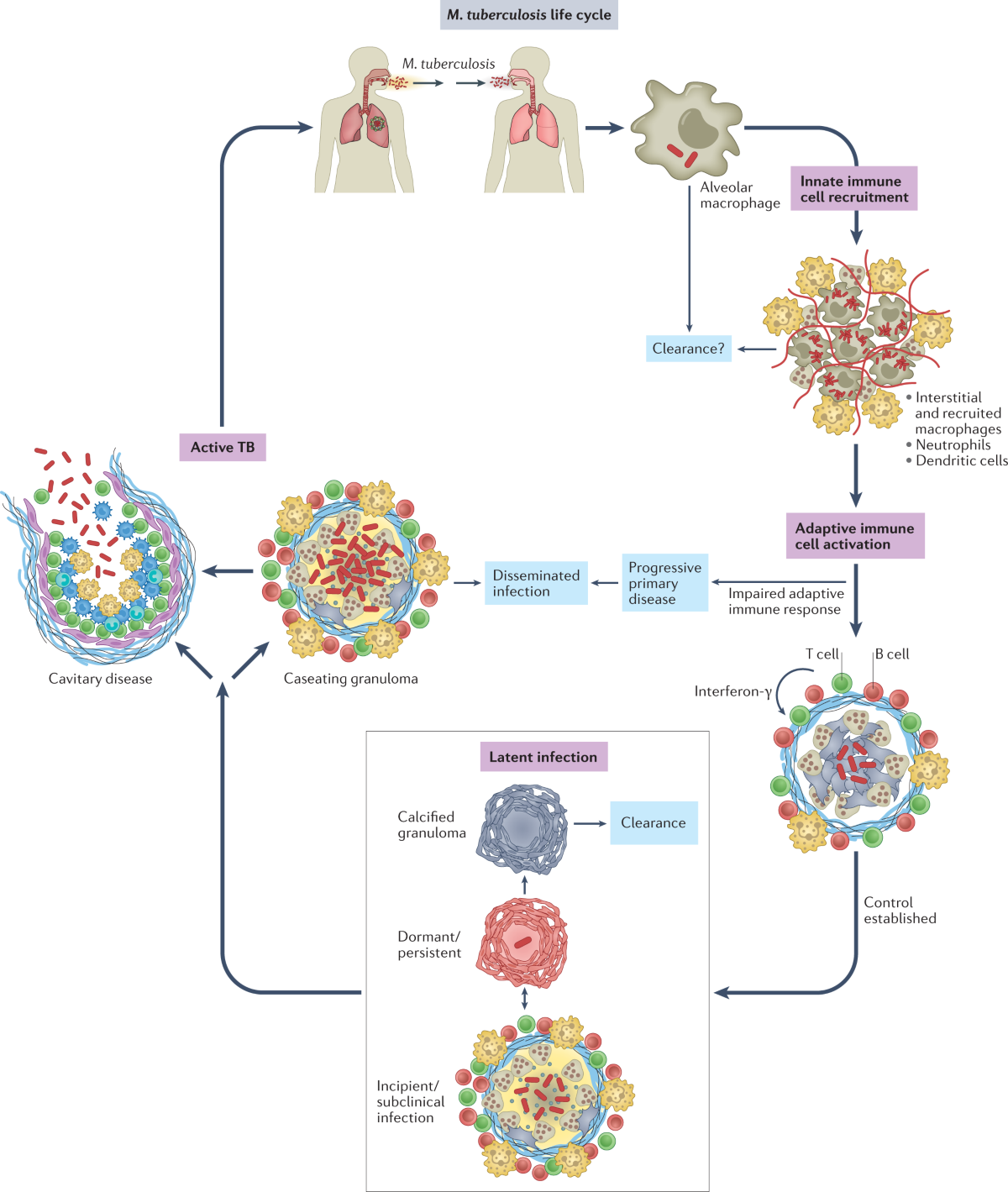
Mohammadnabi N, Shamseddin J, Emadi M, Bodaghi AB, Varseh M, Shariati A, Rezaei M, Dastranj M, Farahani A. Mycobacterium tuberculosis: The Mechanism of Pathogenicity, Immune Responses, and Diagnostic Challenges. J Clin Lab Anal. 2024 Dec;38(23):e25122. doi: 10.1002/jcla.25122. Epub 2024 Nov 26. PMID: 39593272; PMCID: PMC11632860.

.png)
.png)