Week 11: Bioproduction and Cloud Labs
The 1,536 Pixel Artwork Canvas
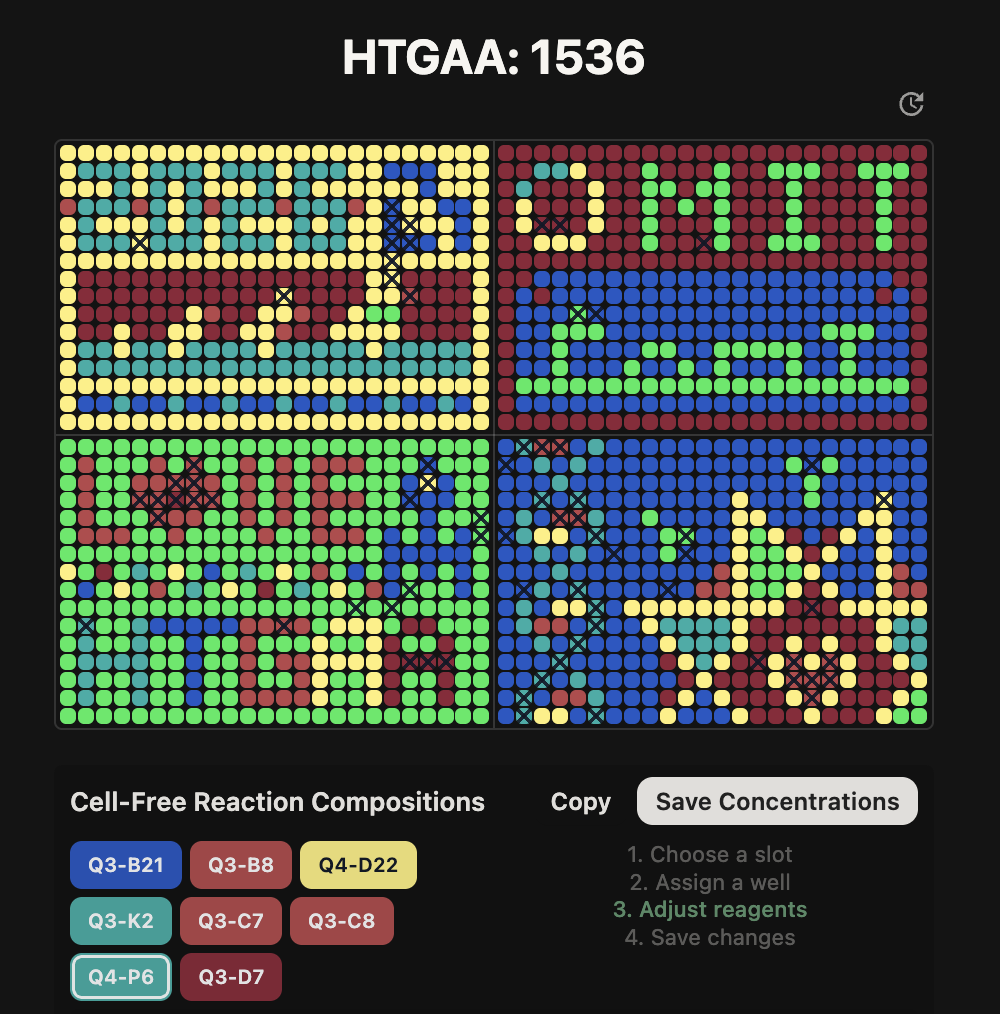
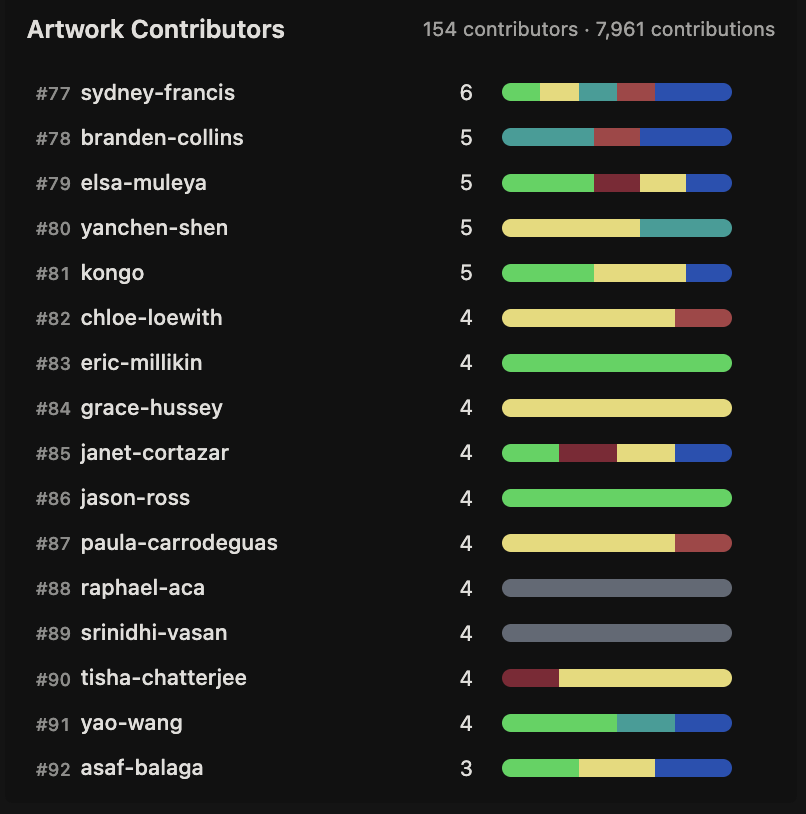 I ended up contributing 6 pixels of various colors to the canvas, which were mostly made on the border, but didn’t end up in the final artwork.
I really enjoyed that this assignment was a play on other iterations of the collaborative pixel artwork challenges across various platforms, and felt like a fun way to be able to interact with the entire HTGAA community. I think that a lower cooldown time was needed (and I heard that it was implemented towards the end), as I would often click onto another tab while waiting (and then would get distracted…). Overall though, it was fun to see what came out of the community and what ended up on the final canvas.
Cell-Free Protein Synthesis
| Component | Role |
|---|---|
| E. coli Lysate | |
| BL21 (DE3) Star Lysate (includes T7 RNA Polymerase) | Provides the transcription/translation machinery, with the T7 RNAP driving the transcription of any gene that is under a T7 promoter |
| Salts/Buffer | |
| Potassium Glutamate | Potassium Glutamate stabilizes the ribosomes and maintains osmotic balance |
| HEPES-KOH pH 7.5 | This is a non-reactive buffer that promotes an optimal pH for transcription/translation |
| Magnesium Glutamate | Supplies Mg2+ to the system, which is necessary for ribosome assembly, RNAP activity, and ATP hydrolysis |
| Potassium phosphate monobasic | Provides additional buffering capacity and also a phosphate source that can feed into the energy pathways |
| Potassium phosphate dibasic | Provides additional buffering capacity and also a phosphate source that can feed into the energy pathways |
| Energy/Nucleotide System | |
| Ribose | Energy source that feeds the metabolic pathways in the lysate to regenerate ATP |
| Glucose | Energy source that feeds the metabolic pathways in the lysate to regenerate ATP |
| AMP | Nucleoside monophosphates that is a building block for RNA syntehsis during transcription |
| CMP | Nucleoside monophosphates that is a building block for RNA syntehsis during transcription |
| GMP | Nucleoside monophosphates that is a building block for RNA syntehsis during transcription |
| UMP | Nucleoside monophosphates that is a building block for RNA syntehsis during transcription |
| Guanine | Helps replenish GMP, which is consumed rapidly during translation |
| Translation Mix (Amino Acids) | |
| 17 Amino Acid Mix | Provides the majority of the standard amino acids needed for translation |
| Tyrosine | Separately provided due to poor solubility at neutral pH |
| Cysteine | Separately added since it is prone to oxidation and to avoid off-target reactions |
| Additives | |
| Nicotinamide | Precursor for NAD+ that helps sustain the energy metabolism |
| Backfill | |
| Nuclease Free Water | Maintains reaction’s final woking volume without introducing RNases or DNases |
The first different I noticed was in the nucleotide composition. For the 1-hour mix, it uses NTPs while the 20-hour mix provides NMPs. The 20-hour mix also relies on ribose and glucose as an energy source, opposed to the PEP-Mono used by the 1-hour mix, which indicates that the 20-hour mix is designed to sustain long-term expression. This is also indicated by the higher concentration of the amino acids found within the 20-hour mix.
Planning the Global Experiment– Cell-Free Master Mix Design
In our pixel artwork, we utilized six fluorescent proteins, including sfGFP, mRFP1, mKO2, mTurquoise2, mScarlet_I, and Electra2, each with unique biophysical properties.
- sfGFP: designed to reliably produce signal even when the lysate is suboptimal
- could increase the amino acid (17 amino acid mix + tyrosine) concentrations to increase translation rates towards the end of the reaction
- mRFP1: slow to mature and has low acid sensitivity
- could increase tyrosine since it has low solubility
- mKO2: high dependence on oxygen
- could increase the ribose and glucose to make sure that oxygen levels are sufficient as well as re-supplying energy
- mTurquoise2: slow to mature
- could increase the magnesium glutamate concentration and increase the NMP pool to overcome the maturation
- mScarlet-I: fast maturation
- could increase the tyrosine concentration since it is typically consumed quicker than other amino acids
- Electra2: tends to form aggregates due to resistance to acidity
- could decrease the magnesium glutamate concentration to reduce the aggregation
| Reaction Mixture | Explanation |
|---|---|
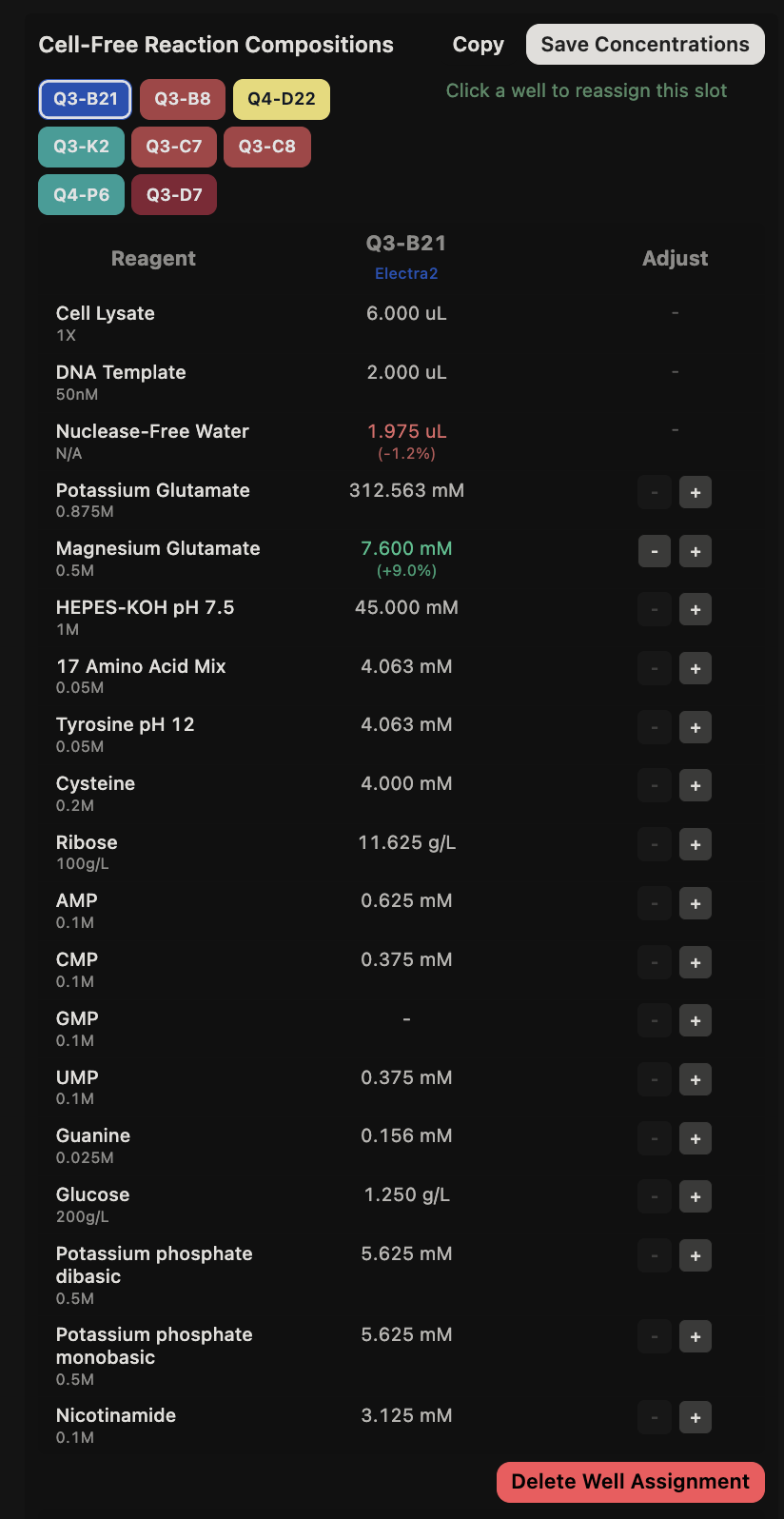
| Since I wanted to compare the Electra2 versus others to test my hypothesis, I increased the glutamate concentration |
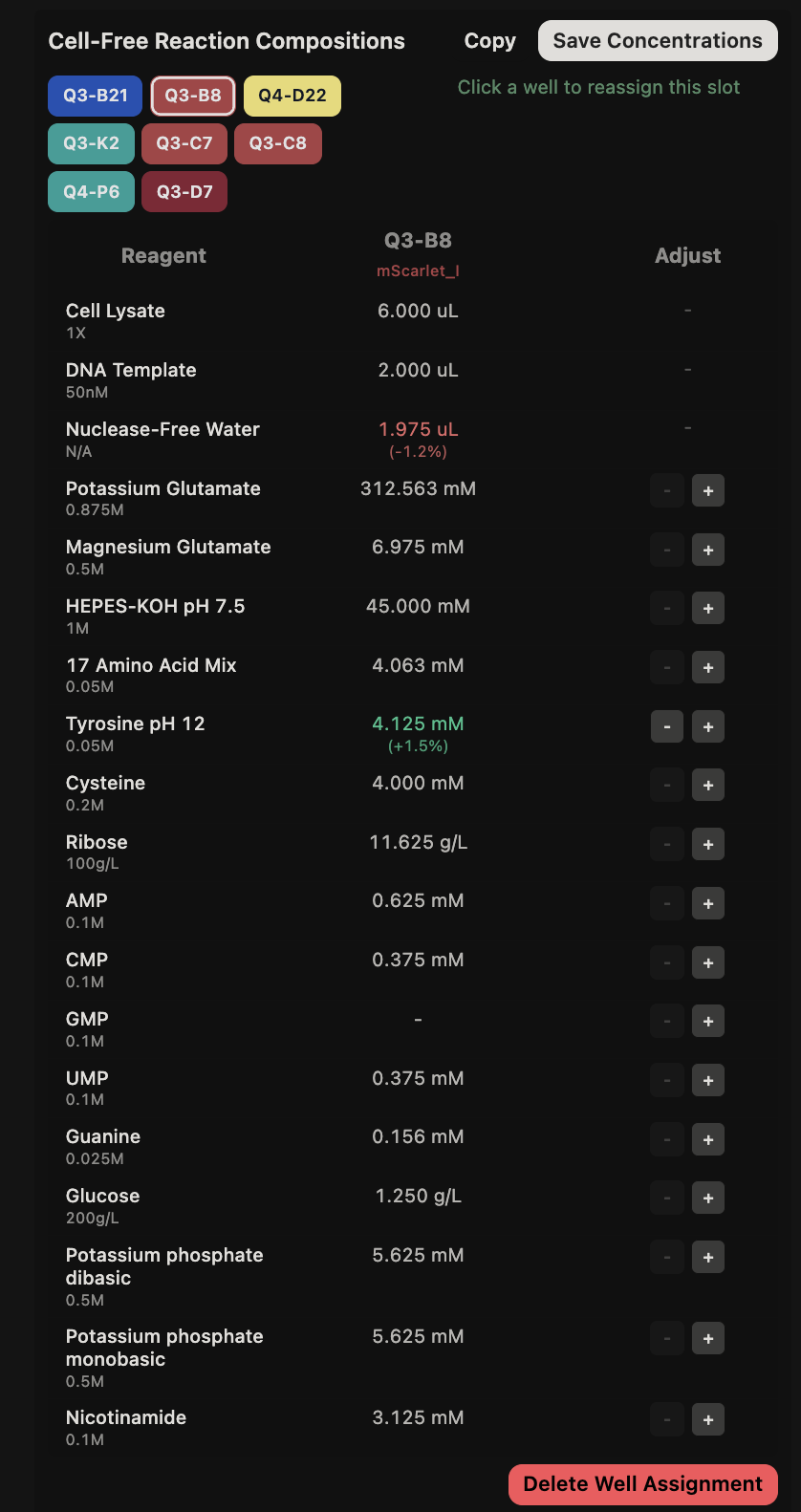
| Increased tyrosine by 1.5% |
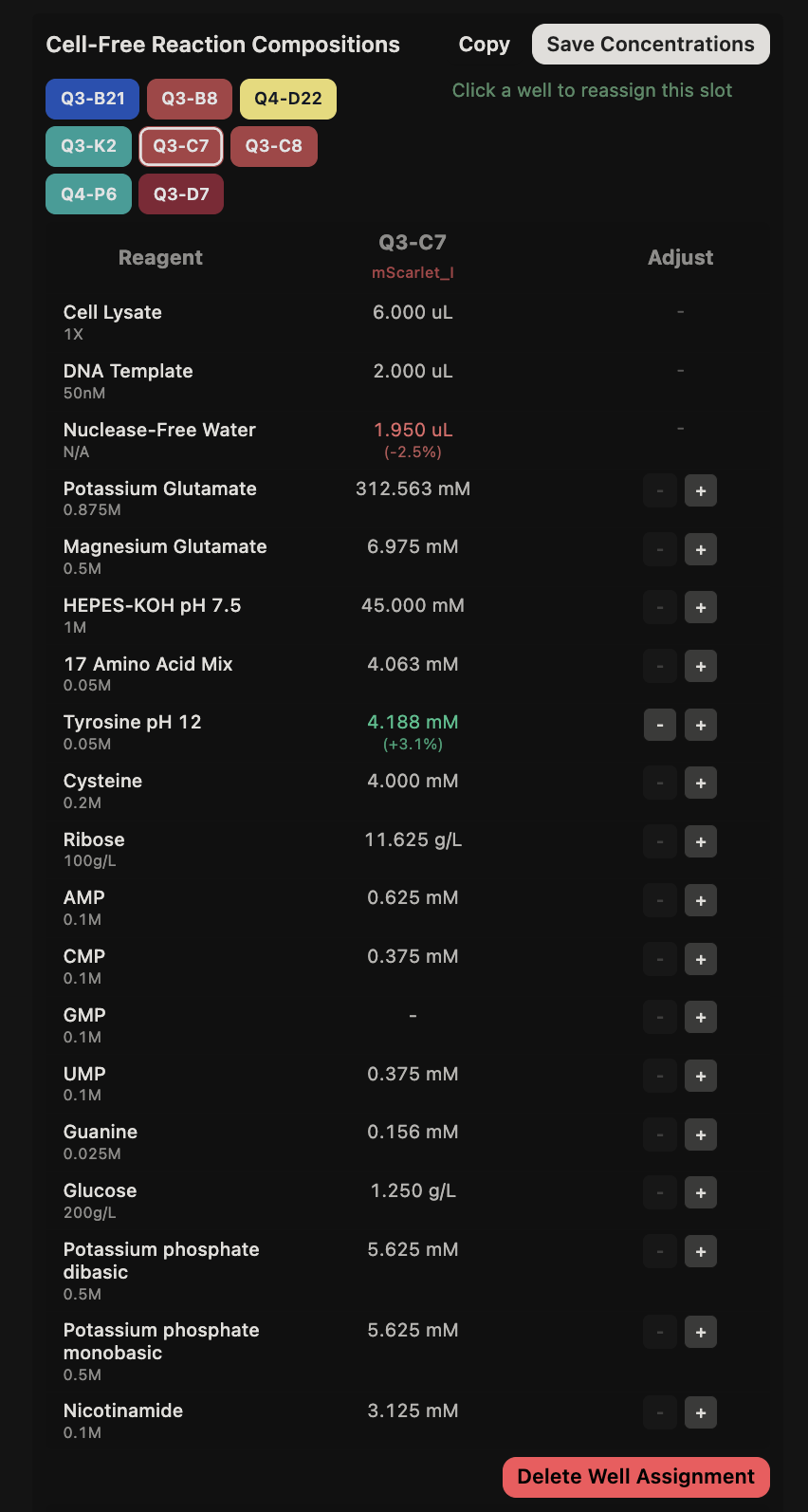
| Increased tyrosine by 3.1% |
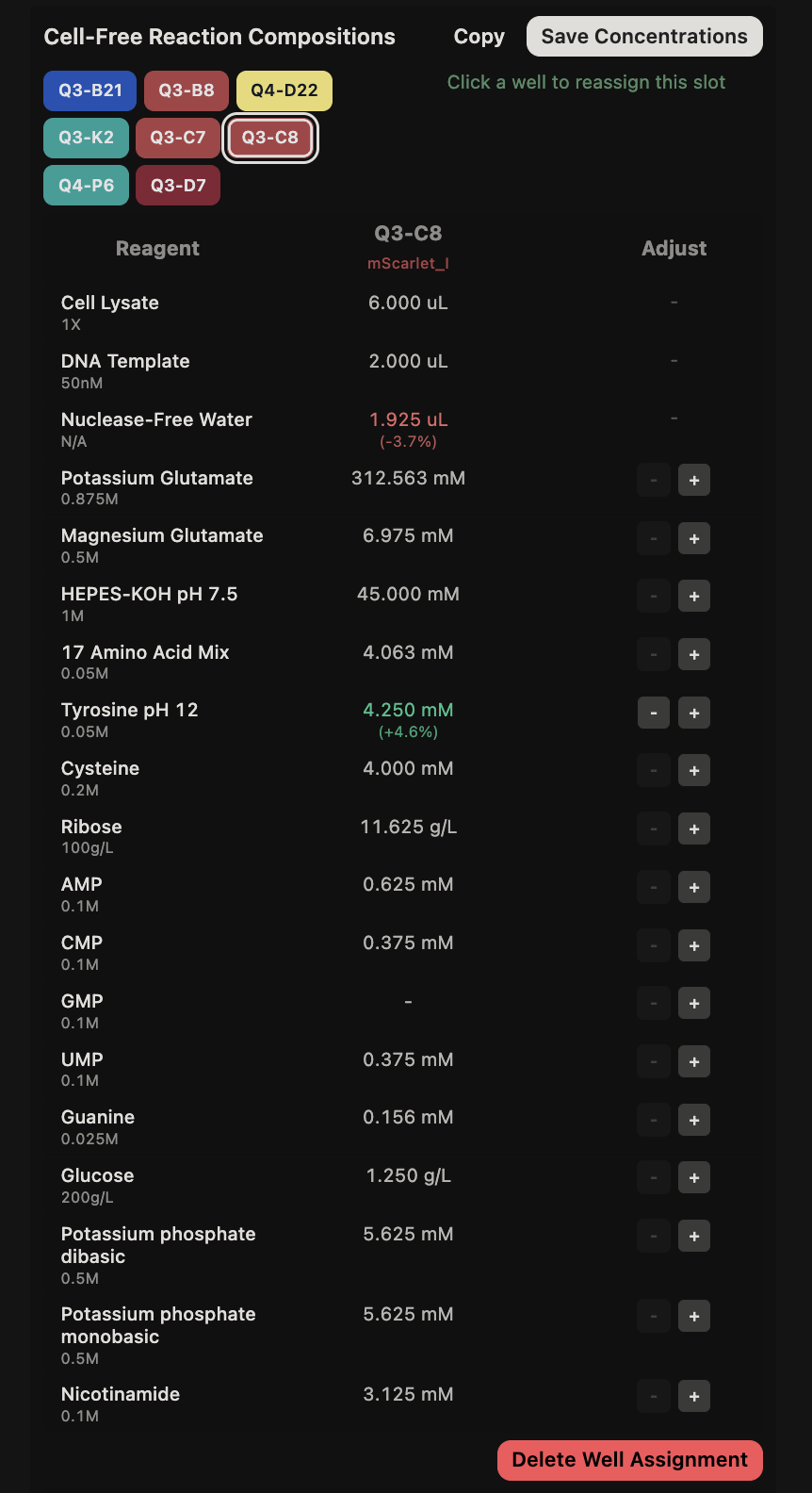
| Increased tyrosine by 4.6% |
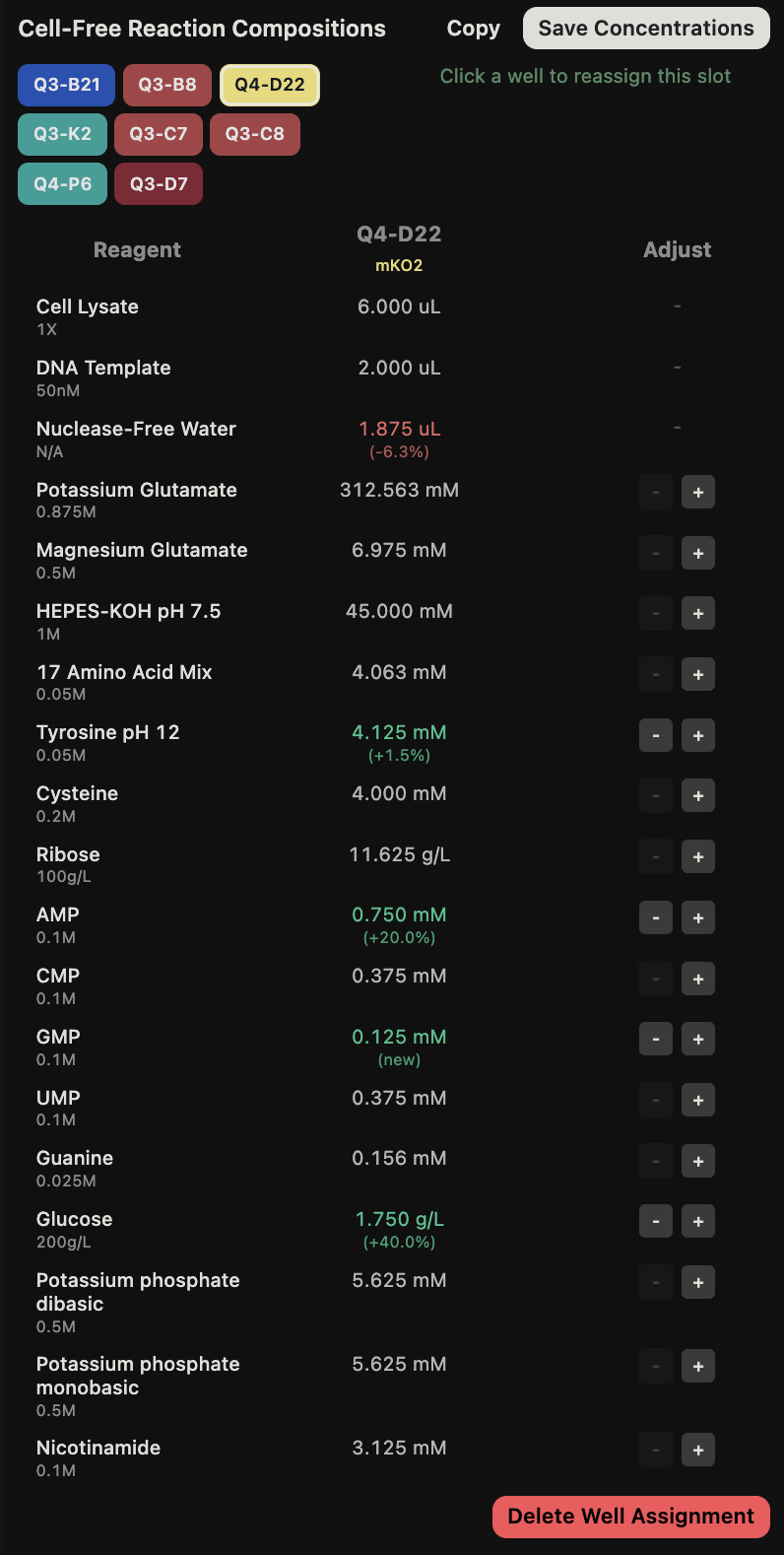
| Increase glucose, as well as tyrosin, AMP, and GMP |
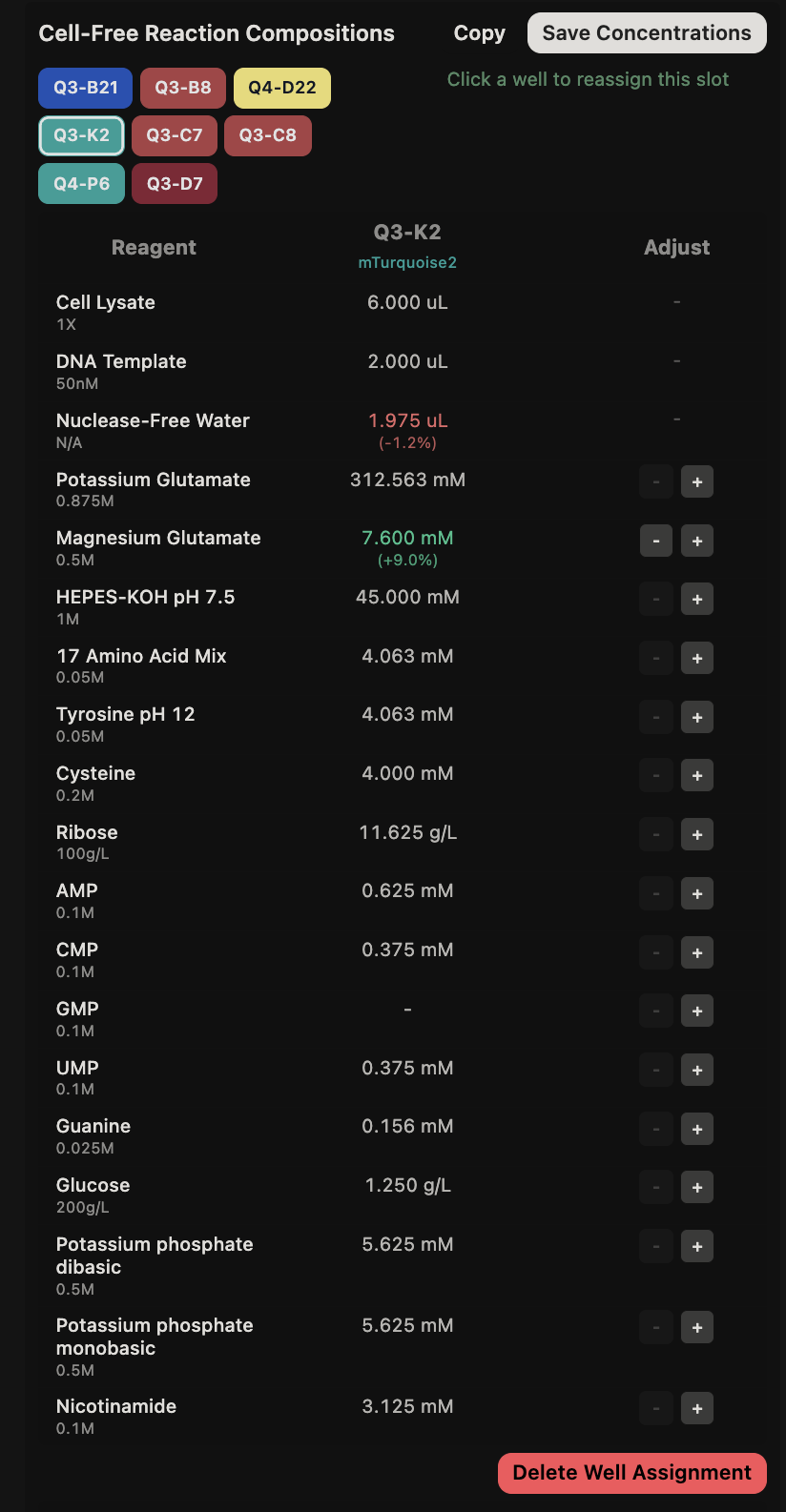
| Increased magnesium glutamate by 9.0% |
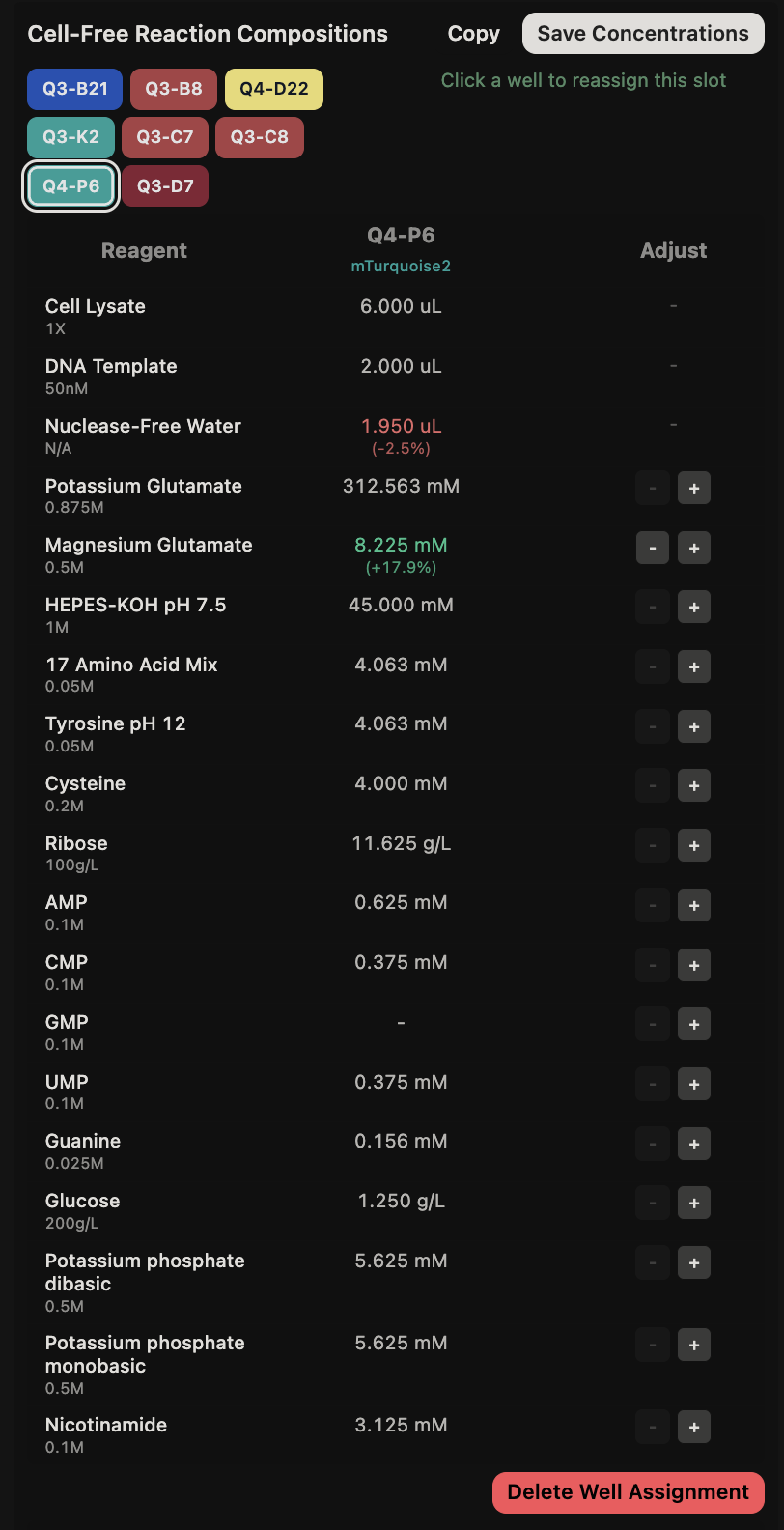
| Increased magnesium glutamate by 17.9% |
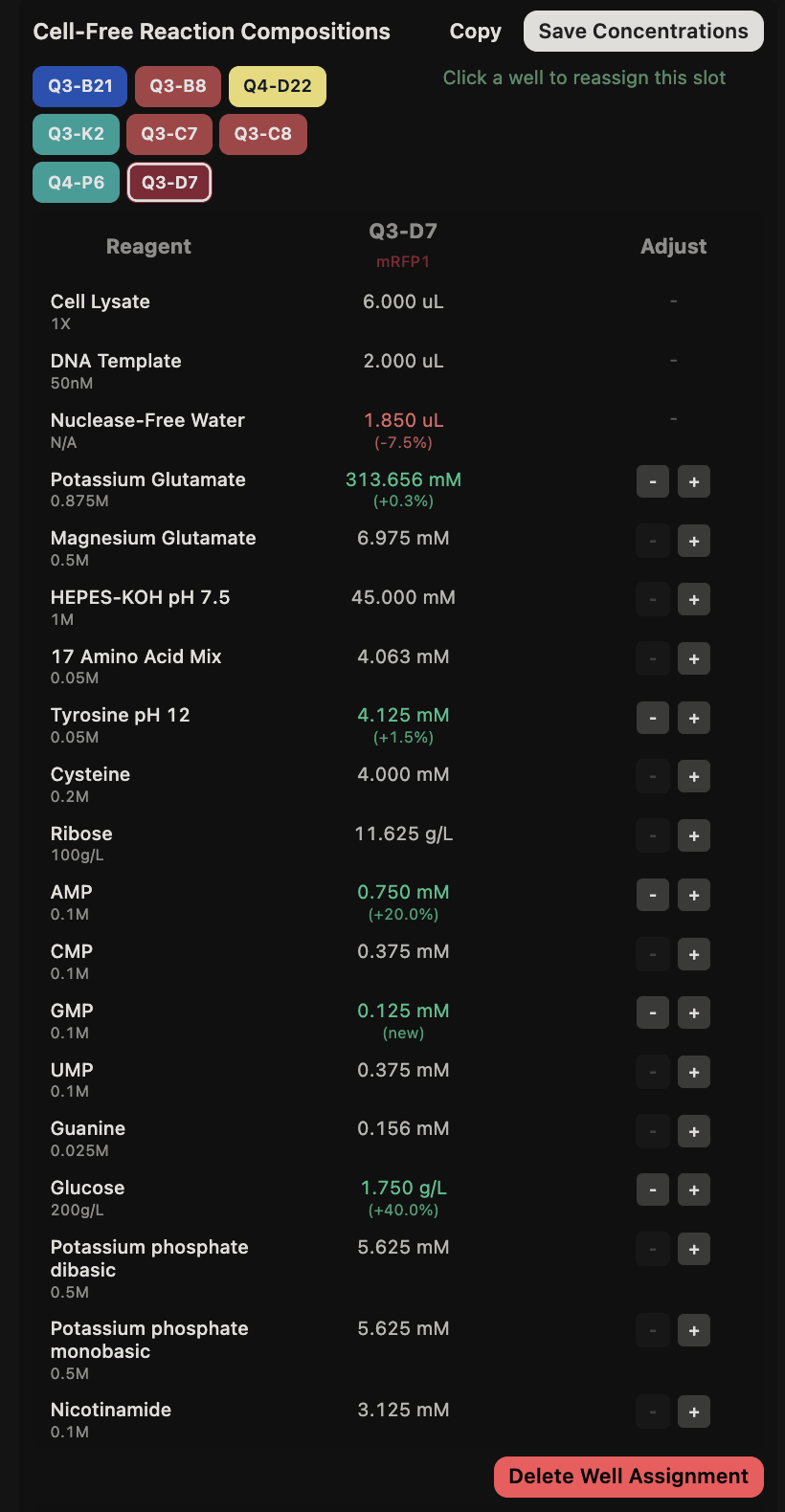
| Increased tyrosine, AMP, GMP, and glucose |