Week 7 HW: Genetic Circuits Part II: Neuromorphic Circuits
Assignment Part 1: Intracellular Artificial Neural Networks (IANNs)
What advantages do IANNs have over traditional genetic circuits, whose input/output behaviors are Boolean functions?
Intracellular Analog Neural Networks (IANNs) offer several advantages over traditional genetic circuits that rely on Boolean logic (ON/OFF states). First, IANNs enable graded, continuous responses rather than binary outputs. This allows cells to process varying signal intensities and produce proportional outputs, which more closely reflects natural biological systems.
Describe a useful application for an IANN; include a detailed description of input/output behavior, as well as any limitations an IANN might face to achieve your goal.
Application Example: Salinity Stress Sensing in Diatoms
A useful application of an IANN is in designing a salinity-responsive system in diatoms that produces a graded fluorescent output (e.g., GFP) based on environmental stress levels.
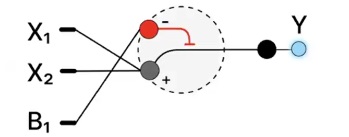
Input/Output Behavior: X₁ (inhibitory input): expression of Csy4 endoribonuclease X₂ (activating input): expression of a fluorescent reporter gene (e.g., GFP mRNA) Csy4 cleaves or destabilizes the mRNA of the reporter Output (Y): fluorescence intensity
Low X₁ (low inhibition) + high X₂ → strong fluorescence High X₁ → reduced fluorescence (due to mRNA cleavage) Intermediate levels → graded fluorescence output
Advantages:
- Enables real-time sensing of environmental stress gradients
- Produces quantitative readouts instead of simple ON/OFF signals
- Can be integrated into microfluidic systems for visualization
Limitations:
- Biological noise and variability
- Gene expression is inherently stochastic
- Precise control of promoter strength and degradation rates is complex
- Crosstalk and unintended interactions
Assignment Part 2: Fungal Materials
What are some examples of existing fungal materials and what are they used for? What are their advantages and disadvantages over traditional counterparts?
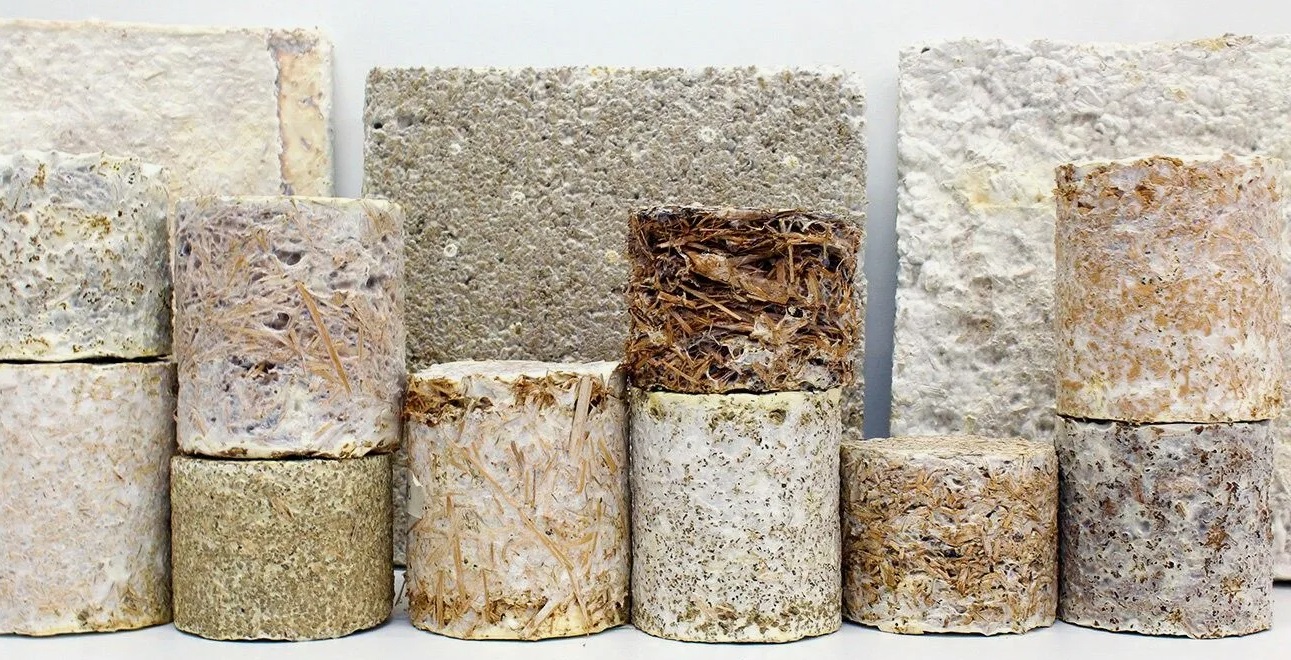
Mycelium composites (e.g., Ecovative). Grown from agricultural waste into rigid boards or foam-like fills. Used for packaging, insulation, acoustic panels, and furniture. Advantages: biodegradable, low energy to produce, fire-resistant. Disadvantages: lower strength than plastics/wood, moisture sensitivity, batch variability.
Mycelium leather. Sheet-grown or processed mycelium. Used for bags, shoes, watch straps. Advantages: faster to grow than animal leather, tunable texture, no heavy metal tanning. Disadvantages: less durable than synthetic leathers, requires finishing layers.
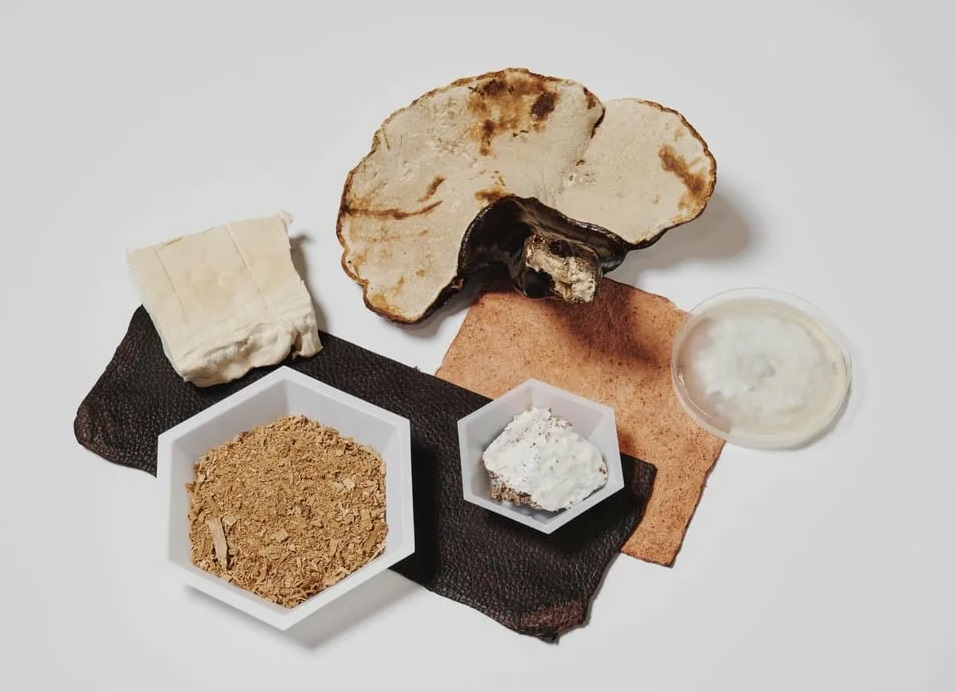
Fungal foams. Flexible, sponge-like mycelium. Used for shoe midsoles, cushioning, wound dressings. Advantages: breathable, hypoallergenic, compostable. Disadvantages: lower rebound resilience than petroleum foams.
What might you want to genetically engineer fungi to do and why?
- Produce novel enzymes (e.g., cellulases, lignin peroxidases) for bioremediation (breaking down plastics, oil, dyes) or biofuel production from crop waste.
- Make fungal materials stronger or waterproof – Expressing hydrophobins or crosslinking enzymes to replace petrochemical coatings.
- Self-coloring mycelium – Engineer pigment biosynthesis so materials grow with color, eliminating dyeing steps.
- Living sensors – Fungi that change color or emit light when exposed to toxins or pathogens.
What are the advantages of doing synthetic biology in fungi as opposed to bacteria?
- Protein secretion – Filamentous fungi are industrial champions of secretion (grams per liter), while bacteria often form inclusion bodies.
- Larger DNA capacity – Fungi tolerate larger genetic payloads and multi-gene pathways (e.g., for secondary metabolites).
- Safety – Non-pathogenic lab strains (e.g., Aspergillus nidulans, Saccharomyces cerevisiae) have GRAS status and are easier to contain than many bacteria.