Week 3 HW: Lab Automation
1. Create a Python file
- Generate an artistic design using the GUI at opentrons-art.rcdonovan.com
- Using the coordinates from the GUI, follow the instructions in the HTGAA26 Opentrons CoLab to write your own Python script that draws your design.
To become familiar with the Python Opentrons API, I adopted a dot array script from the example scripts and reproduced it with changes to create different patterns of assorted dot arrays.
Firstly, I copy/paste the same function multiple times and made coordinate changes, which resulted in a long sequence of repeated code.Link to CoLab Notebook, Python script “Assorted Dot Arrays test”
Secondly, I worked with Gemini AI to produce the final code, which is simplified by consolidating functions while maintaining the same outcome. Link to the CoLab Notebook, Python script “Assorted Dot Arrays final”
Python script: Assorted Dot Arrays final, Click to Expand
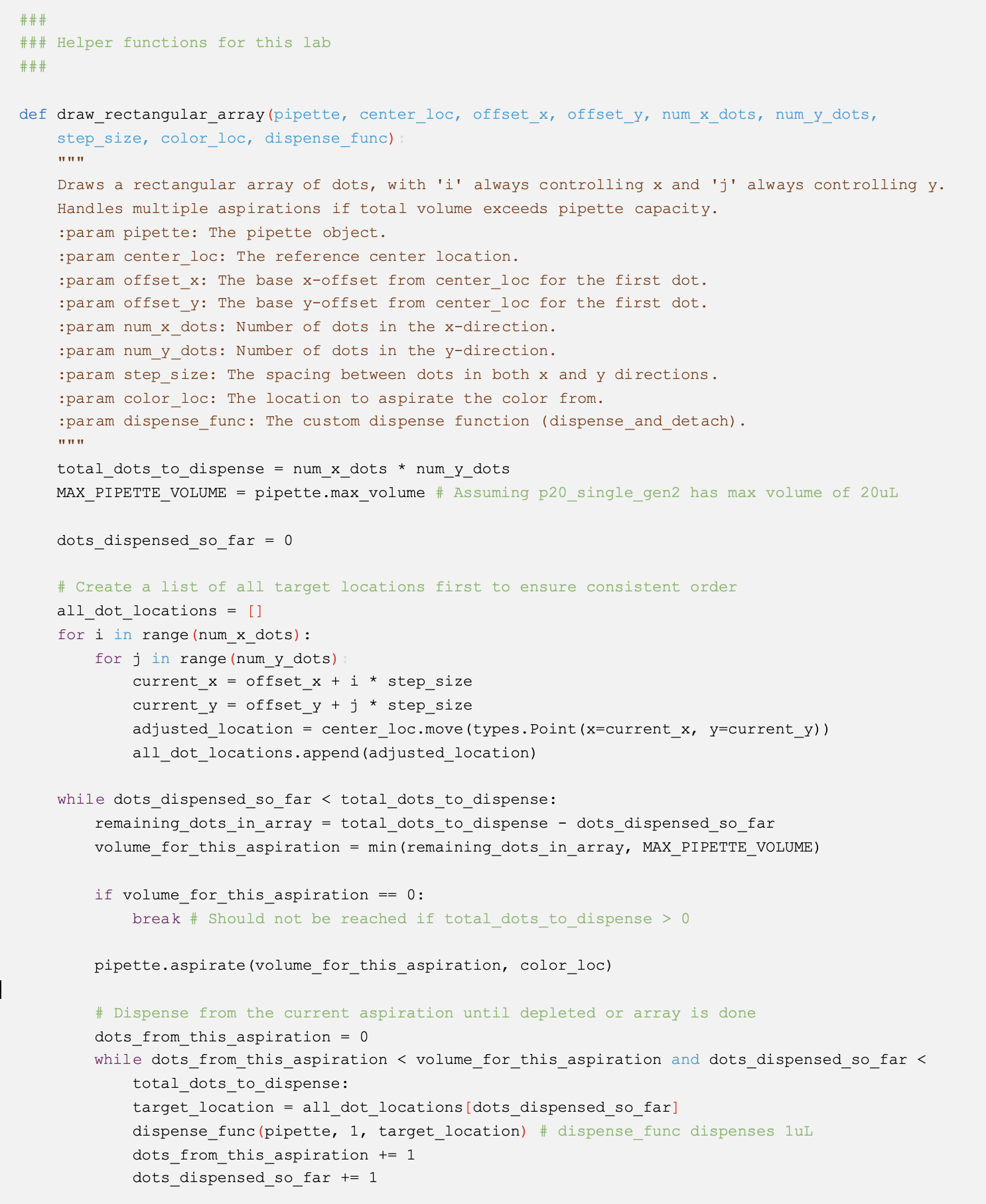
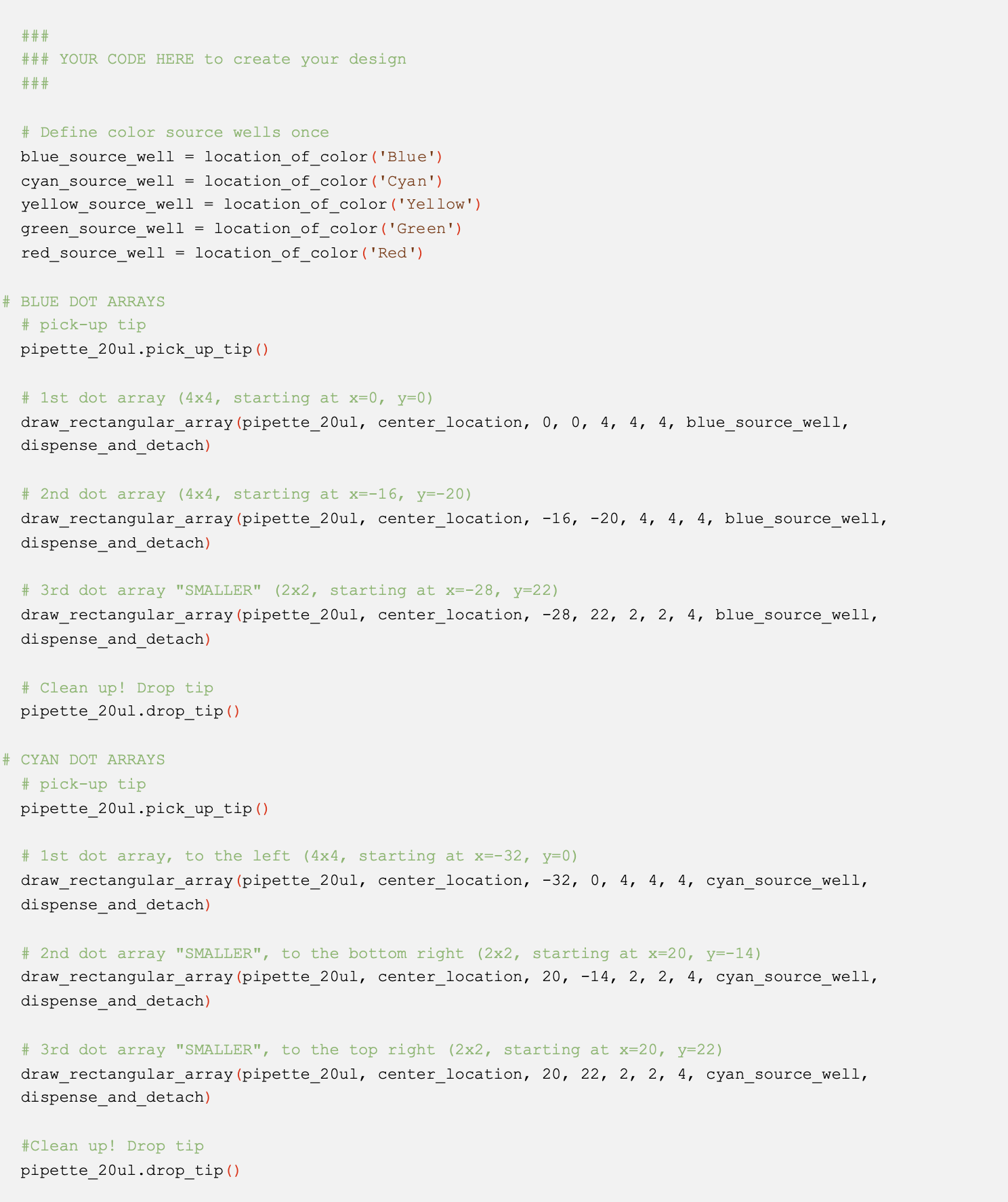
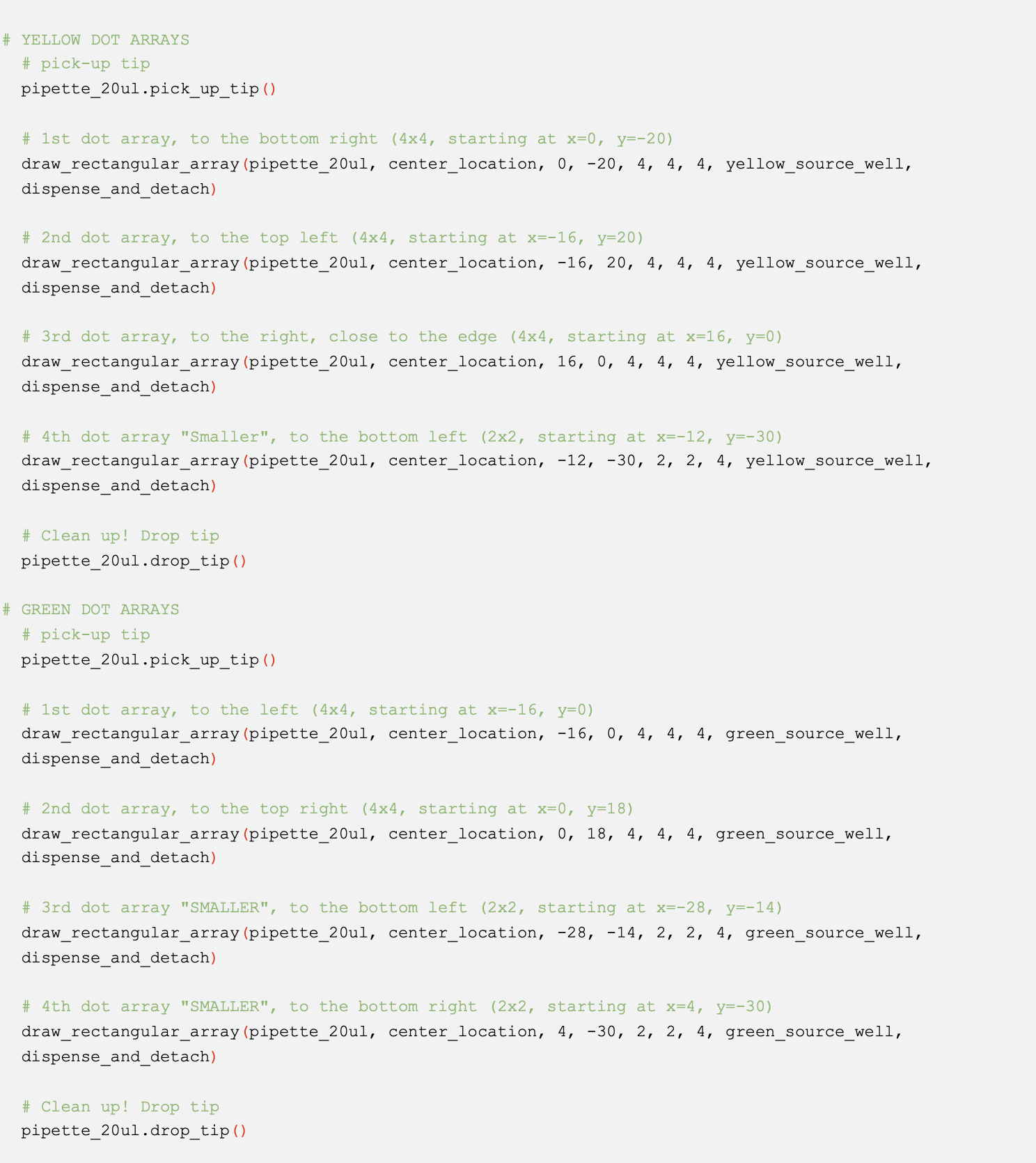
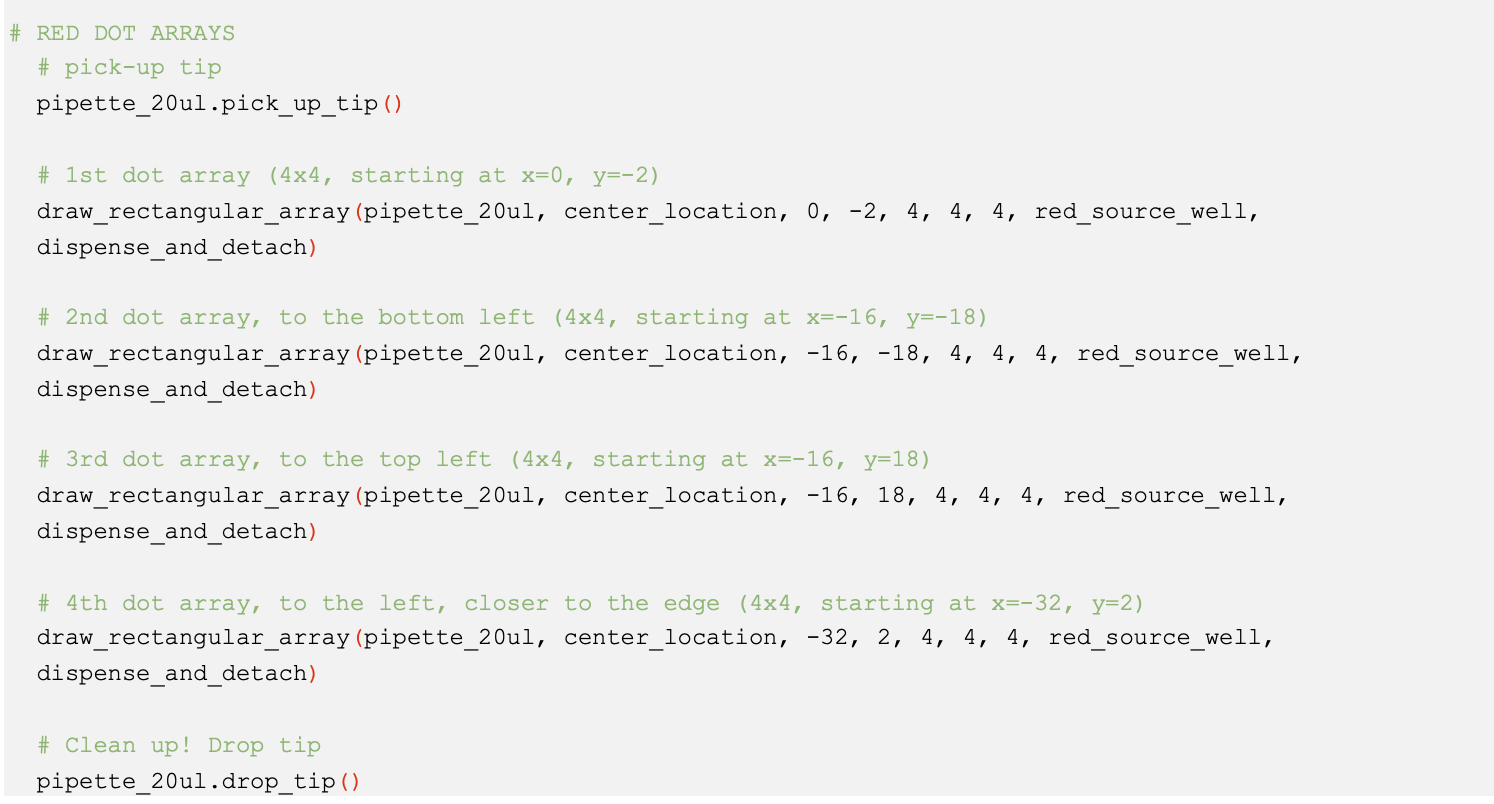
Simulation of the Python script: “Assorted Dot Arrays final” by Opentrons OT-2.
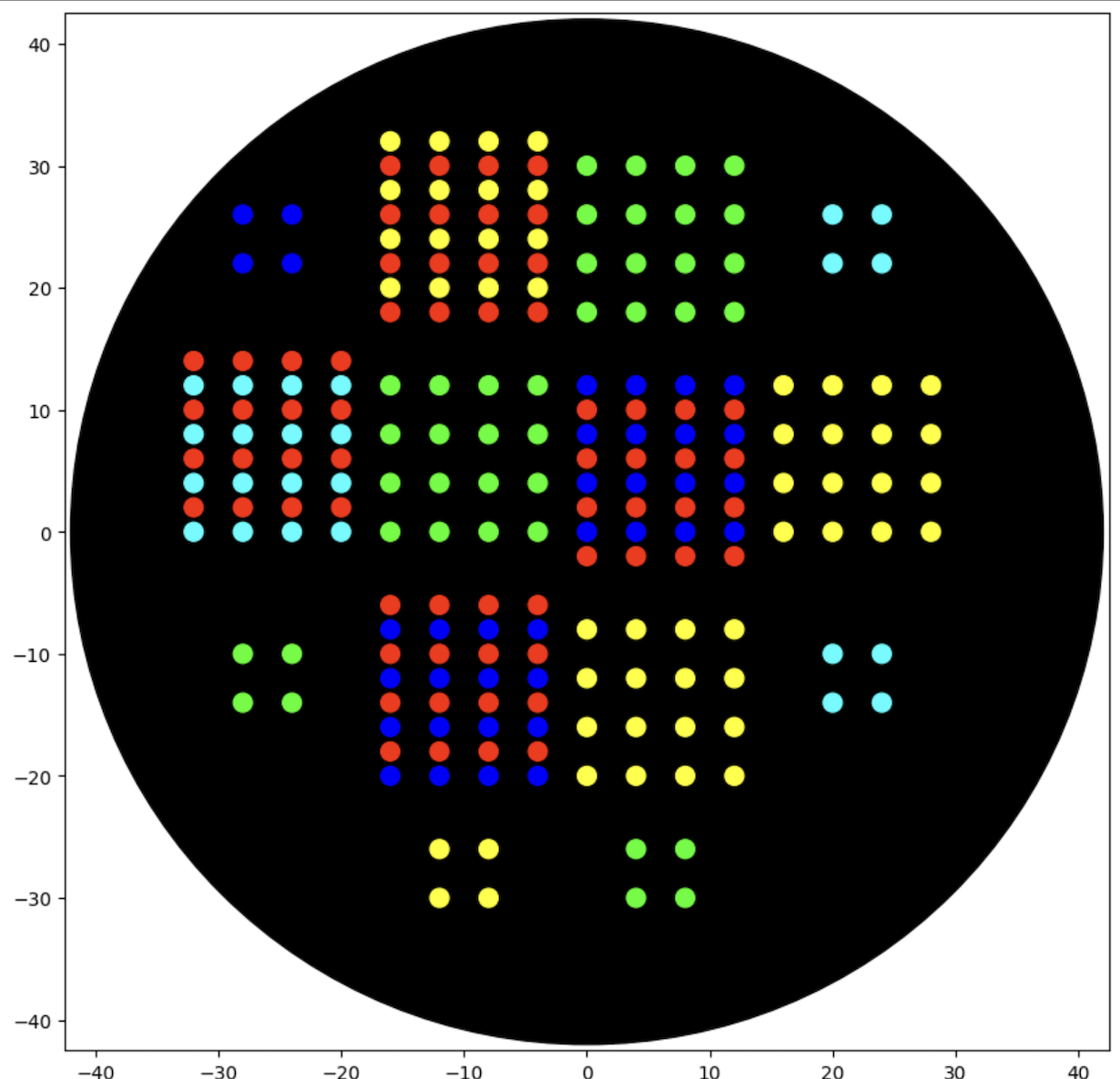
I’ve used Gemini AI to produce the code.
Prompts:
1. Can you write a shorter or combined code for the 2 blue dot arrays? Both arrays use the same code, but for different coordinates. Is there a way to simplify the code?
2. Modify the function, draw_rectangular_array, to handle the second aspiration once it runs out of liquid. Can you write a function to make aspirations specific to each array in the color dot array? As an example, in blue dot arrays, the pipette could aspirate 16 uL for the first array and then go back and aspirate another 16 uL for the second array. Then, finally, go back and aspirate 4 uL for the smaller array.
3. Explain the code: blue_source_well = location_of_color. What does this code do? It is present in all color dot arrays at the beginning, after the pick-up tip code. Is it possible to create this function under def to simplify and make it easier to follow?
Generating an art design using the GUI at opentons-art.rcdonovan.com.
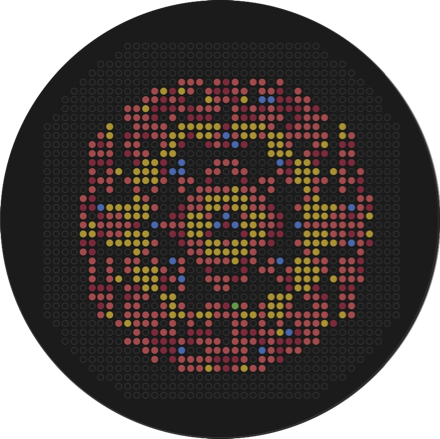
I’ve generated an art design by uploading an image to the GUI at opentrons-art.rcdonovan.com.
Link to the art design at opentrons-art.rcdonovan.com
| (A) Uploaded image | (B) OT_Design_1 |
|---|---|

| 
|
The uploaded image in (A) is converted to an OpenTrons art design as shown in the simulated image in (B).
2. Find and briefly summarize a published paper that utilizes laboratory automation to achieve novel biological applications.
Paper
Kverneland, A., F. Harking, J. M. Vej-Nielsen, M. Huusfeldt, D. B. Bekker-Jensen, I. M. Svane, N. Bache, and J. V. Olsen. 2023. Fully automated workflow for integrated sample digestion and Evotip loading enabling high-throughput clinical proteomics. bioRxiv.
General Overview
Identification and quantification of proteins are important in biomarker discovery in clinical applications. Speed and sensitivity are bottlenecks for large cohort studies. Reliable sample preparation is highly critical for accurate and reproducible measurements in the LC-MS/MS platforms. Manual sample preparations are labor-intensive and prone to errors. For success in proteomics applications, a workflow with scalable and high-throughput sample preparation is essential.
The paper describes an automated, hands-free, end-to-end proteomics sample preparation workflow on the Opentrons OT-2 platform. They demonstrated magnetic bead-based protein aggregate capture and digestion and automated loading of the digested peptides, followed by desalting and sample storage, with reproducible results. The process applies to 96 samples in parallel and takes less than 6 hours.
Findings
The authors evaluated the performance of the automated workflow by using HeLa cell lysate, a well-established standard in LC-MS/MS-based proteomics, as a quality control. Using only 1 ug total protein, they were able to quantify about 50,000 peptides and 5600 proteins. Sample loss was negligible compared to the workflow run on 15-fold higher sample input.
Replicates of workflows were comparable among quantified peptides and proteins, demonstrating reproducible protein quantification. Additionally, they tested the workflow with a larger sample set requiring sample storage between runs. Sample storage did not impact the number of quantified peptides. Plasma proteome was also evaluated, including samples from a clinical setting, a set of patients responding to therapy, and non-responding patients. Findings indicated the utility of the automated workflow in biomarker discovery.
Relevant Figures
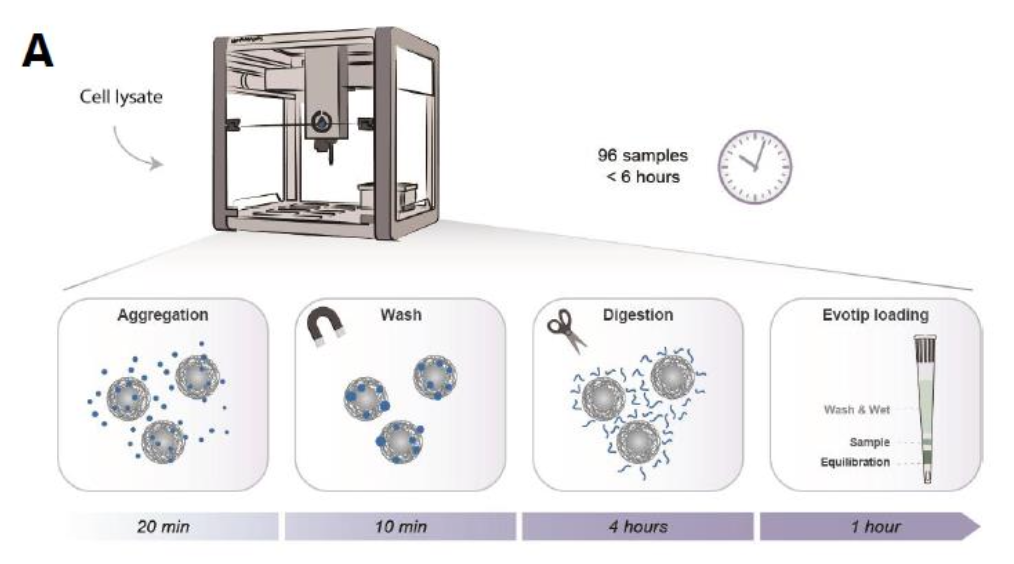
Fig 1A. Schematic overview of the integrated workflow on Opentrons OT-2 robot.
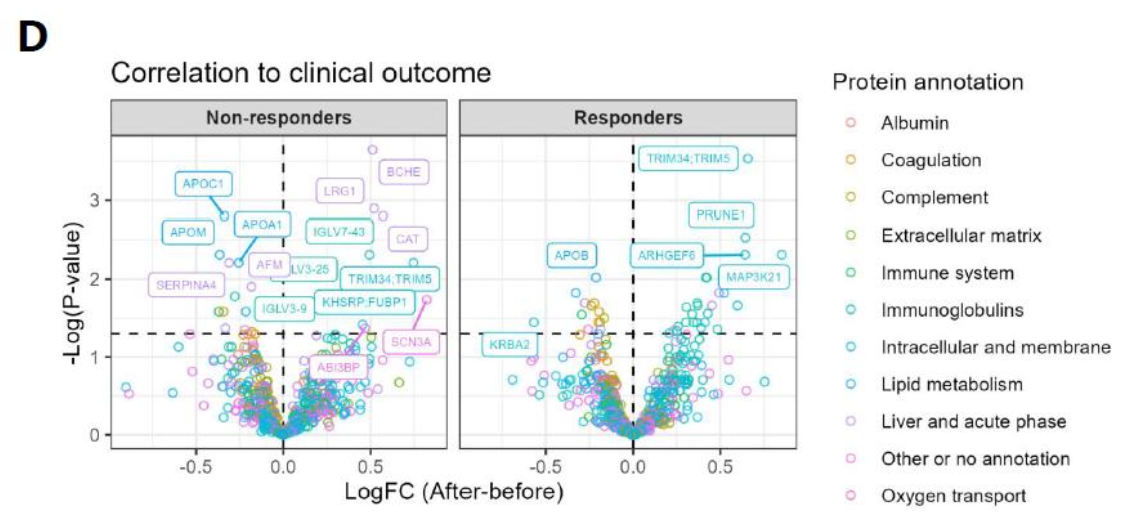
Fig 5D. Application in clinical cohort of metastatic melanoma patients; Volcano plot comparing the time points (after CPI – before CPI) within responding and non-responding patients. CPI: Checkpoint Inhibitor Therapy.
3. Write a description of what you intend to do with automation tools for your final project.
Of the three possible final projects, Project 2 and Project 3, both use automation tools and are described in more detail under “Final Project Ideas”.
Automation tools can be used in the following ways in these projects:
Project 2 has a formulation step where a complex group of chemicals can be determined at their optimal concentrations with automated high-throughput testing in the downstream immunoassays.
Project 3 has an enrichment step to find high-affinity aptamers. High-throughput automation tools can be applied during performing microfluidic-based, microtiter-based, or magnetic bead-based screening and high-throughput sequencing.
Final Project Ideas
Project 1
The development of an engineered bacterial biosensor for real-time hydration detection as a preventive health measure in aging populations.
An engineered skin bacterium, applied as a lotion on the wrist or forearm, could detect body hydration levels and generate an electric current detectable by an electronic wearable component.
Overview:
- Select a reference strain from the human skin microbiome (i.e., Acinetobacter sp) as a chassis for the bacterial biosensor. Ideally, a Gram-negative species that functions to generate electric currency through a synthetic electron transport chain.
- Engineer the commensal strain to be dependent on non-canonical amino acids for growth for biocontainment purposes.
- Build a genetic circuit with an osmolarity-responsive promoter, ProU, from Escherichia coli that drives the expression of synthetic electron chain transport from Shewanella oneidensis, the CymA-Mtr pathway, which generates electron flow in response to an increase in sodium levels in the skin’s interstitial fluid.
- Detection of electron flow by a wearable component.
References, Click to Expand
Kim, S-R., Y. Zhan, N. Davis, S. Bellamkonda, L. Gillan, E. Hakola, J. Hiltunen, and A. Javey. 2025. Electrodermal activity as a proxy for sweat rate monitoring during physical and mental activities. Nature Electronics.
Rashid, F-Z. M., F. G. E. Cremazy, A. Hofmann, D. Forrest, D. C. Grainger, D. W. Heermann, and R. T. Dame. 2023. The environmentally-regulated interplay between three-dimensional chromatin organization and transcription of proVWX in E. coli. Nature Communications.
Atkinson, J. T., L. Su, X. Zhang, G. N. Bennett, J. J. Silberg, and C. M. Ajo-Franklin. 2022. Real-time bioelectronic sensing of environmental contaminants. Nature.
Project 2
Topical application of trans-urocanic acid (trans-UCA) for the management of atopic dermatitis (AD), a common skin disease in eczema patients.
Skin barrier dysfunction is the major contributor to eczema pathologies. To repair skin barrier dysfunction, trans-UCA, which is naturally found in healthy skin, is applied topically as a therapeutic.
Overview:
- Create a yeast expression system to produce the catalyst, histidine ammonia-lyase, a single enzyme required for trans-UCA synthesis.
- Purify and recover the catalyst from yeast fermentation.
- Establish a cell-free system for the production of trans-UCA.
- Apply an automation system to formulate, optimize, and perform efficacy measurements in a 3D reconstructed human epidermis (RHE) in the AD-induced model. The output is the multiplexed immunoassays to look for upregulation of filaggrin and reduction in cytokine markers, such as IL-1alpha.
- Below is the list of formulation components, which is extensive, and an automation platform is highly advantageous to optimally formulate the skin therapeutic.
- Active pharmaceutical ingredient (API): trans-UCA
- Buffer
- Carrier system decision: oil-in-water, hydrogel, ointment
- Surfactant/Emulsifier system
- Penetration enhancers
- Preservatives for shelf life
- Antioxidants & light stabilizers
- Other barrier repair components
References, Click to Expand
Peltonen, J. M., L. Pylkkanen, C. T. Jansen, I. Volanen, T. Lehtinen, J. K. Laihia, and L. Leino. 2014. Three randomized phase 1/IIa trials if 5 % cis-urocanic acid emulsion cream in healthy adult subjects and in patients with atopic dermatitis. Acta Derm Venereol.
Debinska, A. 2021. New treatments for atopic dermatitis targeting skin barrier repair via the regulation of FLG expression. J. of Clinical Medicine.
Kim, Y. and KM Lim. 2021. Skin barrier dysfunction and filaggrin. Arch. Pharm. Res.
Hernandez D. and A. T. Phillips. 1993. Purification and characterization of Pseudomonas putida histidine ammonia-lyase expressed in Escherichia coli. Protein Expression and Purification.
Le Pham, D., K-M. Lim, K-M. J., H-S. Park, D. Y. M. Leung, and Y-M. Ye. 2017. Increased cis-to-trans urocanic acid ratio in the skin of chronic spontaneous urticaria patients. Sci. Rep.
Project 3
A minimally invasive microneedle array with aptasensor technology to detect ferritin from the skin’s interstitial fluid for the body’s iron status and health monitoring.
A vegetarian and vegan diet can be iron-limited. A simple and less invasive device capable of continuous monitoring of the body’s iron storage would be helpful for individualized optimal diet adjustments.
Overview:
- Establish a random ssDNA library.
- Purify human ferritin protein in iron-loaded form as found in the skin’s interstitial fluid.
- Perform selection of functional oligonucleotides for high-affinity binding to the purified ferritin protein through Systemic Evolution of Ligands by Exponential enrichment (SELEX) technique.
- Use a microneedle with a gold-coated surface that will serve as the electrode.
- Engineer the candidate aptamer for electrochemical signal integration: 5’ end of the aptamer is made to contain an electrode attachment tag, such as Thiol, and the 3’ end to contain a redox tag such as Methylene Blue. Optimize to include a hairpin structure for ferritin binding stability.
- Detection of electron flow in a wearable device.
References, Click to Expand
Li, X., S. Liu, X. Huang, C. Yao, J. Chen, L. Gao, C. Zhou, Y. Wu, J. Liu, M. Li, N. Zhao, H-J. Chen, S. Huang, and X. Xie. 2025. Aptamers-based wearable electrochemical sensors for continuous monitoring of biomarkers in vivo. Microsystems & Nanoengineering.
Samant, P., M. M. Niedzwiecki, N. Raviele, V. Tran, J. Mena-Lapaix, D. I. Walker, E. I. Felner, D. P. Jones, G. W. Miller, and M. R. Prausnitz. 2020. Sampling interstitial fluid from human skin using a microneedle patch. Sci Transl. Med.
Kim, S-E., K-Y. Ahn, J-S. Park, K. R. Kim, K. E. Lee, S-S. Han, and J. Lee. 2011. Fluorescent ferritin nanoparticles and application to the aptamer sensor. Anal. Chem.