Week 6 HW: Genetic circuits part I
Assignment: DNA Assembly
1. Components of Phusion High-Fidelity PCR Master Mix and their functions
The Phusion High-Fidelity PCR Master Mix typically contains:
Phusion High-Fidelity DNA Polymerase
A thermostable DNA polymerase with 3’→5’ exonuclease proofreading activity, which significantly reduces the error rate during DNA amplification.dNTPs (dATP, dTTP, dCTP, dGTP)
The nucleotide building blocks used for DNA strand synthesis.Optimized reaction buffer (HF or GC buffer)
Maintains optimal pH, salt concentration, and ionic conditions required for high-fidelity enzyme activity.Mg²⁺ ions (MgCl₂)
Essential cofactor for DNA polymerase activity; influences yield and specificity.Stabilizing agents
Improve enzyme stability and reaction robustness under thermal cycling conditions.
2. Factors affecting primer annealing temperature in PCR
The annealing temperature depends on:
- Primer melting temperature (Tm) – the primary determinant
- GC content – higher GC content increases Tm due to stronger hydrogen bonding
- Primer length – longer primers generally have higher Tm
- Sequence composition – base distribution affects duplex stability
- Salt concentration (especially Mg²⁺) – stabilizes primer-template hybridization and increases effective Tm
- Mismatches (e.g., intentional mutations) – reduce binding stability and lower effective annealing temperature
- 3’-end stability – a GC clamp increases binding specificity and efficiency
3. PCR vs Restriction Enzyme Digestion
PCR is a method used to amplify specific DNA fragments using sequence-specific primers.
Advantages:
- Enables site-directed mutagenesis
- Does not require restriction sites
- Highly flexible for cloning design
- Compatible with Gibson/HiFi assembly workflows
Limitations:
- Risk of polymerase-induced mutations (even with high-fidelity enzymes)
- Limited efficient fragment size (~up to 10 kb)
Restriction enzymes cut DNA at specific recognition sequences.
Advantages:
- Highly predictable and precise cleavage
- Produces defined sticky or blunt ends
- Efficient for classical cloning workflows
Limitations:
- Requires suitable restriction sites in the DNA
- Can leave sequence “scars”
- Less flexible for seamless cloning or mutagenesis
When to use each method
PCR is preferred when:
- Introducing mutations (e.g., chromophore engineering in amilCP)
- No suitable restriction sites are available
- Using Gibson or HiFi assembly
Restriction digestion is preferred when:
- Standard cloning vectors are used
- Appropriate restriction sites are present
- Performing traditional ligation-based cloning
4. Ensuring DNA compatibility for Gibson Assembly
To ensure successful Gibson assembly:
- Design overlapping regions (20–40 bp) between adjacent fragments
- Ensure overlaps are:
- perfectly complementary
- free of strong secondary structures
- balanced in GC content
- Maintain correct:
- reading frame (for coding sequences)
- fragment orientation
- Verify:
- no unintended mutations in coding regions
- correct fragment order (backbone → insert → backbone logic)
- Ensure overlaps have sufficient melting stability (typically ~50–60°C effective annealing range)
5. How plasmid DNA enters E. coli during transformation
Plasmid DNA enters E. coli through temporary membrane permeabilization:
Heat shock transformation
- CaCl₂ treatment neutralizes negative charges on DNA and membrane
- Rapid temperature shift (0°C → 42°C) creates transient pores
- DNA enters the cell by diffusion and electrochemical forces
Electroporation
- High-voltage pulse creates temporary nanopores in the bacterial membrane
- DNA passes directly through these pores into the cytoplasm
After transformation:
- Cells recover in SOC medium
- Express antibiotic resistance genes
- Only successfully transformed cells survive on selective media
6. Alternative assembly method: Golden Gate Assembly
Golden Gate Assembly uses Type IIS restriction enzymes (e.g., AarI), which cut outside their recognition sites to generate custom overhangs. This enables directional assembly of multiple DNA fragments in a single reaction. The reaction cycles between 37°C (digestion) and 16°C (ligation), allowing simultaneous cutting and ligation steps. Because the recognition sites are removed during assembly, the final construct is seamless (“scarless”). This method is highly efficient for multi-part DNA assembly and library construction.
Schematic diagram
Fragment A          Fragment B          Fragment C
   AarI                AarI                AarI
    ↓                   ↓                   ↓

Cuts generate compatible sticky ends:

A ---------> B ---------> C

Ligation step (T4 DNA ligase):

Final construct:
A-B-C (scarless Golden Gate assembly)
Simulation of the Golden Gate Assembly method in Benchling
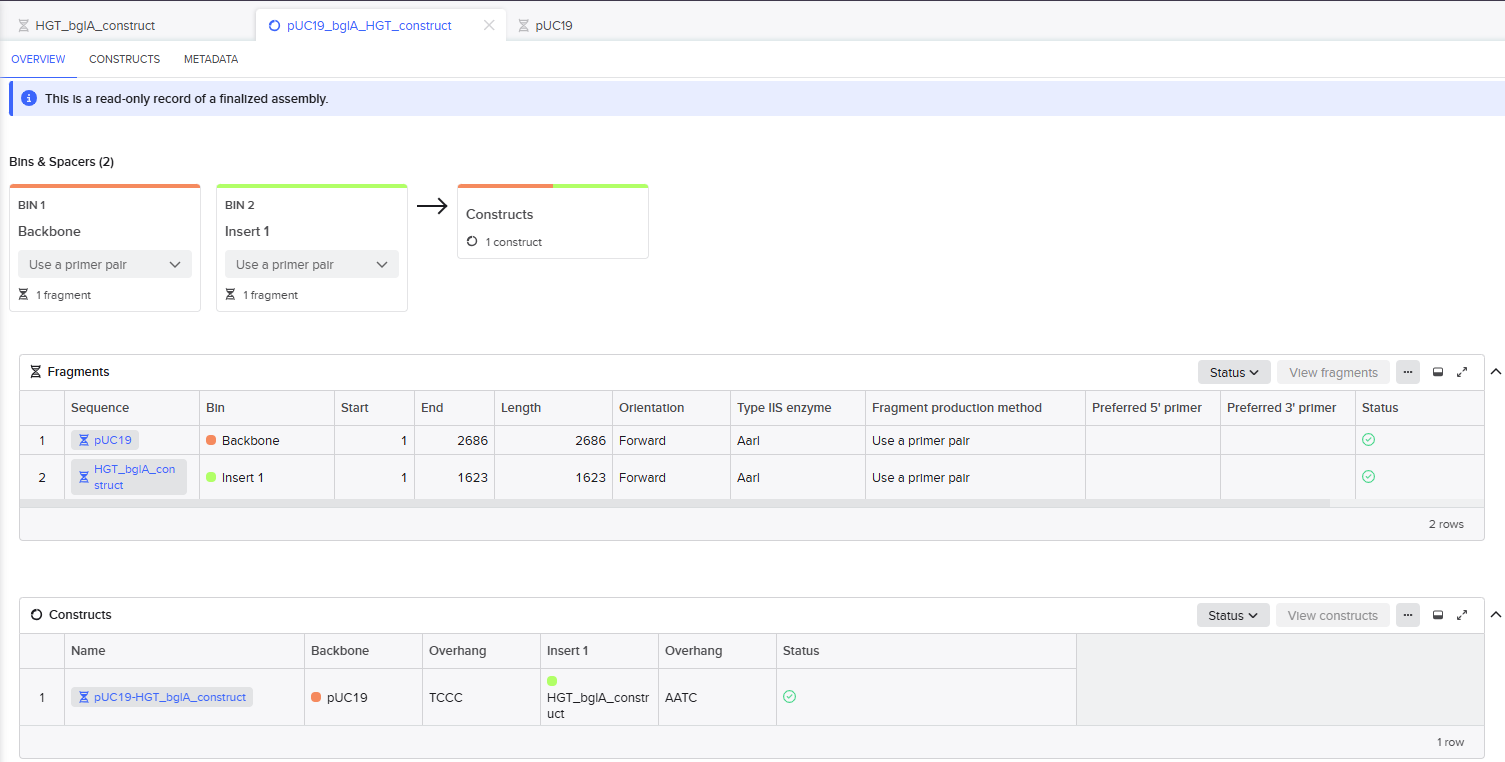
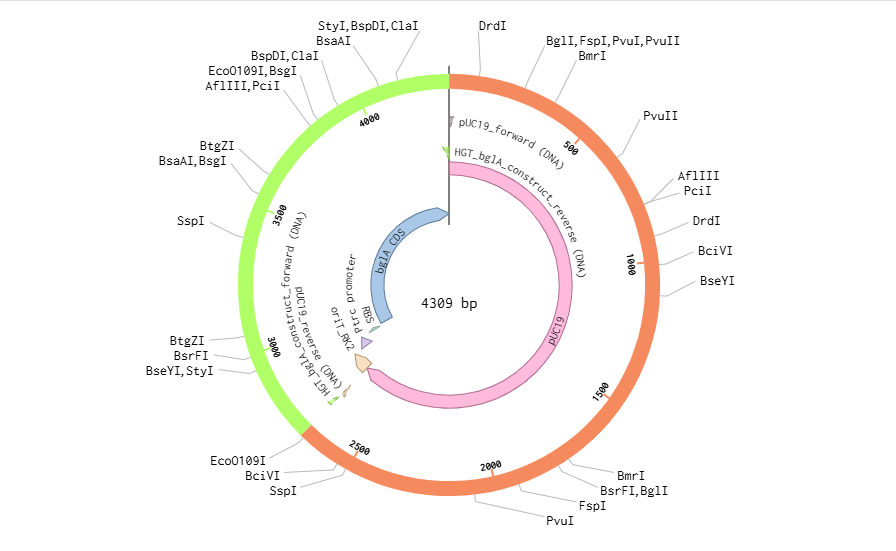
The pUC19 backbone and the final project insert (oriT-Ptrc-RBS-bglA) were added. The Golden Gate AarI Type IIS enzyme was chosen as it didn’t cut sites in my selected fragments. The Golden Gate Assembly was created successfully.
Assignment: Asimov Kernel
Repressilator Construct
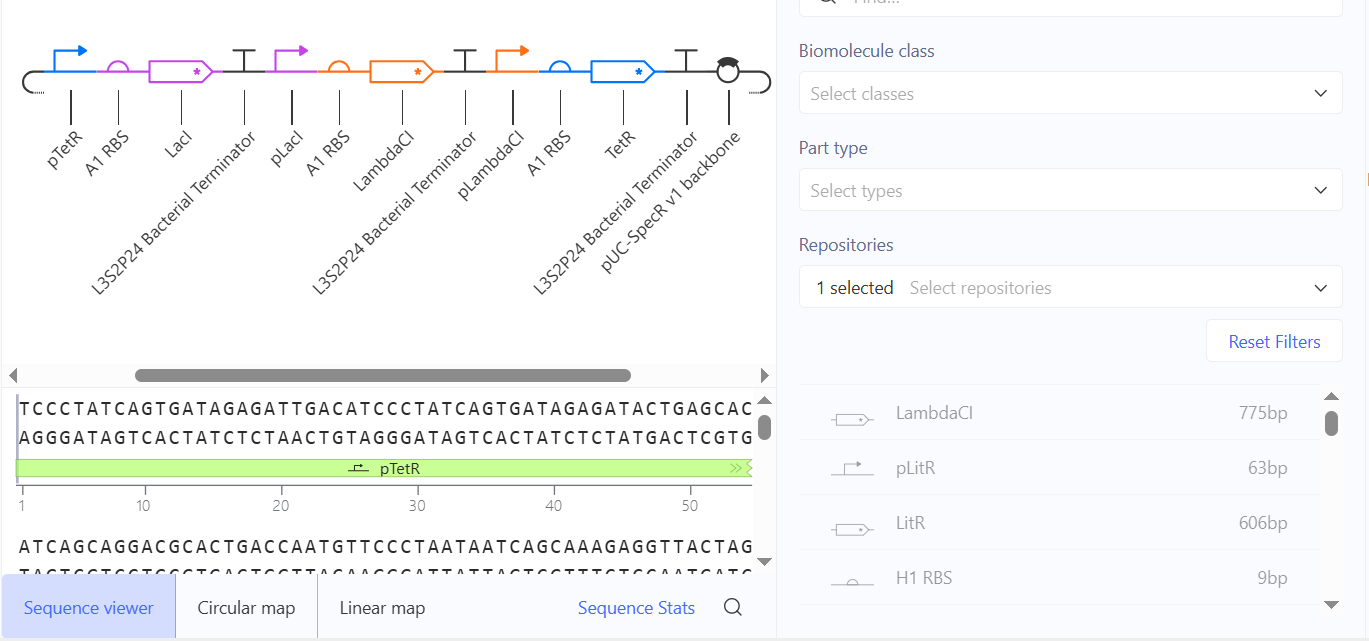
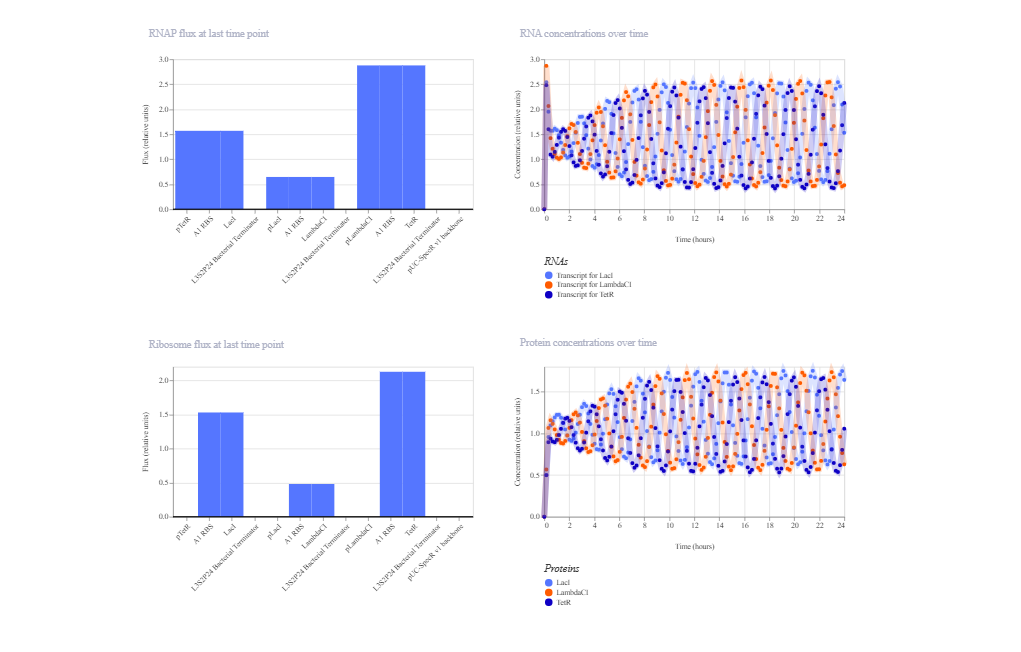
I recreated the Repressilator by using parts from the Characterized Bacterial Parts repository.
The repressilator circuit was simulated in Asimov Kernel under standard E. coli conditions (24 hours, 10-minute timestep, transient transfection, no ligands). The RNA and protein concentration plots show sustained oscillatory behavior of LacI, LambdaCI, and TetR over the full simulation period. The three proteins cycle out of phase, with each repressor periodically suppressing the next promoter in the loop, generating stable temporal oscillations. The RNA profiles mirror the protein oscillations with expected phase relationships and slight amplitude differences due to transcription–translation dynamics.
These results are consistent with the Repressilator construct in the Bacterial Demos repository, which also exhibits sustained, out-of-phase oscillations of the three repressors. The qualitative agreement in oscillation pattern, phase shift, and long-term stability confirms that the reconstructed circuit functions as expected.
My Constructs
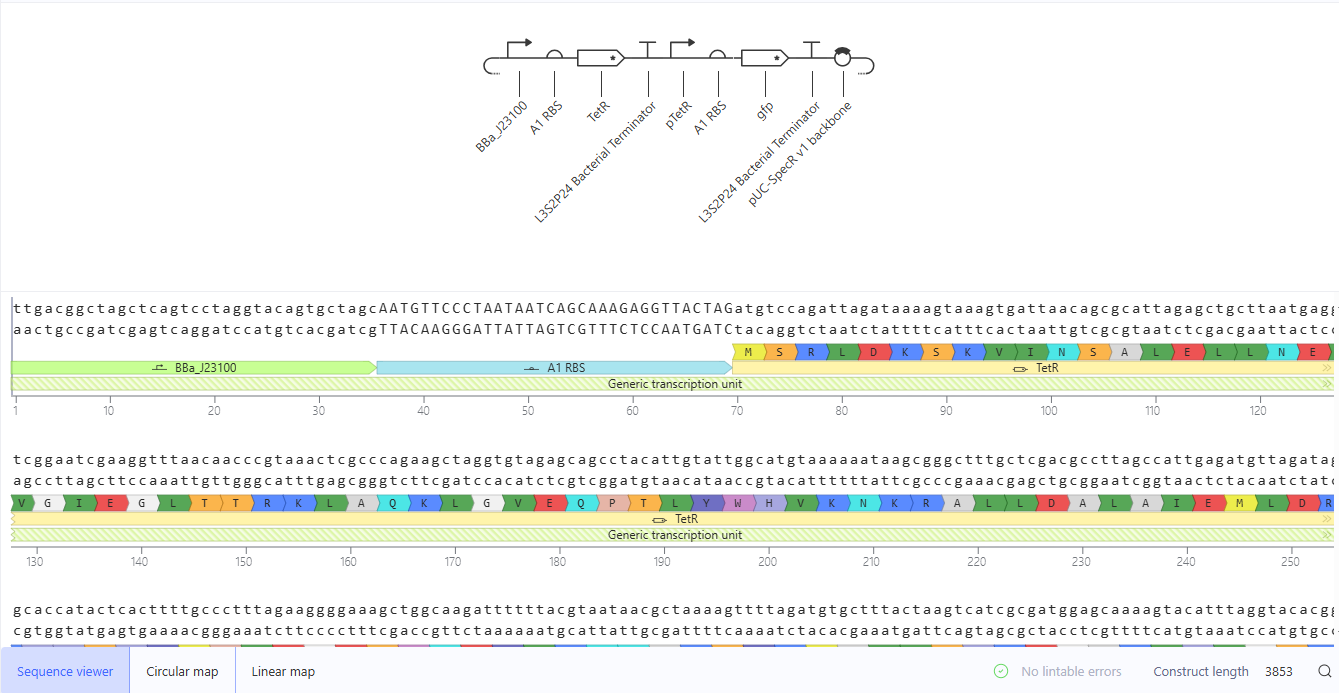
1. Simple Repression (TetR represses GFP)
This construct consists of constitutive TetR expression (J23100 → B0034 → TetR → Terminator) and a GFP reporter controlled by the TetR-repressible promoter pTetR. TetR is expected to repress pTetR, resulting in low GFP expression at steady state.
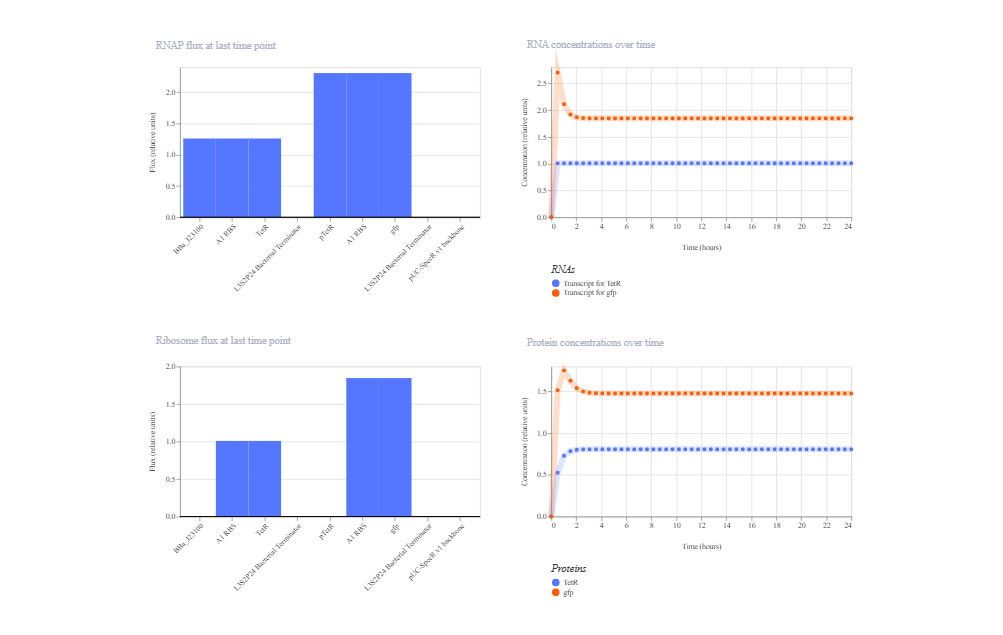
Simulation conditions: Organism: E. coli, Transfection: Transient, Ligands: None, Duration 24 h, Timestep 30 min, no ligands
The simulation shows that the system reaches a stable steady state without oscillations. However, GFP repression is less pronounced than theoretically expected. This outcome is likely due to the balance between the strength of the constitutive TetR promoter, the basal (leaky) activity of pTetR, and the protein degradation parameters defined in the Kernel model. Overall, the circuit functions as a steady repression system, but repression efficiency is parameter-dependent.
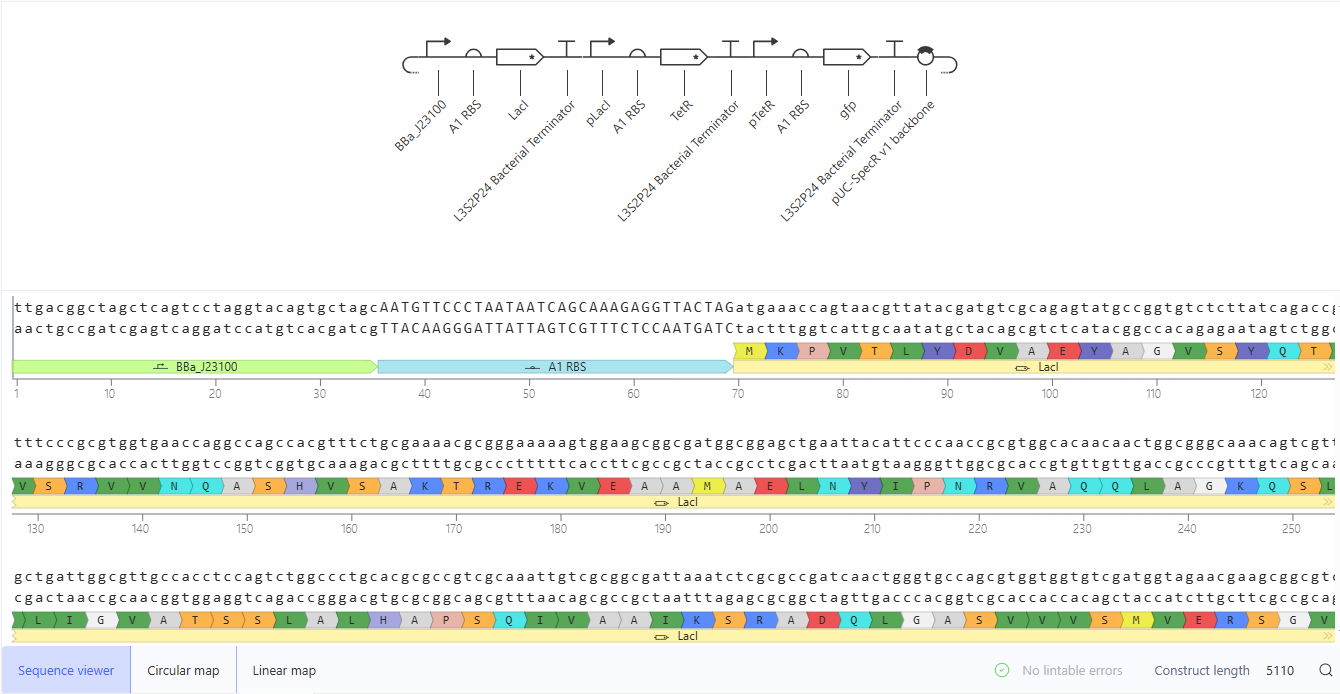
2. Double Negative Cascade
This construct implements a repression cascade: LacI is constitutively expressed and represses TetR via pLacI. TetR in turn represses GFP via pTetR. Because LacI suppresses TetR, repression of GFP should be relieved, leading to GFP expression at steady state.
Simulation conditions: Organism: E. coli, Transfection: Transient, Ligands: None, Duration 24 h, Timestep 30 min, no ligands
The simulation matches the expected behavior of a linear repressive cascade: high LacI levels suppress TetR, resulting in activation of GFP expression. The system reaches a stable steady state without oscillations, consistent with cascade architecture. Minor deviations in expression levels can be explained by the balance of promoter strengths, RBS efficiencies, and degradation parameters specified in the Kernel model.
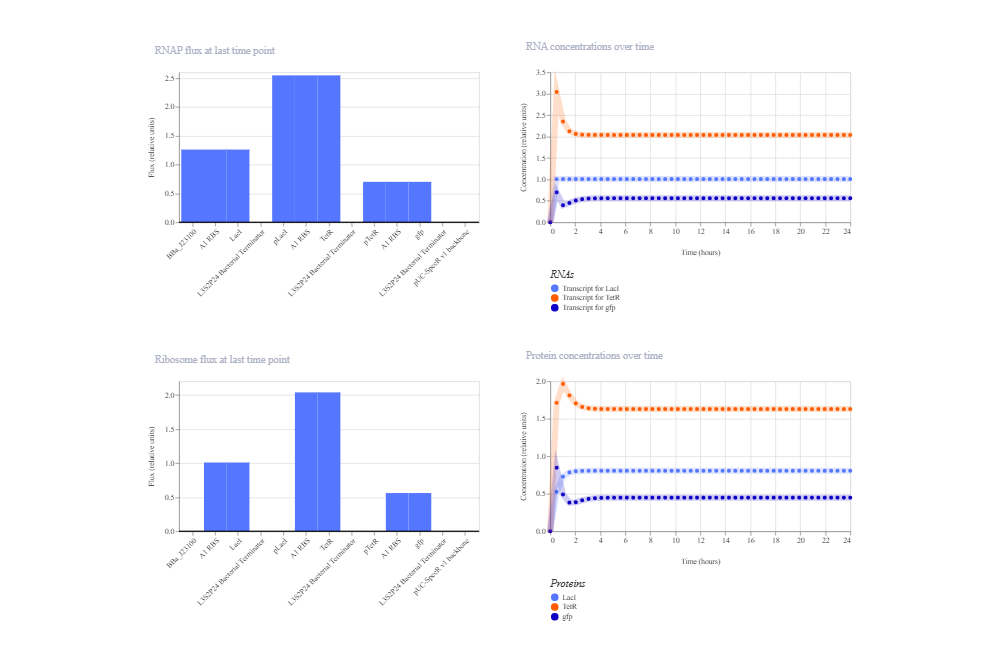
3. Toggle Switch (Mutual Repression)
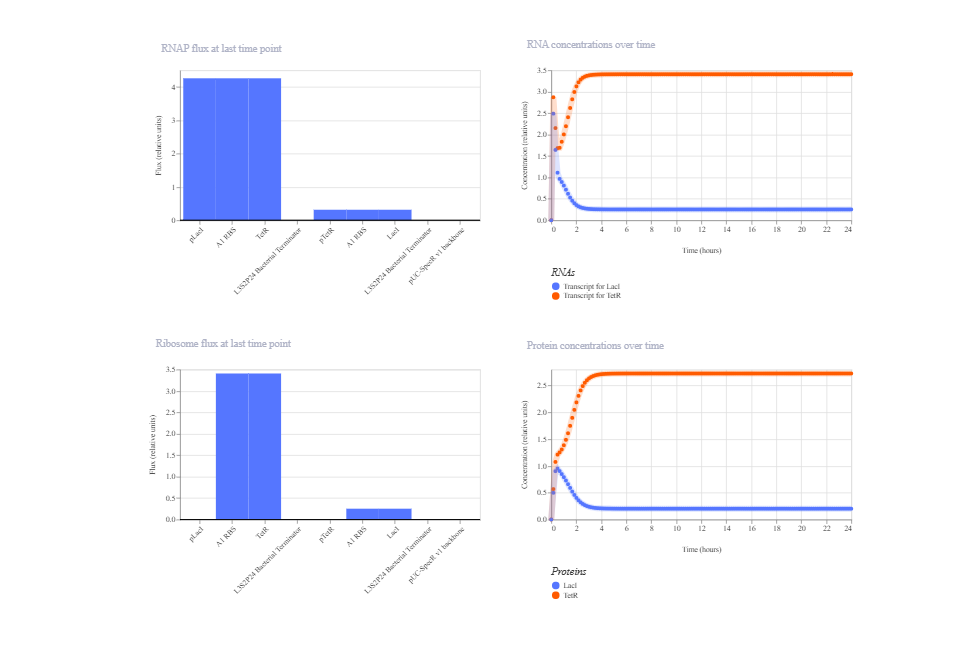
This construct implements mutual repression between LacI and TetR. Each protein represses the promoter driving expression of the other, forming a bistable genetic toggle switch. The system is expected to stabilize in one of two possible states: LacI high/TetR low or TetR high/LacI low.
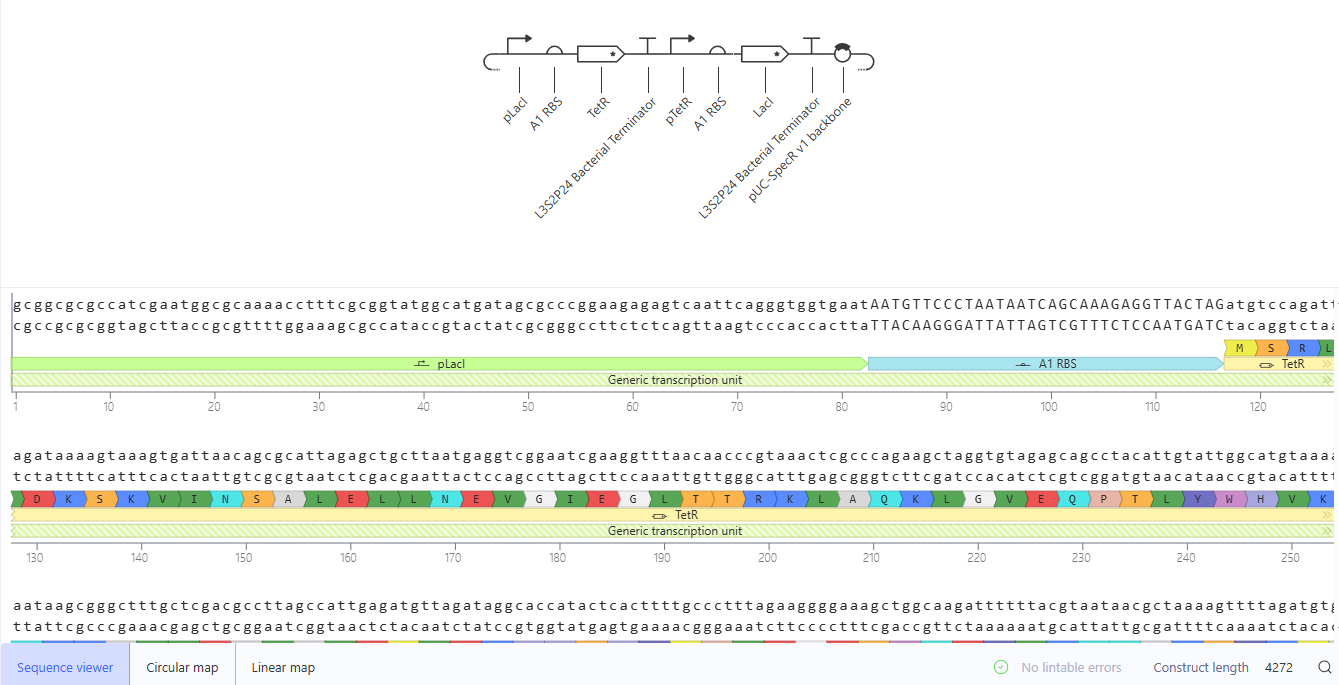
Simulation conditions: Organism: E. coli, Transfection: Transient, Ligands: None, Duration 24 h, Timestep 10 min, no ligands
The simulation confirms the functioning of mutual repression and demonstrates robust bistable behavior. The system rapidly selects one dominant state (TetR high, LacI low) and maintains it throughout the simulation. This behavior is consistent with the theoretical toggle switch model, where the final state is determined by the balance of kinetic parameters, promoter strengths, and initial conditions defined in the Kernel simulation.