Week 7 HW: Genetic circuits part II
Assignment Part 1: Intracellular Artificial Neural Networks (IANNs)
1. What advantages do IANNs have over traditional genetic circuits, whose input/output behaviors are Boolean functions?
Intracellular Artificial Neural Networks (IANNs) provide several important advantages over traditional genetic circuits that operate using Boolean logic gates such as AND, OR, and NOT. Traditional genetic circuits typically generate binary outputs, where genes are either “ON” or “OFF.” In contrast, IANNs can process information in a continuous and weighted manner, similar to artificial neural networks used in computational machine learning.
One major advantage of IANNs is their ability to perform analog signal processing. Biological environments are inherently noisy and variable; therefore, binary logic often oversimplifies intracellular dynamics. IANNs can integrate multiple molecular inputs with different weights and thresholds, enabling graded responses rather than discrete binary outcomes. This allows cells to make more nuanced decisions based on complex environmental conditions.
Another advantage is scalability and computational complexity. Boolean genetic circuits become increasingly difficult to engineer as the number of inputs grows because the number of required regulatory interactions expands rapidly. IANN architectures are more modular and compact, enabling implementation of higher-order decision-making processes using fewer genetic components.
IANNs also possess superior pattern-recognition capabilities. Since neural-network-like systems can classify multidimensional input patterns, they are better suited for applications such as disease-state detection, metabolic-state monitoring, or adaptive therapeutic responses. Traditional Boolean circuits struggle with ambiguous or overlapping biological signals because they rely on rigid thresholds.
IANNs may support adaptive and learning-like behaviors when combined with feedback regulation and dynamic tuning mechanisms. Although current synthetic biology implementations remain relatively simple, the neural-network paradigm offers a conceptual framework for constructing programmable living systems capable of sophisticated information processing.
2. Describe a useful application for an IANN; include a detailed description of input/output behavior, as well as any limitations an IANN might face to achieve your goal.
A highly promising application of IANN is intelligent cancer-cell detection and targeted therapeutic activation in mammalian cells.
In this system, the IANN would receive multiple intracellular molecular inputs associated with cancer progression. For example:
- X1: concentration of oncogenic microRNA (e.g., miR-21),
- X2: hypoxia-associated transcription factors,
- X3: abnormal metabolic markers such as elevated lactate levels,
- X4: DNA damage-response proteins.
Each input would regulate synthetic genetic components corresponding to weighted neuronal connections. The network would integrate these signals through regulatory interactions mediated by transcription factors, CRISPR regulators, or endoribonucleases such as Csy4.
The output layer would produce a therapeutic response only when the overall molecular profile strongly matches a cancerous state. Possible outputs include:
- expression of apoptosis-inducing proteins,
- activation of immune-signaling molecules,
- release of fluorescent reporters for diagnostics,
- controlled secretion of anticancer drugs.
Unlike Boolean circuits, which require exact combinations of signals, the IANN could classify partially overlapping or noisy molecular patterns. For example, moderate levels of hypoxia combined with high miR-21 expression might still trigger therapy even if another marker remains weak. This resembles probabilistic classification in artificial intelligence systems.
The input/output behavior would therefore be continuous and weighted:
- low cumulative activation → no response,
- intermediate activation → weak reporter signal,
- high activation → strong therapeutic gene expression.
But several limitations remain:
- Biological noise presents a major challenge. Gene-expression variability may distort weighted signal integration and reduce classification accuracy.
- Scalability is limited by cellular resource competition. Large synthetic networks consume transcriptional and translational machinery, potentially impairing normal cellular function.
- Precise tuning of regulatory weights and thresholds is difficult in living systems because promoter strengths, RNA degradation rates, and protein interactions vary across cells and environmental conditions.
- Signal crosstalk between synthetic and endogenous pathways may generate unintended outputs or toxicity.
- Evolutionary instability may occur over long timescales, as cells can mutate or silence synthetic constructs to reduce metabolic burden.
3
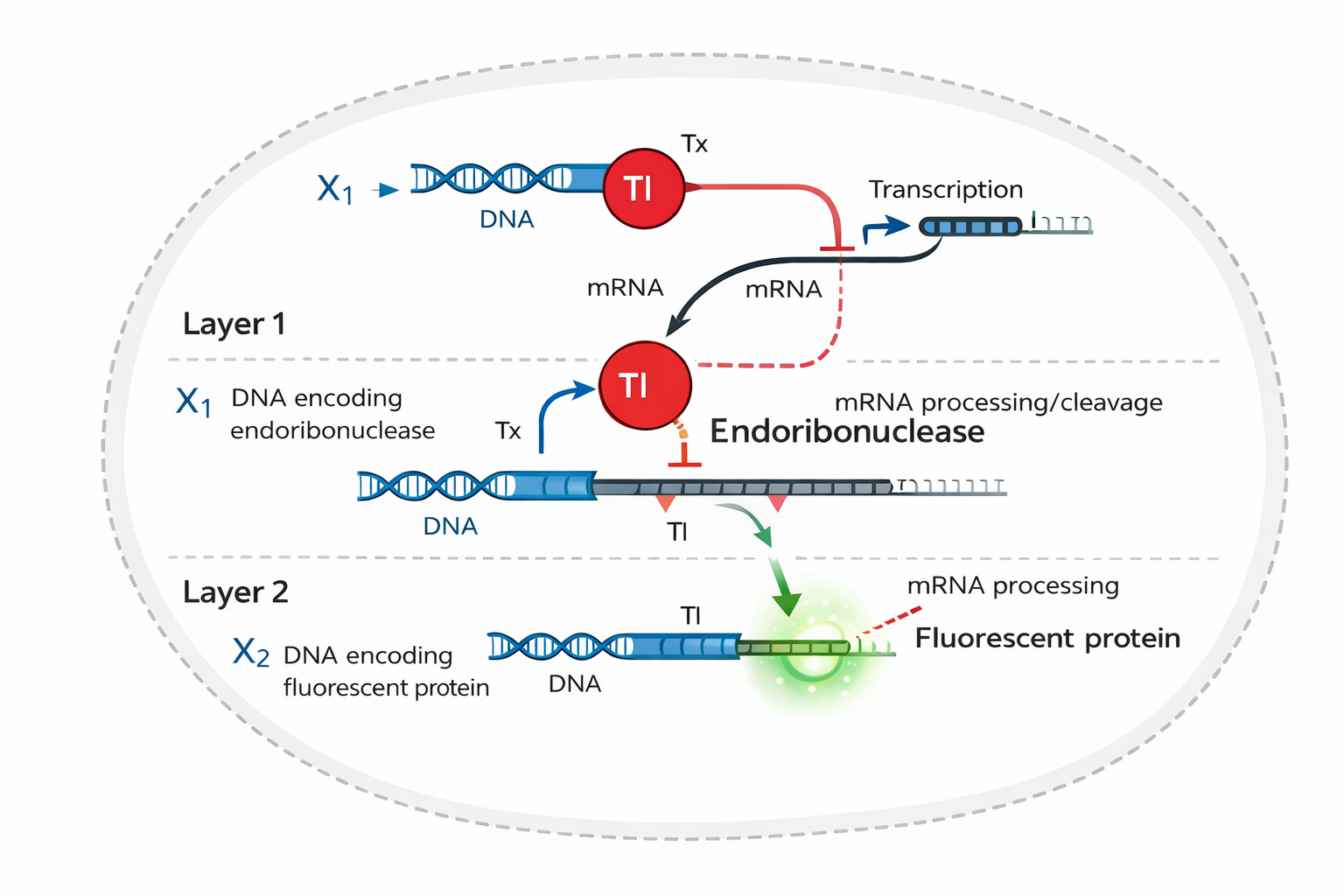 A diagram for an intracellular multilayer perceptron
Assignment Part 2: Fungal Materials
1.1 Mycelium-Based Composites
Applications:
- Packaging materials (replacement for polystyrene foam)
- Thermal and acoustic insulation panels
- Construction biomaterials
- Furniture and interior design elements
Principle:
Mycelium (the vegetative body of fungi) grows through a lignocellulosic substrate (e.g., sawdust, agricultural waste), binding particles into a cohesive composite. Growth is terminated by heat treatment.
Advantages:
- Biodegradable
- Utilize agricultural waste as feedstock
- Lower energy consumption compared to plastics and cement production
- Reduced carbon footprint
Disadvantages:
- Lower mechanical strength compared to synthetic polymers and concrete
- Moisture sensitivity (if untreated)
- Limited standardization of material properties
1.2 Mycelium Leather
Applications:
- Footwear
- Bags and accessories
- Clothing
- Automotive interiors
Advantages:
- Alternative to animal leather without livestock production
- Potentially lower environmental impact
- Tunable texture and thickness
Disadvantages:
- Mechanical durability may be inferior to high-quality natural leather
- Often requires coatings or treatments, which may reduce biodegradability
1.3 Chitin and Chitosan
Applications:
- Biomedical materials (wound dressings, drug delivery systems)
- Biodegradable films
- Water purification (adsorbents)
Advantages:
- Biocompatible
- Antimicrobial properties (especially chitosan)
- Biodegradable
Disadvantages:
- Higher cost compared to conventional synthetic polymers
- Limited mechanical strength unless combined into composites
2.1 Enhancement of Mechanical Properties
- Increased synthesis of chitin or β-glucans
- Modification of cell wall architecture
Goal: to create stronger, more durable structural biomaterials.
2.2 Control of Morphogenesis
- Regulation of hyphal branching
- Control over mycelial density
Goal: to standardize material properties and control porosity and mechanical performance.
2.3 Bioremediation Enhancement
- Upregulation of oxidoreductases (e.g., laccases, peroxidases)
Goal: to improve degradation of xenobiotics, plastics, and petroleum-derived pollutants.
The advantages of doing synthetic biology in fungi as opposed to bacteria
Fungi are eukaryotes and therefore capable of post-translational modifications, proper folding of complex multidomain proteins, secretion of functional eukaryotic proteins
Filamentous fungi naturally secrete large quantities of enzymes into the extracellular environment, simplifying downstream processing in industrial applications.
Mycelium forms natural three-dimensional networks, making fungi uniquely suited for growing structural materials without requiring an external scaffold. Bacteria typically require additional matrices to achieve similar structures.
Assignment Part 3: First DNA Twist Order
1. Final Project Title Bioprinting horizontal gene transfer: a bacterial “photocamera”
Short Final Project Description This project visualises horizontal gene transfer (HGT) in E. coli using a bioprinting system that functions as a bacterial “photocamera”. Donor and recipient strains are printed directly in spatially defined layers onto chromogenic agar; successful conjugation events are revealed by a pink-to-teal colour transition as recipients acquire the β-glucosidase gene (bglA) from Enterococcus faecalis. The project integrates synthetic biology, triparental mating, and bioart to create living images where gene transfer becomes literally visible as evolving colour.
Aim 1: Experimental Aim The first aim of my final project is to visualise plasmid-mediated horizontal gene transfer between spatially organised E. coli populations by utilising a triparental mating system combined with direct chromogenic bioprinting on selective chromogenic agar.
This aim will be achieved through:
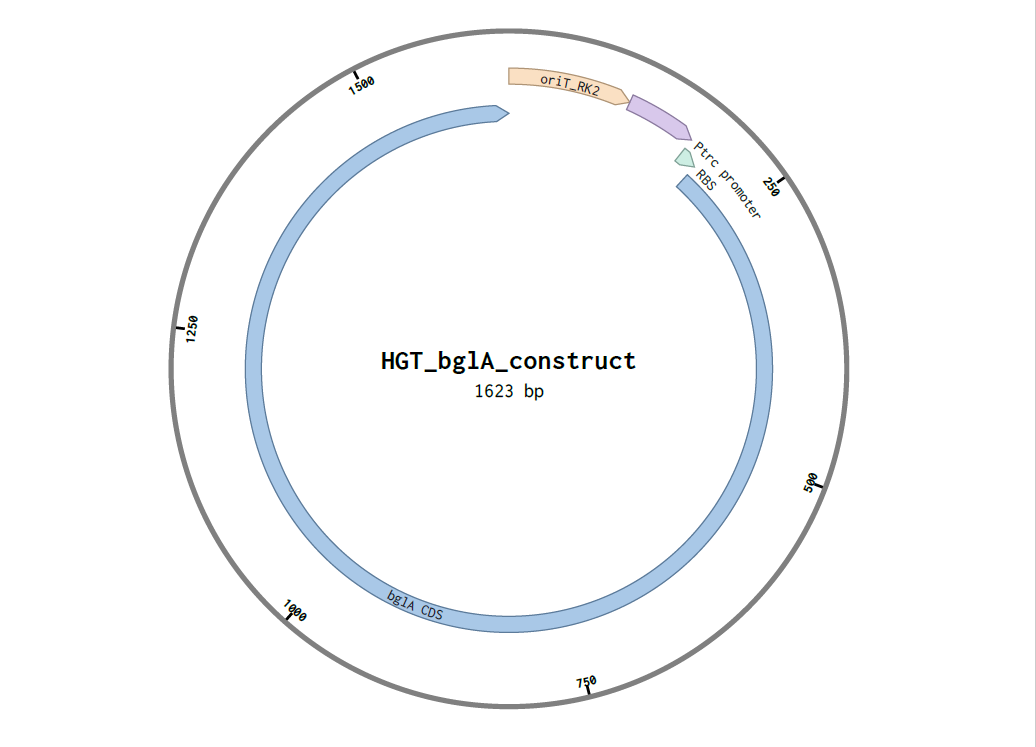
- Plasmid design: cloning the bglA β-glucosidase gene from Enterococcus faecalis into a mobilizable vector backbone (e.g., pBBR1MCS series with oriT) carrying an appropriate antibiotic resistance marker, using Benchling for sequence design and Twist/IDT for gene synthesis
- Strain construction: transforming the mobilizable bglA plasmid into donor E. coli; using pRK2013 (Addgene #37636) in a helper strain to provide conjugation machinery; maintaining an unmarked recipient strain with pink chromogenic phenotype
- Bioprinting: spatially depositing donor, helper, and recipient cell suspensions in defined geometric patterns directly onto chromogenic agar using the lab bioprinter, creating layered arrangements that maximise cell-to-cell contact
- HGT visualisation: incubating printed plates and observing colour transition from pink (recipient only) to teal (successful HGT of bglA) as the spatial visual readout of gene transfer; transconjugants confirmed by replating on selective agar with the corresponding antibiotic
Methods / Resources: triparental mating protocol, chromogenic agar, selective agar with antibiotic (to be confirmed based on vector choice), bioprinter, Benchling (plasmid design), Twist Biosciences (gene synthesis), pRK2013 (Addgene #37636), standard E. coli transformation workflow.
I selected Addgene, Twist Biosciences, New England Biolabs, and Opentrons because they collectively cover both the scientific reproducibility and artistic visualization goals of my bacterial “photocamera” of my project. That consists of plasmid sourcing and gene synthesis to cloning reagents and bioprinting automation. Addgene provides the essential pRK2013 helper plasmid for triparental mating, Twist enables rapid bglA gene synthesis from design to DNA, and NEB supports the molecular cloning workflow. Opentrons brings automation expertise relevant to spatial bioprinting of bacterial suspensions.
2. Construct design in Benchling.