Week 1 HW: Principles and Practices
Question 1: First, describe a biological engineering application or tool you want to develop and why. This could be inspired by an idea for your HTGAA class project and/or something for which you are already doing in your research, or something you are just curious about.
Answer:
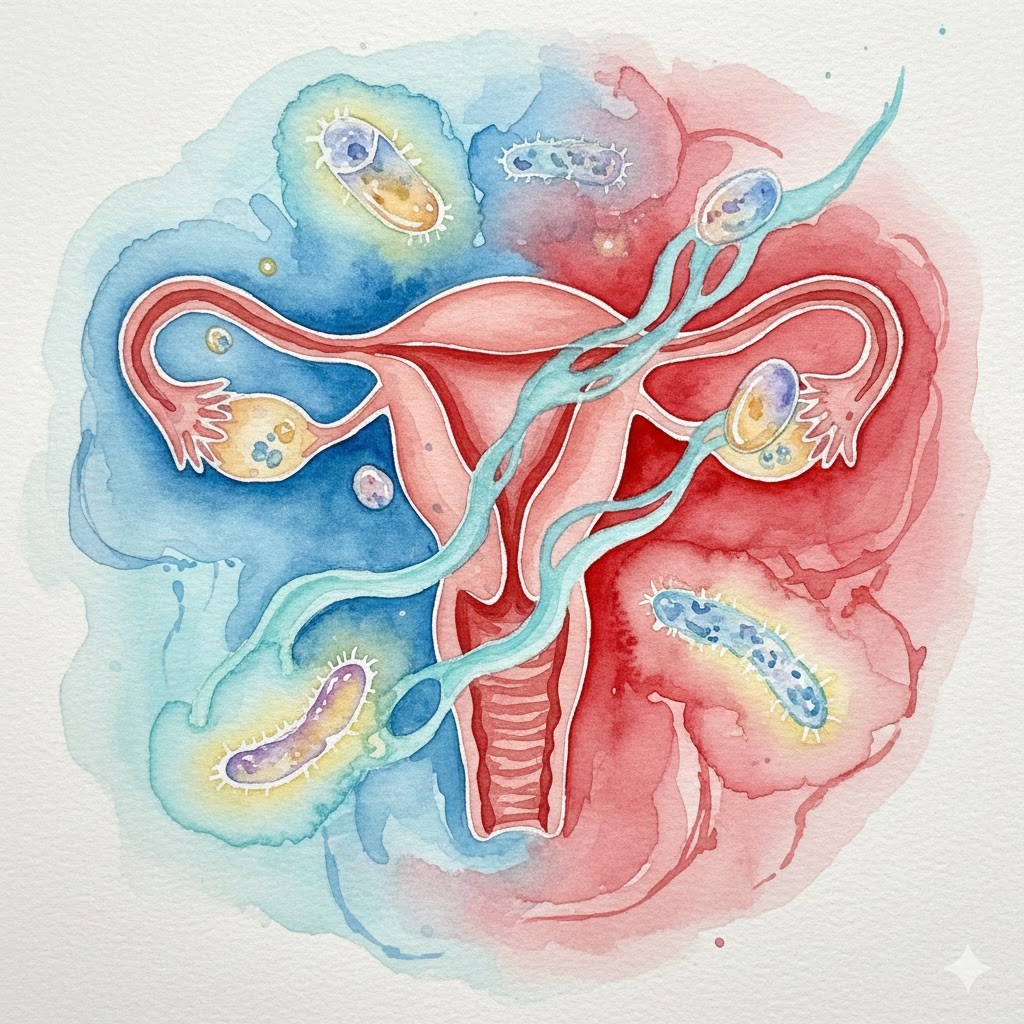
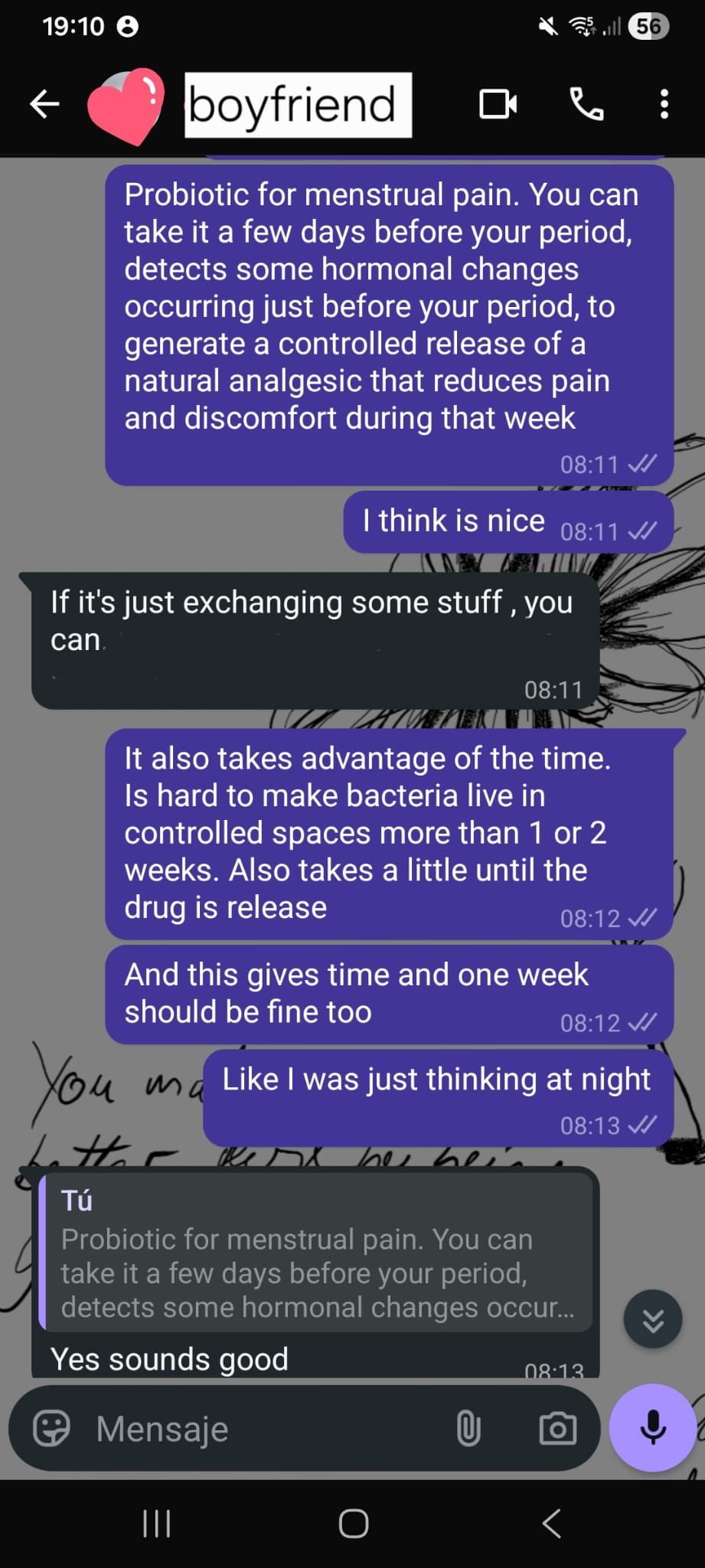
I’m pursuing a PhD in which my daily work revolves around bacterial engineering. I work with both model and non-model strains, mainly within the probiotic field, though not yet in therapeutic applications. However, there is a challenge that many women, including myself, have faced since puberty: menstrual pain. In Argentina, we often say “estoy indispuesta” during that week—literally, “I’m unwell.” But it shouldn’t have to be that way.
Scientific literature provides strong evidence supporting the use of natural compounds to alleviate dysmenorrhea. Natural compounds like ginger, turmeric, fennel, and lavender have been widely studied as non-pharmacological alternatives. Probiotics, on the other hand, are known to modulate the gut–reproductive axis, and growing evidence links gut dysbiosis to menstrual pain and endometriosis. This intersection between microbiome research and women’s health represents a promising direction for developing new engineered probiotic tools to help manage dysmenorrhea naturally. https://publishing.emanresearch.org/Journal/FullText/6163
Question 2: Next, describe one or more governance/policy goals related to ensuring that this application or tool contributes to an “ethical” future, like ensuring non-malfeasance (preventing harm). Break big goals down into two or more specific sub-goals. Below is one example framework (developed in the context of synthetic genomics) you can choose to use or adapt, or you can develop your own. The example was developed to consider policy goals of ensuring safety and security, alongside other goals, like promoting constructive uses, but you could propose other goals for example, those relating to equity or autonomy.
Answer:
For my engineered probiotic tool designed to alleviate dysmenorrhea by modulating the gut-reproductive axis, I propose governance/policy goals focused on ensuring non-maleficence (preventing harm) and promoting equity in access, adapting the synthetic genomics framework to the therapeutic microbiome context. These goals ensure the innovation contributes to an ethical future by prioritizing clinical safety and social inclusion.
Goal 1: Ensure non-maleficence (preventing harm). This minimizes risks from live modified probiotics, such as unintended colonization or immune interactions.
- Sub-goal 1.1: Mandate preclinical testing for persistence and dissemination in vitro/in vivo models (e.g., intestinal and reproductive organoids), enforcing strict viability limits (e.g., <1% survival after 7 days post-administration).
- Sub-goal 1.2: Establish post-market surveillance for adverse effects in vulnerable populations (e.g., those with endometriosis or during pregnancy), aligned with GRAS guidelines from regulatory bodies like FDA/EMA.
Goal 2: Promote equity in access and constructive uses. This prevents exacerbation of global health disparities by ensuring broad, inclusive benefits.
- Sub-goal 2.1: Prioritize inclusive clinical trials that recruit diverse demographics (age, ethnicity, socioeconomic status) to validate efficacy across populations and prevent biased outcomes.
- Sub-goal 2.2: Develop culturally sensitive informed consent frameworks, including multilingual education on risks/benefits to empower user autonomy and avoid coercive applications.
Question 3: Next, describe at least three different potential governance “actions” by considering the four aspects below (Purpose, Design, Assumptions, Risks of Failure & “Success”). Try to outline a mix of actions (e.g. a new requirement/rule, incentive, or technical strategy) pursued by different “actors” (e.g. academic researchers, companies, federal regulators, law enforcement, etc). Draw upon your existing knowledge and a little additional digging, and feel free to use analogies to other domains (e.g. 3D printing, drones, financial systems, etc.). Purpose: What is done now and what changes are you proposing? Design: What is needed to make it “work”? (including the actor(s) involved - who must opt-in, fund, approve, or implement, etc) Assumptions: What could you have wrong (incorrect assumptions, uncertainties)? Risks of Failure & “Success”: How might this fail, including any unintended consequences of the “success” of your proposed actions?
Answer:
Action 1: New Rule – Required Persistence Tests Before Trials (Federal Regulators)
- Purpose: Probiotics now get simple safety reviews under Generally Recognized as Safe rules, but engineered ones need better checks for spreading in the body. This rule requires tests using organoids (mini-organs) before human trials.
- Design: Agencies like the Food and Drug Administration or European Medicines Agency handle this through online submissions. Researchers and companies pay for lab tests and get approval only if strains survive less than 1% after 7 days outside the body.
- Assumptions: Organoids fully mimic real human microbiomes; regulators can review quickly.
- Risks of Failure & “Success”: Tests might use flawed models and slow down helpful treatments. If too strict, it could block safe innovations, much like early drone rules delayed useful tech.
Action 2: Funding Incentive – Grants for Diverse Clinical Trials (Governments and Foundations)
- Purpose: Current trials often focus on wealthy groups; this offers grants to include people of different ages, ethnicities, and incomes for fairer results.
- Design: Governments and foundations provide extra funding. Companies and academics submit diversity plans, tracked with enrollment targets and public reports.
- Assumptions: More diversity means better results for everyone; teams will chase grants over profits.
- Risks of Failure & “Success”: Plans might look good on paper but exclude people anyway, wasting money. Success could force small researchers to compete unfairly.
Action 3: Monitoring Strategy – Public Adverse Event Database (International Health Organizations)
- Purpose: Probiotics currently lack centralized tracking of side effects after use; this creates an open database for users and doctors to report issues in real time.
- Design: Groups like the World Health Organization or Centers for Disease Control run it as a simple app or website. Companies must link it to product labels, and regulators review data yearly to update guidelines.
- Assumptions: People will report problems accurately and often; data stays private enough for users.
- Risks of Failure & “Success”: Low reporting could miss rare issues, delaying fixes. If too popular, it might spark unnecessary panic over minor side effects, like social media amplifying rare vaccine concerns.
Question 4: Next, score (from 1-3 with, 1 as the best, or n/a) each of your governance actions against your rubric of policy goals. The following is one framework but feel free to make your own:
| Does the option: | Option 1 | Option 2 | Option 3 |
|---|---|---|---|
| Enhance Biosecurity | |||
| • By preventing incidents | 1 | 3 | 2 |
| • By helping respond | 2 | 3 | 1 |
| Foster Lab Safety | |||
| • By preventing incident | 2 | 3 | 3 |
| • By helping respond | 3 | 3 | 1 |
| Protect the environment | |||
| • By preventing incidents | 1 | 3 | 3 |
| • By helping respond | 2 | 3 | 1 |
| Other considerations | |||
| • Minimizing costs and burdens to stakeholders | 2 | 1 | 1 |
| • Feasibility? | 1 | 1 | 1 |
| • Not impede research | 2 | 1 | 2 |
| • Promote constructive applications | 1 | 1 | 2 |
Question 5: Last, drawing upon this scoring, describe which governance option, or combination of options, you would prioritize, and why. Outline any trade-offs you considered as well as assumptions and uncertainties. For this, you can choose one or more relevant audiences for your recommendation, which could range from the very local (e.g. to MIT leadership or Cambridge Mayoral Office) to the national (e.g. to President Biden or the head of a Federal Agency) to the international (e.g. to the United Nations Office of the Secretary-General, or the leadership of a multinational firm or industry consortia). These could also be one of the “actor” groups in your matrix. Reflecting on what you learned and did in class this week, outline any ethical concerns that arose, especially any that were new to you. Then propose any governance actions you think might be appropriate to address those issues. This should be included on your class page for this week.
Answer:
I recommend prioritizing a combination of Action 1 (Required Persistence Tests) and Action 3 (Public Adverse Event Database) for federal regulators like the Food and Drug Administration or European Medicines Agency, with Action 2 (Diverse Trial Grants) as a supporting incentive from governments and foundations. This mix delivers comprehensive coverage: prevention via testing, rapid response via reporting, and equity via funding.
Action 1 stops problems early (top scores for biosecurity and environment prevention).
Action 3 tracks issues fast after use (best for response across safety areas).
Together, they average the strongest scores (~1.8). Action 2 helps by funding trials and cutting costs so rules don’t hurt small labs.
Trade-offs
- Safety vs. Speed: Tests add time upfront (Action 1), but the database speeds fixes later (Action 3).
- Cost vs. Coverage: Database is cheap, but needs people to report; grants make tests affordable.
- Skip Action 2 alone—it’s great for fairness but weak on stopping harm.
Assumptions & Uncertainties
- Assume regulators can handle reviews without delays and people report side effects often.
- Uncertainty: Lab models might miss real body effects;
- Low reports could weaken tracking.