VIVIEN ROUSSEL — HTGAA Spring 2026
About me
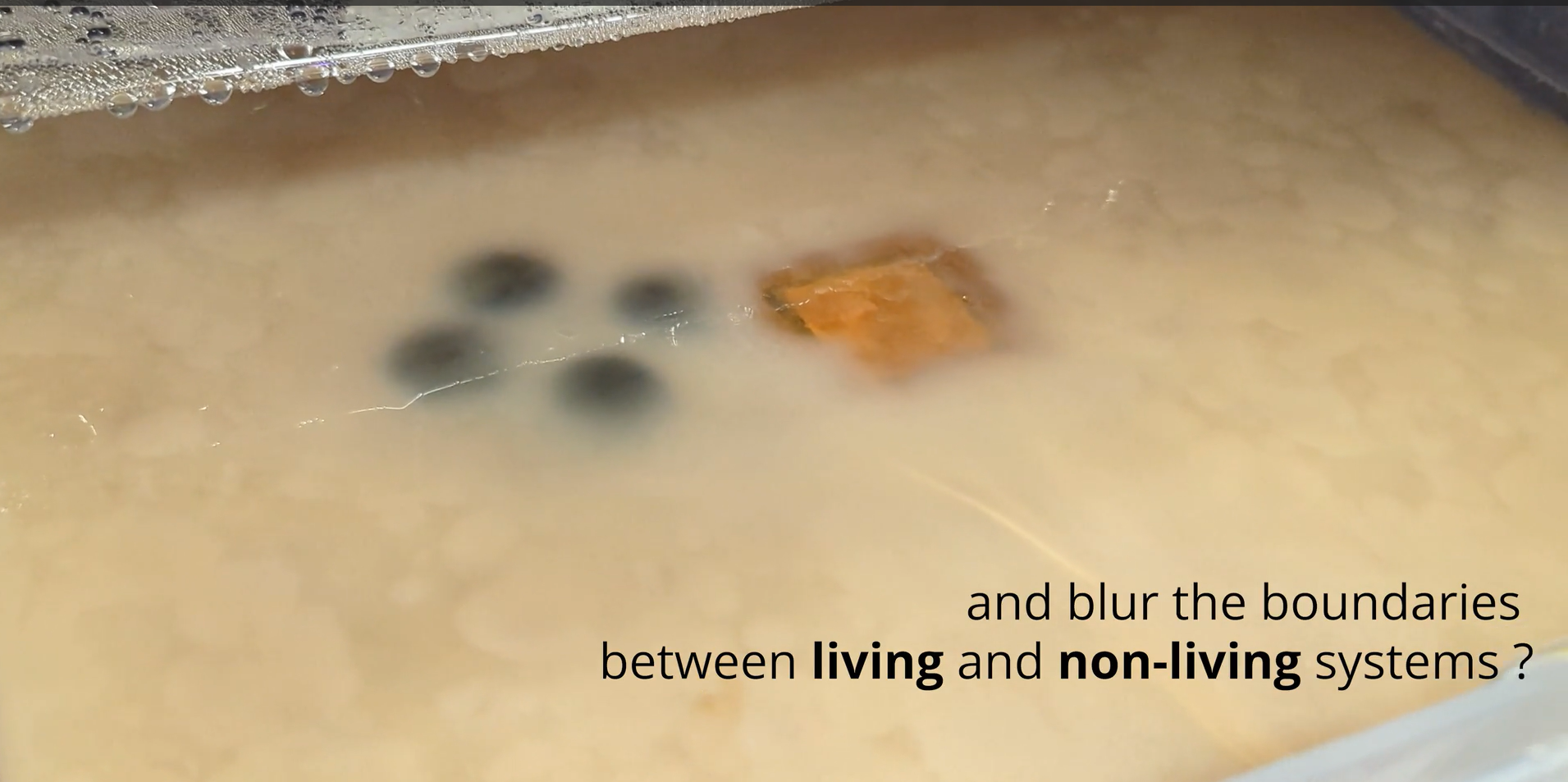
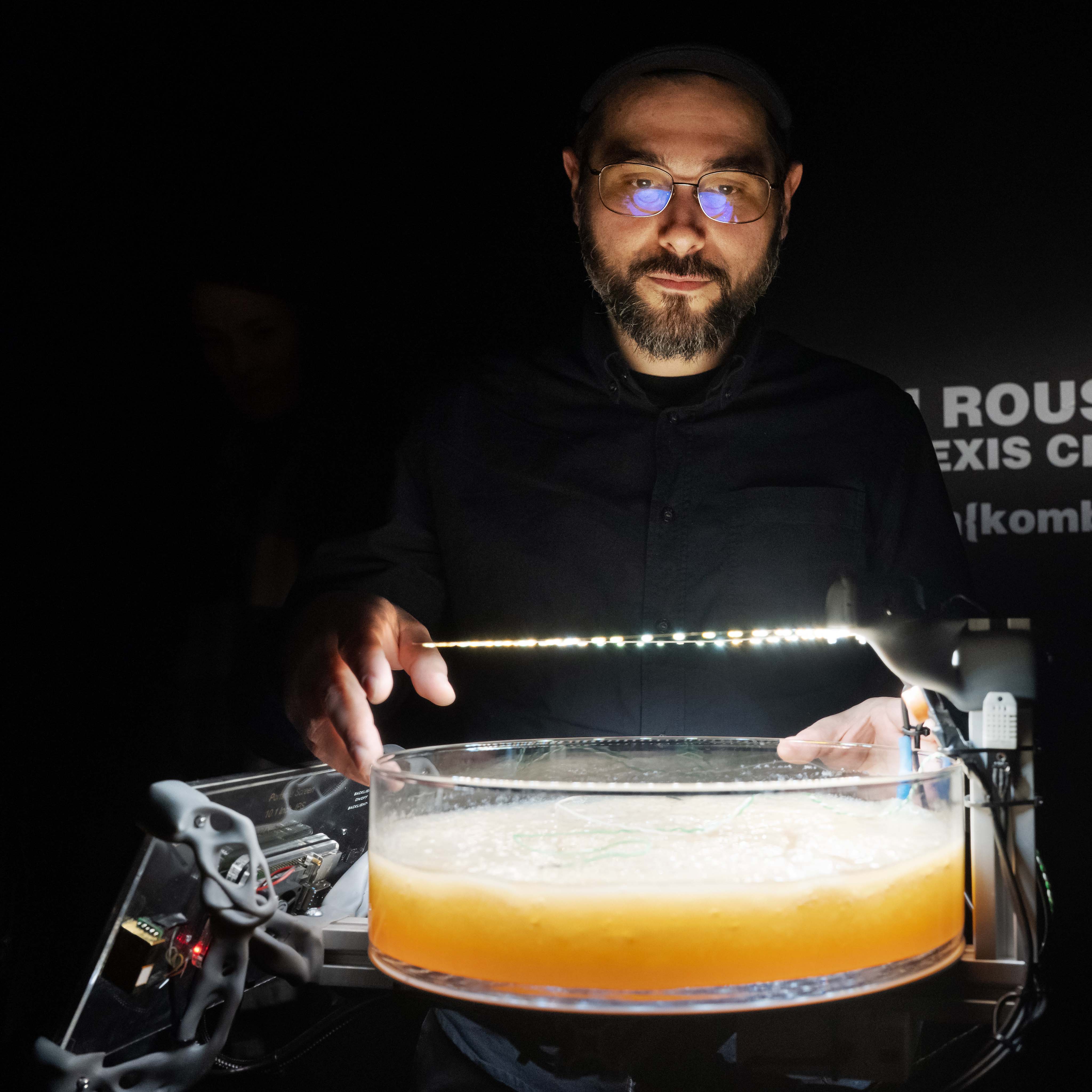
I’m a designer-researcher working at the intersection of living matter, digital fabrication, and speculative design. My work explores how biological processes and biomaterials can reshape how we design, make, and interact with artifacts in a climate-challenged world. My research focuses on hybrid fabrication strategies using bacterial cellulose to grow biohybrid devices that combine computation, interaction, and material sustainability.
I’m currently pursuing a PhD in digital biofabrication at the Institute for Future Technology at Paris, in collaboration with the Chrome biology lab and the design lab Projekt at Nîmes University. I’m also Visiting Student at MIT Media Lab (between april - may - june 2026) at Community Biotechnology Initiative.
Contact info
Homework
Week 01 HW: Principles and Practices
Table of Contents 1) Biological engineering application / tool 2) Governance / policy goals 3) Governance actions 4) Risk analysis 5) Scoring governance actions 6) Prioritization recommendation 7) Reflection 8) Project + governance overview Homework Questions from Professor Jacobson Homework Questions from Dr. LeProust Homework Question from George Church 1) Biological engineering application / tool I want to develop (and why) Application / tool: Growing interactive surfaces from bacterial cellulose I already know how to grow 3D artifacts in bacterial cellulose (BC). In this project, I want to develop a biological functionalization workflow that turns grown BC artifacts into interactive surfaces, measured through impedance-based sensing (e.g., tactile volumetric response, sensitivity to pressure), with minimal embedded electronics.
Week 02 HW: DNA Read, Write, & Edit
Table of Contents 0. Basics of Gel Electrophoresis 1. Benchling and In-silico Gel Art 2. Gel Art Restriction Digests and Electrophoresis 3.1 Choose Your Protein Protein sequence (from Supplementary Data 1) Structural micro-analysis: copper coordination and catalysis Why this protein matters 3.2 Reverse translate 3.3 Codon optimization 3.4 You have a sequence now what 3.5 Optional how does it work in nature 4. Prepare a Twist DNA Synthesis Order 4.1 Create accounts 4.2 Build the DNA insert sequence 5.1 DNA Read 5.2 DNA Write 5.3 DNA Edit 6. Exploration of others strategies for my project 0. Basics of Gel Electrophoresis Gel electrophoresis is a fascinating process that allows DNA fragments to be separated according to size. The migration of fragments through agarose reveals invisible molecular differences as visible banding patterns. What interests me most is how information encoded in DNA becomes a spatial structure that can be interpreted visually.
Table of Contents Assignment: Python Script for Opentrons Artwork Statement of Intent — Why Reaction–Diffusion Post-Lab Questions 1.Find and describe a published paper that utilizes the Opentrons or an automation tool to achieve novel biological applications 2.Write a description about what you intend to do with automation tools for your final project Automation as a Tool to Explore the Behavioral Landscape of Living Materials Moving Beyond Optimization My Intended Use of Automation 1. Mapping Morphogenetic Regimes of Bacterial Cellulose 2. Spatial Programming of Living Matter 3. Toward a Cybernetic Living Material System Why This Matters Final Project Ideas Assignment: Python Script for Opentrons Artwork https://opentrons-art.rcdonovan.com/?id=sux110hip535fnx
Week 04 HW: Protein Design Part 1
Table of Contents Conceptual Questions – Answers
- How many molecules of amino acids are in 500 g of meat? 2. Why do humans eat beef but do not become a cow? 3. Why are there only 20 natural amino acids? 4. Can we make non-natural amino acids? 5. Where did amino acids come from before life? 6. If you make an α-helix using D-amino acids, what handedness would you expect? 7. Can you discover additional helices in proteins? 8. Why are most molecular helices right-handed? 9. Why do β-sheets tend to aggregate? 9b. What is the driving force for β-sheet aggregation? 10. Why do many amyloid diseases form β-sheets? 10b. Can you use amyloid β-sheets as materials? 11. Design a β-sheet motif that forms a well-ordered structure Part B: Protein Analysis and Visualization
Week 05 HW: Proteine design part II
Table of Contents Table of Contents Part A: SOD1 Binder Peptide Design Part 1. Generate Binders with PepMLM
- Submit mutant SOD1 + peptide chains for AlphaFold modeling 3. Record ipTM score and binding localization 4. Compare ipTM values and known binder Part 3. Evaluate Properties in PeptiVerse
Week 06 HW: Genetic circuit part I
Table of Contents Assignment: DNA Assembly
- Components of the Phusion High-Fidelity PCR Master Mix 2. Factors determining primer annealing temperature 3. PCR vs restriction enzyme digests 4. Ensuring compatibility for Gibson cloning 5. Plasmid DNA transformation into E. coli 6. Golden Gate Assembly Benchling / Modeling Component Asimov Kernel Assignment — Repository and Circuit Design
Week 7 — Genetic Circuits Part II: Neuromorphic Circuits
Table of Contents Assignment Part 1: Intracellular Artificial Neural Networks (IANNs)
- Advantages of IANNs over Boolean genetic circuits 2. Useful applications for IANNs 3. Intracellular Multilayer Perceptron Diagram Assignment Part 2: Fungal Materials
- Existing fungal materials: uses, advantages, and disadvantages 2. Genetic engineering of fungi and advantages over bacteria Assignment Part 3: First DNA Twist Order
Table of Contents Homework Part A: General and Lecturer-Specific Questions
- Advantages of cell-free protein synthesis 2. Components of a cell-free expression system 3. Energy regeneration and ATP supply 4. Prokaryotic vs eukaryotic cell-free systems 5. Optimizing membrane protein expression 6. Troubleshooting low protein yield Homework question from Kate Adamala - Design Synthetic Minimal Cell Genetic Circuits
Week 10 HW: Advanced Imaging & Measurement Technology
Table of Contents Homework: Final Project Final Project — Measurement Plan 1. Genetic Construct Verification 2. Tyr1 Protein Expression 3. Melanin Production 4. Bacterial Cellulose Growth 5. Electrochemical / Impedance Behavior 6. Environmental / Culture Conditions Summary Table Overall Goal Homework: Waters Part I — Molecular Weight Waters Part I — eGFP Molecular Weight 1. Calculated Molecular Weight 2. Molecular Weight from Adjacent Charge States Charge State Observation from the Zoomed-In Peak Homework: Waters Part II — Secondary/Tertiary Structure
Week 11 - HW - Bioproduction & Cloud Labs
Table of Contents Part A — The 1,536 Pixel Artwork Canvas | Collective Artwork Part B: Cell-Free Protein Synthesis | Cell-Free Reagents
- Cell-free protein synthesis reaction components E. coli Lysate Salts / Buffer Energy / Nucleotide System Translation Mix (Amino Acids) Additives Backfill 2. PEP-NTP vs NMP-Ribose-Glucose master mix Part C: Planning the Global Experiment | Cell-Free Master Mix Design
Labs
Projects
Growable Impedance-sensitive surface from Bacterial Cellulose via Tyr1-Mediated Eumelanin Student: Vivien Roussel (Committed Listener - Paris, FR) TA : Ahmad Hader (Lifefabs - London node) Table of Contents SECTION 1 ABSTRACT SECTION 2 — PROJECT AIMS