Week 1 HW: Principles and Practices
- First, describe a biological engineering application or tool you want to develop and why. This could be inspired by an idea for your HTGAA class project and/or something for which you are already doing in your research, or something you are just curious about:
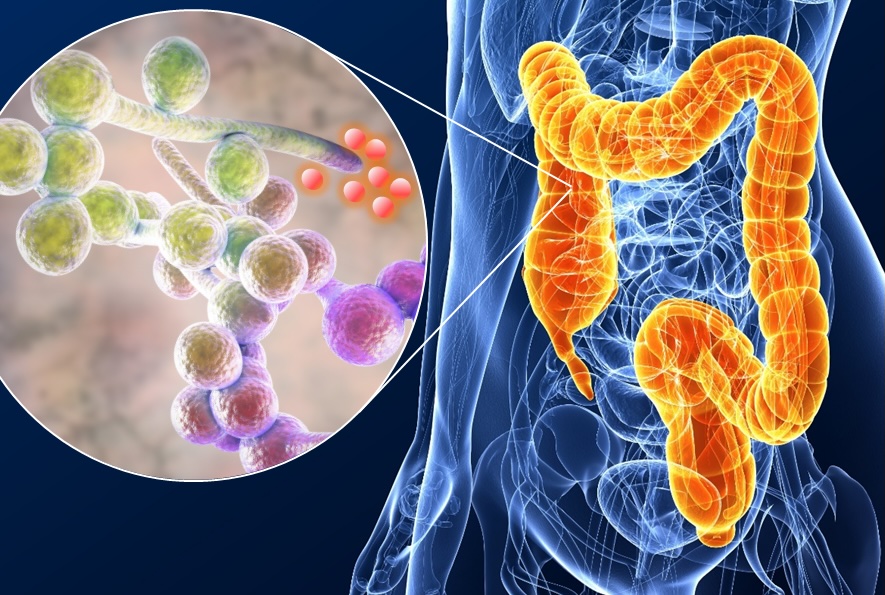
I would be interested in developing an approach to study and properly map interactions and pathways between the gut mycobiome and host gut cells. Specifically to examine how fungal components contribute to chronic inflammation and downstream cellular stress responses. This approach would contribute to the characterization of direct and indirect mycobiome inflammation pathways that are linked to disease (cancer, IBD) origin and progression.
- Next, describe one or more governance/policy goals related to ensuring that this application or tool contributes to an “ethical” future, like ensuring non-malfeasance (preventing harm). Break big goals down into two or more specific sub-goals:
A. Governance role 1 (Safety and security-Responsible research): Prevent misuse or unsafe utilization of mycobiome research. a1. Sub-goal 1: prevent wrongful application of findings outside the context they were designed for: to make sure that findings are not used as direct causal proof or direct clinical input. Responsible research will also involve proper methodologies and expertise input. a2. Sub-goal 2: ensure clear communication of model limitations: this to ensure that understanding of what exactly the model’s goals are and what it insight will be able to provide about the disease or other possible research areas
B. Governance role 2 (Equity): Ensuring equitable and representative research in mycobiome research models. b1. Sub-goal 1: Encourage inclusion of diverse mycobiome profiles in research design: so that models can reflect more accurately the variability of the mycobiome across populations. b2 Sub-goal 2: Ensure that model explicitly acknowledge variability of the mycobiome: to prevent results from being presented as universally representative of all human gut.
- Next, describe at least three different potential governance “actions” by considering the four aspects below (Purpose, Design, Assumptions, Risks of Failure & “Success”). Try to outline a mix of actions (e.g. a new requirement/rule, incentive, or technical strategy) pursued by different “actors” (e.g. academic researchers, companies, federal regulators, law enforcement, etc). Draw upon your existing knowledge and a little additional digging, and feel free to use analogies to other domains (e.g. 3D printing, drones, financial systems, etc.).
Actions:
A. Standardized reporting guidelines for mycobiome-based models
a. Purpose: Commonly, human gut microbiome is studied and it includes bacteria, viruses and fungi. Since fungi are biologically distinct than viruses and bacteria, reporting on methodology of research models should be set on their own category to better understand the behaviour of this fungi in in models and their roles in the gut. This distinction is important to assess the exact roles of bacteria, viruses and fungi in the human gut and to be able to pinpoint what fungal related pathways can be better charatcerized in relation to chronic inflammation. This would enforce that all biological systems in human microbiome research are represented equitably.
b. Design: Academic Journals and scientific institutions would be reporting checklists for mycobiome studies. Authors and contributors will need to include sections addressing fungal specific assumptions and limitations, which reviewers would asses during peer review process.
c.Assumptions: This action would assume that journals will make sure these guidelines are followed, that researchers successfully dispose limitations of the models, clearer reporting would improve interpretation for research replication.
d. Risk of failure and success: -Risk of failure: Reporting requirements may become superficial or inconsistent if they are not properly enforced by journals and institutions and mycobiome focused research might become diluted in microbiome studies. -Risk of success: This might be beneficial for small laboratories that want to focus their research on the mycobiome as a category inside the microbiome instead of the whole biological system that the microbiome is and provide access to reproducible research. It would also open possibilities for collaboration with labs focusing on bacteria or viruses to form equitable involvement of biological systems.
B. Required combined fungal biology and human biology expertise
a. Purpose: If there is mycobiome research proposed to be completed with the goal of reaching biomedical applications, the research cannot only be done by microbiologists due that the human gut involves knowledge of human biology. This action proposes that research addressinf fungal-host interactions in disease contexts is informed by expertise in both fungal biology, and human bioology, particularly when immune signalign and cellular stress are involved.
b. Design: Research teams, institutions and funding bodies would require mycobiome projects claiming relevance to human health would be exoected to include collaborators or consultants with fungal biology and human biology expertise or justify how this expertise is incorportated into their study design. Journals could further assess and confirm that appropiate expertise is oncluded when evaluating study scope. In case of missing expertise in study design scientific boards and universities could direct them to experts.
c. Assumptions: This action would assume that there is relevant expetise is included in research team before beggining experimentation and that revirewers and intitutions reasonably evalute whether this expertise is sufficient. It would also assume that experts involved are capable of carrying out similar research or have done it before.
d. Risk of failure and success: -Risk of failure: Expertise requirements might just be applied briefly or superficially for co authoring purposes, smaller labs may face barriers to collaboration, reviewers may inconsistently assess what counts as adequate expertise. -Risk of success: Increases collaboration requirements could slow research advances or interdisciplinary work may become performative. In the other hand if collaboration proves to be well organized there would be sucessful exchange of quality scientific knowledge and be and example of inclusive collaborative research and correct disctinction of all biological systems participating.
C. Limits on clinical language in mycobiome research
a. Purpose: Many studies that involve immune signaling or potential diseas related processes coould be framed using clinical or therapeutic langiage even when findings are model based and have not yet been appplied in clinical research. This can lead to misunderstandings of findings applications and contribute to misunformation when results are communicated to the public. This action would restric thr use of clinical language unless studies meet defined standards that help to distinguish exploratory research from apploed or clinical claims.
b. Design: Insitutions, science boards and journals would implement guidelines that discurage the use of terms implying treatment, prevention,or clinical efficacy unless it is supported. They would also require explicit labelling of studies as exploratory or non-clinical.
c. Assumptions: This action would assume that language can influence interpetation by both scientific and public audiences. That institutions, jorunals and scientific communities will enfornce the language guideliunes and that researches will be able to communicate their significance without utilizng clinical language.
d. Risk of failure and success: -Risk fo failure: Guidelines might not be consistently enforced. Researches might use other wording impliying clinical relevance. Public misunderstanding will still exists regardless of langiage guidelines. -Risk of success: overly strict language might disocurage translational discussion (although translational potential is not to be confused with claiming clinical relevance). Important findings might be perceived as less impactful due framing and many studies might be dismissed if not read aproppiately.
- Next, score (from 1-3 with, 1 as the best, or n/a) each of your governance actions against your rubric of policy goals.
| Actions: | Action 1 | Action 2 | Action 3 |
|---|---|---|---|
| Enhance accurate science communication | |||
| •By preventing overlooking data | 1 | 1 | 1 |
| •By enhancing understanding | 1 | 1 | 1 |
| of specific biological systems | |||
| Foster Lab Safety | |||
| • By preventing incident | 2 | 1 | 3 |
| • By helping respond | 2 | 1 | 3 |
| Promote scientific collaboration | |||
| • By preventing incidents | 3 | 1 | 3 |
| • By helping respond | 3 | 1 | 2 |
| Other considerations | |||
| • Minimizing costs and burdens to stakeholders | 3 | 3 | 2 |
| • Feasibility? | 1 | 2 | 2 |
| • Not impede research | 2 | 2 | 2 |
| • Promote constructive applications | 1 | 1 | 1 |
- Last, drawing upon this scoring, describe which governance option, or combination of options, you would prioritize, and why. Outline any trade-offs you considered as well as assumptions and uncertainties.
Based on the scoring I would prioritize Action 2 (Requiring combines fungal biology and human biology expertise) supported by Action 3 (placing limits on clinical language). Action 2 scored highly in policy goals related to scientific accuracy, lab safety, and collaboration, which suggetss that expertise is the most effective way to reduce misinterpretation, methodological errors and to avoid the dismissal of important data. Action 3 complements this since it adresses downstream risks of misinformation and misapplication, especially when research findings are communicated beyong the scientific community.
Action 1 (standarized reporting guidelines) scored high on improving communication, it scored lower in terms of cost, burden, and feasibility. This tells us that reporting standards might cause delays in research and may be most effective as a secondary long term action rather than a priority.
By prioritizing action 2, I noticed a trade off between impriving scientific accuracy and the potential burden on smaller laboratories, which may find interdisciplinary collaboration more difficult to enfornce. Action 3 assumes that limiting clinical language will meaningfully reduce public misunderstanding as well as misundersatnding in broader academic communties, though it will remain uncertain how research findings are interpreted once they leave academic contexts.
These recommendations assume thay appropiate expertise is avaliable and that journals and relevant institutions will be able to evaluate appropiately both disciplinary competence and laguage use. I do not think this actions will eliminate the issue but I would expoect them to reduce risks without stalling or impeding research progress.
—-> Questions from professor Jacobson:
- Nature’s machinery for copying DNA is called polymerase. What is the error rate of polymerase? How does this compare to the length of the human genome. How does biology deal with that discrepancy?
DNA polymerase error is 1 per 10⁶ bases added. The human genome is around 3.1 billion base pairs. So if polymerase made one error per 10⁶ bases without corrections there would be thousands of nucleotide misplacements and life would not be viable.
Biology deals with this discrepancy by different systems that reduce errors.
a. DNA polymerases have 3’ to 5’ exonuclease activity which allows them to detect nucleotide misplacements, remove them and place a correct match. b. To lessen the misplacements even more there exists a mechanism called Post replication mismatch repair (MMR) that takes place after replication specifically through the MutS Repair system. In this system specialized proteins, MutS detects mismatches, to allow Pol III and ligase to synthesize correct matches.
- How many different ways are there to code (DNA nucleotide code) for an average human protein? In practice what are some of the reasons that all of these different codes don’t work to code for the protein of interest?
The number of possible ways to code for a human protein is very large, this is due of the degeneracy of the genetic code that allows different codon triplets to code for the same amino acid. The third possiton of the codon is flexible and is able to bind with other bases and even though the codon triplets are different: GCC, GCU, GCA, GCG all code for alanine.
The reasons that even if all of these codons code for the same amino acid but don’t produce a functional protein:
a. mRNA secondary structure: Different codon arrangements change the mRNA sequence and alter how the strand folds, this can cause the strands to fold and form strucutres near the ribosome binding site or nearby the start codons. This would prevent the ribosome from binding and unwinding the mRNA for translation.
b. Different cells have different tRNAs: if there are many strange combinations of codon triplets and a cell does not have enough tRNA to code for them, the result will be an incomplete peptide or a unstable petide that will be prone to degradation.
c. GC content: if there is a very high or low content of GC in a sequence, it can affect folding, coding efficiency, ribosome activity or mRNA stability.It is also known that high GC content can cause the creation of ridig structures affecting their function.
—-> Questions from Dr. LeProust:
- What’s the most commonly used method for oligo synthesis currently?
The most commonly used method is Phosphoramidite DNA Synhesis cycle.
- Why is it difficult to make oligos longer than 200nt via direct synthesis?
Phosphoramidite synthesis has no proofreading and a non zero error rate (it is small but non-zero, they can be deletions, side reactions or incomplete reactions) meaning that long oligos could accumulate several errors and final molecule would contain them since there is no mechanism to fix them, at that point purification would be lenghty and impractical.
- Why can’t you make a 2000bp gene via direct oligo synthesis?
Attempting to make a 2000bp would accumulate errors exponentially since there is no proofreading mechanism, so we would obtain faulty sequences. Assembly would make several oligos of smaller size, they would accumulate less errors which can then be corrected and assembled via enzymatic processes.
—-> Question from George Church
- What are the 10 essential amino acids in all animals and how does this affect your view of the “Lysine Contingency”?
The 10 essential amino acids are Histidine, Isoleucine, Leucine, Lysine, Methionine, Phenylalanine, Threonine, Tryptophan, Valine and Arginine. Animals including humans cannot synthesize Lysine molecules, they must obtain it from other sources through their diet. Plants and some microbes are able to synthesize lysine, so if consumed animals are able to supply their lysine.
This understanding challenges the concept of “lysisne contingency” that was seen in the movies of Jurassic Park, where Henry Wu performed a genetic alteration in the dinosaur genome supposedly knocking down the ability to produce the amino acid lysine. This was a plan made for it that anything went wrong, the dinosaurs were not able to escape and survive long to disrupt ecosystems. It was assumed they would die due the lack of lysine.
Since we know that lysine is an essential amino acid, meaning that animals cannot synthesize it. It is nonsensical that they would say that they performed this genetic alteration, animals (including dinosaurs I imagine) were already unable to produce lysine, so no genetic alteration could have been made.
In any case, if we took that this dinosaurs in that world were supposed to be able to produce lysine but they were genetically altered to not be able to synthesize it, hervibores would be living well, carnivores fed through cattle would be living well, as I suppose they did not want their carnivores eating anything else but the food provided (also not hervibores). But if they escape, carnivores will eat hervibores, so they all survive either way.
The lysine contigency idea does not work. But I believe the author of jurassic park, Michael Chrichton wrote it this way as a symbol of corporate overconfidence and musinderstanding of biological systems. It is is a recurring theme in Michael Chrichton’s work to critique political roles and intitutions, including one of my favorite novels “The Andromeda Strain”.