Week 3 Lab: Opentrons Art
Opentrons Artwork: Fluorescent Bacteria Pixel Art
Overview | Objective
In this two-day lab, you’ll program the Opentrons OT-2 pipetting robot to create stunning, glowing designs by depositing genetically engineered E. coli onto black (charcoal) agar plates. These bacteria express fluorescent proteins in vibrant colors, forming “bio-art” that comes to life under UV light. It’s your chance to turn cutting-edge biotech into a canvas for creativity!
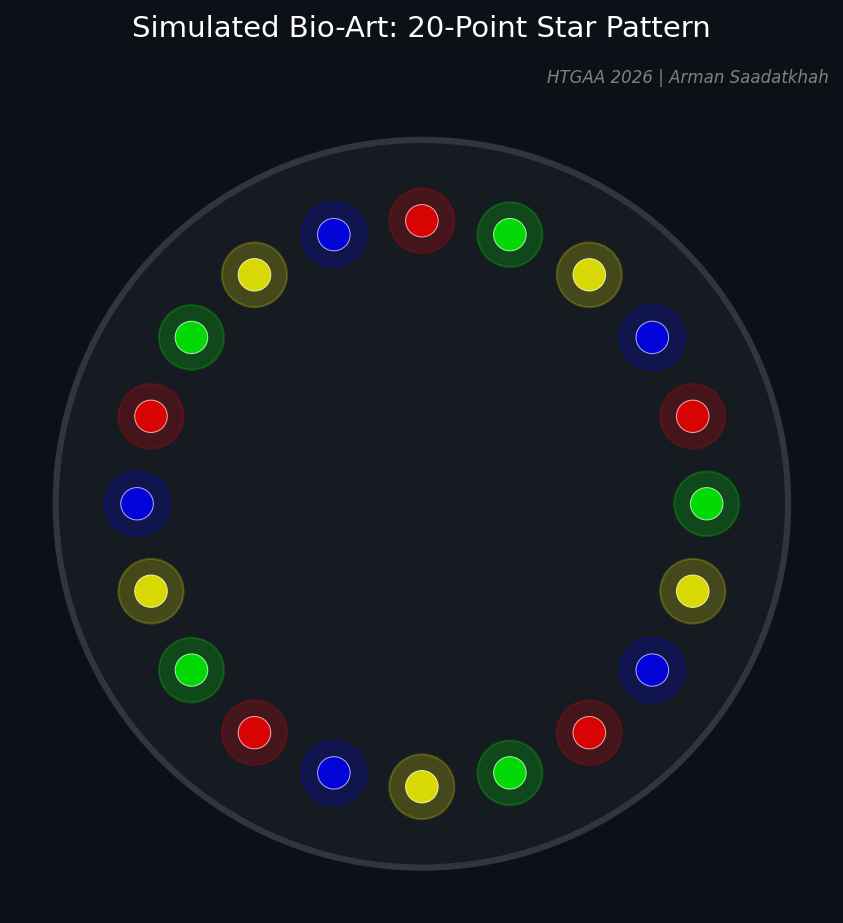 Fig 1. Simulated 20-point star pattern generated via Python for the Opentrons robot.
Overview | Concepts Learned & Skills Gained
This week, you will be working with the Opentrons OT-2, a liquid handling robot used in various life-science laboratories. You will learn:
- How to incorporate automation into synthetic biology research.
- How to code a Python script using the Opentrons API.
- How to create agar plates, a basic tool in molecular biology.
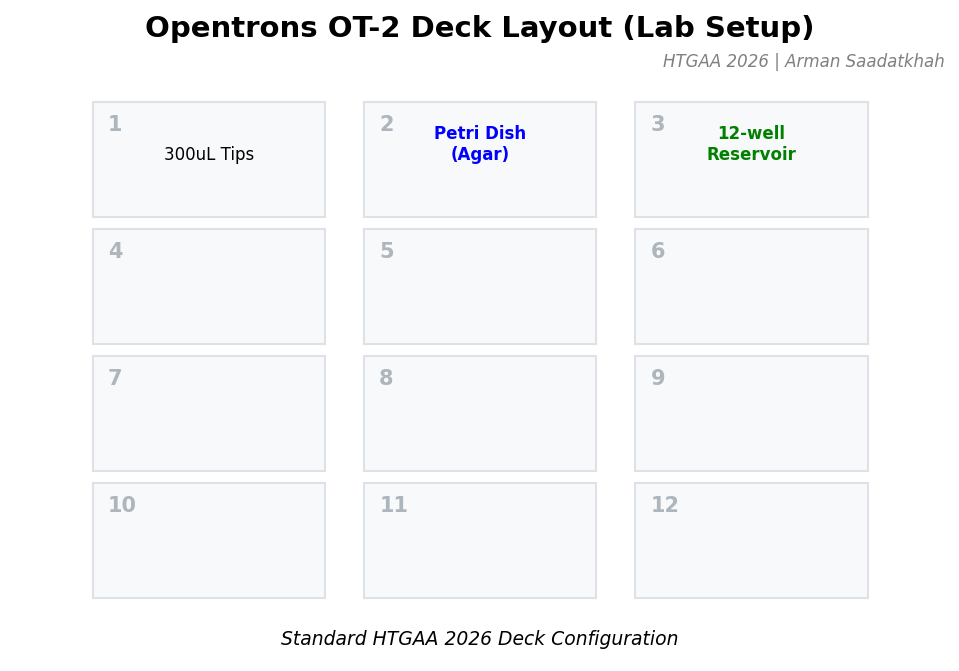 Fig 2. Standard HTGAA 2026 Deck Configuration for the OT-2 robot.
Pre-Lab | Reading
The “Central Dogma” of Opentrons
Before programming, it’s important to understand the workflow that transforms an idea into a precise robotic procedure.
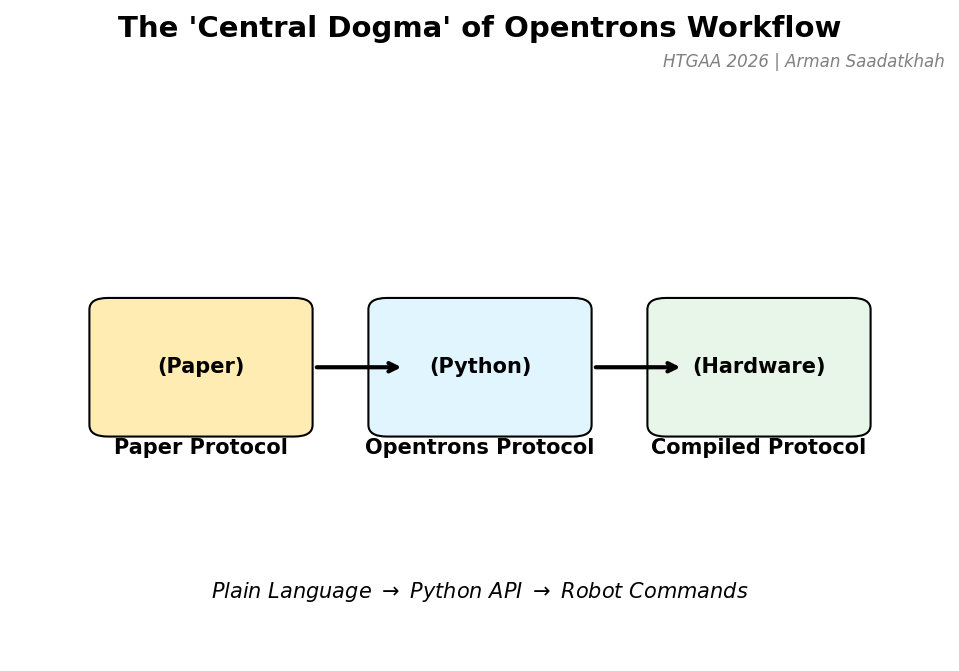 Fig 3. The transformation from plain language instructions to hardware commands.
- Paper Protocol: Instructions written in plain language (e.g., “Pipette 100 uL into A1”).
- Opentrons Protocol: The Python script that translates these steps using the Opentrons API.
- Compiled Protocol: The Opentrons App compiles the script into commands controlling the robot hardware.
GFP and Friends: The Science of Glow
Green Fluorescent Protein (GFP) is a protein that glows green when illuminated with UV light. “Fluorescing” involves absorbing light at one wavelength (UV) and re-emitting it at another (Visible Green).
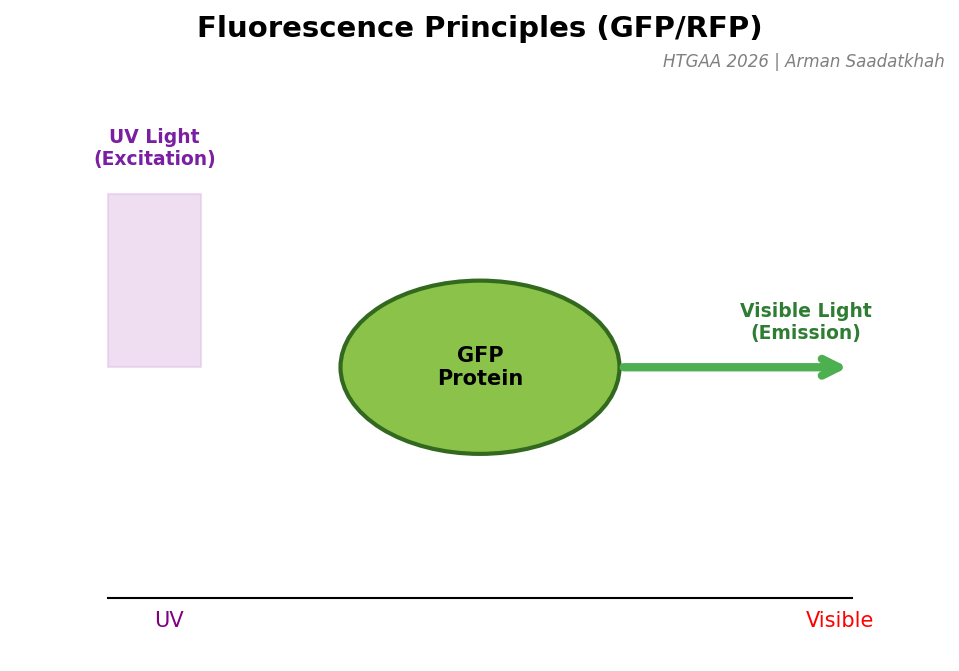 Fig 4. The mechanism of absorption and emission in fluorescent proteins.
For this lab, we use E. coli spliced with R/G/B/C/YFP genes. We mix charcoal powder into the agar to make it black, enhancing the visibility of the glowing designs.
Protocol | Part 1: Fluorescent Bacteria & Black Agar Script
Time Estimate: 2 Hours
Artistic Concept — “ELM Habitat Cross-Section”
My design uses the 96-well plate as a canvas to depict a cross-sectional schematic of the Multi-Trophic Myco-Foundry — the engineered living material (ELM) habitat proposed in Week 1.
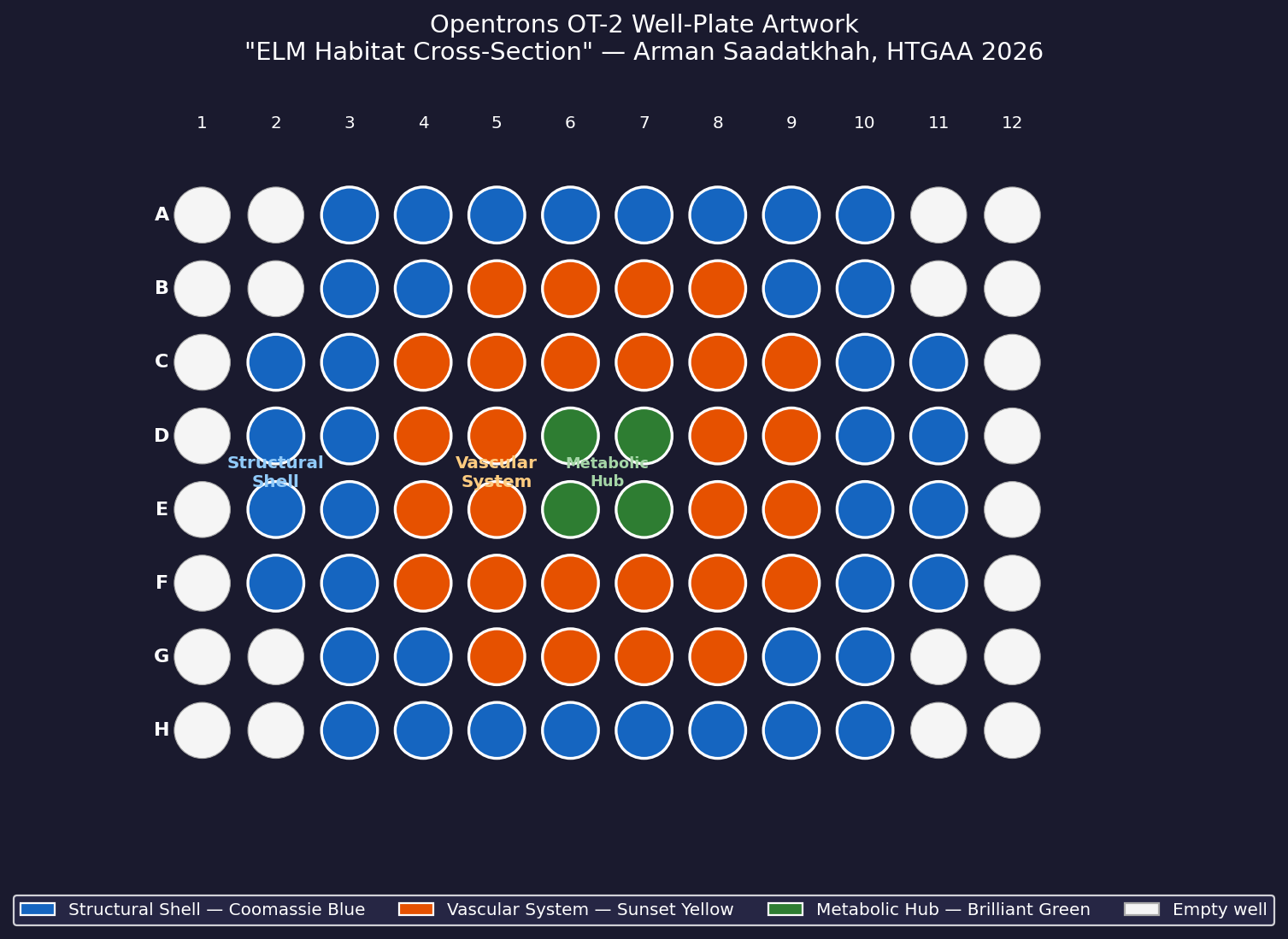 Fig 5. Well-plate layout for “ELM Habitat Cross-Section.” Blue = Structural Shell, Orange = Vascular System, Green = Metabolic Hub.
Python Script (Opentrons API v2.14)
The robot run starts without any tips. Fresh tips are used for every color to prevent cross-contamination.
Protocol | Part 2: Automation Plan for Final Project
Goal: Use lab automation to screen and validate the phosphite auxotrophy biocontainment system.
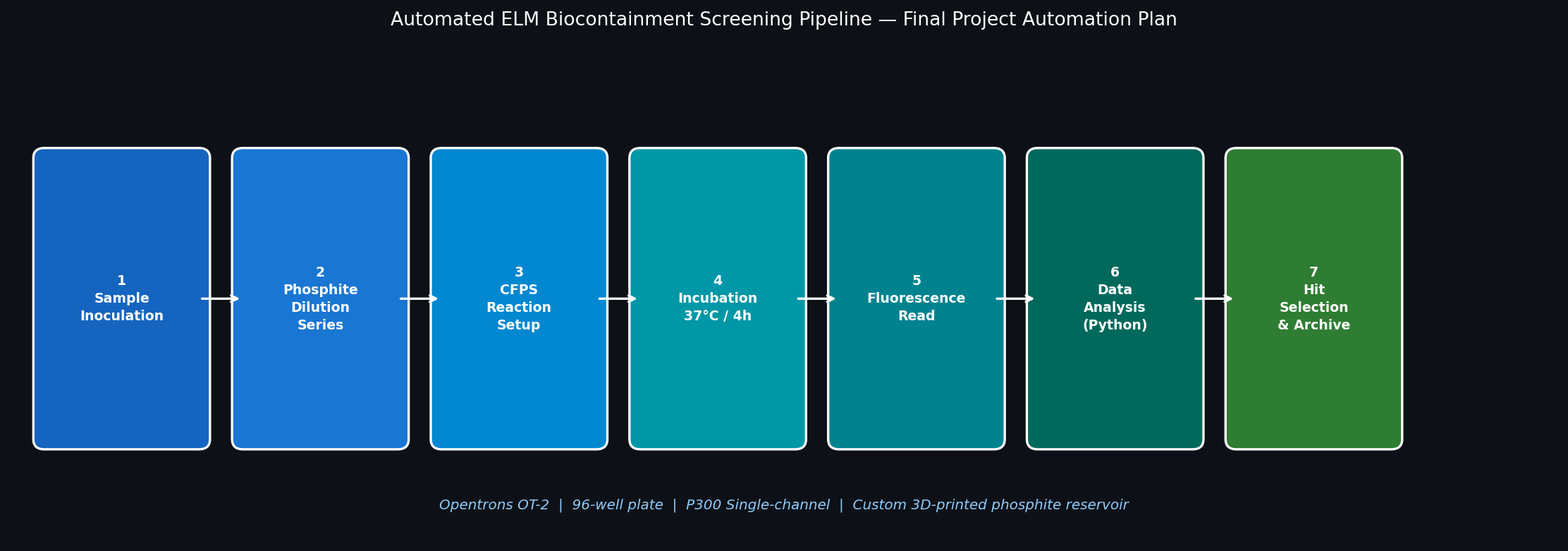 Fig 6. Seven-step Opentrons automation pipeline for screening the ELM phosphite auxotrophy kill switch.
The OT-2 will run a 12-condition × 8-replicate growth screen, testing the ptxD-based kill switch across a 2-fold phosphite dilution series. This allows for rapid calculation of the IC₅₀ value, essential for the safety case of deployment.
Post-Lab | Troubleshooting & Results
Alice Cai’s final plate (2023) demonstrates the transition from a dark charcoal agar to a vibrant glowing masterpiece under UV light. Simple geometric shapes often yield the most precise results on the OT-2.
HTGAA 2026 | Arman Saadatkhah | Reference: Opentrons OT-2 Documentation