Week 11 Lab: Introduction to Cloud Laboratories
Cloud Laboratories: Collective Art and Cell-Free Optimization
Overview | Introduction
Cloud laboratories are making science accessible, affordable, and reproducible. This lab showcases how cloud labs enable human creativity at scale and provide a platform for global collaboration. Our goal is to design a scientifically rigorous cell-free fluorescent protein optimization experiment together.
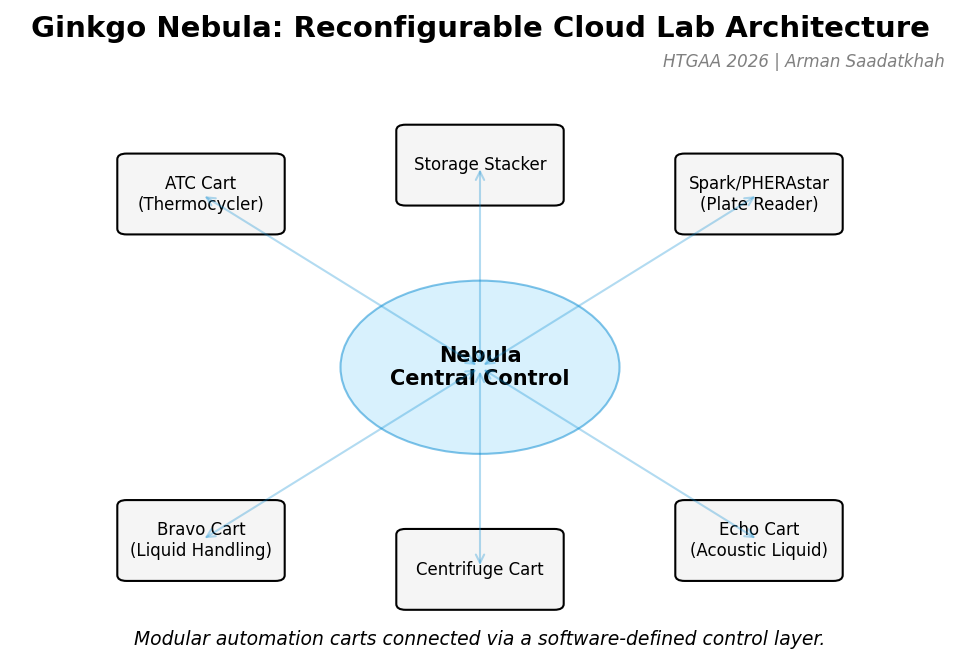 Fig 1. Ginkgo Nebula architecture featuring modular automation carts connected via a software-defined control layer.
1. The 1,536 Pixel Artwork Canvas
The community bioart project involved contributing pixels to a global artwork experiment. This demonstrates the power of automation (Opentrons and Echo systems) to handle high-density layouts that would be impossible manually.
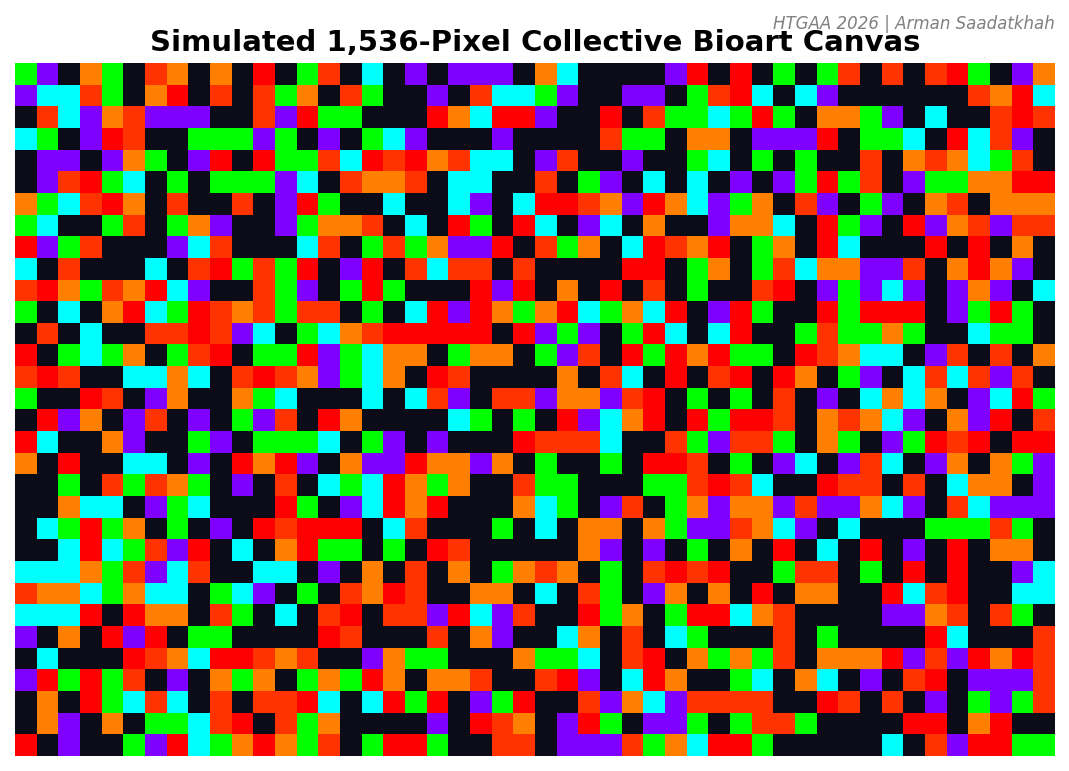 Fig 2. Simulation of the collective 1,536-pixel bioart canvas using various fluorescent proteins.
My Contribution:
- Pixel Location: I contributed to the “DNA” pattern on the bottom right plate.
- Reflection: I liked the seamless integration of individual designs into a unified biological canvas. For next year, real-time visualization of the design progress would be a great addition.
2. Cell-Free Protein Synthesis Reagents
A cell-free reaction requires a complex mixture of “hardware” (lysate) and “fuel” (master mix).
Master Mix Comparison
There are two main strategies for energy provision:
- 1-hour PEP-NTP: Optimized for speed; uses high-energy phosphate donors (PEP) for rapid protein synthesis.
- 20-hour NMP-Ribose-Glucose: Optimized for sustained production; uses secondary metabolism to regenerate ATP over longer periods.
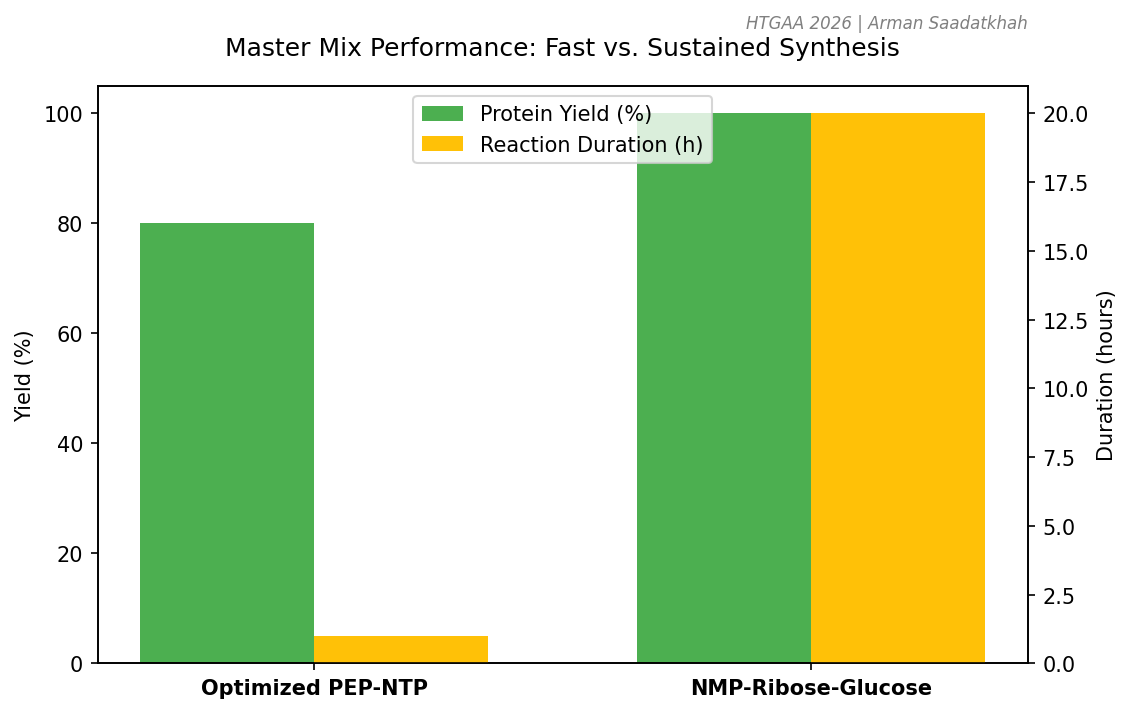 Fig 3. Performance trade-offs between rapid (PEP-NTP) and sustained (NMP-based) energy systems.
Component Roles:
- BL21 (DE3) Star Lysate: The molecular machinery (ribosomes, tRNA synthetases, T7 RNA Polymerase).
- HEPES-KOH / Potassium Glutamate: Buffers and salts to maintain optimal pH and ionic strength.
- Ribose/Glucose/NMPs: Building blocks and energy precursors for sustaining the reaction.
- Guanine Bonus: Transcription can occur even without GMP if Guanine is present because the lysate contains salvage pathway enzymes (e.g., phosphoribosyltransferases) that can convert Guanine into GMP/GTP.
3. Global Experiment: Fluorescent Protein Properties
We used 6 different proteins for our collaborative painting, each with unique biophysical characteristics.
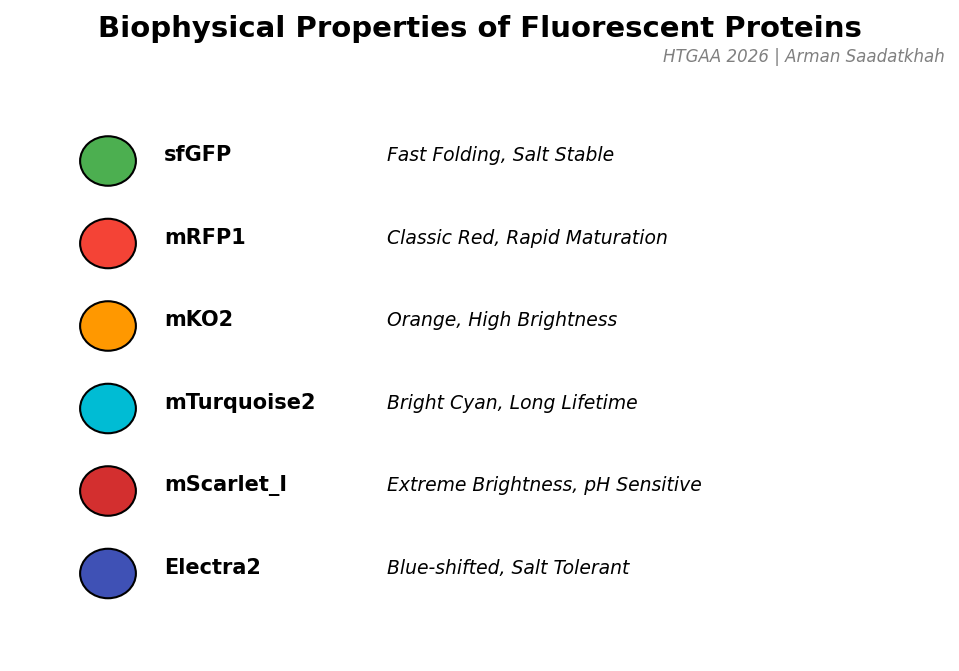 Fig 4. Key functional properties of the fluorescent proteins used in the collective optimization experiment.
Optimization Hypothesis:
- Target Protein:
mScarlet_I - Identified Property: High pH sensitivity (fluorescence drops in acidic conditions).
- Hypothesis: By increasing the
HEPESbuffer concentration in the master mix from 500mM to 750mM, we can maintain a more stable neutral pH as metabolic byproducts accumulate, thereby maximizing fluorescence over the 36-hour incubation.
4. Generic Cloud Lab Operations (JSON)
Automation in cloud labs like Ginkgo Nebula is driven by software-defined protocols. Below is a sample configuration for a spark_read operation:
HTGAA 2026 | Arman Saadatkhah | Reference: Ginkgo Bioworks Nebula Platform