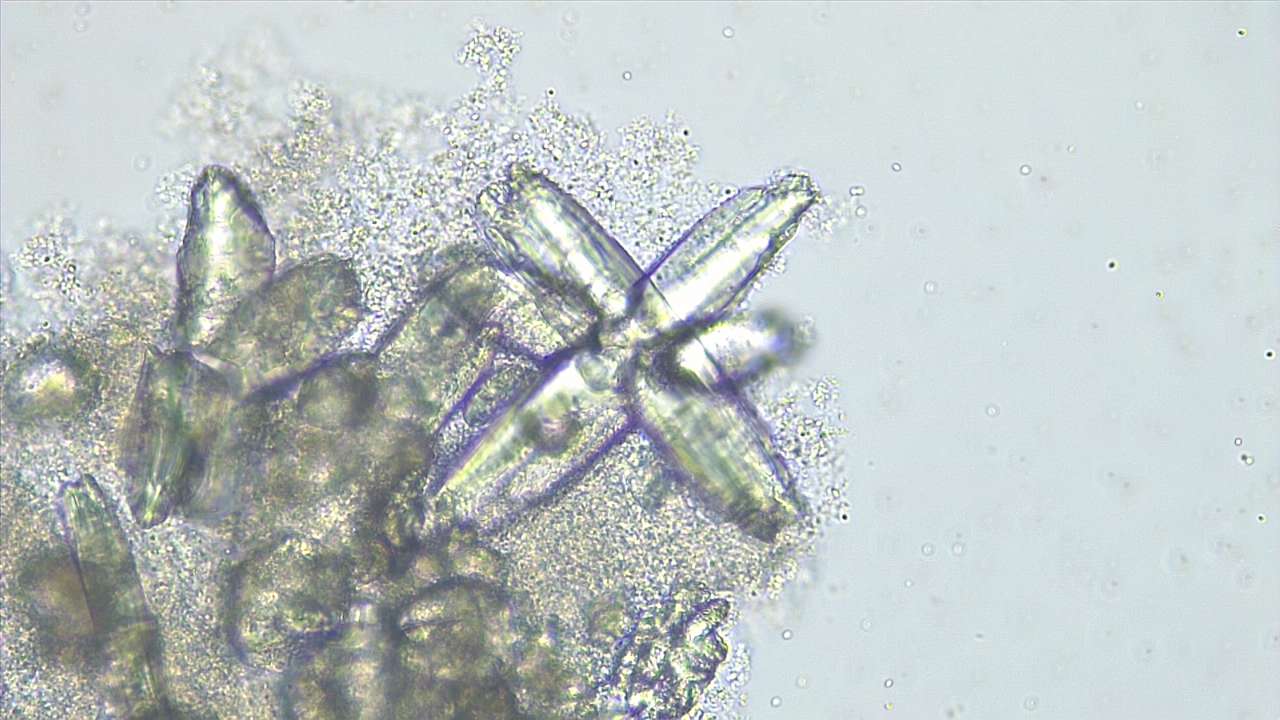
Light Microscopy image of Aragonite crystal from my current biomineralisation experiments, isn’t she beautiful?!
About me
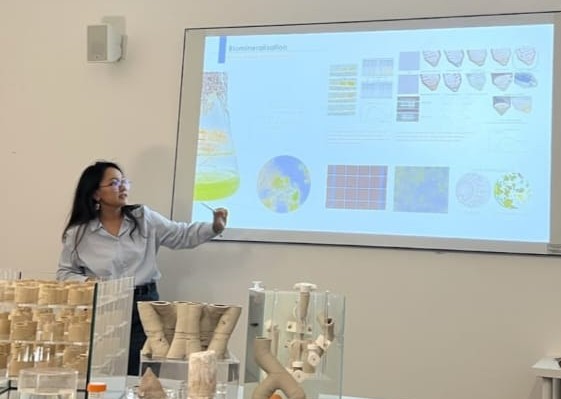
Hi! I’m Zere!! Welcome to my page! I’m happy to share with you my journey in HTGAA!
I’m a kazakh biodesign enthusiast on my 2nd year of MSc in Bio-Integrated Design at UCL. Currently, I’m exploring living materials and attempting to engineer programmable light-powered biomineralization with heterotroph-phototroph consortia. In general, I’m interested in increasing resilience of the biomaterials through harnessing natural polymers or metabolic activities of microorganisms and integrating them into the biomaterials.
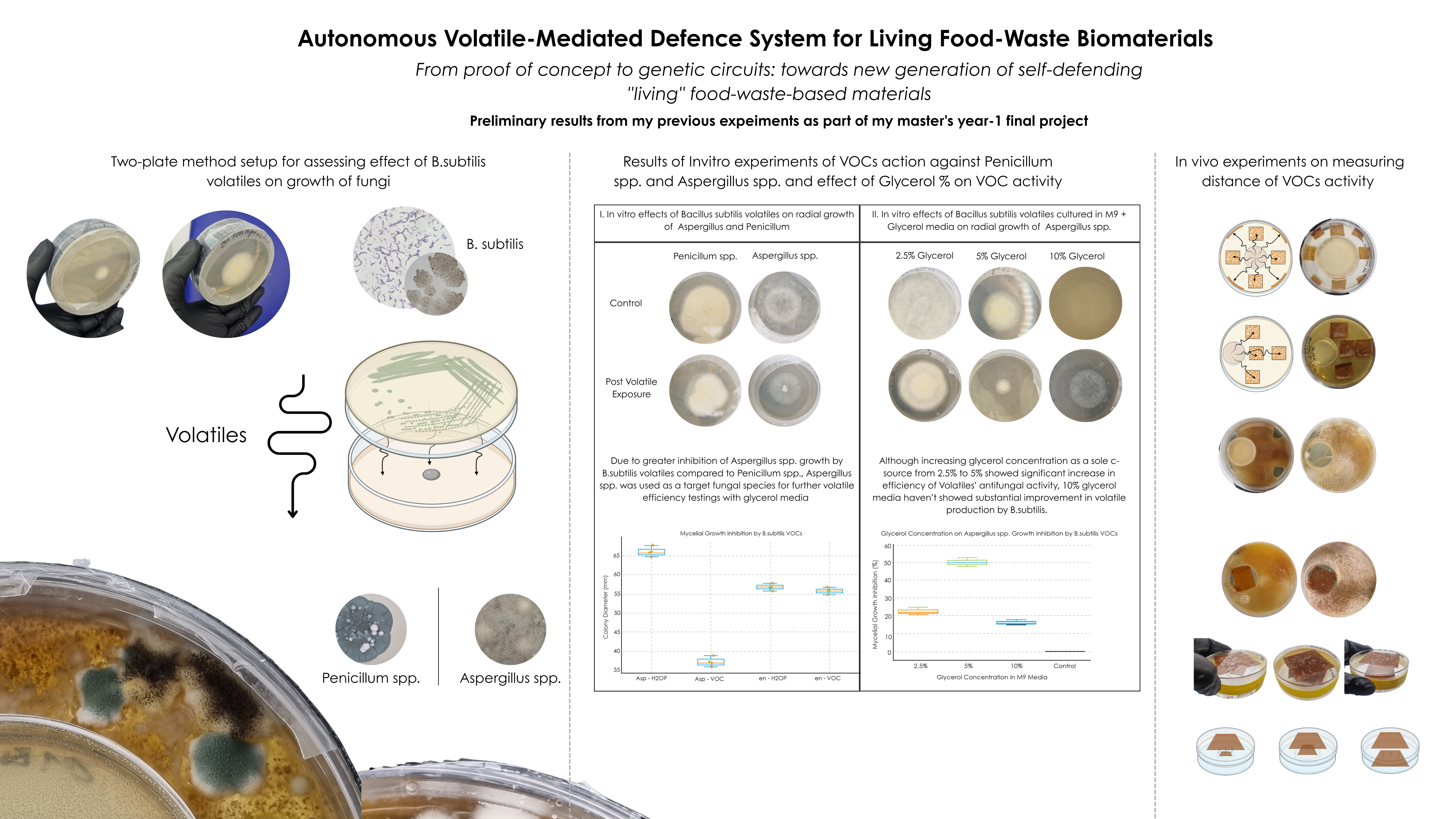
HTGAA Homework 1: Principles and Practices Autonomous Volatile-Mediated Defence System for Living Food-Waste Biomaterials 1. Biological Engineering Application The proposed biological engineering application is an intrinsic, volatile-mediated defence system designed to provide autonomous antifungal protection for organic-waste-based materials. This tool harnesses the metabolic capacity of Bacillus subtilis to produce microbial volatile organic compounds (VOCs)—specifically 2,3-butanedione (diacetyl)—which act as a gas-phase biofumigant within the material matrix (Ling et al., 2022).
Subsections of Homework
Week 1 HW: Principles and Practices
HTGAA Homework 1: Principles and Practices
Autonomous Volatile-Mediated Defence System for Living Food-Waste Biomaterials
1. Biological Engineering Application
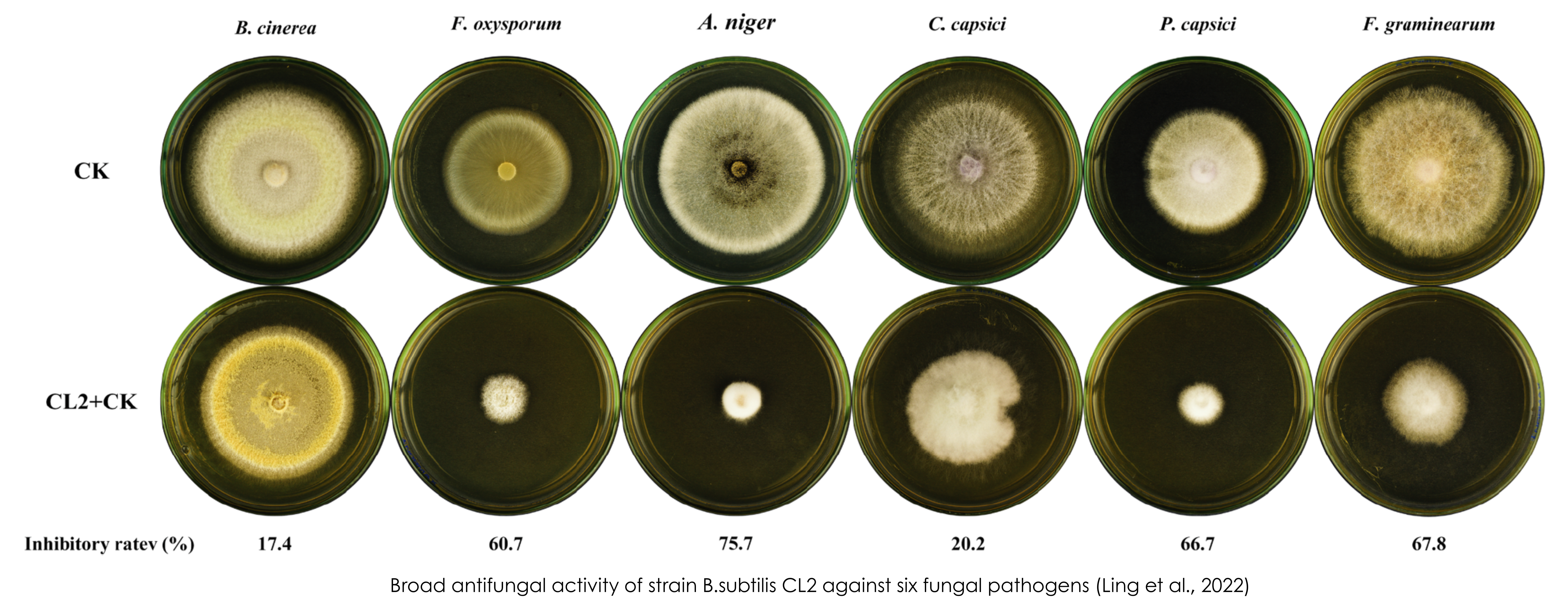
The proposed biological engineering application is an intrinsic, volatile-mediated defence system designed to provide autonomous antifungal protection for organic-waste-based materials. This tool harnesses the metabolic capacity of Bacillus subtilis to produce microbial volatile organic compounds (VOCs)—specifically 2,3-butanedione (diacetyl)—which act as a gas-phase biofumigant within the material matrix (Ling et al., 2022).
Unlike conventional preservation methods, this application utilises encapsulated bacterial spores that remain dormant until moisture ingress or the presence of fungal pathogens triggers germination and the subsequent activation of the antifungal volatile pathway (Zhao et al., 2022; Veras, Silveira and Welke, 2023).
Why
While the valorisation of food and agricultural waste into biomaterials is becoming a widespread practice of the circular economy, these substrates are highly vulnerable to saprophytic fungi like Aspergillus flavus and Penicillium when exposed to moisture (Veras, Silveira and Welke, 2023). When exposed to moisture, these materials provide a nutrient-rich substrate for opportunistic pathogens, leading to structural decay and the production of toxic mycotoxins (Ling et al., 2022).
This project offers an alternative that eliminates the need for environmentally persistent synthetic fungicides by using Generally Recognised as Safe (GRAS) bacterial metabolites and creates an autonomous, living defence mechanism. By harnessing the metabolic activities of B. subtilis to produce antifungal VOCs and integrating synthetic genetic circuits that sense environmental triggers such as humidity and fungal presence, the project aims to establish a new niche in the generation of self-defending “living” food-waste-based materials.
Synthetic Biology Aspect
To maximise the production of the antifungal biofumigant, B. subtilis is metabolically rewired to optimise 2,3-butanedione biosynthesis from precursors like glycerol (a common plasticiser). This involves overexpressing α-acetolactate synthase (alsS) and α-acetolactate decarboxylase (alsD) while disrupting competing pathways, such as the bdhA (acetoin reductase) and lctE (lactate dehydrogenase) genes (Vikromvarasiri, Shirai and Kondo, 2021).
The “sense-and-respond” functionality is achieved through synthetic genetic circuits using stress-responsive promoters (e.g., SigB-dependent promoters) that upregulate the VOC pathway in response to osmotic stress or humidity fluctuations (Wang et al., 2019; Rodriguez Ayala, Bartolini and Grau, 2020). Additionally, specific circuits can be designed to detect fungal signatures like N-acetylglucosamine (GlcNAc), ensuring that the defence response is both temporally and spatially targeted (Intana, Kheawleng and Sunpapao, 2021).
2. Governance and Policy Goals
The primary governance goal is to ensure Non-Malfeasance (Preventing Harm) while promoting the constructive use of Engineered Living Materials (ELMs).
Sub-goal A: Environmental biocontainment. Prevent accidental release and long-term persistence of genetically modified microorganisms (GMMs) into local ecosystems from consumer-facing bio-products.
Sub-goal B: Consumer health and food safety. Ensure that the engineered Bacillus strains and their volatile outputs do not pose respiratory, ingestion, or allergenic risks when utilized in food packaging or domestic environments (Hallagan, 2017).
Today, ELM prototyping often happens across mixed spaces (design studios, maker labs, bio labs), creating uneven biosafety practice. Propose a mandatory contained-use compliance gate at the London node level: no strain work or spore–material integration without an approved risk assessment, training completion, and documented containment plan. This aligns with the UK’s contained-use framework for GMOs (UK Government, 2014) and regulator guidance (Health and Safety Executive, 2010).
The biggest harm vector is not antifungal intent; it’s uncontrolled biology (growth where it shouldn’t happen) or unintended exposure. Propose engineering the system so it is physically and biologically biased toward dormancy, with activation tightly constrained to humidity-risk windows.
“Bio-based” materials can be opaque: users may not realise a product contains viable organisms or engineered DNA. Propose a lightweight disclosure standard for any material distributed outside the lab that contains viable microbes/spores or engineered constructs: what it contains, intended environment, what not to do, and how to deactivate/dispose.
Design
Actors: academic node leadership, biosafety officers, lab managers, course staff. Requirements: biosafety training, written risk assessment, strain inventory, waste deactivation SOPs, sign-off before experiments. Enforcement: access control to reagents/equipment + milestone-based check-ins.
Actors: researchers, supervisors, funders (requiring safety case), later companies adopting a standard. Elements: dormancy-first chassis (spore embedding with defined activation conditions) (Kummetha et al., 2025); conditional expression (VOC-linked modules under stress/humidity proxies); nutrient dependency (“material addiction”); end-of-life deactivation (heat, pH shift, chemical quench) compatible with disposal streams.
Assumes work qualifies as “contained use” and remains within those boundaries (classification is non-trivial for materials intended to leave the lab). Assumes institutional capacity exists (time, staff, expertise).
Assumes engineered control remains stable over time (mutation/silencing risk). Assumes spores do not unintentionally germinate during storage/shipping due to humidity excursions.
Assumes consumers and procurement teams will read/use labels. Assumes labeling won’t be treated as marketing rather than a safety tool.
Risks of failure & “success”
Failure: bureaucracy pushes activity into informal spaces (worse safety). “Success” risk: compliance becomes a checkbox exercise; teams overestimate safety and scale prematurely.
Action 1 (Contained-use compliance gate) as the non-negotiable baseline (near-term risk: research activity across hybrid spaces; structural risk: biology embedded in the artifact).
Action 2 (Safe-by-design containment + duty-cycled activation) as the core technical governance strategy.
Action 3 (Disclosure + disposal labeling) as the bridge from lab to real-world handling (deployment risk: misuse, misplacement, disposal).
References
Hallagan, J.B. (2017) ‘The use of diacetyl (2,3-butanedione) and related flavoring substances as flavorings added to foods—Workplace safety issues’, Toxicology, 388, pp. 1–6.
Health and Safety Executive (2010) ‘Amendments to the Genetically Modified Organisms (Contained Use) Regulations 2000 (email to GM users)’. Available at: (Accessed: 10 February 2026).
Health and Safety Executive (HSE) (2014) The Genetically Modified Organisms (Contained Use) Regulations 2014. L29.
Intana, W., Kheawleng, S. and Sunpapao, A. (2021) ‘Trichoderma asperellum T76-14 released volatile organic compounds against postharvest fruit rot in muskmelons’, Journal of Fungi, 7(1), p. 46.
Kummetha, L.R. et al. (2025) ‘Leveraging the versatile properties of bacterial spores in engineered living materials’, Trends in Biotechnology. Available at: (Accessed: 10 February 2026).
Ling, L., Jiang, K., Cheng, W., Wang, Y., Pang, M., Luo, H., Lu, L., Gao, K. and Tu, Y. (2022) ‘Biocontrol of volatile organic compounds obtained from Bacillus subtilis CL2 against Aspergillus flavus in peanuts during storage’, Biological Control, 176, p. 105094.
Rodriguez Ayala, F., Bartolini, M. and Grau, R. (2020) ‘The Stress-Responsive Alternative Sigma Factor SigB of Bacillus subtilis and Its Relatives: An Old Friend With New Functions’, Frontiers in Microbiology, 11, p. 1761.
UK Government (2014) The Genetically Modified Organisms (Contained Use) Regulations 2014. Available at: (Accessed: 10 February 2026).
Veras, F.F., Silveira, R.D. and Welke, J.E. (2023) ‘Bacillus spp. as a strategy to control fungi and mycotoxins in food’, Current Opinion in Food Science, 52, p. 101068.
Vikromvarasiri, N., Shirai, T. and Kondo, A. (2021) ‘Metabolic engineering design to enhance (R,R)-2,3-butanediol production from glycerol in Bacillus subtilis’, Microbial Cell Factories, 20, p. 184.
Wang, Y., Wang, Y. et al. (2019) ‘Engineering strong and stress-responsive promoters in Bacillus subtilis by interlocking sigma factor binding motifs’, Synthetic and Systems Biotechnology, 4(4), pp. 169–176.
Yoon, Y.S., Lee, J.G. et al. (2024) ‘Biological control of a novel strain Bacillus velezensis CMML21-47 against sweet potato wilt and black rot diseases’, Biological Control, 195, p. 105541.
Zhao, X., Zhou, J., Tian, R. and Liu, Y. (2022) ‘Microbial volatile organic compounds: Antifungal mechanisms, applications, and challenges’, Frontiers in Microbiology, 13, p. 922450.
Week 2 Lecture Prep
Homework Questions from Professor Jacobson
Nature’s machinery for copying DNA is called polymerase. What is the error rate of polymerase? How does this compare to the length of the human genome? How does biology deal with that discrepancy?
The error rate of nature’s biological synthesis using error-correcting polymerase is 1:106 (one error for every million bases added). The human genome is approximately 3.2 billion base pairs (Gbp) in length. If the polymerase operated at a raw error rate of 1:106, a single round of replication for one human cell would result in approximately 3,200 errors (3.2 \times 109 / 106). Biology employs several layers of “Error Correction” to bridge this gap and ensure high-fidelity inheritance:
Proofreading: The DNA polymerase itself has an active site for proofreading that identifies and corrects errors during the extension phase.
Mismatch Repair (MMR) Systems: Biology utilizes specialized repair systems, such as the MutS Repair System. This involves a suite of proteins (MutS, MutL, and MutH) that detect mismatches in the DNA, nick the erroneous strand, excise the incorrect bases, and allow DNA polymerase III and ligase to fill the gap correctly.
How many different ways are there to code (DNA nucleotide code) for an average human protein? In practice, what are some of the reasons that all of these different codes don’t work to code for the protein of interest?
The average human protein is approximately 1,036 base pairs long, which translates to roughly 345 amino acids. Because the genetic code is redundant (most of the 20 amino acids are coded for by multiple different “triplet” codons), the number of possible DNA sequences that can code for the same protein is astronomical. For a protein of this length, there are typically 10^150 or more different ways to code for the same sequence of amino acids.
In bioengineering, researchers have found that while many DNA sequences code for the same protein, they are not functionally equivalent for several reasons:
Secondary Structures: DNA and mRNA sequences can fold into specific secondary structures (like hairpins or stems) based on their minimum free energy (MFE). If an mRNA folds too tightly, it can block the ribosome from translating the protein.
RNA Cleavage Rules: Specific nucleotide sequences may inadvertently trigger “cleavage rules.” For example, RNase III in organisms like E. coli follows specific patterns to identify and cut RNA, which can lead to the premature degradation of the transcript before it can be translated.
GC Content and Thermodynamics: The ratio of Guanine/Cytosine (GC) vs. Adenine/Thymine (AT) affects the stability of the DNA/RNA. Extreme GC content (e.g., 90%) creates very high base-pairing energies ($G/C \sim -2.0~kcal/mol$) that can interfere with the machinery’s ability to “unzip” and read the code.
Codon Usage/tRNA Availability: The genetic code is a “life operating system” where the presence of an anticodon on a tRNA does not chemically determine the amino acid. Instead, it relies on the cell’s internal logic and resource availability; some codons may be harder for a specific cell factory to process if the corresponding tRNAs are rare.
Questions from Dr. LeProust
What’s the most commonly used method for oligo synthesis currently?
The dominant workhorse is solid-phase phosphoramidite chemistry: iterative cycles of (i) coupling of a protected phosphoramidite to a surface-bound growing chain, followed by (ii) capping unreacted sites, (iii) oxidation, and (iv) deblocking, repeated N times on a solid support (classically CPG/silica or related substrates). This is exactly the stepwise cycle shown in the “Oligonucleotide Synthesis” schematic.
Why is it difficult to make oligos longer than 200 nt via direct synthesis?
Because stepwise yield compounds multiplicatively. Even with high coupling efficiency per cycle, the probability of obtaining a full-length product falls exponentially with length, while truncation products and base damage accumulate.
Why can’t you make a 2000 bp gene via direct oligo synthesis?
A 2000 bp gene is outside the practical envelope of single-chain chemical synthesis because:
Yield collapse: at 2000 coupling cycles, full-length recovery becomes effectively negligible under ordinary stepwise yields (even tiny per-step inefficiencies dominate
Error accumulation: even if you could produce something near full length, the expected number of substitutions/indels grows with length; long sequences need downstream error correction and sequence verification. The slides emphasize error-rate realities and the need for QC/verification workflows (and note that sometimes PCR becomes the bottleneck, not just synthesis)).
Question from George Church (choose ONE)
Choose one of the following three questions to answer; and please cite AI prompts or paper citations used, if any.
[Using Google & Prof. Church’s slide #4] What are the 10 essential amino acids in all animals and how does this affect your view of the “Lysine Contingency”?
The ten essential amino acids are: histidine, isoleucine, leucine, lysine, methionine, phenylalanine, threonine, tryptophan, valine, and arginine.
Why the “lysine contingency” argument breaks down: animals generally cannot biosynthesize lysine and therefore obtain it through dietary intake. As a result, lysine is already pervasive throughout trophic networks:
Carnivores obtain lysine from animal tissues.
Herbivores can obtain lysine from lysine-containing plant sources (including lysine-rich crops such as legumes).
In other words, lysine is not a scarce or isolated resource in ecosystems, so it does not function as a reliable constraint.
If the goal is robust biocontainment, the dependency needs to be placed on a resource absent from natural environments, such as non-standard amino acids (NSAAs), or implemented via recoded genomes that require synthetic inputs not available in the wild.
[Given slides #2 & 4 (AA:NA and NA:NA codes)] What code would you suggest for AA:AA interactions?
[(Advanced students)] Given the one paragraph abstracts for these real 2026 grant programs, sketch a response to one of them or devise one of your own: