Week 3 HW: Lab Automation
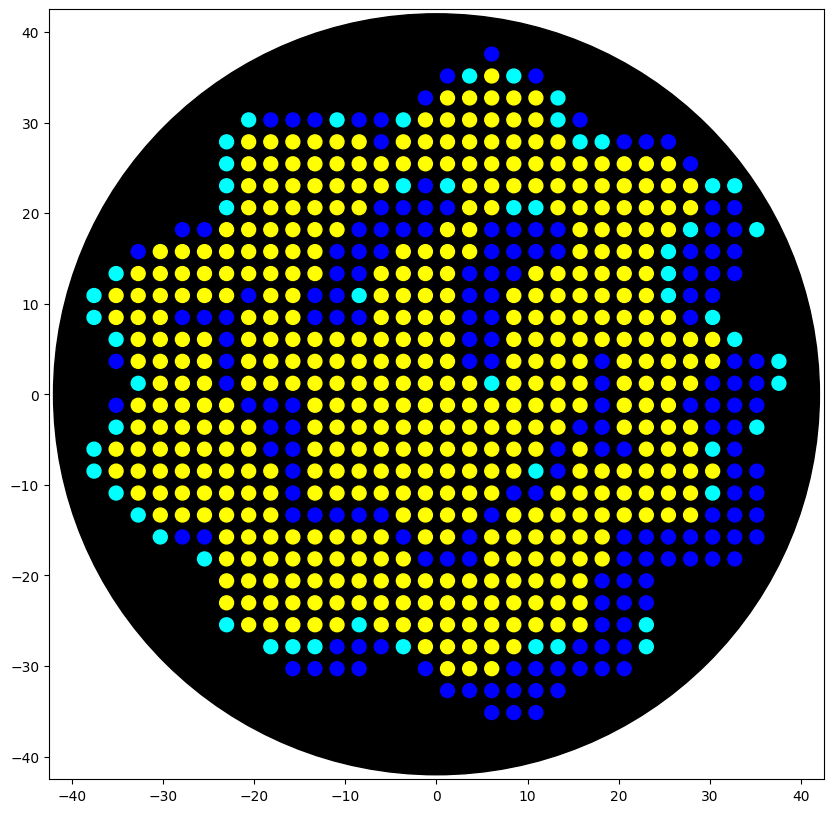
Part 1: Python Script Opentron Artwork
Opentrons Colab for Source Code
Part 2: Post-Lab Questions
Question 1: Find and describe a published paper that utilizes the Opentrons or an automation tool to achieve novel biological applications.
Fushimi, K., Nakai, Y., Nishi, A., Suzuki, R., Ikegami, M., Nimura, R., Tomono, T., Hidese, R., Yasueda, H., Tagawa, Y., & Hasunuma, T. (2025). Development of the autonomous lab system to support biotechnology research. Scientific Reports, 15, 6648. https://doi.org/10.1038/s41598-025-89069-y
This paper by Fushimi, Nakai et al. (2025) tackles the problem of optimizing how engineered bacteria produce glutamic acid, a commercially valuable amino acid used in MSG, medicine, and cosmetics. The researchers engineered E. coli by knocking out four genes and overexpressing ten others to redirect its metabolism toward glutamic acid production. However, finding the right growth medium recipe is extremely difficult because the bacteria tightly regulate their own glutamic acid levels to protect themselves from stress like pH changes and osmotic pressure. With dozens of possible nutrient combinations to test, manual experimentation is too slow and the biology is too complex for human intuition alone.
To solve this, they built the Autonomous Lab (ANL) using an Opentrons OT-2 liquid handler, an incubator, centrifuge, plate reader, mass spectrometer, and a robotic arm connecting them all. A Bayesian optimization AI suggests which combinations of calcium, magnesium, cobalt, and zinc concentrations to test, the robots autonomously prepare the media, culture the bacteria, and measure both growth and glutamic acid output, then feed the results back to the AI for the next round.
The system found a medium that nearly doubled E. coli growth using only 24 AI-picked experiments, outperforming a brute-force search of 256 conditions. This is the first fully autonomous closed-loop system for culture medium optimization, demonstrating that affordable tools like the Opentrons can power self-driving biology labs capable of navigating complex biological regulation faster than any human could, opening the door to optimizing production of many other valuable biomolecules the same way.
Part 3: Final Project Ideas