Week 1 HW: Final Project Ideas
Biomanufacturing Human Neural Models for Neurodegenerative Disease Research
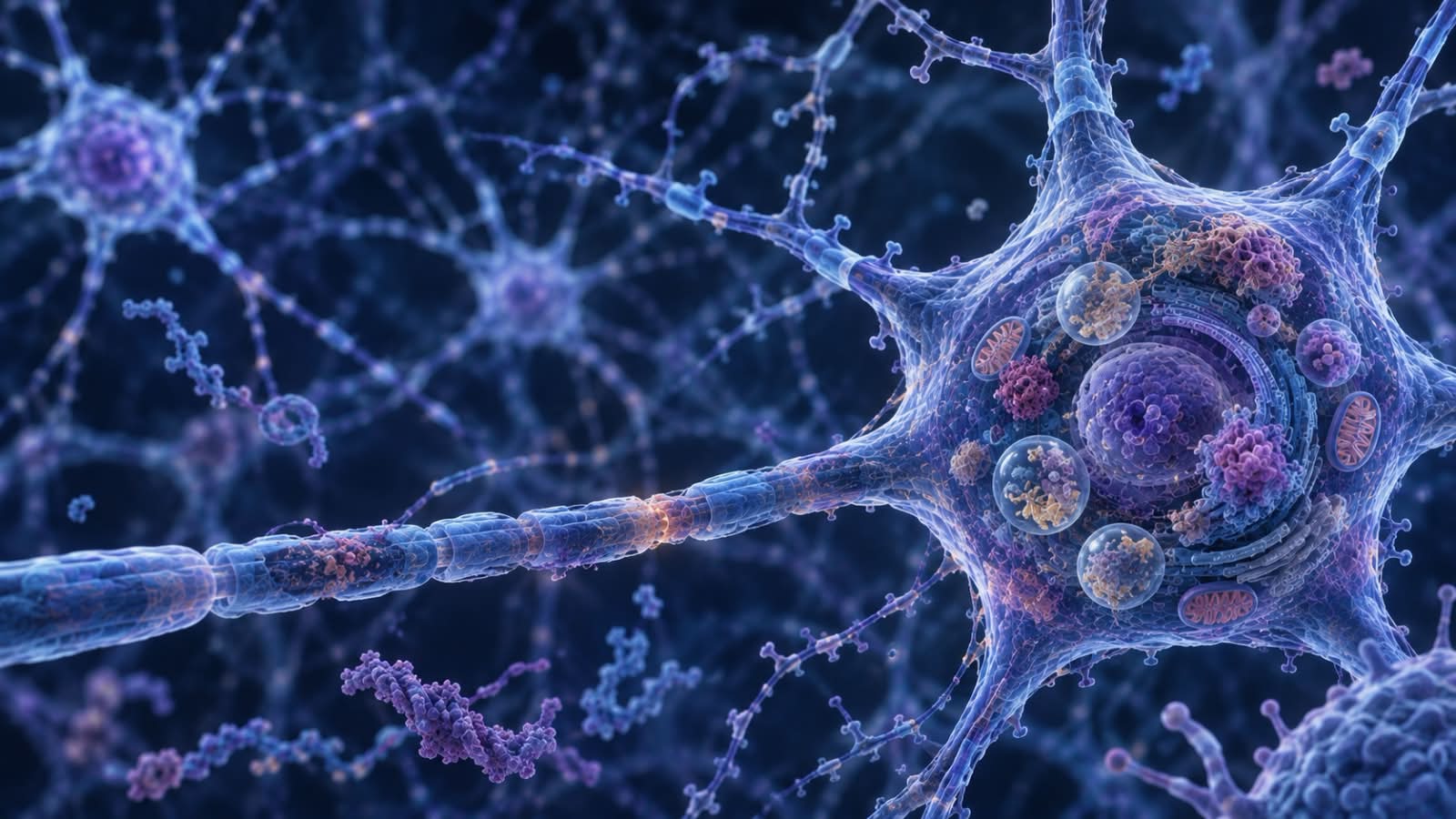
(1) What would I like to biomanufacture and why?
I would like to biomanufacture standardized three-dimensional human neural disease models. Their main objective would be to study neurological disorders and, in the future, evaluate potential therapies. More specifically, I am interested in developing a reproducible platform for producing small neural tissue models that capture selected features of human neural tissue, with lysosomal storage disorders as one of the main applications. One example of these conditions that I would like to work on is Sanfilippo syndrome. Scientifically known as mucopolysaccharidosis type III (MPS III), Sanfilippo syndrome occurs when the degradation of heparan sulfate is impaired, leading to its accumulation and contributing to cellular dysfunction, particularly in the central nervous system [1]. As a result, patients progressively lose cognitive and motor skills. In this regard, the models would be intended for researchers studying neurological disorders, including rare and understudied conditions, allowing them to compare healthy and disease-associated neural phenotypes and test potential treatments under controlled and reproducible conditions. I am particularly interested in this idea because neurological disorders affect millions of people worldwide every year and can have a profound impact on quality of life. From widely recognized conditions such as Alzheimer’s disease to rare and less well-known disorders such as Sanfilippo syndrome, these conditions have very different causes and mechanisms, but they can all affect the nervous system and significantly alter the lives of not only patients but also their families and caregivers. Even when a condition affects a relatively small number of people, its impact can be substantial because of the progressive nature of many neurological disorders and the limited treatment options available. For this reason, I am interested in developing human neural models that could help researchers better understand these disorders and contribute to feasible solutions with meaningful real-world impact.
(2) What living system would I use?
The main biological manufacturing system I would use would be human mammalian cells, specifically human induced pluripotent stem cells (iPSCs) differentiated toward neural cell types. iPSCs are particularly attractive for this application because they can be expanded in culture and differentiated into specialized human cells, including neural progenitors, neurons, and other relevant neural cell types [2]. In this respect, for the disease-modeling application, I would use both healthy control iPSCs and patient-derived iPSCs that carry disease-associated mutations. This comparison would allow me to distinguish normal neural characteristics from cellular changes specifically associated with the disease. For instance, in the case of Sanfilippo syndrome, patient-derived iPSCs could provide a human cellular system in which disease-related phenotypes can be studied while preserving the genetic background of affected individuals.
(3) How would I use automation?
I would use automation to make the production of these neural models more reproducible and scalable by combining the biological system with laboratory automation. On this matter, one technology I would use is a programmable liquid-handling robot —such as an Opentrons platform— to automate repetitive steps including cell seeding, media changes, addition of differentiation factors, and treatment preparation in multiwell plates [3]. This would reduce manual variability between samples and allow multiple experimental conditions to be processed in parallel. In addition, automated imaging could be used to monitor the development and morphology of the neural models and to measure disease-associated features over time [4]. Thus, by combining automated liquid handling with imaging, the platform could generate standardized models while allowing researchers to evaluate a larger number of conditions more efficiently.
(4) How much would I need to make, and how long would it take?
(a) How much? My target is a research platform and not a therapeutic product. Considering this, I would define a meaningful scale based on a screening study, aiming to manufacture approximately 1,000 standardized neural models, which could be used to compare healthy and disease-derived cells across multiple treatment conditions and biological replicates. Assuming that approximately 80 wells per 96-well plate are available for experimental models after reserving wells for controls and quality checks, I would need approximately 13 plates: 1,000 models ÷ 80 models/plate = 12.5 plates. (b) How long? For an initial estimate, I would assume that one production batch would require approximately 30 days, including cell expansion, neural differentiation, three-dimensional model formation, and maturation. With automated liquid handling, the 13 plates could be processed in parallel rather than sequentially, so producing approximately 1,000 models would take about 30 days per batch. This timeline is a preliminary assumption that would need to be experimentally validated, since the actual production time would depend on the selected cell types, among other conditions.
(5) What don’t I know yet?
The first major technical unknown would be how reproducibly the neural models can be manufactured, since differences in size, cellular composition, morphology, and maturation between batches could affect experimental comparisons. The second would be whether the models reproduce disease-associated phenotypes strongly enough to be useful for therapeutic screening, particularly measurable features such as heparan sulfate accumulation and lysosomal changes (using Sanfilippo syndrome as an example). Finally, I would need to determine whether automation can increase production without compromising biological quality, as automated handling could introduce technical challenges.
AI Use Disclosure
AI client: ChatGPT (OpenAI)
Prompt used for image generation: “Create a sophisticated horizontal scientific illustration for a research project focused on neural models for lysosomal disease research. The scene must take place inside a highly detailed microscopic neural environment, with realistic biological neurons in the background. While maintaining a semi elegant visual aesthetic, it must not be a realistic illustration. DO NOT include any text or labels.”
Prompt used for writing assistance: “Improve the redaction of the following text by adding a more formal academic tone and appropriate connecting words: ‘[…]’.”
AI Prompt Used for Section (4): I am developing a biomanufacturing project in which I propose producing standardized three-dimensional human neural disease models using human iPSCs. The models would be used to study neurological disorders (such as Sanfilippo syndrome) and evaluate potential treatments. Help me develop a reasonable estimate for how many neural models I would need to manufacture for a meaningful research screening study and how long producing that amount could take. Please, suggest reasonable assumptions for the number of models per experiment, biological replicates, and production time. Keep the estimate simple and appropriate.
References
[1] M. A. et al., “Neuronal and Astrocytic Differentiation from Sanfilippo C Syndrome iPSCs for Disease Modeling and Drug Development,” Stem Cells, 2020.
[2] K. Ardhanareeswaran, J. Mariani, G. Coppola, A. Abyzov, and F. M. Vaccarino, “Human induced pluripotent stem cells for modelling neurodevelopmental disorders,” Nature Reviews Neurology, vol. 13, 2017.
[3] G. Courville et al., “Open-source cell culture automation system with integrated cell counting for passaging microplate cultures,” PNAS Nexus, 2025.
[4] M. McCloy et al., “Automated high-speed 3D imaging of organoid cultures with multi-scale phenotypic quantification,” Nature Methods, 2022.