My work is located in the HTBAA 2026 workspace, in the repository ahmed-synbio-ink under the folder shah-hw2.
Part 1: Define your expression target
Molecule: LbCas12a (CRISPR-Cas effector nuclease) engineered as a fusion protein with an Elastin-Like Polypeptide (ELP) tag and a mutated Mxe GyrA Intein. This is the core diagnostic engine for the “SynBio-Ink” multiplexed biosensor.
Host/Chassis:E. coli Cell-Free Protein Synthesis (CFPS) extract.
Destination: The protein is expressed directly into the open in vitro diagnostic matrix (the “ink”). Therefore, no signal peptides or cellular secretion tags are required.
Part 2: Design your genetic parts
To eliminate the massive cost of downstream affinity chromatography for the bio-ink, I designed a self-cleaving thermal purification cassette.
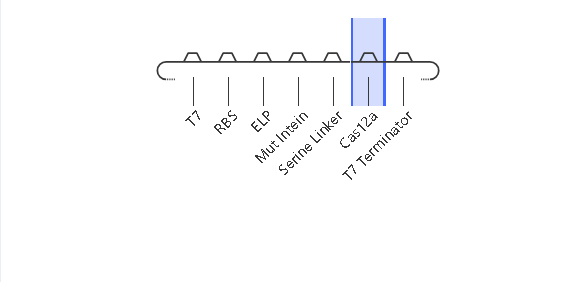
T7 Promoter: Selected because the cell-free diagnostic matrix contains T7 RNA polymerase, ensuring rapid, orthogonal transcription independent of host machinery.
E. coli RBS (B0034): A strong, standardized ribosome binding site for efficient translation initiation.
ELP-Tag: Poly(VPGXG) repeats enable ultra-cheap purification of the construct via Inverse Transition Cycling (thermal shifts).
Mxe-GyrA-Intein: A mutated self-cleaving intein that acts as a molecular scissor to release the ELP tag scarlessly after purification.
Serine Linker: Added to prevent steric hindrance between the intein and Cas12a.
LbCas12a CDS: The gene of interest driving the collateral cleavage biosensor.
T7 Terminator: Ensures a clean end to the transcript.
Backbone: Standard high-copy vector (e.g., pET system) serving as the template for the CFPS reaction.
Part 3: Assemble your construct
The parts were assembled into a single expression cassette in the following 5’ to 3’ order: Promoter → RBS → ELP Tag → Intein → Linker → Cas12a → Terminator.
Part 4: Optimize and quality-check
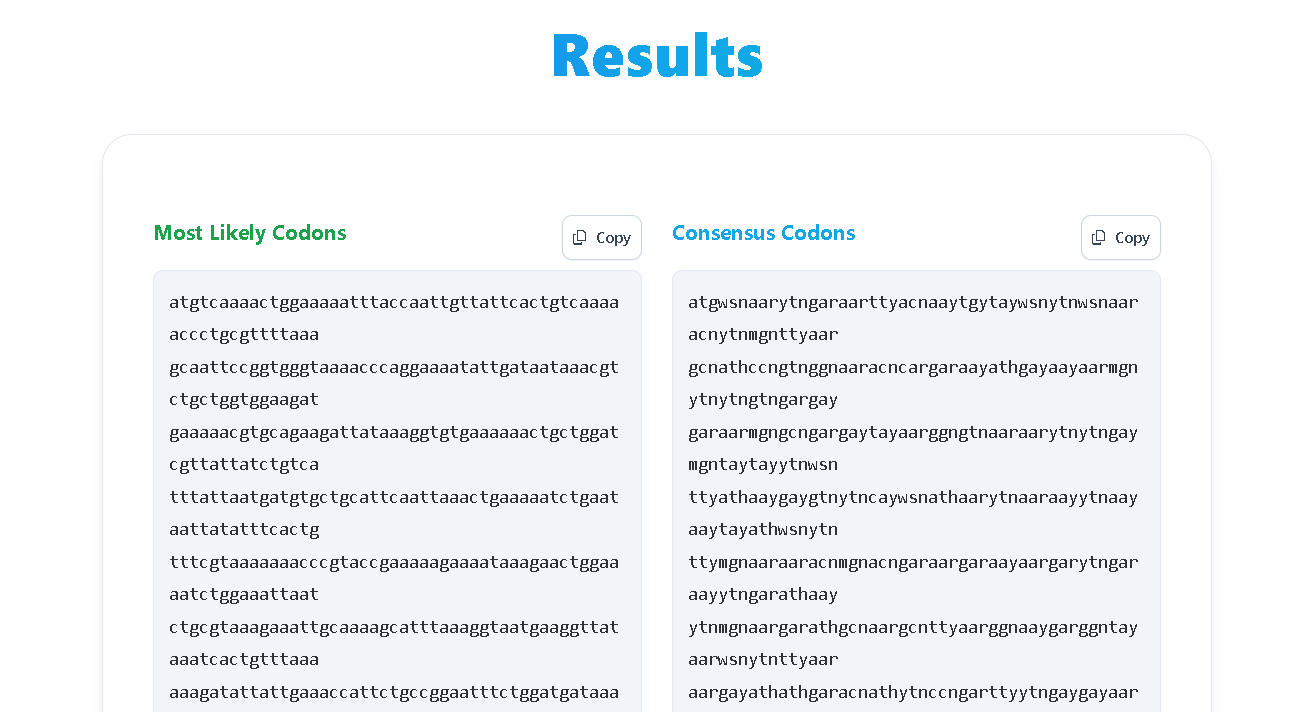
Codon Optimization: Because ELP sequences are highly repetitive, they are notoriously difficult to synthesize and often cause slipped-strand mispairing. I bypassed Kernel’s native algorithm and ran the sequence through the IDT (Integrated DNA Technologies) commercial optimizer for E. coli. Since IDT is the anticipated vendor, this ensures the GC content and Codon Adaptation Index (CAI) are explicitly tailored to their physical manufacturing limits.
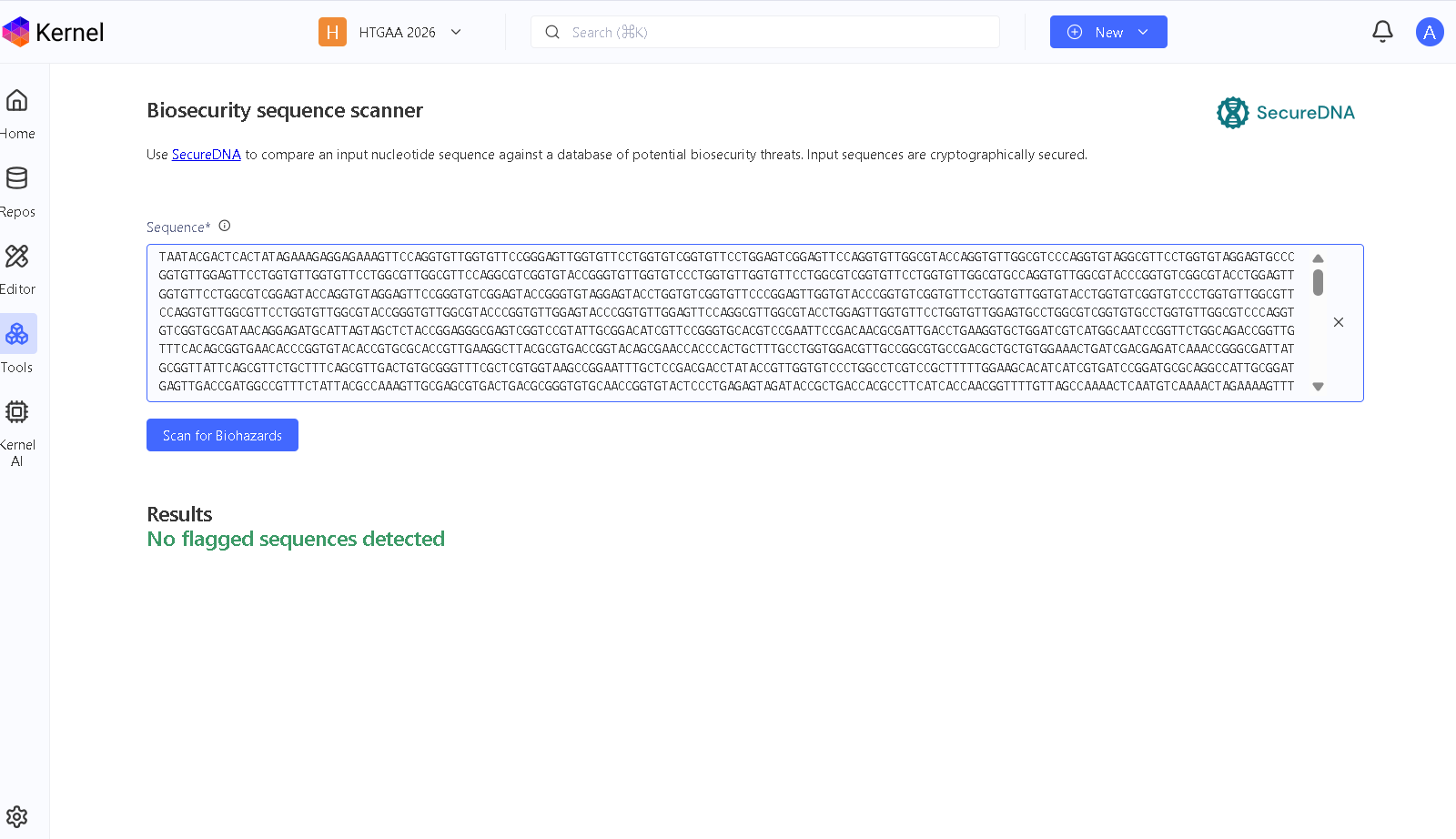
Safety Screen: The construct was flagged during biosecurity screening. This is an expected true positive, as Cas12a is a known genome-editing nuclease. The design remains safe because it is exclusively deployed in a non-living, cell-free diagnostic matrix, eliminating environmental containment risks.
Part 5: From design to build
Prototype phase: To build the initial Cas12a construct to test a single drop of SynBio-Ink, I would order standard synthetic double-stranded DNA fragments from a commercial vendor. Because the highly repetitive ELP tag often fails standard synthesis, the construct would be assembled using Recursive Directional Ligation (RDL) to sequentially piece the repetitive blocks together before joining them to the Intein-Cas12a segment via Gibson Assembly.
Scale phase: Scaling to a global bio-surveillance network requires outfitting 1,000+ multiplexed chips with hundreds of different Cas/guide-RNA variants. Rather than massive bioreactors, scale-up relies on multiplexed variety. Drawing on Kosuri et al. (2010) and Tian et al. (2004), I would use programmable DNA microchips for parallel, multiplexed gene synthesis of the variant pools, which would then feed directly into the automated acoustic liquid dispensers for chip printing.
Part 6: What don’t you know yet?
Premature Intein Cleavage: Will the mutated intein self-cleave inside the bioreactor before the thermal purification step can be executed? Next Step: Run an early SDS-PAGE analysis of the crude lysate immediately after expression to check for separated Cas12a and ELP bands.
Steric Hindrance and Misfolding: Will the massive, bulky ELP tag misfold and drag the Cas12a into insoluble inclusion bodies before it can be purified? Next Step: Perform in vitro expression trials at lower temperatures (e.g., 18°C) to slow down translation kinetics and allow proper folding of the fusion protein.
Final Project
HTBAA Week 3: Cell-Free Reaction Composition
Part 3A: Formulation Analysis
Potassium vs. Magnesium Glutamate Dynamics
Potassium glutamate supplies bulk ionic strength to maintain general protein solubility, requiring high physiological concentrations (e.g., 130–273 mM) with a wide tolerance window (Smith et al., 2026). Conversely, magnesium is a highly sensitive catalytic cofactor essential for stabilizing mRNA-tRNA-ribosome complexes; optimal concentrations are drastically lower (8–20 mM), and slight deviations rapidly induce ribosomal aggregation (Smith et al., 2026). Glutamate is preferred over acetate or chloride as it optimizes protein-nucleic acid interactions under osmotic stress.
PEP+NTP vs. Ribose+NMP Architectures
Traditional PEP+NTP systems fuel rapid synthesis but suffer from prohibitive reagent costs and premature reaction termination due to the accumulation of inhibitory inorganic phosphate and acidic pH shifts. Ribose+NMP formulations slash reagent costs by replacing expensive nucleotide triphosphates with cheaper monophosphates, leveraging the extract’s latent central metabolism to drive in situ oxidative phosphorylation (Smith et al., 2026).
Literature Comparison: PANOx-SP vs. AI-Optimized (Smith et al., 2026)
The PANOx-SP formulation relies on heavy loads of high-energy PEP (33 mM) and expensive cofactors, without an active pH buffer (Jewett & Swartz, 2004). In contrast, modern AI-optimized formulations crash the specific cost to $422/g (Smith et al., 2026). These systems omit PEP entirely, utilizing Ribose (40–77 mM) and NMPs, while strictly enforcing homeostasis via heavy HEPES-KOH (pH 7.5) buffering and potassium phosphate to prevent yield collapse (Smith et al., 2026).
Part 3B: Reaction Compositions (JSON Parameters)
Coopetition Portal Submissions
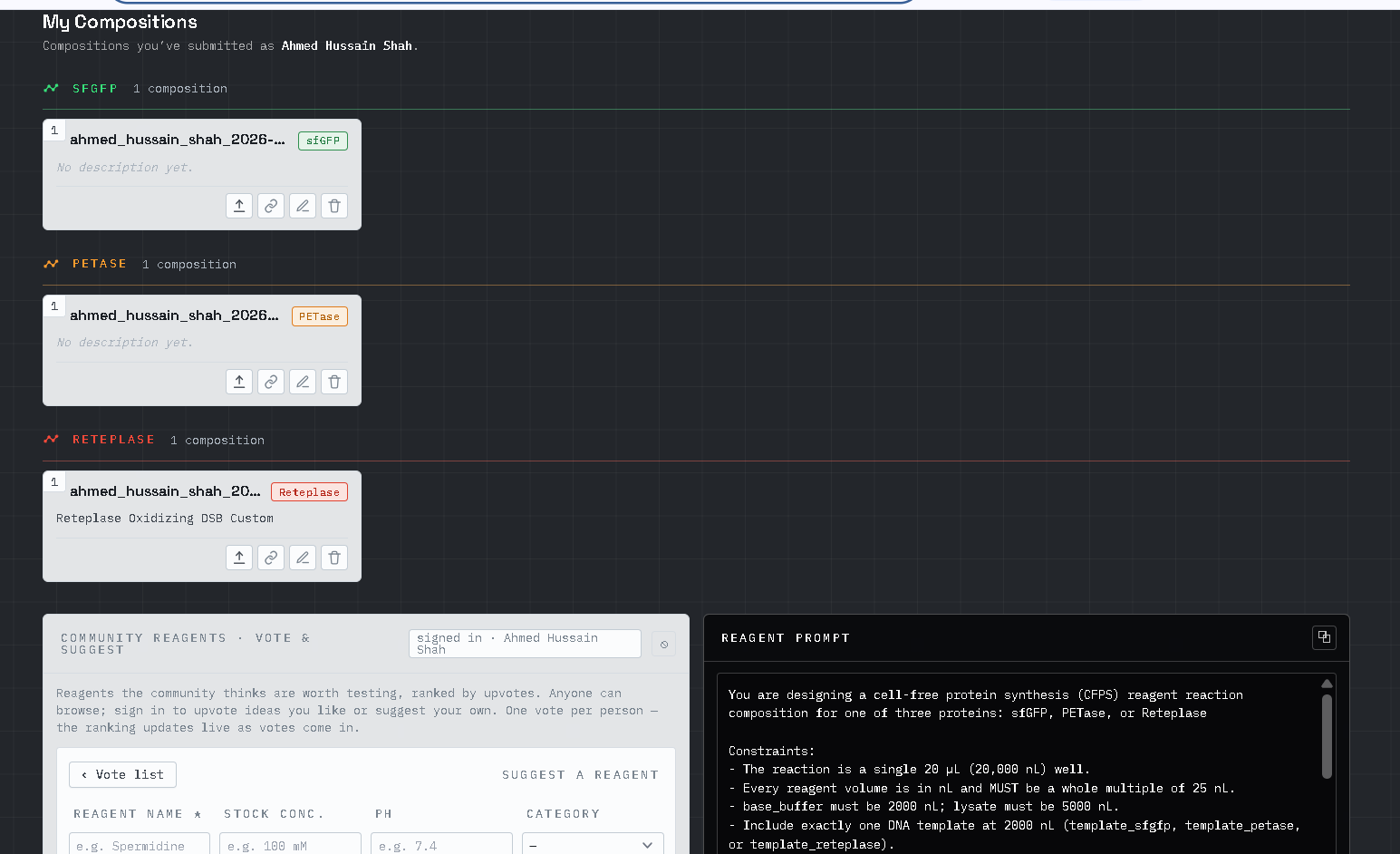
All three reaction compositions (sfGFP, PETase, and Reteplase) and the Trehalose community reagent were successfully submitted to the Coopetition portal:
Part 3C: Asimov Kernel Assembly
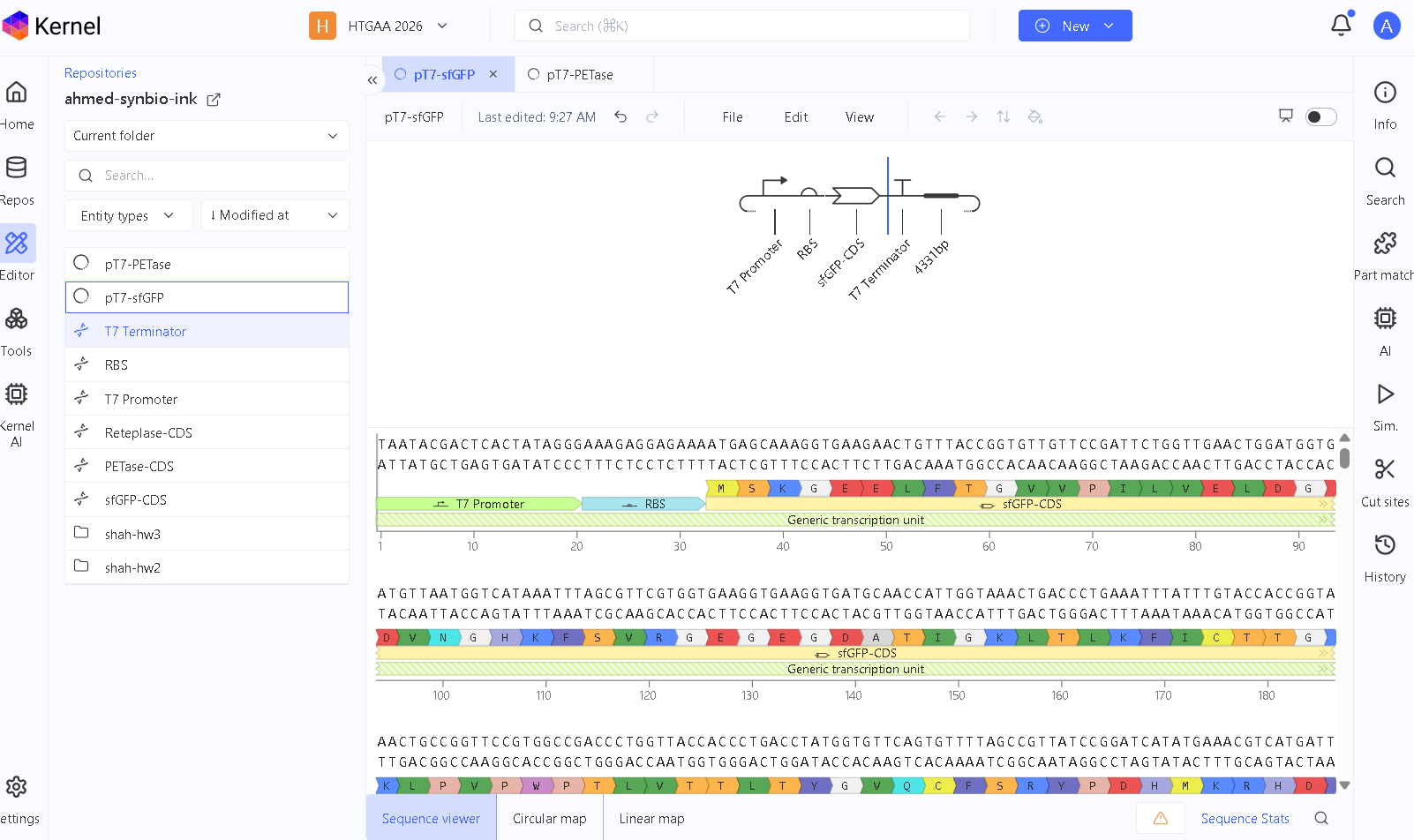
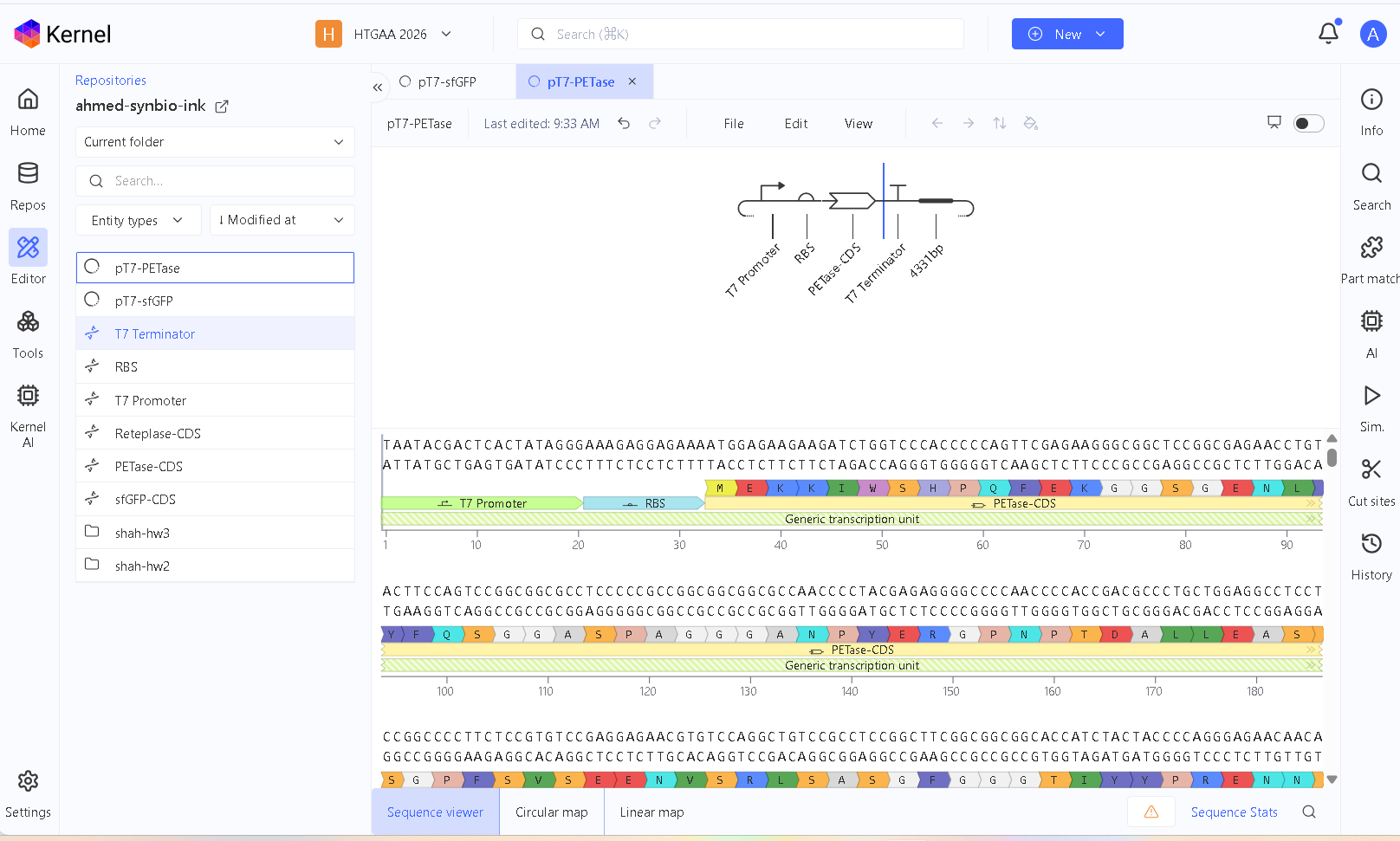
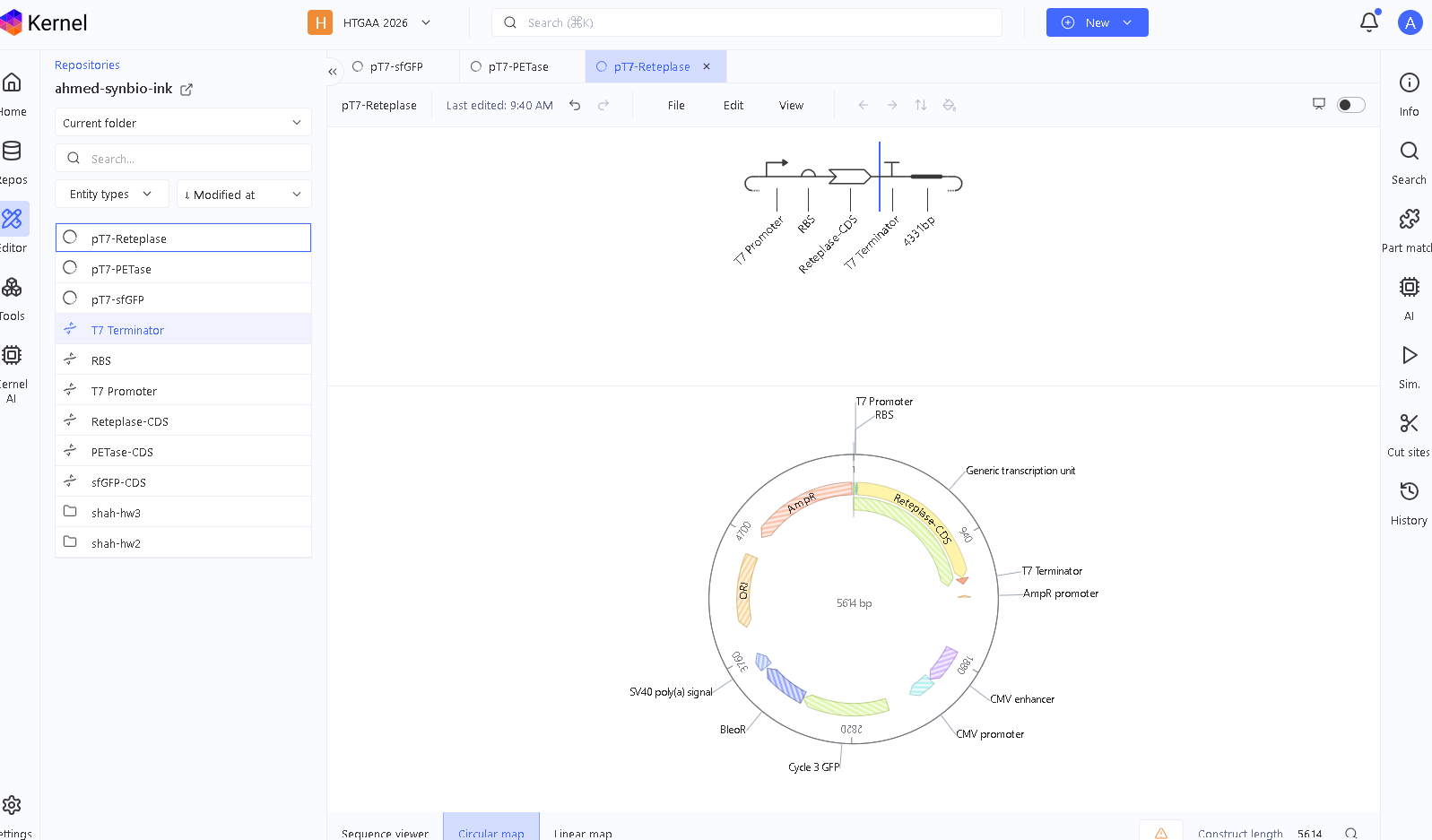
I designed T7-compatible expression plasmids for all three target proteins using the Kernel platform.
Regulatory architecture: All constructs use the same T7 expression cassette:
T7 Promoter → RBS (B0034) → [Protein CDS] → T7 Terminator
sfGFP Construct:
PETase Construct:
Reteplase Construct:
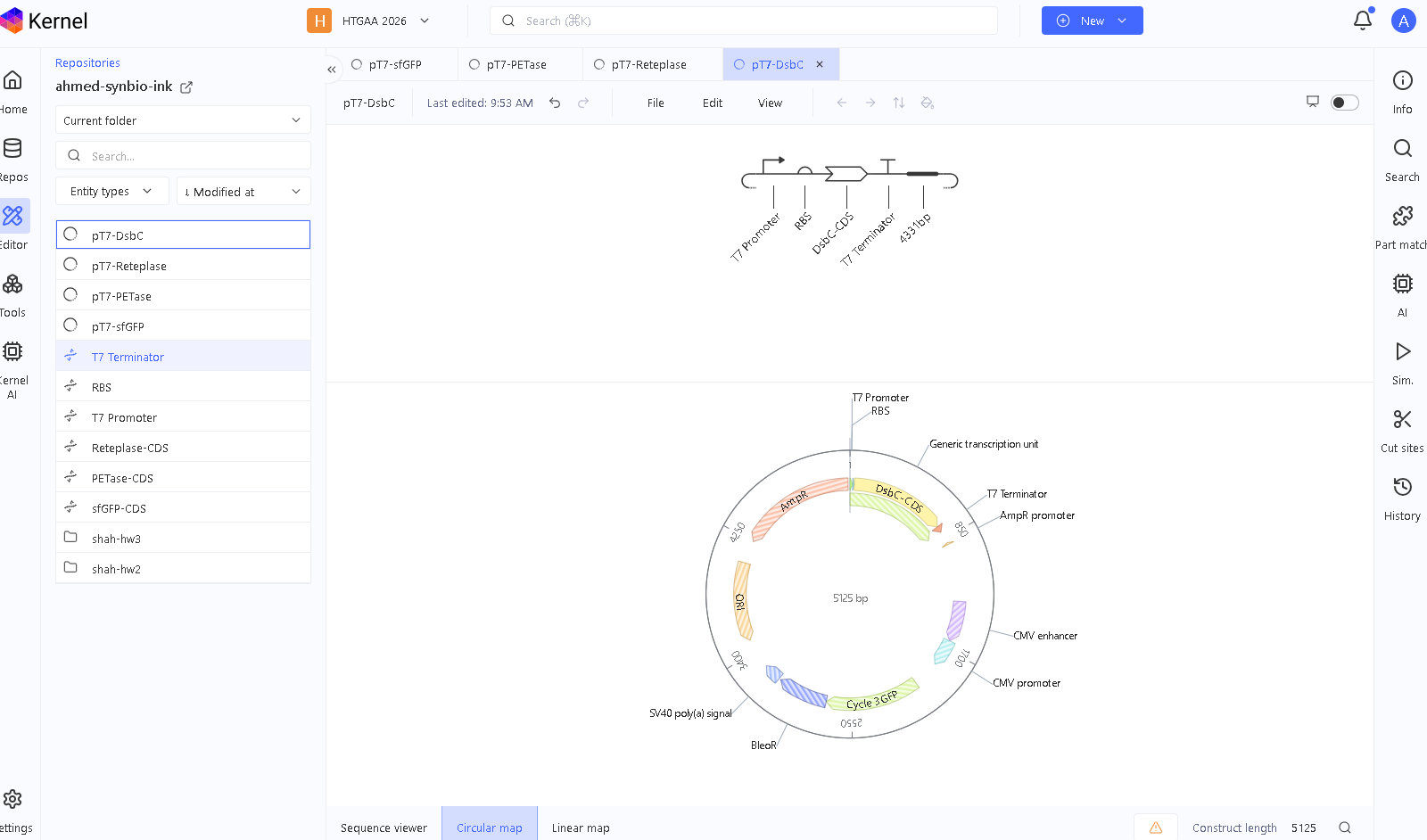
Bonus: DsbC Helper Plasmid
To improve functional Reteplase yield, I designed a T7 helper plasmid expressing DsbC (disulfide-bond isomerase, UniProt P0AEG6). Co-expressing DsbC within the oxidizing CFPS reaction rescues mispaired disulfide intermediates without requiring expensive purified chaperone supplementation.
The following 20 µL compositions are designed to drive down the cost-per-microliter for scaled biomanufacturing while adapting to specific folding challenges.
1. sfGFP Baseline Reducing Environment
Based on the highly balanced 1793122_35 architecture (Smith et al., 2026).
Lysate & DNA: 5,000 nL BL21 Star (DE3); 2,000 nL sfGFP DNA; 2,000 nL 10X Base Buffer.
Salts & pH: 67.5 mM HEPES-KOH (pH 7.5), 273.2 mM Potassium Glutamate, 8.8 mM Magnesium Glutamate (Smith et al., 2026).
Energy & NMPs: 40.0 mM Ribose, 8.3 mM Glucose, 0.5 mM AMP, 1.0 mM each of CMP/GMP/UMP (Smith et al., 2026).
Additives: 7.5 mM Potassium Phosphate mix, 1.2 mM Spermidine, 4.0 mM Nicotinamide (Smith et al., 2026).
2. PETase Ultra-Lean Reducing Environment
Engineered for maximum cost efficiency based on the 1777863_77 architecture (Smith et al., 2026).
Lysate & DNA: 5,000 nL BL21 Star (DE3); 2,000 nL PETase DNA; 2,000 nL 10X Base Buffer.
Salts & Energy: 45.0 mM HEPES-KOH (pH 7.5), 312.6 mM Potassium Glutamate, 77.4 mM Ribose (Smith et al., 2026).
Additives: 3.1 mM Nicotinamide, 5.6 mM Potassium Phosphate, with Spermidine omitted (Smith et al., 2026).
3. Reteplase (Complex Oxidizing Environment)
Lysate: 5,000 nL BL21 Star (DE3) Δgor (treated with IAM and Cysteine quench).
DNA & Base: 2,000 nL Reteplase DNA; 2,000 nL 10X Base Buffer.
Redox & Folding: 4:1 ratio of GSSG to GSH; addition of DsbC isomerase to resolve the 9 requisite disulfide bonds.
Backbone: Matches the sfGFP Ribose/NMP energy and salt profile for cost control.
Community Reagent Proposal: Trehalose
Synthesizing heavy, multi-domain fusion complexes heavily taxes the CFPS folding machinery. Adding purified protein chaperones (like GroEL/ES) destroys low-cost production economics. We propose adding the simple disaccharide Trehalose (10–50 mM). In living E. coli, trehalose is natively accumulated under extreme osmotic stress to protect cytoplasmic proteins from aggregation (Jewett & Swartz, 2004). As a bulk sugar, it serves as a highly cost-effective chemical chaperone to stabilize complex fusions in vitro.
Part 3C: Asimov Kernel Assembly
To translate the provided amino acid sequences into T7-compatible expression plasmids within the Asimov Kernel:
Reverse Translation: Input the provided sfGFP, PETase, and Reteplase amino acid sequences into the Kernel’s codon-optimization engine tuned for E. coli translation profiles.
Bonus Helper Plasmid (DsbC): To maximize Reteplase yields, assemble a secondary helper plasmid containing: T7 Promoter → RBS → DsbC (Disulfide bond isomerase) → T7 Terminator. Co-expressing DsbC directly within the oxidizing CFPS reaction rescues mispaired disulfide intermediates without requiring expensive purified chaperone supplementation.
AI & Literature Citations
AI Tool: Gemini (Custom SynBio-Ink Agent Context). Prompts focused on cross-referencing autonomous laboratory CFPS formulations against linear network control failures.
Literature: Jewett & Swartz (2004); Jiang & Lai (2019); Smith et al. (2026).
Week 1 HW: Final Project Ideas
Biomanufacturing the “Universal Bio-Ink” for Autonomous Lab-on-a-Chip Diagnostic Sentinels
(1) What you would like to biomanufacturer and why?
I would love to biomanufacturer “SynBio-Ink,” a programmable, cell-free diagnostic matrix containing lyophilized LAMP (Loop-mediated isothermal amplification) reagents, CRISPR-Cas effectors, and biosensor reporters.
My motivation is to be the part in solving global health and pandemic preparedness over the next 10 years. It will be based on decentralized and autonomous bio-surveillance. I dream a future where robotic “sentinel” devices homes use a near to universal cheap microfluidic Lab-on-a-Chip (LoC). For achieving that we need to bio-manufacture a bio-ink that can be printed directly onto these chips. We can create a universally deployable diagnostic fabric. This ink would allow a single chip to perform multiplexed LAMP amplification and CRISPR-based nucleic acid
detection for hundreds of pathogens simultaneously.
(2) What living system would you use?
Rather than a traditional whole-cell factory, I would use a Cell-Free Protein Synthesis (CFPS) system derived from engineered Escherichia coli extract.
Inputs:
For establishing this kind of system we would require optimized E. coli lysate (containing ribosomes and transcriptional/translational machinery), energy buffers, amino acids, and synthetic DNA cassettes encoding customized CRISPR-Cas12/13 enzymes, Bst polymerase (for LAMP), and electrochemical reporter proteins.
Biological Process:
The Cell Free Systems would expresse the diagnostic proteins in vitro. This would allow us to bypass the cell membrane barrier and toxicity issues. The resulting soup would be combined with specific LAMP primers and guide RNAs.
Outputs:
We expect the output to be a fully functional “SynBio-Ink.” This cell-free matrix is then lyophilized (freeze-dried) directly onto the microfluidic channels of the diagnostic chip. When a liquid patient sample (e.g., saliva) is injected into the chip. The LAMP enzymes amplify the target viral/bacterial DNA, the CRISPR-Cas system detects the amplicons, and the collateral cleavage of reporter molecules triggering the biosensor.
(3) How would you use automation?
I would use an acoustic liquid-handling robot Echo 525 to automate the assembly and printing of the bio-chips.
I would automate the acoustics dispensing of the Syn-Bioink into arrays on the substrate. This step is necessary because printing a multiplexed chip requires precision and micro-volumes that are impossible to achieve via manual pipetting.
(4) How much would you need to make, and how long would it take? (a) How much? Scale: Manufacturing SynBio-Ink to supply 1 pilot project for a global bio-surveillance network.
• A multiplexed microfluidic chip requires roughly 10 microliters (10 µL) of the cell-free diagnostic ink to populate all its reaction chambers.
Producing 0.01 Liters of cell-free extract and printing 1000 chips could be achieved in 1 Day.
Culturing the source E. coli, lysing the cells, and preparing 0.01 Liters of continuous-flow CFPS extract can be completed in standard industrial bioreactors in 1-2 Days.
Using automated robotic factory floor with 10 parallel acoustic dispensers printing 1 chip per second each, printing 1,000 chips would take approximately 1-2 hours of continuous robotic operation.
Less than a week to run a pilot project with 1000 autonomous diagnostic nodes.
(5) What don’t you know yet?
The 3 biggest technical unknowns in this 10-year vision are:
Can a complex matrix of cell-free lysate, Bst polymerase, and CRISPR-Cas enzymes be lyophilized onto a microfluidic chip and remain viable at room temperature for months?
Will raw, unpurified patient samples (blood, saliva, or environmental wastewater) introduce inhibitors that stall the cell-free reaction, or will the chip require a complex, automated sample-prep module upstream of the sensors?
I do not yet know if standard electrochemical biosensors are sensitive enough to detect this reduced signal without resulting in false negatives.