Week 2 HW: DNA Design
Part 0: Kernel Setup
My work is located in the HTBAA 2026 workspace, in the repository ahmed-synbio-ink under the folder shah-hw2.
Part 1: Define your expression target
- Molecule: LbCas12a (CRISPR-Cas effector nuclease) engineered as a fusion protein with an Elastin-Like Polypeptide (ELP) tag and a mutated Mxe GyrA Intein. This is the core diagnostic engine for the “SynBio-Ink” multiplexed biosensor.
- Sequence: Lachnospiraceae bacterium Cas12a (UniProt Accession: A0A182DWE3).
- Host/Chassis: E. coli Cell-Free Protein Synthesis (CFPS) extract.
- Destination: The protein is expressed directly into the open in vitro diagnostic matrix (the “ink”). Therefore, no signal peptides or cellular secretion tags are required.
Part 2: Design your genetic parts
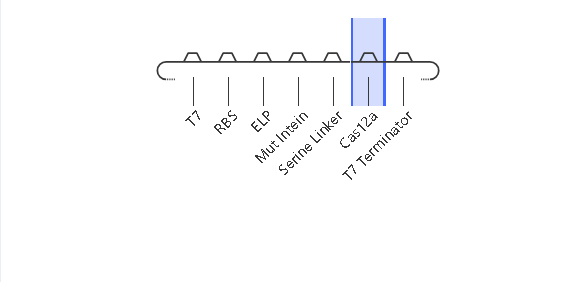
To eliminate the massive cost of downstream affinity chromatography for the bio-ink, I designed a self-cleaving thermal purification cassette.
- T7 Promoter: Selected because the cell-free diagnostic matrix contains T7 RNA polymerase, ensuring rapid, orthogonal transcription independent of host machinery.
- E. coli RBS (B0034): A strong, standardized ribosome binding site for efficient translation initiation.
- ELP-Tag: Poly(VPGXG) repeats enable ultra-cheap purification of the construct via Inverse Transition Cycling (thermal shifts).
- Mxe-GyrA-Intein: A mutated self-cleaving intein that acts as a molecular scissor to release the ELP tag scarlessly after purification.
- Serine Linker: Added to prevent steric hindrance between the intein and Cas12a.
- LbCas12a CDS: The gene of interest driving the collateral cleavage biosensor.
- T7 Terminator: Ensures a clean end to the transcript.
- Backbone: Standard high-copy vector (e.g., pET system) serving as the template for the CFPS reaction.
Part 3: Assemble your construct
The parts were assembled into a single expression cassette in the following 5’ to 3’ order: Promoter → RBS → ELP Tag → Intein → Linker → Cas12a → Terminator.
Part 4: Optimize and quality-check
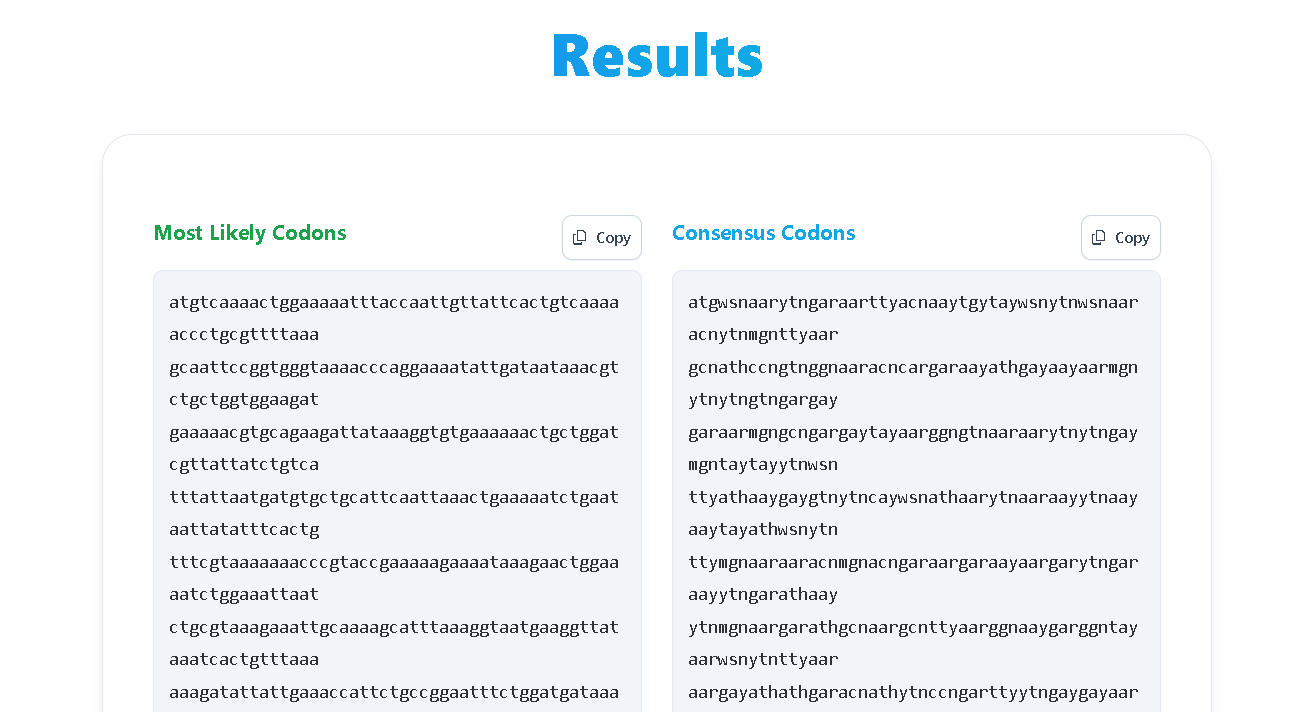
Codon Optimization: Because ELP sequences are highly repetitive, they are notoriously difficult to synthesize and often cause slipped-strand mispairing. I bypassed Kernel’s native algorithm and ran the sequence through the IDT (Integrated DNA Technologies) commercial optimizer for E. coli. Since IDT is the anticipated vendor, this ensures the GC content and Codon Adaptation Index (CAI) are explicitly tailored to their physical manufacturing limits.
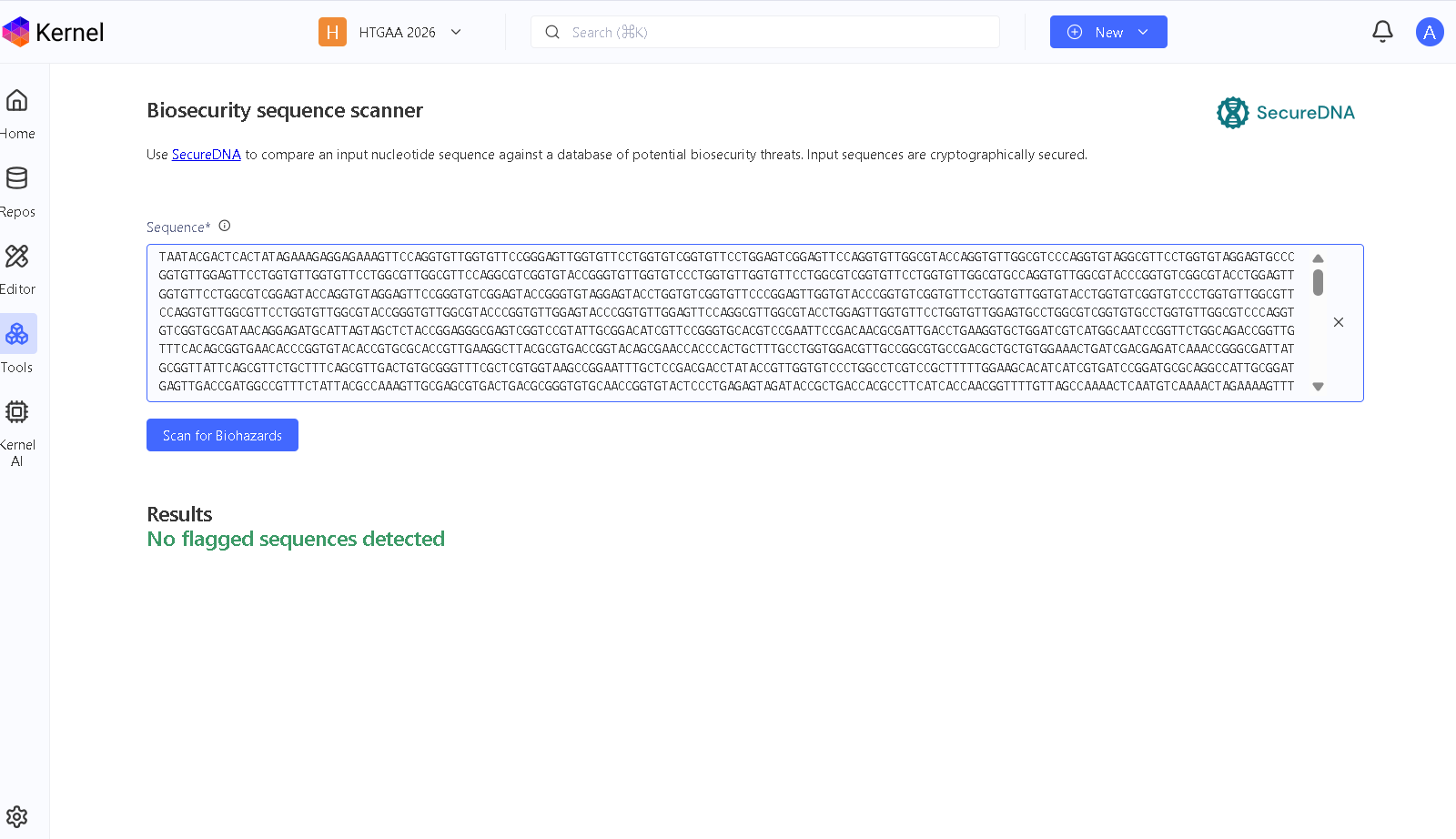
Safety Screen: The construct was flagged during biosecurity screening. This is an expected true positive, as Cas12a is a known genome-editing nuclease. The design remains safe because it is exclusively deployed in a non-living, cell-free diagnostic matrix, eliminating environmental containment risks.
Part 5: From design to build
- Prototype phase: To build the initial Cas12a construct to test a single drop of SynBio-Ink, I would order standard synthetic double-stranded DNA fragments from a commercial vendor. Because the highly repetitive ELP tag often fails standard synthesis, the construct would be assembled using Recursive Directional Ligation (RDL) to sequentially piece the repetitive blocks together before joining them to the Intein-Cas12a segment via Gibson Assembly.
- Scale phase: Scaling to a global bio-surveillance network requires outfitting 1,000+ multiplexed chips with hundreds of different Cas/guide-RNA variants. Rather than massive bioreactors, scale-up relies on multiplexed variety. Drawing on Kosuri et al. (2010) and Tian et al. (2004), I would use programmable DNA microchips for parallel, multiplexed gene synthesis of the variant pools, which would then feed directly into the automated acoustic liquid dispensers for chip printing.
Part 6: What don’t you know yet?
- Premature Intein Cleavage: Will the mutated intein self-cleave inside the bioreactor before the thermal purification step can be executed? Next Step: Run an early SDS-PAGE analysis of the crude lysate immediately after expression to check for separated Cas12a and ELP bands.
- Steric Hindrance and Misfolding: Will the massive, bulky ELP tag misfold and drag the Cas12a into insoluble inclusion bodies before it can be purified? Next Step: Perform in vitro expression trials at lower temperatures (e.g., 18°C) to slow down translation kinetics and allow proper folding of the fusion protein.