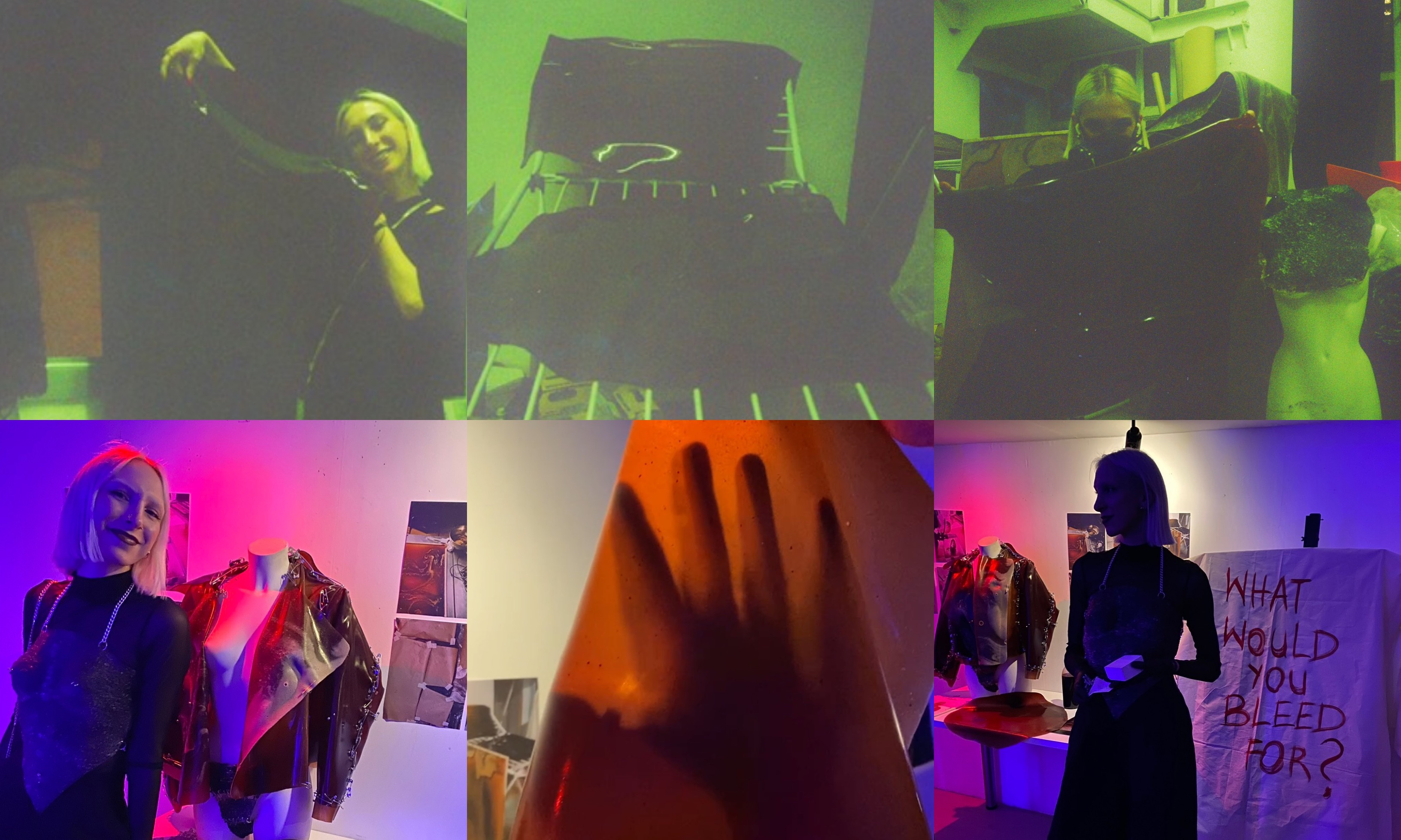
I am originally from Poland and spent six years living in the UK, where I studied BA in Media & Communication at De Montfort University, Leicester before completing an MA in Innovation Management at Central Saint Martins, London. I am now based in Barcelona.
Although my formal background is not in biology, looking back, I can see how my work has been gradually moving in this direction. Media taught me to understand how ideas, narratives and cultural shifts influence behaviour and shape the way we imagine the future. During my MA, that perspective expanded from communication into systems thinking, innovation strategy, regenerative design and emerging technologies. This is where I became increasingly fascinated by biodesign and the possibility of working with living systems rather than designing only within conventional industrial models.
That curiosity eventually brought me to Barcelona, where I joined Fabricademy at Fab Lab Barcelona to move from strategy into experimentation. There, I began working hands-on with biomaterials, digital fabrication and alternative material systems.
The project that pushed me furthest in that direction explored animal blood as a waste-derived biomaterial. I experimented with liquid and powdered pig blood, gelatin and other bio-based ingredients to create a latex-like material for fashion. It was deliberately provocative, but it also became a practical investigation into a question that still drives my work today: what if a material normally treated as waste could become the starting point for a completely novel material futures?
That project made me realise that I did not only want to speculate about alternative materials; I wanted to understand the biology, chemistry and manufacturing processes behind them.
HTBAA feels like the next step in that journey. I am entering biology without a traditional scientific background, which is exactly why I want to challenge myself with it. I want to understand the biological mechanisms behind the material ideas I have been exploring and learn how living systems, automation and biomanufacturing could become tools for designing new material economies.
My work is increasingly driven by one question:
What if waste, biology and emerging technologies could become the building blocks of regenerative manufacturing systems?
See the nav bar on the left to look through my work for How To
Biomanufacture Almost Anything (Fall 2026)!
Subsections of ALEKSANDRA PIOTROWSKA — HTBAA Fall 2026
Week 1 HW: Final Project Ideas
Fashion Feeds on Pollution
Starting point
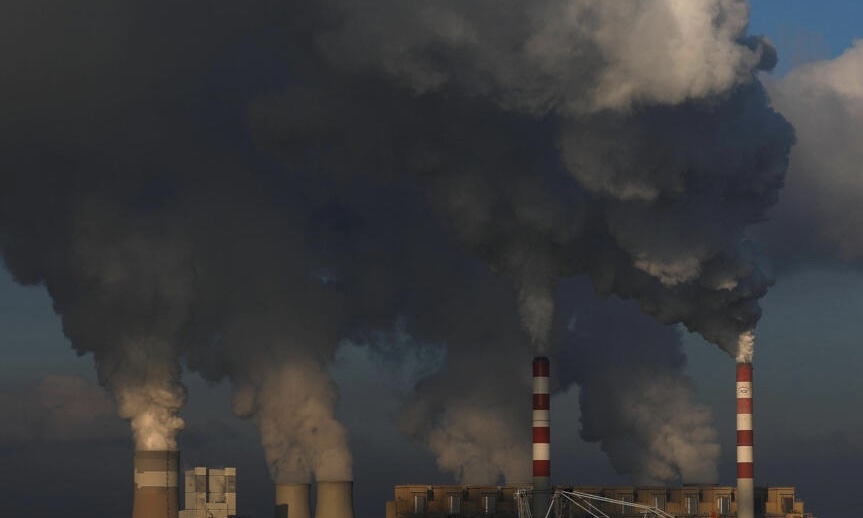
I grew up in Silesia, a region whose landscape, economy and sense of itself were built by coal. As Poland moves away from coal, I find myself less interested in how an industry ends than in what it leaves behind, and whether any of that residue can be put to work.
Coal mines keep emitting methane long after extraction stops. In 2023, Polish hard-coal mines generated roughly 752 million m³ of methane, of which around 551 million m³ went straight into the atmosphere (Borowski et al., 2025). Abandoned mines can continue venting for years after closure (Hadro et al., 2025; European Union, 2024). That is a very large, very local waste stream with almost no productive use attached to it.
I am currently based in Barcelona, near a research ecosystem that has just demonstrated something relevant: methane-eating bacteria can convert methane into protein-rich extracellular polymers (Aranda et al., 2026). A biological capability in Catalonia, a waste stream in Silesia, and a material question that belongs to my own practice in fashion and biomaterials. This project is an attempt to connect the three.
From material idea to innovation hypothesis
Reading Asin-Garcia et al. (2025), one argument stayed with me: there is a persistent gap between what biomanufacturing makes theoretically possible and what is technically and economically feasible, and engineering biology tends to generate hype well before industrial viability has been shown.
That reframed how I wanted to pose the project. Rather than starting from methane + bacteria = sustainable fashion, I want to start from a hypothesis that can fail:
What if methane-derived extracellular polymers become a flexible fashion material, and under what technical, material, economic and environmental conditions would that actually make sense?
Four questions follow from it. Would fashion need this material (desirability)? Can biology and material processing produce it (feasibility)? Could it become economically realistic (viable)? Would its lifecycle genuinely improve on what it replaces (responsibility)? Together, these form what I think of as the project’s bio-techno-economy, and I would rather establish early that the answer to one of them is no than arrive at a beautiful swatch with no system behind it.
What already exists
Innovation here does not mean inventing without precedent. It means finding an existing capability, understanding its limits, and recombining technologies and contexts.
Newlight Technologies’ AirCarbon is the clearest precedent: microorganisms transform greenhouse-gas carbon into PHB, part of the PHA family of biopolyesters, and the resulting material has been developed into sheets, fibres, leather-like materials and consumer goods (Newlight Technologies, 2026). What matters is not that I want to reproduce it, but that it proves an emission can be metabolically restructured into a new polymer rather than simply captured or burned.
Mango Materials is the closer precedent. The company co-locates production near waste methane sources and uses methanotrophs to manufacture P3HB, which can be formulated into fibres for textiles. The pathway from methane to microorganism to biopolymer to fashion already exists as a technological direction.
This is useful because it rules out the obvious framing. “Make fashion from methane” is not a research gap. The more productive question is where the current system still has friction, and that question led me to polymer recovery.
The bottleneck: intracellular PHA
PHAs such as PHB accumulate inside microbial cells. Manufacturing therefore, requires growing cells, harvesting them, breaking the biomass, recovering the polymer and purifying it. That downstream chain adds high cost and complexity.
The CH4-BIOPOL project at the Catalan Institute for Water Research (ICRA) addresses this directly by asking whether methane could instead produce extracellular polymers - material the organism secretes outside the cell, potentially shortening the recovery chain. From an innovation-strategy perspective, this is interesting because it changes not only the material but the manufacturing architecture. The most important innovation may not be a new polymer at all, but a simpler route to producing and recovering one.
In 2026, researchers associated with ICRA published work on Methylotuvimicrobium alcaliphilum 20Z showing that the organism converts methane into extracellular polymeric substances (EPS), and that the resulting material is consistently protein-rich (Aranda et al., 2026). Across fourteen combinations of pH, temperature and methane concentration, they found that pH strongly influenced EPS production, that the pH 6–8.5 range supported higher yields, and that greater methane availability increased EPS accumulation.
What the study demonstrates is a biological capability. What it leaves open is what the polymer can become. That gap is where I want to position the project. The question shifts from can biology make something to can biological production become a material system with a meaningful application.
1. What I want to biomanufacture
A standalone flexible material for fashion, made from methane-derived EPS, not a coating applied to an existing textile, but a self-supporting bio-skin that can be cut, stitched, draped, bonded, moulded, heat-formed or digitally fabricated. The applications I have in mind are those currently dependent on flexible synthetics: PU, TPU, PVC, synthetic leather-like sheets and flexible polymer surfaces.
I want to work backwards from a material brief rather than forwards from the biology. The material should be flexible, self-supporting, thin, cuttable, joinable, drapable, durable in use, and designed for biological end-of-life. That gives me a target against which the biology can be judged rather than simply described.
The first success criterion is not a garment but a 10 × 10 cm self-supporting swatch that behaves like a material rather than a laboratory residue. Initial evaluation would be qualitative: hand-feel, drape, thickness, transparency, foldability, stitchability, bonding, heat and water response; before moving to: tensile strength, elongation, tear resistance, water uptake, ageing and degradation. The distinction matters: a biological system can be perfectly capable of producing a polymer that is of no interest whatsoever as a fashion material.
As for why EPS rather than a copy of AirCarbon, Newlight and Mango validate that methane-derived PHA can become commercially relevant, which is evidence that the opportunity space is real. My question is whether secreted polymer offers a lower-complexity recovery route. I am not assuming that it does. That is precisely the hypothesis requiring techno-economic analysis rather than optimism.
2. The living system
The proposed chassis is Methylotuvimicrobium alcaliphilum 20Z, a methanotroph that uses methane as its carbon and energy source. Methane, oxygen and mineral nutrients go in; methane metabolism drives extracellular polymer production; EPS comes out, to be recovered and formulated into material. Carbon transformation happens through microbial metabolism rather than petrochemical polymerisation in a chemical plant.
The organism is haloalkaliphilic, which means it is adapted to salty, alkaline conditions. Ye et al. (2023) argue that extremophiles may offer real advantages for next-generation industrial biotechnology, including lower contamination risk and reduced dependence on expensive sterile fermentation. The appeal is that the organism itself could lower the infrastructure burden.
There is a tension here worth naming rather than smoothing over. Aranda et al. found EPS production was strongest around pH 6–8.5 and strongly inhibited at pH 11. The conditions that make an extremophile attractive for cheap industrial fermentation are not necessarily the conditions that maximise the product I want. This is exactly the kind of trade-off that only becomes visible when an idea moves from biological possibility toward techno-economic feasibility.
Geography as infrastructure
The project has three locations, and I want to treat them as one distributed system rather than three separate sites.
Silesia supplies the problem and the feedstock. My preferred input is methane that would otherwise be emitted, particularly from closing or abandoned mines, a deliberate constraint, since the project must not create any incentive to continue extraction.
Catalonia supplies the scientific capability, with ICRA in Girona having demonstrated the methane-to-EPS process. What I could contribute is an application pull rather than a technology push: instead of asking what else the organism can produce, ask what material performance would make this capability relevant to fashion.
London could supply the translation layer. LifeFabs Institute works across biofabrication, materials, fashion, automation and digital fabrication, with Opentrons Flex and OT-2 systems, bioprinters, incubators, microscopy and digital fabrication equipment, and has previously used automated liquid handling for polymer formulation research.
Asin-Garcia et al. (2025) argue that better coordination between research infrastructures, knowledge and data could accelerate the bioeconomy. My project does not need every capability in one building: feedstock and environmental data in Silesia, microbiology and fermentation data in Catalonia, material and fabrication data in London, and could function as exactly the kind of meta-workflow they describe.
3. Automation
Petzold and Mukhopadhyay (2025) identify the sheer size of the experimental design space as a major challenge in microbial biomanufacturing. My system has two stacked design spaces: pH, temperature, methane concentration, nutrients, salinity and time on the biological side, determining EPS yield and composition; then EPS concentration, plasticiser, crosslinking, drying and thickness on the material side, determining performance. Testing these manually becomes unmanageable very quickly.
I would structure development as a simplified Design–Build–Test–Learn cycle, and Petzold and Mukhopadhyay describe automation as particularly valuable at the test stage, where automated cultivation, sampling and analysis reduce error and improve reproducibility.
An Opentrons Flex would not handle methane gas - cultivation needs dedicated gas-handling equipment, but it could automate media preparation, nutrient dosing, sampling, EPS formulation, plasticiser and crosslinker screening, and sample preparation. A realistic first experiment: four EPS concentrations × four plasticiser levels × three drying conditions gives 48 formulations, systematically produced rather than hand-mixed one at a time.
The longer-term ambition is not automation but learning. Structured high-throughput experimentation generates datasets that can later support machine learning, predictive models and metabolic modelling, turning the output from “I made a biomaterial recipe” into a model of how biological and material variables drive performance.
This connects to the interoperability argument in Asin-Garcia et al. (2025), and I would organise the work around a small data lake rather than scattered lab notes: feedstock data (mine, location, CH₄ concentration, gas flow, impurities, mine status, existing utilisation); biology data (pH, temperature, CH₄, salinity, nutrients, culture time, EPS yield and composition); material data (formulation, plasticiser, crosslinker, thickness, strength, elongation, drape, water response, surface); end-of-life data (degradation conditions and time, mass loss, residual additives, reuse and recycling potential); and techno-economic data (energy, reactor volume, methane consumed, recovery yield, processing steps, labour, material yield, estimated €/kg).
The goal is eventually to be able to ask: given a particular methane source and a desired fashion property, which combination of biological and processing conditions should I choose? That turns a recipe into a decision-making system.
The techno-economic layer
A biologically interesting material is not automatically a viable innovation. It has to clear technical feasibility, material desirability, economic viability and genuine environmental improvement, and Asin-Garcia et al. (2025) specifically warn about the distance between what is theoretically possible and what is realistic.
I want to be prepared for this to fail. If producing 1 kg of EPS demands enormous methane input, extremely dilute fermentation, intensive purification, high-energy drying and expensive additives, then the responsible conclusion is not to scale this pathway. Establishing that early would still be a successful research outcome.
4. How much, and how long
How much
Since methane-derived EPS has not been demonstrated as a standalone fashion material, starting from a collection makes no sense. My first meaningful scale is one experimental wearable demonstrator: approximately 0.5 m² of material at 0.5 mm thickness.
0.5 m² = 5,000 cm²; 0.5 mm = 0.05 cm
Volume: 5,000 × 0.05 = 250 cm³
Density is currently unknown; assuming 1 g/cm³ as a placeholder: 250 cm³ × 1 g/cm³ = ~250 g dry EPS-based material
Earlier methane-biomanufacturing research reported extracellular polymer concentrations of approximately 2.6 g/L (Cantera et al., 2018). This was a different methane-EPS system, so I treat it strictly as an order-of-magnitude reference rather than a prediction.
At 2.6 g/L: 250 g ÷ 2.6 g/L ≈ 96 L culture
Assuming 70% recovery: 250 ÷ (2.6 × 0.70) ≈ 137 L, rounded to ~140 L culture per demonstrator
That calculation immediately exposes the central problem: the polymer is very dilute. Increasing volumetric productivity may matter more than almost any other variable, which is exactly why automation, strain, process optimisation, and techno-economic analysis become load-bearing rather than decorative.
How long
Aranda et al. (2026) cultivated M. Alcaliphilum 20Z for approximately seven days when investigating EPS production. Adding two to three days for recovery, formulation, and drying gives roughly 9–10 days per production cycle.
At this stage, the realistic target is grams rather than hundreds of grams. The first milestone is simply whether a self-supporting flexible sample can exist at all.
5. What I don’t know yet
Is the feedstock compatible? The Catalan experiments use controlled laboratory methane. Real Silesian mine gas carries variable CH₄ concentration, CO₂, oxygen, humidity, and contaminants. The process could work beautifully on clean methane and fail on mine gas, and that needs testing before anything larger is built.
Is the polymer actually a material? Aranda et al. demonstrate that EPS exists. They do not demonstrate that it behaves like a fashion material. I do not yet know whether it is brittle, flexible, sticky, water-soluble, weak, strong or thermally processable. The opportunity exists precisely because that application space is untested.
How much modification does it need? If wearability requires large quantities of synthetic plasticiser, coating, stabiliser or crosslinker, the biological origin loses much of its meaning. The target is minimum intervention for the required performance.
Does extracellular actually mean cheaper? This is the strategic assumption most in need of challenge. Avoiding intracellular extraction is not the same as reducing total complexity; EPS may be too dilute, hard to purify, expensive to dry or chemically inconsistent. The real question is whether extracellular production reduces overall manufacturing complexity or simply relocates it.
Reflection: Why work on Earth
Averesch et al. (2023) examine microbial biomanufacturing for space exploration. The paper is technically fascinating, and it provoked a reaction I did not expect: biomanufacturing has been discussed for decades as a way to sustain human life where conventional supply chains cannot reach. I kept wanting to redirect that ambition toward repairing the material systems already around us.
Silesia is my example. It is a landscape shaped by extraction, energy, employment, pollution and now transition. I would rather explore how biotechnology could build a different material economy in this one than manufacture in another.
The historical logic runs extract, use, pollute, and abandon. The alternative I want to test runs identify waste, capture, metabolise, manufacture, use, recover, or biodegrade. That is not material substitution; it is potentially system innovation. Which means the interesting object of the project is not really the swatch, it is the relationship between regional waste, biological manufacturing, research infrastructure, data, fashion, economics, and end-of-life.
Could Silesia’s industrial past become biological feedstock for its post-coal future, without creating the next pollution problem? That is the hypothesis I want to test.
References
Aranda, A., Primo-Catalunya, D., Sánchez-Melsió, A., Balcázar, J. L., & Pijuan, M. (2026). Exploring the capabilities of Methylotuvimicrobium alcaliphilum 20Z to produce exopolymeric substances from methane. Enzyme and Microbial Technology, 199, 110893. DOI: 10.1016/j.enzmictec.2026.110893.
Asin-Garcia, E., Fawcett, J. D., Batianis, C., & Martins dos Santos, V. A. P. (2025). A snapshot of biomanufacturing and the need for enabling research infrastructure. Trends in Biotechnology, 43(5), 1000–1014. DOI: 10.1016/j.tibtech.2024.10.014.
Averesch, N. J. H., Berliner, A. J., Nangle, S. N., Zezulka, S., Vengerova, G. L., Ho, D., Casale, C. A., Lehner, B. A. E., Snyder, J. E., Clark, K. B., Dartnell, L. R., Criddle, C. S., & Arkin, A. P. (2023). Microbial biomanufacturing for space-exploration—what to take and when to make. Nature Communications, 14, 2311. DOI: 10.1038/s41467-023-37910-1.
Borowski, M., Zwolińska-Glądys, K., & Cheng, J. (2025). Methane emissions from coal mines: Quantification, capture, and utilization strategies for atmospheric impact mitigation—A case study from Poland. Atmosphere, 16(2), 174. DOI: 10.3390/atmos16020174.
Cantera, S., Lebrero, R., Rodríguez, E., García-Encina, P. A., & Muñoz, R. (2017). Continuous abatement of methane coupled with ectoine production by Methylomicrobium alcaliphilum 20Z in stirred tank reactors: A step further towards greenhouse gas biorefineries. Journal of Cleaner Production, 152, 134–141.
Cantera, S., Sánchez-Andrea, I., Lebrero, R., García-Encina, P. A., Stams, A. J. M., & Muñoz, R. (2018). Multi-production of high added market value metabolites from diluted methane emissions via methanotrophic extremophiles. Bioresource Technology, 267, 401–407. DOI: 10.1016/j.biortech.2018.07.057.
European Union. (2024). Regulation (EU) 2024/1787 on the reduction of methane emissions in the energy sector. Official Journal of the European Union.
Hadro, J., Jureczka, J., Suszka, G., & Strzemińska, K. (2025). The most important factors contributing to the effective development of abandoned mine methane resources in the Upper Silesian Coal Basin. Geological Quarterly.
ICRA — Catalan Institute for Water Research. (2022–2025). CH4-BIOPOL: Valorizing methane — biorefinery based on methanotrophs for the production of extracellular polymers. Project TED2021-129501B-I00.
Petzold, C. J., & Mukhopadhyay, A. (2025). From bench to biofactory: High-throughput technologies and automated workflows to accelerate biomanufacturing. Current Opinion in Biotechnology, 94, 103320. DOI: 10.1016/j.copbio.2025.103320.
Ye, J.-W., Lin, Y.-N., Yi, X.-Q., Yu, Z.-X., Liu, X., & Chen, G.-Q. (2023). Synthetic biology of extremophiles: A new wave of biomanufacturing. Trends in Biotechnology, 41(3), 342–357. DOI: 10.1016/j.tibtech.2022.11.010.
Industry and research precedents
LifeFabs Institute. Biofabrication R&D Studio and facilities, London.
Mango Materials. Methane-to-PHA biomanufacturing and textile applications.
AI clients: ChatGPT (OpenAI, GPT-5.6 Sol) and Claude (Anthropic)
Date: September 2026
I used both as research and ideation assistants while developing this proposal, and the process was iterative. I initially explored bacterial cellulose, textile-waste-to-PHA pathways and methane-derived PHBV before recent Catalan research on methane-derived extracellular polymers shifted the project toward EPS.
My prompts focused less on generating concepts than on stress-testing them through an innovation-strategy lens. Representative examples:
“What if pollution from Silesia could become a feedstock for fashion?”
“How is this different from AirCarbon and Mango Materials?”
“What existing technology validates the opportunity, and what gap is still unresolved?”
“How could recent Catalan methane-to-EPS research become a material innovation rather than remaining only a biological result?”
“What are the desirability, feasibility, viability and end-of-life risks of this system?”
“How could Silesia, Catalonia and London become parts of one distributed innovation ecosystem?”
“What techno-economic assumptions could make this project fail?”
AI outputs were used as research starting points. Scientific and factual claims were checked against the publications and primary sources listed above.
Week 2 HW: DNA Design
This week focused on DNA Design — understanding how DNA can be organised into functional parts and combined to control how a biological system behaves.
Coming from design rather than biology, what interested me most was the shift in perspective: DNA is not only something to observe and understand, but something that can also be designed.
A simple genetic construct can be built from four main elements:
Promoter → RBS → CDS → Terminator
Promoter — controls where transcription begins.
RBS (Ribosome Binding Site) — influences how efficiently a protein is produced.
CDS (Coding Sequence) — contains the DNA instructions for producing a protein.
Terminator — signals the end of transcription.
Figure 1. Common components of a genetic circuit.
I found it useful to translate this into a language closer to design and manufacturing:
CONTROL → PRODUCTION INTENSITY → INSTRUCTION → STOP
Changing one part can change the behaviour of the whole system.
Genetic Circuits
When genetic parts are intentionally connected to control an output, they form a genetic circuit.
At its simplest:
INPUT → GENETIC CONTROL → GENE EXPRESSION → OUTPUT
The output might be a fluorescent protein, an enzyme or, eventually, part of a more complex biological production system.
This immediately made me think about my final project, Fashion Feeds on Pollution, where I am exploring whether methane-consuming microorganisms could eventually contribute to the production of a new biomaterial.
A very simplified version of the long-term system could look like:
Methane → Methanotroph → Biological Production → Extracellular Polymer → Material
This introduced a new question:
What if material production could eventually be switched on and controlled?
Before attempting that, however, I first needed to understand how a simple genetic circuit works.
Kernel
For DNA design we were introduced to Kernel, a platform for creating, assembling and simulating genetic constructs.
Kernel uses a parts-based approach to genetic design and can predict outputs such as RNA polymerase flux, ribosome flux and protein concentration.
For this exercise, the workflow became:
SEARCH → ASSEMBLE → SIMULATE → OBSERVE → REDESIGN
Part 1 — Learning the Basics
Creating My First Construct
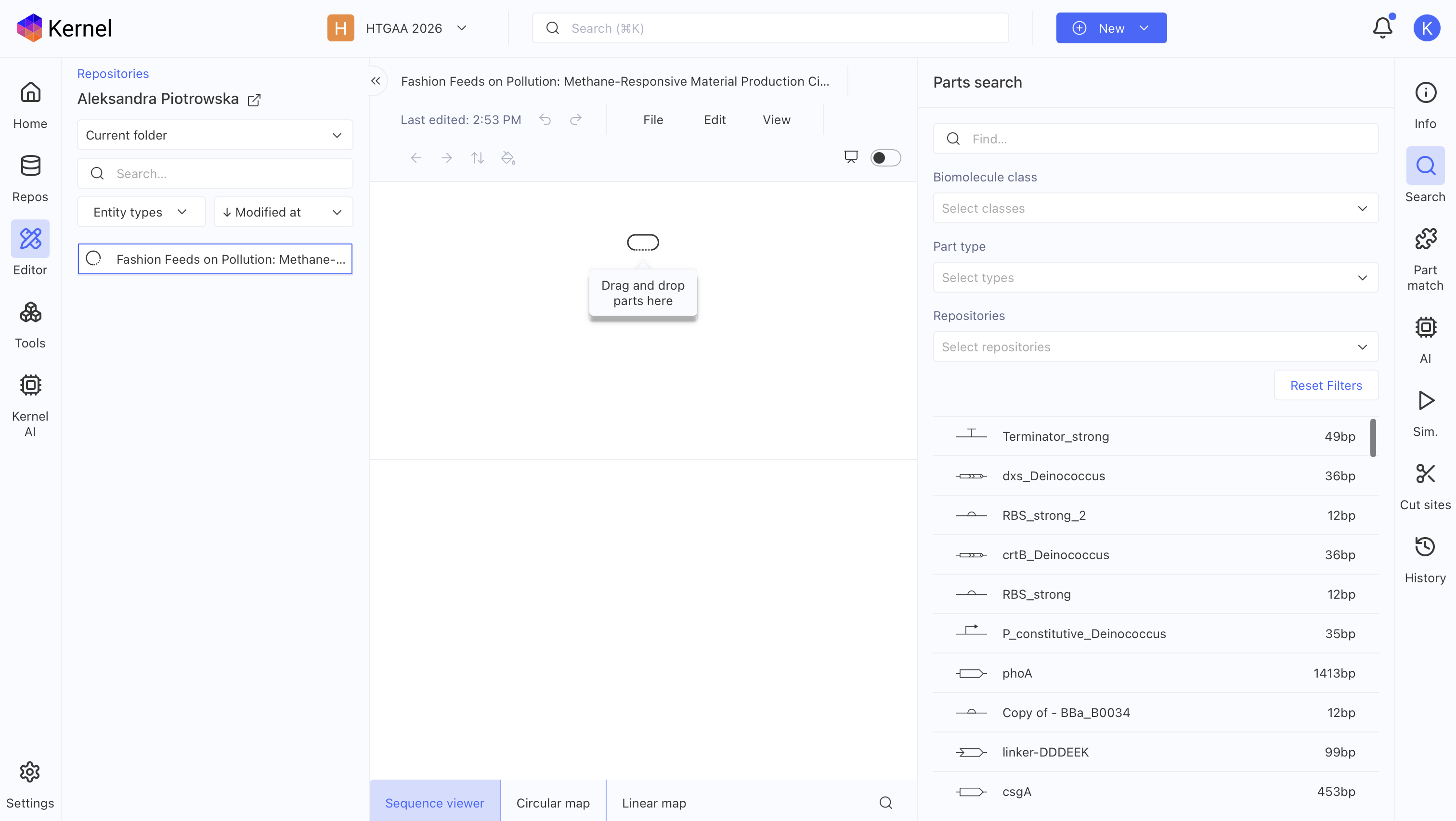
I started by creating a new blank construct.
I initially called it:
Fashion Feeds on Pollution: Methane-Responsive Material Production Circuit
Figure 2. Creating my first blank construct in Kernel.
Although the name connected the exercise to my larger project, I quickly realised that this first circuit should remain much simpler.
Its purpose was to teach me the basic logic of DNA design before attempting a project-specific hypothesis.
Designing the Practice Circuit
For my first circuit I used the basic structure:
Promoter → RBS → Reporter CDS → Terminator
A reporter gene gives the circuit an output that can be measured or observed.
The first question was therefore simply:
Does the circuit behave in the way I expect?
before asking the much more complicated question:
Can biological production eventually be controlled?
1. Choosing a Promoter
The promoter is the first control point in the circuit.
It determines where transcription begins and can influence when a downstream gene is expressed.
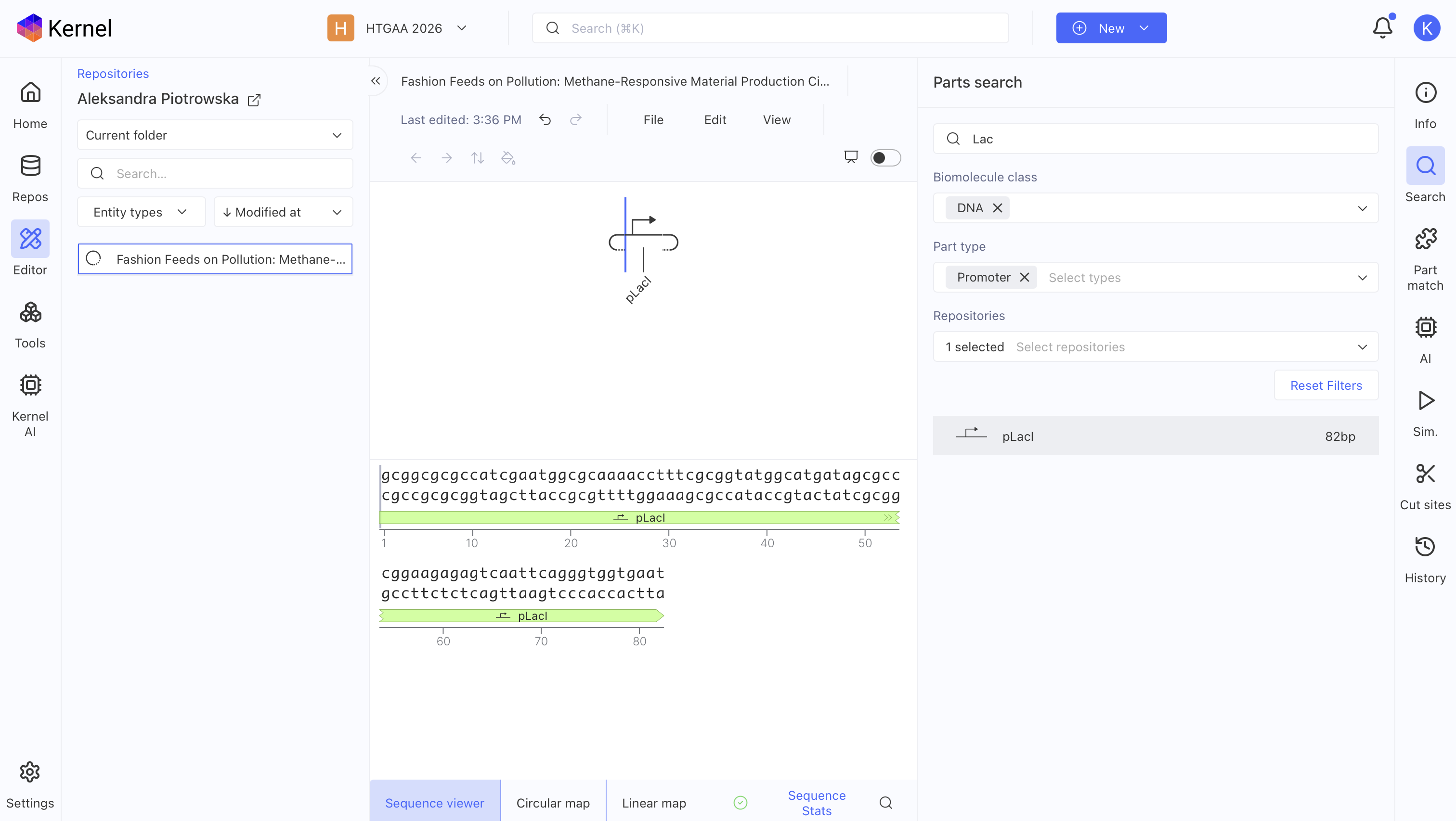
Inside Kernel I searched for a characterised bacterial promoter.
Figure 3. Selecting the characterised pLacI promoter in Kernel.
Selected promoter
pLacI
I chose a regulated promoter because I was already interested in the idea that biological production might eventually be controlled rather than permanently active.
2. Choosing an RBS
Next, I added a Ribosome Binding Site.
The RBS helps the ribosome recognise the mRNA and influences how efficiently the coding sequence is translated into protein.
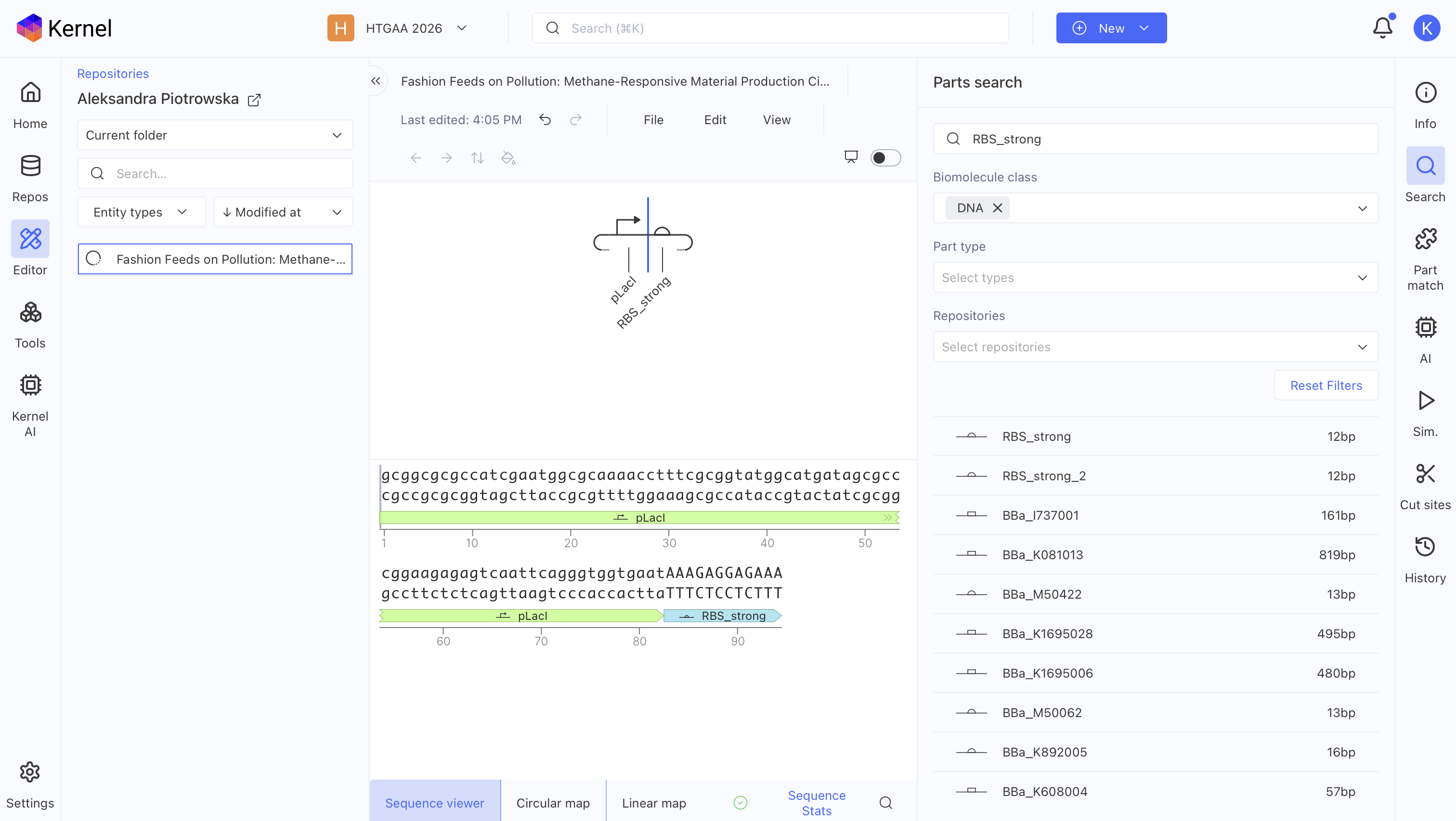
Figure 4. Adding RBS_strong after the promoter.
Selected RBS
RBS_strong
For this first exercise, a strong RBS gave me a simple translation signal with which to observe gene expression.
3. Adding the Reporter
The coding sequence contains the DNA instructions for the protein produced by the circuit.
For this first experiment I used a reporter protein rather than attempting to model material production.
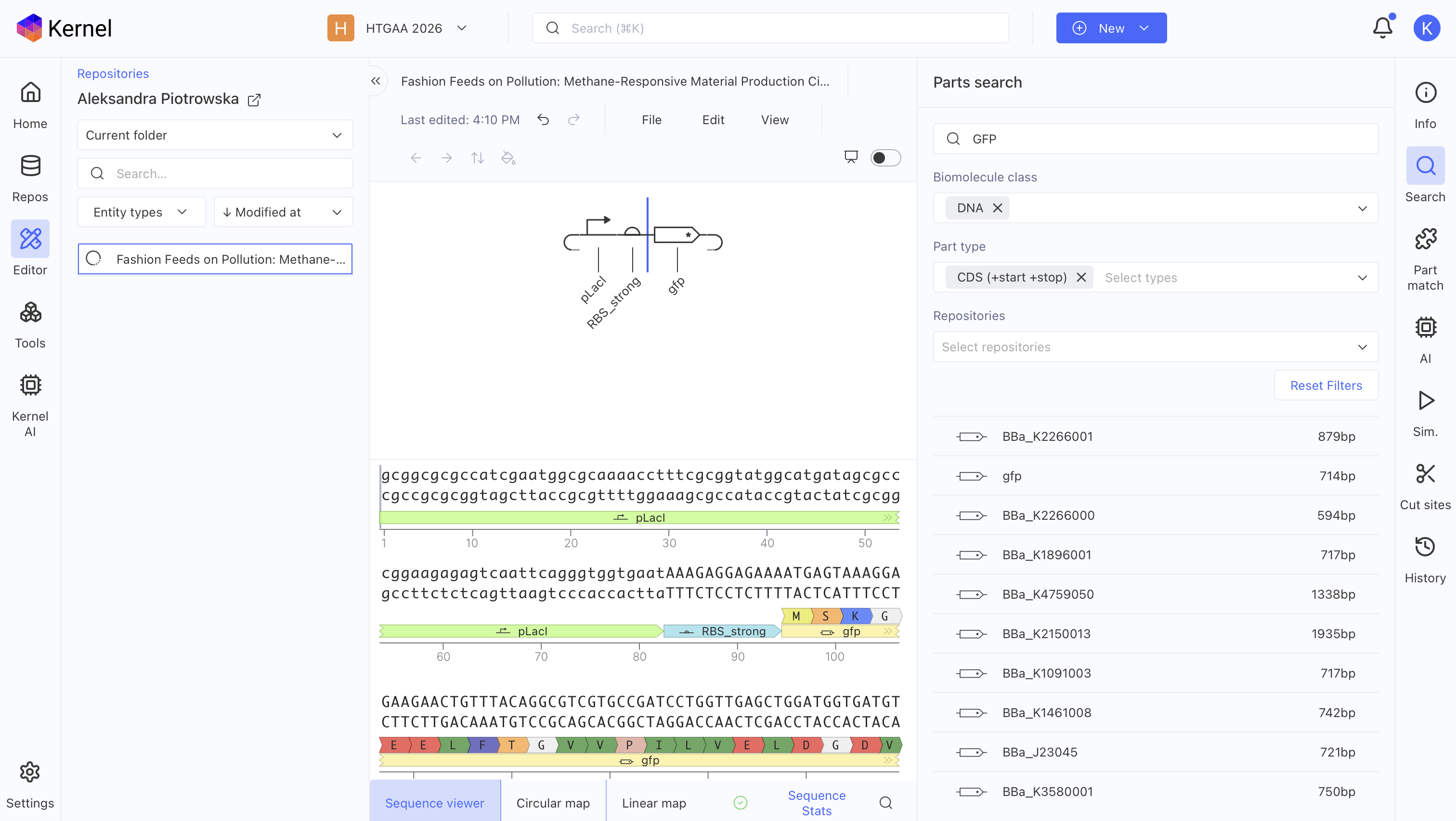
Figure 5. Adding GFP after the promoter and RBS.
Selected reporter
GFP
GFP gives the circuit a simple observable output and allowed me to understand gene expression without immediately introducing the biological complexity of my final project.
4. Adding the Terminator
Finally, I added a transcriptional terminator.
Figure 6. Adding Terminator_strong to complete the transcriptional unit.
Selected terminator
Terminator_strong
The terminator marks where transcription should stop and reduces unwanted transcription beyond the intended unit.
Completed Practice Circuit
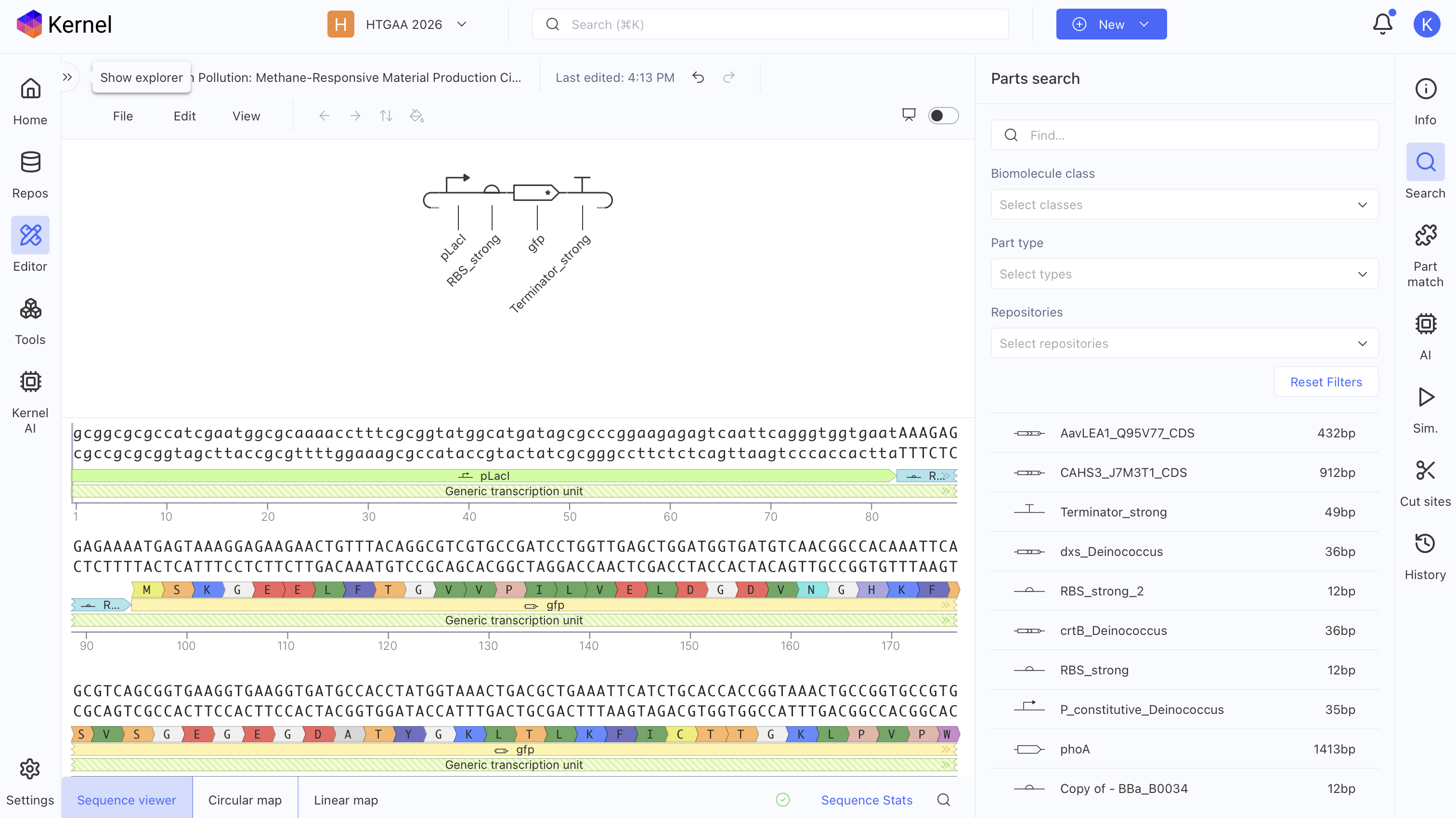
The completed practice circuit was:
pLacI → RBS_strong → GFP → Terminator_strong
Figure 7. Completed GFP practice circuit in Kernel.
This was my first complete transcriptional unit.
Simulating the Practice Circuit
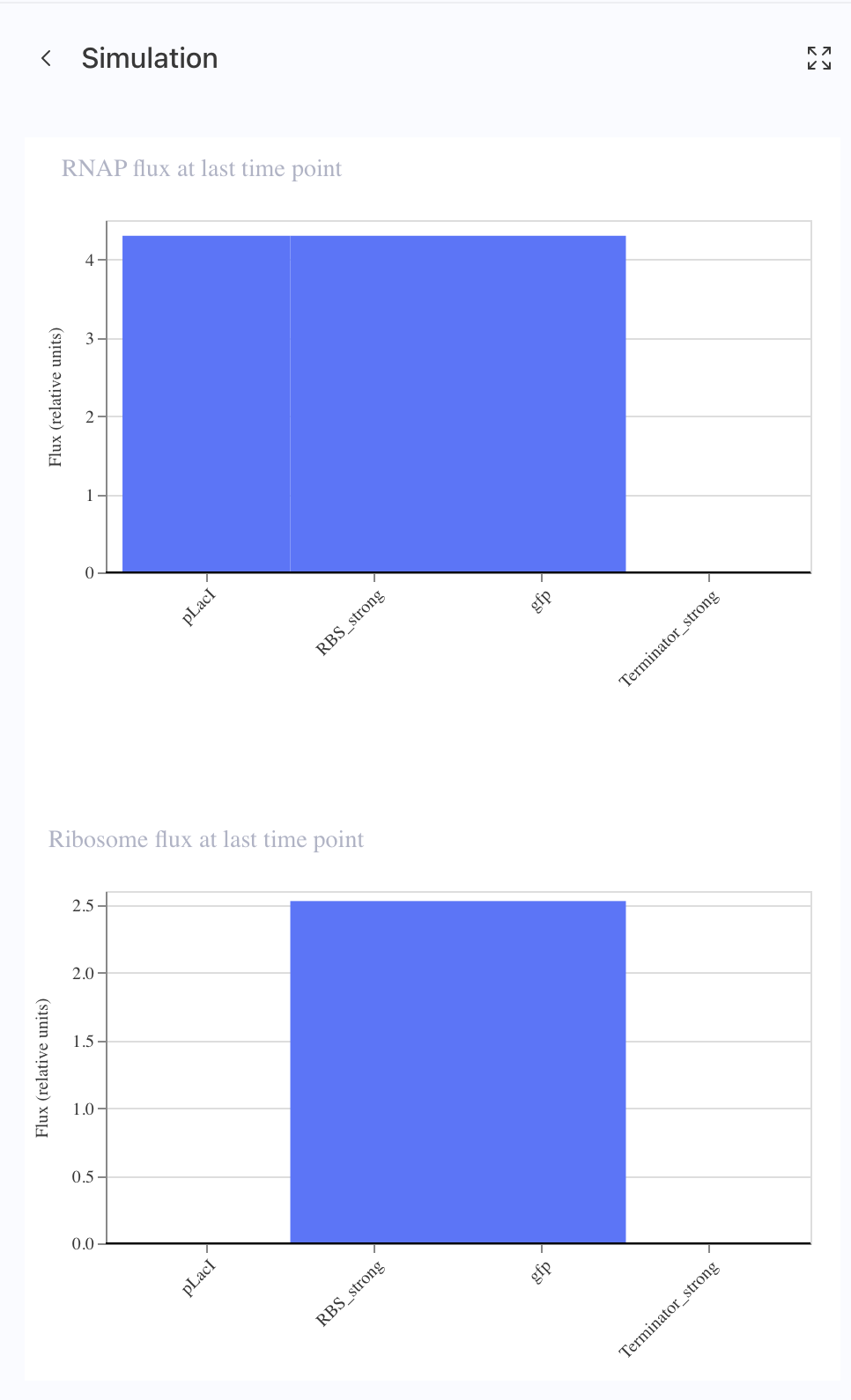
I then used Kernel’s bacterial simulator to explore the predicted behaviour of the construct.
Figure 8. Simulation of the completed practice circuit.
The simulation helped me connect the DNA architecture with different stages of gene expression:
DNA → RNA → PROTEIN
Kernel can predict outputs including RNA polymerase activity, ribosome activity, RNA concentration and protein concentration.
At this point, the simulation was primarily a learning exercise.
I was not yet modelling methane, EPS production or a biomaterial.
Part 2 — From Practice Circuit to Project Circuit
Once I understood the basic structure:
Promoter → RBS → CDS → Terminator
I wanted to move closer to the biological question behind Fashion Feeds on Pollution.
My project asks:
What if methane pollution could become the feedstock for a new flexible biological material for fashion?
Two existing research directions became particularly important to this question.
AirCarbon — Methane Can Become Material
Newlight Technologies’ AirCarbon demonstrates that microorganisms can transform greenhouse-gas carbon into PHB, a biologically produced polymer.
AirCarbon can subsequently be melted and processed into forms including fibre, sheet and solid parts (Newlight Technologies, n.d.).
For me, AirCarbon establishes an important manufacturing precedent:
GREENHOUSE GAS → MICROORGANISM → POLYMER → MATERIAL
However, I do not want simply to reproduce AirCarbon.
Instead, I began asking:
What if the methane-to-material logic demonstrated by AirCarbon could be combined with a different biological production pathway and designed specifically towards a softer, more flexible fashion material?
Aranda et al. (2026) showed that this methanotroph can produce protein-rich extracellular polymeric substances (EPS) directly from methane.
This is interesting to me because the material is secreted extracellularly rather than following the same intracellular PHB route used by AirCarbon.
The Girona research does not demonstrate a flexible fashion material.
Instead, it creates another biological starting point.
AIRCARBON
greenhouse gas → intracellular PHB → processing → material
ICRA / GIRONA
methane → methanotroph → extracellular polymer
MY QUESTION
methane → controlled extracellular polymer production → material development → flexible fashion application
AirCarbon therefore acts as a precedent for methane / greenhouse-gas-to-material manufacturing, while the Girona research suggests another biological route based on secreted extracellular material.
My project asks what happens when those two lines of thinking are brought together for fashion.
A Geographical Research System
The project is also beginning to connect three places that are relevant to my own trajectory:
SILESIA
the future feedstock ambition — methane associated with the post-coal landscape I come from
↓
CATALONIA
where I am currently based and where emerging methane-to-EPS research is being produced
↓
LONDON
where a future material-development phase could connect the biology with fashion, fabrication and material research
This makes the project not only a biological question, but also a question of how different research and industrial ecosystems might connect.
What Should the Genetic Circuit Do?
I am not trying to design a gene that literally means:
“make a flexible material.”
Flexibility would eventually depend on the composition of the biological material and what happens during recovery, formulation and processing.
The genetic circuit sits earlier in the system.
The question becomes:
What if the microorganism could first grow using methane and then be switched into a material-production state?
Conceptually:
GROWTH
Methane → microbial growth
and later:
PRODUCTION
Control signal → genetic regulation → material-production pathway
This gave me the starting architecture:
Controllable promoter → RBS → candidate production regulator → terminator
The exact genetic control of the methane-derived EPS reported by Aranda et al. (2026) remains poorly characterised.
I therefore treat the circuit as a research hypothesis, rather than pretending that the final biological pathway is already known.
Creating the Project Circuit in Kernel
I created a second construct:
Fashion Feeds on Pollution: Project Circuit
Step 1 — Choosing a Controllable Promoter
For the intended biological system, I am interested in an inducible promoter because the long-term ambition is to explore switching between growth and production states.
Goswami et al. (2024) demonstrated both inducible and constitutive gene-expression tools in Methylotuvimicrobium alcaliphilum, showing that controllable genetic expression in this methanotroph is experimentally possible.
The methanotroph-specific inducible promoter I was interested in was not available as a ready-made part in Kernel.
I therefore used a characterised bacterial promoter as a proxy for the regulatory logic.
I selected:
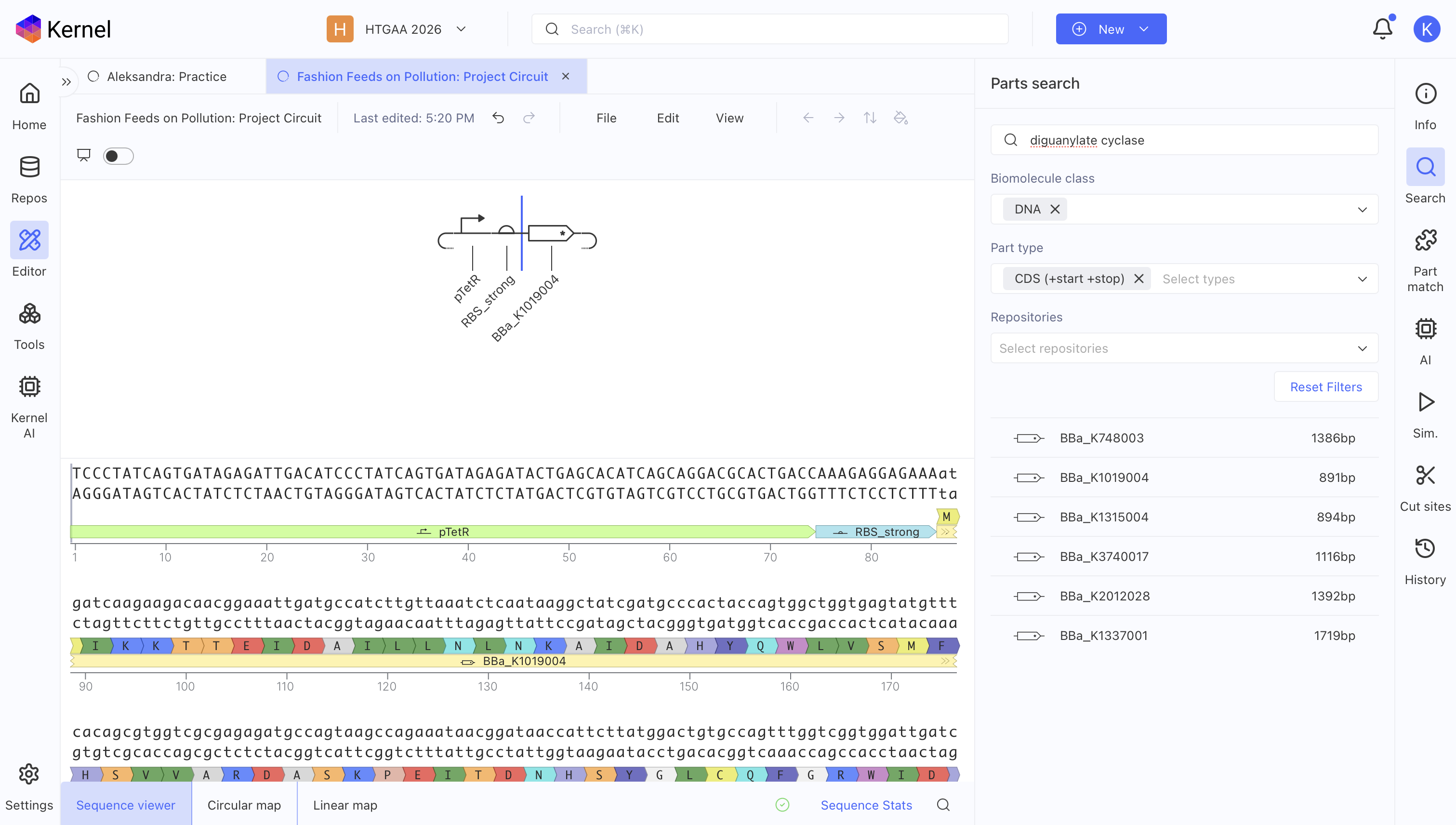
pTetR
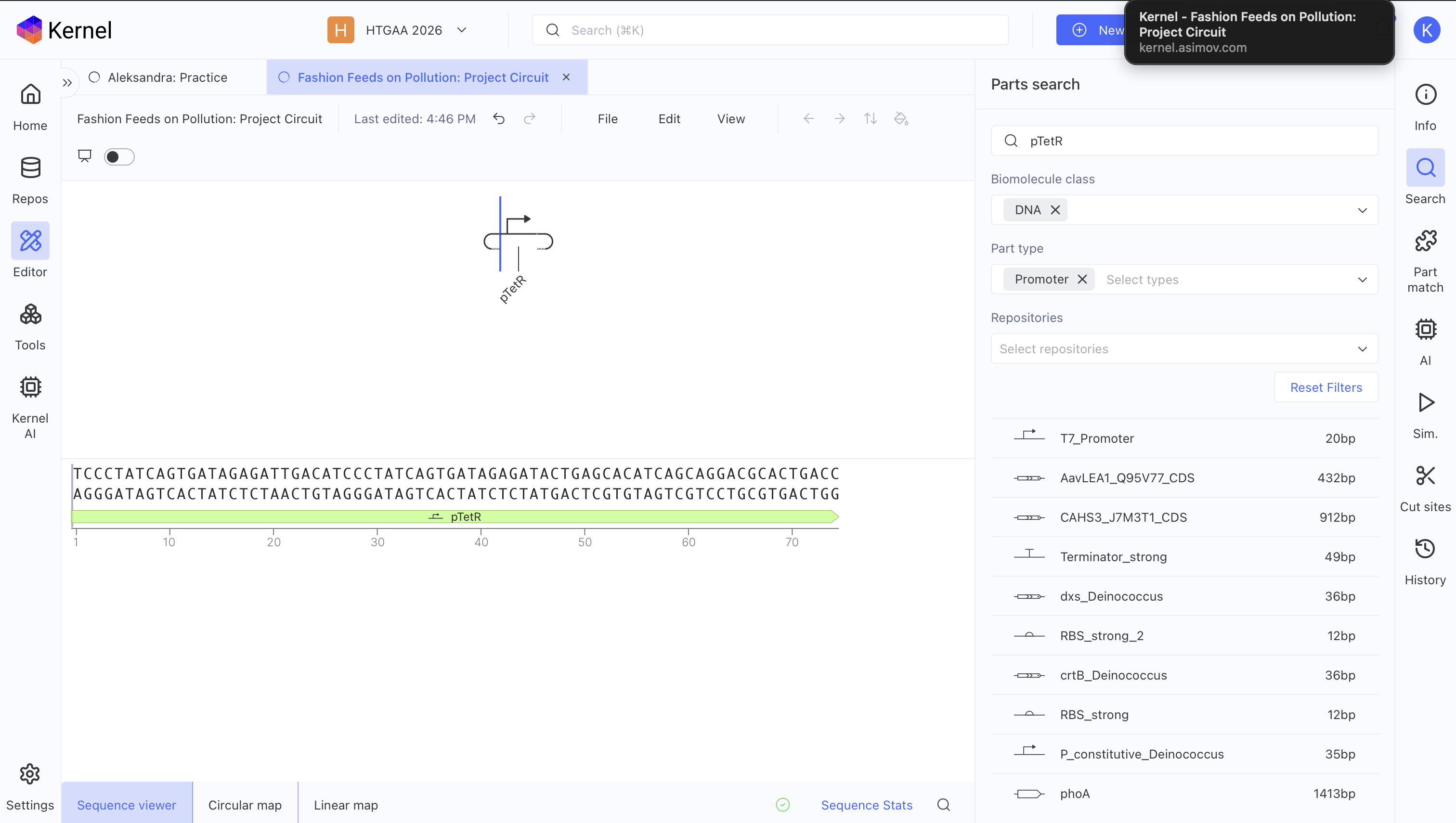
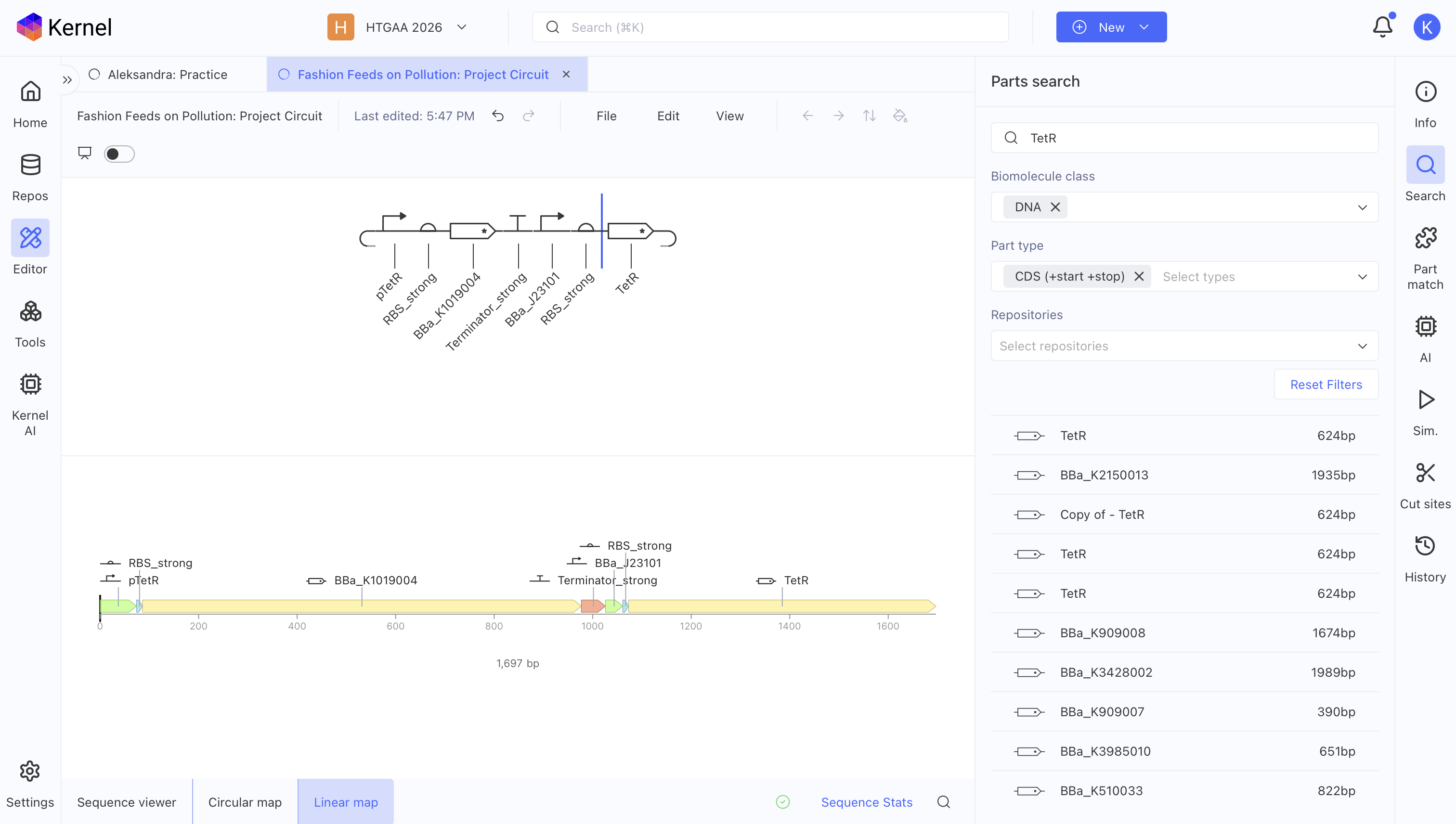
Figure 9. Searching for pTetR in Kernel.
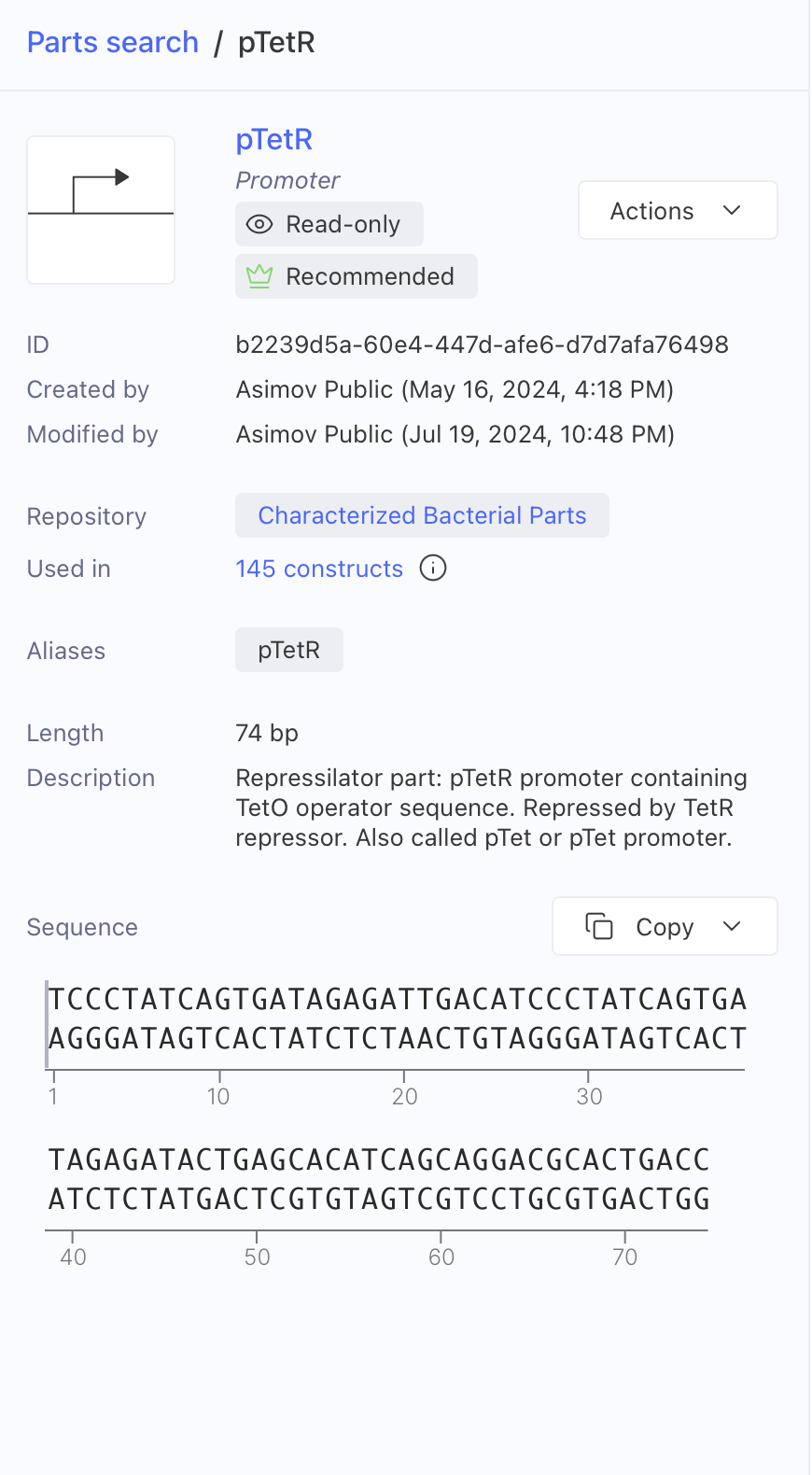
Kernel identifies pTetR as a promoter containing TetO operator sequences and regulated by the TetR repressor.
Figure 10. Information panel for the characterised pTetR promoter.
This does not mean pTetR would necessarily be the final promoter used in M. alcaliphilum.
Its purpose here is to let me explore controllable expression architecture.
Step 2 — Adding the RBS
I added:
RBS_strong
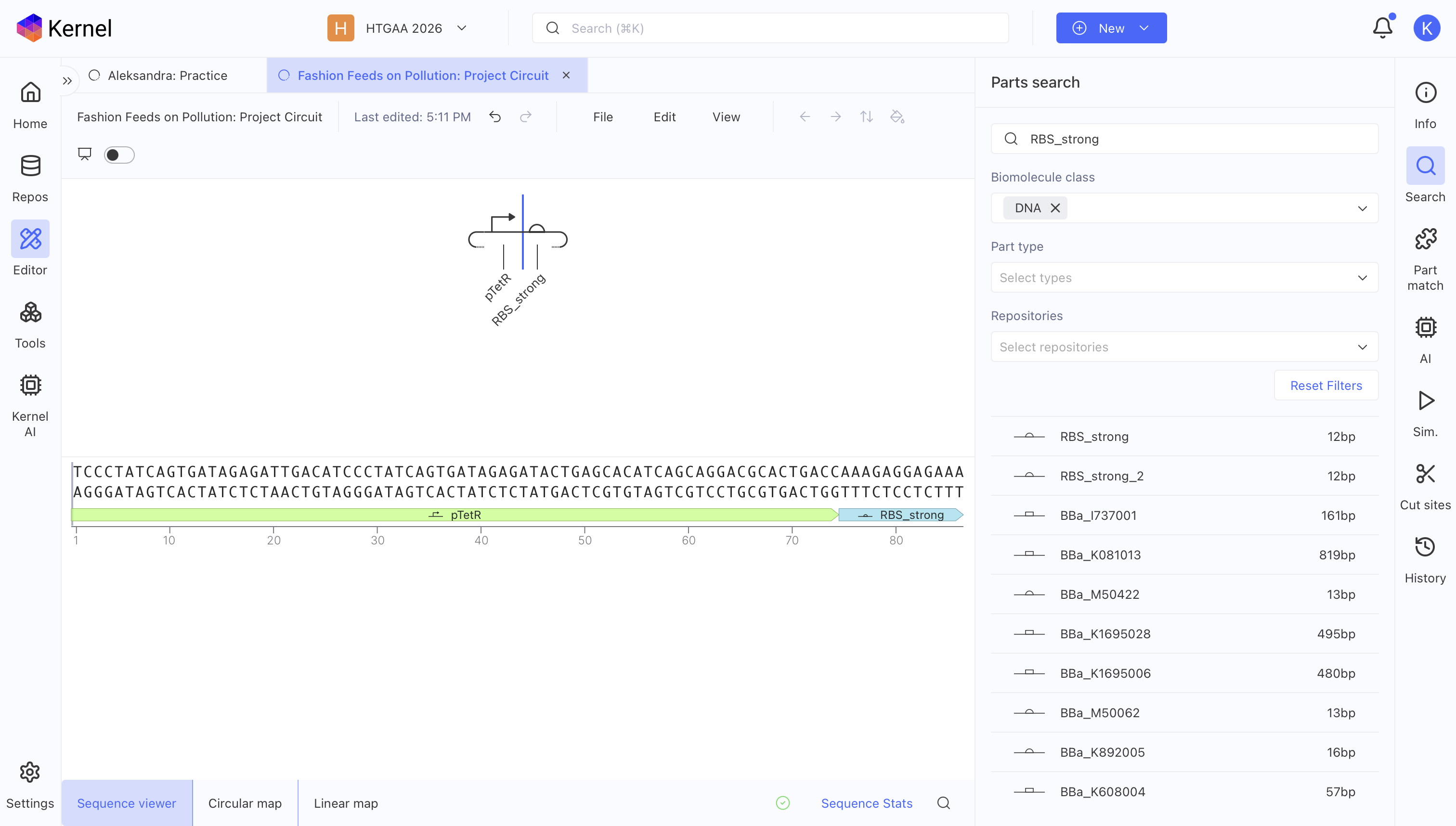
Figure 11. Adding RBS_strong after pTetR.
The circuit now began:
pTetR → RBS_strong → …
Step 3 — Choosing a Candidate Material-Production Regulator
This was the point where the circuit became more project-specific.
Rather than adding another generic reporter, I wanted to explore a gene connected to regulation of extracellular material production.
I selected:
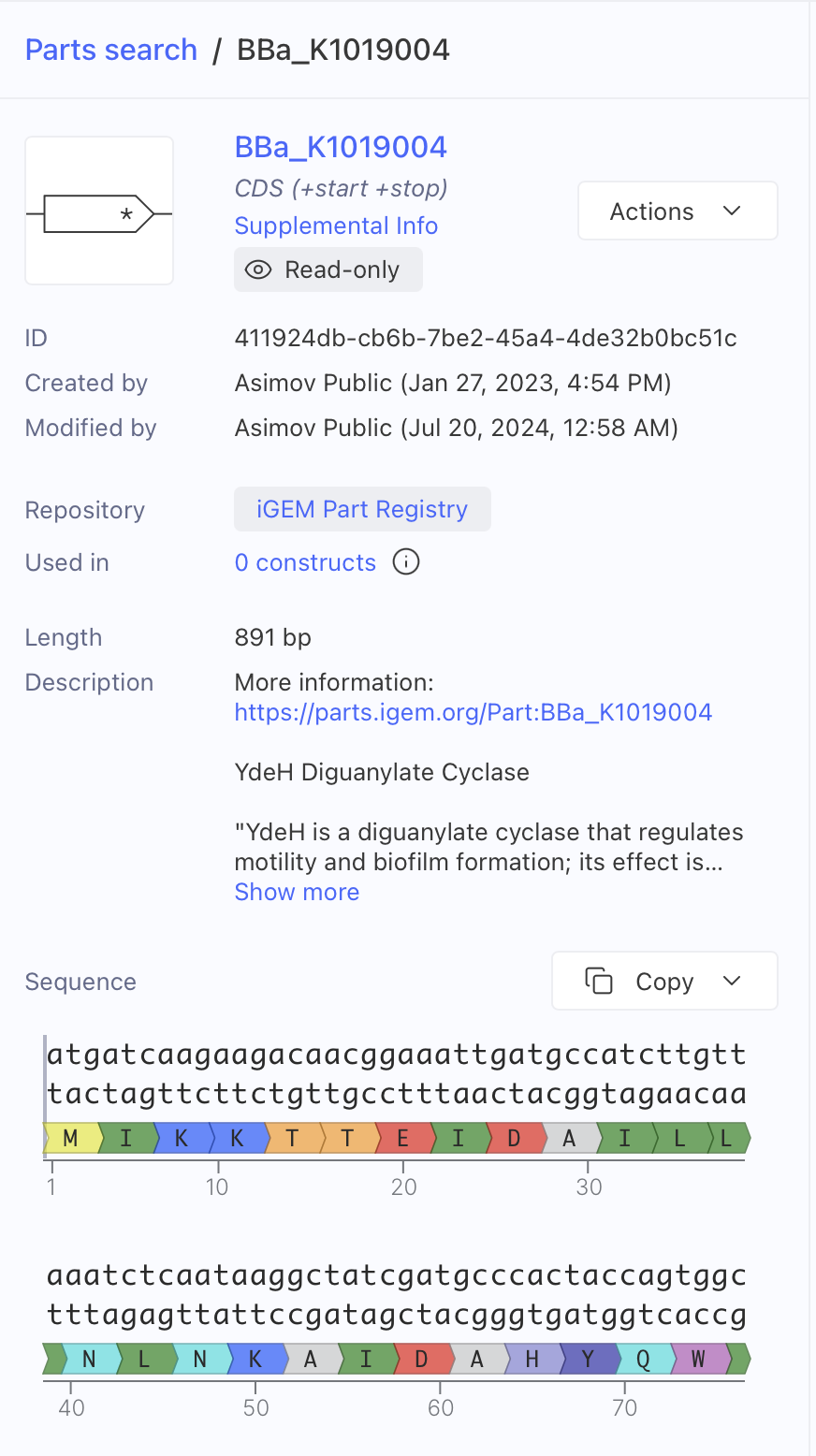
BBa_K1019004 — YdeH Diguanylate Cyclase
Figure 12. Kernel information panel for the YdeH diguanylate cyclase coding sequence.
YdeH is a diguanylate cyclase from E. coli that produces the bacterial signalling molecule c-di-GMP (Zähringer, Massa & Schirmer, 2011).
c-di-GMP is involved in the regulation of several bacterial extracellular polysaccharide systems, and YdeH has been linked to c-di-GMP-dependent extracellular polysaccharide regulation in E. coli (Poulin & Kuperman, 2021).
Figure 13. Adding BBa_K1019004 / YdeH to the project circuit.
This distinction is important:
YdeH is not a proven regulator of the protein-rich methane-derived EPS produced by M. alcaliphilum.
I am using it as a proxy for a possible regulatory intervention.
The hypothesis becomes:
What if increasing a biological signal associated with extracellular-matrix production could increase or alter methane-derived EPS production?
Step 4 — Completing the First Production Unit
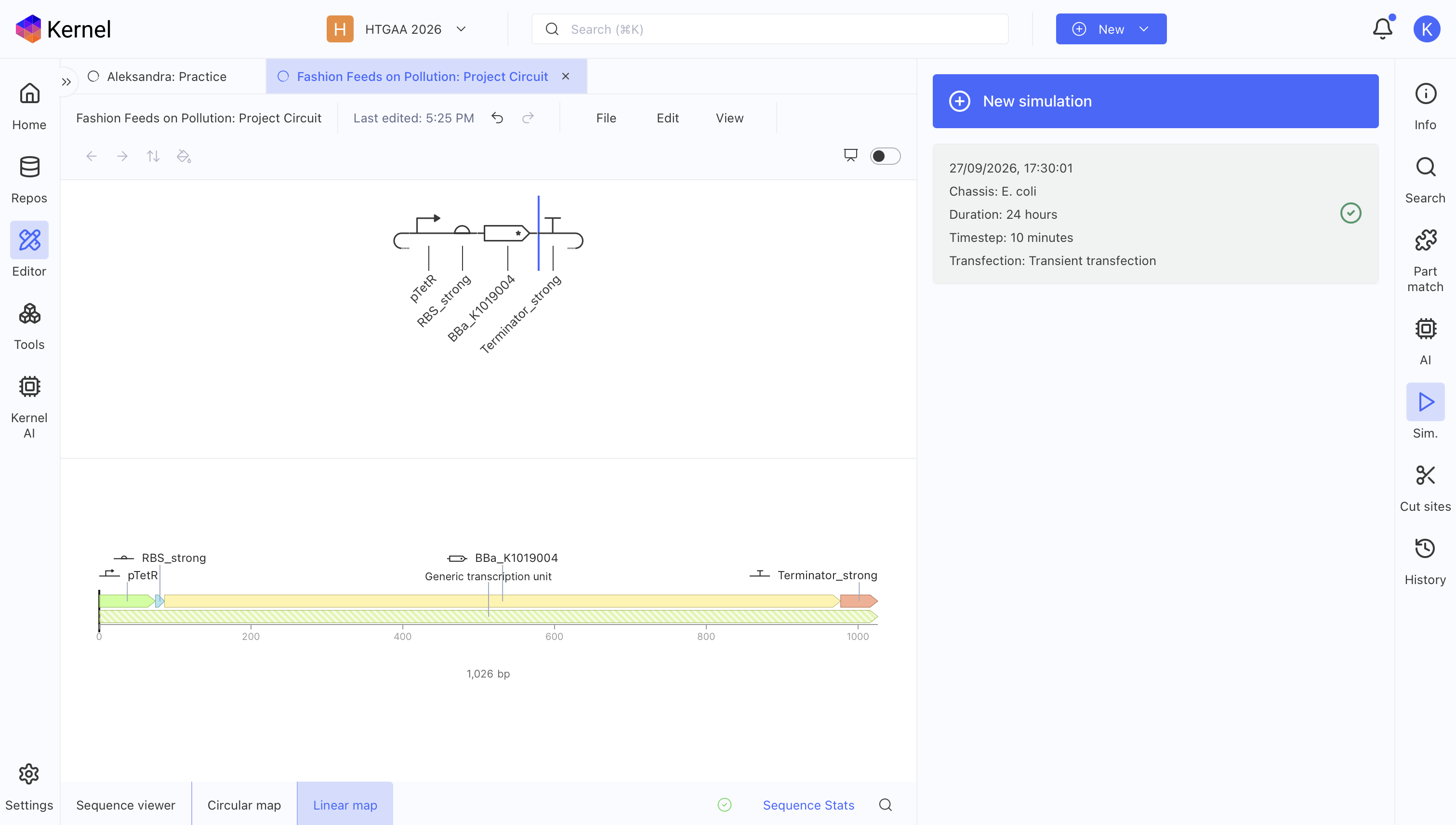
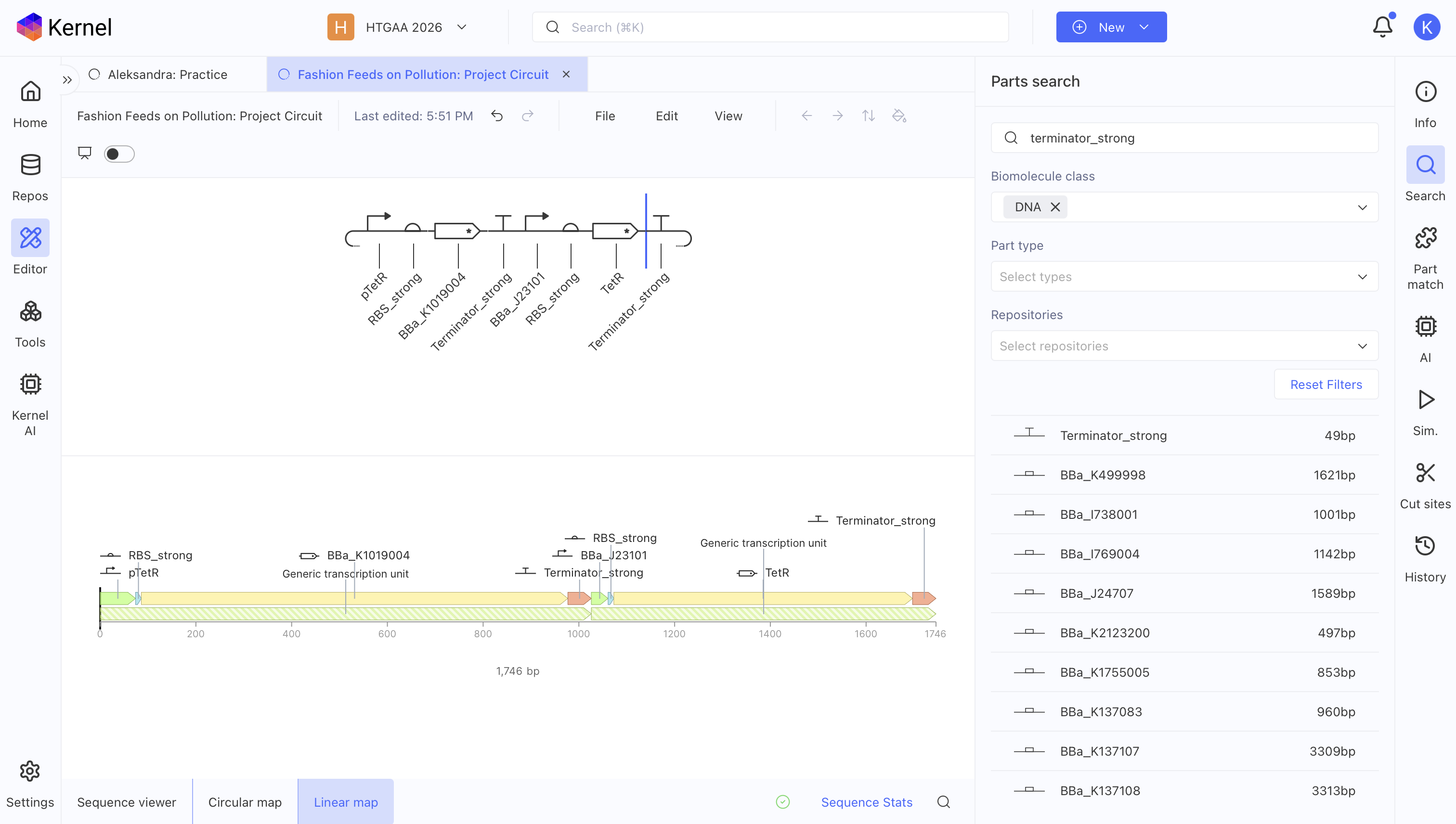
I added:
Terminator_strong
Figure 14. Completed first project-specific production unit.
The first version of the construct was 1,026 bp long:
pTetR → RBS_strong → YdeH → Terminator_strong
The roles of the parts were:
pTetR ↓ controllable transcription
RBS_strong ↓ translation
YdeH ↓ candidate c-di-GMP regulatory intervention
Terminator_strong ↓ stop transcription
This was a testable hypothesis circuit, not a validated methane-to-EPS pathway.
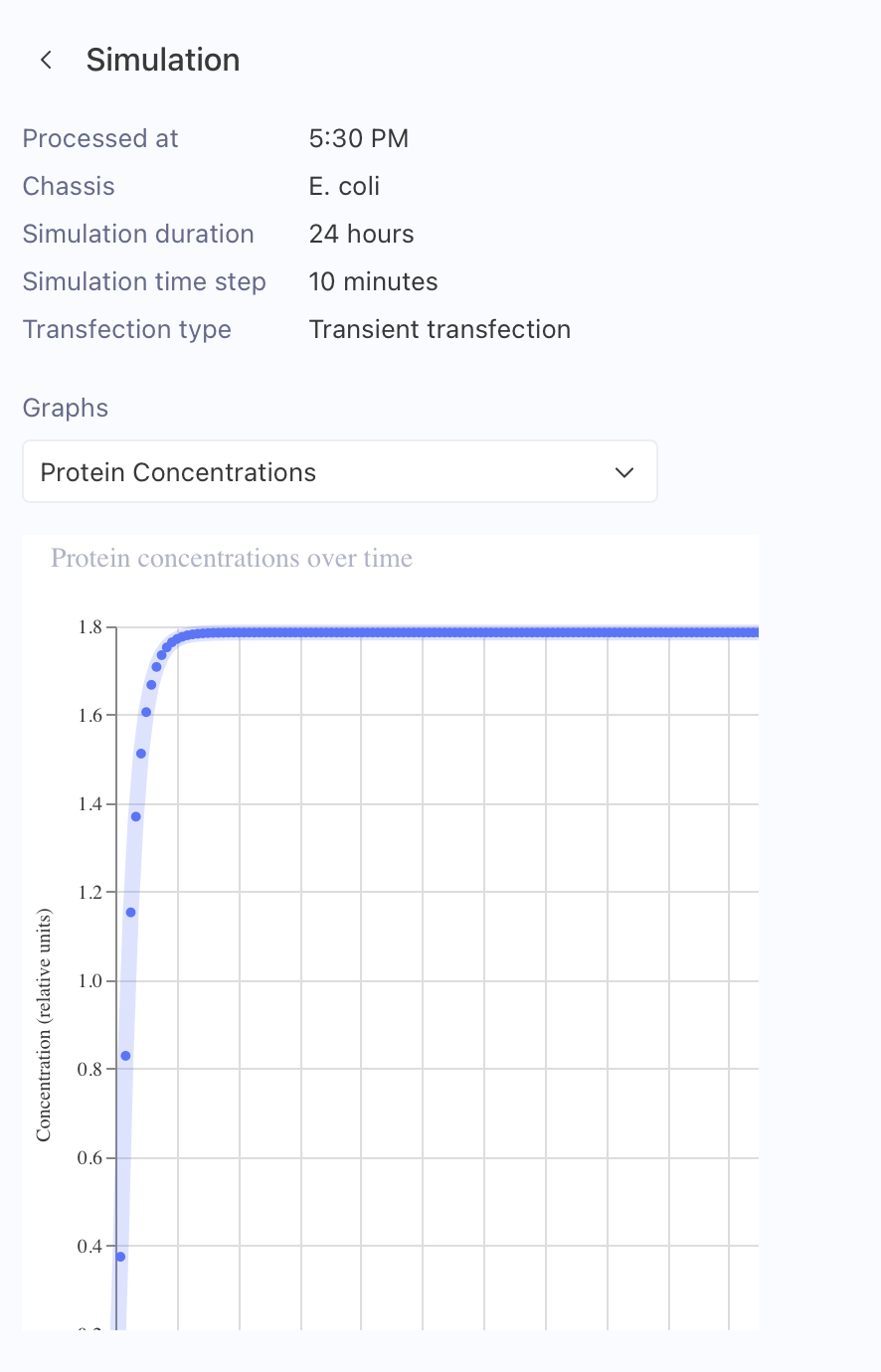
Simulating the First Project Circuit
I simulated the construct using:
Chassis:E. coli
Duration: 24 hours
Time step: 10 minutes
Transfection type: Transient transfection
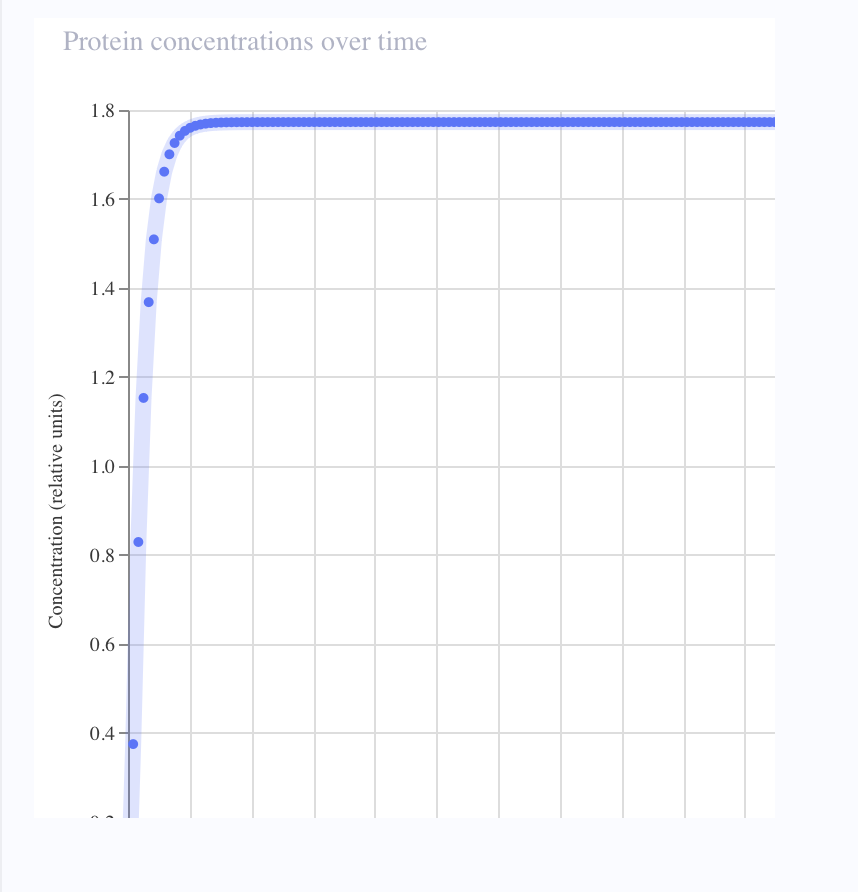
Figure 15. Predicted YdeH protein concentration for the first project circuit.
Kernel predicted that YdeH concentration rapidly increased and then stabilised at approximately:
1.8 relative units
This means Kernel predicted expression of the YdeH protein.
It does not mean that the simulation produced EPS or a biomaterial.
The software was modelling:
GENE EXPRESSION
not:
METHANE → EPS → MATERIAL
There was also an important problem with this first design:
pTetR was present, but TetR was not.
The circuit therefore did not yet contain the repressor needed to turn pTetR into a complete regulatory system.
That created the next design question:
How can I turn the production unit into a controllable genetic switch?
Step 5 — Building the Control Unit
To regulate pTetR, I needed a second transcriptional unit capable of producing the TetR repressor.
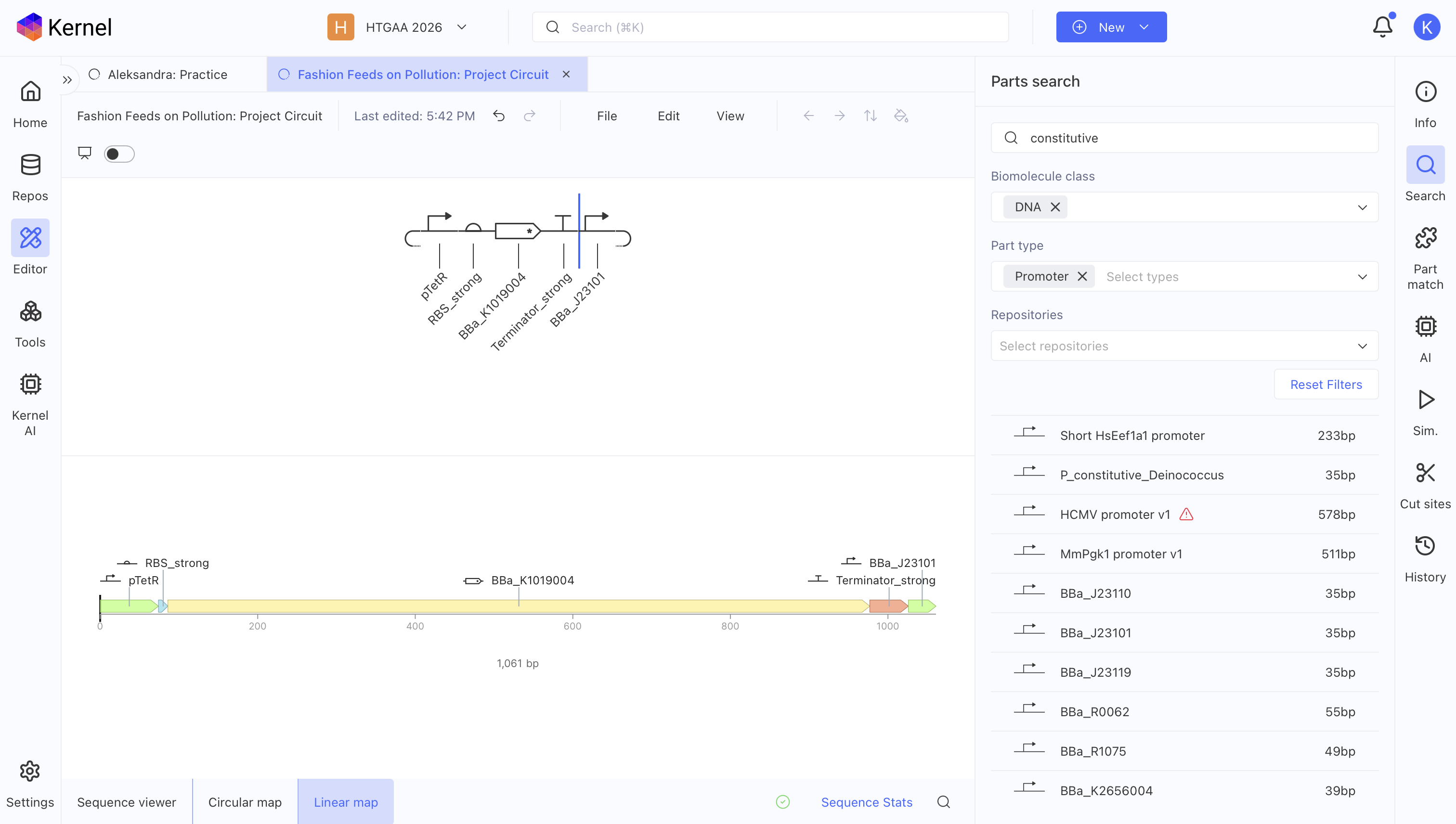
I selected the constitutive promoter:
BBa_J23101
Figure 16. BBa_J23101 selected as the constitutive promoter for the TetR control unit.
A constitutive promoter continuously drives gene expression.
Its role in my circuit was therefore to produce TetR continuously.
Step 6 — Adding an RBS to the Control Unit
I added a second:
RBS_strong
Figure 17. Adding RBS_strong after BBa_J23101.
The second transcriptional unit now began:
BBa_J23101 → RBS_strong → …
Step 7 — Adding the TetR Repressor
Next I added:
TetR
Figure 18. Adding the TetR coding sequence to the control unit.
TetR is the repressor that interacts with TetO operator sequences inside pTetR.
The regulatory relationship becomes:
TetR ┤ pTetR
The circuit now contains two different functions:
PRODUCTION UNIT
pTetR → RBS_strong → YdeH → Terminator
CONTROL UNIT
BBa_J23101 → RBS_strong → TetR → …
Step 8 — Completing the Genetic Switch
Finally, I added another:
Terminator_strong
after TetR.
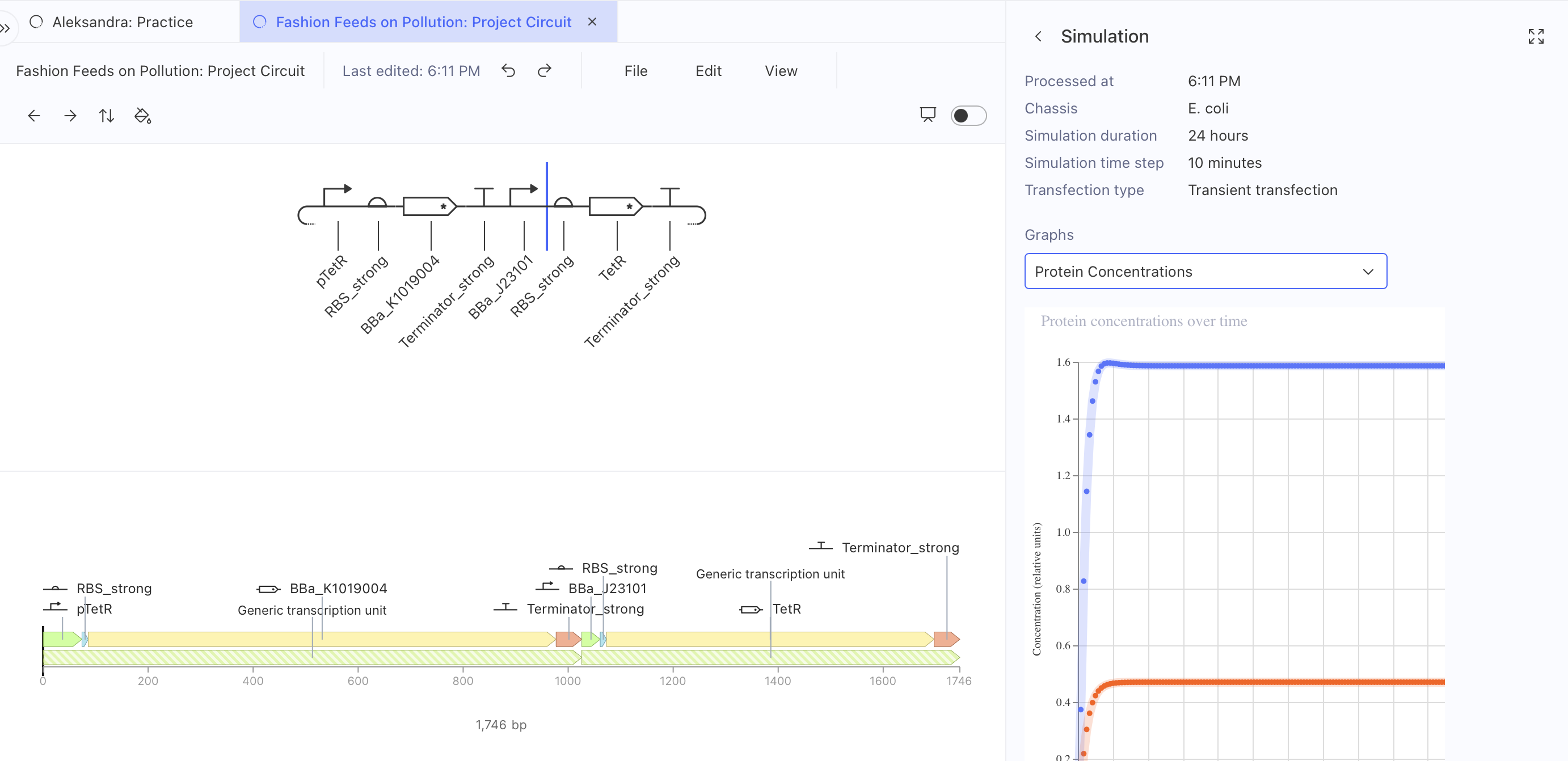
Figure 19. Completed two-unit Fashion Feeds on Pollution genetic circuit.
TetR can repress pTetR, which controls YdeH expression.
In a future biological system, an induction signal could potentially be used to relieve repression and activate the production state.
For my project, this represents the broader question:
What if methane-consuming cells could first grow and then receive a signal that switches them towards a material-production state?
Testing the Regulatory Circuit
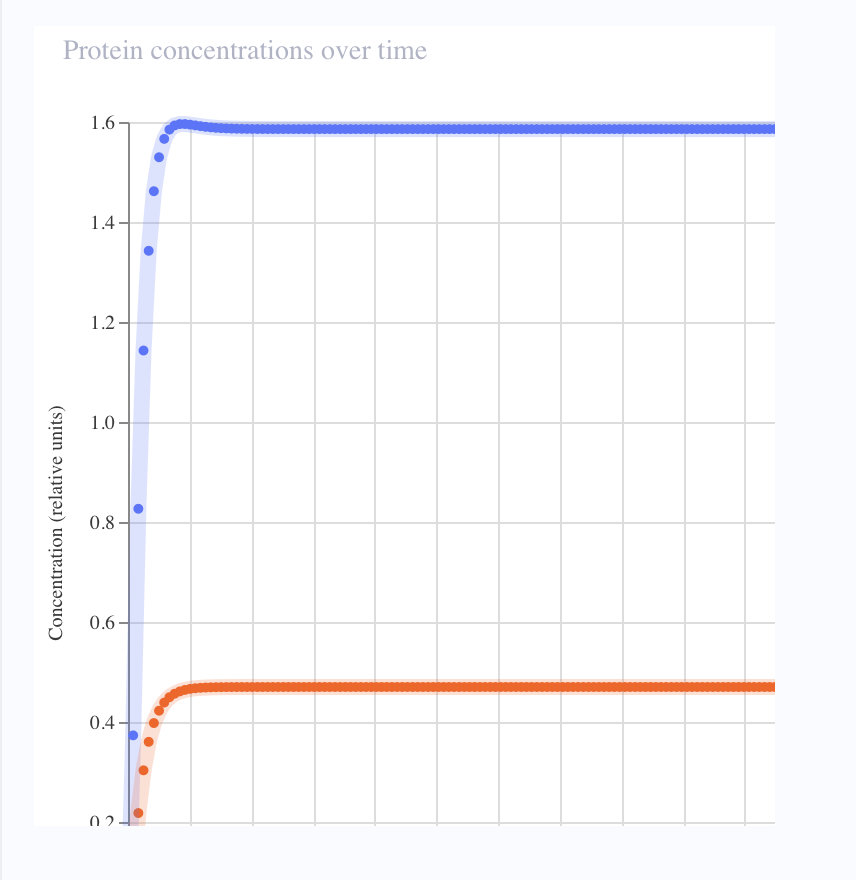
I simulated the complete two-unit circuit using the same conditions as before.
Figure 20. Predicted protein concentrations for the completed regulatory circuit.
The graph produced two protein outputs:
YdeH — blue
approximately 1.6 relative units
TetR — red
approximately 0.47 relative units
Before introducing the TetR control unit, YdeH had reached approximately:
1.8 relative units
With TetR present, YdeH reached approximately:
1.6 relative units
Within the Kernel model, introducing the control unit was therefore associated with a modest reduction in predicted YdeH expression.
Without TetR
pTetR → YdeH
→ YdeH ≈ 1.8
With TetR
TetR ┤ pTetR → YdeH
→ YdeH ≈ 1.6
This was not a complete OFF state.
However, it gave me a computational way to start testing the regulatory logic of the circuit.
Redesigning the Control Unit
I then tested whether changing one component of the control unit would produce a clearer difference between the two states.
First, I replaced the TetR coding sequence with the matching TetR part from Kernel’s Characterized Bacterial Parts collection.
The predicted concentrations remained almost unchanged:
YdeH ≈ 1.6
TetR ≈ 0.47
Changing the TetR sequence itself therefore did not substantially alter the simulation.
I moved to another design variable:
the promoter controlling TetR expression
Redesign — Changing the TetR Promoter
The original control unit used:
BBa_J23101 → RBS_strong → TetR → Terminator
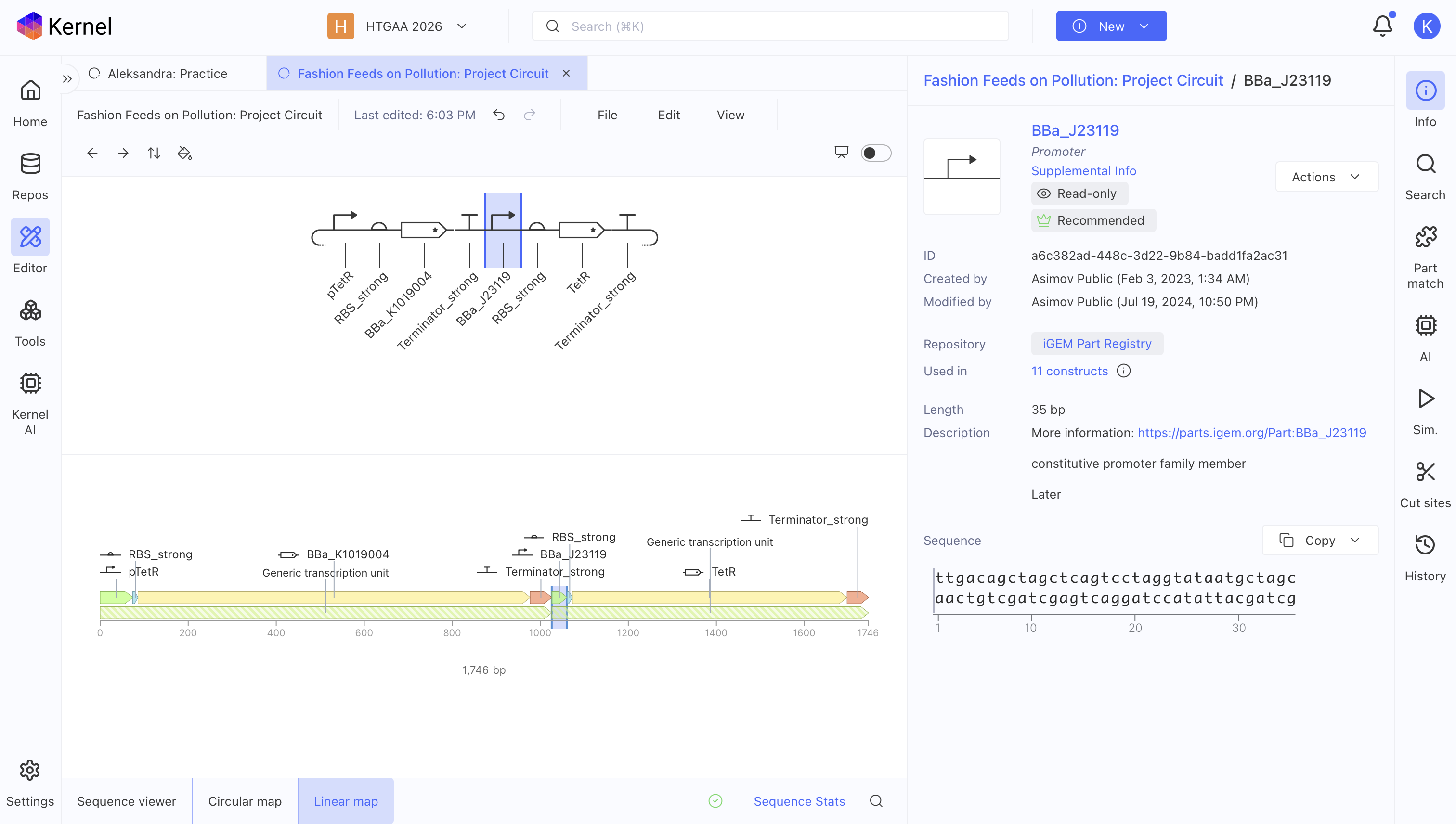
I replaced BBa_J23101 with another constitutive promoter from the same Anderson promoter family:
BBa_J23119
Figure 21. BBa_J23119 selected as an alternative promoter for the control unit.
Rather than assuming that J23119 would improve the circuit, I treated the replacement as an experiment.
The redesigned unit became:
BBa_J23119 → RBS_strong → TetR → Terminator
The question was:
Will changing the promoter driving TetR alter repression of the YdeH production unit?
Testing the Redesign
I repeated the simulation under the same conditions.
Figure 22. Protein-concentration simulation after replacing BBa_J23101 with BBa_J23119.
The predicted YdeH concentration reached approximately:
1.78 relative units
This was higher than the approximately 1.6 relative units predicted with J23101 and very close to the approximately 1.8 relative units observed before adding the TetR control system.
The redesign therefore did not improve repression in the Kernel model.
My three iterations produced:
Design
Predicted YdeH
No TetR control unit
~1.8
J23101 → TetR
~1.6
J23119 → TetR
~1.78
For this model, the J23101 architecture produced the clearest reduction in predicted YdeH expression.
I therefore returned to J23101 for the final construct.
This was useful because it showed me that DNA design is not simply about choosing a part that sounds stronger.
The behaviour of the whole system has to be tested.
Figure 23. Completed final Fashion Feeds on Pollution circuitt in Kernel.
The complete construct is:
1,746 bp
Figure 24. Final Fashion Feeds on Pollution circuit and protein-concentration simulation in Kernel.
The final simulation predicted:
YdeH ≈ 1.6 relative units
TetR ≈ 0.47 relative units
The production of TetR was associated with a modest reduction in predicted YdeH expression compared with the first circuit without the TetR control unit.
This is not a complete ON/OFF switch.
It is a first computational exploration of how a regulatory architecture might influence expression of a candidate material-production regulator.
Design → Test → Redesign
The most useful part of this exercise was not creating one supposedly “correct” circuit.
It was moving through iterations.
1 — LEARN
pLacI → RBS → GFP → Terminator
I learned the basic vocabulary of genetic circuits.
2 — TRANSLATE
pTetR → RBS → YdeH → Terminator
I connected the exercise to my material-production hypothesis.
3 — ADD CONTROL
BBa_J23101 → RBS → TetR → Terminator
I added a second transcriptional unit capable of regulating the first.
4 — TEST
The simulation changed predicted YdeH expression from approximately 1.8 → 1.6.
5 — REDESIGN
I changed J23101 to J23119.
Predicted YdeH increased again to approximately 1.78.
6 — LEARN
I returned to the J23101 architecture.
My process became:
DESIGN → TEST → LEARN → REDESIGN → COMPARE
This is very close to the way I already understand innovation strategy: a proposed solution is not valuable because it sounds convincing, but because assumptions can be made visible and tested.
What Does This Mean for Fashion Feeds on Pollution?
The circuit does not prove that I can genetically engineer a flexible methane-derived fashion material.
Instead, it represents an early biological hypothesis behind the project.
AirCarbon shows that greenhouse-gas carbon can become a biologically produced material.
The Girona research shows that Methylotuvimicrobium alcaliphilum 20Z can produce extracellular polymeric substances directly from methane.
My project asks:
What if that extracellular production pathway could eventually be biologically controlled and developed specifically towards flexible material properties?
The circuit designed this week begins to investigate the control part of that question.
Conceptually:
TetR regulates pTetR
↓
pTetR controls YdeH expression
↓
YdeH represents a hypothesis for modifying c-di-GMP signalling associated with extracellular-matrix production
The next biological question is therefore:
Would manipulating this type of regulatory pathway actually change the amount or composition of methane-derived EPS in M. alcaliphilum?
Only after that question is answered would the project move towards material development:
This circuit is an exploratory computational model, not a validated genetic system for Methylotuvimicrobium alcaliphilum.
Kernel simulated the construct using:
E. coli
rather than my intended methanotroph.
Several components are also being used as proxies for the regulatory architecture I ultimately want to investigate.
Most importantly:
YdeH has not been demonstrated to regulate the specific protein-rich methane-derived EPS reported by the Girona research team.
YdeH is an experimentally supported diguanylate cyclase in E. coli, and c-di-GMP has an established role in regulating multiple bacterial exopolysaccharide systems.
Connecting this mechanism to the EPS of M. alcaliphilum is therefore a hypothesis, not an established fact.
That uncertainty is not something I want to hide.
It defines the next research question.
Future work would require identifying candidate regulatory pathways directly in M. alcaliphilum, potentially using transcriptomic data collected under different methane and EPS-producing conditions.
What I Learned
Before this week, promoters, RBSs, coding sequences, repressors and terminators were mostly new concepts to me.
Using Kernel helped me understand them visually as parts of a system rather than as isolated biological terminology.
The biggest shift was understanding that DNA design is not simply about selecting a gene.
It is about designing relationships between biological instructions.
I started the week asking:
How do I make a cell produce something?
I finished it asking:
How could I control when and how a cell produces a material?
That is where DNA design begins to connect with my existing background in innovation, systems thinking and material design.
References
Aranda, A., Primo-Catalunya, D., Sánchez-Melsió, A., Balcázar, J. L., & Pijuan, M. (2026). Exploring the capabilities of Methylotuvimicrobium alcaliphilum 20Z to produce exopolymeric substances from methane. Enzyme and Microbial Technology, 199, 110893. https://doi.org/10.1016/j.enzmictec.2026.110893
Goswami, S., Singer, S. W., Simmons, B. A., & Awasthi, D. (2024). Optimization of electroporation method and promoter evaluation for type-1 methanotroph, Methylotuvimicrobium alcaliphilum. Frontiers in Bioengineering and Biotechnology, 12, 1412410. https://doi.org/10.3389/fbioe.2024.1412410
HTBAA 2026. (2026). DNA Design / Kernel introduction and genetic circuit design lecture. How to Grow (Almost) Anything, MIT.
Poulin, M. B., & Kuperman, L. L. (2021). Regulation of biofilm exopolysaccharide production by cyclic di-guanosine monophosphate. Frontiers in Microbiology, 12, 730980. https://doi.org/10.3389/fmicb.2021.730980
Zähringer, F., Massa, C., & Schirmer, T. (2011). Efficient enzymatic production of the bacterial second messenger c-di-GMP by the diguanylate cyclase YdeH from E. coli. Applied Biochemistry and Biotechnology, 163(1), 71–79. https://doi.org/10.1007/s12010-010-9017-x
AI Use
I used ChatGPT as a learning, research and documentation assistant while completing this assignment.
As I am approaching synthetic biology from an innovation and design background rather than molecular biology, I used AI primarily to:
explain unfamiliar biological terminology in accessible language;
understand the Kernel workflow;
distinguish between experimentally supported biology and speculative project hypotheses;
identify relevant literature;
connect DNA design to my methane-to-material research question;
structure and edit my documentation.
Examples of prompts included:
“Explain a promoter, RBS, CDS and terminator in simple terms.”
“Help me connect a simple bacterial circuit to my methane-to-material research without inventing biological mechanisms.”
“What does the Kernel protein-concentration simulation actually show, and what can I reasonably conclude from it?”
“Compare my circuit iterations and help me document the Design → Test → Redesign process.”
Scientific claims were checked against the course material and the references listed above. AI-generated suggestions were treated as starting points for research rather than as experimental evidence.
Week 3 HW: Cell-Free Protocols
Overview
This week I worked on designing cell-free protein synthesis reactions for sfGFP, PETase and Reteplase. I started from Ginkgo reference formulations and used AI to help explain the biology, compare ingredients and check the volume calculations.
My aim was to propose affordable reactions that could still produce functional protein. At this stage, I have submitted my sfGFP design and chosen a PETase design. The reactions have not been tested, and I do not yet have experimental results.
Assignment component
Status
Part A formulation comparison
Documented below
sfGFP design
Submitted and verified during the session
PETase design
Option B selected; submission pending
Reteplase design
To complete
Community Reagent contribution
To complete
CFPS forum participation
To complete
Optional Kernel work
Not completed
Understanding cell-free protein synthesis
Cell-free protein synthesis, or CFPS, uses machinery extracted from cells to make proteins outside intact living cells.
The DNA template provides the instructions. Transcription produces messenger RNA, and ribosomes translate that message into a protein. The protein must then fold into a functional structure. [1]
I approached the formulation as a material recipe: some ingredients provide building blocks, others supply energy, and others maintain the conditions in which production can happen.
Function
Examples
Instructions
DNA template
Protein production machinery
Cell lysate containing ribosomes and enzymes
RNA and protein building blocks
Nucleotides and amino acids
Energy support
PEP or a ribose-based system
Chemical conditions
Potassium glutamate, magnesium glutamate and HEPES
Folding support when needed
DsbC and glutathione redox components
Why three different proteins?
The targets introduce different folding challenges. [1]
Target
Function
Folding challenge
sfGFP
Fluorescent reporter
No disulfide bonds
PETase, specifically TfCut2
PET-degrading cutinase
One disulfide bond
Reteplase
Therapeutic protease
Nine disulfide bonds requiring correct pairing
Producing protein and producing active protein are therefore different outcomes.
Reaction constraints
Each reaction must total 20 µL, or 20,000 nL.
The fixed components occupy 9,000 nL, leaving 11,000 nL for supplements and water. All reagent volumes must be multiples of 25 nL. [1]
Component
Volume
Lysate
5,000 nL
DNA template for the selected target
2,000 nL
Base buffer
2,000 nL
Supplements and nuclease-free water
11,000 nL
Total
20,000 nL
The base buffer already contributes some salts and amino acids. The concentration displayed by the tool therefore includes contributions from both the fixed buffer and the variable supplements.
Part A Comparing cell-free formulations
A1 Potassium glutamate and magnesium glutamate
Why do their concentrations differ between compositions, and which is more sensitive?
Different formulations are tuned to different extracts and reaction conditions.
In the reference data examined during my session, potassium glutamate ranged from 80 to 362 mM across 12 formulations. Magnesium glutamate ranged from 4 to 12 mM across the 11 formulations with a reported value. [2]
I treated magnesium as the more sensitive setting and left it unchanged in my initial designs.
This is a working interpretation rather than a measured sensitivity result. Variation between published recipes shows the concentrations researchers selected, not what one reaction can tolerate. A controlled titration would be needed to compare sensitivity directly.
A2 PEP and NTPs compared with ribose and NMPs
How does a PEP + NTP formulation differ from a ribose + NMP formulation?
The PEP route supplies nucleotide triphosphates, or NTPs, and a phosphorylated energy substrate.
The ribose route supplies nucleotide monophosphates, or NMPs, with ribose and relies on metabolic activity in the lysate to generate the triphosphates needed for RNA synthesis. [1]
In the Ginkgo sfGFP references, the PEP formulation includes ATP, CTP, GTP and UTP. The ribose formulation instead includes AMP, CMP, GMP and UMP, and omits added PEP, coenzyme A, NAD and folinic acid. [2]
Ginkgo sfGFP reference
PEP route
Ribose route
Reported sfGFP yield
0.613 g/L
0.464 g/L
Potassium glutamate
279.84 mM
345.47 mM
Magnesium glutamate
8.22 mM
8.22 mM
Amino acid mix
2.00 mM
5.00 mM
HEPES
57.50 mM
75.00 mM
These are reference results, not results from my designs.
I chose the ribose route as my starting point because of the lower prices of several nucleotide ingredients. Lower ingredient costs are only useful if enough functional product is retained.
A3 Comparing two literature formulations
Compare the reagent choices and concentrations in two published compositions.
I compared PANOx-SP, associated with Jewett and Swartz (2004), with RFopt from Olsen et al. (2026), using the literature formulation data represented in the course tool. [2–4]
Feature
PANOx-SP
RFopt
Energy approach
PEP-based
Ribose-based
Nucleotide inputs
NTPs
NMPs
Potassium glutamate
130 mM
362 mM
Magnesium glutamate
8 mM
8 mM
Amino acid mix
2 mM
5 mM
Added coenzyme A
Present
Absent
Reported sfGFP yield
1.11 g/L
2.39 g/L
Reported reagent cost per gram
$4,083
$60
RFopt changes the energy strategy and simplifies the added cofactors while using more potassium and amino acids. [2,3]
These reported outcomes come from different experimental systems. They do not predict performance in Ginkgo’s lysate.
I used RFopt to suggest modifications to a Ginkgo reference, rather than assuming that transferring it would reproduce its yield.
Part B Designing reactions
B1 sfGFP
Status: submitted. Experimental performance is unknown.
I selected Ginkgo’s sfGFP Ribose reference as the baseline because it was already a reference for the platform used in the assignment.
I made three changes:
Ingredient
Reference
My design
Reason
Glucose
No added glucose
9.71 mM
Test an addition inspired by RFopt
Potassium glutamate
345.47 mM
361.88 mM
Move toward the RFopt setting
17 amino acid mix
5.00 mM
4.06 mM
Free volume for the two additions
Magnesium glutamate remained at approximately 8.22 mM. Ribose, nicotinamide and the NMP inputs were also retained.
The amino acid reduction is an untested hypothesis. An incorporation calculation suggested that protein assembly alone would not exhaust the remaining supply at the reference yield. However, lysate metabolism also consumes amino acids, so that calculation does not establish that the reduction will preserve performance.
Composition figure
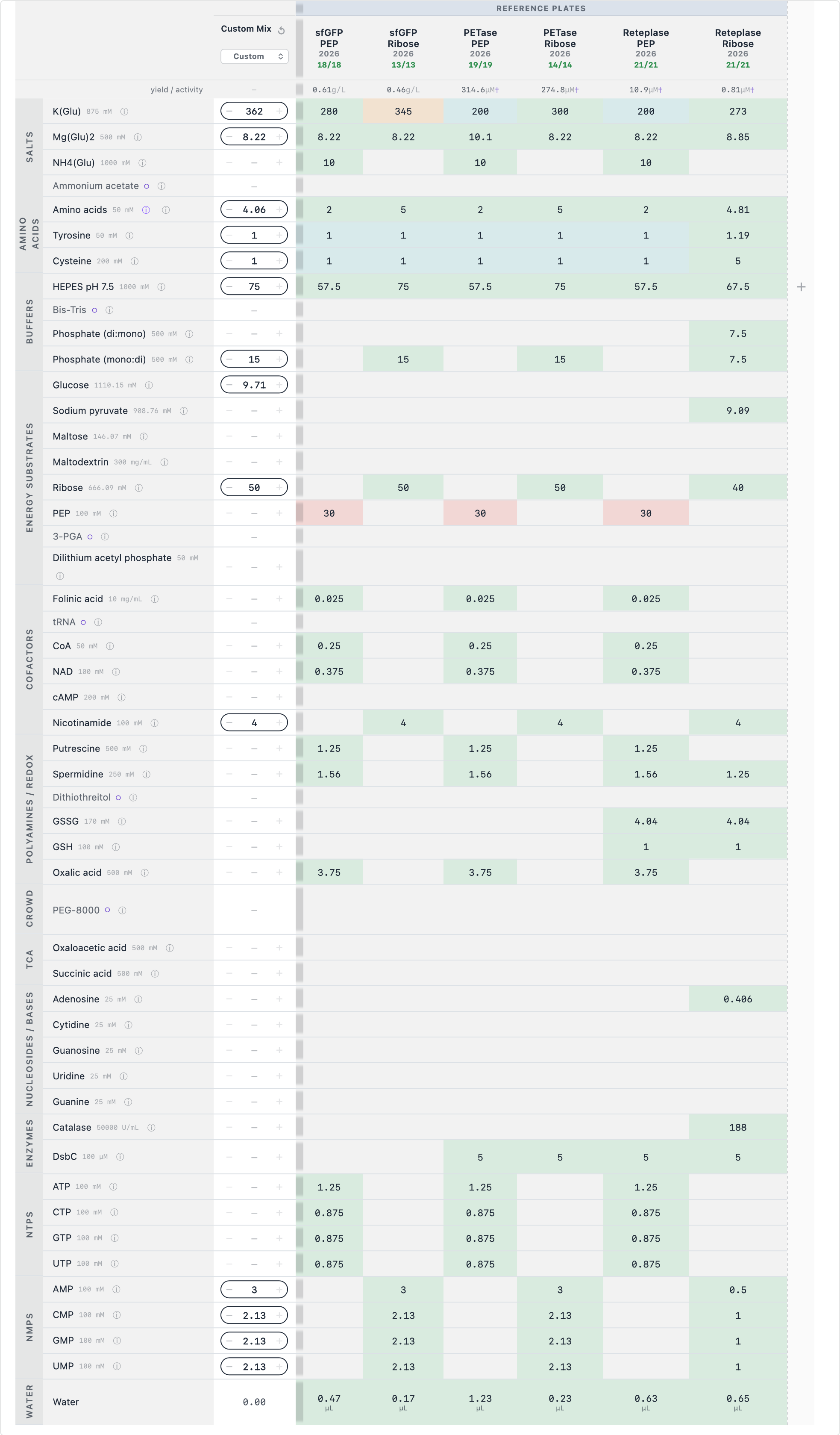
Figure 1. My sfGFP Custom Mix alongside the Ginkgo references. The custom formulation has approximately 362 mM potassium glutamate, 4.06 mM amino acid mix and 9.71 mM glucose. The Water row is 0.00 µL.
The CSV export contains the six reference formulations. It does not include my Custom Mix column. The concentrations and JSON below document my design separately.
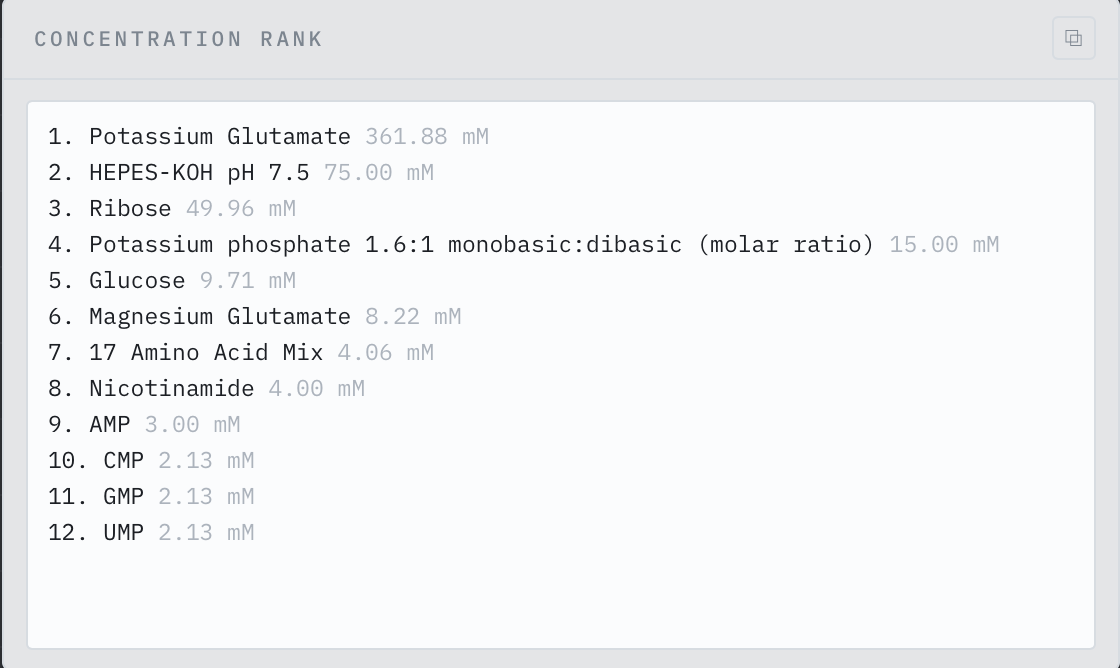
Concentration rank
Figure 2. The tool’s concentration-rank panel for my sfGFP formulation.
Rank
Component
Displayed concentration
1
Potassium glutamate
361.88 mM
2
HEPES-KOH pH 7.5
75.00 mM
3
Ribose
49.96 mM
4
Potassium phosphate 1.6:1 monobasic:dibasic
15.00 mM
5
Glucose
9.71 mM
6
Magnesium glutamate
8.22 mM
7
17 amino acid mix
4.06 mM
8
Nicotinamide
4.00 mM
9
AMP
3.00 mM
10
CMP
2.13 mM
11
GMP
2.13 mM
12
UMP
2.13 mM
This table transcribes the rank panel. It does not list every contribution from the fixed base buffer: the composition figure also shows tyrosine and cysteine at 1 mM each.
Concentrations are rounded by the interface. The JSON records the dispensing volumes.
Reagent supplement JSON
The following is the exported JSON supplied with my documentation. Its metadata fields are blank; it records the composition rather than the completed attribution and comments in the saved submission.
The saved record was read back during the session and matched the intended reagent volumes. [5]
Correction during the design process
An early AI suggestion was to reduce tyrosine from 1.0 to 0.5 mM to create more volume.
This was not possible because the fixed base buffer already supplied 1.0 mM tyrosine. I instead reduced the variable 17 amino acid mix.
The correction showed why the fixed formulation must be accounted for before changing supplements.
B1 PETase
Status: Option B selected and calculated. Submission pending.
I started from Ginkgo’s PETase Ribose reference.
The main cost issue identified in the session was DsbC, a protein that helps rearrange disulfide bonds.
At the recorded inventory price of $5,631.72 per mL of DsbC stock, the reference’s 1,000 nL addition costs approximately $5.63.
The session’s inventory calculation put the complete reference near $5.75 per reaction, making DsbC approximately 98% of that estimate. [2]
Two variants were considered:
Reduce DsbC from 5 µM to 1 µM.
Remove added DsbC entirely.
I chose Option B, removing DsbC and adding glucose.
Ingredient
Reference
Selected design
DsbC
5 µM
0 µM
Glucose
No added glucose
9.71 mM
Potassium glutamate
299.53 mM
Unchanged
Magnesium glutamate
Approximately 8.22 mM
Unchanged
Hypothesis and uncertainty
My hypothesis is that TfCut2 may retain sufficient activity without added DsbC to improve cost per unit of activity.
The homework’s summary table lists no folding helper for the reducing regime, whereas the PETase reference includes DsbC. This difference is worth clarifying with a TA. [1,2]
Yin and Swartz demonstrated benefits from a combination of folding interventions, including DsbC, for a protein with nine disulfide bonds. [6]
That evidence does not establish that DsbC is unnecessary for TfCut2. Having one disulfide bond is a reason to investigate removal, not proof that removal will work.
Using the session’s inventory prices, the selected formulation was estimated at approximately $0.116 per reaction.
Dividing this by the approximately $5.747 reference estimate gives a break-even activity fraction of roughly 2%.
This is cost arithmetic, not a prediction of retained activity. The prices, assay basis and activity measurements need confirmation before claiming a cost advantage.
Selected volumes
Component
Volume in nL
Lysate
5,000
PETase DNA template
2,000
Base buffer
2,000
Potassium glutamate
2,275
Magnesium glutamate
225
HEPES-KOH
900
17 amino acid mix
1,600
Ribose
1,500
Nicotinamide
800
Phosphate mix
600
AMP
600
CMP
425
GMP
425
UMP
425
Glucose
175
DsbC
0
Nuclease-free water
1,050
Total
20,000
The supplements excluding water total 9,950 nL. All volumes are multiples of 25 nL.
This is the calculated design selected at the end of the session. It has not been verified against a saved PETase submission.
B1 Reteplase
To complete.
Reteplase requires correct pairing of nine disulfide bonds, so I cannot simply reuse the sfGFP formulation.
The course describes an oxidizing formulation with an appropriately prepared lysate, GSSG/GSH redox components and DsbC. [1]
I have not yet selected modifications or published a Reteplase design.
This section will include the baseline, exact changes, rationale, volume validation and submission link once that work is complete.
B2 Community Reagent
To complete.
The assignment requires contributing or upvoting at least one Community Reagent and documenting the rationale with relevant research. [1]
No completed contribution is recorded in this session.
I will add the selected reagent, supporting paper and evidence of the contribution here.
B3 CFPS forum
To complete.
The session established access to the HTGAA Zulip forum, but it does not demonstrate that I completed the required visit to the dedicated CFPS discussion channel.
I will confirm access and document any relevant question or discussion.
Posting an optimization idea is a bonus in the brief. [1]
Part C Optional Kernel work
I did not complete the optional T7-compatible plasmid designs or helper-plasmid task in this session.
AI use and verification
I used Claude Science through the OPERON workspace for explanations, source comparison, reaction design and arithmetic.
I subsequently used ChatGPT to turn the exported session into this documentation and check selected references.
The sfGFP submission used the model: claude-opus-5.
The following are exact prompts or decisions from my session. They are examples of the interaction rather than a complete prompt history.
Prompt or response
Role in the work
“let’s do homework 3. give me step by step instruction and teach me”
Requested a beginner-level walkthrough
“ribose”
Selected the initial energy route
“ginko”
Selected the Ginkgo reference baseline
“i dont get it. tell me again which to set up”
Requested clearer interface instructions
“B”
Selected PETase removal of DsbC over partial reduction
AI helped produce both the rationale and the calculations.
I checked the sfGFP concentrations and saved volumes against the tool. The tyrosine correction is one example of why AI suggestions still need verification.
Interpretation and limitations
The sfGFP submission is a valid recorded composition, not a demonstrated improvement.
The PETase composition is a selected hypothesis, not a tested or confirmed submission.
Both designs change several ingredients at once. Comparing them with their references could reveal a net performance difference, but would not isolate the effect of each change. Follow-up comparisons would be needed to identify which ingredient caused an improvement or loss.
The cost figures also need care. The course brief and the tool’s recorded inventory use different prices for some reagents, and an early cost calculator in the session did not reproduce published costs.
I therefore do not report a predicted sfGFP cost per gram. The PETase estimate is explicitly tied to the recorded inventory prices.
The connection to my fashion-material project is the design method: compare input cost with functional output, record assumptions and use experimental results to decide what to change.
This homework does not test methane conversion or production of my proposed material.
Next steps
Submit PETase Option B and check the saved record.
Design and submit the Reteplase formulation.
Complete the Community Reagent contribution.
Confirm participation in the dedicated CFPS forum.
Add PETase and Reteplase figures and submission links.
Add experimental results when available.
References
Donovan, R. and Yue, M. HTBAA Week 3 Designing a Cell-Free Reaction Composition. Homework brief due 6 October 2026. Assignment text and reaction constraints supplied during the session.
Cell-Free Synthesis Coopetition for HTBAA. Reaction design tool. Reference formulations, reagent inventory and prices retrieved during the session on 5 October 2026.
Olsen, M. L. et al. (2026). Design-driven optimization of low-cost reagent formulations for reproducible and high-yielding cell-free gene expression. Nature Communications, 17, 3478. DOI. Open-access full text.
Jewett, M. C. and Swartz, J. R. (2004). Mimicking the Escherichia coli cytoplasmic environment activates long-lived and efficient cell-free protein synthesis. Biotechnology and Bioengineering, 86(1), 19–26. DOI. Formulation values above are taken from the course tool’s comparison.
My submitted sfGFP composition. Saved design. Submission details and read-back verification are preserved in the session export.
Yin, G. and Swartz, J. R. (2004). Enhancing multiple disulfide bonded protein folding in a cell-free system. Biotechnology and Bioengineering, 86(2), 188–195. DOI. PubMed abstract.