Week 1 HW: Final Project Ideas
(1) What you would like to biomanufacture and why?
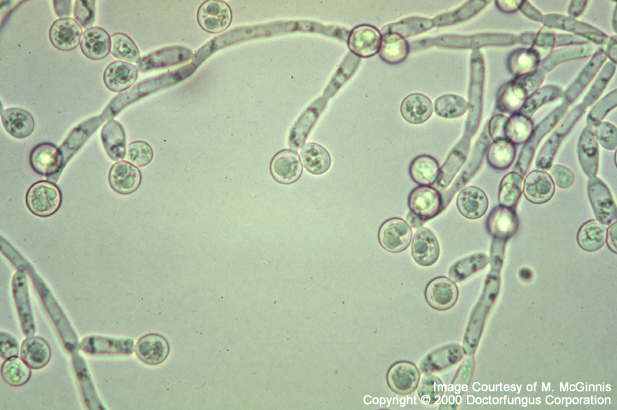
My project idea is based on the development of a lyophilized intravaginal probiotic strain of Lactobacillus, genetically modified to act as a treatment for recurrent vulvovaginal candidiasis (RVVC).
It is estimated that approximately 75% of women will experience at least one episode of vulvovaginal candidiasis (VVC) during their lifetime, and that 5–10% of them will develop recurrent vulvovaginal candidiasis (RVVC) [1]. This is an important problem because infection with this fungus not only causes physical pain, but can also negatively affect patients’ mental health, contributing to increased anxiety and depression [1].
In addition, when the infection becomes recurrent, it can lead to persistent epithelial damage and increased production of potentially carcinogenic metabolites, which may increase the host’s susceptibility to the progression of certain neoplasms [2].
(2) What living system would you use?
To develop this intravaginal probiotic, I propose using Lactobacillus as the microbial chassis. This microorganism is already used as a vaginal probiotic, with the specific strain varying depending on the application. One of the most advanced examples is Lactobacillus crispatus strain CTV-05, which has been shown to significantly reduce pro-inflammatory cytokines and markers of epithelial damage [3]. Other strains that have also been explored include Lactobacillus crispatus [4], Lactobacillus gasseri [4], Lactobacillus jensenii [4], and even bioengineered or recombinant chassis such as Lactiplantibacillus plantarum (e.g., strain BG24) [5].
At a high level, the genetic components that would be introduced into the chassis are:
- A sensing module or inducible promoter: This module would respond to specific environmental triggers or molecules associated with pathogens, such as Candida quorum-sensing molecules (e.g., farnesol), local pH changes, or oxidative stress markers.
- An effector cassette: This would contain genes encoding antifungal molecules, such as antimicrobial peptides (AMPs) or enzymes capable of degrading the fungal cell wall.
- A biocontainment module: This could include a tightly regulated genetic kill switch to improve environmental safety and prevent uncontrolled persistence outside the human host.
For this project, I currently assume that the chassis can efficiently take up, stably maintain, and express these heterologous genetic cassettes without imposing a fatal metabolic burden on the growth rate of the cells.
How the system would work
In the basal state, the modified Lactobacillus would act as a standard probiotic by producing lactic acid and competing with pathogens, while the antifungal genetic circuit remains repressed.
When Candida transitions to its pathogenic and invasive state, the local concentration of the selected trigger molecule would cross a specific threshold. This signal would activate the inducible promoter. The transcriptional machinery would then express the target antifungal proteins, which would subsequently be exported through secretion signals into the extracellular environment. These proteins could then directly target Candida, for example, by disrupting or degrading its fungal cell wall.
In this way, the system would combine the baseline protective effects of Lactobacillus with a pathogen-responsive antifungal response, allowing the probiotic to remain relatively inactive until signals associated with Candida pathogenicity are detected.
(3) How would you use automation?
I would combine the living system with a hybrid automation approach, integrating a desktop liquid-handling robot for genetic construction and a programmable droplet microfluidics platform for high-throughput screening [6].
This would allow me to automate two critical stages of the workflow:
The Build Phase (Liquid Handling): Using, for example, the platform developed by Ginkgo Bioworks [6] to automate precise pipetting, assembly of the genetic cassettes (biosensors, promoters, and antifungal effectors), and transformation across different Lactobacillus chassis.
The Test Phase (Droplet Microfluidics): Using a programmable microfluidics platform to encapsulate individual engineered Lactobacillus variants alongside Candida cells into picoliter-sized droplets. This would allow me to test many different variants in parallel and identify which genetic designs produce the desired antifungal response.
(4) How much would you need to make, and how long would it take?
(a) How much?
According to global epidemiological analyses, approximately 138 million women suffer from recurrent vulvovaginal candidiasis (RVVC) annually worldwide [1]. Considering that these women would be the potential beneficiaries of this probiotic, I will first use a population of 10,000 women as the target scale for the following calculations.
1. Required dose per patient
First, it is important to establish the dose used for intravaginal probiotics. In the United States, for a probiotic to be considered effective from a regulatory perspective, it should maintain at least 10⁸ viable cells per gram (CFU/g) [5].
For this project, I will use the dose described in [3], which contains:
2 * 10⁹ CFU/dose
These viable cells are provided as a standardized lyophilized powder and administered directly into the genital tract using dedicated vaginal applicators.
I will also assume the same dosing schedule described in [3]:
- Initial induction phase: 1 intravaginal application per day for 5 consecutive days during the first week.
- Maintenance phase: 1 application twice per week for an additional 10 weeks.
This results in a total of 25 doses per patient.
Therefore, the total number of viable cells required per patient is:
25 * 2 * 10⁹ = 5 * 10¹⁰ CFU/patient
2. Biomass required for the target population
For a population of 10,000 patients:
10000 * 5 * 10¹⁰ = 5 * 10¹⁴ CFU
I assume that there will be losses during the bioreactor manufacturing process and subsequent lyophilization. To account for these losses, I will use a 2-fold safety factor:
5 * 2 * 10¹⁴ = 1 * 10¹⁵ CFU
Therefore, the manufacturing process should produce approximately 1 * 10¹⁵ viable CFU.
(b) How long?
To estimate the total time required to manufacture this amount of biomass, I considered the following factors.
1. Yield recovery
The downstream process has two key stages. The first is harvesting by Tangential Flow Filtration (TFF). This method is relevant because Lactobacillus produces lactic acid, which can inhibit further cell growth. When TFF is integrated with the bioreactor process, cell viability can be maintained at approximately 94% at the end of the process [7].
However, additional losses are expected during lyophilization. Therefore, I will assume an overall downstream yield of 50% to account for losses during harvesting and lyophilization.
The amount of viable biomass that needs to be present in the fermented broth is:
N_bioreactor = N_final / Y_downstream
Substituting the values:
N_bioreactor = 1 * 10¹⁵ / 0.50 = 2 * 10¹⁵ CFU
Thus, the bioreactor process needs to produce approximately:
2 * 10¹⁵ CFU
before downstream processing.
2. Volumetric calculation
I considered two possible production strategies.
Case A: Standard industrial fed-batch
For the first scenario, I will use the high-cell-density Lacticaseibacillus process described in [8]. The study reports a maximum cell density of:
10.01 log(CFU/mL)
which corresponds to:
10¹⁰·⁰¹ CFU/mL = 10⁰·⁰¹ * 10¹⁰ CFU/mL ≈ 1.0233 * 10¹⁰ CFU/mL
Therefore, the volumetric capacity per liter is:
C_A = 1.023 * 10¹⁰ CFU/mL * 1000 mL/L = 1.023 * 10¹³ CFU/L
The required operating volume is:
V_op = N_bioreactor / C_A
Substituting the values:
V_op = 2 * 10¹⁵ / 1.023 * 10¹³ ≈ 195.50 L
Therefore, approximately 196 L of fermented broth at maximum cell density would be required to obtain the necessary biomass.
Case B: Extractive fed-batch coupled to resin
For the second scenario, I use the process described in [9], which reported a cell density of:
3.89 * 10¹¹ CFU/mL
This approach differs from the previous one because it incorporates an external resin column during the process.
The corresponding volumetric capacity is:
C_B = 3.89 * 10¹¹ CFU/mL * 1000 mL/L = 3.89 * 10¹⁴ CFU/L
The required operating volume is:
V_op = N_bioreactor / C_B
Substituting the values:
V_op = 2 * 10¹⁵ / 3.89 * 10¹⁴ ≈ 5.14 L
Under this model, the entire production target could theoretically be achieved in a single bioreactor with slightly more than 5 L of operating volume.
3. Bioreactor working volume and inoculum
In general, bioreactors are operated at approximately 70–80% working volume, leaving 20–30% headspace. Depending on the culture, even larger headspaces may be used [5]. This is an important consideration when selecting the final bioreactor size and determining the number of batches required.
For the following calculations, I will assume that the final production bioreactor operates with 100 L of liquid working volume, assuming that the required headspace has already been accounted for.
As described in [5], the inoculum size for lactic acid bacteria typically ranges from approximately 1–10% v/v relative to the working volume. In this case, I will use a 5% inoculum, as reported in [5].
Assuming that the seed culture transfers cells during the mid-to-late exponential phase at a concentration of:
1 * 10⁹ CFU/mL
a 5% inoculum results in an initial concentration in the main bioreactor of:
N₀ = 0.05 * 1 * 10⁹ = 5 * 10⁷ CFU/mL
4. Growth time
Using the specific growth rate reported in [5]:
μ = 0.483 h⁻¹
I can estimate the time required during unrestricted exponential growth to reach the target cell density for Case A.
The exponential growth equation is:
N(t) = N₀ * e^(μt)
Substituting the values:
1.023 * 10¹⁰ = 5 * 10⁷ * e^(0.483t)
Therefore:
1.023 * 10¹⁰ / 5 * 10⁷ = 204.6
Taking the natural logarithm:
ln(204.6) = 5.321
Solving for t:
t = 5.321 / 0.483 ≈ 11.02 h
Thus, approximately 11 hours of net exponential growth would theoretically be required to reach the target cell density.
However, this is only the theoretical exponential growth period. In practice, additional time would be required for medium loading and tank preparation, inoculation and the lag phase, stationary-phase development, and downstream processing.
I will therefore use the following approximate timeline per 100-L batch:
| Process stage | Estimated time |
|---|---|
| Medium loading and tank conditioning | 10 h |
| Inoculation and lag phase | 3 h |
| Exponential growth | 11.5 h |
| Stationary phase | 2.5 h |
| TFF harvesting | 5 h |
| Total per batch | 32 h |
Therefore:
T_batch = 10 + 3 + 11.5 + 2.5 + 5 = 32 h
Since the standard fed-batch process in Case A requires approximately 196 L, while the production bioreactor is assumed to have a 100-L working volume, approximately two batches would be required:
2 * 32 = 64 h
Therefore, under these assumptions, the total production time would be approximately:
64 h
or about 2.7 days to produce the required biomass for 10,000 patients using the Case A production strategy.
(5) What don’t you know yet?
After completing my analysis, I identified three major technical unknowns or bottlenecks in my proposed system.
1. Viability and biomass yield of the engineered strain
One of the main bottlenecks is whether the genetic modifications will significantly affect the viability and growth rate of the Lactobacillus chassis. My production calculations are based on cell densities reported for non-engineered strains, but introducing heterologous genetic cassettes and expressing antifungal proteins could impose a metabolic burden on the cells.
Therefore, I would need to experimentally determine whether the engineered strain can reach similar cell densities and growth rates to the original chassis. If its viability or biomass yield decreases substantially, the required bioreactor volume and production time would increase compared with my current estimates.
2. Genetic circuit design
The second bottleneck is the design of the genetic circuit. I am still not certain about the optimal number of genetic cassettes, how the sensing and effector modules should be organized, or whether a plasmid-based system or chromosomal integration would be more appropriate.
I would need to determine experimentally which circuit architecture provides sufficient antifungal activity while maintaining genetic stability and an acceptable metabolic burden on the Lactobacillus chassis. The promoter, regulatory elements, copy number, and effector would therefore be variables that need to be optimized.
3. Automation and scale-up of the manufacturing process
Finally, I have not yet determined how much of the complete manufacturing workflow could realistically be automated. My current automation approach focuses mainly on the Build and Test phases, using liquid handling for genetic construction and droplet microfluidics for high-throughput screening. However, I have not yet considered in detail how to automate the subsequent stages, such as inoculum preparation, bioreactor operation, sampling, monitoring of cell density and pH, harvesting, and lyophilization.
I would therefore need to determine which of these steps could be integrated into an automated workflow and whether the same automation strategy used for prototyping could be adapted to a larger manufacturing scale. This would also help determine whether the estimated production time and number of batches could be reduced through parallelization or automated process control.
Sources and AI Prompt
References
[1] J. San Juan Galán, V. Poliquin, and A. C. Gerstein, “Insights and advances in recurrent vulvovaginal candidiasis,” PLOS Pathogens, vol. 19, no. 11, art. e1011684, Nov. 2023.
[2] D. Yu and Z. Liu, “The research progress in the interaction between Candida albicans and cancers,” Frontiers in Microbiology, vol. 13, art. no. 988734, Sep. 2022.
[3] E. Armstrong, A. Hemmerling, S. Miller, K. E. Burke, S. J. Newmann, S. R. Morris, H. Reno, S. Huibner, M. Kulikova, N. Nagelkerke, B. Coburn, C. R. Cohen, and R. Kaul, “Sustained effect of LACTIN-V (Lactobacillus crispatus CTV-05) on genital immunology following standard bacterial vaginosis treatment: results from a randomised, placebo-controlled trial,” Lancet Microbe, vol. 3, no. 6, pp. e435–e442, Jun. 2022.
[4] P. Liu, Y. Lu, R. Li, and X. Chen, “Use of probiotic lactobacilli in the treatment of vaginal infections: In vitro and in vivo investigations,” Frontiers in Cellular and Infection Microbiology, vol. 13, art. no. 1153894, Apr. 2023.
[5] G. G. Gökmen, S. Sarıyıldız, R. Cholakov, A. Nalbantsoy, B. Baler, E. Aslan, A. Düzel, S. Sargın, Y. Göksungur, and D. Kışla, “A novel Lactiplantibacillus plantarum strain: probiotic properties and optimization of the growth conditions by response surface methodology,” World Journal of Microbiology and Biotechnology, vol. 40, art. no. 66, Jan. 2024.
[6] C. J. Petzold and A. Mukhopadhyay, “From bench to biofactory: high-throughput technologies and automated workflows to accelerate biomanufacturing,” Current Opinion in Biotechnology, vol. 94, art. no. 103320, Jun. 2025.
[7] G. Donnarumma, A. Molinaro, D. Cimini, C. De Castro, V. Valli, V. De Gregorio, M. De Rosa, and C. Schiraldi, “Lactobacillus crispatus L1: high cell density cultivation and exopolysaccharide structure characterization to highlight potentially beneficial effects against vaginal pathogens,” BMC Microbiology, vol. 14, art. no. 137, May 2014.
[8] C. Chen, T. Guo, D. Wu, J. Shu, N. Huang, H. Tian, H. Yu, and C. Ge, “Study on Lacticaseibacillus casei TCS fermentation kinetic models and high-density culture strategy,” Microbiology Spectrum, vol. 13, no. 5, art. e0202424, May 2025.
[9] S. Selvamani, S. Ramli, D. J. Dailin, K. H. Natasya, T. Varzakas, B. Abomoelak, D. Sukmawati, M. Nurjayadi, S. Liu, V. K. Gupta, and H. A. El Enshasy, “Extractive fermentation as a novel strategy for high cell mass production of hetero-fermentative probiotic strain Limosilactobacillus reuteri,” Fermentation, vol. 8, no. 10, art. no. 527, Oct. 2022.
AI Prompt
The following prompt was used with Gemini Deep Research to support the literature review and verify the assumptions used in the preliminary biomanufacturing calculations.
Act as a principal investigator in synthetic biology, medical microbiology, and biomanufacturing. I need you to conduct an exhaustive search of the scientific literature (PubMed, Google Scholar, IEEE, etc.) to corroborate, support with citations (APA or Vancouver format), and adjust if necessary the following 3 key parameters and assumptions for a biomanufacturing project involving a recombinant probiotic (Lactobacillus modified for the treatment of recurrent vulvovaginal candidiasis):
1. Clinical dose and frequency of probiotic administration (intravaginal or oral):
- Investigate the typical standard dose in Colony Forming Units (CFU) per dose (e.g., between 1x10⁹ and 1x10¹⁰ CFU) and the recommended frequency (daily, every other day, or weekly maintenance) for commercial or clinical Lactobacillus strains used against Candida (such as Lactobacillus crispatus CTV-05, Lactobacillus rhamnosus GR-1, or Lactobacillus reuteri RC-14). Provide clinical references.
2. Growth, doubling time, and biomass yield of Lactobacillus:
- Verify the average doubling time of Lactobacillus strains in standard laboratory media or industrial-scale fermenters.
- Investigate the maximum typical cell concentration that can be reached (CFU/mL or g/L of dry biomass) in high-density cultures (fed-batch or batch) in order to estimate the fermentation volume required to produce batches of millions of doses.
3. Automation in strain and plasmid optimization:
- Search for evidence or precedents where desktop liquid-handling robots (such as Opentrons) or high-throughput microfluidic platforms are used to accelerate bacterial transformation, strain screening (e.g., L. crispatus, L. rhamnosus), and evaluation of genetic circuits/plasmids.
Please provide a structured report point by point, indicating the exact bibliographic sources (with DOI or links to PubMed/scientific articles) for each claim.