Ana Trapero Martin — HTBAA Fall 2026
About me
Contact info
Homework, Labs, and Projects
See the nav bar on the left to look through my work for How To Biomanufacture Almost Anything (Fall 2026)!
See the nav bar on the left to look through my work for How To Biomanufacture Almost Anything (Fall 2026)!
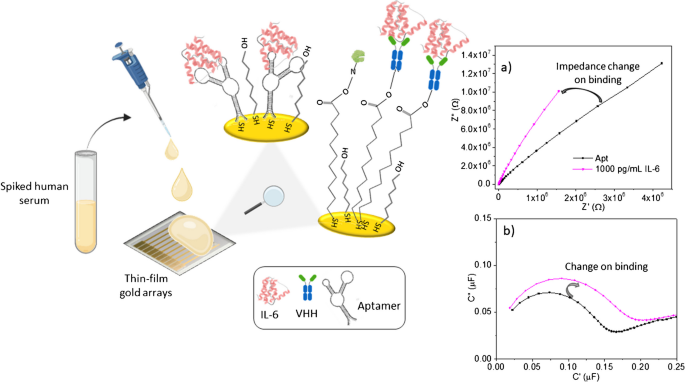
Product. DNA aptamers: the recognition layer of a weekly-replaced skin patch that continuously measures two inflammation markers, C-reactive protein (CRP) and interleukin-6 (IL-6), in interstitial fluid. The aptamers are the biomanufactured component; electrodes and electronics are conventional.
Why. Chronic inflammatory conditions are diagnosed and managed with snapshots: a blood draw when the patient happens to be in clinic. Two initial use cases where that fails:
Who it is for. The patient wears it; the clinician (gynecologist or gastroenterologist) reads a time-resolved inflammation profile to decide on referral, imaging, or treatment escalation. Pharma trials in both indications are a secondary user.
Why aptamers. Reversible binders (so measurement is continuous, not one-shot), thermally stable, and manufacturable enzymatically rather than in animals or mammalian culture. This is the same architecture as the continuous hormone wearable I work on at Clair Health, applied to a different analyte class.
Aptamers are normally made by chemical synthesis, so the chassis needs a deliberate answer. Two chassis:
Primary: cell-free enzymatic synthesis.
| In | DNA template, dNTPs, phi29 polymerase, nicking endonuclease, buffer, Mg²⁺ |
| Process | Rolling-circle amplification makes a long ssDNA concatemer of the aptamer; a nicking enzyme cuts it to unit length; chromatography and refolding |
| Out | Single-stranded DNA aptamer ready for electrode immobilization |
Discovery (SELEX: ~10¹⁴ random sequences, 8 to 15 rounds of bead-based partitioning and PCR) is also entirely cell-free. I choose cell-free over microbial because downstream processing is 15 to 90% of bioprocess cost (Asin-Garcia et al. 2025); a microbial route adds lysis, host nucleic acid removal, and endotoxin clearance, while cell-free has none of those (Karim & Jewett 2021).
Second, unavoidable: recombinant targets. SELEX needs pure CRP and IL-6, and calibration needs them as standards. IL-6 (21 kDa) expresses in E. coli. CRP (115 kDa calcium-dependent pentamer) probably needs mammalian or chaperone-assisted cell-free expression; an aptamer selected against misfolded CRP binds an epitope that does not exist in the patient.
Assumptions: unmodified DNA aptamer is sufficient; ~60 nt; nanomolar affinity achievable; one-week nuclease stability in interstitial fluid.
Discovery and manufacturing use different machines.
Discovery: automated SELEX (Opentrons Flex or cloud lab). Each round is bead incubation, wash, elution, PCR, strand separation: pure liquid handling (automated SELEX: Cox & Ellington 2001). The real gain is not speed but counter-selection: select against CRP while simultaneously counter-selecting against albumin, IgG, fibrinogen, and monomeric CRP, with the IL-6 campaign running in parallel. A cloud lab (Ginkgo, Strateos) extends this to dozens of buffer and temperature conditions. NGS after rounds 3, 6, 9 plus a sequence-function model picks candidates early; Asin-Garcia et al. (2025) point to exactly this ML approach. Freemont’s quote in the paper that biofoundries should serve “low-cost diagnostics” is this workflow.
Characterization: digital microfluidics (Nuclera). Cell-free expression of CRP and IL-6 variants plus nanoliter binding assays of candidate aptamers.
Manufacturing. Batch enzymatic reactor with inline HPLC and mass-spec QC, then automated dispensing onto electrode arrays and electrochemical QC of every sensor. Closer to conventional diagnostics manufacturing than to a biofoundry.
Aptamer per sensor. Electrochemical aptamer sensors immobilize ~10¹¹ to 10¹² molecules/cm² (Arroyo-Currás et al. 2017). Assume 3 × 10¹¹ cm⁻², 0.1 cm² electrode, 60 nt at 330 g/mol per nt (MW ≈ 2 × 10⁴):
Scale. Endometriosis: ~7 M symptomatic US patients × one 3-cycle diagnostic course (12 weekly patches). IBD: ~3 M US patients × continuous wear (52 patches/year).
| Scenario | People | Sensors/yr | Aptamer |
|---|---|---|---|
| Endometriosis diagnostic course | 7 M | 84 M | 84 g |
| IBD continuous monitoring | 3 M | 156 M | 156 g |
| Both initial use cases | 10 M | 240 M | 240 g/yr |
| Upper bound: every US menstruating person (~70 M) | 70 M | 840 M | 840 g |
Result: a few hundred grams of DNA per year. Antisense oligo drugs are made at tens to hundreds of kg/yr. Mass is not the constraint.
Discovery. Manual SELEX: 6 to 12 months for two targets. Automated: ~1 day per round, both targets and all counter-selections in parallel, NGS early stopping: 4 to 8 weeks to candidates, then 3 to 6 months of characterization and sensor integration. Calibration point: artemisinin in yeast took ~150 person-years (Asin-Garcia et al. 2025), so this is optimistic.
Manufacturing. Assume 0.5 mg/mL purified enzymatic ssDNA (my assumption; reported yields span tens of µg/mL to low mg/mL) and 100 L batch reactors:
Which body fluid to measure. I have not decided between interstitial fluid (under the skin, needs microneedles), sweat, or saliva. Interstitial fluid tracks blood most closely but the patch is more invasive. Sweat and saliva are easy to collect but the marker levels are much lower and depend on things like hydration and eating. This choice changes the sensor design, the target concentrations, and the user experience. To learn: measure CRP and IL-6 in all three fluids against blood, in the same people, over time.
Is there enough IL-6 to detect? In healthy blood, IL-6 is around 1 to 5 picograms per mL, which is far below what a typical aptamer can sense (aptamers usually need concentrations 10,000 to 100,000 times higher). CRP is much more abundant and easier, but it is a large molecule and may not pass well into whichever fluid I pick. To learn: whether an aptamer sensor can reach these low levels, or whether I need a different marker.
Do these markers actually tell you about the disease? IL-6 is somewhat higher in endometriosis; CRP evidence is mixed. In IBD, both rise during flares, but nobody knows how far ahead of symptoms. Nobody has continuous data because no tool has existed to collect it. To learn: a small study (50 patients, 50 controls, 3 months of repeated samples) before building any sensor.
Will the sensor keep working for a week on skin? Aptamer sensors drift over time as proteins stick to them and enzymes in the body chew up the DNA. Chemical modifications to the DNA fix this, but the enzymes I would use to manufacture the aptamer often can’t handle those modifications. So there is a tradeoff between “made by a living system” and “good enough to work.” To learn: how fast the sensor drifts in a body-fluid mimic, and whether modified polymerases can make the modified DNA at usable yield.
AI use disclosure -> Claude was used to propose the chassis framing, the discovery/manufacturing automation split, and the calculation structure; I chose the product, analytes, use cases, and scale, and checked the calculations.