Week 2 HW: DNA Design
Objective
Design a T7-compatible genetic construct for cell-free expression of a bifunctional material-binding protein containing the CBM3a-L cellulose-binding module and the SB7 silica-binding peptide joined by a flexible peptide linker.
Part 1: Expression Target
What molecule am I expressing?
I am expressing an engineered bifunctional fusion protein designed to act as a molecular connector between cellulose-rich and silica-rich material surfaces.
The protein consists of:
CBM3a-L → flexible linker → SB7
- CBM3a-L provides cellulose-binding functionality.
- The flexible linker separates the two binding modules and allows them to move more independently.
- SB7 provides silica-binding functionality.
The broader concept is a modular connector system in which material-binding domains can be recombined depending on the surfaces that need to be joined. This could enable future connector variants for cellulose–cellulose, cellulose–silica, or silica–silica interfaces. For this homework, I am focusing on the CBM3a-L–linker–SB7 connector for a cellulose-to-silica interface.
What is the sequence and where does it come from?
The fusion protein is composed of three sequence elements.
CBM3a-L
CBM3a-L is a cellulose-binding protein domain derived from the CipA scaffoldin of Acetivibrio thermocellus, historically known as Clostridium thermocellum. The sequence used for this project is based on the protein sequence associated with PDB entry 4JO5.
Flexible linker
A glycine- and serine-rich flexible linker, (GGGGS)₃, is placed between the two binding modules. The purpose of the linker is to provide spatial separation and flexibility so that the two binding regions are less likely to interfere with one another.
SB7
SB7 is a seven-amino-acid silica-binding peptide with the sequence:
RQSSRGR
It was derived from the silica-binding region of the CotB1 protein from Bacillus cereus. The complete engineered protein therefore follows the architecture:
CBM3a-L → (GGGGS)₃ → SB7
The exact DNA coding sequence will be designed to encode this fusion protein for expression in the selected cell-free system.
What host or chassis am I using?
The expression chassis is an E. coli-based cell-free protein synthesis (CFPS) system using T7-driven transcription. Instead of using intact living cells, the cell-free system contains the molecular machinery required for transcription and translation. DNA encoding the bio-connector protein can therefore be added directly to the reaction mixture and used to produce the protein. This approach allows the protein design to be tested rapidly without first engineering and culturing a complete organism.
Where does the product need to go?
The bio-connector protein is intended to remain soluble in the cell-free reaction mixture after expression. It can then be recovered or used directly in subsequent material-binding experiments. Because the manufacturing system is cell-free and there is no intact cell membrane that the protein needs to cross, the initial construct does not require a secretion signal peptide.
The expressed protein will eventually be tested on controlled cellulose-rich and silica-rich surfaces before translating the system to more architecturally relevant material interfaces such as linen and ceramic.
Designing the Genetic Parts
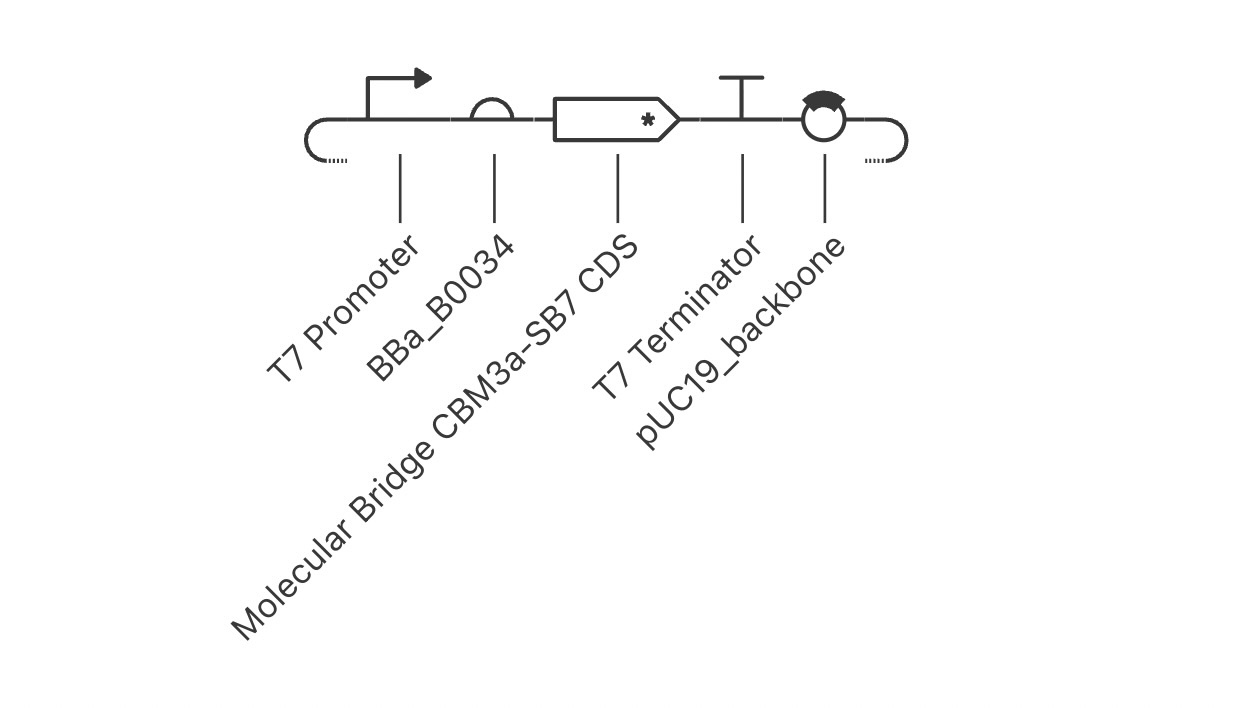
To express the Molecular Bridge protein in an E. coli-based cell-free system, I assembled a T7-driven expression cassette consisting of:
T7 promoter → BBa_B0034 RBS → CBM3a-L–(GGGGS)₃–SB7 CDS → T7 terminator
The expression cassette was then placed in a pUC19-derived backbone.
1. T7 Promoter
Part type: Promoter
Sequence:
TAATACGACTCACTATAGGG
Length: 20 bp
Source: Existing T7 promoter part in Kernel.
Justification:
The T7 promoter was selected because the proposed E. coli-based cell-free protein synthesis system uses T7 RNA polymerase for transcription. The promoter tells T7 RNA polymerase where transcription of the downstream gene should begin.
2. BBa_B0034 Ribosome Binding Site
Part type: Ribosome Binding Site (RBS)
Sequence:
AAAGAGGAGAAA
Length: 12 bp
Source: BBa_B0034, imported from the existing Kernel parts library.
Justification:
BBa_B0034 is a commonly used bacterial ribosome binding site. It provides a translation-initiation region where the bacterial ribosome can associate with the mRNA before reaching the start codon of the protein-coding sequence.
3. Molecular Bridge CBM3a-SB7 CDS
Part type: CDS (+start +stop)
Length: 642 bp
Protein encoded: 213 amino acids followed by a stop codon.
The protein architecture is:
M → CBM3a-L → (GGGGS)₃ → SB7
The CBM3a-L component is based on the 190-amino-acid protein sequence associated with PDB entry 4JO5. An initiating methionine was added through the ATG start codon.
The flexible linker is:
GGGGSGGGGSGGGGS
The silica-binding peptide is:
RQSSRGR
The complete translated protein sequence is:
MVPTNTPTNTPANTPVSGNLKVEFYNSNPSDTTNSINPQFKVTNTGSSAIDLSKLTLRYYYTVDGQKDQTFWCDHAAIIGSNGSYNGITSNVKGTFVKMSSSTNNADTYLEISFTGGTLEPGAHVQIQGRFAKNDWSNYTQSNDYSFKSASQFVEWDQVTAYLNGVLVWGKEPGGSVVPSTQPVTTPPATTGGGGSGGGGSGGGGSRQSSRGR
The DNA coding sequence was designed by reverse-translating the desired protein sequence into DNA codons. It begins with ATG and ends with the stop codon TAA.
DNA sequence:
ATGGTGCCGACCAACACTCCAACGAATACCCCTGCGAACACTCCGGTTAGCGGCAATCTGAAAGTCGAATTTTATAACTCTAATCCATCGGATACGACCAACTCCATTAATCCTCAGTTCAAGGTGACTAACACGGGTAGCTCTGCTATCGACCTCTCGAAATTGACCCTGCGTTACTATTACACTGTTGATGGACAAAAGGACCAGACGTTTTGGTGCGATCACGCCGCGATTATCGGCTCCAATGGTAGCTATAACGGAATTACCTCTAATGTCAAAGGCACTTTCGTGAAGATGTCGTCCAGCACGAACAATGCTGACACCTACCTCGAGATCTCTTTTACTGGTGGAACGTTGGAACCGGGCGCCCATGTTCAAATTCAGGGTCGCTTCGCGAAAAACGATTGGTCGAATTATACCCAATCCAACGACTACAGCTTTAAGTCTGCTTCGCAGTTCGTCGAGTGGGATCAAGTGACTGCCTATCTGAATGGAGTTCTCGTCTGGGGCAAAGAACCAGGTGGATCCGTGGTTCCTAGCACGCAGCCGGTCACCACTCCACCTGCGACGACCGGCGGTGGAGGCTCTGGTGGAGGCGGTTCGGGAGGCGGTGGATCCCGGCAAAGCTCTCGTGGCCGCTAA
Source and design rationale:
CBM3a-L is derived from the CipA scaffoldin of Acetivibrio thermocellus and provides the cellulose-binding component of the design. The flexible (GGGGS)₃ linker was selected to provide spatial separation and mobility between the two material-binding regions. SB7 is a seven-amino-acid silica-binding peptide derived from the CotB1 protein of Bacillus cereus.
Justification:
This CDS combines a cellulose-binding module and a silica-binding peptide into one engineered fusion protein so that the resulting protein can be tested as a molecular connector between cellulose-rich and silica-rich material surfaces.
4. T7 Terminator
Part type: Terminator
Sequence:
CTAGCATAACCCCTTGGGGCCTCTAAACGGGTCTTGAGGGGTTTTTTG
Length: 48 bp
Source: Existing T7 terminator part in Kernel.
Justification:
The T7 terminator provides a transcription-stop signal downstream of the Molecular Bridge CDS and defines the end of the T7-driven transcription unit.
5. pUC19-Derived Backbone
Part type: Backbone
Kernel part: pUC19_backbone
Length: 2641 bp
Source: Existing Kernel backbone derived from pUC19 and listed as a copy of BBa_K4411017.
The backbone contains the two primary elements required for propagation in E. coli:
- pMB1-derived origin of replication — enables replication of the plasmid in E. coli.
- bla / AmpR — provides ampicillin resistance for selection of bacteria carrying the plasmid.
The complete backbone sequence is stored with the Kernel Part.
Justification:
The pUC19-derived backbone provides the replication and selection functions required to maintain and amplify the plasmid in E. coli. These functions are useful for producing the DNA template even though the final protein-expression experiment is intended to occur in a cell-free system.
Signal Peptide / Targeting Sequence
No signal peptide was included.
Because the protein will be produced using a cell-free expression system rather than secreted through the membrane of an intact cell, a secretion signal is not required for the initial construct.
Part 3: Assemble the Construct
The final construct was assembled in Kernel as:
5′ → T7 promoter → BBa_B0034 RBS → Molecular Bridge CBM3a-SB7 CDS → T7 terminator → pUC19-derived backbone → 3′
The completed circular construct is 3363 bp long.
The expression cassette itself is 722 bp:
- T7 promoter: 20 bp
- BBa_B0034 RBS: 12 bp
- Molecular Bridge CDS: 642 bp
- T7 terminator: 48 bp
The remaining 2641 bp corresponds to the pUC19-derived backbone.
Construct Checks
The assembled construct was checked in Kernel for the following:
- The genetic parts occur in the intended 5′→3′ order.
- The T7 promoter is positioned upstream of the RBS and coding sequence.
- The BBa_B0034 RBS is positioned directly upstream of the Molecular Bridge CDS.
- The CDS begins with the start codon ATG.
- The CDS is 642 bp long and maintains the intended reading frame.
- The translated sequence contains the complete CBM3a-L–linker–SB7 fusion protein.
- No unintended internal stop codons are present.
- The CDS ends with the intended stop codon TAA.
- The T7 terminator occurs downstream of the CDS.
- The pUC19-derived backbone provides an E. coli replication origin and ampicillin-resistance selection marker.
- The expression host in Kernel was set to Escherichia coli.
Final Construct
Molecular Bridge – T7 Expression Construct
pUC19 backbone
↓
T7 promoter
↓
BBa_B0034 RBS
↓
CBM3a-L–(GGGGS)₃–SB7 CDS
↓
T7 terminator
The construct is designed to provide a DNA template for T7-driven production of the Molecular Bridge fusion protein in an E. coli-based cell-free protein synthesis system.
Design Hypothesis
If the engineered fusion protein folds correctly and both binding regions remain accessible, the CBM3a-L domain may interact with cellulose-rich surfaces while the SB7 peptide interacts with silica-rich surfaces.The first experiment therefore tests whether two previously characterized material-binding elements can retain their respective functions when combined within a single genetically encoded fusion protein.This does not assume that the protein will function as a structural adhesive. The first goal is to determine whether measurable binding to both material classes can be achieved.
Future Variants
The same modular strategy could later be extended by recombining material-binding domains to create:
- CBM3a → linker → CBM3a for cellulose-rich ↔ cellulose-rich interfaces
- CBM3a → linker → SB7 for cellulose-rich ↔ silica-rich interfaces
- SB7 → linker → SB7 for silica-rich ↔ silica-rich interfaces
This would allow the project to develop from a single fusion protein into a modular family of genetically encoded material connectors.
References
Yaniv, O. et al. (2013). Structure of a family 3a carbohydrate-binding module from the cellulosomal scaffoldin CipA of Clostridium thermocellum with flanking linkers: implications for cellulosome structure. Acta Crystallographica Section F. PDB: 4JO5.
Chen, X., Zaro, J. L., & Shen, W. C. (2013). Fusion protein linkers: property, design and functionality. Advanced Drug Delivery Reviews, 65(10), 1357–1369.
Ikeda, T. et al. (2016). Application of volcanic ash particles for protein affinity purification with a minimized silica-binding tag. The study reports the seven-amino-acid SB7 sequence RQSSRGR.
iGEM Registry of Standard Biological Parts. BBa_B0034 ribosome binding site.
New England Biolabs. pUC19 sequence and map, including the pMB1-derived origin of replication and bla ampicillin-resistance gene.
Thermo Fisher Scientific. T7 promoter sequence and T7 expression-vector documentation.