Week 1 HW: Final Project Ideas
(1) What you would like to biomanufacture and why?
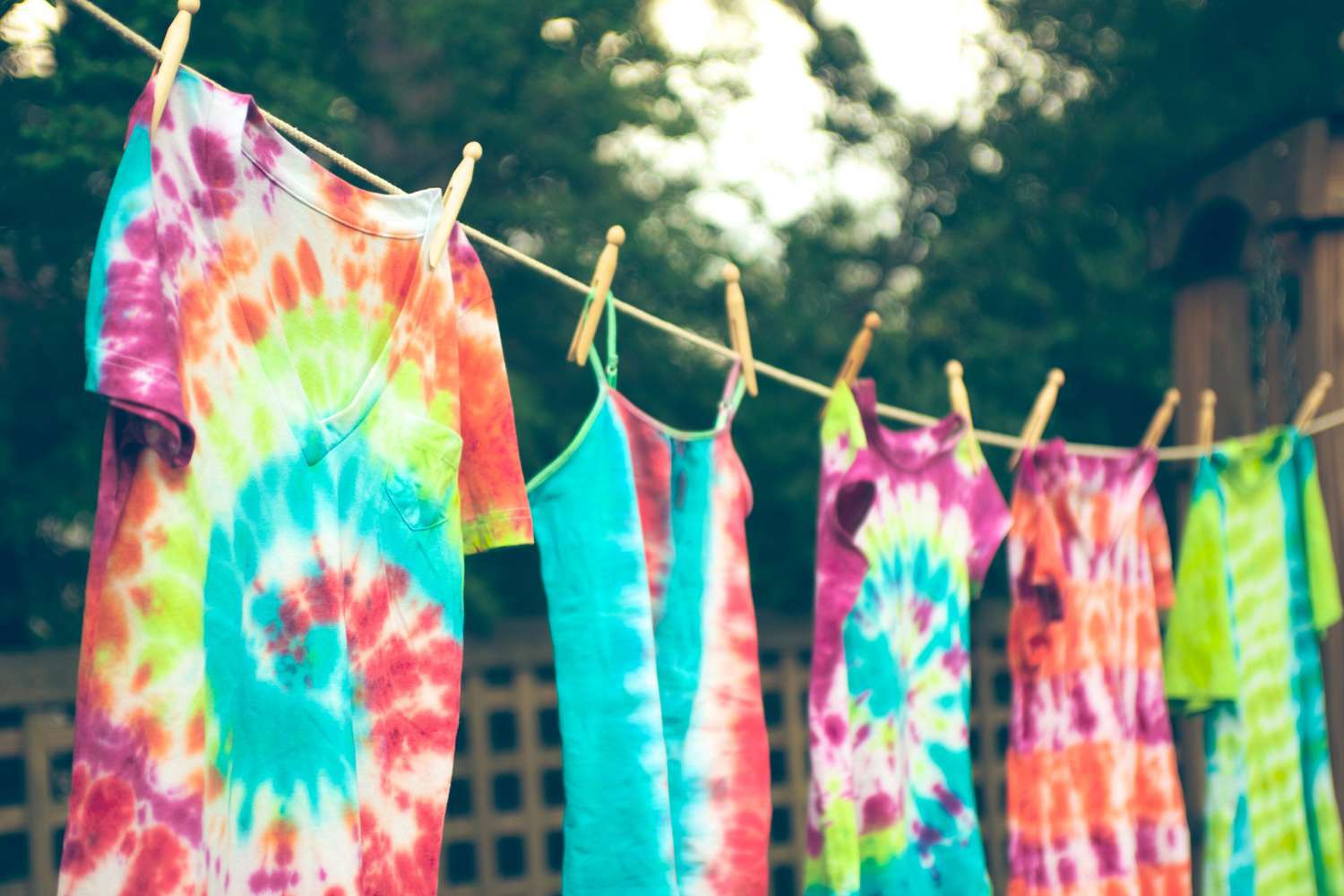
I would like to make a natural dye that is hard to wash off. The dyes that are currently made in the market require a lot of energy to make, their contributions to water pollution, as well as potential health risks. If we can naturally make a dye that is more sustainable to make and poses less risks, it can help the textile and fashion industry. Though there are several natural dyes that exist (within foods, plants, etc), one of the consistent issues that remains is these dyes don’t have a pungent, long-lasting color on clothes, which can make people less likely to use them. Therefore, I would like to biomanufacture dyes that also last, but are safe for the environment and people. I want to use a biomanufacturing model in order to output natural dyes that can be engineered to be more pungent and stick on fabrics. This can be really useful for the fashion and textile industry as hopefully we can also make it cheaper and vibrant enough to use unlike many other natural dyes that currently exist. I believe this is important because synthetic dyes can hopefully become replaced, which can help ease a piece of the problem that is affecting the environment.
(2) What living system would you use?
I would use E. coli, which is a microbial system. A cell-free system could also work, and may in fact be more efficient and useful for getting products. At least within the E. coli model, what I could do is engineer a plasmid that contains a gene that produces pigment protein, and insert that into the E. coli for it to produce the pigments. What would occur is transcription and translation of the gene after it’s transfected, and hopefully what comes out is pigment. In addition to this, another gene could be engineered into the E. coli that helps to modify the pigments in order for them to retain onto fabrics better.
(3) How would you use automation?
The automation technology I would definitely combine with my living system is Optetrons and Nuclera’s. Having a platform that can automate microfluid dispensation, especially when many liquid factors go into transfecting E. coli, could save a lot of time and help increase the output process so I can analyze results at a higher quantity. I would use Optetron’s to automate the process of liquid handling and mixing my reagents and plasmids in order for transfection to occur, and I would use Nuclera’s to automate the process of purification of the pigments.
(4) How much would you need to make, and how long would it take?
(a) How much?
The amount of dye that is used to color a fabric can vary depending on the person’s desire for lightness or brightness. To be able to dye an entire shirt, the amount of dye typically required depends on the dye’s ability to dye, which is known as the weight of fabric (WOF) percentage. The lower this WOF is, the less dye is needed. Ideally, I’d want this number to be low in order to get the most color out of less pigment. To calculate how much dye you would need for a fabric, you would multiply the weight of the fabric by the WOF factor of the dye to get the amount of dye in grams you would need. A regular women’s medium t-shirt is about 100g, and if I want to make my dye a WOF of 10%,
–> 100g x .10 = 10g ; amount of dye needed to dye 1 tshirt
If I wanted to upscale this to 500 tshirts, this would mean I would need
–> 500 t-shirts x 10g = 5,000 g of dye
(b) How long?
For prototyping:
The rate at which E. coli can take in a plasmid and incorporate it into their DNA can take about a whole day, which is my assumption as most protocols ask to wait an entire day for transfection to occur. The reality is I am not sure how much yield I could get from a couple colonies of E. coli, but my guess would be about 0.000001 g of pigment per colony. If I culture about a million colonies, I would have about 1g of pigment. Ideally, I would want to find ways to make this more efficient. If I run parallel experiments with different conditions, I would need more colonies of E.coli, which could mean more petri dishes and more materials. This process could take about two days, considering purification of the pigments takes a day and transfection takes a day
For manufacturing at scale:
I think it would be similar, but at a grander scale. This could mean trillions of colonies cultured at once, and purification of all these colonies after transfection . With the help of automated systems like Optetron’s and Nuclera’s, this process can hopefully become more efficient, hence it could similarly take about 2 days to make possibly a 100 grams of dye (at least in the beginning stage).
(5) What don’t you know yet?
What would you need to learn, measure, or experimentally determine to know whether your idea could actually work?
One, want to figure out a way to modify these pigments to be able to attach fabrics strongly.
Two, I need to figure out which gene to insert into E. coli for them to be able to produce a viable amount of pigment (or whether this can even work).
Three, What environmental variables can help to increase output of these pigments
In order for me to be able to be able to follow through with this idea, I would need to first do some research on genes that currently exist that are known to code pigments. I can look into leaves and plants, which are known to produce pigments. Additionally, it would be interesting to look into certain plants that have interesting colors, and look at what pigments help to create their colors. After this, the most important factor would be to use a plasmid to insert this gene into the E.coli and seeing if the E.coli can produce pigment. Based on prior literature and recent biomanufacturing news, it appears that E.coli is able to produce pigments when inserted the gene for it. Finally, we would need to experiment with protocol optimization. This would mean testing different reagent amounts and environmental factors to determine which produce the most yield. In terms of how to get the pigments to attach to fabrics better, what we would need to research is how synthetic dyes that are really strong in dyeing differ from many natural dyes that are unable to dye as well. Then, we can look into how we can do post-translation modificiations on pigments to potentially make them a stronger dye.