Week 2 HW: DNA Design
HTBAA Homework #2: DNA Design
Where this fits in my project: In Homework 1, I proposed using C. lytica DSM 7489 biofilms as a photonic sensor and I listed “which genes control the color?” as one of my main unknowns. This homework is my first step into that question. I target gldB, a gene annotated as gliding-motility-associated, to test the hypothesis that gliding motility is required for structural color. Because gliding genes can have broader effects (for example on adhesion and biofilm formation), a ΔgldB strain would be a candidate non-iridescent control and I would need to characterize its phenotype before drawing conclusions.
Status: this homework is a design only (in silico). Nothing has been built or tested. Role in the sensor: if a ΔgldB strain loses the structural color, gldB becomes a lead for what the color depends on (the “what controls the color” part of my final project). It does not change the salinity calibration, which uses wild-type cells.
Part 0: Set up in Kernel
I logged in to Kernel and joined the HTBAA 2026 workspace. In the repository HTBAA26_WilliamandMary there is a folder with my name Aranza Cantu Puga, where the folder HW2-Cellulopagha-project and my work done is located.
Part 1: Define your expression target
What molecule are you expressing?
I am not expressing a heterologous protein. Instead, I designed a suicide plasmid to knock out of the native gldB gene in Cellulophaga lytica DSM 7489. gldB is annotated as a gliding motility-associated lipoprotein (GldB). Disrupting this gene is expected to impair gliding motility, and gliding motility has been linked to iridescence in Cellulophaga (Kientz et al., 2012c). Whether gldB specifically is needed for the color has not been shown, so this is my working hypothesis.
What is the sequence?
The sequence used as the homology arm is the complete gldB gene (966 bp). It was obtained from the KEGG database (entry: cly:Celly_2006). The selection cassette is the ermF gene (705 bp), which confers resistance to erythromycin and comes from Bacteroides fragilis.
What host or chassis?
The knockout is performed in Cellulophaga lytica DSM 7489 (a marine bacterium). The plasmid is propagated in E. coli DH5α for cloning.
Where does the product need to go?
The cassette needs to integrate into the chromosome of C. lytica by homologous recombination. This is why I use a suicide plasmid (it cannot replicate in C. lytica, so it must integrate or be lost).
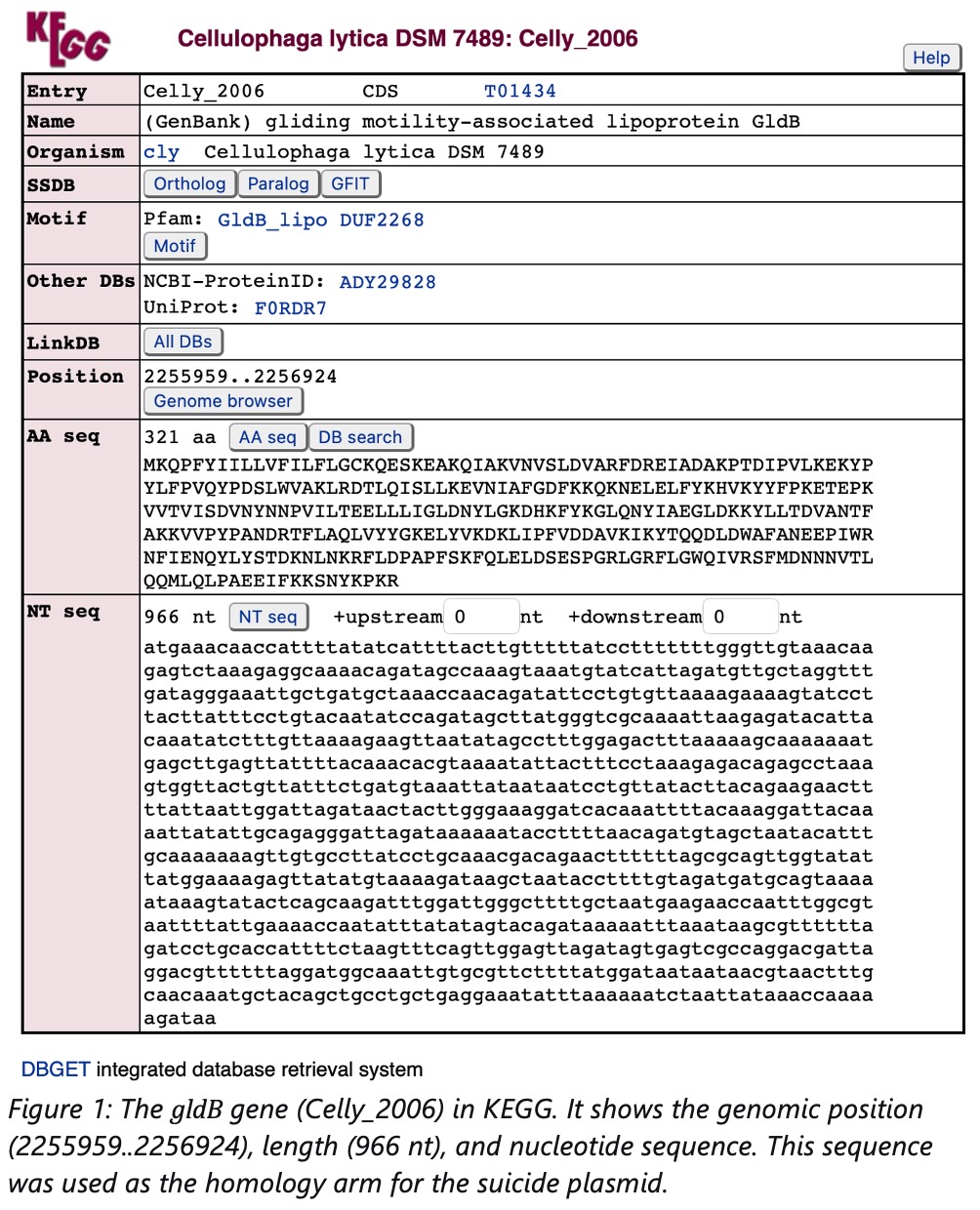
Figure 1: The gldB gene (Celly_2006) in KEGG. It shows the genomic position (2255959..2256924), length (966 nt), and nucleotide sequence. This sequence was used as the homology arm for the suicide plasmid.
Part 2: Design your genetic parts
Since my host is a prokaryote (C. lytica for the knockout, E. coli for cloning), I designed a suicide plasmid with the following parts:

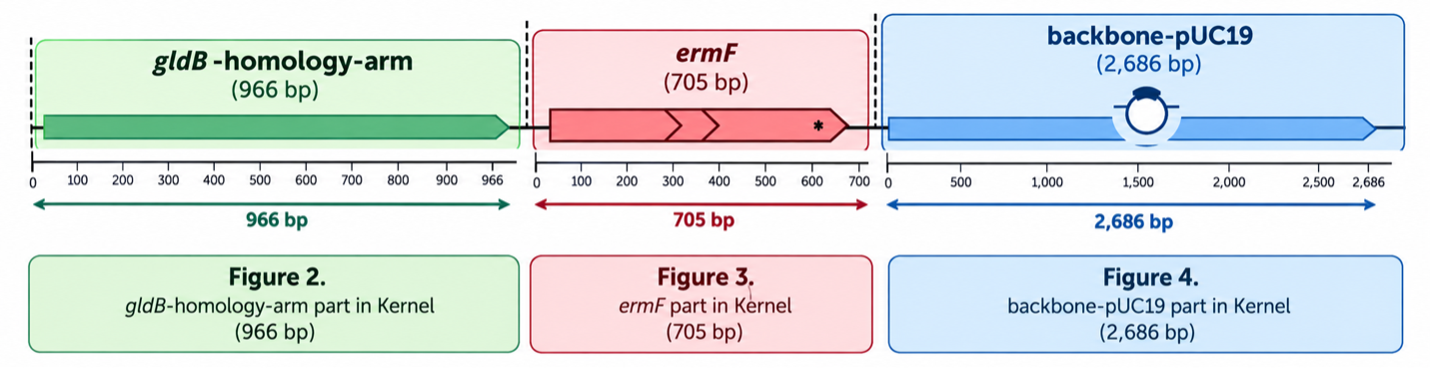
Figure 2 and 3. gldB-homology-arm part, ermF part and backbone-pUC19 part in Kernel
Part 3: Assemble your construct
The construct is 4,357 bp: pUC19 backbone (2,686 bp) + gldB (966 bp) + ermF (705 bp). I checked that the parts are in the intended order and that the ermF reading frame is intact, with a start codon, a stop codon and no accidental internal stops.
A note on the name: I named the construct after pYT313, a sacB-containing suicide vector used in Bacteroidetes (Wang et al., 2017, citing Zhu et al.). I tried to use its real backbone in Kernel, but I could not import it, so I prototyped the design on a pUC19 backbone. This is a prototype of the design logic, not a copy of pYT313: it has no sacB counterselection. A wet-lab version would use the real pYT313 backbone.
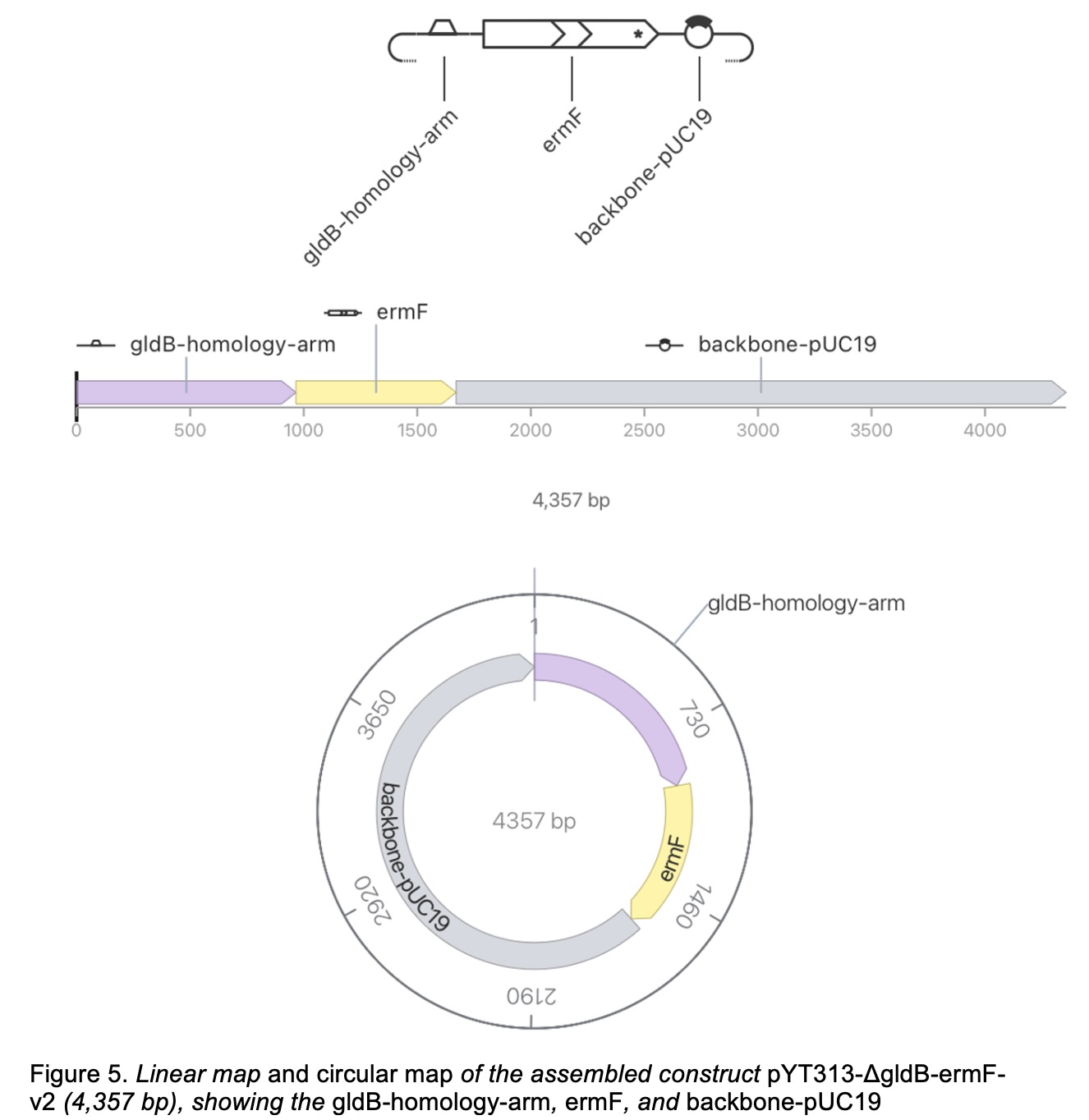
Figure 4. Linear map and circular map of the assembled construct pYT313-ΔgldB-ermF-v2 (4,357 bp), showing the gldB-homology-arm, ermF, and backbone-pUC19.
Part 4: Optimize and quality-check
Codon optimization
I did not codon-optimize anything because gldB is used as a homology region, not as a coding sequence for expression. ermF is a common resistance marker from Bacteroidetes, so I kept its natural sequence. Whether it is expressed well enough for selection in C. lytica is one of the unknowns I list in Part 6.
BLAST / sequence search
I ran a BLAST search of the ermF sequence against the NCBI nucleotide database. The top hits were erythromycin resistance genes from Bacteroides fragilis and related bacteria, with E-values < 1e-100 and 100% query coverage. No significant matches were found against the C. lytica genome, confirming that ermF is heterologous and will not interfere with native genes.
Safety screen
I ran the Biosecurity sequence scanner (SecureDNA) on the construct in Kernel. The scanner checks for sequences that could be hazardous (for example toxin genes and virulence factors). It flagged no sequences, which is what I expected because the construct only contains a homology region to a native gene and a common antibiotic-resistance marker. This does not prove that it is safe in every context.
Conclusion: The construct is suitable as a prototype to test the design logic, but not yet as a finished knockout design: with a single crossover and the complete gldB gene as the only homology region, one intact copy could remain (see Part 6, Question 4). The limitations described in Part 6 apply.
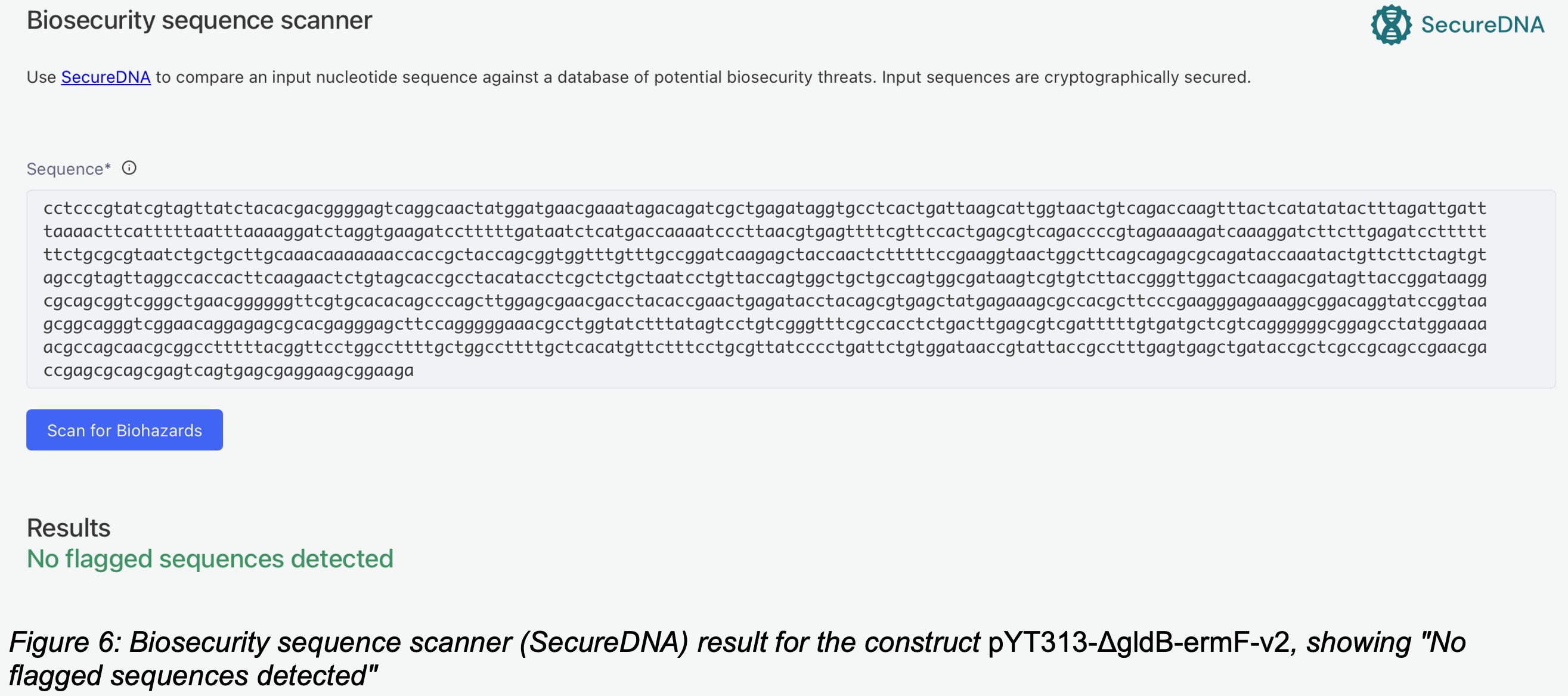
Figure 5: Biosecurity sequence scanner (SecureDNA) result for the construct pYT313-ΔgldB-ermF-v2, showing “No flagged sequences”.
Part 5: From design to build
A sequence in software is not yet DNA. Here I explain how my construct (pYT313-ΔgldB-ermF-v2, 4,357 bp) would actually be synthesized and assembled.
How would I build it?
I would build this construct by commercial DNA synthesis of the cassette (gldB-homology-arm + ermF, ~1,671 bp) followed by Gibson Assembly into the pUC19 backbone (2,686 bp). The total construct is 4,357 bp, which is well within the range of commercial synthesis. Gibson Assembly is ideal here because it allows joining multiple fragments in a single isothermal reaction, without needing restriction sites (Gibson et al. 2009). This is simpler and more flexible than traditional restriction cloning.
What does synthesis constrain?
DNA synthesis has error rates and can struggle with high GC content, repeats or secondary structures. gldB is a native C. lytica sequence, so it may contain some of these. To reduce the risk, I would order the cassette in two or three smaller fragments and assemble them by Gibson. If sequencing finds errors, I could use protein-mediated error correction (Carr et al., 2004).
Prototype vs. scale
For the prototype, I would order the synthesized cassette and clone it into pUC19 using Gibson Assembly, then transform into E. coli for propagation. This is a standard, cost-effective approach for a single construct. For scale, if I needed many variants of the knockout plasmid (e.g., to test different homology arm lengths), I could use chip-based oligo synthesis (Kosuri et al. 2010; Tian et al. 2004) to generate pools of variants, then assemble them by Gibson. This would be more cost-effective than ordering each construct individually.
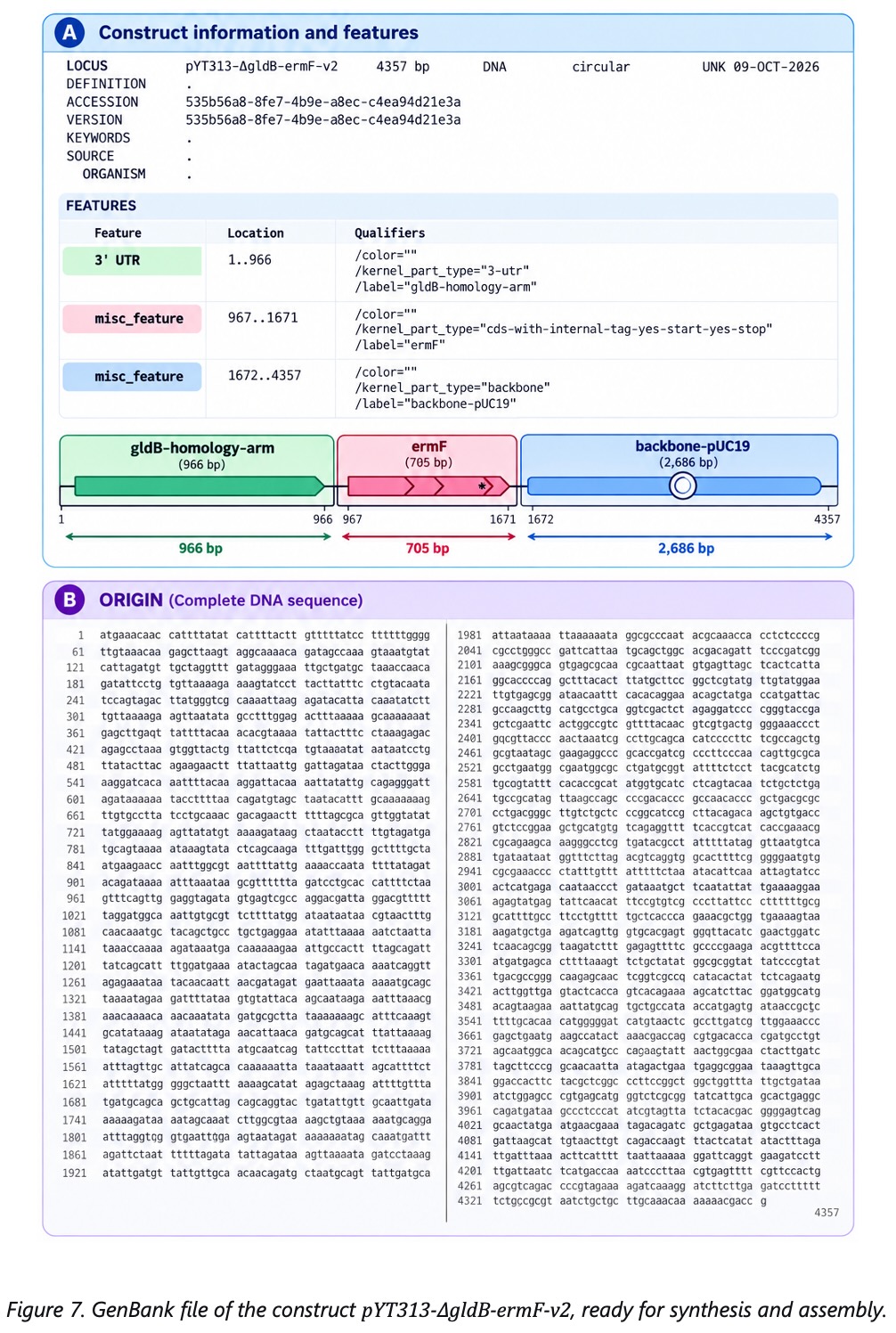
Figure 6. GenBank file of the construct pYT313-ΔgldB-ermF-v2, ready for synthesis and assembly.
Part 6: What don’t you know yet?
The main uncertainties in my current design are:
1. Will the knockout of gldB actually eliminate iridescence?
The central hypothesis of my project (not a shown fact) is that gldB is needed for the self-organization that produces structural color. However, it is possible that deleting gldB does not completely eliminate iridescence or that other genes compensate for its loss.
How I would find out: I would compare the wild-type and ΔgldB strains visually and with optical measurements (reflectance spectroscopy). If iridescence is not fully lost, I would test additional motility genes (e.g., gldJ, gldK) as alternative targets.
2. Will the suicide plasmid integrate correctly into the C. lytica chromosome?
Homologous recombination is not always efficient, and the plasmid may integrate at the wrong site or not at all. Additionally, C. lytica is a marine bacterium and may be difficult to transform. I also do not know whether this strain can take up foreign DNA at all (the same open question as in Week 1).
How I would find out: I would use colony PCR with primers that flank the gldB locus. A larger PCR product (due to the inserted ermF cassette) would confirm integration. I would also sequence the PCR product to verify the insertion site. If transformation fails, I would optimize the electroporation protocol (voltage, capacitance, recovery time).
3. Will ermF provide reliable selection in C. lytica?
Although ermF is a standard erythromycin resistance marker, its expression level in C. lytica may not be sufficient for selection, or the antibiotic concentration may need optimization.
How I would find out: I would plate transformed cells on increasing concentrations of erythromycin (e.g., 1, 5, 10, 20 µg/mL) and identify the minimum concentration that inhibits wild-type growth but allows transformed cells to grow. If selection is weak, I would test a stronger promoter or a different resistance marker.
4. Does my construct really disrupt gldB?
The plasmid carries the complete gldB gene as its only homology region, with ermF next to it and no sacB. With a single crossover, the integrated plasmid would leave one intact copy of gldB, so the gene might stay functional. This prototype is therefore a test of the design logic, not a finished knockout design.
How I would fix it: I would redesign the homology region as an internal fragment of gldB (about 500 bp, without the start and stop codons) so that integration truncates both copies, or use two flanking arms with sacB counterselection, as in pYT313 (Wang et al., 2017). In both cases I would check the result by colony PCR and sequencing.
Conclusion: These are the main bets in my design. The knockout of gldB is the central hypothesis and the homology-region design, the transformation and the selection steps are the main technical risks. Each can be tested with simple experiments (optical measurements, colony PCR, antibiotic titration) before scaling up.
AI
I used ChatGPT (OpenAI) as a learning and brainstorming tool during the development of this project and also used Claude (Anthropic) to check this submission against the assignment instructions and the literature and to review my reasoning about the design. I used these tools to explore the biology of Cellulophaga lytica, understand the mechanism of gliding motility, find the gldB gene sequence in KEGG, and organize my ideas for the construct design.
I reviewed and revised all information generated by AI and I take responsibility for the final content, assumptions, and decisions presented in this submission.
Representative prompts used:
- “What living systems could produce an adaptive photonic material with a measurable optical response?”
- “How does the gldB gene relate to gliding motility and iridescence in Cellulophaga lytica?”
- “Help me find the sequence of the gldB gene (Celly_2006) in KEGG.”
- “How do I design a suicide plasmid for gene knockout in a marine bacterium?”
- “What parts do I need to assemble a knockout construct in Kernel?”
- “How do I connect the DNA design from HW2 with the cell-free reaction design for HW3?”
References
- Carr, P. A., et al. (2004). Protein-mediated error correction for de novo DNA synthesis. Nucleic Acids Research, 32, e162. https://doi.org/10.1093/nar/gnh160
- Gibson, D. G., et al. (2009). Enzymatic assembly of DNA molecules up to several hundred kilobases. Nature Methods, 6, 343–345. https://doi.org/10.1038/nmeth.1318
- Johansen, V. E., et al. (2018). Genetic manipulation of structural color in bacterial colonies. PNAS, 115, 2652–2657. https://doi.org/10.1073/pnas.1716214115
- Kientz, B., Vukusic, P., Luke, S., & Rosenfeld, E. (2012a). Iridescence of a marine bacterium and classification of prokaryotic structural colors. Applied and Environmental Microbiology, 78(6), 2092–2099. https://doi.org/10.1128/AEM.07339-11
- Kientz, B., Ducret, A., Luke, S., Vukusic, P., Mignot, T., & Rosenfeld, E. (2012c). Glitter-like iridescence within the Bacteroidetes especially Cellulophaga spp.: Optical properties and correlation with gliding motility. PLoS ONE, 7(12), e52900. https://doi.org/10.1371/journal.pone.0052900
- Kientz, B., Luke, S., Vukusic, P., Péteri, R., Beaudry, C., Renault, T., Simon, D., Mignot, T., & Rosenfeld, E. (2016). A unique self-organization of bacterial sub-communities creates iridescence in Cellulophaga lytica colony biofilms. Scientific Reports, 6, 19906. https://doi.org/10.1038/srep19906
- Kosuri, S., et al. (2010). Scalable gene synthesis by selective amplification of DNA pools from high-fidelity microchips. Nature Biotechnology, 28, 1295–1299. https://doi.org/10.1038/nbt.1716
- Sullivan, C. J., et al. (2023). Iridescent biofilms of Cellulophaga lytica are tunable platforms for scalable, ordered materials. Scientific Reports, 13, 13192. https://doi.org/10.1038/s41598-023-38797-0
- Tian, J., et al. (2004). Accurate multiplex gene synthesis from programmable DNA microchips. Nature, 432, 1050–1054. https://doi.org/10.1038/nature03151
- Wang, X., Han, Q., Chen, G., Zhang, W., & Liu, W. (2017). A putative type II secretion system is involved in cellulose utilization in Cytophaga hutchinsonii. Frontiers in Microbiology, 8, 1482. https://doi.org/10.3389/fmicb.2017.01482
- KEGG: cly:Celly_2006 (gldB). https://www.kegg.jp/entry/cly:Celly_2006
- ENA accession M77789.2 (pUC19). https://www.ebi.ac.uk/ena/browser/view/M77789.2