Week 3 HW: Cell-Free Reaction Design
HTBAA Homework #3: Cell-Free Reaction Design
Overview:
In this assignment, I designed cell-free protein synthesis (CFPS) reaction compositions for three target proteins: sfGFP, PETase, and Reteplase. The goal is to optimize the cost per gram of functional protein. I also compared published CFPS formulations and contributed a new reagent to the community inventory.
Part A: Compare cell-free reaction compositions
Why does the concentration of potassium glutamate and magnesium glutamate differ between compositions? Which is more sensitive?
Potassium glutamate (K-Glu) and magnesium glutamate (Mg-Glu) have different roles. K-Glu mainly controls ionic strength and provides glutamate as a compatible solute. Mg-Glu is critical for ribosome function and ATP regeneration. Mg-Glu is more sensitive than K-Glu. Small changes in Mg²⁺ concentration can strongly affect translation, while K⁺ has a broader optimal range. In practice, Mg-Glu is titrated carefully (2–10 mM final), while K-Glu can vary more widely (50–300 mM final).
Explain how a PEP+NTP reaction formulation is different from a Ribose+NMP reaction formulation.
PEP+NTP: Uses phosphoenolpyruvate (PEP) as the energy source and nucleotide triphosphates (NTPs) as building blocks. PEP regenerates ATP through pyruvate kinase. This formulation is fast and high-yielding but expensive because NTPs (especially *CTP, GTP, UTP¨) are costly.
Ribose+NMP: Uses ribose as the energy source and nucleotide monophosphates (NMPs) as building blocks. Ribose is metabolized through the pentose phosphate pathway to regenerate ATP, and NMPs are converted to NTPs by the lysate enzymes. This formulation is cheaper because NMPs are much less expensive than NTPs, but it may be slower and require more optimization.
In short: PEP+NTP = expensive, fast, high yield **Ribose+NMP ** = cheaper, slower but cost-effective
Choose two cell-free reaction compositions from the literature, compare and contrast the choice of reagents and the concentration of reagents.
Composition 1: PANOx-SP (Jewett & Swartz 2004)
- Uses PEP as energy source and NTPs as building blocks
- High concentrations of potassium glutamate (175–250 mM) and magnesium glutamate (8–12 mM)
- Includes 17 amino acids, folinic acid, NAD, CoA and spermidine
- Redox environment: reducing (DTT present)
- Best for: soluble proteins without disulfide bonds (like sfGFP)
Composition 2: Cost-optimized formulation (Olsen et al. 2026)
- Uses ribose and NMPs instead of PEP and NTPs to reduce cost
- Lower concentrations of potassium glutamate (~100–150 mM) and magnesium glutamate (~5–8 mM)
- Includes spermidine and improved pH buffering (HEPES-KOH)
- Redox environment: oxidizing (GSSG/GSH) for proteins with disulfide bonds
- Best for: proteins with disulfide bonds (like Reteplase) and cost optimization
Comparison: PANOx-SP is optimized for high yield but is more expensive. The Olsen formulation is optimized for low cost per gram by replacing expensive NTPs with NMPs and ribose.
Part B: Design reaction compositions for each protein
I designed three CFPS compositions for sfGFP, PETase, and Reteplase. Each composition has a total volume of 20,000 nL (20 µL) and follows the fixed components:
- 5,000 nL lysate
- 2,000 nL DNA template
- 2,000 nL base buffer
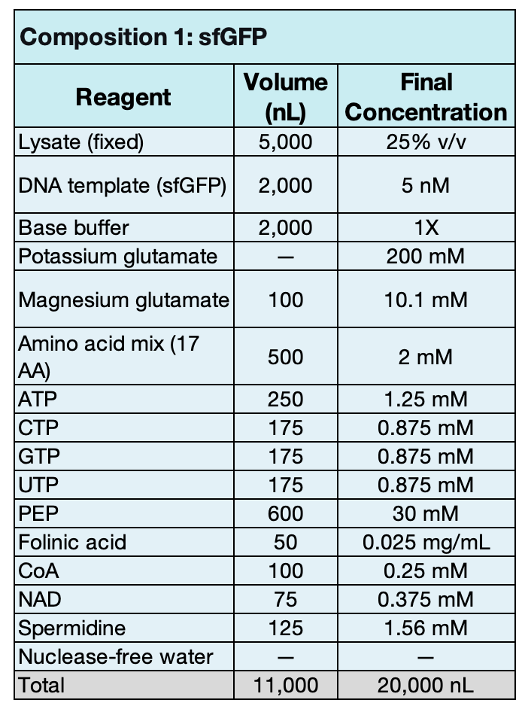
Figure 1. sfGFP composition submitted to coopetition.htgaa.org
Justification: This is a standard formulation for soluble proteins without disulfide bonds. It uses PEP as the energy source and NTPs for transcription. The environment is reducing (no GSSG/GSH), which is compatible with sfGFP. The K-Glu concentration was set to 200 mM, which is within the optimal range of PANOx-SP (175–250 mM).
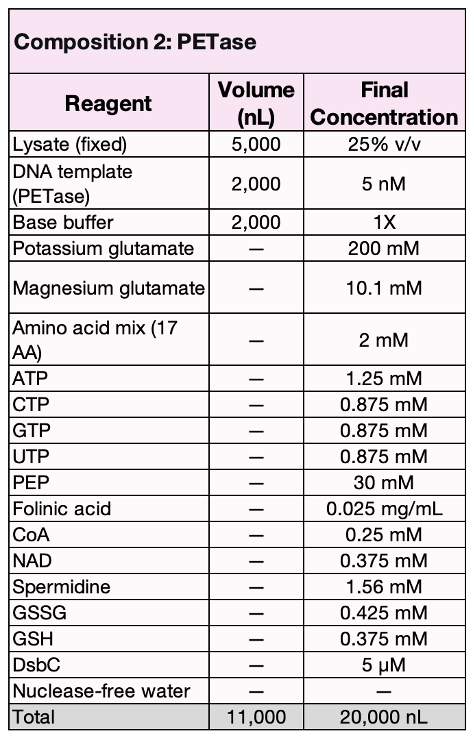
Figure 2. PETase composition submitted to coopetition.htgaa.org
Justification: PETase has 1 disulfide bond, so it needs a slightly oxidizing environment. The GSSG:GSH ratio is approximately 1.13:1 (0.425 mM : 0.375 mM), which favors disulfide bond formation. DsbC (5 µM) helps correct any mispaired disulfides. The K-Glu concentration was set to 200 mM, which is within the optimal range of PANOx-SP (175–250 mM)
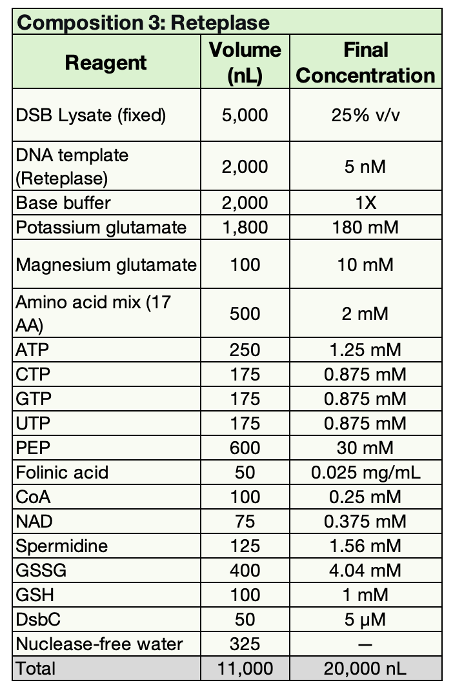
Figure 3. Reteplase composition submitted to coopetition.htgaa.org
Justification: RReteplase has 9 disulfide bonds and needs a strongly oxidizing environment. DSB lysate is used (no DTT, treated with IAM), and a high GSSG/GSH ratio (4.04 mM : 1 mM) plus DsbC (5 µM) helps correct disulfide pairing.
New Reagent Suggestion: Liposomes (or Nanodiscs)
I suggest adding liposomes or nanodiscs to the CFPS reagent inventory. Membrane proteins (like GldB in C. lytica) are difficult to express in standard CFPS because they are hydrophobic and tend to aggregate. Adding liposomes or nanodiscs provides a lipid environment that mimics the cell membrane, allowing the protein to fold correctly. This is relevant for my photonic biofilm project, where GldB is a membrane lipoprotein.
Part C: Asimov Kernel (optional)
T7-compatible plasmids for cell-free expression
I built three T7-compatible plasmids in Kernel for sfGFP, PETase, and Reteplase. Each plasmid contains a T7 promoter, an RBS, the coding sequence for the target protein, and a T7 terminator in a pUC19 backbone.
T7-sfGFP plasmid:
- T7 promoter (drives transcription by T7 RNA polymerase)
- RBS-pET (initiates translation)
- sfGFP CDS (240 amino acids, 27 kDa)
- T7 terminator (ends transcription)
- pUC19 backbone (provides ori and AmpR)
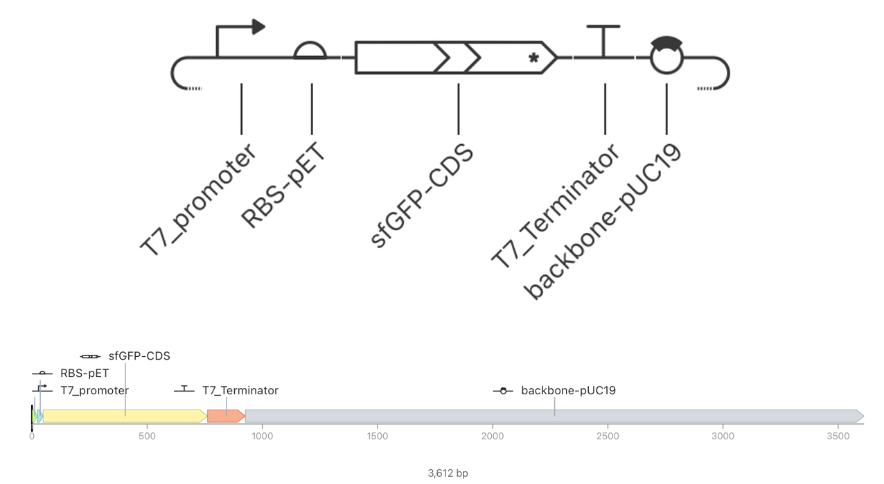
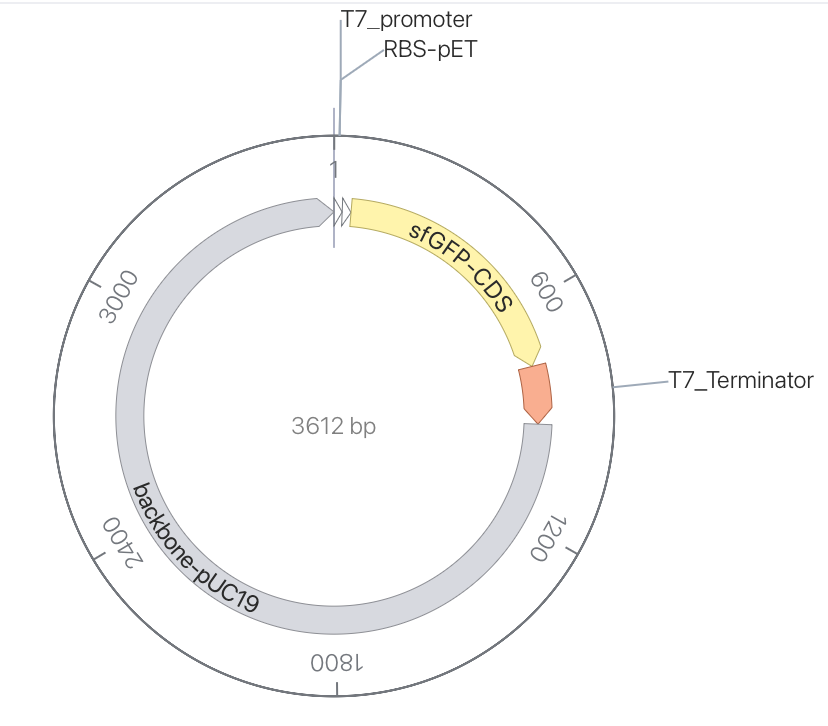
Figure 4. T7-sfGFP plasmid map
T7-PETase plasmid:
- T7 promoter (drives transcription by T7 RNA polymerase)
- RBS-pET (initiates translation)
- PETase CDS (918 bp, 309 amino acids, 33 kDa)
- T7 terminator (ends transcription)
- pUC19 backbone (provides ori and AmpR)
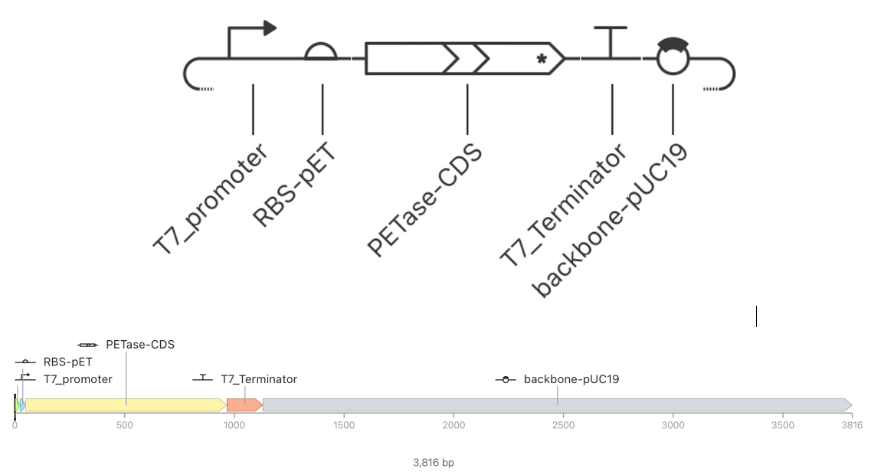
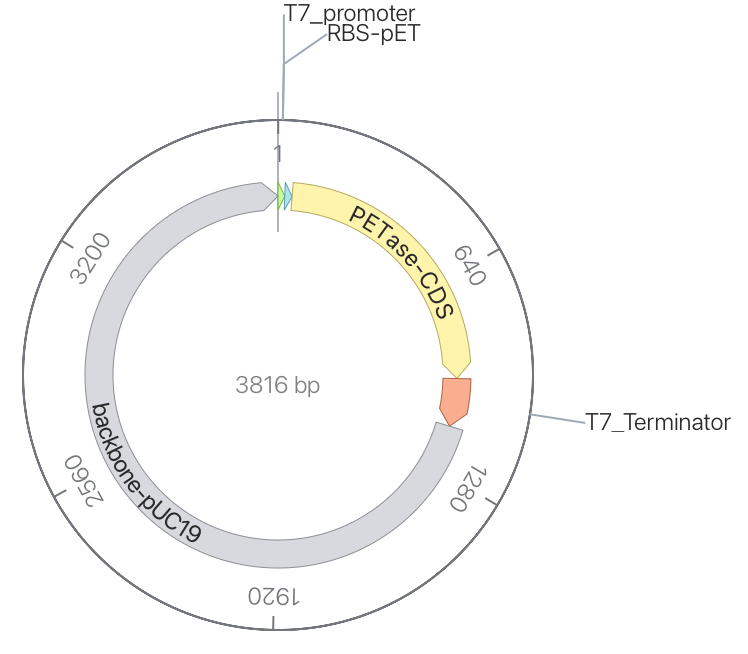
Figure 5. T7-PETase plasmid map (3,816 bp). The construct contains a T7 promoter, RBS-pET, PETase CDS, T7 terminator, and pUC19 backbone.
T7-Reteplase plasmid:
- T7 promoter (drives transcription by T7 RNA polymerase)
- RBS-pET (initiates translation)
- Reteplase CDS (1,200 bp, 399 amino acids, 44 kDa)
- T7 terminator (ends transcription)
- pUC19 backbone (provides ori and AmpR)
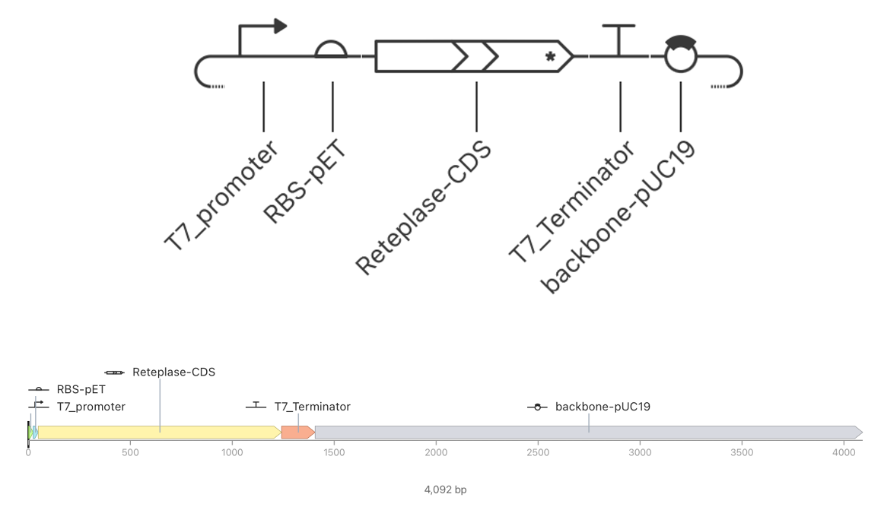
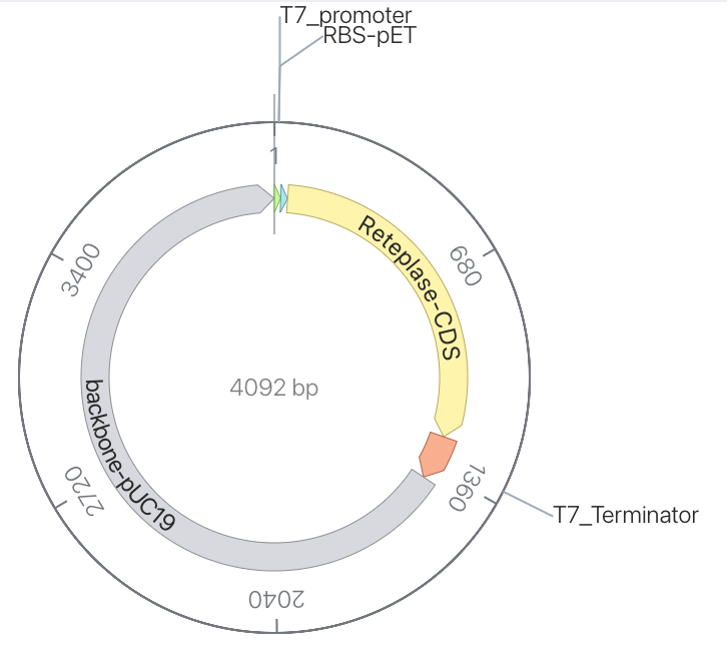
Figure 6. T7-Reteplase plasmid map (4,092 bp). The construct contains a T7 promoter, RBS-pET, Reteplase CDS, T7 terminator, and pUC19 backbone.
T7 helper plasmid for Reteplase
I designed a T7 helper plasmid that expresses DsbC (a disulfide-bond isomerase) to improve the yield of functional Reteplase. DsbC helps correct mispaired disulfide bonds, which is critical for Reteplase’s 9 disulfide bonds. The plasmid contains:
- T7 promoter (drives transcription by T7 RNA polymerase)
- RBS-pET (initiates translation)
- DsbC CDS (741 bp, 247 amino acids)
- T7 terminator (ends transcription)
- pUC19 backbone (provides ori and AmpR)
The total construct size is 3,612 bp.
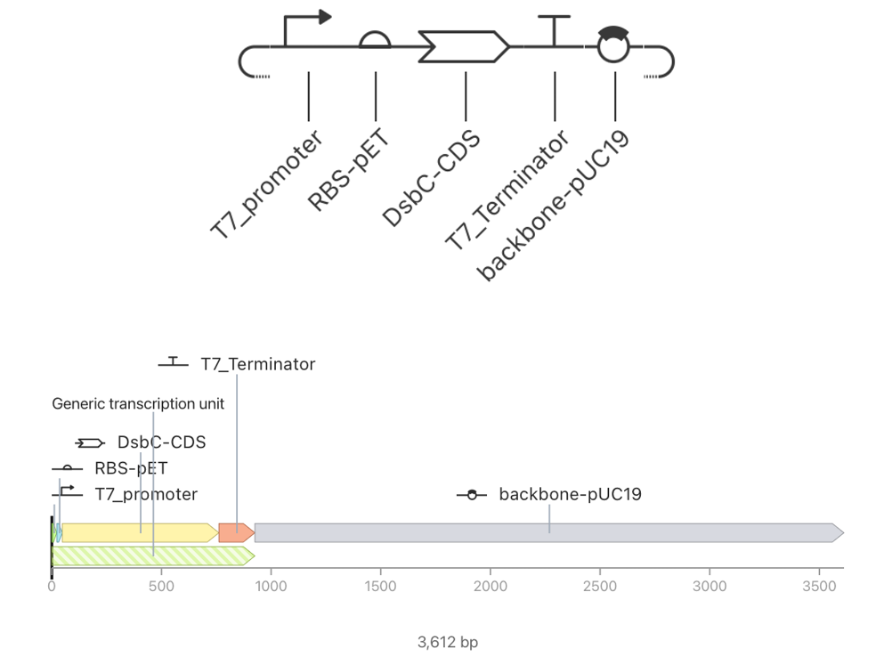
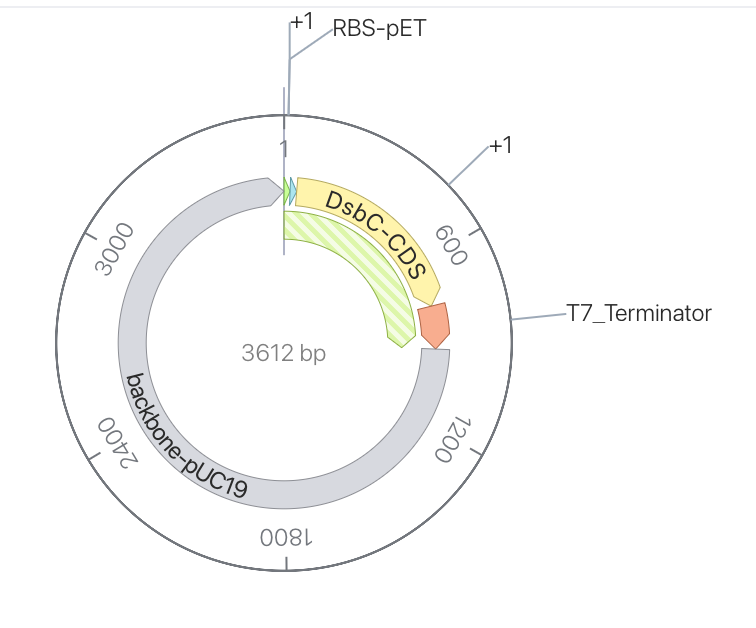
Figure 7. T7-DsbC helper plasmid map (3,612 bp). The construct contains a T7 promoter, RBS-pET, DsbC CDS, T7 terminator, and pUC19 backbone.
AI Usage
I used ChatGPT (OpenAI) as a learning assistant to help me understand CFPS concepts, compare published formulations, and structure my design reasoning. I reviewed all AI-generated content, verified it against the literature, and I take full responsibility for the final design decisions.
References
- Jewett, M. C., & Swartz, J. R. (2004). Mimicking the Escherichia colicytoplasmic environment activates long-lived and efficient cell-free protein synthesis. Biotechnology and Bioengineering, 86(1), 19–26.
- Olsen, M. L., et al. (2026). Design-driven optimization of low-cost reagent formulations for reproducible and high-yielding cell-free gene expression. Nature Communications.
- Smith, A. A., et al. (2026). Using a GPT-5-driven autonomous lab to optimize the cost and titer of cell-free protein synthesis. bioRxiv.
- Silverman, A. D., Karim, A. S., & Jewett, M. C. (2020). Cell-free gene expression: an expanded repertoire of applications. Nature Reviews Genetics, 21, 151–170.
- Rasor, B. J., et al. (2021). Toward sustainable, cell-free biomanufacturing. Current Opinion in Biotechnology, 69, 136–144.