Week 1 HW: Final Project Ideas
HOMEWORK #1
1. What do you want to make, and why?
I am looking to find the most efficient way to biomanufacture melanin nanoparticles (MNPs), specifically eumelanin, and use them as a functional UV-absorbing ingredient for a more natural and effective sunscreen that reutilizes a form of biomatter that is not only very common but often overlooked in the Peruvian context.
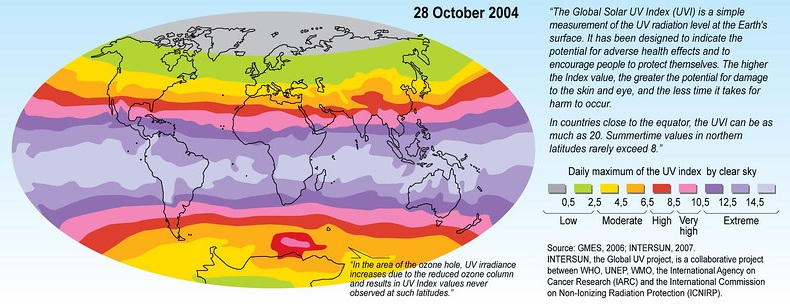
Peru has been in the middle of a public health crisis that has, ironically, been overshadowed by the current political climate. The UV index values have been reaching higher and higher levels each year, up to 18 in highland cities like Marcapomacocha, Junin [1]. Essentially, most major Peruvian cities sit in “extremely high” UV levels year-round [2]. The consequences are very real and are not met with a proportionally prepared healthcare system. Between 2021 and 2023, Peru’s Ministry of Health registered more than 3,500 cases of skin cancer [3]. Affordable, effective photoprotection is not a luxury product here, it is a public health need.
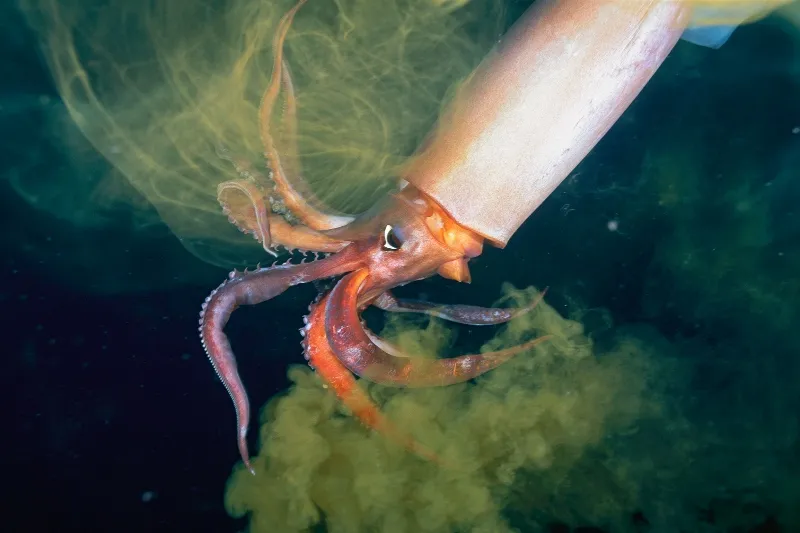
Melanin is our own way to combat the power of the sun, one that has been developed through years of evolution. This biopolymer is a broadband UV absorber, a free radical scavenger, an antimicrobial, anti-oxidant and more importantly, has shown to be an effective repellent of skin cancer [4][5]. My undergraduate thesis characterized melanin nanoparticles extracted from the ink of Dosidicus gigas (Peruvian giant squid, Humbolt squid also locally called “pota”) and confirmed its UV-absorbing and antioxidant properties. However, the next step is to find a way to manufacture these particles into an efficient and convenient product that is affordable and easy to use for the population. My approach, even if it’s a low-cost option, would be difficult to translate to a high scale production, however I found that there are other ways to produce a high yield of eumelanin. The one I want to focus on here is the engineering of a microbial cell factory that gives us a reliable amount of high-quality eumelanin.
2. What living system could make it?
Escherichia coli is going to be the choice for this project. It is probably the most well-known bacteria for research and has a fully annotated aromatic amino acid biosynthesis pathway. It also is able to be used to reach a well-established industrial fermentation system with high cell density exceeding 100 g/ L dry cell weight. Specifically for the melanin synthesis system, the annotation of its aromatic amino acid biosynthesis pathways facilitates targeted engineering, and its mechanism of feedback inhibition release is well established and applied [6].
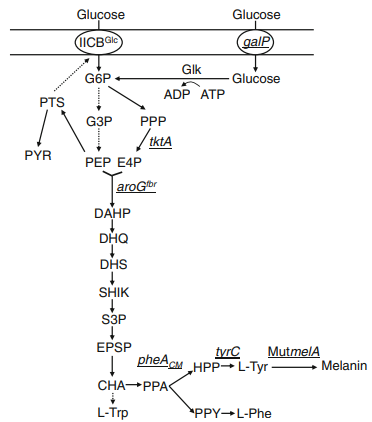
The main component for this process would be tyrosinase, an enzyme that catalyzes the oxidative conversion of L-tyrosine to dopaquinone and onward through the melanogenesis cascade to eumelanin. Chávez-Béjar et al. (2013) reported the most important early benchmark for this project: by expressing the MutmelA tyrosinase from Rhizobium etli and overexpressing feedback-resistant aroGfbr to boost L-tyrosine flux, their strain VH33MGTR reached 3.22 g/L eumelanin in a 120 h fed-batch bioreactor using glucose as the sole carbon source [7]. Their two-phase production strategy, growing cells at 32 °C first, then triggering melanogenesis at stationary phase by adding CuSO₄ (Cu²⁺ is an essential tyrosinase cofactor) and reducing temperature to 30 °C, decouples biomass accumulation from pigment production and is directly relevant to our process design.
An alternative enzymatic strategy uses 4-hydroxyphenylpyruvate dioxygenase (HPPD), which routes homogentisate toward pyomelanin rather than eumelanin. Lee et al. (2022) achieved 3.76 g/L in recombinant E. coli expressing HPPD from Flavobacterium kingsejongi, and the wild-type F. kingsejongi itself reached 6.07 g/L — the highest reported titer from a natural melanogen [8]. For our sunscreen application the tyrosinase/eumelanin route is preferable because eumelanin has the broader UV-absorption spectrum [4][5], but the HPPD yields demonstrate that titer space above 3 g/L is accessible in E. coli.
A further advance directly relevant to downstream processing comes from Kong et al. (2024), who engineered E. coli MG1655 to not only synthesize melanin but to secrete it as exosomes (~191 nm nanoparticles) upon Cu²⁺/tyrosine induction [9]. This extracellular secretion eliminates one of the more laborious steps in classical melanin production, cell lysis and pigment extraction, and the particle size of ~191 nm falls within the nanoparticle range already associated with good skin penetration and UV-scattering performance in sunscreen formulations [4][5].
3. How would you automate its production?
I would focus in applying a two-way process including combinatorial strain screening and manufacturing-scale fermentation.
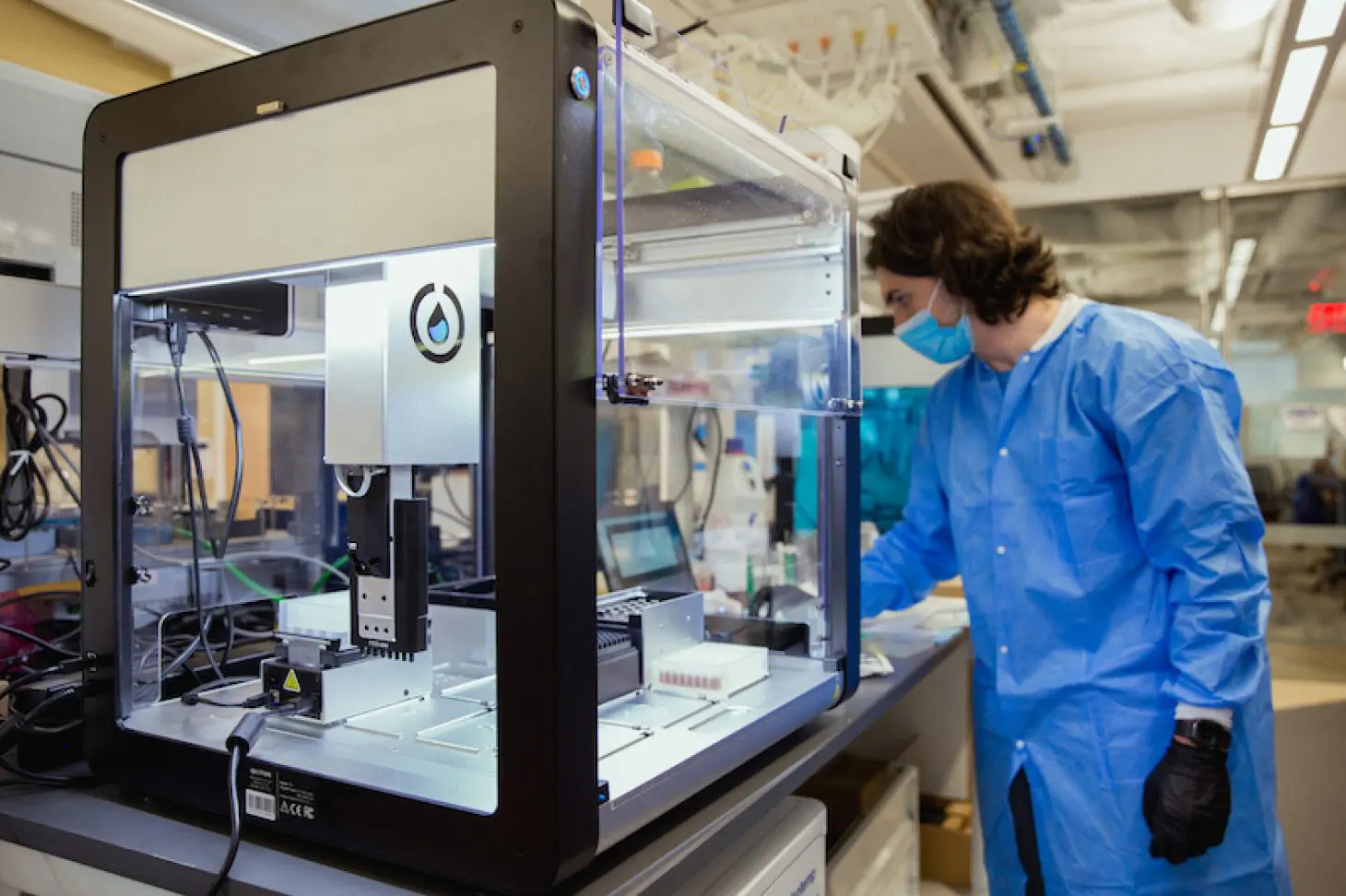
At the strain-development stage, the Opentrons OT-2 liquid-handling robot can run 96-well plate assays in parallel, varying parameters like CuSO₄ concentration (Zou et al. 2025 showed 30 mg/L is as effective as 50 mg/L, with less copper toxicity to the host [10]), induction timing, carbon source concentration (optimal at 5 g/L glucose in flask conditions [10]), and aroGfbr expression level. Melanin output from each well is quantifiable by absorbance at 400 nm, making high-throughput screening straightforward without specialized equipment. This mirrors how the HTBAA course has used OT-2 for combinatorial biology tasks [11].
At manufacturing scale, the process maps directly onto standard fed-batch bioreactor operation. The two-phase strategy described by Chávez-Béjar et al. [7], automated pH control, dissolved oxygen monitoring, glucose feed control, and a programmed CuSO₄ injection trigger at the onset of stationary phase, is implementable in any instrumented bioreactor with a programmable logic controller. Cloud laboratory platforms such as Strateos or Ginkgo Bioworks provide robotic bioreactor execution with remote protocol deployment, enabling iterative design-build-test-learn cycles without requiring hands-on fermentation time at each iteration [11].
Downstream, melanin is recovered from the broth by acid precipitation (lowering pH to approximately 2 using a HCl solution), centrifugation, washing, and drying, a process compatible with continuous centrifuge systems at scale. If the Kong et al. secretion strain [9] is used, the melanin-laden exosomes are already in the supernatant, and cell removal by centrifugation or cross-flow filtration becomes the primary separation step, skipping lysis entirely.
4. How much do you need, and how long will it take?
I would say that given that the main target population, at least currently, are around 35 million people that live in Peru and are constantly exposed to the highly dangerous UV levels. As a first viable proof-of-concept deployment, I will estimate serving 1,000 people, a pilot group small enough to run as a controlled study, large enough to generate statistically meaningful SPF performance and skin tolerance data before scaling further. A clinically meaningful sunscreen requires an active ingredient with real UV-absorbing mass. Using the formulation parameters from Alcalá-Alcalá et al. (2023), who demonstrated SPF > 30 protection with 1% w/w melanin nanoparticle inclusion in a cream base, and assuming a standard 30 mL daily application of a cream at ~200 mg/mL density, each person uses approximately 60 mg of MNPs per day [12]. Scaling to 1,000 users over one year:
graph LR
    A["1,000 persons × 0.060 g/day × 365 days"] --> B["21.9 kg eumelanin / year"]
Using the 3.22 g/L titer established by Chávez-Béjar et al. in their optimized bioreactor [7], a single 10,000 L production fermentor yields around 32.2 kg per batch, meaning the entire annual supply for the pilot group is covered by less than one batch. Even at the 100 L pilot-bioreactor scale typical of university or startup facilities, one batch yields 322 g, so roughly 68 pilot-scale runs would cover the year’s demand. This makes the pilot entirely feasible without industrial infrastructure. If strain engineering pushes titers toward the 5.58–7.57 g/L range reported in flask conditions by Zou et al. (2025) using autonomous tyrosine biosynthesis [10], cost per gram drops by 70–73% [10], making the economics of a pilot study even more accessible. Regulatory testing for SPF performance, by in vitro testing with the Mansur equation or the ISO 24444 human testing standard, and a DIGEMID (General Directorate of Medicines, Supplies, and Drugs) review in Peru would add from 12 to 24 months to the timeline before a commercial launch [13][14]. A realistic timeline from strain finalization to pilot deployment is around 2 years, with the first 12 months dedicated to strain optimization and formulation characterization.
5. What don’t you know yet?
There are a few concerns that I would like to address beforehand. First off, in a biological sense, the relationship between fermentation conditions and nanoparticle size distribution is not that predictable. Kong et al. showed that E. coli can secrete melanin particles averaging ~191 nm [9], but particle size in a sunscreen formulation affects both SPF performance and skin penetration depth and the size of the MNP obtained by a glucose-fed fermentation have not been extensively mapped. There are some ways I could find some referential results, like using a skin-like replacement, pig skin for example, and testing the amount of UV absorption both before and after the application of the cream. The test could also be used to evaluate both the tyrosinase route and the HPPD route and determine which one has a superior SPF. Another issue I am not particularly familiar with is the legal and regulatory pathway in Peru. DIGEMID doesn’t have that much experience with genetically modified organisms so while the required testing can be achieved in a university laboratory setting, the approval timeline and the question of whether GMO-derived melanin needs a different dossier from chemically identical melanin extracted from squid ink are genuinely open questions that will determine the commercial feasibility of the whole project.
References
[1] Infobae. (2024, January 27). Perú tiene el índice de rayos UV más alto del mundo: ¿A qué se debe la alarmante situación del país andino? https://www.infobae.com/peru/2024/01/27/peru-tiene-el-indice-de-rayos-uv-mas-alto-del-mundo-a-que-se-debe-la-alarmante-situacion-del-pais-andino/
[2] Black, A. T. (2024). Ultraviolet B (UVB). In P. Wexler (Ed.), Encyclopedia of Toxicology (4th ed., pp. 655–661). Academic Press. https://doi.org/10.1016/B978-0-12-824315-2.00611-4
[3] Ministerio de Salud del Perú. (2023, September 13). Cuidado con el sol: Minsa registró más de 3 500 casos de cáncer de piel del 2021 al 2023. https://www.gob.pe/institucion/minsa/noticias/904693-cuidado-con-el-sol-minsa-registro-mas-de-3500-casos-de-cancer-de-piel-del-2021-al-2023
[4] Narayanan, S., Kurian, N. K., & Bhat, S. G. (2020). Ultra-small pyomelanin nanogranules abiotically derived from bacteria-secreted homogentisic acid show potential applications in inflammation and cancer. BioNanoScience, 10(1), 191–203.
[5] Mavridi-Printezi, A., Guernelli, M., Menichetti, A., & Montalti, M. (2020). Bio-applications of multifunctional melanin nanoparticles: From nanomedicine to nanocosmetics. Nanomaterials, 10(11), 2276.
[6] Zou, L., Liu, J., Hu, Y., Zhao, Y., & Liu, X. (2025). Cost-effective melanin production using engineered Escherichia coli with autonomous tyrosine biosynthesis. Journal of Biotechnology, 408, 151–157. https://doi.org/10.1016/j.jbiotec.2025.09.009
[7] Chávez-Béjar, M. I., Lara, A. R., López, H., Hernández-Chávez, G., Rahman, A., Martínez, A., Bolívar, F., & Gosset, G. (2013). Metabolic engineering of Escherichia coli to optimize melanin synthesis from glucose. Microbial Cell Factories, 12, 108. https://doi.org/10.1186/1475-2859-12-108
[8] Lee, H. S., Choi, J. Y., Kwon, S. J., Park, E. S., Oh, B. M., Kim, J. H., & Lee, P. C. (2022). Melanin biopolymer synthesis using a new melanogenic strain of Flavobacterium kingsejongi and a recombinant strain of Escherichia coli expressing 4-hydroxyphenylpyruvate dioxygenase from F. kingsejongi. Microbial Cell Factories, 21, 75. https://doi.org/10.1186/s12934-022-01800-w
[9] Kong, X., Zhang, J., Li, Y., Liu, Y., Zhang, Y., Ye, C., & Wang, H. (2024). Genetically modified E. coli secreting melanin (E.melanin) activates the astrocytic PSAP-GPR37L1 pathway and mitigates the pathogenesis of Parkinson’s disease. Journal of Nanobiotechnology, 22, 690. https://doi.org/10.1186/s12951-024-02955-x
[10] Zou, L., Liu, J., Hu, Y., Zhao, Y., & Liu, X. (2025). Cost-effective melanin production using engineered Escherichia coli with autonomous tyrosine biosynthesis. Journal of Biotechnology, 408, 151–157. https://doi.org/10.1016/j.jbiotec.2025.09.009
[11] Thieme, A., Renwick, S., Marschmann, M., Guimaraes, P. I., Weissenborn, S., & Clifton, J. (2024). Deep integration of low-cost liquid handling robots in an industrial pharmaceutical development environment. SLAS Technology, 29(5), 100180. https://doi.org/10.1016/j.slast.2024.100180
[12] Alcalá-Alcalá, S., Llánes-Bernabe, A., Figueroa-González, G., Fabila-Bustos, D. A., Villegas-Álvarez, F., Borbolla-Jiménez, F. V., Leyva-Gómez, G., & Del Prado-Audelo, M. L. (2023). Recombinant melanin nanoparticles as potential ingredients of photoprotective formulations. Polymers, 15(10), 2381. https://doi.org/10.3390/polym15102381
[13] Sayre, R. M., Agin, P. P., LeVee, G. J., & Marlowe, E. (1979). A comparison of in vivo and in vitro testing of sunscreening formulas. Photochemistry and Photobiology, 29(3), 559–566. https://doi.org/10.1111/j.1751-1097.1979.tb07098.x
[14] Gabros, S., Patel, B. C., & Zito, P. M. (2025). Sunscreens and photoprotection. StatPearls Publishing. https://www.ncbi.nlm.nih.gov/books/NBK537164/
*AI assistance: Used Claude Sonnet 4.6 (Anthropic) to aid in the arragement. Prompt: " Rearrange the citations, including those I have used in my thesis bibliography and the new sources I recently found”.