Week 1 HW: Final Project Ideas
HTBAA Homework #1 — Recombinant human lactoferrin in Komagataella phaffii
# 1. What I would like to biomanufacture and why
I would like to biomanufacture recombinant human lactoferrin (hLF) using engineered yeast.
Human lactoferrin is an approximately 80-kDa iron-binding glycoprotein found naturally in human milk. It has several important biological functions, including binding iron, limiting microbial growth, supporting immune responses, and interacting with intestinal and immune cells.
Lactoferrin has also been studied for its potential to protect against bacterial infections, influence inflammation, and support the development of the intestinal and immune systems, particularly in newborns.
Because of these biological functions, human lactoferrin has potential applications in infant nutrition, therapeutics, and other health-related products.
My project would focus on producing hLF using engineered Komagataella phaffii and improving the productivity of the existing production process. A 2024 study achieved 3.1 g/L extracellular hLF in a 3-L bioreactor, showing that K. phaffii can produce hLF at relatively high concentrations. Additionally, a private company, Heleina, has commercialized the production of hLF using yeast. This proves that it can be done at a large scale
The goal of my project would be to improve this process by increasing hLF production, secretion, and overall process efficiency, while maintaining the quality and biological activity of the final protein.
2. What living system would I use?
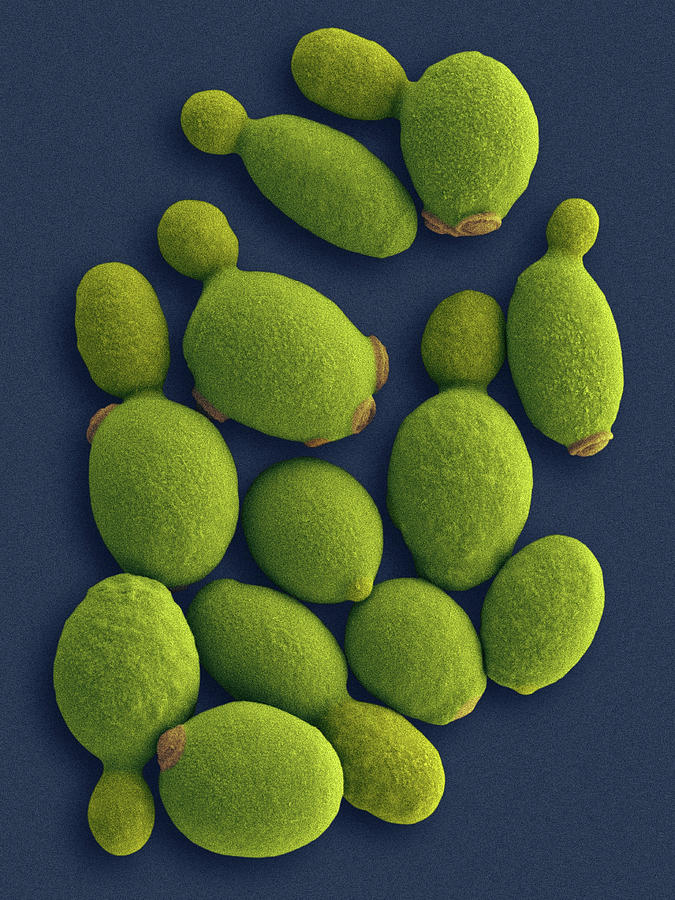
I would use the yeast Komagataella phaffii as the production chassis.
K. phaffii is attractive because it can reach high cell densities, is widely used for recombinant protein production, and has a eukaryotic secretory pathway capable of producing complex proteins. Engineering of its secretion, folding, glycosylation, and metabolic pathways has become an important strategy for improving recombinant protein production.
The system has already been demonstrated for industrial hLF production. Helaina’s published process uses K. phaffii in batch, fed-batch, and induction phases, followed by cell removal and downstream purification.
More recently, Wang et al. demonstrated that engineering the secretion pathway can substantially increase extracellular hLF production. Their work specifically addressed intracellular hLF accumulation by modifying secretion signals and vesicle trafficking, ultimately achieving 3.1 g/L extracellular hLF in a 3-L bioreactor.
I would investigate host tolerance and secretion capacity as potential bottlenecks.
Potential engineering strategies could include:
- increasing secretion efficiency
- optimizing secretion signals
- increasing ER protein-folding capacity
- improving vesicle trafficking
- reducing intracellular proteolysis
- optimizing hLF gene copy number
- optimizing iron availability
- optimizing fermentation conditions (to prevent cell death from the product)
The goal would be to prevent the production system from reaching a point where increasing hLF expression simply increases intracellular accumulation and cellular stress.
3. How would I use automation?
I would use a liquid-handling robot such as an Opentrons to screen many yeast strains and fermentation conditions simultaneously.
Variables could include:
- hLF gene copy number
- secretion signal
- ER folding capacity
- secretion pathways
- iron concentration
- temperature
- pH
- induction conditions
The robot would automatically grow the strains, collect samples, and measure:
growth + viability + extracellular hLF + intracellular hLF
This would allow me to identify strains that produce high amounts of hLF while maintaining good growth and secretion.
The best strains could then be tested in progressively larger bioreactors.
4. How much would I need to make, and how long would it take?
(a) How much?
As a simple example, I would calculate the amount required for a hypothetical 1,000-infant program.
Assuming:
- 1,000 infants
- 1.5 kg average weight
- 150 mg/kg/day
- 28 days
Each infant would require:
1.5 × 150 × 28 = 6.3 g
For 1,000 infants:
6.3 g × 1,000 = 6.3 kg
Assuming 70% recovery during production and purification:
6.3 kg ÷ 0.70 = 9 kg
Therefore, I would use approximately 9 kg of purified hLF as a manufacturing target.
(b) How long?
The 2024 study produced 3.1 g/L of hLF in a 3-L bioreactor, however, the length of time is unknown since that information is behind a paywall.
At this titer and assuming 70% recovery:
9,000 g ÷ (3.1 g/L × 0.70) ≈ 4,150 L
Therefore, approximately 4,150 L of fermentation broth would be required.
If using a 1,000-L working-volume reactor, this would require approximately 5 production batches.
If each batch takes approximately one week, including fermentation, harvest, and reactor turnaround, production would take roughly 5 weeks. Additional time would be needed for downstream purification and quality testing.
The actual timeline would depend on fermentation duration, reactor utilization, downstream-processing capacity, and the final productivity of the engineered strain.
Improving the titer would reduce both the required fermentation volume and production time.
5. What don’t I know yet?
- What is the major limitation at high hLF production?
The recent 3.1-g/L study provides an important clue: secretion was a major bottleneck.
The researchers observed substantial intracellular accumulation of hLF. By optimizing secretion signals and vesicle trafficking, they were able to substantially increase extracellular production and reduce the intracellular/extracellular ratio from 1.69:1 to approximately 1.01:1.
This suggests that simply increasing hLF gene expression may not be sufficient.
I would therefore want to determine whether the next bottleneck is:
gene expression → folding → ER processing → vesicle trafficking → secretion → extracellular stability
or some combination of these processes.
- Can I improve secretion beyond the current 3.1-g/L benchmark?
The Wang et al. study provides a particularly interesting starting point because it already identified secretion as an important limitation.
I would therefore investigate whether additional engineering could further increase the amount of hLF exported from the cell.
Potential targets could include:
- alternative signal peptides
- additional vesicle-trafficking components
- ER chaperones
- protein disulfide isomerase
- unfolded-protein-response pathways
- protease reduction
- gene copy-number optimization
I would specifically measure intracellular hLF vs. extracellular hLF and calculate:
Secretion efficiency = extracellular hLF / (extracellular hLF + intracellular hLF)
This would allow me to distinguish between a strain that simply makes more hLF and a strain that actually has a more efficient secretion system.
- Can I improve productivity without compromising product quality?
Increasing titer is not sufficient if the resulting protein has inappropriate glycosylation, aggregation, degradation, or reduced biological activity.
The optimized strain would therefore need to be evaluated for:
- hLF concentration
- purity
- aggregation
- glycosylation
- structural integrity
- iron-binding activity
- biological activity
This is particularly important because recombinant hLF produced in K. phaffii can be structurally very similar to native hLF while still having differences in its N-glycosylation pattern. Industrial-scale characterization of Helaina’s recombinant hLF provides an important reference for evaluating product quality.
The ideal production strain would therefore not simply maximize hLF concentration. It would maximize:
- functional hLF produced per unit of reactor volume and time while maintaining an appropriate product-quality profile.
Key references
- Wang et al. (2024), Engineering a transport pathway to boost extracellular production of human lactoferrin in Komagataella phaffii. Food Bioscience. — 3.1 g/L hLF benchmark.
- Griffiths et al. (2019), Enteral lactoferrin supplementation for very preterm infants. The Lancet. — ELFIN trial.
- Characterization of recombinant human lactoferrin expressed in Komagataella phaffii (2024). — Industrial-scale hLF production.
- Advances in Cell Engineering of the Komagataella phaffii Platform for Recombinant Protein Production (2022). — Yeast engineering and secretion strategies.
AI Use Disclosure
I used ChatGPT (OpenAI) as a research and brainstorming tool during development of this proposal. AI was used to help identify relevant scientific concepts, organize the proposed biomanufacturing strategy, compare production approaches, and refine the experimental and process-development framework. Scientific claims and references were independently reviewed against the cited literature.
Example prompts used included:
“I want to develop a biomanufacturing project around recombinant human lactoferrin production in yeast. Help me identify the major technical challenges and opportunities for improving productivity.”
“What are the main challenges associated with producing recombinant human lactoferrin in Komagataella phaffii?”
“Is lactoferrin toxic or antimicrobial to yeast, and could this create a host–product conflict during recombinant production?”
“How could yeast be engineered to improve lactoferrin secretion, folding, stability, and tolerance?”
“Design an automated screening and optimization strategy for improving recombinant human lactoferrin production in yeast.”