I’m a biotechnology engineer from Ecuador, currently working as a lab assistant responsible for the molecular biology laboratory at Universidad Politécnica Salesiana (UPS). During my internships and undergraduate thesis, I worked on protein expression and purification in E. coli, which sparked my interest in molecular and synthetic biology more broadly. I’m especially drawn to biomanufacturing of recombinant therapeutics — figuring out how to make the molecules people need more accessible and scalable.
See the nav bar on the left to look through my work for How To
Biomanufacture Almost Anything (Fall 2026)!
Subsections of Camila Naranjo — HTBAA Fall 2026
Week 1 HW: Final Project Ideas
HTBAA Homework #1
Name: Camila Naranjo
I would like to biomanufacture alpha-1 antitrypsin (AAT), a glycoprotein that protects the lungs from damage caused by proteolytic enzymes. The production of this glycoprotein is intended to improve the quality of life for people with alpha-1 antitrypsin deficiency, an inherited condition (1). Currently, the primary treatment for this disease involves repeated administration of donated AAT, so the biomanufacturing of alpha-1 antitrypsin could make treatment more available.
For the expression system, I would consider two options, keeping in mind that, since this is a glycoprotein, post-translational modifications—especially glycosylation—will be required. CHO cells are a good option because they support post-translational modifications. On the other hand, a cell-free system derived from HEK cells could be another option.
To produce alpha-1 antitrypsin, an expression vector must first be constructed. For CHO cells, the vector must contain, in addition to the protein-coding sequence, a fluorescent gene to monitor the growth of transfected cells, an antibiotic resistance gene, a constitutive promoter, a signal peptide that allows the protein to be secreted into the medium, and, preferably, a sequence that allows the protein to be purified in downstream processes, such as a His-tag. For the cell-free system, the construct is mixed with HEK cell lysate, an energy regeneration system, amino acids, and other components necessary for protein expression.
In the AAT biomanufacturing process, vector assembly and cloning could be performed using a liquid-handling robot to reduce pipetting errors and enable parallel testing of variants. The process of optimizing expression conditions can be automated with Cloud Lab, allowing for the testing of more conditions than could be evaluated manually and thus saving production time. Once expression conditions are optimized, continuous monitoring of the cell culture can be performed using a parallel minibioreactor system with automatic, real-time data collection; in the case of cell-free systems, reaction kinetics can be monitored with an automated plate reader. Finally, the purification process would utilize automated chromatographs to ensure reproducibility.
The biomanufactured AAT is expected to benefit patients with alpha-1 antitrypsin deficiency (AATD). To estimate the potential demand for the product, Sweden was used as a reference country. (2) reported a prevalence of diagnosed AATD of 21.04 cases per 100,000 inhabitants in Sweden. Based on a current Swedish population of 10,613,531 inhabitants (3), this prevalence corresponds to approximately 2,233 diagnosed patients. However, augmentation therapy is indicated specifically for patients with severe AAT deficiency and clinically evident emphysema. (4) reported that 66% of participants in the NHLBI Registry received augmentation therapy at some point during follow-up. Applying this proportion to the estimated Swedish AATD population results in a potential target population of approximately 1,474 patients.
The FDA-approved dosage for AAT augmentation therapy is 60 mg/kg of body weight administered intravenously once weekly (5). Assuming an average patient weight of 75 kg, each patient would require approximately 4.5 g of AAT per week (60 mg/kg × 75 kg = 4,500 mg = 4.5 g), corresponding to approximately 19.55 g of AAT per patient per month (4.5 g/week × 4.345 weeks/month). Therefore, for an estimated target population of 1,474 patients, the total monthly demand would be approximately 28.82 kg of AAT (19.55 g/patient/month × 1,474 patients ≈ 28,820 g/month).
To determine how much A1AT can be produced and how long it would take, a glycoengineered Chinese Hamster Ovary (CHO) cell line producing correctly human-glycosylated A1AT was used as a reference, achieving a titer of 1.2 g/L (6). Assuming a 2,000 L bioreactor, a single batch would yield a raw titer of 2,400 g (1.2 g/L × 2,000 L). For this preliminary production model, an overall downstream recovery of 80% was assumed (7), resulting in 1.92 kg of purified A1AT per batch.
CHO fed-batch cultures can be harvested after approximately 10 days of culture (8). Downstream processing was conservatively estimated to require 7 days under a conventional batch configuration. Previous studies have demonstrated that automation and process integration can reduce downstream processing times by approximately 50% to more than 70% (9,10). Therefore, considering the automated liquid-handling and chromatography systems proposed in this work, downstream processing is conservatively expected to be completed in approximately 5 days. This gives a total cycle time of 15 days per batch, or approximately 2 batches per bioreactor per month, and a monthly output of 3.84 kg per bioreactor (2 × 1.92 kg).
To meet the monthly demand of 28.82 kg, approximately 8 bioreactors of 2,000 L would need to operate in parallel (28.82 kg / 3.84 kg ≈ 7.5, rounded up to 8), producing around 30.72 kg per month, a supply that comfortably covers demand. The first purified batch would be available approximately 15 days after production begins, with continuous monthly output sustained thereafter through the parallel bioreactor line.
References
(1) Statistics Sweden. (2026, October 7). Population Statistics.
(2) Amann, T., Hansen, A. H., Kol, S., Hansen, H. G., Arnsdorf, J., Nallapareddy, S., Voldborg, B., Lee, G. M., Andersen, M. R., & Kildegaard, H. F. (2019). Glyco-engineered CHO cell lines producing alpha-1-antitrypsin and C1 esterase inhibitor with fully humanized N-glycosylation profiles. Metabolic Engineering, 52, 143–152. https://doi.org/10.1016/j.ymben.2018.11.014
(3) Borlido, L., Azevedo, A. M., Sousa, A. G., Oliveira, P. H., Roque, A. C. A., & Aires-Barros, M. R. (2012). Fishing human monoclonal antibodies from a CHO cell supernatant with boronic acid magnetic particles. Journal of Chromatography B, 903, 163–170. http://www.sciencedirect.com/science/article/pii/S1570023212004151
(4) Campos, M. A., Geraghty, P., Holt, G., Mendes, E., Newby, P. R., Ma, S., Luna-Diaz, L. V., Turino, G. M., & Stockley, R. A. (2019). The Biological Effects of Double-Dose Alpha-1 Antitrypsin Augmentation Therapy. A Pilot Clinical Trial. American Journal of Respiratory and Critical Care Medicine, 200(3), 318–326. https://doi.org/10.1164/rccm.201901-0010OC
(5) Chatterjee. (2022). (12) United States Patent.
(6) Chen, R., Chen, X., Shi, C., Jiao, B., Shi, Y., Yao, B., Lin, D., Gong, W., & Hsu, S. (2022). Converting a mAb downstream process from batch to continuous using process modeling and process analytical technology. Biotechnology Journal, 17(11). https://doi.org/10.1002/biot.202100351
(8) Gomis-Fons, J., Löfgren, A., Andersson, N., Nilsson, B., Berghard, L., & Wood, S. (2019). Integration of a complete downstream process for the automated lab-scale production of a recombinant protein. Journal of Biotechnology, 301, 45–51. https://doi.org/10.1016/j.jbiotec.2019.05.013
(9) Stoller, J. K., Fallat, R., Schluchter, M. D., O’Brien, R. G., Connor, J. T., Gross, N., O’Neil, K., Sandhaus, R., & Crystal, R. G. (2003). Augmentation Therapy With α1-Antitrypsin. Chest, 123(5), 1425–1434. https://doi.org/10.1378/chest.123.5.1425
(10) Wahlin, S., Widman, L., & Hagström, H. (2025). Epidemiology and outcomes of alpha-1 antitrypsin deficiency in Sweden 2002-2020: A population-based cohort study of 2286 individuals. Journal of Internal Medicine, 297(3), 300–311. https://doi.org/10.1111/joim.20058
AI Client: Claude (Anthropic)
Prompts
I’m going to switch to molecular biology. Can you name an enzyme or protein that can be produced to compensate for a genetic deficiency?
I need to know how much alpha-1 antitrypsin I would need to produce and how long it would take to produce it. To perform the calculations, assume that the goal is to reach the entire population of a country, and use this article—which estimated the incidence and prevalence of alpha-1 antitrypsin deficiency in Sweden—as a reference. Consider quantities such as production rate, yield, volume, number of parallel experiments or reactors, automation throughput, or whatever parameters are most appropriate for your system. Show and explain calculations, including units, assumptions, and sources for important numbers (if it is needed, search other references).
*AI Client: Gemini Notebook
Prompts
Hi, I need you to give me the main Ideas I need to know to be able to solve Homework #1. It would be better if the ideas are classified by each question.
I need you to make a zoom-in “automation” since I have no idea about this topic, and the same for scale calculation. Is there any formula for that?
Week 2 HW: DNA Design
Part 1: Define your expression target
What molecule are you expressing?
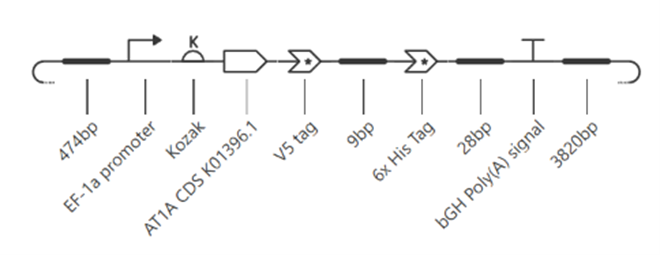
I’m expressing alpha-1-antitrypsin, a glycoprotein encoded by the SERPINA1 mRNA (GenBank accession K01396.1; NCBI Gene ID 526). I used the mRNA-derived CDS rather than the genomic SERPINA1 sequence because it is already spliced, contains no introns, and can be cloned directly as a continuous open reading frame into an expression vector. This protein requires post-translational modifications, so I chose CHO cells as the chassis. Moreover, this host is easier to scale up than HEK 293 cells. The protein has to be secreted, and the sequence already includes the native signal peptide, which directs the protein to the secretory pathway and is cleaved to release the mature protein, so no additional signal peptide is needed. The sequence is the following:
The chart below details the genetic parts needed for the construct. The backbone already contains the majority of the necessary components for the expression cassette, including the promoter and the His-tag.
Part type
Name
Where it came from?
Justification
Promoter
Promotor EF-1α
SnapGene/Backbone
A strong human constitutive promoter that tends to be stable in long-term culture. [1]
5’ UTR_Kozak
Kozak
Kozak, M [2]
Kozak consensus sequence
Signal peptide
Native signal peptide from A1AT
NCBI
Directs A1AT to the secretory pathway for direct recovery from the medium.
CDS
K01396.1
NCBI
This is the CDS that encodes A1AT and includes the signal peptide.
Tag
6xHisTag
SnapGene/Backbone
This tag will help during the purification process.
Transcription Stop
BGH PolyA
SnapGene/Backbone
It ensures efficient polyadenylation and the stability of mRNA in the cytoplasm.
Vector
pTracer™-EF/V5-His A
SnapGene
High-level expression vector, designed for visual detection of transformed E. coli cells and transfected mammalian cells.
Part 3: Assemble your construct
The construct uses the pTracer™-EF/V5-His A vector as the backbone. This vector already provides the elements required for expression in mammalian cells: the EF-1α promoter (a strong constitutive promoter that functions in CHO cells), a C-terminal V5/6xHis tag, and a polyadenylation signal. It also carries the ampicillin resistance gene (AmpR) for selection in E. coli and the bleomycin/Zeocin resistance gene (BleoR) for selection in mammalian cells. Therefore, only a few elements had to be added: a Kozak sequence and the α1-antitrypsin coding sequence (GenBank K01396.1), including its native signal peptide, which directs the protein to the secretory pathway. The insert is cloned into the multiple cloning site between the XbaI and Acc65I sites, which cut the vector once and allow directional cloning.
Codon optimization was performed for Cricetulus griseus (CHO) to match the host’s codon usage bias, which can improve translation efficiency and mRNA stability. Although human and CHO codon preferences are similar, they are not identical, and optimization also allowed me to remove unwanted restriction sites and avoid regions of extreme GC content that complicate synthesis.
The codon-optimized sequence of the CDS of A1AT is the following:
After optimizing the sequence, a BLAST against the NCBI nucleotide collection was run. All top hits were human SERPINA1 (alpha-1-antitrypsin) transcripts and cDNA clones, led by Homo sapiens serpin family A member 1 (SERPINA1), transcript variant 2, mRNA (NM_001002236.3), with 99% query coverage and 84.56% identity. This confirms that the CDS encodes alpha-1-antitrypsin.
The final genetic construct was evaluated using an automated biosecurity safety screening tool to detect potential biosecurity threats. The screening returned zero flagged sequences, confirming the complete absence of controlled pathogens, toxins, select agents, or dangerous viral elements. As a result, the construct is composed exclusively of benign mammalian genetic parts and a safe codon-optimized human therapeutic gene, rendering it fully compliant with biosecurity protocols, eligible for commercial DNA synthesis, and safe for standard BSL-1 laboratory containment.
Part 5: From design to build
As it was mentioned before, most of the part are already in the backbone vector, so for the physical construction, Gibson Assembly will be used. It is an isothermal single-step enzymatic method operating at 50 °C that utilizes a 5’ T5 exonuclease to generate single-stranded overhangs, a Phusion DNA polymerase to fill internal gaps, and a Taq DNA ligase to covalently seal nicks between overlapping double-stranded DNA fragments [3]. To mitigate synthesis-derived errors such as microdeletions and mismatches inherent to oligonucleotide precursor chemical synthesis, MutS protein-mediated error correction will be employed, wherein the Thermus aquaticus MutS mismatch-binding protein selectively binds to flawed heteroduplexes to physically resolve error-free DNA fractions, reducing mutation frequency by over 15-fold down to ~1 error per 10,000 bp [4].
To test the construct at a prototype level, enzymatic digestion, agarose electrophoresis, and in silico pattern comparison effectively verify overall plasmid integrity. Then Sanger sequencing allows determination of the presence of point mutations. On the other hand, large-scale bioprocess optimization requiring parallel screening of genetic parts demands high-throughput synthesis technologies. For scaled-up screening, programmable DNA microchips enable the massively parallel synthesis of thousands of custom oligonucleotides in microfluidic arrays at low cost, coupled with MutS mismatch filtration to purge errors from high-density pools.
Part 6: What don’t you know yet?
Glycosylation Profile: I don’t know if the glycosylation profile is similar to the endogenous A1AT. CHO cells do not possess the same glycosylation machinery as human cells, and glycan composition has been shown to influence the immunogenicity and stability of therapeutic proteins. A suitable approach would be to analyze the glycosylation pattern by HPLC using fluorescently labeled glycans, allowing comparison of the glycan profile of recombinant and endogenous A1AT. If needed, α2,6-sialyltransferase can be co-expressed to improve the glycosylation profile [5].
Signal Peptide Cleavage: It is unknown whether the native hA1AT signal peptide will drive 100% efficient ER/Golgi translocation and extracellular secretion in CHO cells. To find this out, quantifying extracellular versus intracellular protein fractions by ELISA and Western blot is a good option.
Long-Term Clonal Productivity and Epigenetic Stability in Bioreactors: Although the human EF-1α promoter is resistant to long-term DNA methylation, extended passaging and fed-batch bioreactor conditions could cause clonal drift. So, it would be necessary to conduct a 12-week cell line stability study in Erlenmeyer shake flasks with and without selection pressure, tracking cell-specific productivity and titer via ELISA.
References
[1] X. Wang et al., “The EF‐1α promoter maintains high‐level transgene expression from episomal vectors in transfected CHO‐K1 cells,” J. Cell. Mol. Med., vol. 21, no. 11, pp. 3044–3054, Nov. 2017, doi: 10.1111/jcmm.13216.
[2] M. Kozak, “An analysis of 5’-noncoding sequences from 699 vertebrate messenger RNAs,” Nucleic Acids Res., vol. 15, no. 20, pp. 8125–8148, 1987, doi: 10.1093/nar/15.20.8125.
[3] D. G. Gibson, L. Young, R. Y. Chuang, J. C. Venter, C. A. Hutchison, and H. O. Smith, “Enzymatic assembly of DNA molecules up to several hundred kilobases,” Nat. Methods, vol. 6, no. 5, pp. 343–345, 2009, doi: 10.1038/nmeth.1318.
[4] P. A. Carr, J. S. Park, Y. J. Lee, T. Yu, S. Zhang, and J. M. Jacobson, “Protein-mediated error correction for de novo DNA synthesis,” Nucleic Acids Res., vol. 32, no. 20, 2004, doi: 10.1093/nar/gnh160.
[5] M. E. Lalonde, I. Koyuturk, D. Brochu, J. Jabbour, M. Gilbert, and Y. Durocher, “Production of α2,6-sialylated and non-fucosylated recombinant alpha-1-antitrypsin in CHO cells,” J. Biotechnol., vol. 307, pp. 87–97, Jan. 2020, doi: 10.1016/j.jbiotec.2019.10.021.
Week 3 HW: Cell-Free Protocols
CFPS REACTION DESIGN FOR SFGFP, PETASE, RETEPLASE
A. COMPARE CELL-FREE REACTION COMPOSITIONS
1. Why does the concentration of potassium glutamate and magnesium glutamate differ between compositions? Which is more sensitive?
Potassium glutamate and magnesium glutamate contribute K⁺ and Mg²⁺ ions, respectively, which provide the ionic strength and the cofactors essential for activating the transcription and translation machinery, whilst the Glu⁻ anion is the predominant natural physiological anion in the cytoplasm of E. coli (1).
K⁺ stabilises the structure of the ribosome, maintains the overall ionic strength, and facilitates the interaction between tRNA and mRNA, whilst Mg acts as a cofactor for T7 polymerase and is involved in the assembly of ribosomal subunits and complex formation with nucleotides such as ATP (1). The decrease in magnesium ions in the reaction due to the accumulation of inorganic phosphates causes premature stoppage of protein synthesis (2).
The optimum amount of Mg²⁺ depends on the energy system and the nucleotides used. Systems using PEP and NTPs require more Mg²⁺ because these compounds chelate it, while systems using pyruvate and NMPs release freer Mg²⁺ and require less of this ion (1). Furthermore, the optimum value may vary between batches of cell lysate. The amount of K⁺ also varies with the concentration of other charged reagents, as the demand for potassium to maintain the ideal ionic strength and isomolarity changes (3).
Finally, based on the ranges of variation in the glutamate concentrations, it can be deduced that Mg(Glu)₂ is the most sensitive, as its variation between protocols is the smallest; this indicates that even small variations in the optimal concentration can lead to a drastic drop in protein production or a complete halt to synthesis (4).
2. Explain how a PEP + NTP reaction formulation is different from a Ribose + NMP reaction formulation.
The PEP + NTPs-based formulation utilises phosphoenolpyruvate (PEP) as an energy source to regenerate ATP, together with triphosphate nucleotides (ATP, CTP, GTP and UTP), which possess three phosphate groups and represent one of the highest costs within the system (4); however, the rapid degradation of PEP leads to a high accumulation of free inorganic phosphate, which disrupts homeostasis and inhibits protein synthesis (5).
On the other hand, the ribose + NMPs-based formulation replaces the triphosphates with monophosphate nucleotides (AMP, CMP, GMP, and UMP) containing a single phosphate group. It utilizes ribose as a low-cost, non-phosphorylated sugar to activate the endogenous salvage pathways of the cell lysate, phosphorylating the NMPs in situ to convert them into active NTPs (6,7). Furthermore, it maintains free phosphate concentrations within stable physiological ranges (7), thereby prolonging protein synthesis.
3. Choose two cell-free reaction compositions from the literature, compare and contrast the choice of reagents and the concentration of reagents.
I chose the RFopt formulation from (7) and the PANOx-SP formulation. A comparison of the two formulations reveals a 98.5% reduction in cost and a 115% increase in protein yield for the RFopt formulation compared with the PANOx-SP formulation.
The main differences driving this cost reduction are the shift in energy source (ribose instead of PEP) and the replacement of expensive NTPs with NMPs. Crucially, this higher productivity goes hand-in-hand with an increased amino acid concentration (5.0 mM in RFopt vs. 2.0 mM in PANOx-SP); because the RFopt formulation sustains active protein synthesis over a significantly longer reaction time (20+ hours compared to 3–6 hours in PANOx-SP), a larger pool of amino acids is required as building blocks to prevent substrate exhaustion and achieve higher final titers.
Moreover, fewer cofactors (such as CoA, NAD, or folinic acid) need to be added explicitly because sufficient background levels are obtained directly from cell lysate carryover, while polyamines and oxalic acid were eliminated as they showed no significant effect on yield.
Finally, the changes in buffer concentrations aim to maintain pH stability during incubations while supplying the initial phosphate pool necessary for in situ NMP phosphorylation without reaching inhibitory levels.
Parameter
RFopt
PANOx-SP
sfGFP yield (g/L)
2.39
1.11
$/g protein
$60
$4,083
SALTS
mM
mM
K-glutamate
200
200
Mg-glutamate
8.85
8.85
NH₄-glutamate
—
10
BUFFER
HEPES pH 7.5
75
57
Phosphate (di: mono)
15
—
AMINO ACIDS
17 amino acid mix
5
2
Tyrosine
5
2
Cysteine
5
2
ENERGY
PEP
—
30
Ribose
50
—
Glucose
9.71
—
COFACTORS
Folinic acid
—
0.03 mg/mL
tRNA
—
0.17 mg/mL
CoA
—
0.27
NAD
—
0.4
Nicotinamide
4
—
POLYAMINES AND OTHERS
Putrescine
—
1
Spermidine
—
1.5
Oxalic acid
—
4
NTP
ATP
—
1.2
CTP
—
0.85
GTP
—
0.85
UTP
—
0.85
NMP
AMP
3
—
CMP
2.13
—
GMP
2.13
—
UMP
2.13
—
Water (µL)
1.30
1.77
B. DESIGN ONE REACTION COMPOSITION FOR EACH OF THE THREE PROTEINS
Parameter
sfGFP
PEPase
Reteplase
K(Glu)
250
200
200
Mg(Glu)₂
8.22
8.85
8.85
Amino acids
5
5
5
Tyrosine
2
1
1
Cysteine
1
1
1
HEPES pH 7.5
75
75
75
Phosphate (di:mono)
7.5
7.5
7.5
Phosphate (mono:di)
7.5
7.5
7.5
Maltose
0
0.5
48
Maltodextrin
—
—
31.5
Ribose
57.5
50
30
Nicotinamide
4
4
3
GSSG
—
4.04
4.04
GSH
—
1
1
Adenosine
0.25
0.5
—
DsbC
—
3
5
AMP
2
2.13
3
CMP
2
2.13
2.13
GMP
2
2.13
2.13
UMP
2
2.13
2.13
Water
1.8
0.85
0.45
1. First unique 20 µL CFPS reaction composition for each of the following:
sfGFP
I took the sfGFP ribose as a reference and incorporated findings from GPT-5 autonomous lab optimization. To lower overall reagent costs while boosting translation titers, AMP is partially substituted with adenosine, leveraging lysate nucleoside salvage pathways for in situ ATP regeneration.
The concentrations of potassium glutamate and magnesium glutamate fall well within the established functional range for cell-free systems, representing a testable condition to evaluate whether reducing solution viscosity improves acoustic dispensing accuracy while preserving optimal ionic strength for T7 RNA polymerase activity and ribosomal translation.
PETase
I took the Ribose PETase formulation as the reference and mainly modified the concentrations of DsbC, GSSG, and GSH. The concentration of DsbC was reduced as a cost-saving strategy, while GSSG and GSH were added to maintain a favorable redox environment and compensate for the lower amount of disulfide isomerase.
This decision was based on Thames et al. (2023) (8), who successfully used 3 µM DsbC together with 4 mM GSSG and 1 mM GSH in an E. coli-based cell-free protein synthesis system and obtained soluble, functional proteins.
In addition, there is evidence that proteins containing only one disulfide bond can be produced in E. coli-based cell-free systems, as shown in the study of El-Baky et al. (2022) (9), where biologically active TNF-α, which contains a single intramolecular disulfide bond, was successfully expressed.
Therefore, since PETase also contains only one disulfide bond, it is expected that reducing DsbC may not significantly affect its activity if an adequate redox environment is maintained. Other parameters of the formulation were also modified, but the reasons for those changes were explained previously.
Reteplase
For Reteplase, the ribose-based formulation was again used as the reference condition. DsbC, GSSG, and GSH were maintained because Reteplase contains multiple disulfide bonds and therefore requires a strong folding and redox support system.
Maltodextrin was added together with ribose as an experimental modification rather than mainly as a cost-reduction strategy, since the price difference between both substrates is not substantial. This modification was based on Garenne et al. (2021) (10), who reported a synergistic effect when 60 mM maltodextrin and 30 mM D-ribose were combined in an E. coli-based cell-free TXTL system, reaching protein yields of up to 4.05 mg/mL.
Maltose was also added, based on previous evidence showing that it can improve cell-free system performance under some formulations (11).
Therefore, these changes were introduced mainly to evaluate whether combining multiple carbohydrate sources could improve the energetic performance of the ribose-based Reteplase system rather than simply to reduce formulation costs.
2. As a HTBAA research team, we will have the opportunity to suggest new reagents to add to the cell-free reagent inventory. Contribute (or upvote) at least one reagent to the “Community Reagents” section of the website and provide a short rationale.
The reagent I decided to upvote in the list was FkpA because it is an E. coli peptidyl-prolyl isomerase and chaperone that helps protein folding and reduces aggregation.
In Groff et al. (2014) (12), it was shown that adding FkpA to an E. coli-based cell-free protein synthesis system significantly increased protein solubility and improved the folding and assembly of IgG, particularly when used together with DsbC.
3. Visit the cfps-coopetition forum page to ensure you will be able to take part in the discussion.
I can take part in the discussion.
References
Jewett MC, Swartz JR. Mimicking the Escherichia coli Cytoplasmic Environment Activates Long-Lived and Efficient Cell-Free Protein Synthesis. Biotechnol Bioeng. 2004 Apr 5;86(1):19–26. doi:10.1002/bit.20026. PubMed PMID: 15007837.
Harman J. Development of a cell-free strategy for the directed evolution of enzymes for high-value natural products. 2021.
Smith AA, Wong EL, Donovan RC, Chapman BA, Harry R, Tirandazi P, et al. Using a GPT-5-driven autonomous lab to optimize the cost and titer of cell-free protein synthesis [Internet]. 2026. Available from: http://biorxiv.org/lookup/doi/10.64898/2026.02.05.703998 doi:10.64898/2026.02.05.703998
Olsen ML, Copeland CE, Sundberg CA, Aw R, Shaver ZM, Rao G, et al. Design-driven optimization of low-cost reagent formulations for reproducible and high-yielding cell-free gene expression. Nature Communications. 2026 Dec 1;17(1). doi:10.1038/s41467-026-69605-8. PubMed PMID: 41786720.
Calhoun KA, Swartz JR. An Economical Method for Cell-Free Protein Synthesis using Glucose and Nucleoside Monophosphates. Biotechnol Prog. 2008 Sep 5;21(4):1146–53. doi:10.1021/bp050052y.
Smith AA, Wong EL, Donovan RC, Chapman BA, Harry R, Tirandazi P, et al. Using a GPT-5-driven autonomous lab to optimize the cost and titer of cell-free protein synthesis [Internet]. 2026. Available from: http://biorxiv.org/lookup/doi/10.64898/2026.02.05.703998 doi:10.64898/2026.02.05.703998
Olsen ML, Copeland CE, Sundberg CA, Aw R, Shaver ZM, Rao G, et al. Design-driven optimization of low-cost reagent formulations for reproducible and high-yielding cell-free gene expression. Nature Communications. 2026 Dec 1;17(1). doi:10.1038/s41467-026-69605-8. PubMed PMID: 41786720.
Thames AH, Rische CH, Cao Y, Krier-Burris RA, Kuang FL, Hamilton RG, et al. A Cell-Free Protein Synthesis Platform to Produce a Clinically Relevant Allergen Panel. ACS Synth Biol. 2023 Aug 18;12(8):2252–61. doi:10.1021/acssynbio.3c00269.
El-Baky NA, EL-Fakharany EM, Sabry SA, El-Helow ER, Redwan EM, Sabry A. A De Novo Optimized Cell-Free System for the Expression of Soluble and Active Human Tumor Necrosis Factor-Alpha. Biology (Basel). 2022 Jan 19;11(2):157. doi:10.3390/biology11020157.
Garenne D, Thompson S, Brisson A, Khakimzhan A, Noireaux V. The all-E. coli TXTL toolbox 3.0: new capabilities of a cell-free synthetic biology platform. Synth Biol. 2021 Oct 26;6(1). doi:10.1093/synbio/ysab017.
Guzman-Chavez F, Arce A, Adhikari A, Vadhin S, Pedroza-Garcia JA, Gandini C, et al. Constructing Cell-Free Expression Systems for Low-Cost Access. ACS Synth Biol. 2022 Mar 18;11(3):1114–28. doi:10.1021/acssynbio.1c00342.
Groff D, Armstrong S, Rivers PJ, Zhang J, Yang J, Green E, et al. Engineering toward a bacterial “endoplasmic reticulum” for the rapid expression of immunoglobulin proteins. MAbs. 2014 May 11;6(3):671–8. doi:10.4161/mabs.28172.
Use of AI
AI was used to identify sources that could guide changes in the compositions of cell-free systems.