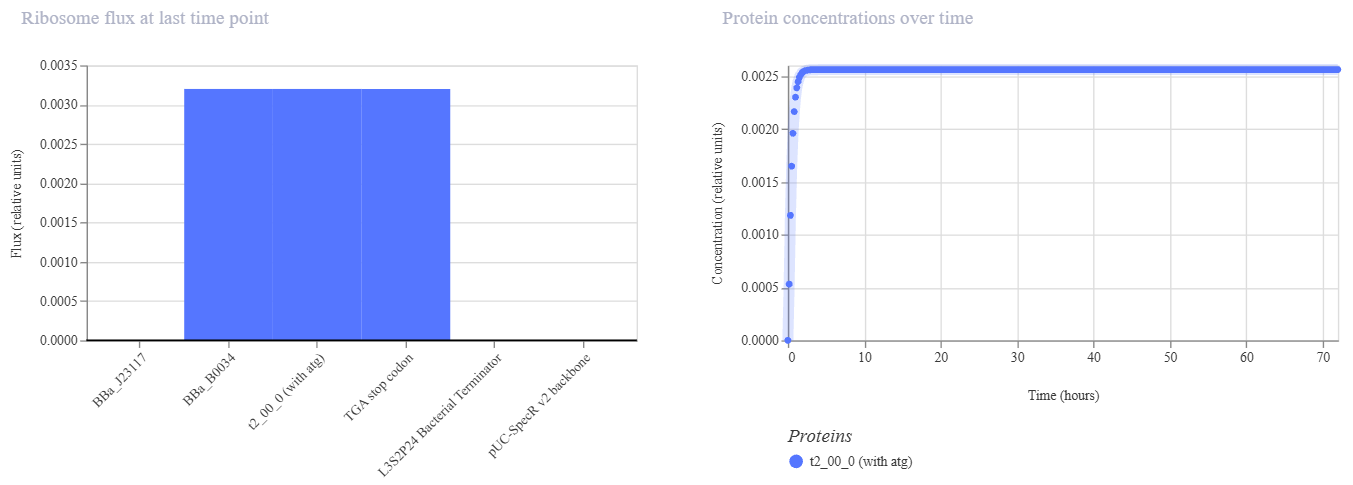
What do you want to make? → Custom designed protein; post translational modifications/ usage of nonstandard amino acids (e.g. selenocysteine) not clear.
For the purpose of this homework, may the custom protein be named Cuop. Coup is a peptidic macromolecule I plan to design, analyse and test using various computational tools. Its intended goal is to address prion activity in-vivo; work like an inhibitory drug against prion PrPSc “infectious” folding mechanism. The explanation for a protein’s ability to self-propagate a motif is intermolecular interactions between strongly bound-together amino acids (PrPSc beta sheets) and a less rigid structure (PrP alpha helices). Therefore a molecule able to prevent the interactions between the two proteins may be capable of preventing the spread of disease in high risk patients. The way I aim to achieve this is molecular docking simulations to assess if the custom protein can actually help.
Protein expression system in Asimov Kernel 1. Defining expression target What molecule are you expressing? A protein, an RNA, or an enzyme (or small set of enzymes) for a pathway. If your HW1 product is a material, food, or chemical, identify the protein(s) that produce it and design for those. Fortunately, the only molecule desribed for my final project is a single short protein (i.e. prion-binding ‘peptide’). The design logic stays simple throughout production: DNA -> mRNA -> protein of interest.
WEEK 3 ASSIGNMENT: CFPS REACTION DESIGN FOR SFGFP, PETASE, RETEPLASE A. COMPARE CELL-FREE REACTION COMPOSITIONS (20 minutes) Why does the concentration of potassium glutamate and magnesium glutamate differ between compositions? Which is more sensitive? Referance concentration: K-glutamate (279.84 mM), Mg-glutamate (8.22 mM) are to mimic and maintain osmotic parameters of lysate in CFPS, assure ribosome, energy-replenishing enzymes, polymerase function, stabilise DNA/RNA structure etc.; both glutamic acid salts are usually found in high concentrations.
→ Custom designed protein; post translational modifications/ usage of nonstandard amino acids (e.g. selenocysteine) not clear.
For the purpose of this homework, may the custom protein be named Cuop. Coup is a peptidic macromolecule I plan to design, analyse and test using various computational tools. Its intended goal is to address prion activity in-vivo; work like an inhibitory drug against prion PrPSc “infectious” folding mechanism.
The explanation for a protein’s ability to self-propagate a motif is intermolecular interactions between strongly bound-together amino acids (PrPSc beta sheets) and a less rigid structure (PrP alpha helices). Therefore a molecule able to prevent the interactions between the two proteins may be capable of preventing the spread of disease in high risk patients. The way I aim to achieve this is molecular docking simulations to assess if the custom protein can actually help.
The synthesis of Coup is contextualised for industry-scale (working with software like Kernel and interpreting the data accordingly), though the proposed activity validation route for the drug may revolve around the ideas of batches and limited portions for quality-assessment bottlenecks.
What living system could make it?
→ Assuming a rather simple peptidic structure with no ions attached, E. coli can be used as a model organism as in-silico workflow parameters usually are determined by Escherichia systems. After clarifying the proposed amino acid sequence, BLAST tools could help in seeking homologous sequences, thus an organism already specialised in synthesizing similar enough structures.
*I am noting the fact that the host living system is a really important choice I need to settle down on later in the pipeline:
It should properly replicate the computationally validated lucrative structure and refrain from potentially altering it via unintended integration of the product in own metabolic chains or via its intracellular medium;
It should express the gene cost and time efficient;
The protein’s toxicity to the organism should be minimised;
*
Week 2 HW: DNA design
Protein expression system in Asimov Kernel
1. Defining expression target
What molecule are you expressing? A protein, an RNA, or an enzyme (or small set of enzymes) for a pathway. If your HW1 product is a material, food, or chemical, identify the protein(s) that produce it and design for those.
Fortunately, the only molecule desribed for my final project is a single short protein (i.e. prion-binding ‘peptide’). The design logic stays simple throughout production: DNA -> mRNA -> protein of interest.
What is the sequence? Give the protein or RNA sequence, or the specific gene, you will encode, and say where it comes from (a database accession such as UniProt or NCBI, a known part, or de novo). Cite it.
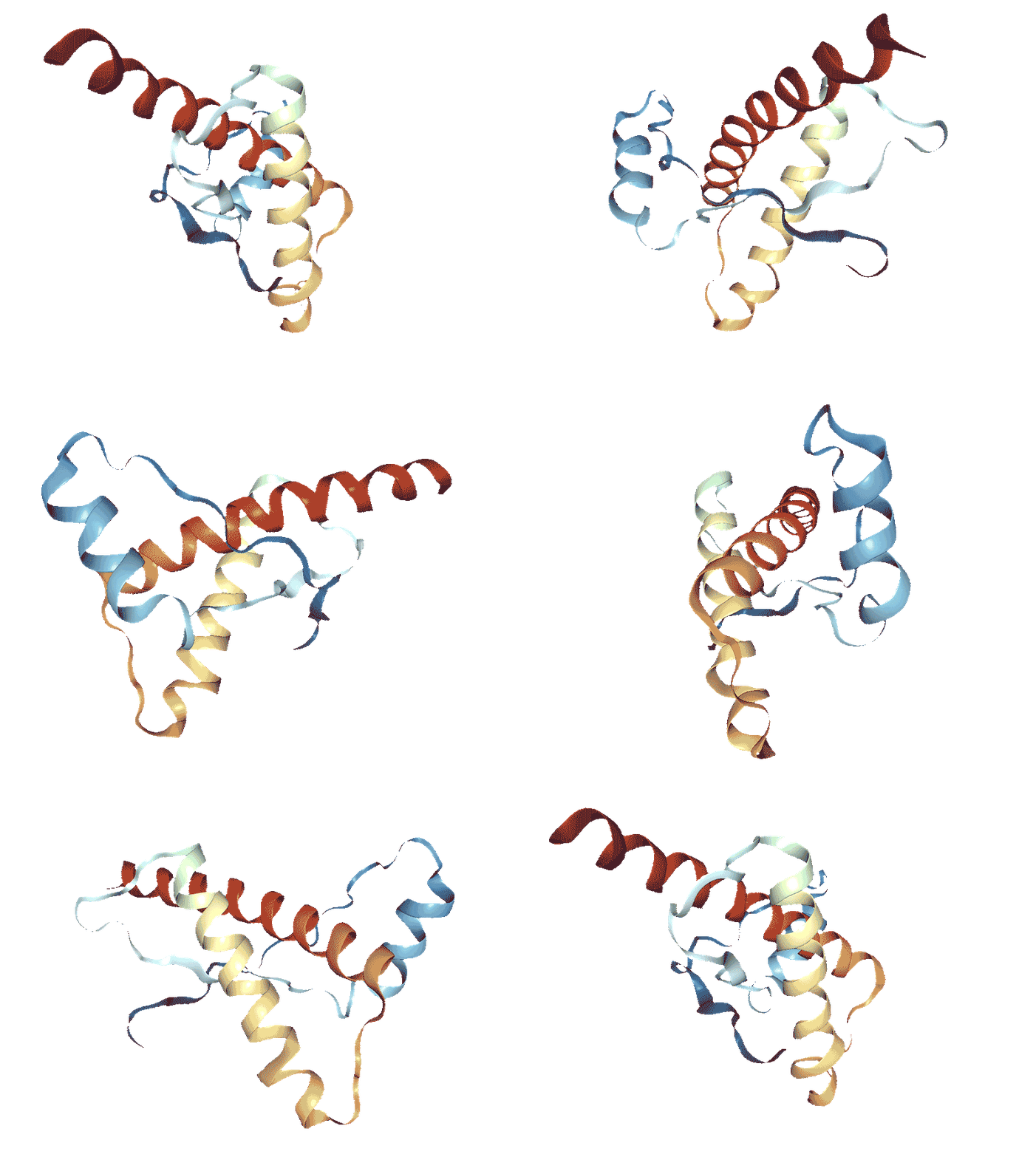
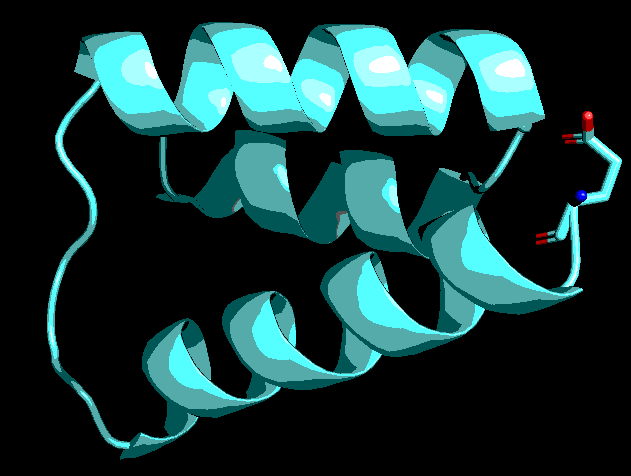
For this assignment I made the second binder peptide from the original batch the expression target. The sequence is 49 amino acids long (the shortest from its batch) and encodes for a trouple of α-helices, supposedly having a high-affinity-for-PrP S surface.
Unsurprisingly, reverse translating it into a 147 nt sequence outputed nothing when BLAST-ed.
the residue shown as sticks is the N-terminus of the peptide
What host or chassis? The living system from HW1, for example E. coli, S. cerevisiae, CHO or another mammalian line, or a cell-free system. Your host drives almost every part choice that follows.
E.coli is the best pick for expressing a short simple singular polypeptide unit with no disulfide bridges or other tertiary structure requirements that would make synthesis increasigly complicated.
Where does the product need to go? Cytoplasm, secreted, membrane, or a compartment? This decides whether you need a signal peptide or targeting sequence.
I have not tought of this yet, upcoming updates will come as I progress my final project research and engineering work.*
2. Genetic design
Layer
Prokaryote host
Justification
Data
Transcription start
Promoter
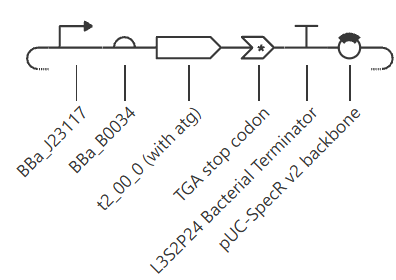
Noticeably weak Anderson promoter, further investigating the binder will reveal if its overexpression could pose a hazard to host-cell. J23106 is an alternative
-> no selection marker was attributed to the plasmid in Kernel as the chosen vector already had one: SpecR, streptomycin with its own native promoter ~430 bp upstream;
3. Construct & assembling
The design should pass as Golden-Gate clean: no BsaI, BsmBI/Esp3I, BbsI, SapI, PaqCI sites are found within the construct, risking later assembly.
Week 3 HW: CFPS for sfGFP, PETase, Reteplase
WEEK 3 ASSIGNMENT: CFPS REACTION DESIGN FOR SFGFP, PETASE, RETEPLASE
A. COMPARE CELL-FREE REACTION COMPOSITIONS (20 minutes)
Why does the concentration of potassium glutamate and magnesium glutamate differ between compositions? Which is more sensitive?
Referance concentration: K-glutamate (279.84 mM), Mg-glutamate (8.22 mM) are to mimic and maintain osmotic parameters of lysate in CFPS, assure ribosome, energy-replenishing enzymes, polymerase function, stabilise DNA/RNA structure etc.; both glutamic acid salts are usually found in high concentrations.
Mg2+ is needed by ribosomes, T7 polymerase, and ADP phosphorylating enzymes; nucleotides, phosphate groups and PEP all bind it => optimum Mg level shifts with the rest of the recipe.
K+ is a broader background that tolerates tens of mM shifts (Mg is the more sensitive one).
Explain how a PEP+NTP reaction formulation is different from a Ribose+NMP reaction formulation.
PEP+NTP: PEP regenerates ATP directly (+the four triphosphates) - quick, expensive, risky (PEP degradation releases phosphate that can tie up Mg);
Ribose+NMP: cheap sugar + monophosphates that will be metabolised by the lysate and supposedly turned into ATP (i.e. GMP can be partly replaced by guanine + ribose, like one paper specifies) - cheaper, harder to nail (reactions dependent on phosphate availablity, cofactors, pH etc)
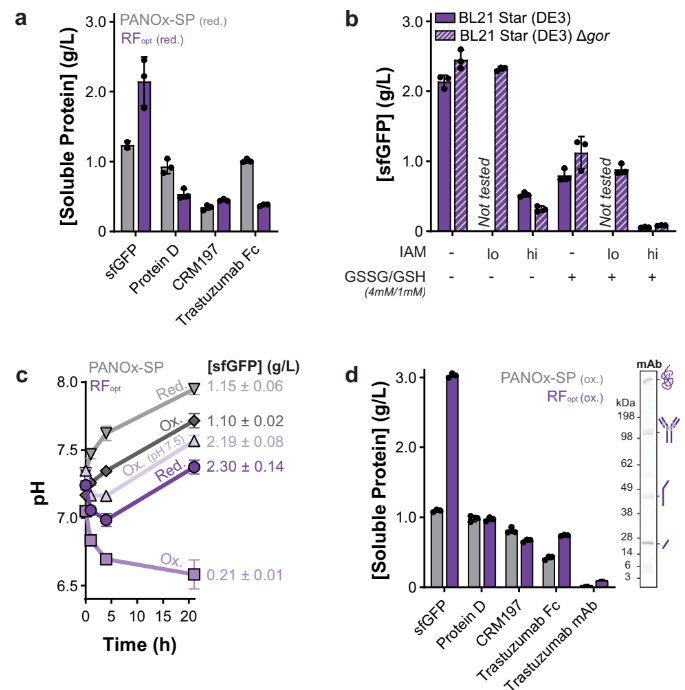
“Surprisingly, we found that GMP could be replaced with a combination of guanine and ribose without sacrificing protein yield and that UMP could be replaced with its corresponding base and ribose, albeit with reduced yields.”
Choose two cell-free reaction compositions from the literature, compare and contrast the choice of reagents and the concentration of reagents.
PANOx-SP s.
Cytomin s.
Comment
Mg acetate (mM)a
3.3
3.3
Mg glutamate (mM)
20
8
NH4 acetate (mM)
0
0
NH4 glutamate (mM)
10
10
K acetate (mM)a
14.4
14.4
K glutamate (mM)
175
130
phosphoenolpyruvate (mM)b
33
0
Na pyruvate (mM)
0
33
Spermidine (mM)
1.5
1.5
Putrescine (mM)
1
1
Na oxalate (mM)
2.7
4
Tris (mM)
2.4
2.4
pH = 8.2
Note: A recommended starting point would be to review a least one published formulation, such as PANOx-SP (Jewett & Swartz 2004), a cost-optimized formulation from Olsen et al. (2026), and/or an AI-designed formulation from Smith et al. (2026).
B. DESIGN ONE REACTION COMPOSITION FOR EACH OF THE THREE PROTEINS (40 minutes)
Sign in to coopetition.htgaa.org and publish your first unique 20 µL CFPS reaction composition for each of the following (don’t worry, you can resubmit later):
sfGFP
PETase
Reteplase
Note: if you’re unable to login with your HTGAA keycloak account, please post in Zulip so that you can participate in the coopetition!
For each composition, specify the reagents you would adjust from the relevant categories, including salts, energy sources, building blocks, cofactors, and redox components.
C. ASIMOV KERNAL
Build T7 compatible plasmids for cell-free expression using the amino acid coding sequences below:
Bonus question: design a T7 helper plasmid that you could add to the cell-free reaction to improve the yield of functional reteplase (general chaperones, disulfide-bond machinery, etc).