Week 2 HW: DNA design
Protein expression system in Asimov Kernel
1. Defining expression target
- What molecule are you expressing? A protein, an RNA, or an enzyme (or small set of enzymes) for a pathway. If your HW1 product is a material, food, or chemical, identify the protein(s) that produce it and design for those.
Fortunately, the only molecule desribed for my final project is a single short protein (i.e. prion-binding ‘peptide’). The design logic stays simple throughout production: DNA -> mRNA -> protein of interest.
- What is the sequence? Give the protein or RNA sequence, or the specific gene, you will encode, and say where it comes from (a database accession such as UniProt or NCBI, a known part, or de novo). Cite it.
‘EEAKRYAIKLFVKKIEEGKPLTKRTLEELIKLAEELGDKEALEVFKKAL’
For this assignment I made the second binder peptide from the original batch the expression target. The sequence is 49 amino acids long (the shortest from its batch) and encodes for a trouple of α-helices, supposedly having a high-affinity-for-PrP S surface.
Unsurprisingly, reverse translating it into a 147 nt sequence outputed nothing when BLAST-ed.
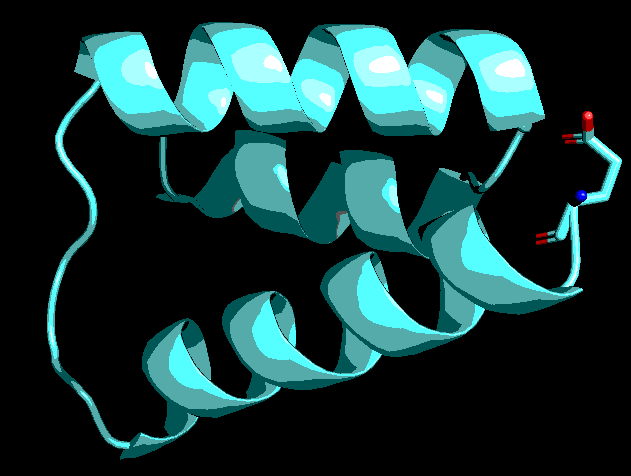
- the residue shown as sticks is the N-terminus of the peptide
- What host or chassis? The living system from HW1, for example E. coli, S. cerevisiae, CHO or another mammalian line, or a cell-free system. Your host drives almost every part choice that follows.
E.coli is the best pick for expressing a short simple singular polypeptide unit with no disulfide bridges or other tertiary structure requirements that would make synthesis increasigly complicated.
- Where does the product need to go? Cytoplasm, secreted, membrane, or a compartment? This decides whether you need a signal peptide or targeting sequence.
I have not tought of this yet, upcoming updates will come as I progress my final project research and engineering work.*
2. Genetic design
| Layer | Prokaryote host | Justification | Data |
|---|---|---|---|
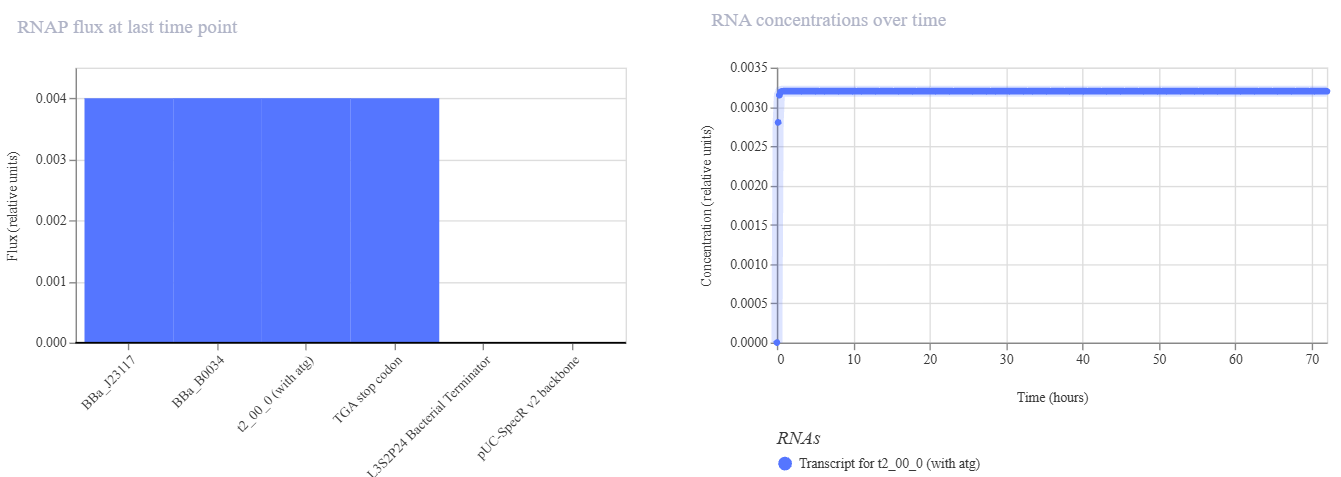
| Transcription start | Promoter | Noticeably weak Anderson promoter, further investigating the binder will reveal if its overexpression could pose a hazard to host-cell. J23106 is an alternative | BBa_J23117 |
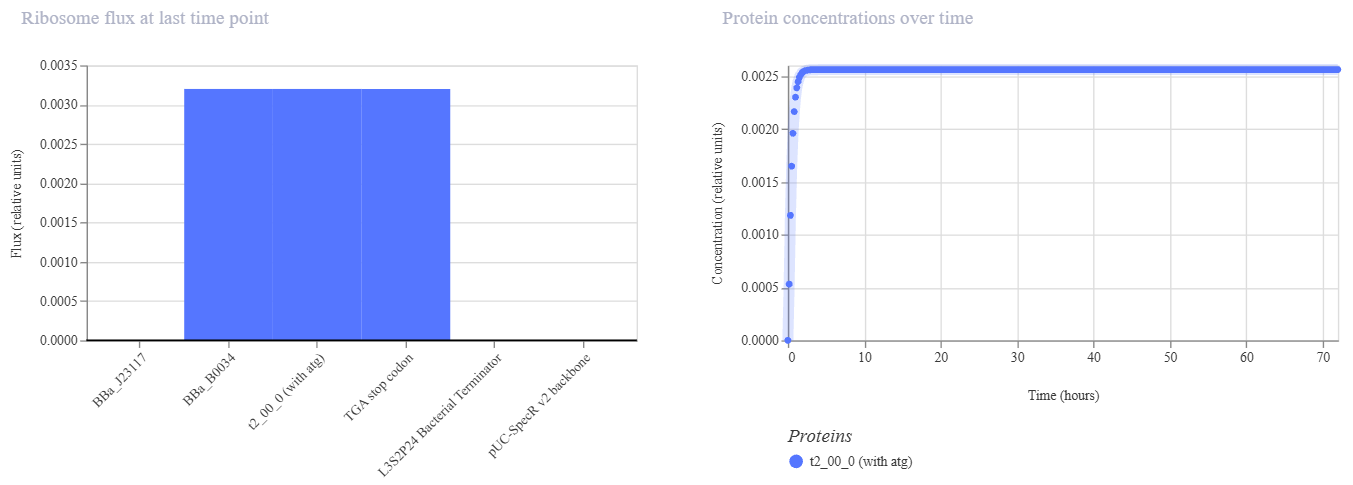
| Translation start | RBS | efficient, transcription is the limiting factor in this construct | BBa_B0034 |
| Coding sequence | protein of interest | n/a | Designed from peptide amino acid seq + start codon |
| • Translation stop | E.coli: TGA/ TAG/ TAA (best) | I chose the TGA stop codon design available in Kernel, separate from the CDS | ID: 477cbe6a-feb0-4068-822c-f8036ddb10f6 |
| Targeting (if needed) | n/a | - | - |
| Transcription stop | Terminator | compact, robust | L3S2P24 Bacterial Terminator |
| Vector context | I suppose it is a good fit for E.coli | 2,038 bp | pUC-SpecR v2 backbone |
-> no selection marker was attributed to the plasmid in Kernel as the chosen vector already had one: SpecR, streptomycin with its own native promoter ~430 bp upstream;
3. Construct & assembling
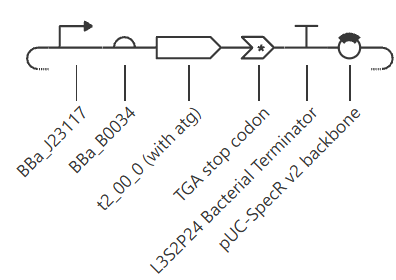
The design should pass as Golden-Gate clean: no BsaI, BsmBI/Esp3I, BbsI, SapI, PaqCI sites are found within the construct, risking later assembly.