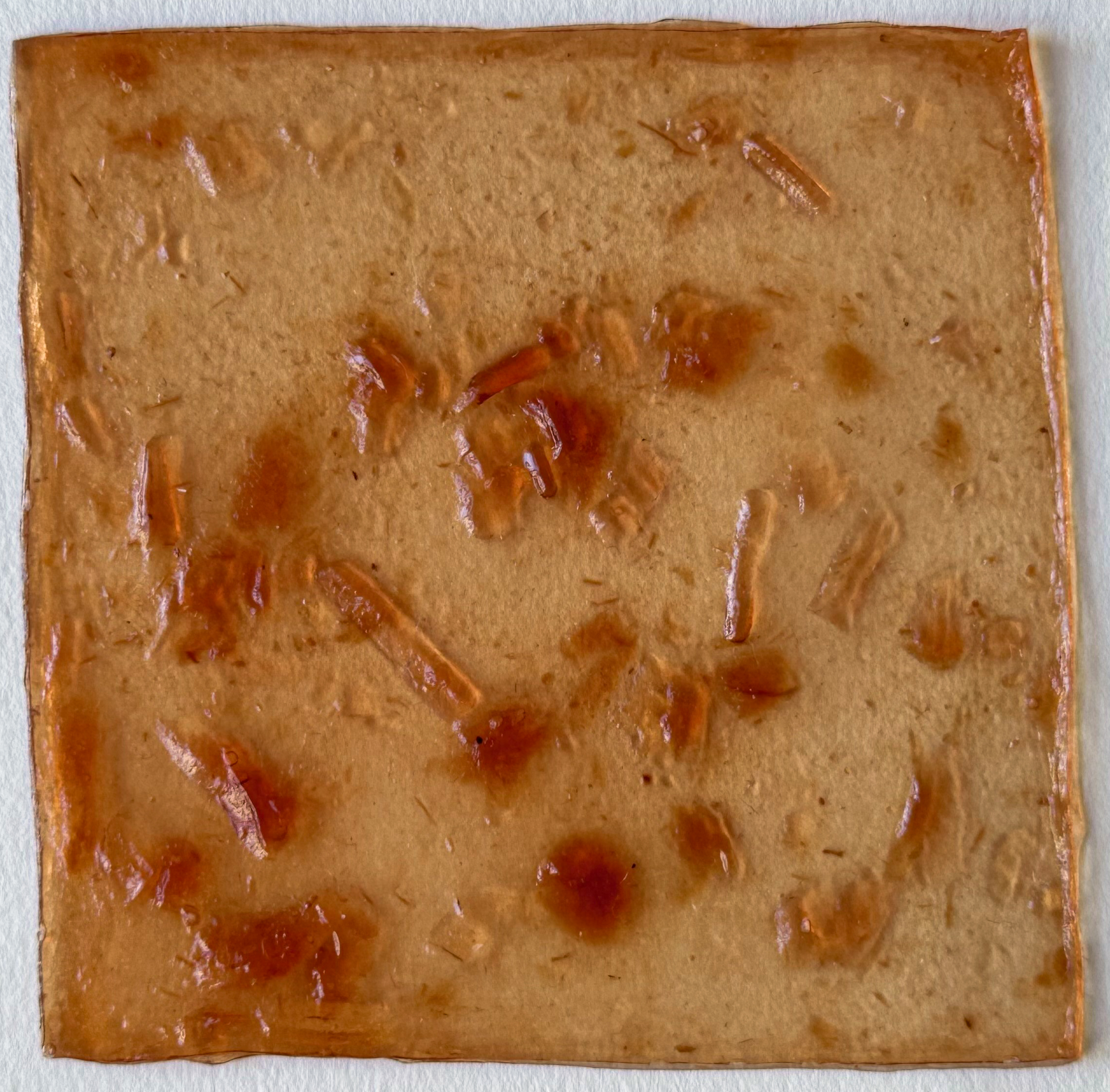
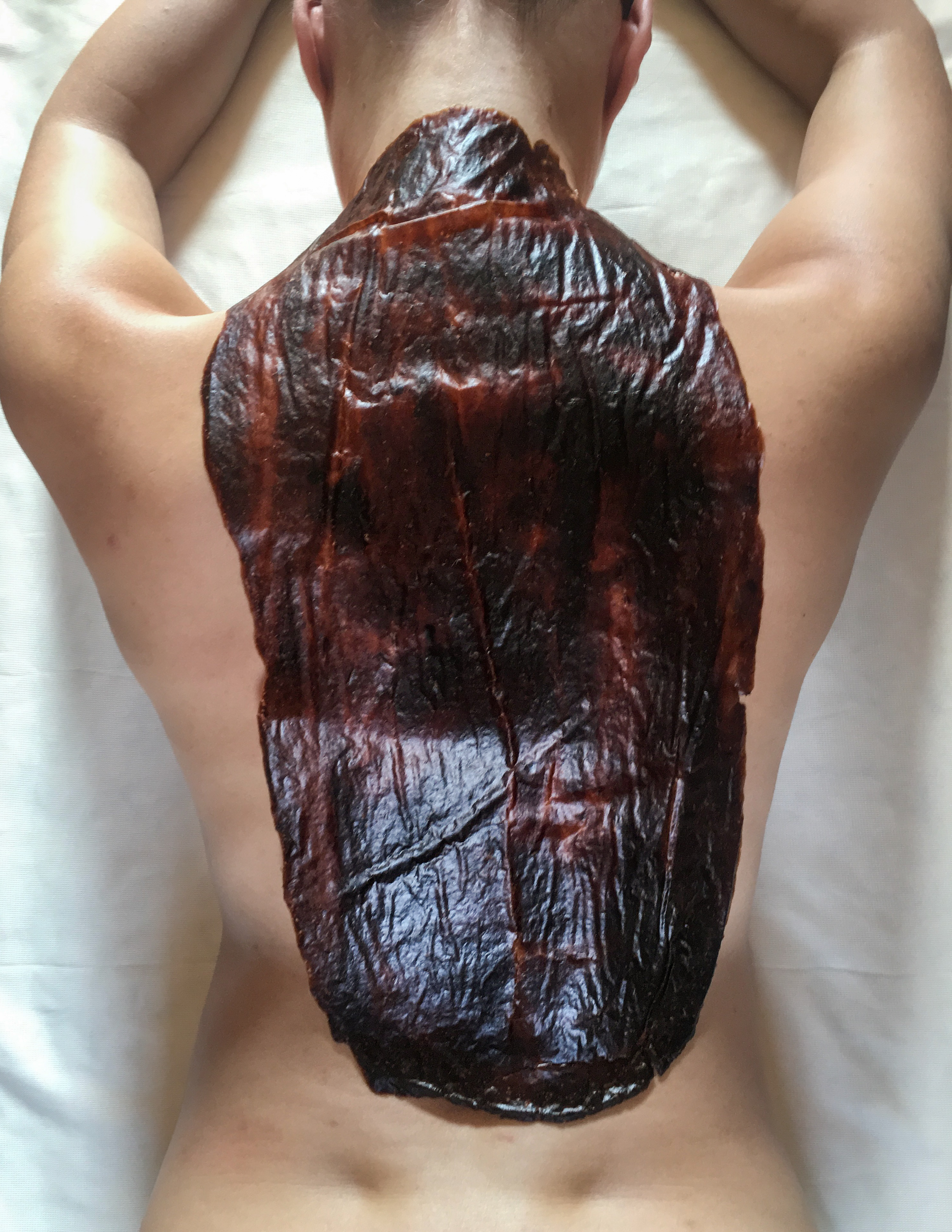
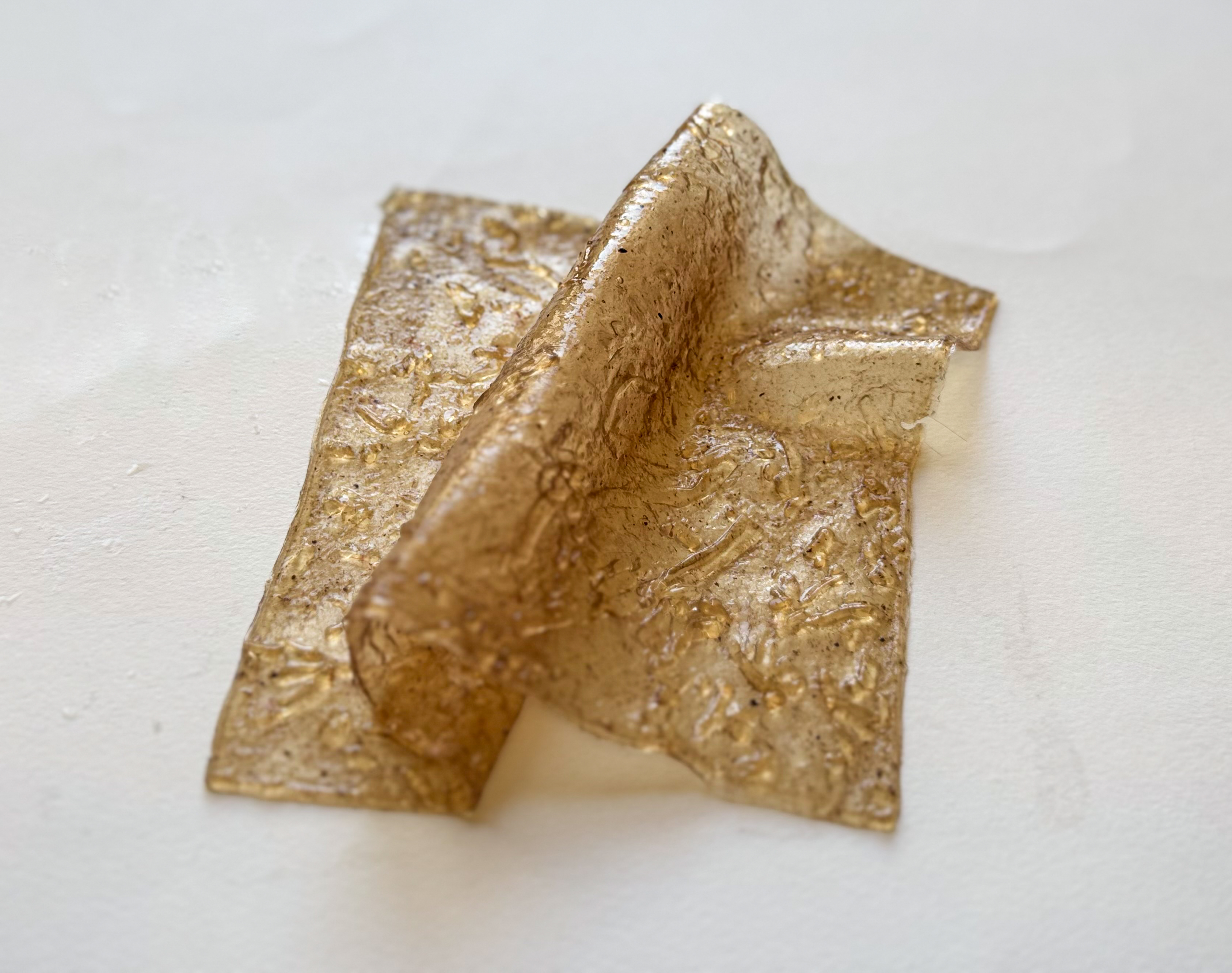
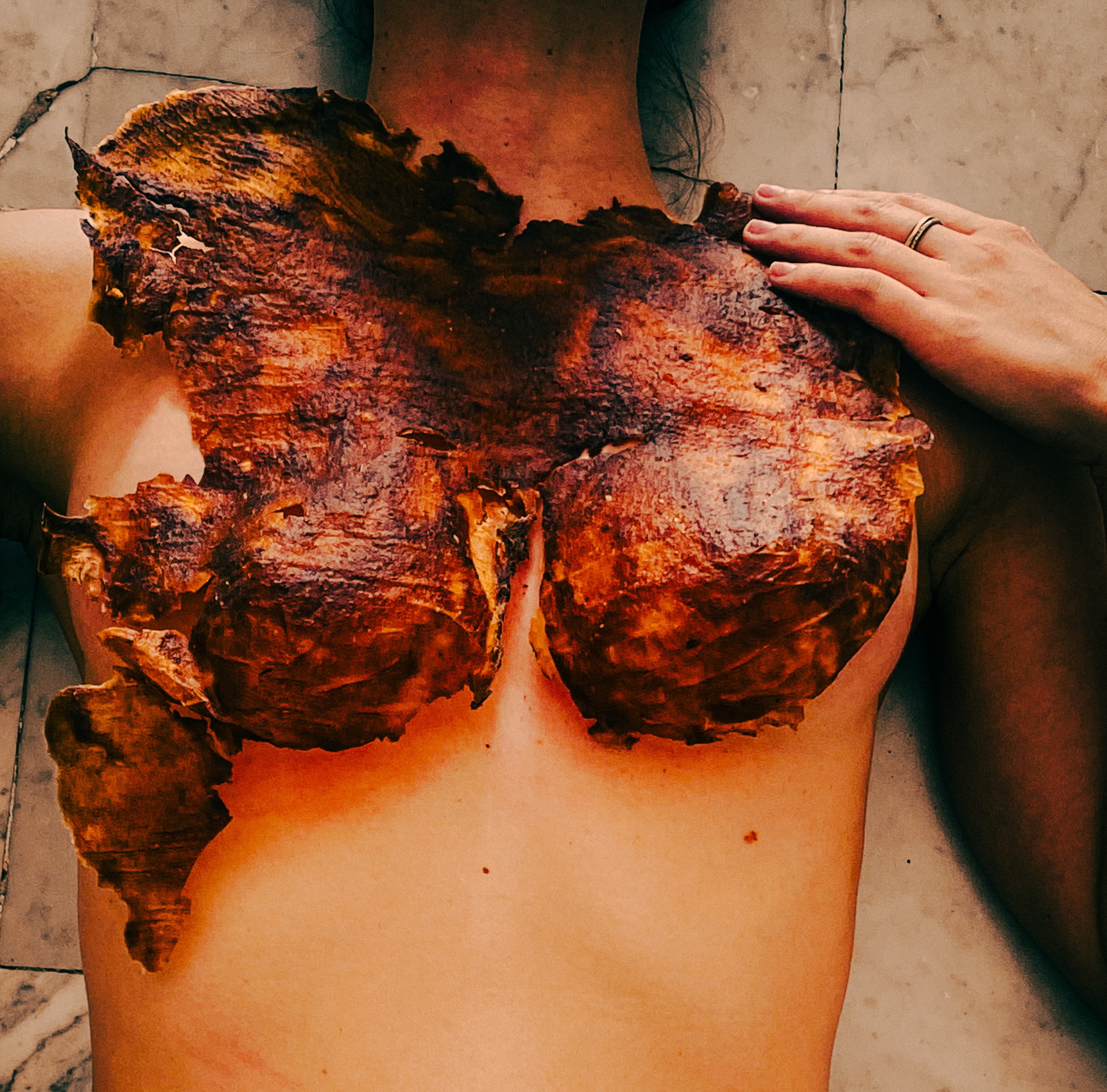
I am a Fashion Designer and Creative Researcher exploring the space between the body, material and the living world.
My practice moves across fashion, material experimentation and biomaterials, driven by a curiosity for what materials can become beyond their conventional roles.
What if what we wear could do more than simply cover the body?
See the nav bar on the left to look through my work for How To
Biomanufacture Almost Anything (Fall 2026)!
Subsections of Caterina Amelia Sandonini — HTBAA Fall 2026
Homework 1
Interactive Second Skin
From Passive Material Layer to Active Interface
1. What would I like to biomanufacture and why?
Interactive Second Skin is an ongoing research project that I developed prior to this assignment, exploring how clothing could evolve from a passive layer covering the body into an active interface capable of interacting with the skin.
As a fashion designer, I am interested in the relationship between the body, materials and the living world. Rather than beginning with a specific biological technology, my starting point is a design question:
Can a textile be biologically manufactured to act as an interface that carries, retains and gradually transfers beneficial compounds to the human skin?
The material I aim to develop would behave as a flexible, wearable second skin. Rather than functioning only as a protective or covering layer, it would act as an interface through which functional compounds contained within the material could be retained and gradually transferred through contact with the skin.
In my previous material experiments, I explored plant-derived ingredients such as aloe vera in combination with agar, glycerin and textile substrates. This work led me to look beyond biomaterials simply as substitutes for conventional textiles, and towards materials that could perform additional functions through their relationship with the body.
For this assignment, I want to investigate how biomanufacturing could extend this existing research direction.
The objective is not simply to reproduce an existing textile through a biological process, but to investigate whether biomanufacturing could enable a new material system in which structure and function are developed together.
Aloe-derived compounds provide one possible starting point because of my previous experimentation with the material, but they are not intended to define the only possible active component. The broader research question is how a biologically manufactured textile matrix could carry functional compounds, retain them within the material, and enable their controlled transfer at the interface with the skin.
The project therefore proposes a shift:
Passive textile → Active material interface → Interaction with the skin
2. What living system would I use?
At this stage, I do not want to assume that a single biological system represents the final solution. Instead, I see the choice of living system as part of the research itself, to be evaluated in relation to the material and functional requirements of the project.
One promising starting point is a microbial system capable of producing cellulose, such as cellulose-producing bacteria. This approach is particularly relevant to the project because bacterial cellulose can be grown directly as a continuous fibrous material, offering the possibility of developing the material structure through the biological production process itself.
Conceptually, the process could be:
nutrient medium → microbial growth → cellulose formation → material harvesting → functionalisation → wearable interface
The biologically produced cellulose could provide the structural matrix of the material. The next research question would be whether plant-derived or other functional compounds could be incorporated into this matrix, retained within it, and gradually transferred through contact with the skin.
I am deliberately treating this as a hypothesis rather than an established solution.
Several approaches could be investigated. Functional compounds might be introduced during microbial growth, incorporated after the cellulose has been produced, or integrated with the biological material through a secondary functionalisation process.
An important part of the project would therefore be comparing these approaches and understanding how each one changes the material’s flexibility, strength, moisture behaviour, surface and capacity to retain and release compounds.
Other living systems, including fungal or biohybrid approaches, could also become relevant as the research develops. The reason for beginning with microbial cellulose is not that it represents a predetermined solution, but that it provides a tangible biological manufacturing system through which the central concept of an active textile interface can be experimentally investigated.
3. How would I use automation?
Automation could be particularly valuable during the experimental development of the material.
My previous biomaterial research has involved preparing formulations manually and comparing different combinations of ingredients. Moving into biomanufacturing would introduce additional variables, including nutrient composition, growth conditions, culture time, material thickness, incorporation of functional compounds and post-processing.
Rather than testing these variables one at a time, I would use automated liquid handling, through a platform such as Opentrons, to prepare a systematic matrix of small-scale experiments in which multiple material and biological parameters could be varied in a controlled and reproducible way.
For example, a first experimental series could vary:
growth-medium composition;
concentration of selected functional compounds;
moment at which these compounds are introduced;
culture time;
post-growth treatment.
The resulting samples could then be evaluated using criteria directly relevant to the development of a wearable active interface: material thickness, flexibility, mechanical strength, moisture retention, surface quality, functional-compound loading, and release behaviour over time.
For me, automation would not replace the design process, but expand the material possibility space that can be explored systematically and reproducibly. It would allow a larger number of material variations to be generated and compared, while design decisions would continue to be informed by both functional performance and sensory qualities.
4. How much would I need to make, and how long would it take?
For the first meaningful scale, I would define the objective as producing enough material for one full-scale wearable prototype, rather than immediately considering industrial production.
As an initial design assumption, I would target approximately 1.5 m² of usable material. This represents a working estimate of the surface area required to construct one full-scale wearable prototype, rather than a fixed production requirement.
If one experimental growth tray produced a sheet approximately 30 cm × 40 cm:
0.30 m × 0.40 m = 0.12 m² per tray
To obtain 1.5 m²:
1.5 m² / 0.12 m² ≈ 12.5 trays
This means that approximately 13 successful sheets of this size would be required. In practice I would plan for around 15–16 trays to allow for unsuccessful or inconsistent samples.
The exact production time would need to be experimentally established for the selected organism and culture conditions. As an initial planning range, I would assume approximately 10–14 days of microbial growth per batch, consistent with cultivation periods reported for bacterial cellulose production (Uğurel & Öğüt, 2024), followed by harvesting, purification, functionalisation and material conditioning.
If multiple trays were grown in parallel, producing the surface area required for one prototype could therefore potentially happen within a single growth cycle rather than sequentially.
A preliminary prototype timeline could be:
10–14 days of microbial growth + several days for harvesting, purification, functionalisation, conditioning and testing ≈ 2–3 weeks for one material generation.
This is intentionally a back-of-the-envelope estimate. The real yield would depend on the biological system, growth medium, thickness required and percentage of material lost during processing.
At a later stage, scale would become a different design problem. Rather than simply multiplying the number of growth trays, I would want to investigate whether the material could be grown closer to the geometry required by the body or garment. This could reduce cutting waste while opening the possibility of integrating biological growth more directly into the garment construction process.
5. What don’t I know yet?
The project currently has three major technical questions.
1. Can a biologically manufactured material achieve the physical and sensory qualities required for a second skin?
A material may be biologically producible but still be too rigid, fragile, unstable or uncomfortable to function as clothing. Flexibility, touch, breathability, moisture behaviour and movement with the body would therefore need to be evaluated.
2. How can functional compounds be incorporated and transferred to the skin in a controlled way?
It is not yet clear whether these compounds should be introduced during biological growth or after the structural material has been produced. I would need to understand how much can be retained, how quickly it is released and whether incorporation changes the mechanical behaviour of the material.
3. Can biological growth itself become part of the design and construction process?
Instead of producing uniform sheets that are later cut like conventional textiles, I am interested in whether growth could eventually be spatially controlled: different thicknesses, properties or functional zones could potentially correspond to different areas of the body.
This is currently a research direction rather than an established capability, but it is particularly important to the project because it could change not only what a textile is made from, but also how a garment is designed and manufactured.
Conclusion
Interactive Second Skin proposes biomanufacturing not simply as an alternative way to produce textile material, but as an opportunity to reconsider what clothing can do.
The long-term ambition is to move from clothing as a passive boundary between the body and its environment toward clothing as an active interface capable of carrying, retaining and transferring properties through contact with the skin.
The biological system, the functional compounds and the manufacturing process are therefore not predetermined answers. They are variables to investigate around one central design question:
How can we grow a material that does more than cover the body?
References
Asin-Garcia, E., Fawcett, J. D., Batianis, C. & Martins dos Santos, V. A. P. (2025). A snapshot of biomanufacturing and the need for enabling research infrastructure. Trends in Biotechnology, 43(5), 1000–1014. https://doi.org/10.1016/j.tibtech.2024.10.014
Averesch, N. J. H., Berliner, A. J., Nangle, S. N., Zezulka, S., Vengerova, G. L., Ho, D., Casale, C. A., Lehner, B. A. E., Snyder, J. E., Clark, K. B., Dartnell, L. R., Criddle, C. S. & Arkin, A. P. (2023). Microbial biomanufacturing for space-exploration—what to take and when to make. Nature Communications, 14, 2311. https://doi.org/10.1038/s41467-023-37910-1
Rasor, B. J., Vögeli, B., Landwehr, G. M., Bogart, J. W., Karim, A. S. & Jewett, M. C. (2021). Toward sustainable, cell-free biomanufacturing. Current Opinion in Biotechnology, 69, 136–144. https://doi.org/10.1016/j.copbio.2020.12.012
Petzold, C. J. & Mukhopadhyay, A. (2025). From bench to biofactory: high-throughput technologies and automated workflows to accelerate biomanufacturing. Current Opinion in Biotechnology, 94, 103320. https://doi.org/10.1016/j.copbio.2025.103320
Uğurel, C. & Öğüt, H. (2024). Optimization of bacterial cellulose production by Komagataeibacter rhaeticus K23. Fibers, 12(3), 29. https://doi.org/10.3390/fib12030029
AI Use
AI client: ChatGPT (OpenAI).
Interactive Second Skin is my own ongoing research project, developed prior to this assignment. My background is in fashion design and material experimentation, and I used ChatGPT primarily as a research support tool to investigate scientific and biological aspects relevant to exploring the project through biomanufacturing.
AI prompts and research questions included:
possible living systems for producing a flexible material suitable for an active textile interface;
microbial cellulose as one potential biological material platform;
possible strategies for incorporating, retaining and releasing functional compounds from a biologically manufactured material;
how automated experimentation could support systematic and reproducible material development;
how to estimate the production scale and timeline required for a full-scale wearable prototype.
The original project concept, previous material experimentation, creative direction and design decisions are my own.
Week 2 HW: DNA Design
DNA Design — Interactive Second Skin
From material concept to biological function
In Homework 1, I explored Interactive Second Skin as a material interface between the body and clothing: a system in which a textile or biomaterial layer could move beyond being passive and instead carry, retain, or deliver functional properties through contact with the skin.
For this second assignment, I am narrowing that broader concept to one specific biological function that can be translated into a genetic design.
Rather than genetically engineering the material itself, I am exploring the production of a functional protein that could eventually be incorporated into or associated with the material after production.
The protein selected for this design is manganese superoxide dismutase (MnSOD), an antioxidant enzyme. I am using it as a first model through which to investigate how a biologically produced function could become part of a future bioactive material system.
Part 0 — Kernel setup
I created the repository Caterina-Sandonini_Interactive-Second-Skin in the HTGAA 2026 Kernel workspace and used it to create the individual biological parts and assemble the expression construct.
Part 1 — Define the expression target
What molecule am I expressing?
The target molecule is manganese superoxide dismutase (MnSOD), an antioxidant enzyme encoded by the sodA gene.
Superoxide dismutases catalyze the conversion of superoxide radicals into hydrogen peroxide and molecular oxygen.
For Interactive Second Skin, MnSOD is not intended to define the final biological function of the project. Instead, I am treating it as a first model protein for exploring how biological functionality could be produced separately and later associated with a material.
What is the sequence?
I used the characterized sodA / MnSOD from Escherichia coli K-12 as the biological reference.
Gene: sodA
Protein: Superoxide dismutase [Mn]
UniProt accession: P00448
NCBI Gene ID: 948403
RefSeq protein: NP_418344.3
Protein length: 206 amino acids
Enzyme classification: EC 1.15.1.1
The target is therefore based on an existing characterized protein rather than a protein designed de novo.
What host or chassis?
For this first expression design, I selected Escherichia coli as the intended host.
Because the reference MnSOD is itself derived from E. coli, this provides a relatively direct starting point for examining the natural coding sequence and comparing it with a sequence optimized for bacterial expression.
Where does the product need to go?
The longer-term objective is not for MnSOD to remain inside the producing cell. The protein would eventually need to be recovered so that its incorporation, immobilization, or association with a material could be investigated.
For this assignment, I therefore treat protein production and material integration as two separate stages. No secretion signal is included in this first construct.
Part 2 — Design the genetic parts
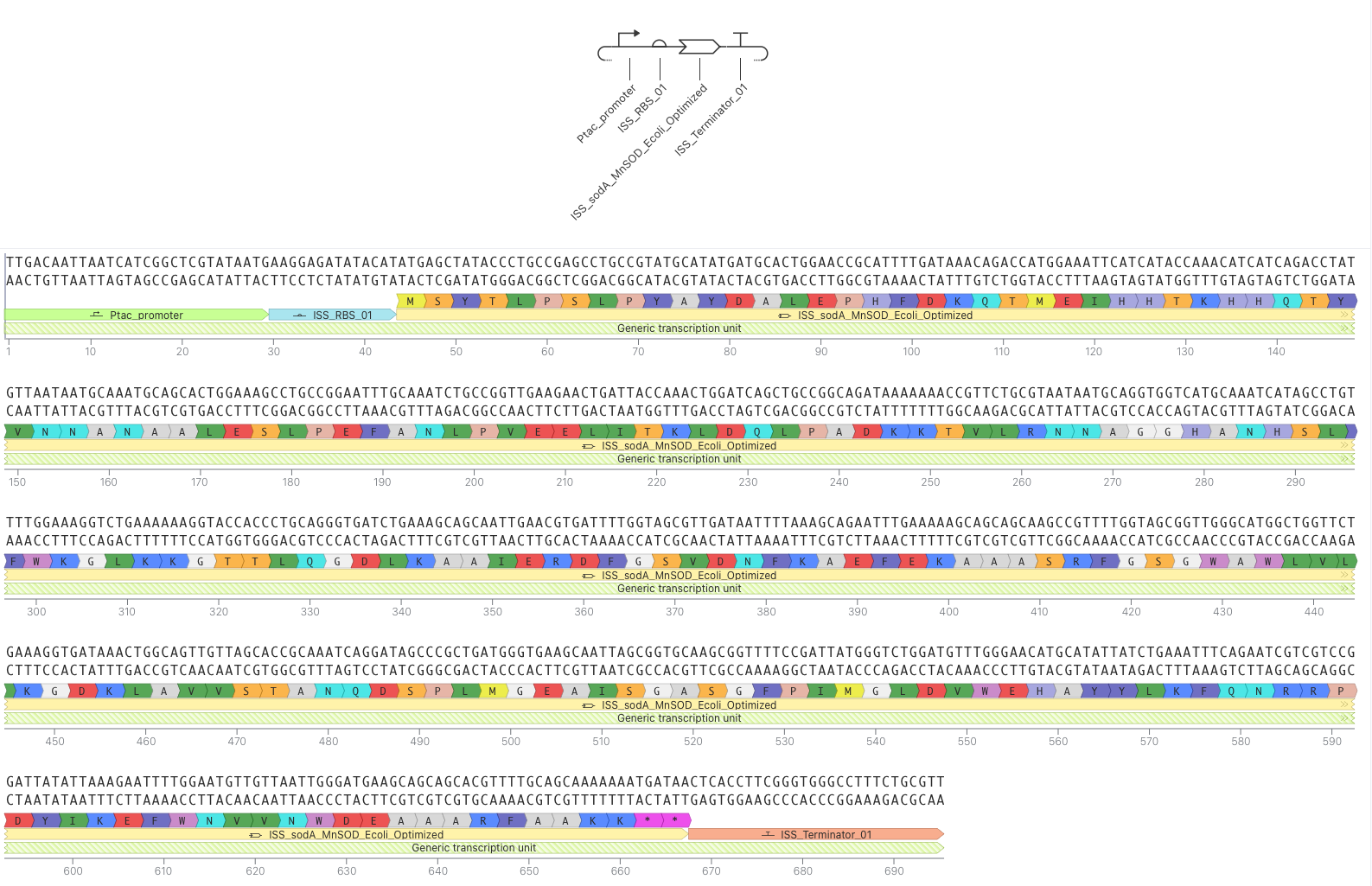
I designed a simple bacterial expression cassette following the architecture:
Promoter → RBS → MnSOD CDS → Terminator
Promoter — Ptac_promoter
Part type: Promoter
Length: 29 bp
Sequence:TTGACAATTAATCATCGGCTCGTATAATG
Source: Kernel
Rationale: Ptac provides an inducible bacterial promoter and therefore offers a way to control transcription rather than expressing the protein continuously.
Ribosome Binding Site — ISS_RBS_01
Part type: Ribosome binding site
Length: 14 bp
Sequence:AAGGAGATATACAT
Source: Created in Kernel
Rationale: The RBS provides the translation-initiation region required upstream of the coding sequence in the bacterial expression design.
Coding Sequence — ISS_sodA_MnSOD_Ecoli_Optimized
Part type: CDS
Target: MnSOD / sodA
Reference organism:Escherichia coli K-12
Source: sodA reference sequence followed by codon optimization in Kernel
Rationale: This sequence encodes the functional protein selected as the biological model for Interactive Second Skin.
Targeting / secretion
No secretion signal is included in this first construct.
The immediate objective is to investigate production of MnSOD. Recovery of the protein and its subsequent relationship with the material would be addressed as a later stage of the project.
Terminator — ISS_Terminator_01
Part type: Terminator
Length: 28 bp
Sequence:CTCACCTTCGGGTGGGCCTTTCTGCGTT
Source: Kernel
Rationale: The terminator provides a defined downstream end to transcription.
Vector context
For this exercise I focused on designing and evaluating the expression cassette itself. A complete experimental implementation would additionally require an E. coli-compatible vector backbone providing an origin of replication and selectable marker.
Part 3 — Assemble the construct
The individual parts were assembled in Kernel in the following 5’→3’ order:
The assembled expression cassette is approximately 695 bp long.
Kernel was used to visualize the sequence and the relative position and orientation of each functional part.
Figure 1. Assembled MnSOD expression cassette in Kernel, showing the Ptac promoter, RBS, optimized sodA coding sequence and terminator.
The resulting construct provides a simple first genetic implementation of the biological function selected for Interactive Second Skin.
Part 4 — Optimize and quality-check
Codon optimization
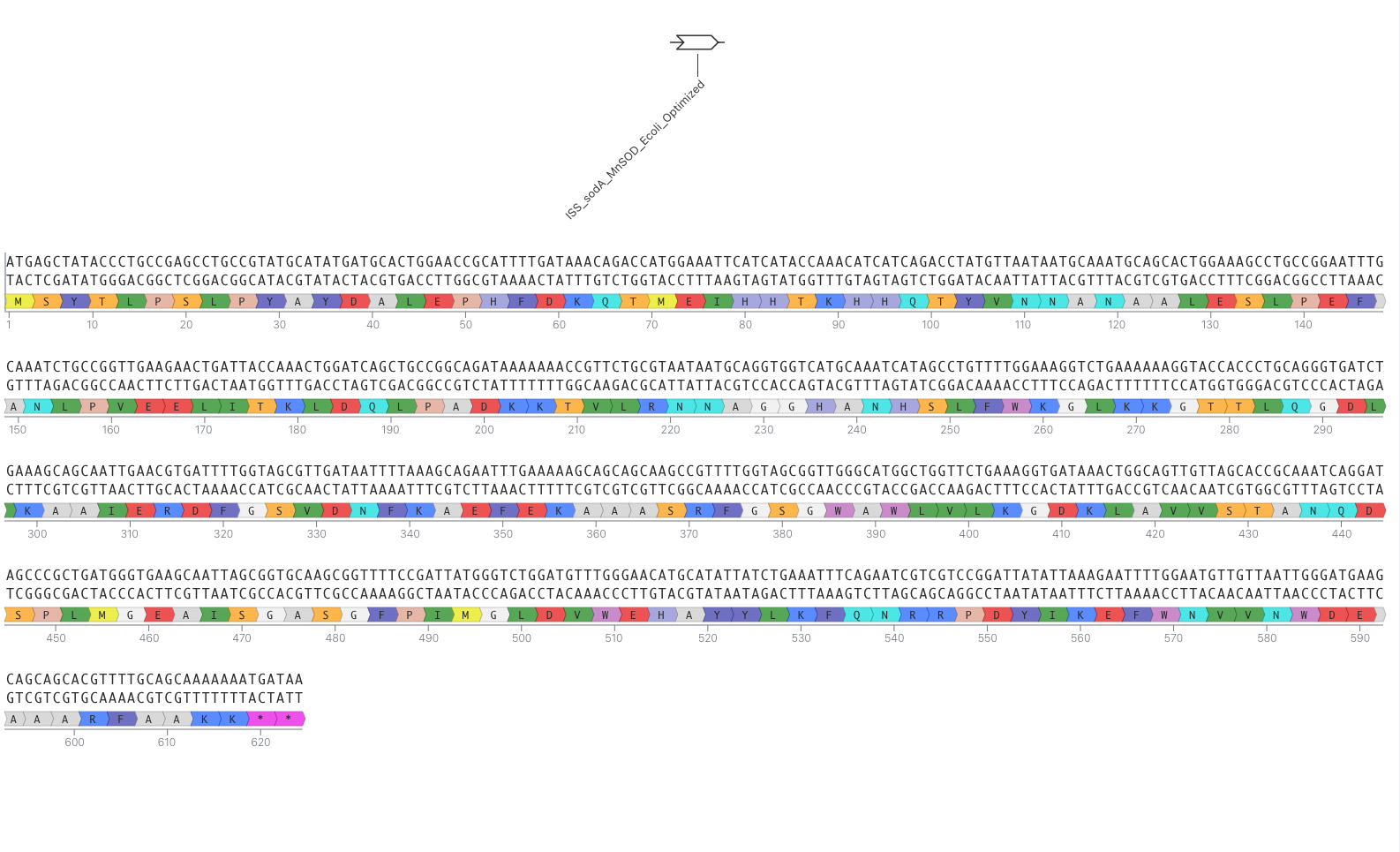
I used Kernel to generate a codon-optimized version of the MnSOD coding sequence.
Codon optimization changes the DNA sequence while aiming to preserve the encoded protein. Because multiple codons can encode the same amino acid, synonymous codons can be selected according to the expression context without intentionally changing the protein sequence.
The optimized CDS generated in Kernel is 624 bp long.
Figure 2. MnSOD coding sequence after codon optimization in Kernel.
This step made the distinction between the biological information represented by the protein and the exact DNA sequence used to encode it particularly clear to me. The DNA can be redesigned at the codon level while maintaining the intended protein product.
Pairwise sequence alignment
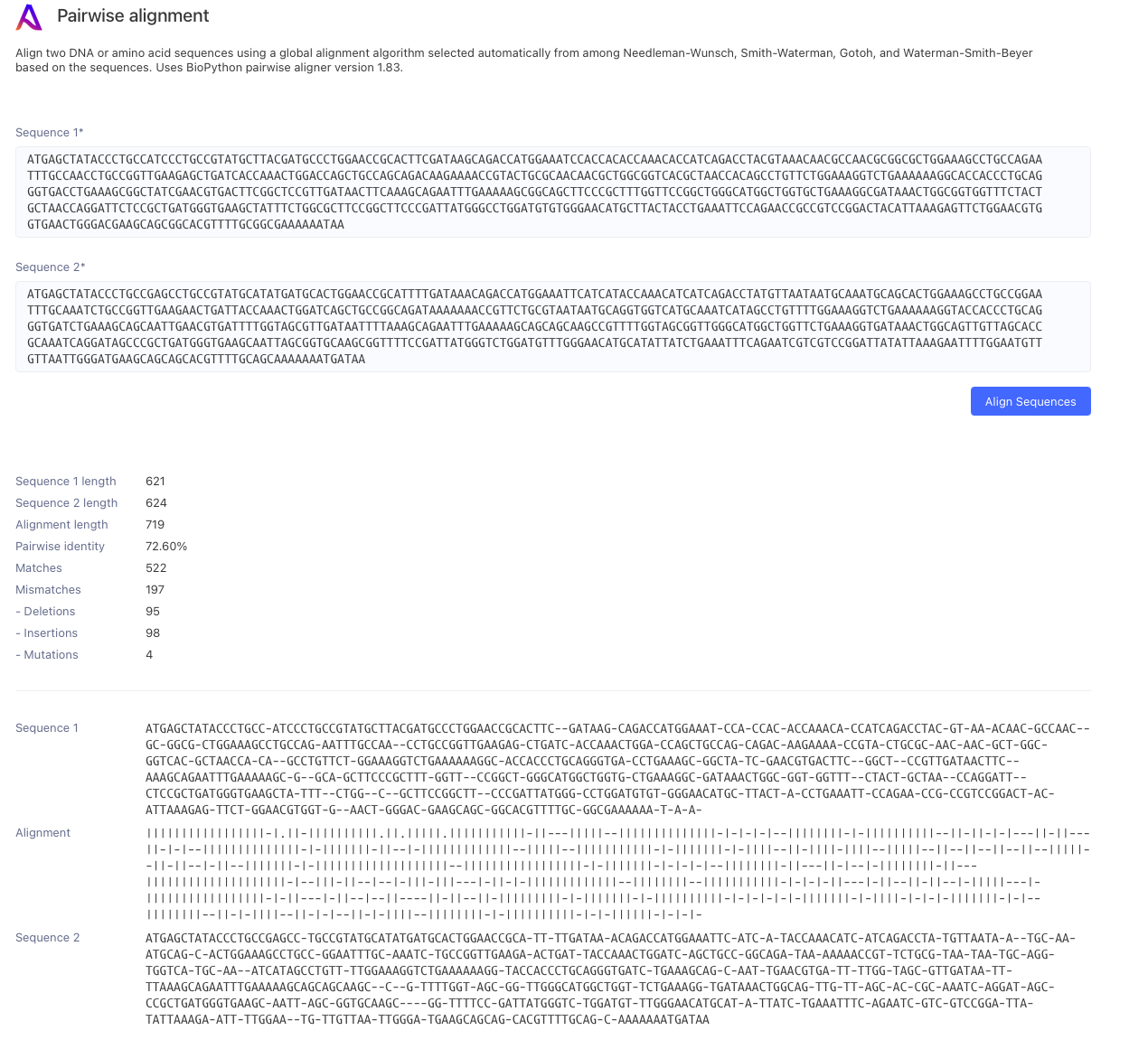
I then used Kernel’s pairwise alignment tool to compare the original and optimized DNA sequences.
Kernel reported:
Sequence 1 length: 621 bp
Sequence 2 length: 624 bp
Alignment length: 719
Pairwise identity: 72.60%
Matches: 522
Mismatches: 197
Deletions: 95
Insertions: 98
Mutations: 4
Figure 3. Kernel pairwise alignment between the two DNA sequences used in the optimization comparison.
The result shows that optimization produced substantial nucleotide-level differences between the sequences. This illustrates why the optimized DNA does not need to be identical to the original sequence in order to represent the same intended protein target.
The alignment result is therefore useful as a sequence-level comparison, although confirmation that the optimized CDS preserves the intended protein should ultimately rely on translation and protein-level comparison rather than DNA identity alone.
Biosecurity sequence screening
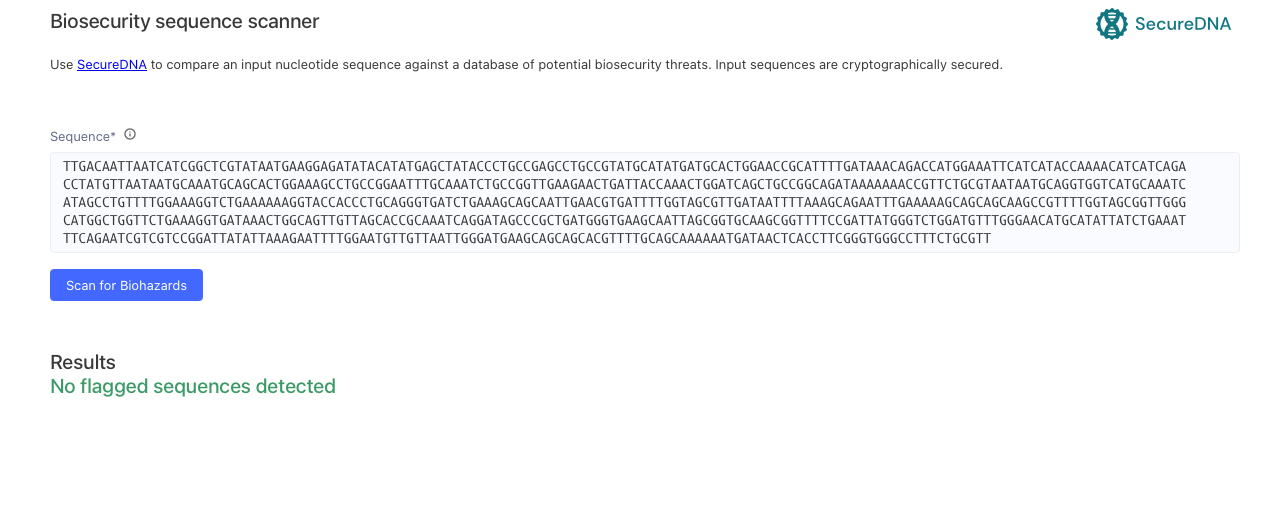
I also tested the sequence using Kernel’s Biosecurity Sequence Scanner, which uses SecureDNA to compare an input nucleotide sequence against a database of potential biosecurity threats.
The result was:
No flagged sequences detected.
Figure 4. Biosecurity screening result for the sequence tested in Kernel. No sequences were flagged.
For this design, the result is consistent with the use of MnSOD as a standard antioxidant enzyme rather than a sequence expected to represent a biosecurity concern.
Part 5 — From design to build
The construct designed here is relatively small and simple, so for an initial prototype I would favor commercial synthetic DNA followed by assembly into an appropriate bacterial vector, rather than attempting to synthesize the complete DNA experimentally from individual oligonucleotides.
A practical implementation could divide the design into a synthetic insert and a reusable plasmid backbone. Gibson assembly would then provide one possible method for joining DNA fragments with designed overlapping ends.
Gibson et al. demonstrated an enzymatic approach capable of assembling multiple overlapping DNA fragments into larger DNA molecules. For a construct such as this one, that makes fragment-based assembly a logical strategy if the expression cassette and backbone are obtained separately.
DNA synthesis itself is not error-free. Sequence length, repetitive regions and other difficult sequence features can affect synthesis and assembly. Carr et al. demonstrated that error-correction approaches can substantially reduce errors in synthetic DNA, illustrating why sequence verification remains important even when DNA is ordered rather than manually constructed.
At a larger scale, approaches based on parallel oligonucleotide synthesis and microchip-derived DNA pools become relevant. Work by Tian et al. and Kosuri et al. demonstrates how multiplexed synthesis can increase the scale at which many DNA sequences are produced.
For this project, however, the immediate goal would be one validated prototype, not large-scale DNA production. I would therefore first synthesize and verify a small number of construct variants, test protein expression, and only consider more scalable DNA-production strategies if the biological function proved useful for the material system.
Part 6 — What don’t I know yet?
This design converts one part of Interactive Second Skin into a concrete genetic construct, but several important questions remain open.
1. Will the construct produce enough functional MnSOD?
Designing a sequence does not guarantee the required protein expression level.
I would test this experimentally by expressing the construct and measuring both the amount of MnSOD produced and its enzymatic activity. If expression were too low or unnecessarily high, I would compare alternative promoter or RBS strengths.
2. Will the produced protein remain active outside the producing cell?
For Interactive Second Skin, producing MnSOD is only useful if the recovered enzyme can retain activity under conditions relevant to a material.
The next step would therefore be to recover the protein and compare its activity before and after exposure to candidate material environments.
3. How could the protein actually become part of the material?
This remains the largest question connecting the genetic design back to Interactive Second Skin.
Possible strategies could include incorporation, immobilization, encapsulation, or association with a material matrix, but I do not yet know which approach would preserve activity while creating the type of body–material interaction envisioned in the project.
I would therefore test several material–protein configurations and measure both retention of the protein and retention of biological activity over time.
The genetic construct developed here should therefore be understood as a first biological module within a much larger material system, rather than as the final Interactive Second Skin.
NCBI. sodA — superoxide dismutase, Mn.Escherichia coli K-12. Gene ID: 948403; RefSeq protein NP_418344.3.
Gibson, D. G. et al. (2009). Enzymatic assembly of DNA molecules up to several hundred kilobases.Nature Methods, 6, 343–345. https://doi.org/10.1038/nmeth.1318
Carr, P. A. et al. (2004). Protein-mediated error correction for de novo DNA synthesis.Nucleic Acids Research, 32, e162. https://doi.org/10.1093/nar/gnh160
Tian, J. et al. (2004). Accurate multiplex gene synthesis from programmable DNA microchips.Nature, 432, 1050–1054. https://doi.org/10.1038/nature03151
Kosuri, S. et al. (2010). Scalable gene synthesis by selective amplification of DNA pools from high-fidelity microchips.Nature Biotechnology, 28, 1295–1299. https://doi.org/10.1038/nbt.1716
AI assistance
I used ChatGPT (OpenAI, GPT-5.6 Sol) as a learning assistant for the biological concepts involved in this assignment.
AI was used to help me understand unfamiliar molecular-biology terminology and the relationships between the biological components of an expression construct.
Representative questions included:
“What is the difference between a DNA sequence and an amino-acid sequence in the context of codon optimization?”
“What is the role of a promoter, RBS, CDS and terminator in bacterial protein expression?”
“Why can two different DNA sequences encode the same protein?”
“Why does codon usage matter for protein expression?”
“What biological questions should be considered when producing MnSOD in E. coli?”
AI was used as a learning resource to support my understanding of the biological design decisions. The genetic parts, construct and experimental tool results reported above correspond to the design developed and tested during the assignment.