Week 2 HW: DNA Design
DNA Design — Interactive Second Skin
From material concept to biological function
In Homework 1, I explored Interactive Second Skin as a material interface between the body and clothing: a system in which a textile or biomaterial layer could move beyond being passive and instead carry, retain, or deliver functional properties through contact with the skin.
For this second assignment, I am narrowing that broader concept to one specific biological function that can be translated into a genetic design.
Rather than genetically engineering the material itself, I am exploring the production of a functional protein that could eventually be incorporated into or associated with the material after production.
The protein selected for this design is manganese superoxide dismutase (MnSOD), an antioxidant enzyme. I am using it as a first model through which to investigate how a biologically produced function could become part of a future bioactive material system.
Part 0 — Kernel setup
I created the repository Caterina-Sandonini_Interactive-Second-Skin in the HTGAA 2026 Kernel workspace and used it to create the individual biological parts and assemble the expression construct.
Part 1 — Define the expression target
What molecule am I expressing?
The target molecule is manganese superoxide dismutase (MnSOD), an antioxidant enzyme encoded by the sodA gene.
Superoxide dismutases catalyze the conversion of superoxide radicals into hydrogen peroxide and molecular oxygen.
For Interactive Second Skin, MnSOD is not intended to define the final biological function of the project. Instead, I am treating it as a first model protein for exploring how biological functionality could be produced separately and later associated with a material.
What is the sequence?
I used the characterized sodA / MnSOD from Escherichia coli K-12 as the biological reference.
- Gene: sodA
- Protein: Superoxide dismutase [Mn]
- UniProt accession: P00448
- NCBI Gene ID: 948403
- RefSeq protein: NP_418344.3
- Protein length: 206 amino acids
- Enzyme classification: EC 1.15.1.1
The target is therefore based on an existing characterized protein rather than a protein designed de novo.
What host or chassis?
For this first expression design, I selected Escherichia coli as the intended host.
Because the reference MnSOD is itself derived from E. coli, this provides a relatively direct starting point for examining the natural coding sequence and comparing it with a sequence optimized for bacterial expression.
Where does the product need to go?
The longer-term objective is not for MnSOD to remain inside the producing cell. The protein would eventually need to be recovered so that its incorporation, immobilization, or association with a material could be investigated.
For this assignment, I therefore treat protein production and material integration as two separate stages. No secretion signal is included in this first construct.
Part 2 — Design the genetic parts
I designed a simple bacterial expression cassette following the architecture:
Promoter → RBS → MnSOD CDS → Terminator
Promoter — Ptac_promoter
- Part type: Promoter
- Length: 29 bp
- Sequence:
TTGACAATTAATCATCGGCTCGTATAATG - Source: Kernel
- Rationale: Ptac provides an inducible bacterial promoter and therefore offers a way to control transcription rather than expressing the protein continuously.
Ribosome Binding Site — ISS_RBS_01
- Part type: Ribosome binding site
- Length: 14 bp
- Sequence:
AAGGAGATATACAT - Source: Created in Kernel
- Rationale: The RBS provides the translation-initiation region required upstream of the coding sequence in the bacterial expression design.
Coding Sequence — ISS_sodA_MnSOD_Ecoli_Optimized
- Part type: CDS
- Target: MnSOD / sodA
- Reference organism: Escherichia coli K-12
- Source: sodA reference sequence followed by codon optimization in Kernel
- Rationale: This sequence encodes the functional protein selected as the biological model for Interactive Second Skin.
Targeting / secretion
No secretion signal is included in this first construct.
The immediate objective is to investigate production of MnSOD. Recovery of the protein and its subsequent relationship with the material would be addressed as a later stage of the project.
Terminator — ISS_Terminator_01
- Part type: Terminator
- Length: 28 bp
- Sequence:
CTCACCTTCGGGTGGGCCTTTCTGCGTT - Source: Kernel
- Rationale: The terminator provides a defined downstream end to transcription.
Vector context
For this exercise I focused on designing and evaluating the expression cassette itself. A complete experimental implementation would additionally require an E. coli-compatible vector backbone providing an origin of replication and selectable marker.
Part 3 — Assemble the construct
The individual parts were assembled in Kernel in the following 5’→3’ order:
Ptac_promoter → ISS_RBS_01 → ISS_sodA_MnSOD_Ecoli_Optimized → ISS_Terminator_01
The assembled expression cassette is approximately 695 bp long.
Kernel was used to visualize the sequence and the relative position and orientation of each functional part.
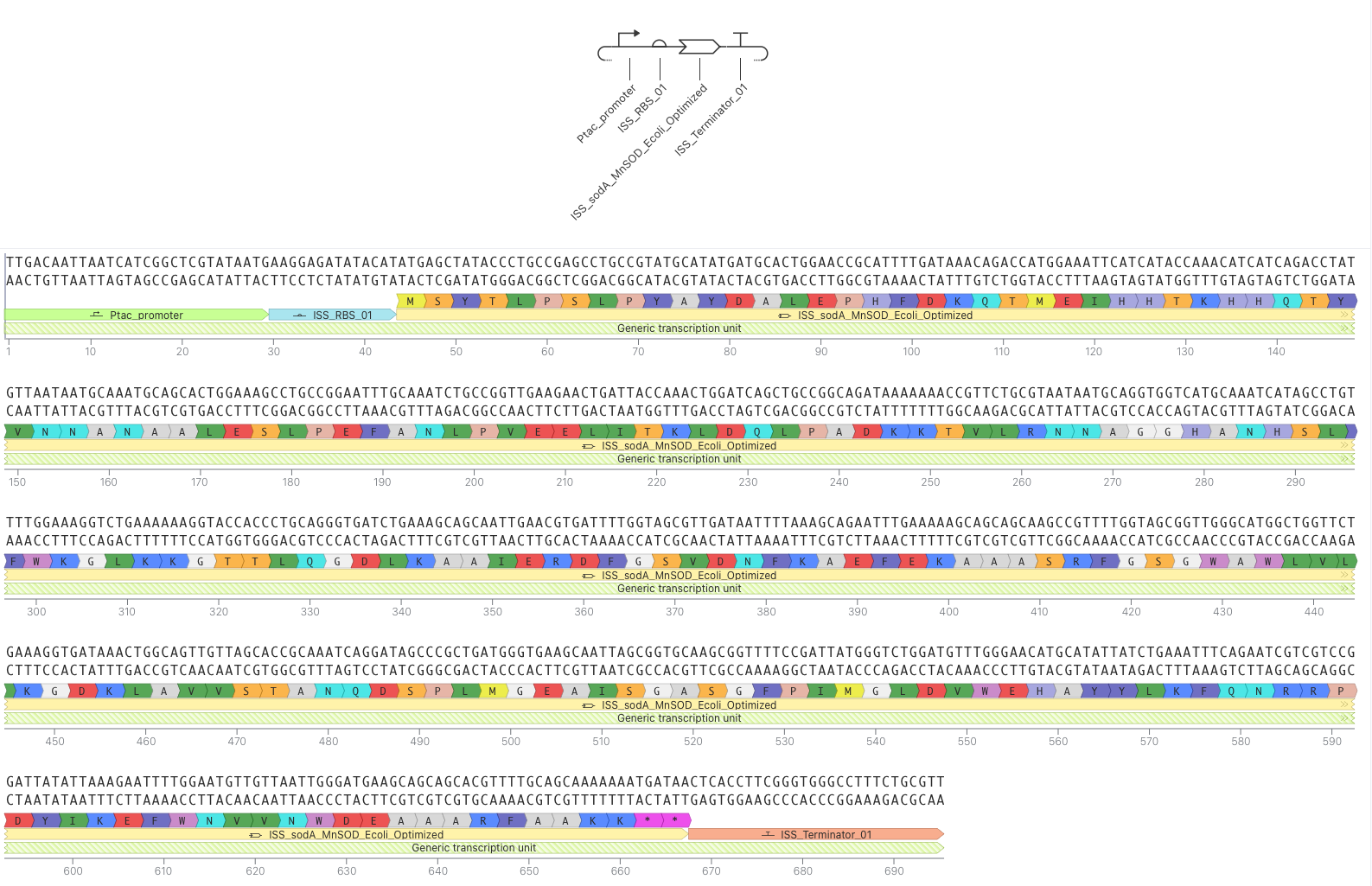
Figure 1. Assembled MnSOD expression cassette in Kernel, showing the Ptac promoter, RBS, optimized sodA coding sequence and terminator.
The resulting construct provides a simple first genetic implementation of the biological function selected for Interactive Second Skin.
Part 4 — Optimize and quality-check
Codon optimization
I used Kernel to generate a codon-optimized version of the MnSOD coding sequence.
Codon optimization changes the DNA sequence while aiming to preserve the encoded protein. Because multiple codons can encode the same amino acid, synonymous codons can be selected according to the expression context without intentionally changing the protein sequence.
The optimized CDS generated in Kernel is 624 bp long.
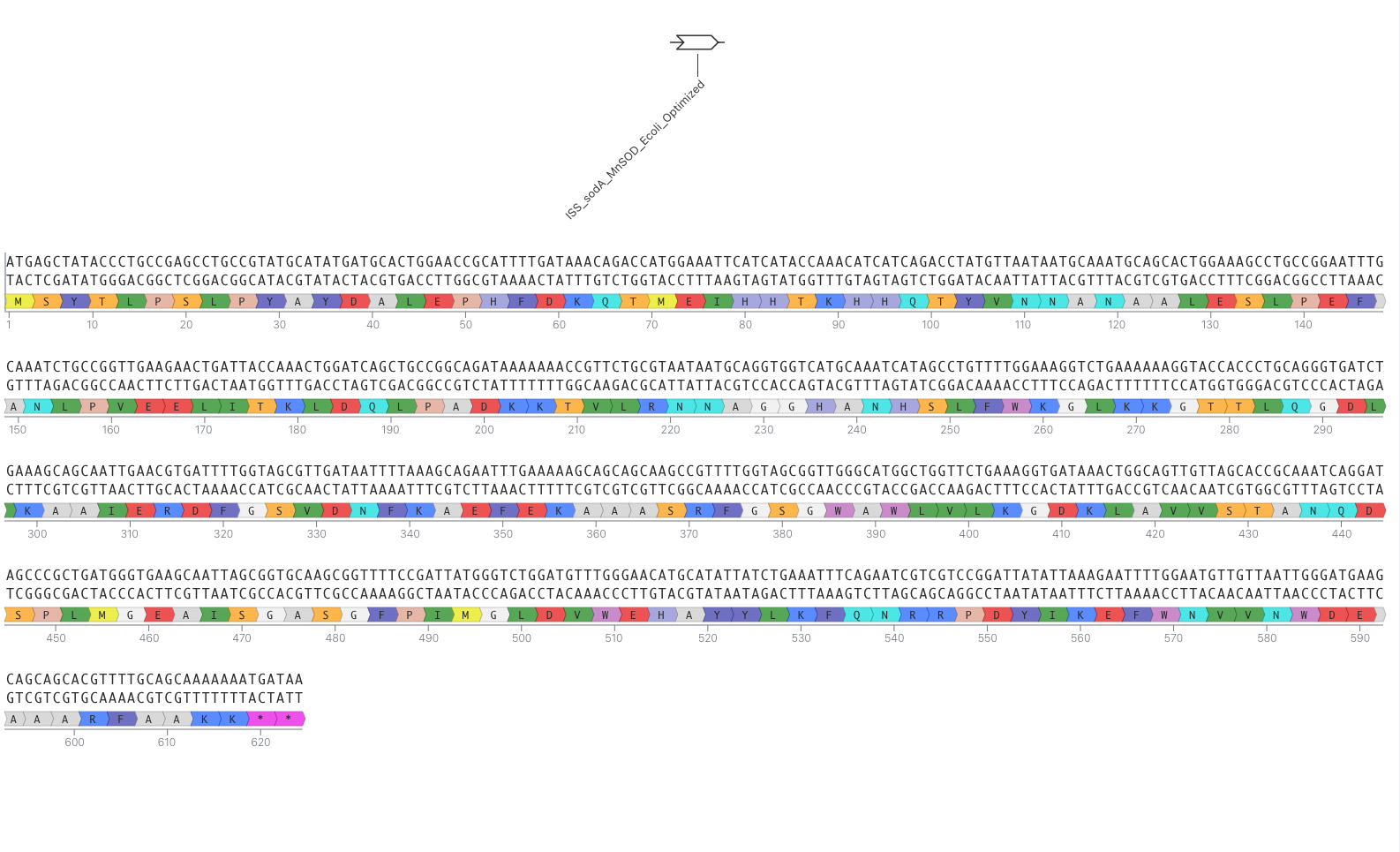
Figure 2. MnSOD coding sequence after codon optimization in Kernel.
This step made the distinction between the biological information represented by the protein and the exact DNA sequence used to encode it particularly clear to me. The DNA can be redesigned at the codon level while maintaining the intended protein product.
Pairwise sequence alignment
I then used Kernel’s pairwise alignment tool to compare the original and optimized DNA sequences.
Kernel reported:
- Sequence 1 length: 621 bp
- Sequence 2 length: 624 bp
- Alignment length: 719
- Pairwise identity: 72.60%
- Matches: 522
- Mismatches: 197
- Deletions: 95
- Insertions: 98
- Mutations: 4
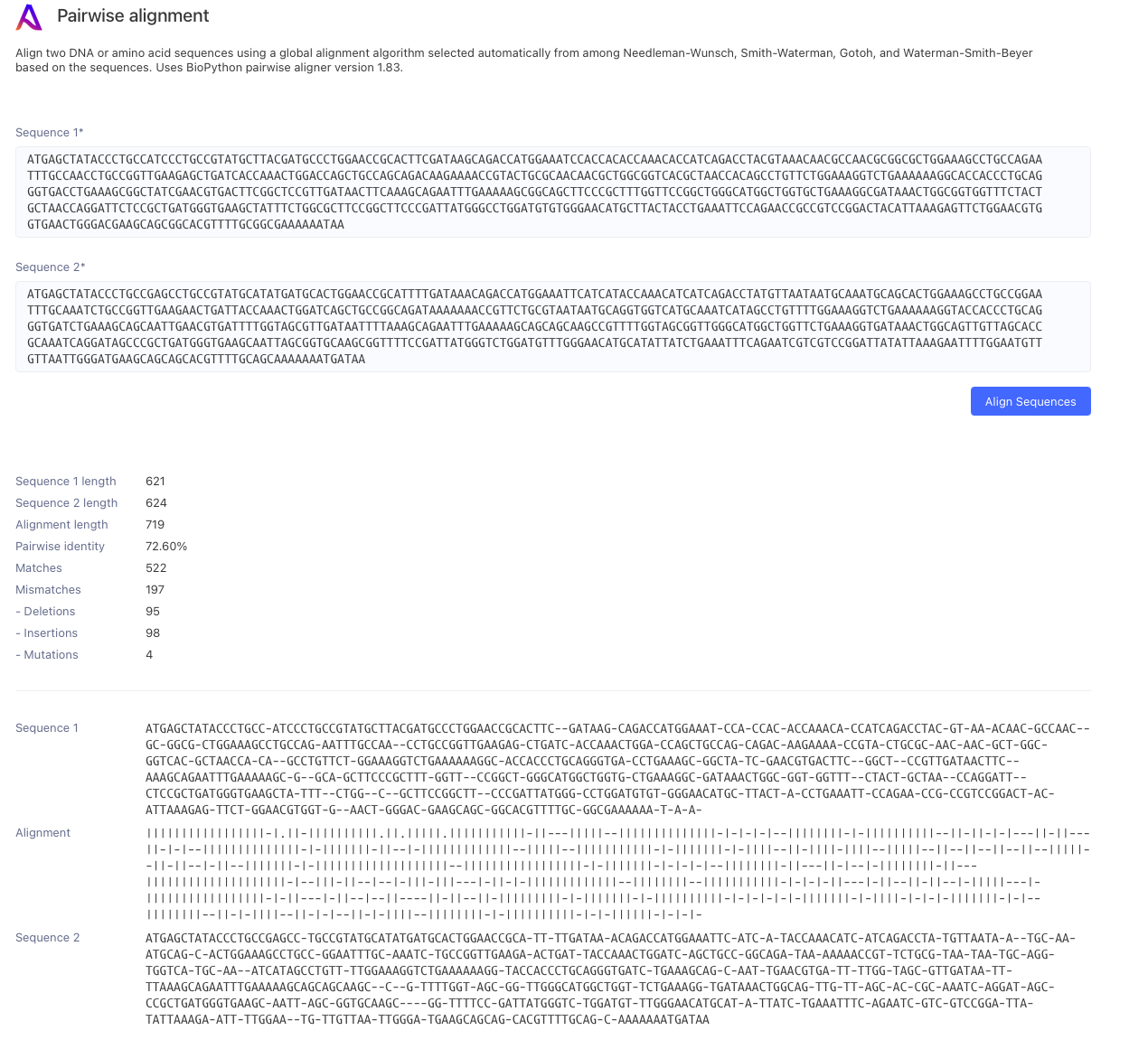
Figure 3. Kernel pairwise alignment between the two DNA sequences used in the optimization comparison.
The result shows that optimization produced substantial nucleotide-level differences between the sequences. This illustrates why the optimized DNA does not need to be identical to the original sequence in order to represent the same intended protein target.
The alignment result is therefore useful as a sequence-level comparison, although confirmation that the optimized CDS preserves the intended protein should ultimately rely on translation and protein-level comparison rather than DNA identity alone.
Biosecurity sequence screening
I also tested the sequence using Kernel’s Biosecurity Sequence Scanner, which uses SecureDNA to compare an input nucleotide sequence against a database of potential biosecurity threats.
The result was:
No flagged sequences detected.
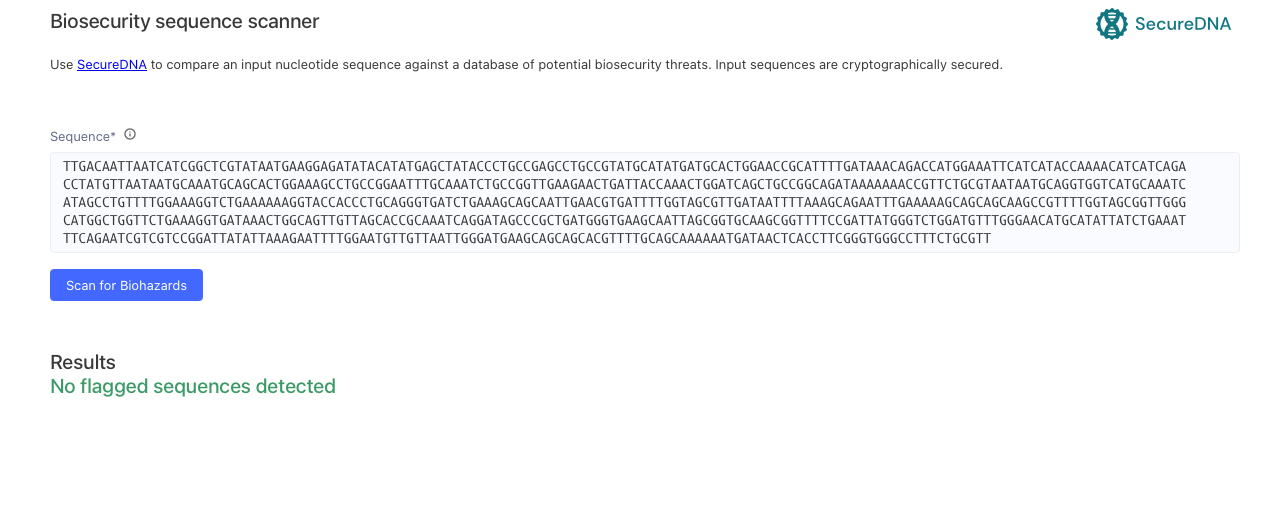
Figure 4. Biosecurity screening result for the sequence tested in Kernel. No sequences were flagged.
For this design, the result is consistent with the use of MnSOD as a standard antioxidant enzyme rather than a sequence expected to represent a biosecurity concern.
Part 5 — From design to build
The construct designed here is relatively small and simple, so for an initial prototype I would favor commercial synthetic DNA followed by assembly into an appropriate bacterial vector, rather than attempting to synthesize the complete DNA experimentally from individual oligonucleotides.
A practical implementation could divide the design into a synthetic insert and a reusable plasmid backbone. Gibson assembly would then provide one possible method for joining DNA fragments with designed overlapping ends.
Gibson et al. demonstrated an enzymatic approach capable of assembling multiple overlapping DNA fragments into larger DNA molecules. For a construct such as this one, that makes fragment-based assembly a logical strategy if the expression cassette and backbone are obtained separately.
DNA synthesis itself is not error-free. Sequence length, repetitive regions and other difficult sequence features can affect synthesis and assembly. Carr et al. demonstrated that error-correction approaches can substantially reduce errors in synthetic DNA, illustrating why sequence verification remains important even when DNA is ordered rather than manually constructed.
At a larger scale, approaches based on parallel oligonucleotide synthesis and microchip-derived DNA pools become relevant. Work by Tian et al. and Kosuri et al. demonstrates how multiplexed synthesis can increase the scale at which many DNA sequences are produced.
For this project, however, the immediate goal would be one validated prototype, not large-scale DNA production. I would therefore first synthesize and verify a small number of construct variants, test protein expression, and only consider more scalable DNA-production strategies if the biological function proved useful for the material system.
Part 6 — What don’t I know yet?
This design converts one part of Interactive Second Skin into a concrete genetic construct, but several important questions remain open.
1. Will the construct produce enough functional MnSOD?
Designing a sequence does not guarantee the required protein expression level.
I would test this experimentally by expressing the construct and measuring both the amount of MnSOD produced and its enzymatic activity. If expression were too low or unnecessarily high, I would compare alternative promoter or RBS strengths.
2. Will the produced protein remain active outside the producing cell?
For Interactive Second Skin, producing MnSOD is only useful if the recovered enzyme can retain activity under conditions relevant to a material.
The next step would therefore be to recover the protein and compare its activity before and after exposure to candidate material environments.
3. How could the protein actually become part of the material?
This remains the largest question connecting the genetic design back to Interactive Second Skin.
Possible strategies could include incorporation, immobilization, encapsulation, or association with a material matrix, but I do not yet know which approach would preserve activity while creating the type of body–material interaction envisioned in the project.
I would therefore test several material–protein configurations and measure both retention of the protein and retention of biological activity over time.
The genetic construct developed here should therefore be understood as a first biological module within a much larger material system, rather than as the final Interactive Second Skin.
References
UniProt Consortium. Superoxide dismutase [Mn] (sodA), Escherichia coli K-12. UniProt accession P00448.
NCBI. sodA — superoxide dismutase, Mn. Escherichia coli K-12. Gene ID: 948403; RefSeq protein NP_418344.3.
Gibson, D. G. et al. (2009). Enzymatic assembly of DNA molecules up to several hundred kilobases. Nature Methods, 6, 343–345. https://doi.org/10.1038/nmeth.1318
Carr, P. A. et al. (2004). Protein-mediated error correction for de novo DNA synthesis. Nucleic Acids Research, 32, e162. https://doi.org/10.1093/nar/gnh160
Tian, J. et al. (2004). Accurate multiplex gene synthesis from programmable DNA microchips. Nature, 432, 1050–1054. https://doi.org/10.1038/nature03151
Kosuri, S. et al. (2010). Scalable gene synthesis by selective amplification of DNA pools from high-fidelity microchips. Nature Biotechnology, 28, 1295–1299. https://doi.org/10.1038/nbt.1716
AI assistance
I used ChatGPT (OpenAI, GPT-5.6 Sol) as a learning assistant for the biological concepts involved in this assignment.
AI was used to help me understand unfamiliar molecular-biology terminology and the relationships between the biological components of an expression construct.
Representative questions included:
- “What is the difference between a DNA sequence and an amino-acid sequence in the context of codon optimization?”
- “What is the role of a promoter, RBS, CDS and terminator in bacterial protein expression?”
- “Why can two different DNA sequences encode the same protein?”
- “Why does codon usage matter for protein expression?”
- “What biological questions should be considered when producing MnSOD in E. coli?”
AI was used as a learning resource to support my understanding of the biological design decisions. The genetic parts, construct and experimental tool results reported above correspond to the design developed and tested during the assignment.