I am a Microbiology undergraduate student and researcher at Universidad Nacional Mayor de San Marcos (UNMSM), interested in extremophiles, molecular biology, genomics and de novo protein design.
Climate change and unregulated mining, particularly in the Peruvian Andes, leave behind vast expanses of acidic, saline, metal-contaminated tailings where traditional seeds simply cannot germinate.
My current bachelor’s thesis at UNMSM evaluates the osmotic tolerance and ectoine production of the extreme acidophile Leptospirillum ferriphilum under chloride and sulfate stress. This homework is my opportunity to translate that fundamental discovery into a tangible and scalable biomanufacturing solution.
⚠️ Critical Literature Gap
While halophilic bacteria exhibit Plant Growth Promoting (PGP) traits under salt stress (Srivastava, 2022), no direct experimental evidence currently exists on the formal application of formulated ectoine or PHA biopolymers as seed coatings for the phytoremediation of mine tailings.
2️⃣ What Living System Would I Use?
Proposed Chassis: Halomonas bluephagenesis
I propose using Halomonas bluephagenesis, a halophilic microbial manufacturing chassis renowned for Next-Generation Industrial Biotechnology (NGIB). It is capable of open, non-sterile fermentation at high salinity, which drastically reduces CAPEX and OPEX.
The Metabolic Challenge & Biological Process
H. bluephagenesis naturally co-produces both PHA and ectoine, but these pathways compete for central carbon. Ectoine biosynthesis diverts oxaloacetate away from the TCA cycle, suppressing oxidative phosphorylation to prioritize precursor availability over ATP generation (Enuh, 2024; Shu, 2023).
graph TD
    A["Carbon Source<br/>(Crude Glycerol)"] --> B["Entner-Doudoroff Pathway"]
    B --> C["Oxaloacetate"]
    C --> D["Aspartate Semialdehyde"]
    D --> E["ectABC Operon<br/>→ Ectoine"]
    D --> F["Amino Acid Synthesis"]
    C --> G["TCA Cycle"]
    G --> H["ATP Generation"]
    G --> I["phaCAB Operon<br/>→ PHA"]

    style E stroke:#228B22,stroke-width:2px
    style I stroke:#4169E1,stroke-width:2px
    style H stroke:#DAA520,stroke-width:2px
    style A stroke:#8B4513,stroke-width:2px
Rather than static overexpression, I propose exploring a a toggle switch circuit to balance co-production:
Stage 2 (Ectoine Burst): A targeted osmotic shock (like a specific Cl⁻/SO₄²⁻ pulse, inspired by my thesis) flips the circuit, derepressing ectABC for hyper-accumulation.
What goes in: Crude glycerol (agricultural waste) + NaCl/metal sulfates.
What comes out: High-density microbial biomass heavily loaded with intracellular PHA granules and ectoine.
3️⃣ How Would I Use Automation?
To connect the living system to the target product, I propose using automation in three distinct phases of the biomanufacturing workflow: Strain Optimization, Product Separation, and Artifact Creation.
Technology: Opentrons OT-2 integrated with open-source platforms.
Workflow Automated: The Design-Build-Test-Learn (DBTL) cycle for genetic circuit assembly.
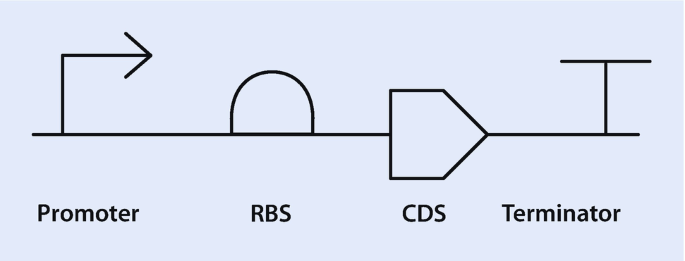
Balancing two competing metabolic pathways requires screening hundreds of genetic circuit variants (Promoter × RBS × Terminator). The Opentrons will automate the Golden Gate assembly of the toggle switch library and inoculate 96-well plates with precise Cl⁻/SO₄²⁻ gradients. This accelerates the primary DBTL cycle from months to weeks (Carbonell, 2018).
Technology: Automated continuous-culture system with robotic valves and centrifugation modules.
Workflow Automated: Non-lethal Product Separation.
Extracting intracellular products is traditionally labor-intensive, but the physical state of the molecules allows for an elegant automated separation:
Ectoine (Dissolved solute): Lives dissolved in the cell’s cytoplasm.
PHB (Solid polymer): Lives as insoluble, solid intracellular granules.
The Automated Milking Process:
Automated Osmotic Shock: Robotic valves rapidly cycle the bioreactor between high and low salinity. The cell membrane temporarily becomes permeable. The dissolved ectoine “sweats” out into the liquid, while the solid PHB granules remain trapped inside the cell.
Automated Centrifugation: The system automatically separates the streams where the liquid supernatant (rich in ectoine) is routed to crystallization, while the cell pellet (rich in PHB) is routed to solvent extraction.
3. Formulation Automation: From Biopolymers to “Seed Pods”
Technology: Automated liquid mixing and precision casting modules.
Workflow Automated: Formulation and Artifact Molding.
The raw PHB extracted from the cells comes out as solid pellets after solvent evaporation. To create the final artifact:
Automated Blending: A robotic mixing module dissolves the purified PHB pellets and the crystallized ectoine powder together in a solvent, creating a homogeneous biocomposite resin.
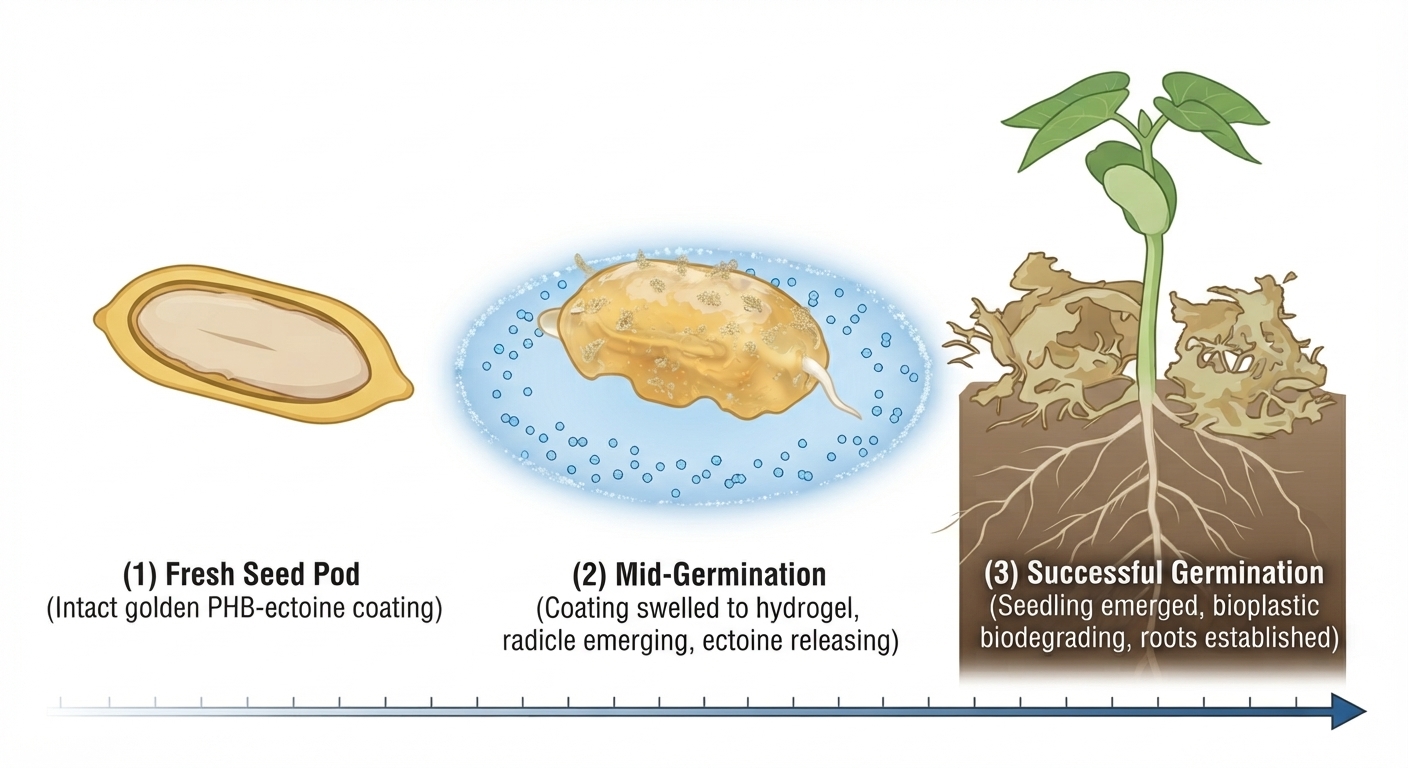
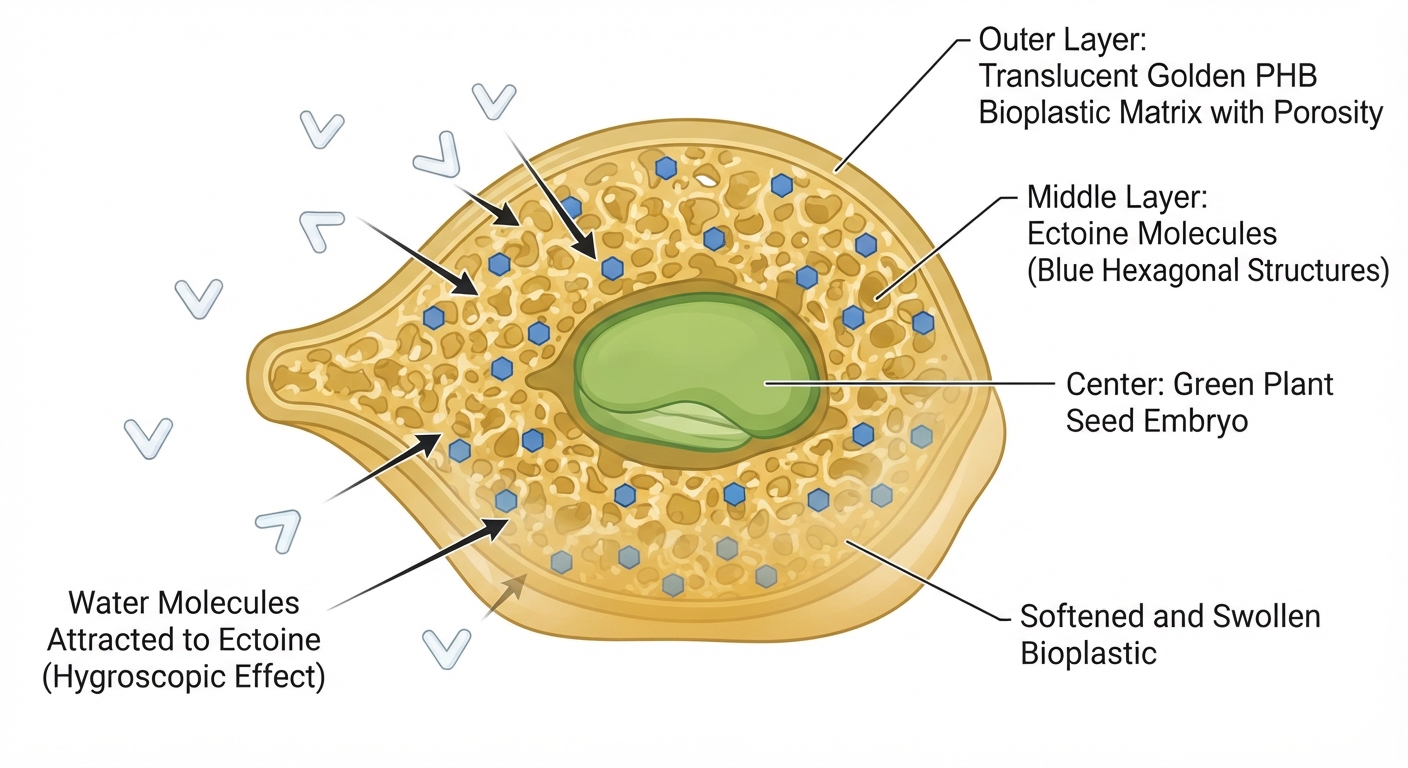
Precision Casting: The liquid resin is automatically dispensed into 3D-printed molds shaped like seed pods. A physical plant seed is placed in the center of each mold before the resin solidifies, encapsulating the seed in the protective, moisture-retaining PHA-Ectoine matrix.
4️⃣ How Much Would I Need to Make, and How Long Would It Take?
Meaningful Scale Definition
As a reasonable engineering estimate for a pilot project, I define the scale as the reforestation of 1 hectare of degraded, acidic mining tailings in the Peruvian Andes.
(a) How Much?
graph TD
    A["10,000 m²<br/>Mining Tailings"] --> B["10,000 Seed Pods<br/>1 pod / m²"]
    B --> C["20 kg Biocomposite<br/>2 g / pod"]
    C --> D["2 kg Pure Ectoine<br/>10% of matrix"]
    D --> E["100 L Fermentation<br/>at 20 g/L titer"]

    style A stroke:#8B4513,stroke-width:2px,color:#fff
    style B stroke:#228B22,stroke-width:2px
    style C stroke:#8B4513,stroke-width:2px
    style D stroke:#DAA520,stroke-width:2px
    style E stroke:#4169E1,stroke-width:2px
Parameter
Value
Source / Assumption
Area to reclaim
10,000 m² (1hectare)
Pilot-scale field trial
Seed pod density
1 pod/m²
Standard reforestation practice
Total pods needed
10,000 pods
10,000 m² × 1 pod/m²
Biocomposite per pod
2 g
Estimated for structural integrity
Total biocomposite
20 kg
10,000 × 2 g
Ectoine fraction
10% w/w
Optimized formulation target
Pure ectoine needed
2 kg
20 kg × 10%
Expected titer
20 g/L
Conservative assumption; literature reports up to 28 g/L (Hong, 2020)
Total Time to Product: Around 4 days of manufacturing to yield the 100L batch (2 kg ectoine + 18 kg PHA) required for the 1-hectare pilot, following the 11-week automated strain optimization.
5️⃣ What Don’t I Know Yet?
#
Unknown / Bottleneck
What I need to learn/measure
1
Phenotypic Stability of the Toggle Switch
Will the synthetic genetic circuit remain stable over generations in open, non-sterile NGIB conditions? I need to experimentally measure the mutation rate of the synthetic promoters under continuous osmotic cycling.
2
Metabolic Toxicity Threshold
Diverting massive carbon flux toward ectoine suppresses the TCA cycle (Enuh, 2024). I need to perform metabolic flux analysis to determine the exact threshold where the metabolic burden causes culture arrest, and if deleting competing pathways is viable.
3
Efficacy of Automated “Microbial Milking”
While microbial milking works in theory, I do not know if the automated osmotic shock cycles will efficiently extract ectoine without causing excessive cell lysis, which would contaminate the ectoine stream with intracellular proteins. I need to measure the purity and yield of the automated extraction module.
AI Citation
AI Client: Qwen (developed by Alibaba Cloud)
Prompt Used:“Format the final proposal as a visually appealing Markdown page with Mermaid diagrams, emojis, and tables”
References
Bryant, J. A., Jr, Kellinger, M., Longmire, C., Miller, R., & Wright, R. C. (2023). AssemblyTron: flexible automation of DNA assembly with Opentrons OT-2 lab robots. Synthetic Biology (Oxford, England), 8(1), ysac032. https://doi.org/10.1093/synbio/ysac032
Carbonell, P., Jervis, A. J., Robinson, C. J., Yan, C., Dunstan, M., Swainston, N., Vinaixa, M., Hollywood, K. A., Currin, A., Rattray, N. J. W., Taylor, S., Spiess, R., Sung, R., Williams, A. R., Fellows, D., Stanford, N. J., Mulherin, P., Le Feuvre, R., Barran, P., … Scrutton, N. S. (2018). An automated Design-Build-Test-Learn pipeline for enhanced microbial production of fine chemicals. Communications Biology, 1(1), 66. https://doi.org/10.1038/s42003-018-0076-9
Enuh, B. M., Aytar Çelik, P., & Angione, C. (2024). Genome-scale metabolic modeling of Halomonas elongata 153B explains polyhydroxyalkanoate and ectoine biosynthesis in hypersaline environments. Biotechnology Journal, 19(10), e202400267. https://doi.org/10.1002/biot.202400267
Hong, M., Zhao, Y., Huang, W., Zhang, L., Wu, F., Ye, J., & Chen, G.-Q. (2020). Rational flux-tuning of Halomonas bluephagenesis for co-production of bioplastic PHB and ectoine. Nature Communications, 11(1), 3313. https://doi.org/10.1038/s41467-020-17223-3
Hu, Q., Sun, S., Zhang, Z., Liu, W., Yi, X., He, H., Scrutton, N. S., & Chen, G.-Q. (2024). Ectoine hyperproduction by engineered Halomonas bluephagenesis. Metabolic Engineering, 82, 238–249. https://doi.org/10.1016/j.ymben.2024.02.010
Shu, Z., Zhang, X., Wang, R., Xing, J., Li, Y., Zhu, D., & Shen, G. (2023). Metabolic engineering of Halomonas campaniensis strain XH26 to remove competing pathways to enhance ectoine production. Scientific Reports, 13(1), 9732. https://doi.org/10.1038/s41598-023-36975-8
Srivastava, A. K., Srivastava, R., Sharma, A., Bharati, A. P., Yadav, J., Singh, A. K., Tiwari, P. K., Srivatava, A. K., Chakdar, H., Kashyap, P. L., & Saxena, A. K. (2022). Transcriptome analysis to understand salt stress regulation mechanism of Chromohalobacter salexigens ANJ207. Frontiers in Microbiology, 13, 909276. https://doi.org/10.3389/fmicb.2022.909276
Week 2 HW: DNA Design
Part 0: Set up in Kernel
Repository: Cesar_Alcantara-SeedPods
Part 1: Define your expression target
Molecules expressed: Ectoine biosynthesis enzymes (EctA, EctB, EctC)
Sequences: The ectABC operon sequence derived from Leptospirillum ferriphilum YR01, retrieved from NCBI
Part 2: Design your genetic parts
Promoter: From Leptospirillum ferriphilum YR01 ectA
AAAAATCCTTCAAAAACAAAGGGCATTTTTGTCATTGGAAACAAAAAAATTGGATTTCAGGTTTGACATT
CCGGCGTTCACTTGCAAAACTAGAAAACATGCACAAACGGTTTGAGGGGTTTTAAACGTTGCCCTGCCGG
CGTGTCGCTGGCAGGGGGGGGAAGCTGTTTTTGAAACGAGAGGGAGGCATGACGTTCGACGCGTCATGCA
GGAAGGAGGAGAAGAAGCCCGAAAAACAACACGATTTCTGACTTTCCGGAAGAGAATTTCCGGACAGAAA
AAGGTCATCTCTAAACCGCCCGTTTTACCCGACATCGGACCCCGAAAAAGTTCACCCCCGCAACCCCTGA
ACAAAGGCACCACAACAAGAGTTTCTCTCCGGACCGGCCAGATGGCCAATTGTTTTTTCTCCGGTGACGC
GGTTCTCATAAATGCATGTTGCCCGTTCAGCATCCTGACCGGACGCTCGTTTTATGACATATGCCAAAGG
AGGGACGCCC
Part 4: Optimize and quality-check
a short paragraph per tool covering what you ran, what it returned, and what you concluded. Screenshots welcome.
Part 5: From design to build
How would you build it?
What does synthesis constrain? Synthesis has error rates and struggles with certain sequences. Does your design contain anything hard to synthesize? How would error correction or fragment-based assembly change your approach?
Prototype vs. scale. Mirroring HW1: the way you’d build one construct to test your idea may differ from how you’d produce DNA at the scale your product needs. Briefly describe both if they differ.