Week 2 HW: DNA Design
Homework — Tuesday September 29, by 2:30p ET
Week 2 HW Overview
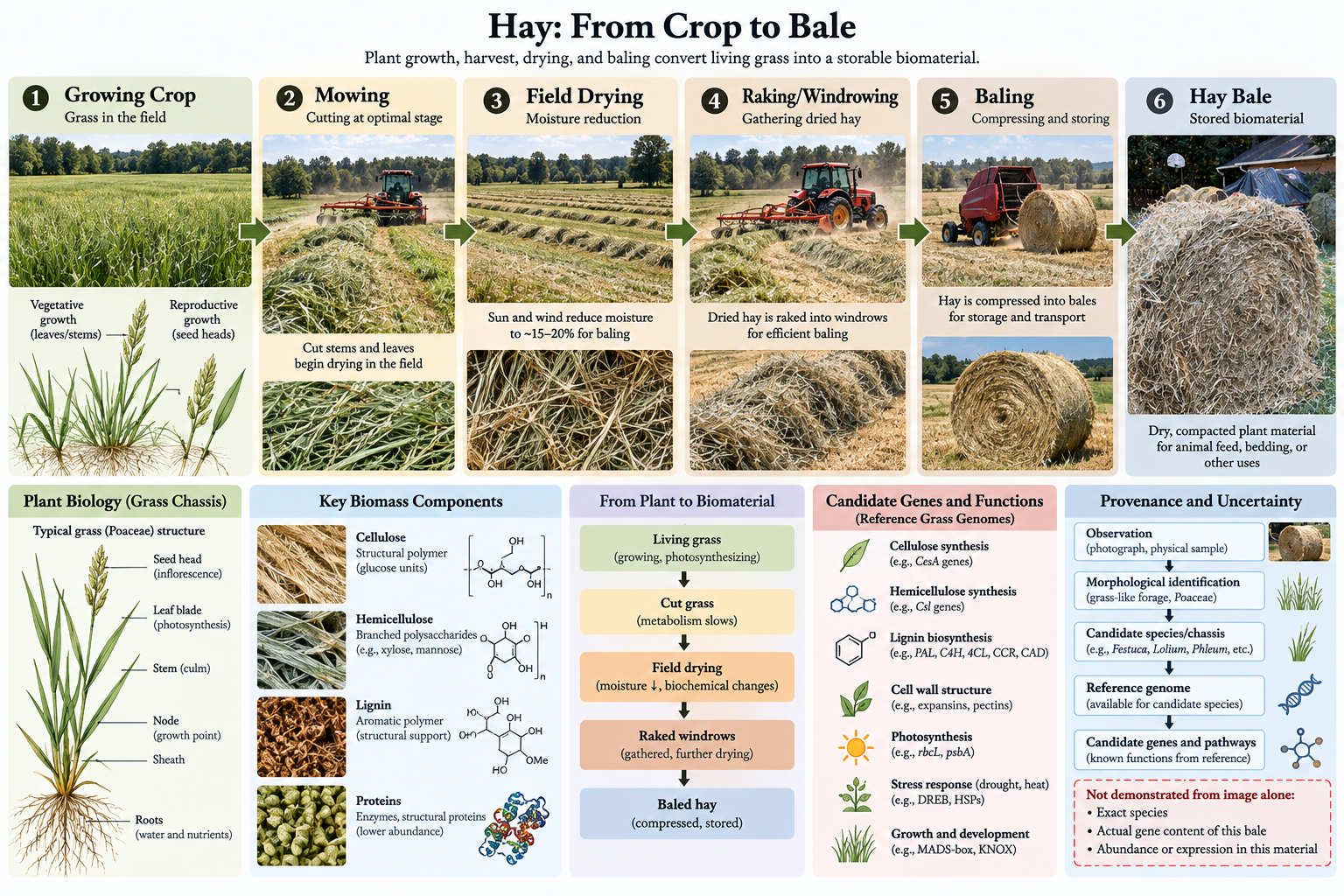
Part 0: Set up in KernelIn Homework #1 you proposed what to biomanufacture. In this assignment you design the DNA that makes it, the actual genetic construct, using Kernel, Asimov’s computer-aided genetic design software. You will take the product and living system you proposed and turn them into a concrete expression design: the biological parts, the assembled construct, and the sequence-level decisions a lab would need to order and build it. Along the way you will run Kernel’s design tools and reason about how your construct would actually be synthesized and assembled. Your goal is to move from concept to sequence and to make, and defend, a real design choice at each layer. You are not expected to produce a perfect, lab-ready plasmid. Where you have to guess, guess reasonably and say so. Get oriented in the software tool before you design anything. Log in to Kernel and join the HTBAA 2026 workspace. Create a repository for your project, and inside it a folder named for you and your project, e.g. lastname-project. Spend some time exploring: open an existing part and an existing construct and notice the difference. Check out the different tools and ask Kernel AI some questions! Deliverable for this part: a one-sentence note in your write-up with the name of your repository and folder, so we can find your work. Part 1: Define your expression targetStart from the project you proposed in Homework #1 and pin down exactly what your cells need to make. Answer in your write-up: I have no way to sequence the materials in my HW #1, so how do I describe the genes associated with my biomaterials? The straightforward answer is to identify genes associated with biomaterials similar to mine in the published literature. But then the project gets less interesting. If I cannot measure the biological material using my own parameters of inter-variability, can I really know that the published sequence represents the biological system in front of me? Tick-tock, tick-tock. Time is indifferent to the challenges of now. If I must “live” in the literature, I still need some way to evaluate whether accessible and available information represents my local conditions. I might find an excellent sequence obtained from a bog beside a nuclear reactor in Japan—but does it represent a bog in the backwoods of North Carolina? Tick-tock. Yes? No. Unknown. The problem, as I see it, is the absence of a context codex for the chassis of hosts and their nested chassis. Even the apparently simple category of “hay” contains this problem. Hay is derived from living plants, which at least gives us directionality—and directionality is not a trivial place to begin. But network directionality only gets us so far. It can, however, cut relatively clean state representations from a dynamic biological landscape that can be reconstructed in the here and now. From growth to harvest, an ecological niche is born. Within the hay are microbiomes inherited from when the plants were alive. What becomes of those microbiomes when the hay is harvested? Some of the life remaining in the hay returns to the soil. Some passes outward into the gut and eventually into the tissues of other chassis. In time, some reaches the water, and some takes flight into the air. The biomaterial therefore cannot be completely separated from the nested biological systems through which it moves. Down to the biochemistry, then. I can consider the chemistry of living hay and dead hay, the genes and organisms associated with those states, and the evolutionary history that produced them. Published sequences can provide hypotheses and reference states, but without local sequencing they cannot establish the sequence composition of my own material. The literature therefore becomes a comparative framework rather than a substitute for measurement. Tick-tock. For HW #1, the best approach is to use what is available now—but preserve the distinction between what I can observe locally, what I can infer from published biological analogues, and what remains unknown. 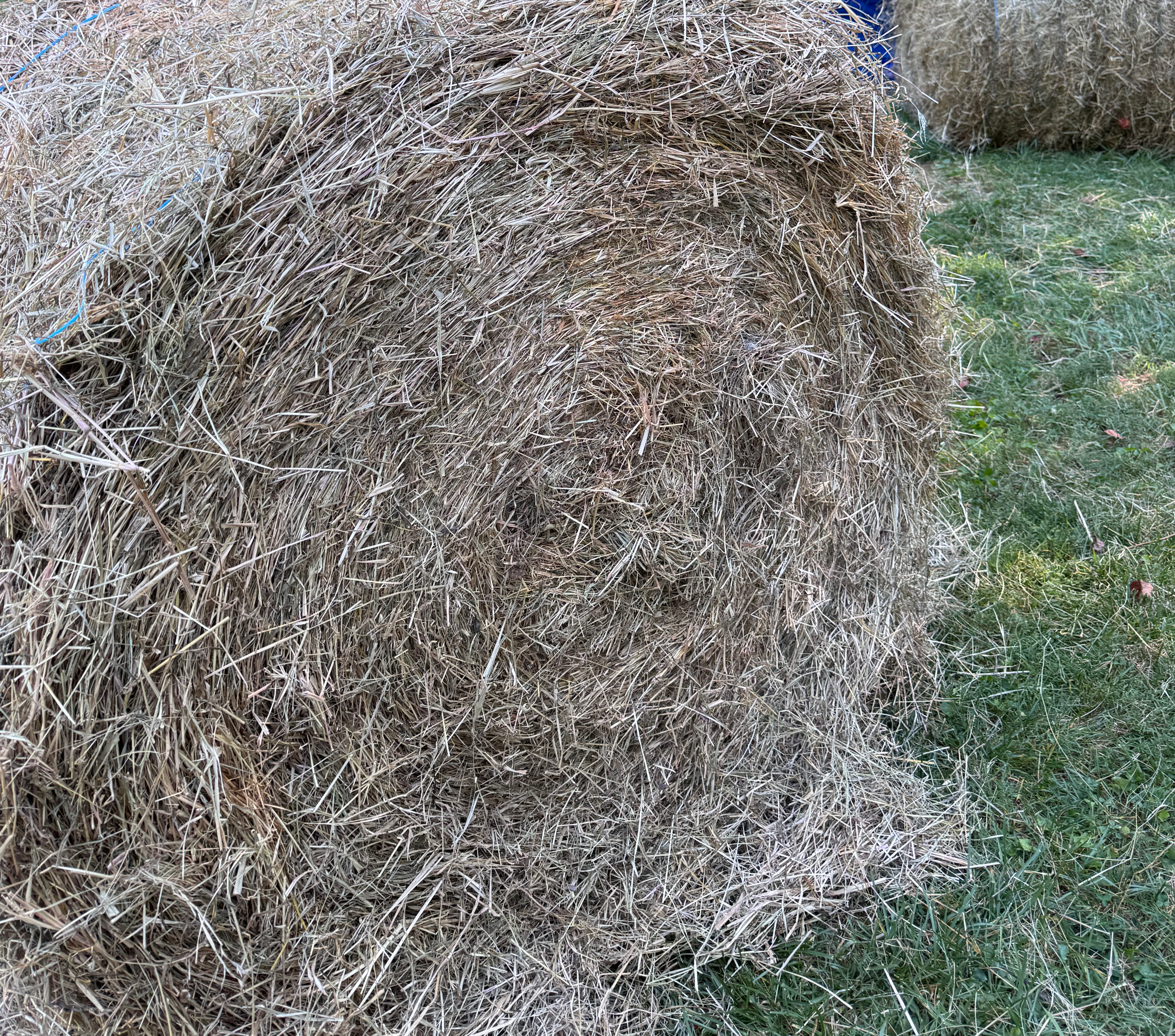
The proposed biomaterial can be conceptualized as a three-dimensional Winogradsky-like system constructed from soiled hay. The hay provides both a cellulose-rich structural substrate and heterogeneous plant carbon, while animal waste contributes additional organic matter and nutrients. Mountain geometry, animal-mediated surface compaction, water infiltration, heat transfer, gas exchange, and drying establish spatially heterogeneous environmental gradients throughout the structure. These gradients condition microbial community assembly and metabolism, potentially including decomposition, fermentation, redox cycling, fungal growth, and localized biomineralization. The additional spatial dimensionality transforms the conventional vertical Winogradsky gradient into a multivariate dynamic system. Position within the mountain can be represented as a state conditioned by variables such as moisture, temperature, oxygen availability, redox potential, nutrient availability, porosity, compaction, and flow. Because several of these variables can be experimentally manipulated through geometry, irrigation, material packing, mineral supplementation, and animal interaction, the resulting ecological trajectories can be experimentally shaped and measured over time. 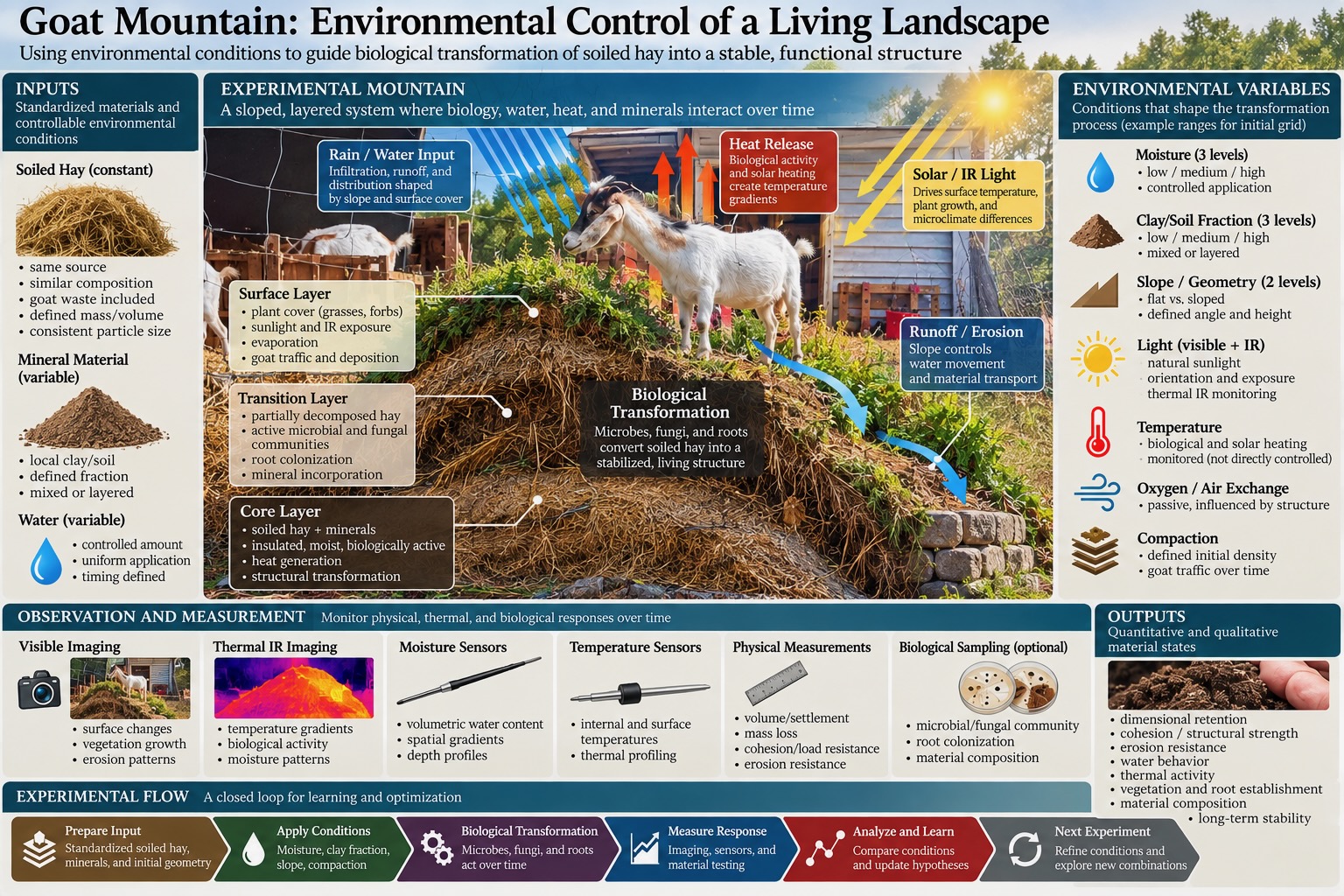
🌾 Representative organism: Kentucky-31 tall fescue (Lolium arundinaceum, syn. Schedonorus arundinaceus / Festuca arundinacea) 🌾 Genome resource: USDA Ag Data Commons, A haplotype-resolved genome assembly of hexaploid Kentucky-31 tall fescue 🌾 Dataset DOI: 10.15482/USDA.ADC/30032191 🌾v NCBI BioProjects: PRJNA1312083 (haplotype 1) and PRJNA1312082 (haplotype 2) 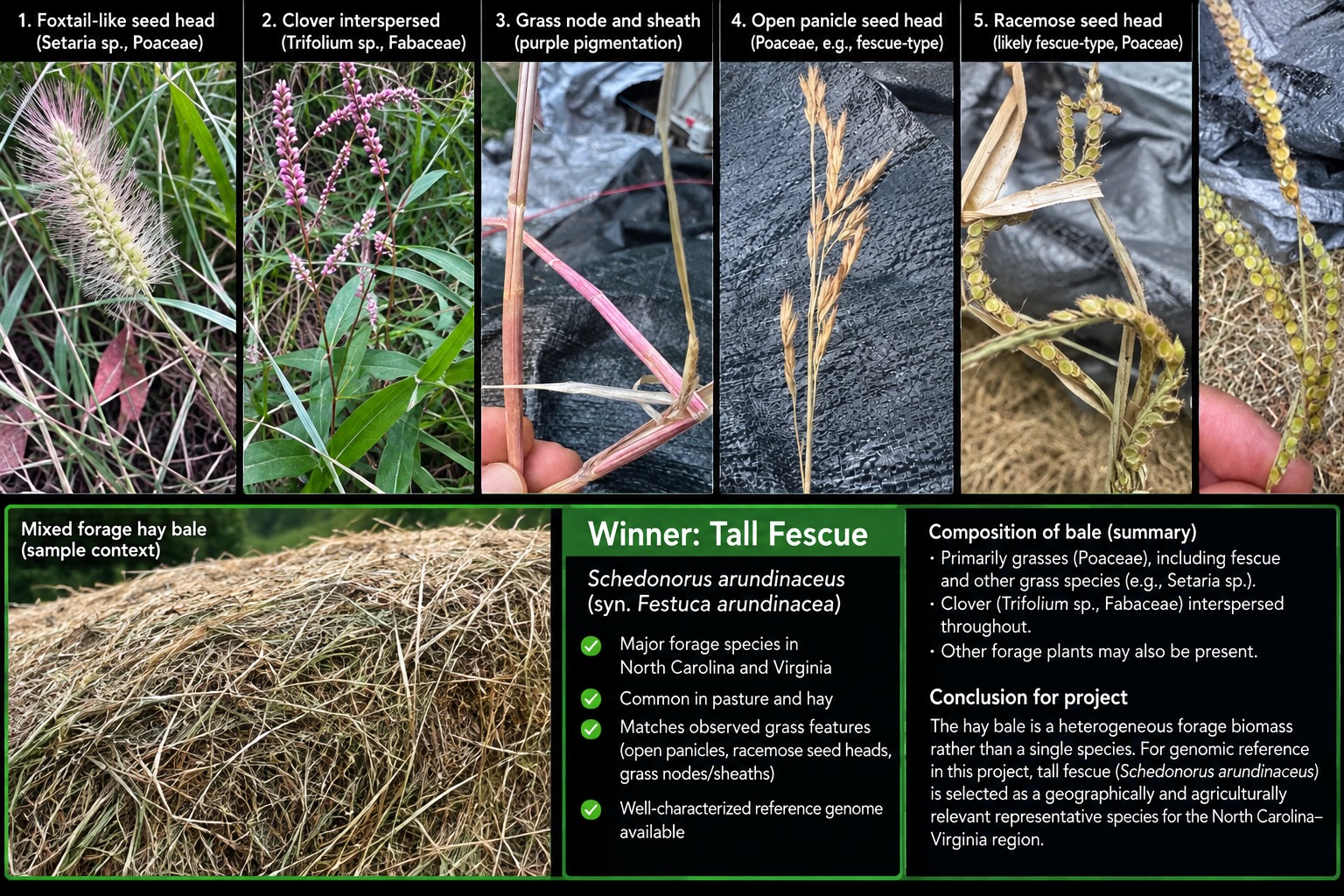
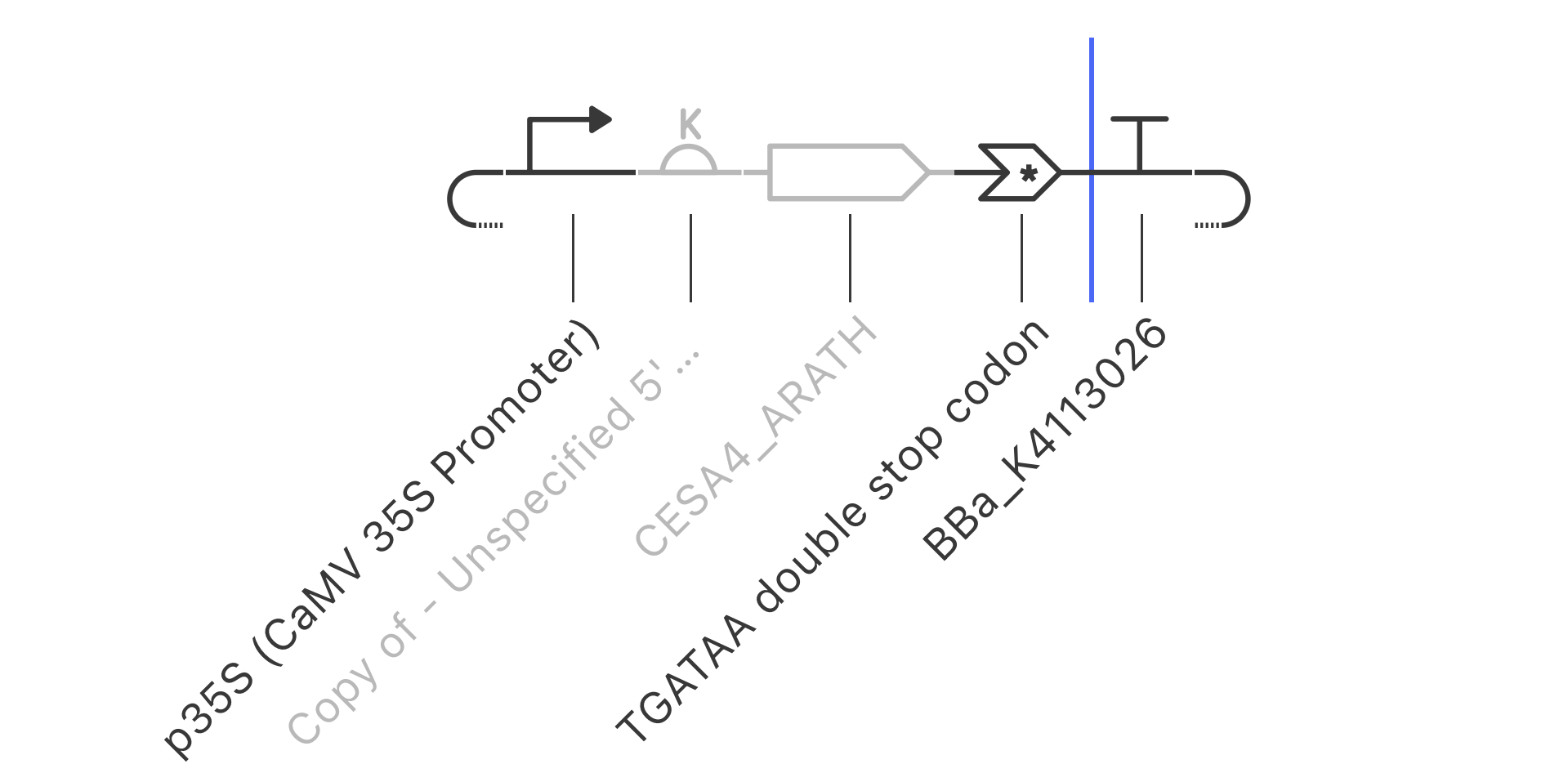
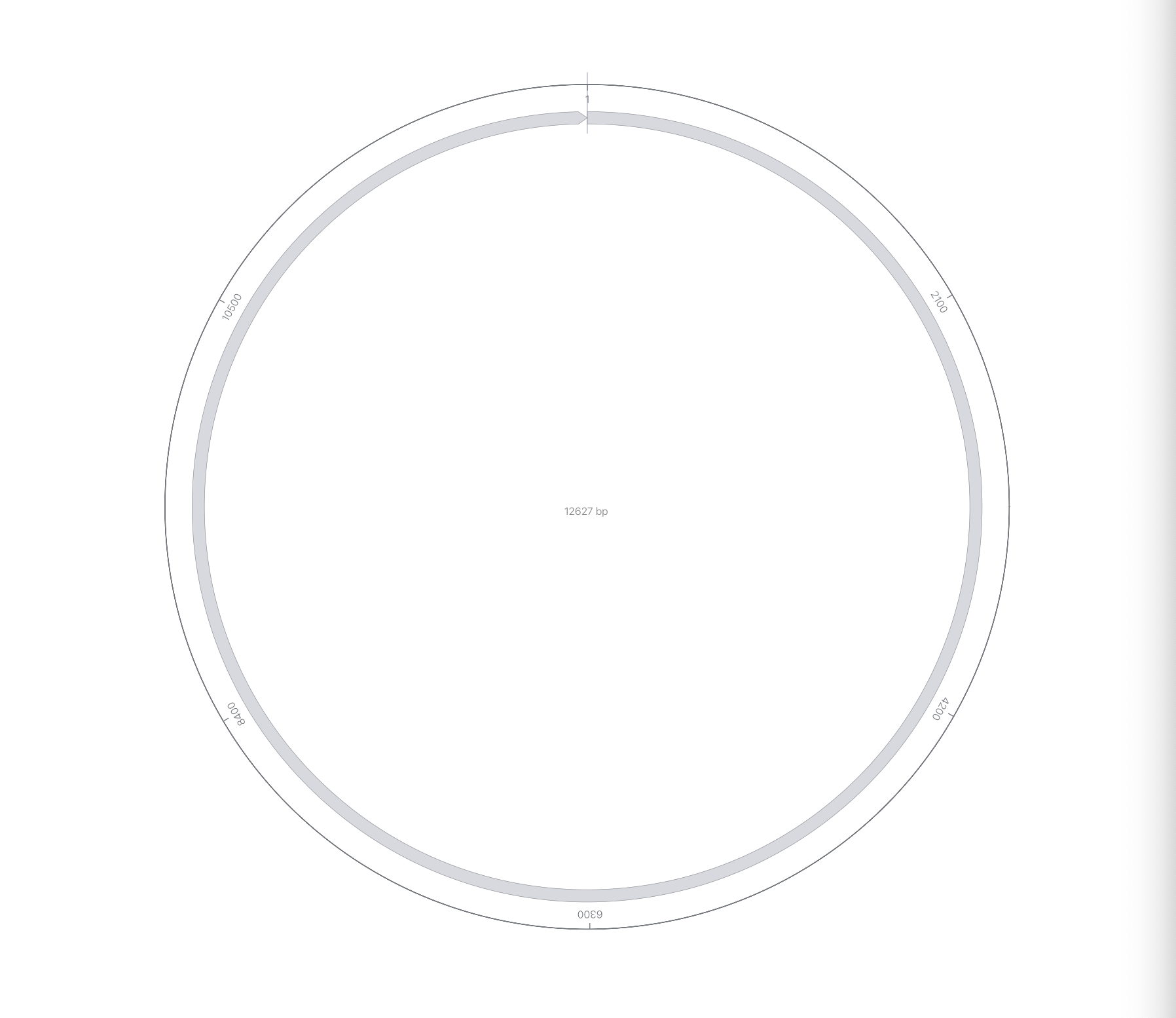
The purpose of this project is to convert soiled hay into a miniature mountain for goats to lounge on. The assignment asks me to identify a molecule to express—a protein, RNA, enzyme, or small set of enzymes in a pathway. If the intended product is a material, the task is to identify the proteins that produce that material and design from them. If only it were this simple. We will get there. To begin, the chassis responsible for producing hay is a plant in the kingdom Plantae. Hay is produced from harvested flowering plants, placing the starting chassis within the angiosperms. The bale available for this project appears to consist predominantly of grasses. If that morphological identification is correct, the taxonomic path narrows through the monocots, commelinids, order Poales, and family Poaceae. Then comes the problem: species. Species identification becomes daunting when the only evidence available for bioinformatic analysis is a photograph of one of the hay bales I have used over the years. There are 150,000 genes to chose from in the USDA directory above for Kentucky-31 tall fescue (Lolium arundinaceum, syn. Schedonorus arundinaceus / Festuca arundinacea), so I am going to search for a gene with AI which is much more collaborative than the haplotype-resolved hexaploid genome data on the USDA website. I will use the functional gene family for the biomaterial component of my tall fescue associated with secondary-cell-wall cellulose biosynthesis, targeting cellulose synthase A (CesA) and then narrow further down to a gene class – CesA4. What is the sequence? Give the protein or RNA sequence, or the specific gene, you will encode, and say where it comes from (a database accession such as UniProt or NCBI, a known part, or de novo). Although Festuca arundinacea is my intended host and my canidate gene family is CesA4 for sake of trying to catch-up with class tempo I had to default to the model species Arabidopsis thaliana CESA4 (AT5G44030/IRX5), UniProt Q84JA6Cite it. https://www.uniprot.org/uniprotkb/Q84JA6 What host or chassis? The living system from HW1, for example E. coli, S. cerevisiae, CHO or another mammalian line, or a cell-free system. Your host drives almost every part choice that follows. The Arabidopsis thaliana will be my model chassis and reference system for CESA4 (AT5G44030/IRX5). Also note-to-self, need to follow-up on endophytic fungus Epichloë coenophiala and fescue toxicosis syndrome https://content.ces.ncsu.edu/comparison-of-commercially-available-novel-endophyte-tall-fescue-forage-varieties Where does the product need to go? Cytoplasm, secreted, membrane, or a compartment? This decides whether you need a signal peptide or targeting sequence. The expressed CESA4 (AT5G44030/IRX5) protein must be inserted and localized in the plasma membrane, where it functions in cellulose synthesis for secondary cell-wall deposition. UniProt annotation identifies CESA4 as a multi-pass membrane protein with multiple transmembrane helices that contribute to its membrane topology. Because CESA4 must be correctly inserted and oriented in the plasma membrane as part of the cellulose synthase complex, I will need to consider the native targeting and membrane-insertion requirements of CESA4 when selecting parts appropriate for my plant chassis. Ofcourse, I am going cell-free here so everything changes. I am going to use Asminov Kernel now. Part 2: Design your genetic partsEvery construct is built from parts. Decide which parts your target needs, then create or import each one in Kernel with the correct part type. At minimum, choose the elements below for your host. Genetic Construct Design LayersFor each part you use, record in Kernel (and note in your write-up): The part type and a short name. Its sequence and where it came from (a Kernel part, a database, or designed). One sentence of justification, why this part, for this host, for this product. You do not need to hand-design a backbone from scratch; you may reuse an existing one and say what it provides. Part 3: Assemble your constructNow put the parts together into a single construct in Kernel. Create a new construct in your folder and add your parts in the correct 5’→3’ order for your host (for a basic expression cassette: promoter → RBS or 5’ UTR/Kozak → CDS → terminator, plus any signal peptide or tag, in the vector backbone). Check the assembled sequence: the reading frame is intact, the start and stop codons are where you expect, and there are no accidental internal stops. Look at the construct map Kernel renders and confirm the parts sit in the order and orientation you intended. Deliverable for this part: your assembled construct in Kernel, plus an exported schematic of it in your write-up, with a brief description of the design. Arabidopsis thaliana CESA4 ConstructUse Kernel’s design tools on your coding sequence and construct, and interpret the results rather than just running them. Codon-optimize your CDS for your chosen host. Compare before and after: what changed, and why does codon usage matter for expression in this organism? Note any constraints you applied (e.g. avoiding certain restriction sites, GC content). Search your sequence (BLAST / sequence search) against known sequences. Is your CDS what you think it is? Is it identical to a natural gene, or novel? What is the closest match? Run the safety screen on your construct. Summarize what it checks for and what it reports. If it flags something, explain whether it is expected for your design and how you would respond. The selected CESA4_ARATH part provided a complete CESA4 amino-acid sequence but exported its 3,147-bp coding region as unresolved nucleotides (N). Consequently, DNA-level codon and biosecurity analyses could not be completed directly on the assembled kernel construct without first obtaining or generating a nucleotide-resolved CDS. Deliverable for this part: a short paragraph per tool covering what you ran, what it returned, and what you concluded. Screenshots welcome.
Part 5: From design to buildA sequence in software is not yet DNA. Using this week’s readings, reason about how your construct would actually be made. Answer in your write-up: How would you build it? Would you order it as synthetic DNA, assemble it from smaller fragments (e.g. Gibson assembly), or build it from a pool of oligos synthesized on a chip? Justify your choice given your construct’s length and complexity. What does synthesis constrain? Synthesis has error rates and struggles with certain sequences. Does your design contain anything hard to synthesize? How would error correction or fragment-based assembly change your approach? Prototype vs. scale. Mirroring HW1: the way you’d build one construct to test your idea may differ from how you’d produce DNA at the scale your product needs. Briefly describe both if they differ. Ground this in at least two of the assigned readings and cite them. Part 6: What don't you know yet?As in Homework #1, close by naming the edges of your design. Identify the 2–3 biggest unknowns or risks in your construct. For example: Will the promoter give the right expression level? Will the protein fold and be active in this host? Will it be secreted? Is codon optimization enough, or do you need to tune it empirically? For each, state how you would find out: the measurement, experiment, or design variant you would try next. A good answer here shows you know which decisions are still bets. AI Feel free to use AI and our learning tools to assist you, but remember that you will present in class, so make sure you have a solid understanding of your design and every choice in it. Please also cite your AI client and prompts. Reading & Resources |
Elowitz, M. B. & Leibler, S. A synthetic oscillatory network of transcriptional regulators. Nature 403, 335–338 (2000). https://doi.org/10.1038/35002125 Stanton, B. C. et al. Genomic mining of prokaryotic repressors for orthogonal logic gates. Nature Chemical Biology 10, 99–105 (2014). doi.org/10.1038/nchembio.1411 Carr, P. A. et al. Protein-mediated error correction for de novo DNA synthesis. Nucleic Acids Research 32, e162 (2004). https://doi.org/10.1093/nar/gnh160
Gibson, D. G. et al. Enzymatic assembly of DNA molecules up to several hundred kilobases. Nature Methods 6, 343–345 (2009). https://doi.org/10.1038/nmeth.1318
Kosuri, S. et al. Scalable gene synthesis by selective amplification of DNA pools from high-fidelity microchips. Nature Biotechnology 28, 1295–1299 (2010). https://doi.org/10.1038/nbt.1716
Kong, D. S. et al. Parallel gene synthesis in a microfluidic device. Nucleic Acids Research 35, e61 (2007). https://doi.org/10.1093/nar/gkm121
Tian, J. et al. Accurate multiplex gene synthesis from programmable DNA microchips. Nature 432, 1050–1054 (2004). https://doi.org/10.1038/nature03151
Readings Folder: https://drive.google.com/drive/folders/1Mdc1KPKCZgLyiN42loqJSqG71fRpdffN?usp=sharing