Chiun Lee — HTBAA Fall 2026
About me
Contact info
Homework, Labs, and Projects
See the nav bar on the left to look through my work for How To Biomanufacture Almost Anything (Fall 2026)!
See the nav bar on the left to look through my work for How To Biomanufacture Almost Anything (Fall 2026)!
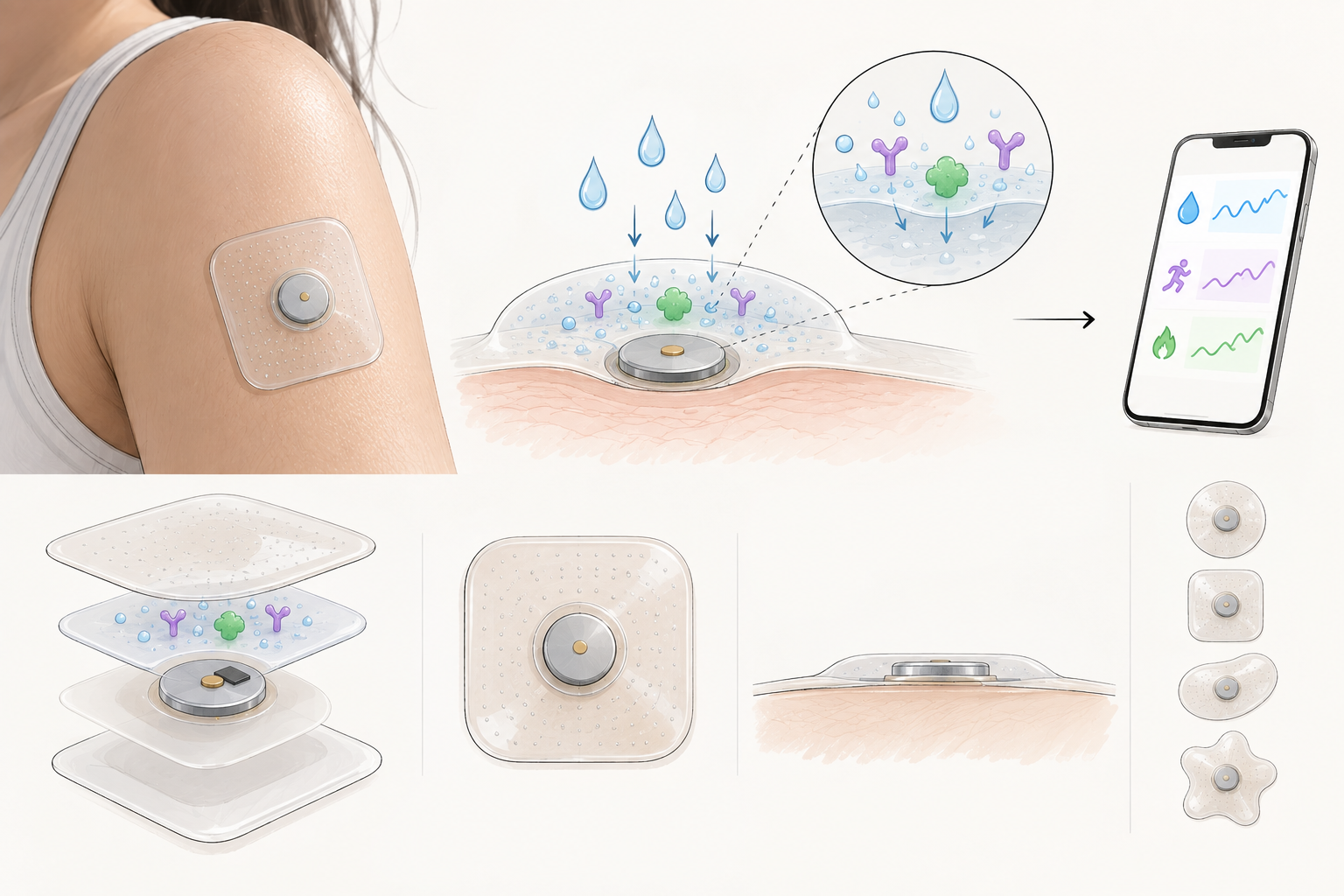
I would like to biomanufacture a wearable biosensor that provides useful, real-time information about a person’s health in a non-invasive way. The product would be a flexible patch worn on the skin that analyzes biomarkers in sweat. Using biological sensing components such as enzymes, antibodies, or engineered proteins, it could measure indicators related to hydration, stress, physical exertion, and metabolism. Possible targets include electrolytes, lactate, glucose, and cortisol, with the results displayed on a phone or another connected screen.
I have not fully narrowed down the biomarker, but I am most interested in lactate because it is associated with metabolism and physical exertion (Garcia et al., 2016). A lactate sensor could potentially help a wearer understand changes that occur during exercise or other physically demanding activities.
I am interested in this product because many health measurements require blood samples, medical appointments, or other inconvenient methods. They also usually provide information from only one moment in time. A wearable biosensor could collect information as someone goes about daily life and help the wearer understand how exercise, sleep, diet, stress, and the environment affect the body.
This product could be useful for anyone exposed to physical exertion, including athletes, people who exercise recreationally, and people performing physically demanding activities. It could help users monitor patterns related to hydration, exertion, and recovery. I am also interested in how the manufacturing process could influence the form of the device. Biomanufacturing may make it possible to create useful biological sensing components and could eventually support more renewable or biodegradable materials for disposable wearable devices.
I am not yet sure which living-system manufacturing chassis I would use. My wearable biosensor would be biofluid-based because it would analyze sweat. The two candidates that currently seem to fit my project best are microbial and cell-free systems.
One microbial option would be to use engineered bacteria as a manufacturing system. The inputs would include bacteria, nutrients, and DNA instructions for producing a sensing enzyme or protein. As the bacteria grow, they would produce the desired protein. The protein would then be collected, purified, and attached to an electrode in the wearable patch. The bacteria would act as small biological factories but would not be present in the final product. Tamborelli et al. (2024) demonstrated this approach by using engineered E. coli to produce a recombinant form of lactate oxidase, which was purified and attached to an electrode to create an electrochemical lactate sensor.
Another microbial option would be to use living engineered bacteria as the sensing component. The bacteria could be contained inside a protective hydrogel in the patch. A target chemical could enter the hydrogel and activate a genetic circuit inside the bacteria, causing them to produce a visible or fluorescent signal. Liu et al. (2017) demonstrated stretchable patches and gloves containing engineered bacteria that responded to specific chemicals. However, a living-cell patch would be more difficult to maintain and would require nutrients, suitable environmental conditions, and strong containment.
A cell-free system would use biological components without complete living cells. One version could use a purified enzyme attached to an electrode. When sweat reaches the patch, the enzyme would react with the target biomarker and produce an electrical change. Garcia et al. (2016), for example, developed a wearable sweat sensor that used lactate dehydrogenase to produce an electrical response to different lactate concentrations.
Another possibility would be a freeze-dried cell-free genetic circuit. The inputs could include DNA instructions, amino acids, enzymes, ribosomes, energy sources, and salts. Sweat would rehydrate the materials and allow the system to produce a color, fluorescent signal, or another measurable response. Nguyen et al. (2021) demonstrated this idea by placing freeze-dried cell-free systems into flexible materials and textiles.
At this stage, the most practical option appears to be using engineered bacteria to manufacture an enzyme and then using the purified enzyme in a cell-free electrochemical sweat patch. I have not made a final decision because the best system will depend on the biomarker, the stability of the sensing component, and the type of result I want the patch to provide. I am assuming that the electronic and structural parts of the patch would be manufactured separately and later combined with the biologically produced sensing component.
I am not yet familiar with many automation technologies used in biomanufacturing. One technology that appears useful for my project is an Opentrons Flex liquid-handling robot. It is a programmable pipetting system that can automatically measure, transfer, and mix small amounts of liquid. Instead of preparing every sample by hand, the robot can repeat the same steps across many samples (Opentrons, n.d.).
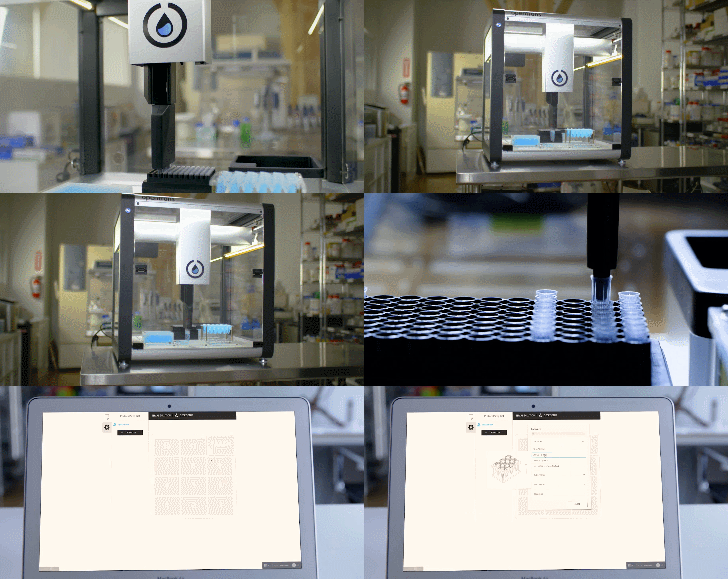
I would use the robot to test and compare different versions of the biological sensing system. It could prepare samples containing different enzymes, biomarker concentrations, or environmental conditions. If I use a microbial system, it could help prepare samples containing bacteria, nutrients, and materials needed for protein production. If I use a cell-free system, it could mix the biological components and prepare different lactate concentrations for testing.
Automating these steps would make testing faster and more consistent while reducing small differences caused by manual pipetting. I am assuming that the robot and other laboratory equipment would be available through the course or a shared laboratory. I would also need to learn how to operate the equipment safely. For early prototypes, I could use the Opentrons with a laser cutter and manual assembly. At a larger scale, roll-to-roll printing and automated dispensing would be more practical.
Because I have not chosen a final living system, I will use one possible design for this estimate. I will assume that engineered E. coli produces lactate oxidase. The enzyme would then be removed from the bacteria, purified, and placed on the electrode of a cell-free sweat patch.
A meaningful first scale would be a study involving 100 people. I will assume that each person uses 10 disposable patches and that I manufacture 10% extra for setup and failed quality checks.
| Step | Calculation | Result |
|---|---|---|
| Usable patches | 100 people × 10 patches | 1,000 patches |
| Including 10% extra | 1,000 × 1.10 | 1,100 patches |
| Enzyme per patch | 20 µL × 0.50 mg/mL | 0.010 mg = 10 µg |
| Enzyme for all patches | 1,100 × 10 µg | 11 mg |
| Including 20% process loss | 11 mg × 1.20 | 13.2 mg |
| Growth liquid required | 13.2 mg ÷ 15 mg/L | 0.88 L, rounded to 1 L |
| Prepared enzyme solution | 1,100 × 20 µL × 1.20 | 26.4 mL |
Tamborelli et al. (2024) used 20 µL of a 0.50 mg/mL lactate oxidase solution per electrode and reported a purified enzyme yield of approximately 15–20 mg per liter of bacterial growth liquid. I used the lower value of 15 mg/L for a conservative estimate. In this context, bacterial growth liquid simply means nutrient-containing liquid in which the engineered bacteria grow and produce the enzyme.
My estimated manufacturing target is therefore 1,100 total patches, including 1,000 usable patches for 100 people. Producing them would require approximately 13.2 mg of lactate oxidase, 1 liter of bacterial growth liquid, and 26.4 mL of prepared enzyme solution.
I will assume that growing the bacteria and producing the enzyme takes about 24 hours. Collecting, purifying, and preparing the enzyme could take another 12 hours, for a total of 36 hours. I would round this to approximately two days for enzyme production.
The Opentrons Flex can transfer liquid to 96 positions at the same time. If the patches were arranged in compatible trays, the number of robot runs would be:
1,100 patches ÷ 96 patches per run = 11.5, rounded up to 12 runs
12 runs × 5 minutes per run = 60 minutes
The Opentrons could therefore place the enzyme solution onto the patches in approximately one hour. The five-minute run time is my assumption and would depend on the final setup.
For larger-scale production, the patch layers could be made using roll-to-roll printing and automated laser cutting. Nyein et al. (2019) demonstrated production of printed sweat-sensor layers at 60 devices per minute:
1,100 patches ÷ 60 patches per minute = 18.3 minutes
This rate applies only to printing the basic layers. I will assume another eight hours for cutting, laminating, packaging, and quality testing, along with approximately 12 hours for the enzyme to stabilize on the patches.
| Manufacturing step | Estimated time |
|---|---|
| Enzyme production | 36 hours |
| Automated enzyme placement | 1 hour |
| Assembly and quality testing | 8 hours |
| Enzyme stabilization | 12 hours |
| Total | 57 hours |
The total is approximately two and a half days. I would round the estimate to three to four days, or up to one week if there are delays or failed quality tests. Some physical parts of the patch could be manufactured while the bacteria are producing the enzyme, so the steps may overlap.
Since I am still learning about biomanufacturing and wearable biosensors, the three biggest unknowns are choosing the right biomarker, determining whether the sensor will work reliably on the body, and finding a manufacturing process that produces consistent patches.
The first unknown is which sweat biomarker would provide the most useful information. Lactate is one possible starting point, but I still need to understand what a sweat lactate measurement can reliably tell the wearer. Sweat composition may also change with the person, body location, temperature, hydration level, and sweat rate. I would need to test the patch on different people and under different levels of physical exertion to determine whether the results are consistent and useful.
The second unknown is whether the biological sensing component would continue to work after being placed in the patch. Temperature, pH, storage time, movement, and other substances in sweat could affect the enzyme. I would test the patch with artificial sweat under different conditions, compare it with real sweat samples, and measure how long the enzyme remains active during storage.
The third unknown is whether the patch could be manufactured consistently at a meaningful scale. I would need to compare microbial and cell-free production methods and determine whether each patch receives the same amount of active enzyme. A small manufacturing test of approximately 100 patches could be used to compare sensitivity, response time, and failure rate before moving to a larger scale.
I used ChatGPT to help develop prompts for analyzing the specific papers listed in this document, explain concepts that I had trouble understanding, and identify relevant tools such as the Opentrons liquid-handling robot (OpenAI, 2026). I reviewed the original sources, checked the calculations, and revised the final responses in my own words so that I could understand and present the project in class.
Proposal image was also generated by ChatGPT. However, it is here as a placeholder to be replaced for once I understand the components and layers better in the upcoming week.
Garcia, S. O., Ulyanova, Y. V., Figueroa-Teran, R., Bhatt, K. H., Singhal, S., & Atanassov, P. (2016). Wearable sensor system powered by a biofuel cell for detection of lactate levels in sweat. ECS Journal of Solid State Science and Technology, 5(8), M3075–M3081. https://doi.org/10.1149/2.0131608jss
Liu, X., Tang, T. C., Tham, E., Yuk, H., Lin, S., Lu, T. K., & Zhao, X. (2017). Stretchable living materials and devices with hydrogel-elastomer hybrids hosting programmed cells. Proceedings of the National Academy of Sciences, 114(9), 2200–2205. https://doi.org/10.1073/pnas.1618307114
Nguyen, P. Q., Soenksen, L. R., Donghia, N. M., Angenent-Mari, N. M., de Puig, H., Huang, A., Lee, R., Slomovic, S., Galbersanini, T., Lansberry, G., Sallum, H. M., Zhao, E. M., Niemi, J. B., & Collins, J. J. (2021). Wearable materials with embedded synthetic biology sensors for biomolecule detection. Nature Biotechnology, 39, 1366–1374. https://doi.org/10.1038/s41587-021-00950-3
Nyein, H. Y. Y., Bariya, M., Kivimäki, L., Uusitalo, S., Liaw, T. S., Jansson, E., Ahn, C. H., Hangasky, J. A., Zhao, J., Lin, Y., Happonen, T., Chao, M., Liedert, C., Zhao, Y., Tai, L. C., Hiltunen, J., & Javey, A. (2019). Regional and correlative sweat analysis using high-throughput microfluidic sensing patches toward decoding sweat. Science Advances, 5(8), eaaw9906. https://doi.org/10.1126/sciadv.aaw9906
OpenAI. (2026). ChatGPT [Generative AI tool]. https://chatgpt.com/
Opentrons. (n.d.). Opentrons Flex robot. Retrieved September 22, 2026, from https://opentrons.com/products/opentrons-flex-robot
Tamborelli, A., López Mujica, M., Amaranto, M., Barra, J. L., Rivas, G., Godino, A., & Dalmasso, P. (2024). L-lactate electrochemical biosensor based on an integrated supramolecular architecture of multiwalled carbon nanotubes functionalized with avidin and a recombinant biotinylated lactate oxidase. Biosensors, 14(4), 196. https://doi.org/10.3390/bios14040196
For this assignment, I designed a DNA construct that could be used to produce L-lactate oxidase (LOx), the enzyme component of a future sweat-lactate biosensor. The important distinction is that the engineered bacteria are a manufacturing system: they would make the enzyme in the laboratory, after which the enzyme would be purified and incorporated into a wearable electrochemical patch. No living genetically modified bacteria are intended to be placed in the wearable or on the user’s skin.
The work is saved in the Kernel repository chiun-lactate-sweat-patch, inside the folder lee-lactate-oxidase-hw2. The final draft construct is named Biosensor-LOx-expression-draft-v1.
Open the actual Kernel construct
In the terminology used here, a part is one reusable DNA element, such as a promoter, ribosome binding site, coding sequence, or terminator. A construct is the complete DNA molecule created by arranging those parts in a defined order. I saved the native reference gene, the optimized and tagged gene, the promoter, and the RBS as separate project parts. The terminator and plasmid backbone were referenced from Kernel’s iGEM library.
The expression target is L-lactate oxidase from Aerococcus viridans. Its verified reference protein is 374 amino acids long and is recorded as UniProt Q44467. I traced the corresponding native DNA to GenBank D50611.1, bases 316–1440 of the coding sequence, which encodes protein BAA09172.1. Verifying both the protein record and the nucleotide record was important because the design should begin from a known biological sequence rather than an untraceable sequence copied from a secondary source.
LOx catalyzes this reaction:
L-lactate + oxygen → pyruvate + hydrogen peroxide
The enzyme uses flavin mononucleotide (FMN) as a cofactor. In a proposed electrochemical patch, the purified LOx would react with lactate in sweat. The reaction produces hydrogen peroxide, or another reaction-linked change, that can be detected electrically at an electrode. Calibration with known lactate standards would then relate electrical signal to lactate concentration. The DNA plasmid is therefore not itself the sensor; it is the manufacturing instruction used to produce the sensing enzyme.
The proposed production host is E. coli BL21(DE3). This strain is commonly used for recombinant protein expression because the DE3 system supplies T7 RNA polymerase, which recognizes the T7 promoter in this construct. The enzyme is designed to remain in the cytoplasm, so no secretion signal was added. After cell growth and expression, the cells would be collected and lysed, and the enzyme would be recovered and purified.
This design is only one component of a possible sweat-lactate sensor. It does not yet prove that sweat lactate directly measures muscle strain, predicts injury, or determines when someone should stop exercising. Sweat-gland metabolism, collection method, sweat rate, oxygen availability, temperature, pH, electrode chemistry, and interfering molecules can all affect the measurement. A separate uricase-based wound-monitoring idea is not part of this construct.
Before assembling parts, I translated the project idea into a short list of design requirements:
These requirements explain why each part is present and provide criteria for checking whether the digital construct matches the intended biological function.
Coordinates below are 1-based and inclusive in the final GenBank export. All five top-level parts were placed in the forward orientation. The imported backbone contains its own internal features; those features are not additional pieces inserted between the five parts listed here.
| Position | Kernel part / type | Length | Function and design reason |
|---|---|---|---|
| 1–69 | T7-lacO-promoter-K2406020 / Promoter | 69 bp | Starts T7-driven transcription and includes a lac operator for repression. It requires appropriate host machinery, including T7 RNA polymerase. |
| 70–84 | T7-RBS-7nt-spacer / Ribosome binding site | 15 bp | Recruits the bacterial ribosome and creates spacing between the RBS and start codon. |
| 85–1242 | His6-GSG-AvLOx-Ecoli-CDS / CDS with upstream tag | 1,158 bp | Encodes the N-terminal purification tag, short linker, complete LOx protein, start codon, and two terminal stop codons. |
| 1243–1290 | BBa_K923004 / Terminator | 48 bp | Provides a defined end to the intended T7 transcript. |
| 1291–3360 | pSB1C3 / Backbone | 2,070 bp | Provides plasmid replication and chloramphenicol selection in E. coli. |
The promoter sequence comes from BBa_K2406020. Kernel’s library labeled the record as “Miscellaneous,” so I created a sequence-identical project copy with the correct Promoter type. Kernel detected that the sequence already existed, which helped confirm that I had not accidentally changed it.
This promoter was chosen because the planned BL21(DE3) host can supply T7 RNA polymerase. The lac operator offers a possible layer of repression, but repression should not be assumed to be perfect. Host genotype, LacI availability, culture conditions, and plasmid copy number can all influence background expression.
The translation-start region uses GAAGGAGA from BBa_K2906017, followed by the selected seven-base spacer TATACAT.
The RBS helps the bacterial ribosome find the transcript, while the spacer places the start codon at a usable distance from the RBS. The combined sequence also matched the existing Kernel registry part BBa_K3096000, so it is not claimed as a new sequence. Its actual expression strength was not computationally predicted or experimentally measured; the presence of an RBS alone does not guarantee an optimal protein yield.
The final coding sequence begins with a designed 30-base N-terminal extension:
This sequence encodes MHHHHHHGSG. The six histidines form a proposed affinity-purification handle, and GSG is a short flexible linker intended to separate that handle from LOx. The complete original LOx protein follows the linker, including LOx’s own starting methionine. The final fusion is therefore 384 amino acids long: 10 added residues plus the 374-amino-acid LOx reference protein.
The tag makes purification easier in principle, but it is still a design hypothesis. Even a short tag can affect protein folding, oligomerization, FMN binding, catalytic activity, or stability. A tagged-versus-untagged activity comparison is therefore one of the most important follow-up experiments. The tag extension itself was not codon-optimized separately.
The terminator is BBa_K923004, a T7 terminator sourced from pET14b.
The terminator helps define the end of the transcript and reduces transcription into downstream plasmid sequence. I verified the part identity in Kernel because BBa_K923004 is not the same part as BBa_B0011, even though both may appear in general terminator searches.
The backbone is pSB1C3, a high-copy BioBrick plasmid containing a pUC/pMB1-type origin and chloramphenicol resistance. Its purpose is to allow the circular DNA to be maintained and selected in E. coli. Background on BioBrick/Golden Gate engineering is available in iGEM’s engineering documentation, and plasmid copy number and expression burden are discussed in this primary study.
This is a simple teaching prototype, not a pET vector and not an optimized manufacturing backbone. A high-copy plasmid combined with strong T7 expression may produce metabolic burden, leaky expression, or instability. I did not add an extra plasmid-borne lacI cassette, so host LacI availability and actual repression would need to be checked before laboratory use.
I began with the GenBank nucleotide record and confirmed that its translation matched UniProt Q44467. This created a reference pair: one verified DNA sequence and one verified protein sequence. Keeping that native reference separate made it possible to check later whether optimization changed the protein.
I ran Kernel’s codon optimizer as AvLOx-D50611-Ecoli-HW2. The input was the native LOx DNA, the selected host was Escherichia coli, the optimizer was SIMPLE_0_3, and the preset was None. I did not specify restriction-enzyme exclusions, CpG avoidance, or a signal peptide. The saved result is available here: Kernel codon-optimizer result.
The native CDS was 1,125 bp, including one stop codon. The optimized untagged output was 1,128 bp, including two terminal stop codons. Across the 1,122 protein-coding bases, excluding stops, optimization introduced 258 nucleotide substitutions. Whole-CDS GC content changed from 41.511% to 43.794%.
Codon optimization changes synonymous DNA codons while preserving the amino-acid sequence. The goal is to make the gene more compatible with the host’s translation machinery, but an optimized sequence does not automatically produce more soluble or active protein. Kernel reported N/A, rather than a numeric value, for both codon usage index and RNA structure score, so those metrics should not be invented or interpreted as successful scores.
I placed the His6-GSG sequence immediately upstream of the optimized LOx coding sequence and kept the reading frame continuous. I then checked that the combined CDS began with ATG, had a length divisible by three, and ended with the intended TGA–TAA stop sequence. This step matters because a single missing or extra nucleotide at the junction would shift the reading frame and change every downstream amino acid.
The biological order is:
T7-lacO promoter → RBS/spacer → His6-GSG-LOx CDS → T7 terminator → pSB1C3 backbone
The expression cassette is 1,290 bp, and the backbone is 2,070 bp, giving a total circular construct length of 3,360 bp.
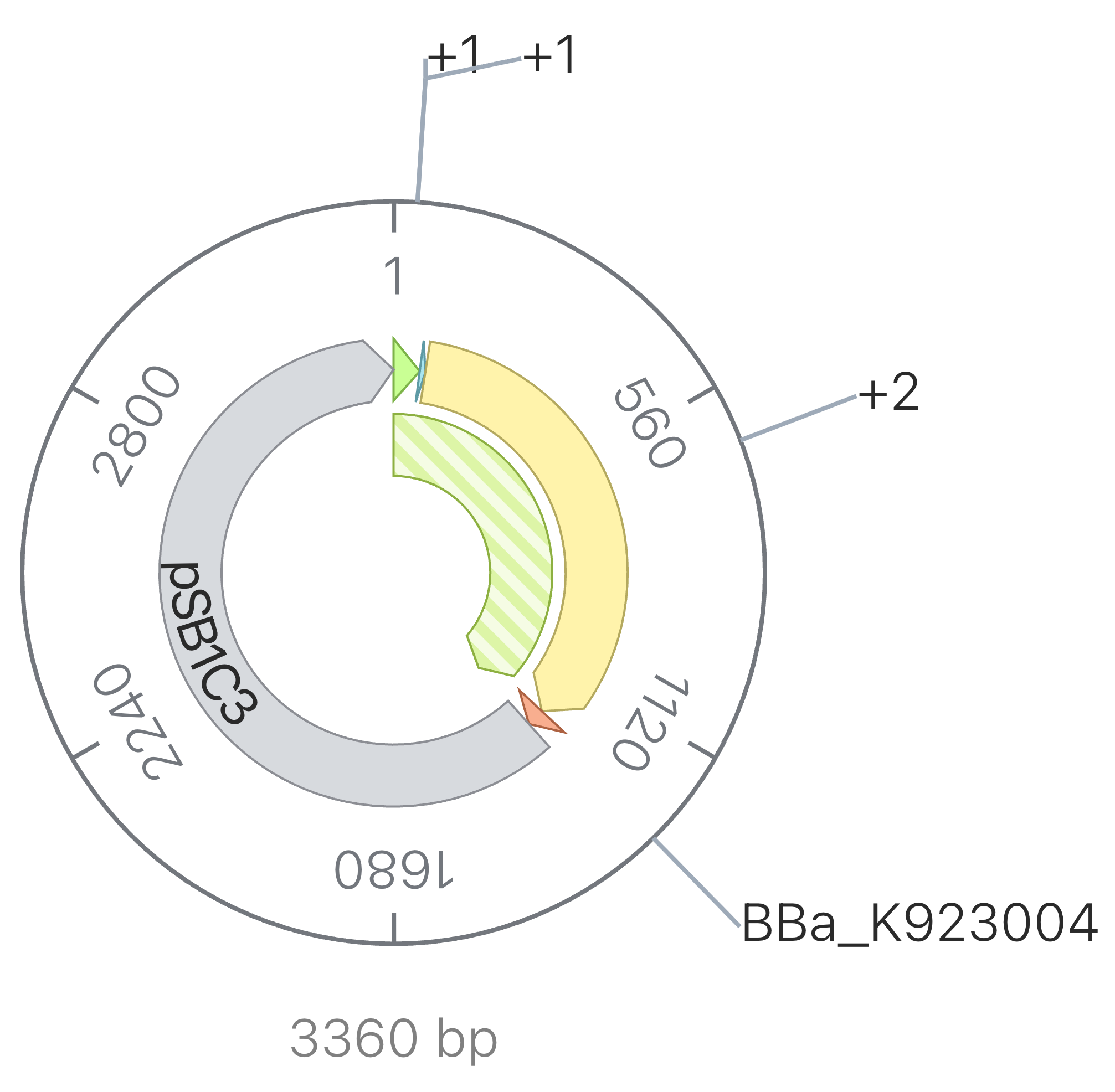
In the circular map, the gray arc is the backbone, the large yellow arc is the tagged LOx gene, and the inner green arc is Kernel’s inferred transcription-unit annotation rather than an extra DNA part. The raw exported image uses a transparent background and compresses crowded labels into “+1” and “+2,” so the coordinate table above is the reliable legend.

Kernel showed 0 errors and 0 warnings after assembly. I also checked the exported sequence independently. The checks confirmed that:
Kernel’s GenBank translation qualifier displays two trailing asterisks. Those asterisks represent the two terminal stop codons; they are not extra amino acids. The protein FASTA provided below omits them.
Kernel pairwise alignment of native and optimized LOx returned 374/374 matches, 100.00% identity, zero mismatches, zero insertions, and zero deletions. This confirms that synonymous recoding did not alter the protein sequence, but it is a pairwise comparison rather than a database search.
I therefore also ran NCBI BLASTP against Swiss-Prot using the actual optimized 374-amino-acid LOx domain and excluding the artificial tag. The top match was Q44467.1, L-lactate oxidase from Aerococcus viridans ATCC 11563, with 100% query coverage, 100.00% identity, E-value 0.0, and score 770. The temporary result was saved under RID BPUMBBN1016, although BLAST RIDs can expire.
Together, the pairwise alignment and BLAST result support two different conclusions: the optimized gene still translates to the intended reference protein, and that protein is a known natural lactate oxidase rather than a newly invented protein variant. The final tagged fusion is different from the untagged natural protein only because of its deliberate N-terminal purification extension.
Kernel’s Biosecurity sequence scanner describes using SecureDNA to compare nucleotide sequences with a database of potential biosecurity threats while protecting the submitted sequence cryptographically. I first screened the expression cassette and then repeated the screen on the entire 3,360-bp construct, including the backbone. Both runs returned “No flagged sequences detected.”
This result means that the tool did not report a flagged match for those submitted sequences. It is not a general certification of biological safety, antibiotic-marker acceptability, environmental safety, skin safety, or clinical usefulness. Laboratory handling, institutional biosafety review, waste disposal, strain choice, and product testing remain separate responsibilities. A sequence should never be changed simply to evade a screening result; an unexpected flag should instead be reviewed with an instructor or biosafety professional.
For a first prototype, I would propose ordering a sequence-verified synthetic 1.3-kb expression cassette and joining it to a verified, linearized pSB1C3 backbone using overlap-based assembly. This keeps the functional cassette as one traceable fragment and is simpler for this single design than managing a large oligonucleotide pool. Exact primer and overlap sequences have not been finalized; when they are designed, they must preserve every junction in the coordinate table and avoid duplicating vector sequence.
Gibson et al. (2009) describes assembling overlapping DNA fragments using coordinated exonuclease, polymerase, and ligase activities. That mechanism supports a cassette-plus-backbone strategy without requiring a restriction site at every junction.
The final construct has approximately 46.0% overall GC content, but an acceptable average GC percentage is not enough to guarantee easy synthesis. The sequence also contains short repeated histidine-tag codons, a structured terminator, and an eight-adenine homopolymer. A DNA supplier should evaluate local sequence context, repeats, and secondary-structure risk. If necessary, the cassette could be divided into smaller sequence-verified fragments, but functional regulatory parts should not be rewritten casually.
Carr et al. (2004) demonstrated MutS mismatch binding as a method to reduce errors in synthesized DNA. The practical lesson for this project is that a correct digital file does not guarantee a correct physical molecule. Vendor quality control and sequencing of the assembled plasmid are still necessary. The historical error rates in that paper are not assumed to represent a current commercial supplier.
A reasonable laboratory validation sequence would be:
At larger scale, a new plasmid would not be synthesized for every patch. After a construct and production strain were validated, controlled cell banks and fermentation would supply enzyme batches, followed by purification, activity testing, immobilization, and sensor quality control. A manufacturing version may need a lower-copy backbone, tighter expression control, or an alternative selection system.
| Question | Why it matters | What I would measure next |
|---|---|---|
| Does this expression architecture produce soluble, active LOx without excessive burden or leakage? | A correct sequence can still yield insoluble protein, poor growth, or low activity. | Compare native and optimized genes; measure growth, total and soluble protein yield, and enzyme activity; compare against a lower-copy or established expression-vector version. |
| Does the His6-GSG extension preserve folding, FMN-dependent activity, and useful stability? | The tag helps purification but may interfere with the enzyme. | Compare tagged and untagged LOx using lactate standards; assess cofactor-dependent activity and retained activity after storage and immobilization. |
| Does the enzyme work reliably in the intended sweat patch? | Performance in purified buffer may not translate to sweat or a wearable electrode. | Measure calibration, response time, drift, oxygen dependence, and interference across relevant pH, temperature, and artificial-sweat conditions. Validate any physiological interpretation separately. |
I designed DNA to manufacture the enzyme component of a sweat-lactate sensor. The bacteria are the production factory, not part of the wearable. A T7 promoter and ribosome binding site control production of tagged lactate oxidase; a terminator ends the transcript, and a plasmid backbone maintains the DNA in E. coli. I verified the source sequence, optimized the DNA for the host, checked that the protein sequence stayed unchanged, confirmed its identity with BLAST, and screened the full construct. The next questions are whether the construct produces enough soluble, active enzyme and whether the immobilized enzyme gives a reliable signal in sweat. I am not yet claiming that this design predicts injury.
AI clients used: OpenAI Codex and Kernel AI.
Kernel AI was asked to help identify parts and an assembly approach for cytoplasmic, tagged A. viridans LOx production in E. coli. The description here summarizes those interactions rather than reproducing a verbatim transcript; the Kernel conversation should be preserved if exact wording is required. Suggested parts were checked against the actual Kernel library records and primary sequence databases. Inappropriate backbone or terminator suggestions were not accepted.
AI-generated claims about expression, purification, sensing performance, or commercialization remain hypotheses unless experimentally tested. No DNA was ordered, no wet-lab experiment was performed, and no assignment was submitted automatically. The existing project name and work were preserved.
The GenBank and FASTA files contain the complete sequences. This explanatory page is not a substitute for a final sequence review, manufacturability check, biosafety review, or experimental protocol.