Week 6 HW: Non-Model Organisms
Part 1 · Choose an organism
Why Nostoc commune?
I chose Nostoc commune because it forms a water-holding gel and has published research on chemicals that absorb ultraviolet light. One study found a sugar-linked form of shinorine. I still need to check whether an obtainable strain makes both products in a useful form. [1]
I used OpenAI Codex to find literature leads, then checked papers and the Cultivarium Portal. After safety, my priorities are whether one strain makes both products and whether they reach the surrounding material.
Information from the Portal
A strain is a particular version of a species. The Portal had no selectable Nostoc commune strain, so I left unavailable strain information blank. These are gaps in the inspected Portal record, not proof that the information does not exist elsewhere.
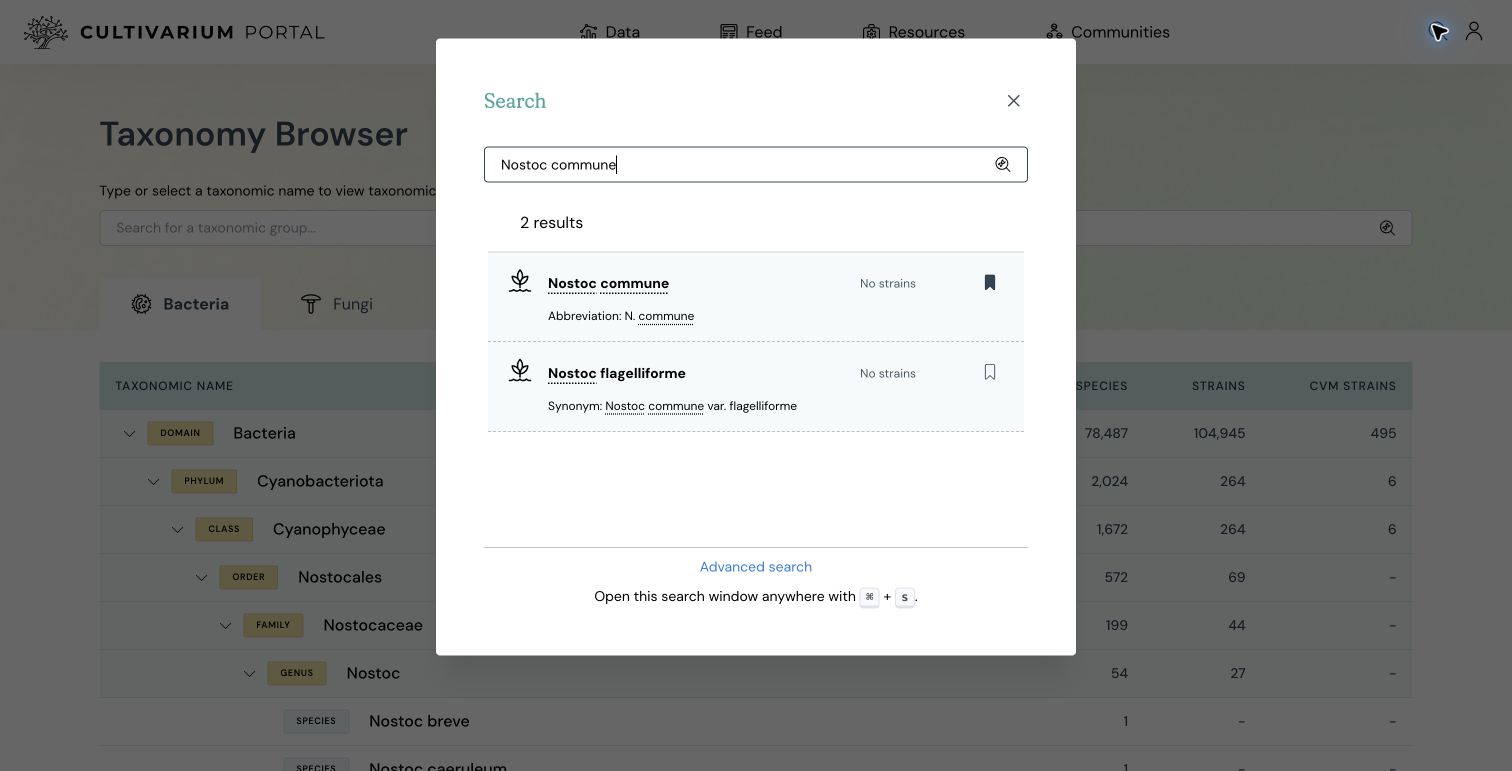
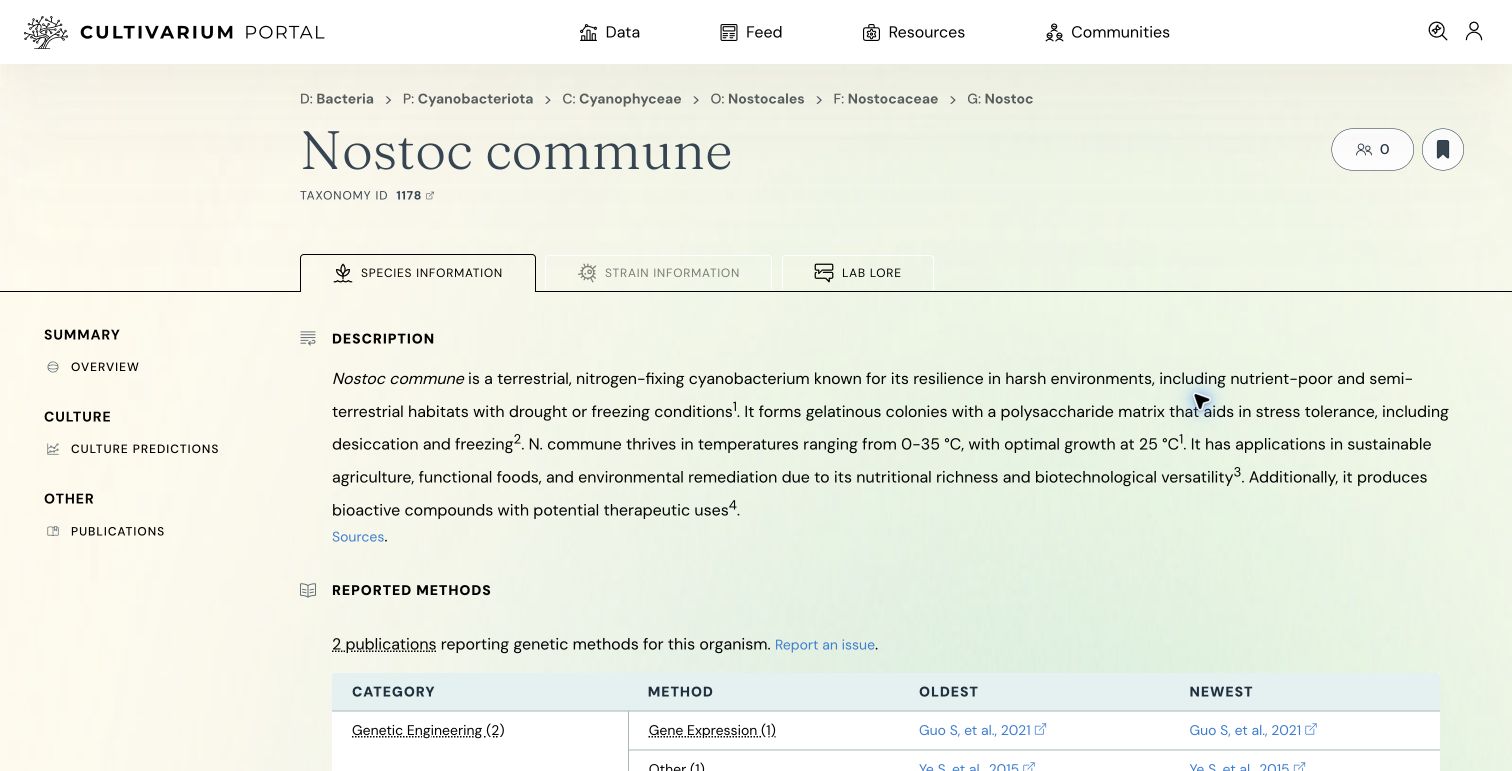
| Category | Data |
|---|---|
| Species Name | Nostoc commune |
| Strain Name | |
| Link | Cultivarium species page |
| Growth Media and Temperature | |
| Susceptible antibiotics, and minimum inhibitory concentration (MIC90) | |
| Functional origins of replication (ORIs) | |
| Genome size | |
| Number of publications listed |
This information would help me grow and study a specific strain. I still need to choose that culture. The Portal listed 3,469 publications for the species, not a selected strain, so I kept the strain-publication field blank.
Genetic methods
I checked the Portal’s Reported Methods section. It listed two research categories spanning 2015–2021:
| Method / grouping | Papers | Years |
|---|---|---|
| Gene Expression: making a protein from a gene | 1 | 2021 |
| Other: not given a specific method name | 1 | 2015 |
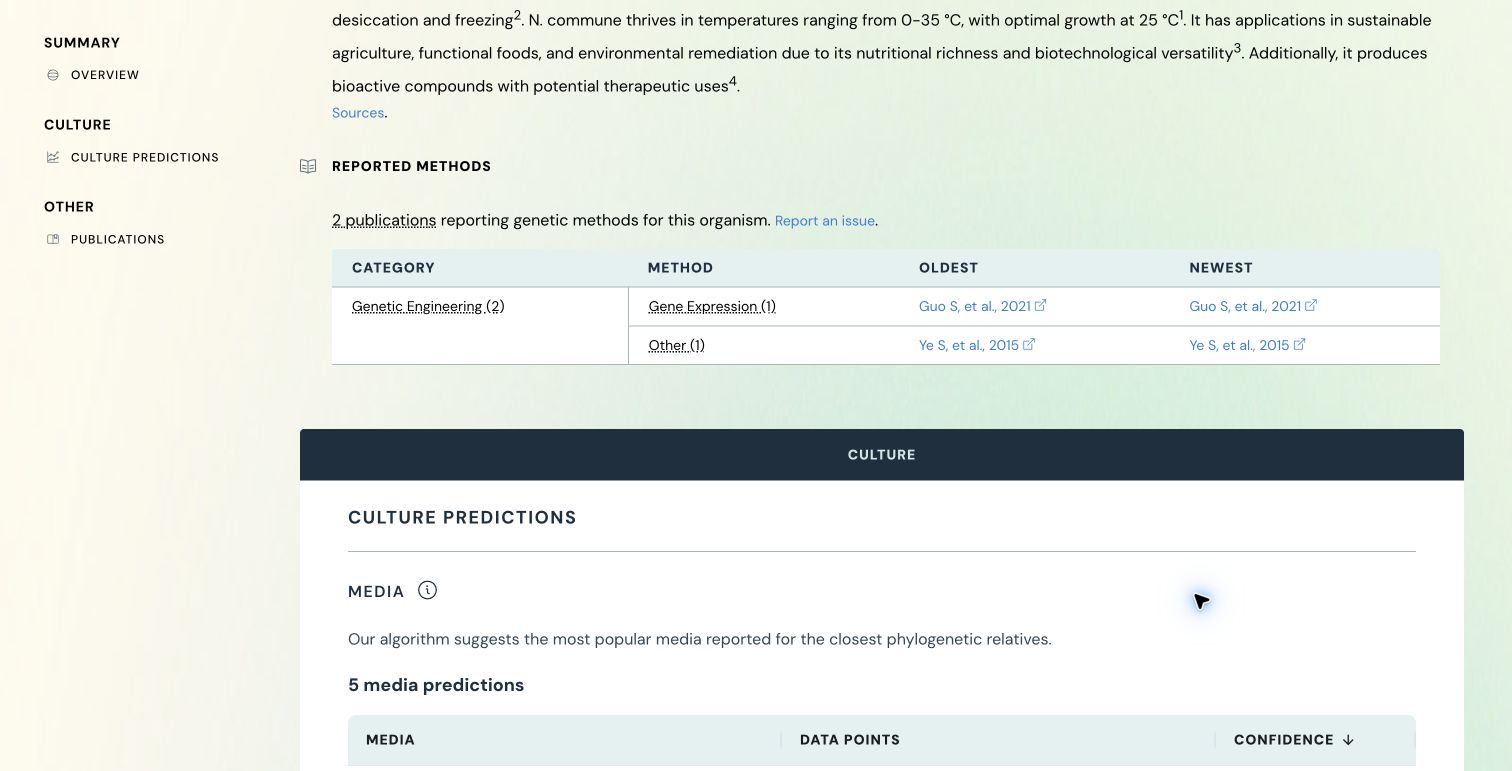
That is one named method plus “Other.” The papers study its proteins or genes in other contexts; they do not establish how to change living Nostoc commune itself. [2, 3]
Part 2 · Learn from related strains
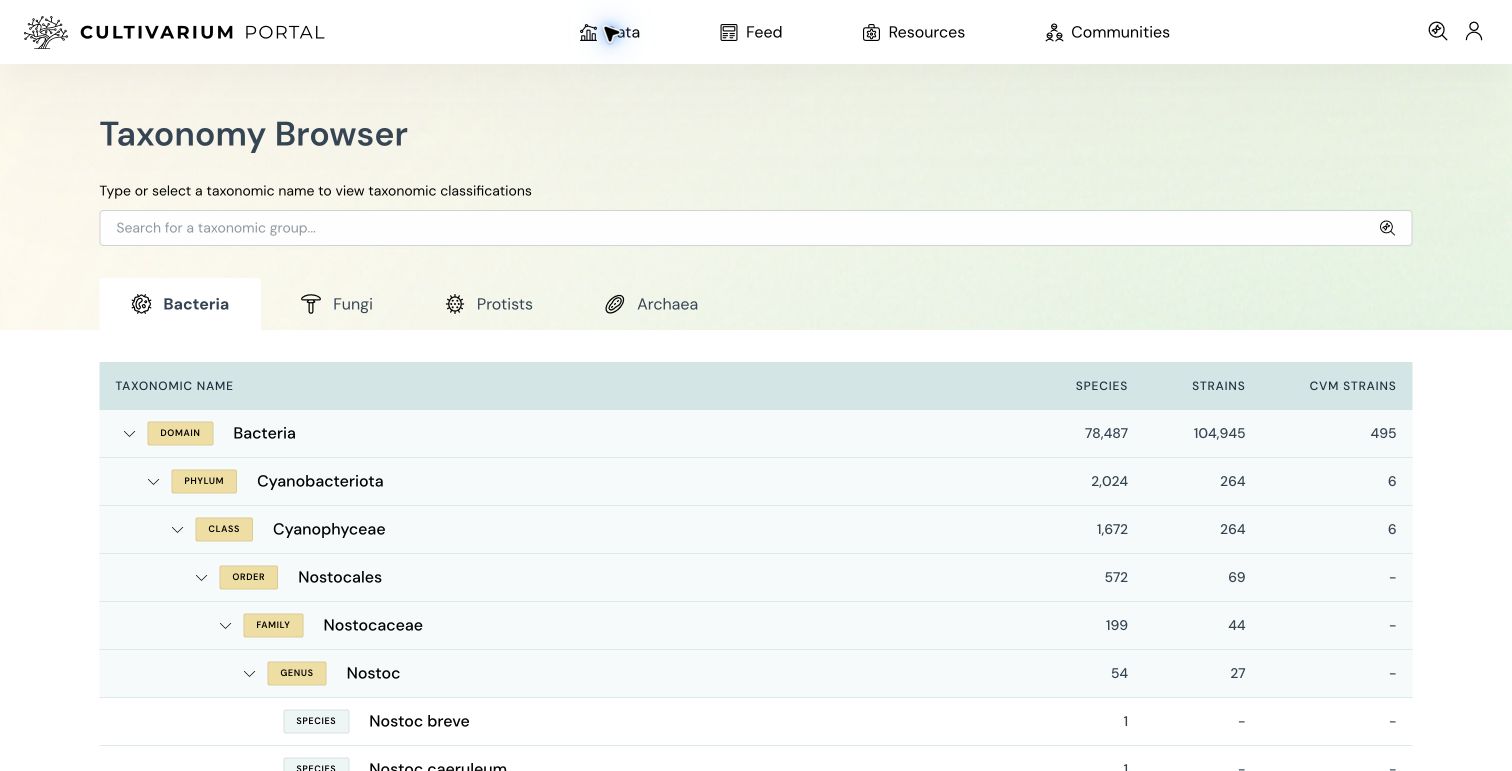
I used the Taxonomy Browser, the Portal’s family tree of organisms, to find the Nostoc group and look for relatives.
I investigated Nostoc punctiforme strain 29133 because the shinorine paper and culture record refer to the same strain. Its catalog names are American Type Culture Collection (ATCC) 29133 and Pasteur Culture Collection (PCC) 73102. [4, 5]
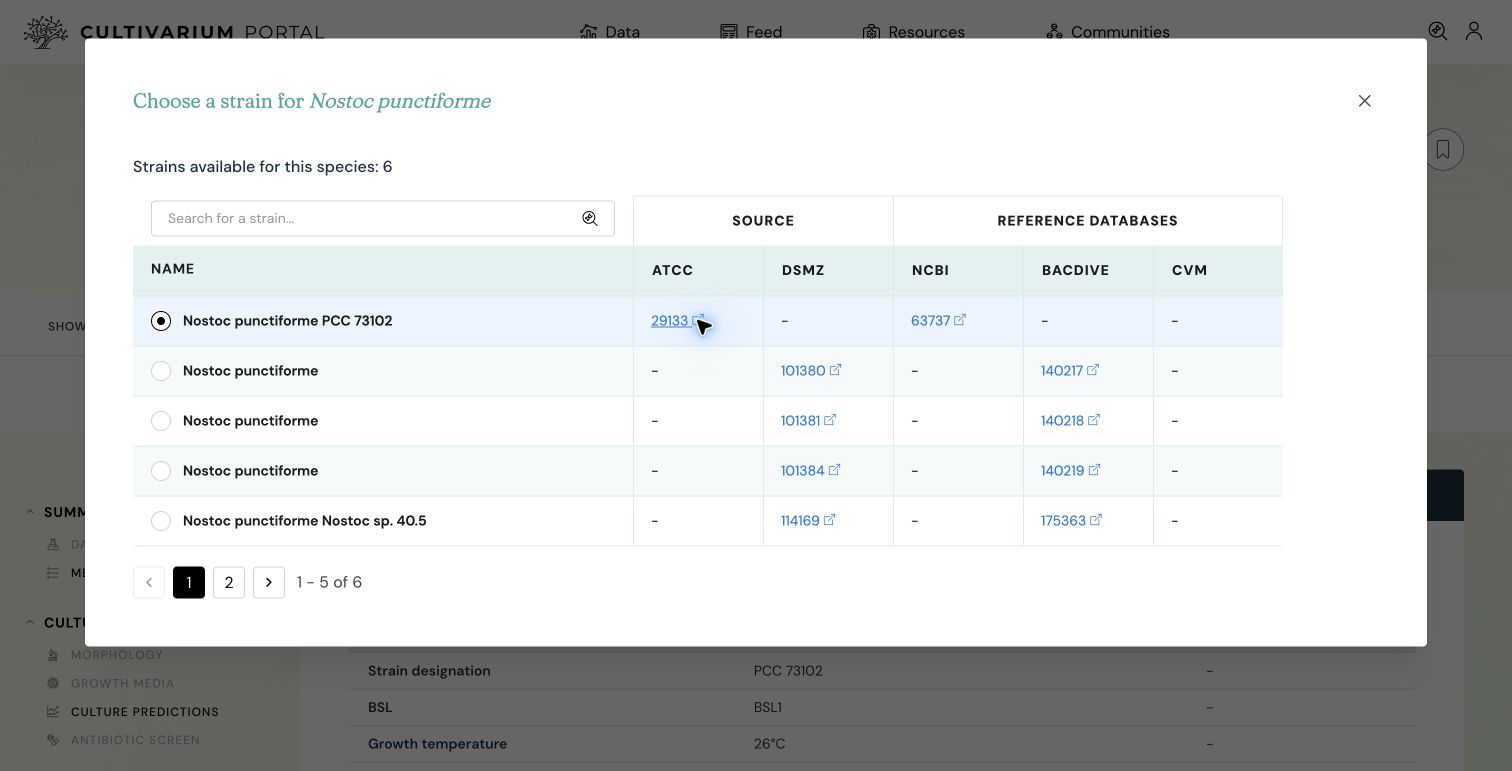
All rows describe the same strain. Empty Data cells remain unverified; these values are not established for Nostoc commune.
| Neighbor Species | Related level (e.g., genus, family) | Category | Data |
|---|---|---|---|
| Nostoc punctiforme, strain 29133 | Genus: Nostoc | Strain Name | Catalog names: ATCC 29133 / PCC 73102 [5] |
| Growth Media and Temperature | Collection medium 819; 26°C [5] | ||
| Susceptible antibiotics, and minimum inhibitory concentration (MIC90) | |||
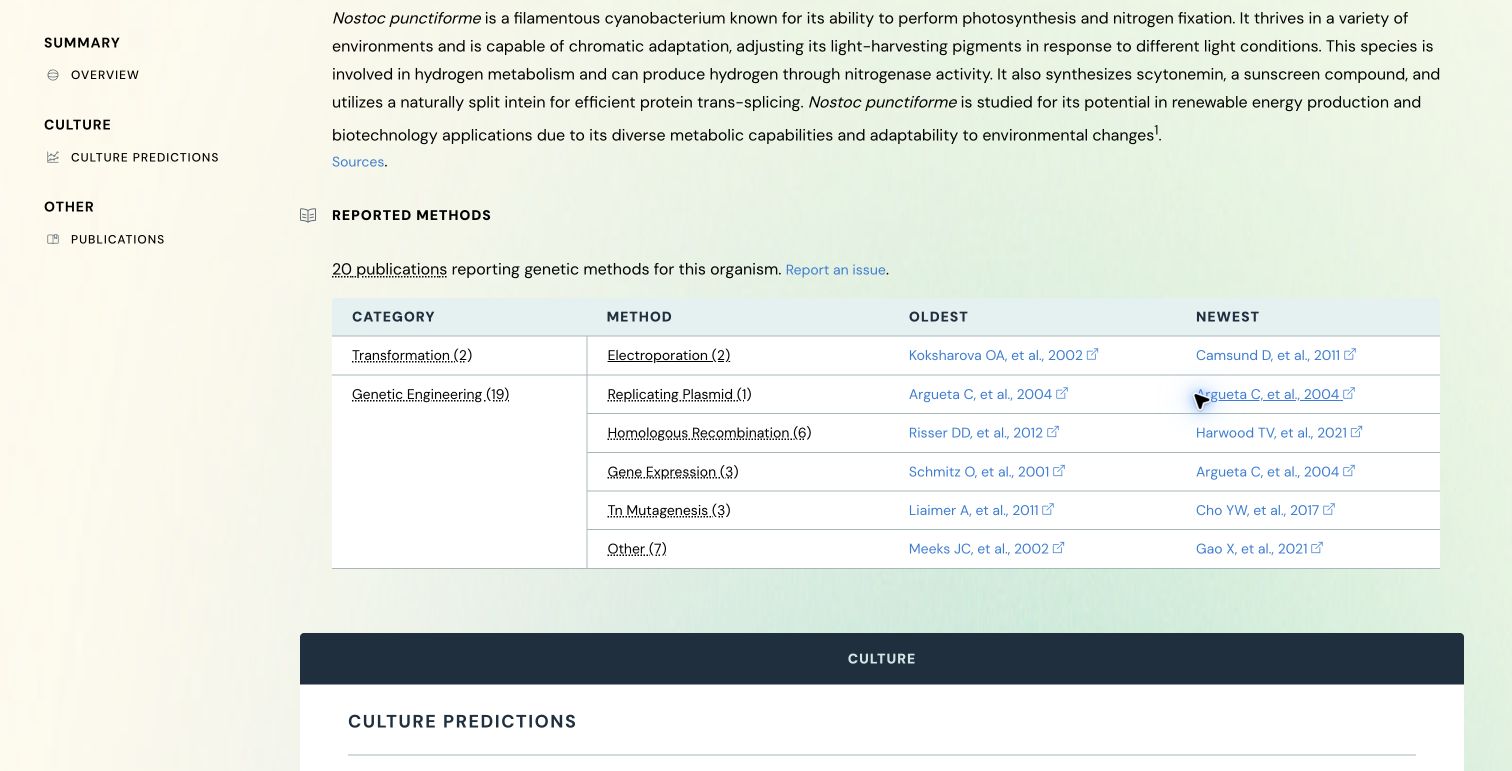
| Functional origins of replication (ORIs) | Published pDC1-based copying system for plasmids; no Portal screen verified [7] | ||
| Genome size | 9,141,309 genetic letters, listed as nucleotides in the collection’s 2024 record [6] | ||
| Number of publications listed | 634 in the Portal strain tab on November 10, 2026 |
I then checked the information shown for that exact strain.
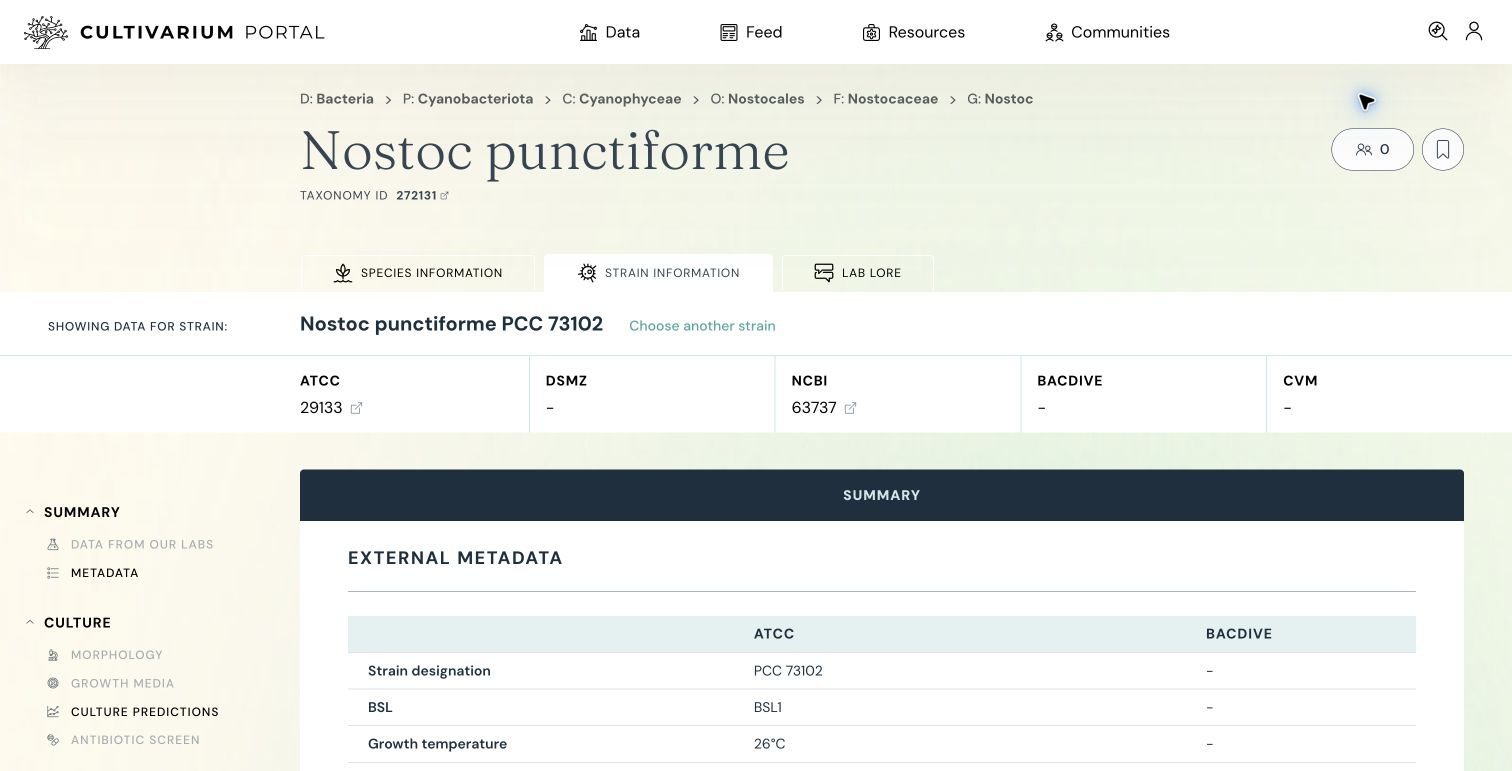
Plasmids are small genetic carriers; an origin of replication lets them copy themselves inside a cell. The copying information above comes from a paper. I have not verified the Portal’s antibiotic concentration measurements.
Methods and growth suggestions
I also checked the genetic methods listed for Nostoc punctiforme.
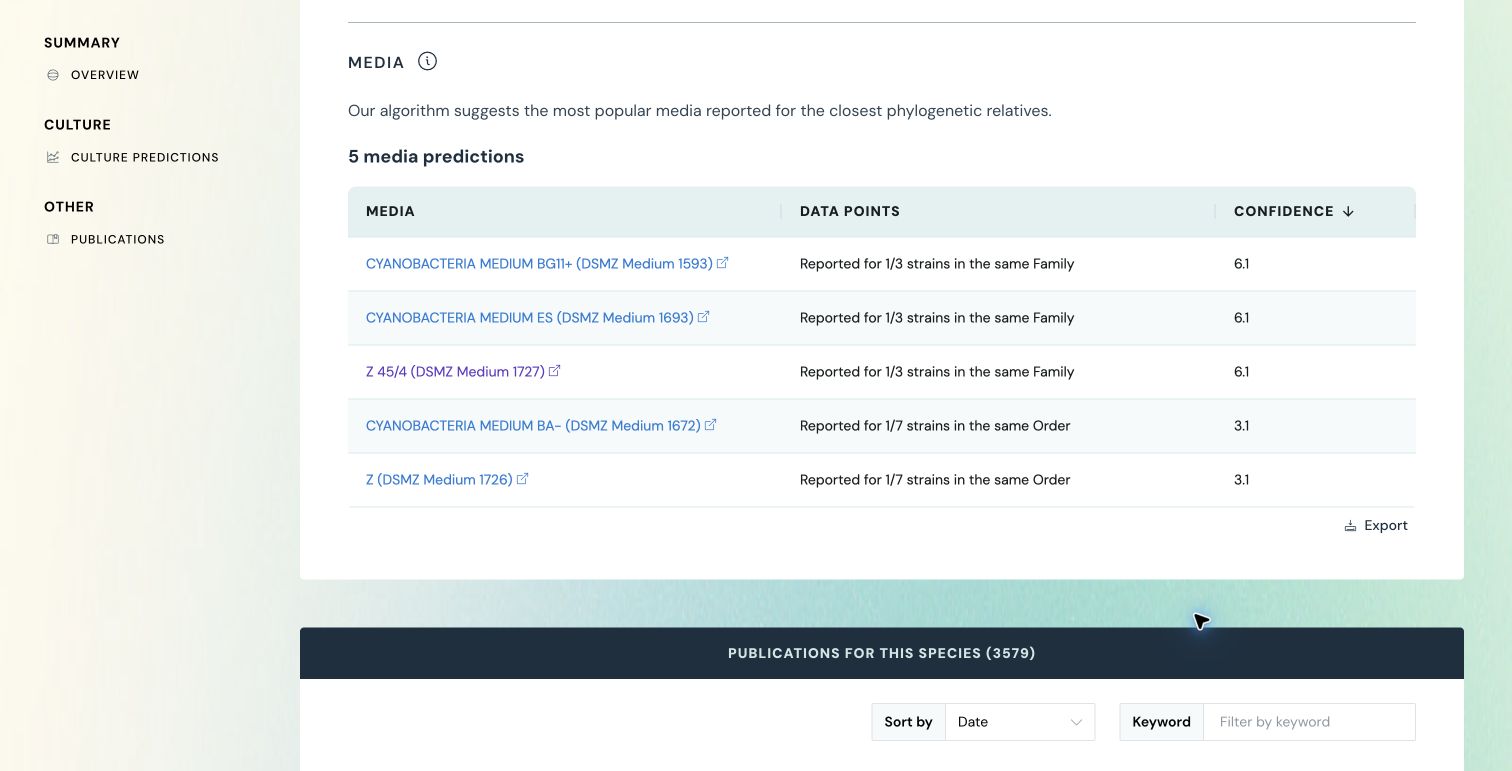
I checked the suggested growth mixtures. These suggestions come from relatives; they are not tested conditions for Nostoc commune.
The remaining neighbor-search task
The Taxonomy Browser showed no Cultivarium strains in Nostoc, its family, or its order, but six in the broader class Cyanophyceae. Cyanobacterium aponinum, Cultivarium strain 157 was one candidate; its page did not display the requested measurements. Finding the nearest neighbor with those data remains incomplete.
Other strains researched
- Nostoc verrucosum, culture KU005: relevant research on ultraviolet-absorbing compounds and the surrounding gel. Its collection record lists very slow growth and other bacteria present. [8]
- Trichormus variabilis, culture 29413: called Anabaena variabilis in the earlier shinorine paper. Useful for understanding how shinorine is made. [9]
- Chlorogloeopsis fritschii, culture 6912: research measures how light changes its ultraviolet-absorbing compounds. A limited toxin screen does not establish skin safety. [10, 11]
These are supporting comparisons, not a ranking or a completed nearest-neighbor result.
Part 3 · What do I still need to find out?
I can outline contained lab tests, but I am not ready to choose a culture for skin use. My three main unknowns are:
| Question | What I would do next | What the result would tell me |
|---|---|---|
| Can I obtain and grow a suitable strain? | Choose a named culture with the instructors, test its growth, and review contamination and toxin evidence. | Whether it grows under the tested conditions and which safety questions remain. |
| Does the same strain make shinorine and a useful gel? | Measure both from the same cultures. Compare water loss in matched materials with and without the recovered gel. | Whether both products are present and whether the gel helps retain water. |
| Does shinorine reach the material outside the cells? | Test the cells, surrounding liquid, and gel separately. Include a blank sample and check for broken cells. | Where shinorine is found, and whether cell damage could explain its presence outside cells. |
These are proposed tests, not completed experiments. Water retention alone would not prove human moisturization, and finding shinorine would not prove sunscreen performance. Homework 7 explains how I would measure the chemical.
Part 4 · How the tools help my project
I would use the Cultivarium Portal to find strain records and reported methods. Next, I would check available results in the Data Vault to help choose growth conditions and genetic tools. I have not yet inspected those underlying results.
Artificial intelligence (AI) use
I used OpenAI Codex mainly to compare literature leads. An important limitation was mixing findings from different strains. I kept missing information visible and separated published findings from proposed tests.
Sources
- Nostoc commune: sugar-linked ultraviolet-absorbing compounds.
- Guo et al.: protein study linked by the Portal.
- Ye and Gao: genes used in crop research.
- Gao and Garcia-Pichel: Nostoc punctiforme shinorine pathway.
- Culture record for strain 29133.
- Strain 29133: 2024 genome record.
- Published cyanobacterial plasmid-copying systems.
- Nostoc verrucosum KU005 culture record.
- Balskus and Walsh: how cyanobacteria make shinorine.
- Chlorogloeopsis fritschii: light and chemical production.
- Chlorogloeopsis fritschii culture record and toxin-screen note.
Portal records: Nostoc commune, Nostoc punctiforme strain 29133, and Taxonomy Browser. Inspected November 10, 2026.