See the nav bar on the left to look through my work for How To
Biomanufacture Almost Anything (Fall 2026)!
Subsections of CHRISTOPHER EDUARDO REBOUÇAS DE ARAÚJO — HTBAA Fall 2026
Week 1 HW: Final Project Ideas
Important: I used ChatGPT to help me with understanding concepts, brainstorming ideas, and find relevant references
1.What would I like to biomanufacture and why?
I would like to develop an automated biomanufacturing platform for producing and optimizing a biological preservation system that could reduce the dependence of wildlife biobanks on ultra low-temperature storage.
We’ve been through a critical time for almost all kinds of wildlife in the past decades, with extinction rates becoming more and more alarming as the years pass due to habitat loss, hunting, pollution and etc. Because of that, it’s crucial for us to preserve the ecosystems and it’s species to avoid the loss of more species, and the biobank enters in this scenario as a fundamental tool on conservation efforts
Wildlife biobanks can preserve all kinds of biological materials from threatened species through cryopreservation. These genetic material collections can provide a fundamental resource in future research, population management and novel conservation efforts.
However, cryopreservation requires extremely low temperatures and specialized infrastructure, which can create logistical challenges in regions with limited access to cryogenic infrastructure.
In my project i aim to investigate a different approach: develop a biologically manufactured preservation system that could maintain cellular integrity under less extreme storage conditions through a microbial or cell-free biomanufacturing platform capable of producing the selected protective molecule.
The goal is not to replace cryogenic biobanking entirely. Instead, I would investigate if cells could be used to create a biological preservation system to extend the range of storage conditions under which wildlife-derived cells remain viable and biologically useful.
The proposed product would be a biologically manufactured preservation formulation designed to protect cells during drying and/or storage at temperatures above conventional cryogenic conditions.
One potential strategy is based on trehalose and other biological protective molecules.
Trehalose is a naturally occurring disaccharide found in many organisms that survive environmental stresses such as dehydration. It has been investigated as a cellular protectant because it can interact with cellular membranes and biomolecules during water loss.
Recent research has investigated trehalose-based approaches for preserving mammalian cells under non freezing conditions, including work with feline fibroblasts involving trehalose loading, drying, and storage above conventional cryogenic temperatures.
The project would focus on optimizing the preservation system, rather than simply manufacturing trehalose as a commodity
2.What living system would I use?
The production component could use a microbial or cell-free biomanufacturing platform capable of producing the selected protective molecule.
The exact production organism and biological pathway would be determined during the development phase according to:
production efficiency; product stability; compatibility with the preservation formulation; scalability; cost; ease of automation.
Mammalian cells could be used to test the efficacy of this novel preservation system
The overall concept would therefore be:
Biological production system → Protective molecule → Preservation formulation → Model mammalian cells → Controlled dehydration/storage → Rehydration → Cell recovery → Viability and functional assessment
3.How would I use automation?
Automation could be used to create a system that could vary parameters such as: Concentration of the protective molecule; formulation composition; exposure time; dehydration conditions; rehydration conditions; storage temperature and storage duration to test different scenarios applied to the preservation system
The experiment could initially evaluate 96 different experimental conditions.
The workflow would follow a Design–Build–Test–Learn cycle:
This would allow the preservation system to be optimized systematically instead of relying on trial-and error experimentation
4.How much would I need to make?
For an initial calculation, i would consider a hypothetical scenario where a wildlife biobank contain 100 individuals with 10 preserved samples per individual, which would give:
100 × 10 = 1,000 samples
If each sample required a hypothetical 1 mL preservation formulation:
1,000 × 1 mL = 1,000 mL
Resulting in a total formulation of: 1 L
Then, in the initial experimental phase, 96 formulations at 1 mL each could be used:
96 × 1 mL = 96 mL per experimental round
If ten rounds were performed:
96 mL × 10 = 960 mL
The actual volume would ultimately depend on the experimental protocol and the amount of formulation required per sample.
But since i can’t be in person on the labs, i don’t know exactly how i will be putting this in practice, but i’m really excited to see how this will go on!
5.What are the main uncertainties?
Uncertainty 1 — Can cells survive non-cryogenic preservation?
The main uncertainty is if sufficient cellular integrity will be maintained when cells are subjected to dehydration and storage at temperatures above cryogenic conditions. To the system be successful it need to protect cellular structures during both water removal and rehydration.
Uncertainty 2 — How much protection can the biological product provide?
Another uncertainty is if the protective molecule will work equally well under diferent conditions. Its performance could depend on: concentration; cell type; dehydration rate; storage temperature; storage duration; rehydration protocol. Therefore, the project would need to experimentally identify the appropriate combination of parameters.
Uncertainty 3 — Will the method work for wildlife cells?
Different species and cell types can have different membrane compositions, metabolic characteristics, and sensitivities to dehydration. Therefore it’s still unknown if this preservation system will work on every specie.
Uncertainty 4 — Can preserved cells remain useful?
Another question is if whether or not the recovered cells will retain characteristics relevant to their intended application (For example, the ability to proliferate and maintain appropriate cellular characteristics). This is important since the main goal is to preserve biologically useful genetic resources.
References
Crowe, J. H. (2005). Stabilization of Dry Mammalian Cells: Lessons from Nature. Integrative and Comparative Biology, 45(5), 810–820. https://doi.org/10.1093/icb/45.5.810
Loi, P., Iuso, D., Czernik, M., Zacchini, F., & Ptak, G. (2013). Towards storage of cells and gametes in dry form. Trends in Biotechnology, 31(12), 688–695. https://doi.org/10.1016/j.tibtech.2013.09.004
Török, Z., Satpathy, G. R., Banerjee, M., Bali, R., Little, E., Novaes, R., Van Ly, H., Dwyre, D. M., Kheirolomoom, A., Tablin, F., Crowe, J. H., & Tsvetkova, N. M. (2005). Preservation of Trehalose-Loaded red blood cells by lyophilization. Cell Preservation Technology, 3(2), 96–111. https://doi.org/10.1089/cpt.2005.3.96
Wolkers, W. F., Tablin, F., & Crowe, J. H. (2002). From anhydrobiosis to freeze-drying of eukaryotic cells. Comparative Biochemistry and Physiology Part a Molecular & Integrative Physiology, 131(3), 535–543. https://doi.org/10.1016/s1095-6433(01)00505-0
Week 2 HW: DNA Design
Obs.: Since i’m really new to the world of genetic engineering and never had any strong prior experience, i used AI to help me during the entire proccess. ChatGPT helped me on how to create the cassete and construct, and Claude (Anthrophic) was used to give me a “script” to follow, aside from help on what to analyse and how to write.
1. Defining My Expression Target
What Molecule Are You Expressing
I will express a gene responsible for the production of CAHS 8 protein on E. coli.
where a stop codon “TAA” was put in the end of the sequence by me. The sequence has been codon-optimized for E. Coli too
What host or chassis?
The host and chassis will be E. Coli
Where does the product need to go?
The product is, in the moment, mean to be intracelular (Although i may or not change this later), so the target location for now is the citosol, and no signal peptide is needed. The reason for this is that the idea, in the moment, is that the E. coli will work as a “mini factory”, producing CAHS 8 all the time, for then it be extracted. (But, as i said: This may or not change in the future)
2. Design Of My Genetic Parts
Layer
Prokaryotic host (E. coli)
Justification
Transcription Start
BBa_J23108 (Promoter)
It’ a medium-strength constitutive promoter that will give a reliable continuous expression.
Translation Start
BBa_BOO34 (Ribosome Binding Site)
It’s a well-characterized RBS that is commonly paired with constitutive promoters in BioBrick-based designs.
Coding Sequence
CAHS D / CAHS 94063
Will encode the tardigrade protein associated with desiccation tolerance.
Transcription Stop
BBa_B0015 (Terminator)
A double terminator will give a more reliable transcript end than a single terminator. Aside from being a standard choice in BioBrick cassette design.
Backbone
Psb1c3
Standard empty BioBrick vector (ColE1-type origin, chloramphenicol resistance). Chloramphenicol is gonna be used as the selection marker because it’s what pSB1C3 already carries.
3. Assembling My Construct
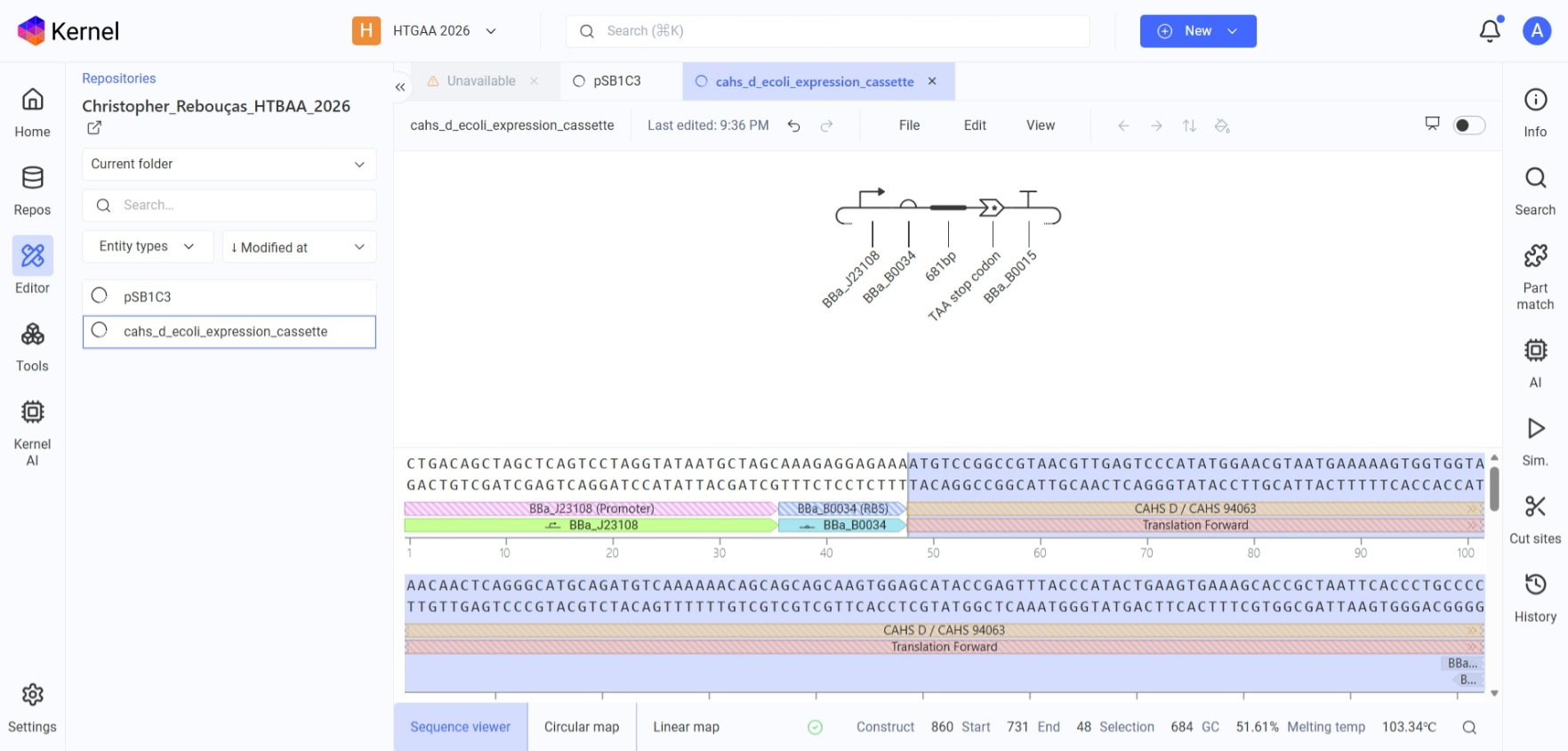
The genetic cassette was primarly assembled in Benchling (due to the fact that the kernel access was conceived only later on) in the 5’-3’ order of promoter, RBS, CAHS D coding sequence, and transcription terminator. The CAHS D CDS contains a start codon and a stop codon (Added by me). The orientation of the genetic parts was checked to ensure that the cassette follows the transcriptional and translational architecture for expression in E. coli. Later on the cassete was imported into Kernel.
Schematic of the cassete
Cassete imported into Kernel
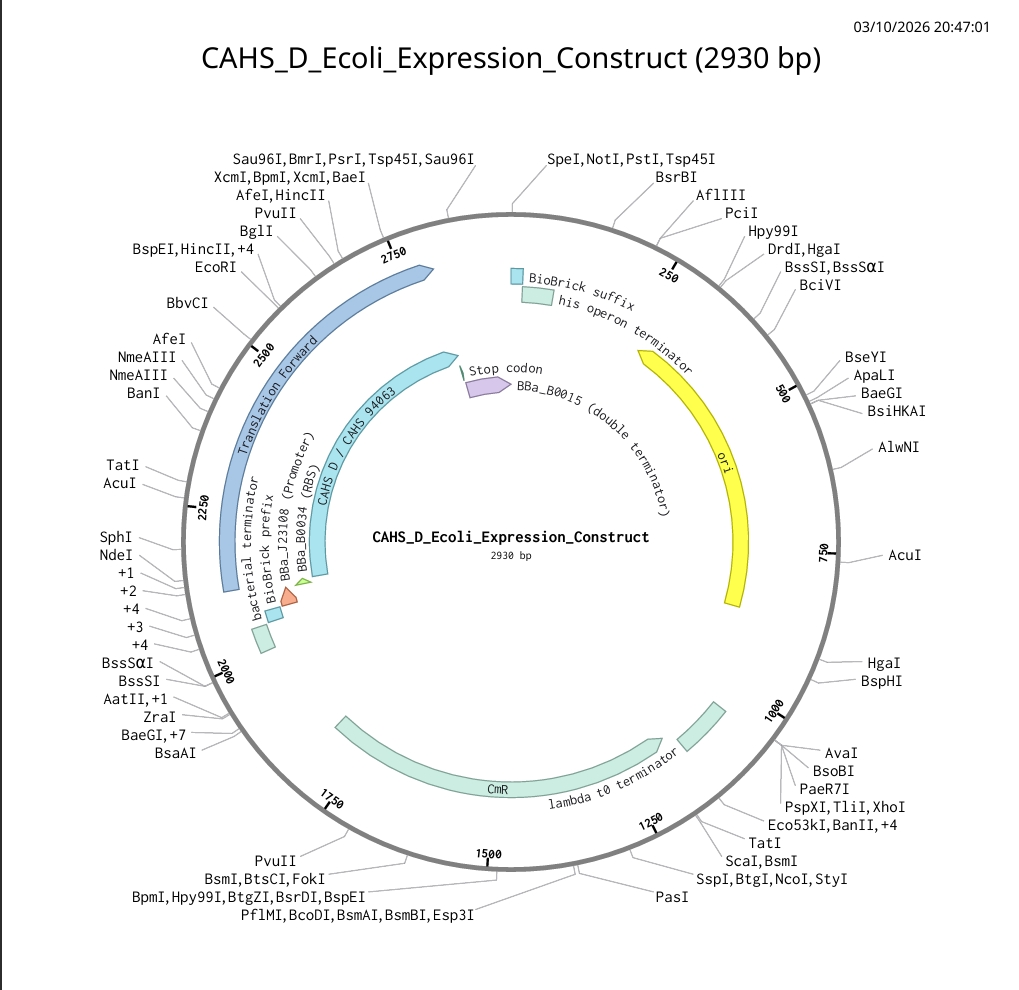
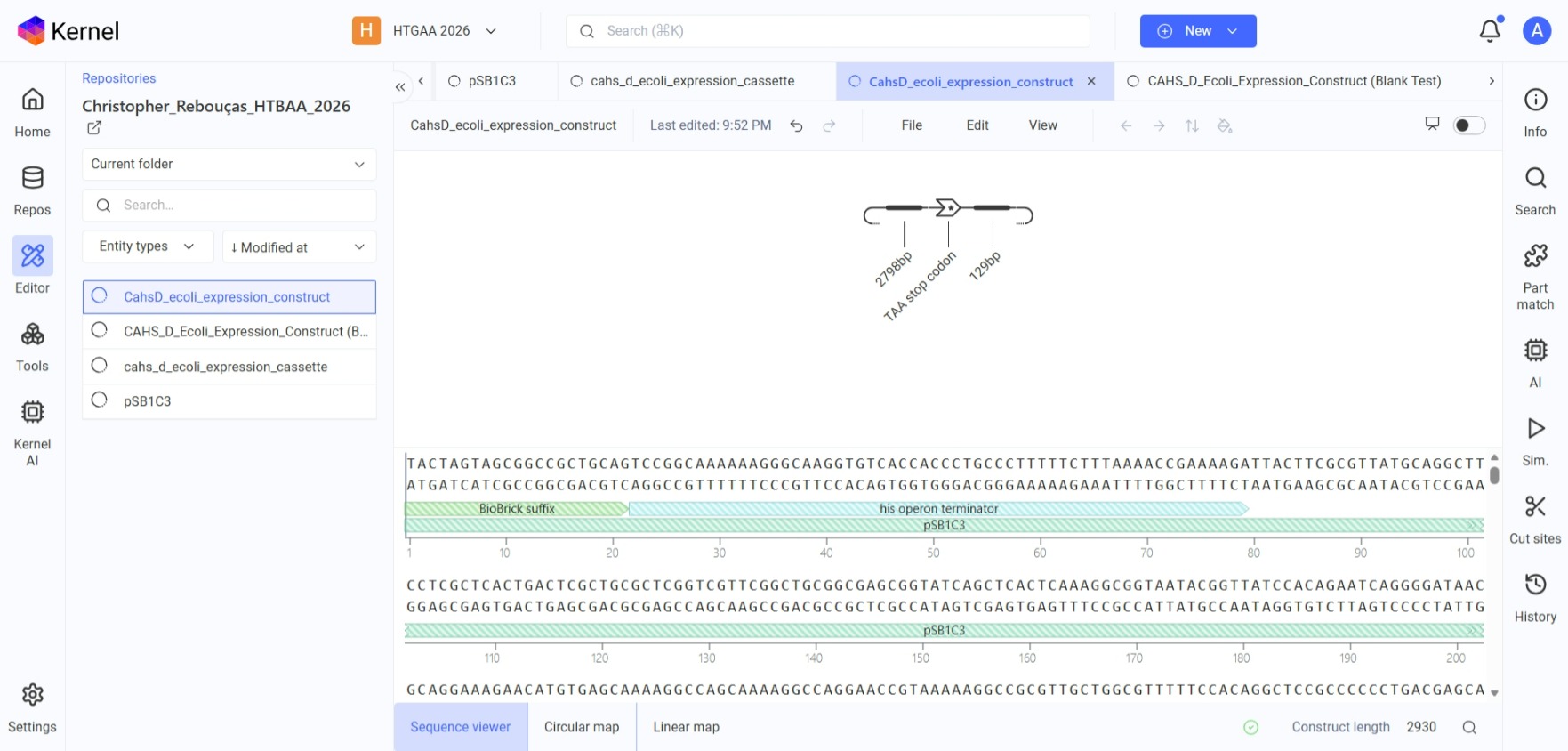
The construct was build later on, using the plasmid pSB1C3 as the backbone, wwhere the cassete was inserted between the biobrick preffix and biobrick suffix. This step was made in Benchling too and later on imported into Kernel.
Construct schematic given by benchling
Construct imported into Kernel (Obs.: Since it was my first time accessing Kernel and i didn’t knew how much on how to use it and the Kernel AI wasn’t working properly, i didn’t knew why the construct schematic stayed kinda messy on the software)
4. Optimization And Quality Check
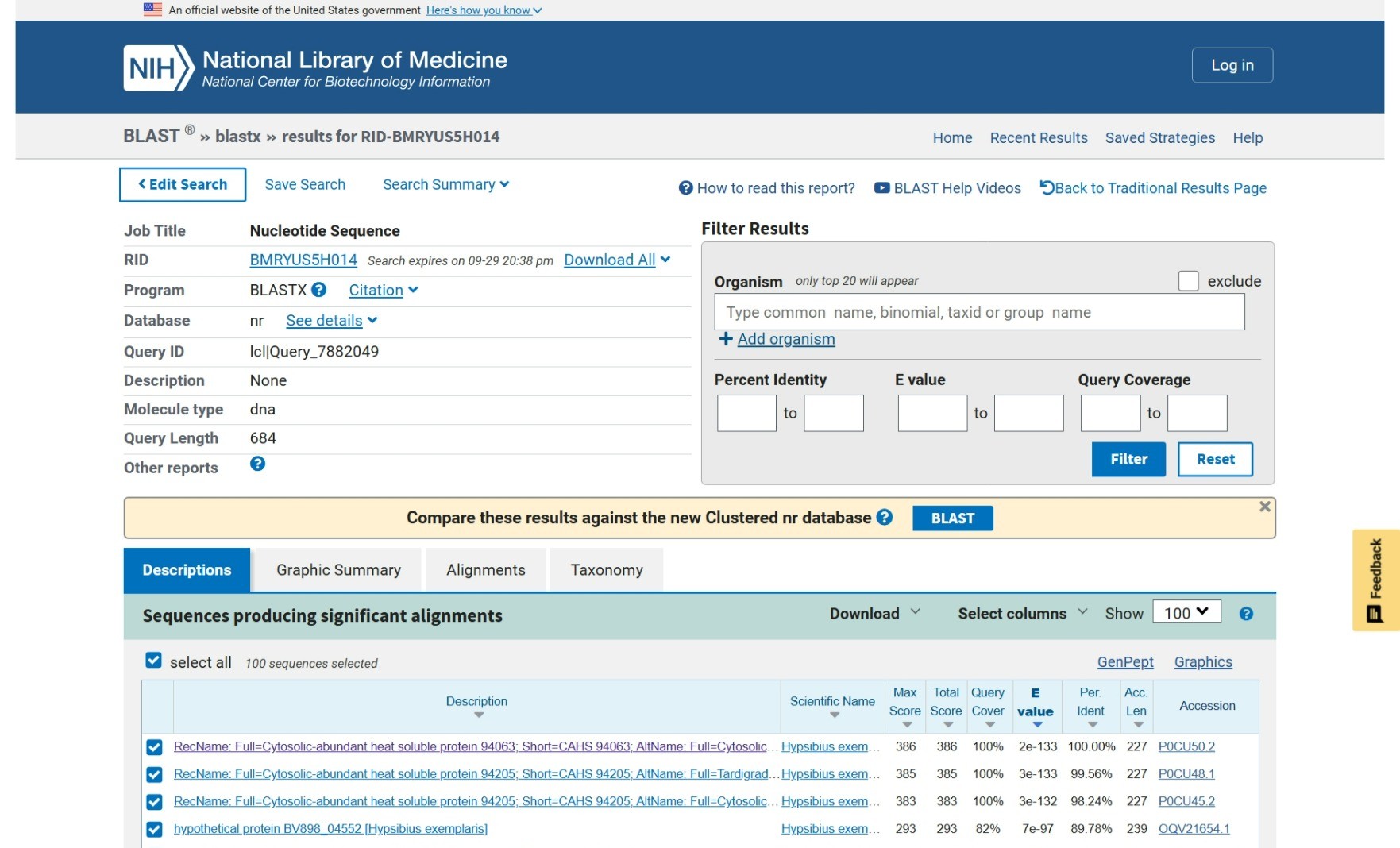
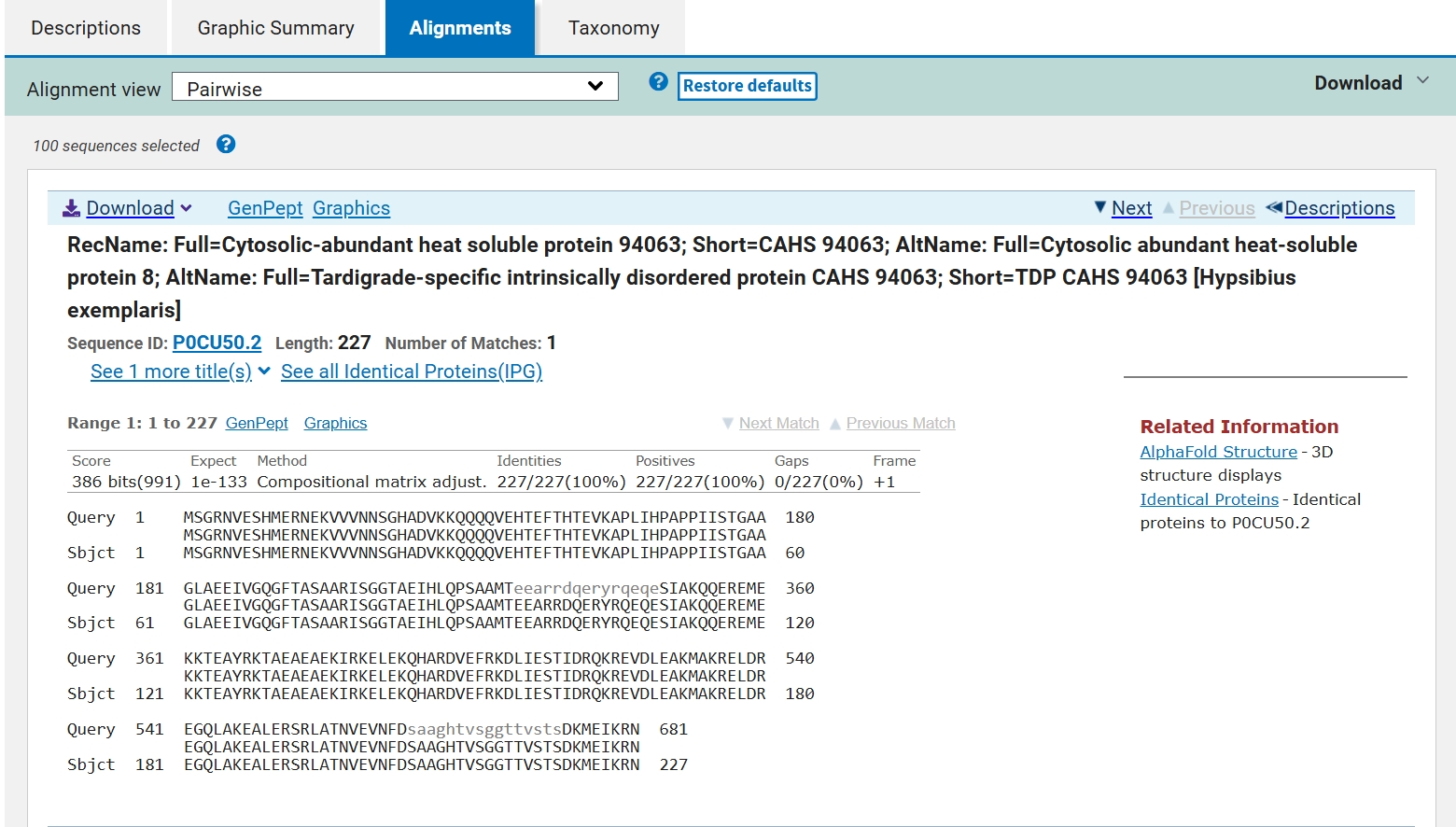
The CAHS 8 CDS was blasted using blastx to confirm the translated sequence was correct and able to syntesize the CAHS 8 protein
Blastx results screenshot
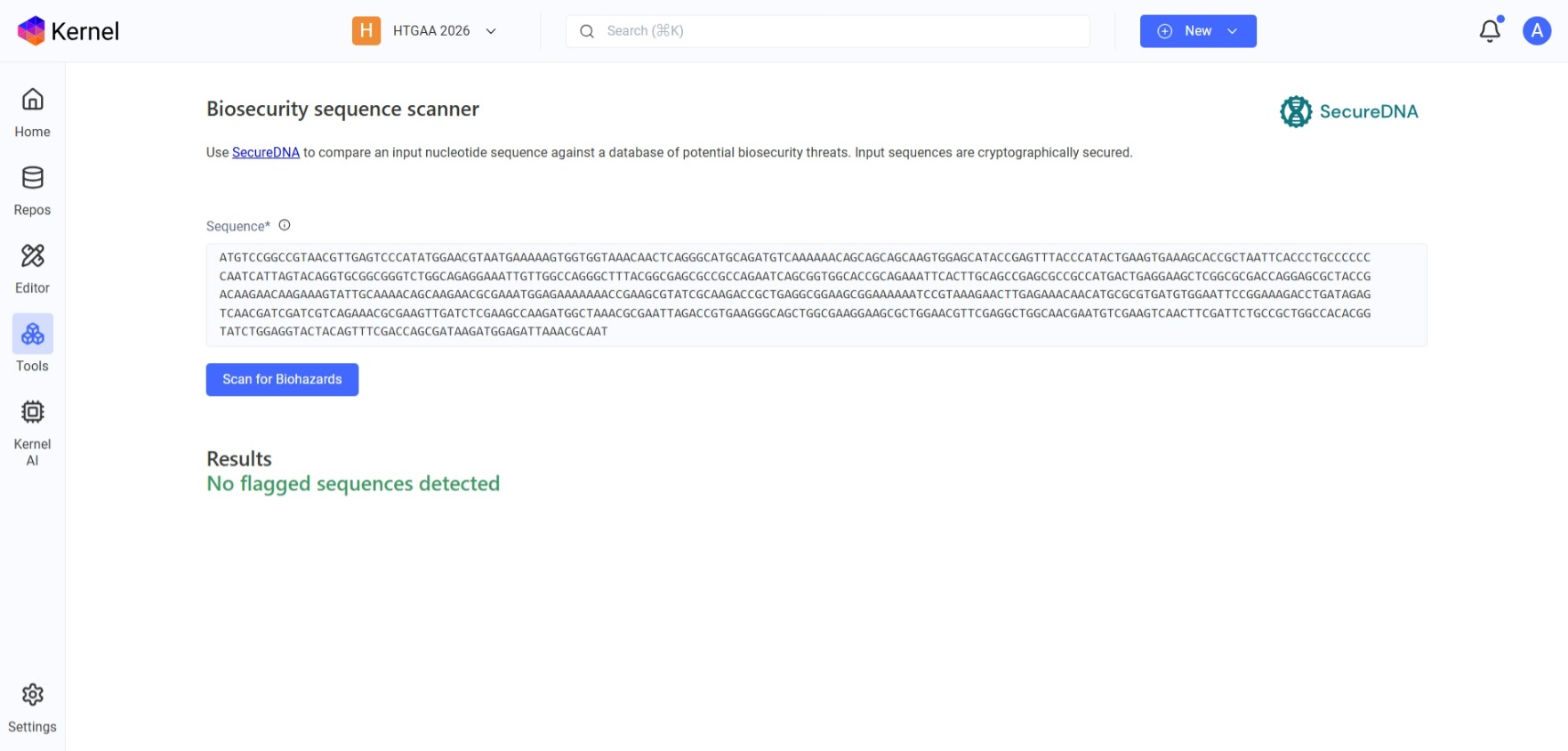
Later on the Safety Screening was runned in Kernel
Safety Screening results in Kernel
5. From Design To Build
How i’d build?
For an initial prototype, i would order the ~860 bp cassete as synthetic DNA and assemble it with the pSB1C3, since my construct is relatively simple.
What does synthesis constrain?
Prototype vs Scale
For the first prototype the goal is to achieve a verified construct and have the confirmation that CAHS 8 is being produced in E. coli. While in production scale the main goal is reproducibility at large scale
6. What i don’t know yet?
Will CAHS D be properly expressed and syntesized in E. coli?
Since CAHS D is native to a very different organism and codon optimization doesn’t guarantee correct folding, there will be a need to test the protein production and stability
Must be more things to be analysed
As i said, since i’m really new to the world of genetic engineering and i’m still learning, must be much more topics to cover and much more thing to analyse