Week 1 HW: Final Project Ideas

My project — at a glance
Probe pipeline
A biological space probe
A cell-free biosensor architecture for hunting biocompatible planets
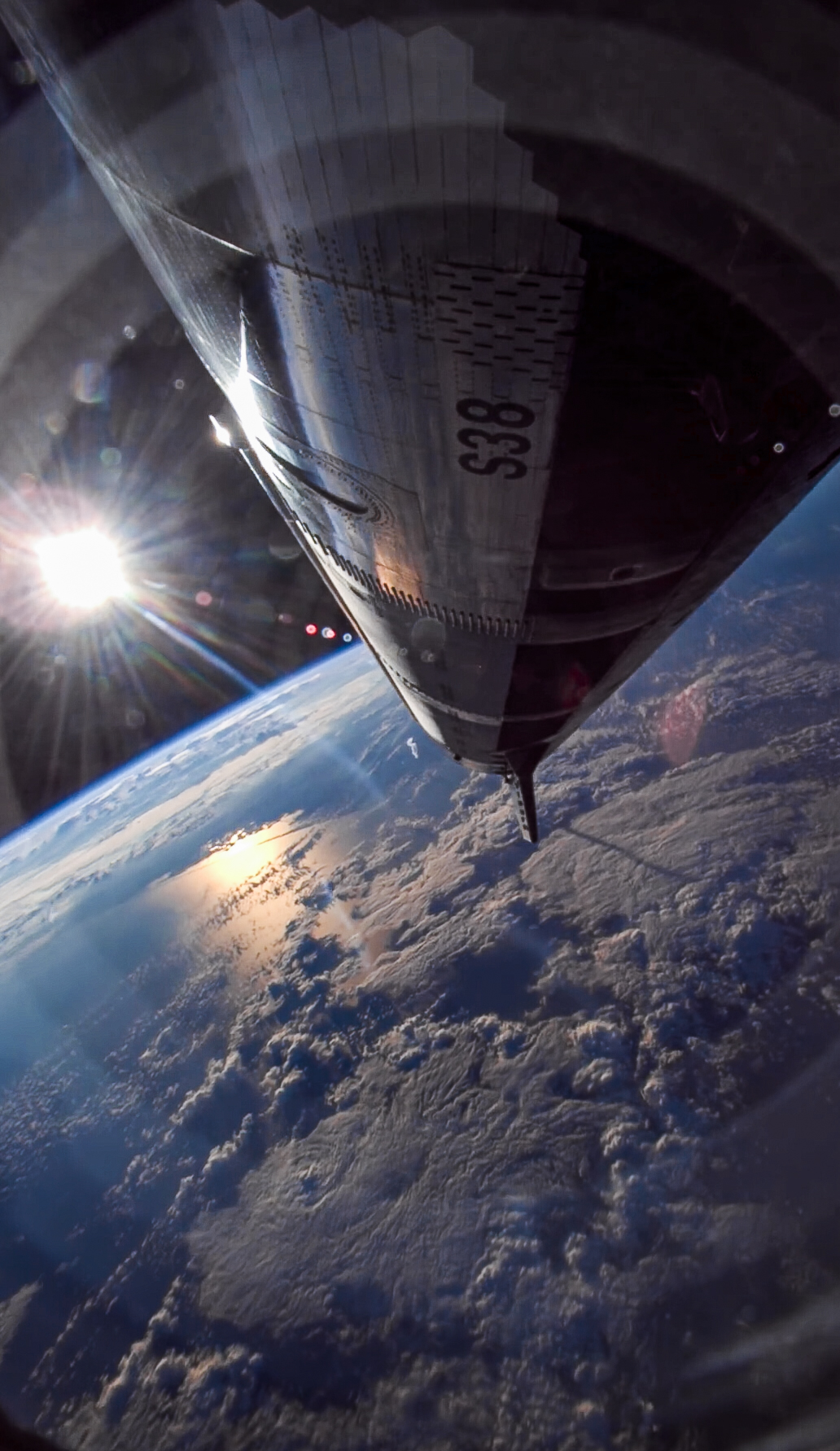
Launch
Millions of probes are launched from Earth on a Starship, destined to be deployed across the universe, each probe contains a cassette, cell free sensors destined to prove human habitability. Their data will improve our understanding of habitable planets in the universe and help humans plan future colonisation missions to them
It 's not an organism, not alive, wont pollute
A cell free cassette, DNA templates to sense the environment. No mutation risks, fewer contamination risks, more radiation resistance than a live cell culture, hurtling through space, hunting, reporting back to human colonies.
It stays inert, only responding if the planet says yes
Temperature, solvent and chemical triggers activate the logic gates and next actions (see the mindmap below for more info)
It reads the local chemistry
A controlled panel turns a raw environment into inputs, the logic acts on these.
Molecular Inference
Cell-free logic gates weigh the inputs and perform inference against in-built classifiers, each weight is assessed against earth biocompatibility, allowing the inference to prove biocompatible planets instead of physical visitations
Logic becomes light
Only the inferenced reporters fire, different schema lighting their set spectral peak and a band in the encoded barcode. This will allow observers to map the spectral signals that the cassette has provided allowing for future colonisation targets
My current mindmap of the factors that each reporter will target.
mindmap
  root((mindmap))
    Physical
      Temperature
      Pressure
      ::icon(fa fa-book)
    Solvent
      Water
      Other solvent available
      No solvent found
    Chemical
      pH
      Redox
      Organics
    Biological
      Candidate biosignatures
    Toxicological
      compounds incompatible with humans
    Local environment
      Atmospheric composition/disequilibrium
    Geological	mineral/elemental environment
    Information anomalous artificial signatures
And the inference map of the planet
Temperature ████████░░ Water activity █████████░ Organic chemistry ███████░░░ Redox energy ████████░░ Toxicity ██░░░░░░░░ Biosignature █████░░░░░ Contamination risk ███████░░░
which is encoded as a fingerprint, wavelength-accurate spectral barcode and sent back to earth
for eg. sfGFP (510 nm), mScarlet-I (594 nm) and mTagBFP2 (457 nm):
#Q1 What would you make?
When thinking about colonisation of the universe by human consciousness and earth biology, the limitations of our current technological stack become apparent and the challenges ahead seem enormous. I hope with my final project to be able to solve a small part of the problem, ie the ability to autonomously select planets that are biocompatible and suitable for human habitation using biological space probes.
What this would be is a cell-free protein analysis suite, because suitably engineered cell-free molecular system may provide greater containment and reduced biological persistence than a viable-organism probe during inter/intra galactic transit (a biological probe/coloniser as suggested by George Church risks being damaged by environmental radiation associated with space travel with the added risks of biological contamination and providing false positives, dangerous for future human missions).
This probe will wake up on arrival at a targeted planet. Its logic gates sweeps through the local chemistry searching for bio signatures or other signs of civilisations life and releases hyperspectral proteins encoded within a spectral barcode triggered by the logic, as its a cell-free design, the local temperature of the planet will anneal the proteins tot he point where the spectral signature gives us even more information on bio compatibility. These hyperspectral signals will be captured and monitored via a space telescope (maybe using gravitational lensing) or a local probe dedicated to the analysis of the data in that system and the information is transmitted autonomously to the nearest human civilisation outpost.
The costs associated with the space economy is rapidly subsiding, with the age of space data centres, costs of launch are being heavily subsidised by the infrastructure providers to make business sense for launch. Therefore the costs associated with testing this project in space will be trivial in the near future as well as longer term.
#Q2. What living system could make it?
A cell free system
#Q3. How could automation help you make it?
We need a detailed analysis to select the best reporters for the slots in the mindmap, I believe in terms of automation this will be my first step among many
#Q4. What would it take to make it at a meaningful scale?
This is a whole of system architecture that I’ve had in my head and want to test out among my peers, I am unsure if it will be viable to join all the parts together but they work individually and I see no reason why they wont work together, however I’m unsure how I would scale it without having first assembled one myself, I see a pathway to scale and the financial case to scale it, however I’m unsure of the biomanufacturing aspect of it at this stage.
References: CHATGPT Prompt: Hello Mr GPT what do you think of my idea? do you think its viable? how would inference look like here (and then I copied Q1 answer) and it provided me with the inference graph and mindmap ideas to work off.