Hi! I’m Dany Ait Aissa, a Medical Doctor with a strong interest in surgery, wound healing, regenerative medicine, and biomedical innovation.
My medical training exposed me to general surgery, reconstructive surgery, trauma, wound care, oncology, and other clinical fields where the limitations of current treatments are often very tangible. Those experiences pushed me to become increasingly interested not only in how we treat patients, but also in how we can design and manufacture better tools, biomaterials, and therapies for them.
I am currently exploring biomanufacturing and synthetic biology through HTBAA, with a particular interest in the intersection of biology, engineering, and surgery. I am especially curious about programmable biomaterials, tissue regeneration, wound scaffolds, and how biological manufacturing could make complex medical technologies more scalable and accessible.
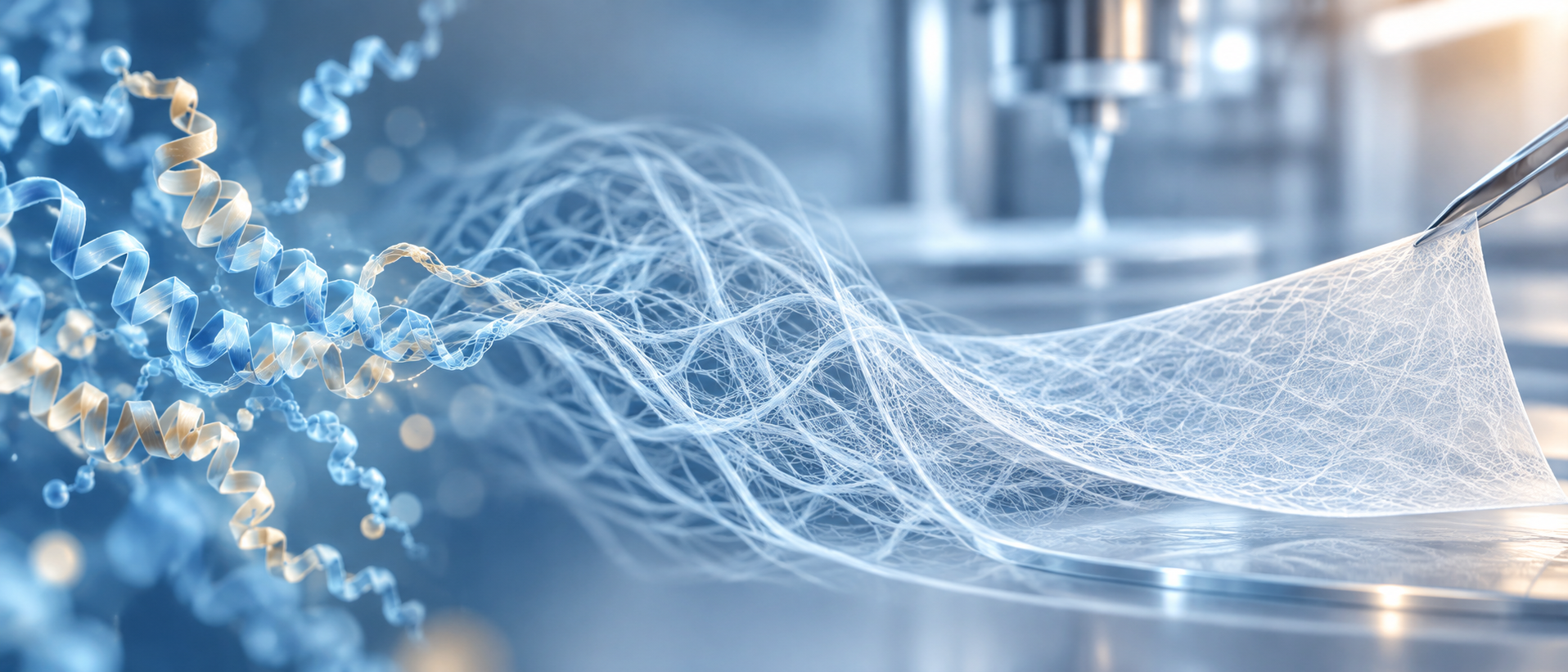
For my first HTBAA project, I am exploring the biomanufacturing of an off-the-shelf, large-area wound scaffold made from engineered recombinant fibrous proteins for use in major burns.
Ultimately, I am interested in learning how to move from:
clinical problem → biological idea → engineered system → manufacturable solution.
## Contact
Feel free to reach out to me through the HTBAA community.
## Homework
My homework assignments document the ideas, experiments, and biomanufacturing concepts I develop throughout the course.
## Labs
Lab work and experimental documentation will be added here as the course progresses.
## Projects
This section will follow the larger projects I develop throughout HTBAA, particularly around biomaterials, wound healing, and regenerative medicine.
See the navigation bar on the left to explore my work for How To Biomanufacture Almost Anything — Fall 2026.
Contact info
Homework, Labs, and Projects
See the nav bar on the left to look through my work for How To
Biomanufacture Almost Anything (Fall 2026)!
Subsections of Dany Ait Aissa — HTBAA Fall 2026
Week 2 HW: DNA Design
Week 2 HW: DNA Design
Recombinant Collagen–Elastin Protein for an Off-the-Shelf Wound Scaffold
My final project asks whether an engineered recombinant fibrous protein could be biomanufactured in advance and later fabricated into an acellular scaffold for large-area wounds such as major burns.
For this homework, I translated that material concept into a DNA expression design.
The production organism is only the manufacturing system. The final wound scaffold would contain purified protein, not living engineered bacteria.
For this educational prototype, I defined residues 35–344 as the Scl2 V+CL segment used in the fusion. This boundary is a design choice for this homework rather than a claim that these are canonical database-defined domain boundaries.
The His6 tag, linker, and ELP20 region were designed as synthetic additions.
1.3 Expression host
The proposed expression host is:
Escherichia coli BL21(DE3)
I selected BL21(DE3) because the construct uses a T7-based expression system.
1.4 Localization
The intended expression is intracellular.
I do not want a secretion signal peptide. After expression, the cells would be harvested and lysed, and the recombinant protein would be purified before scaffold fabrication.
The complete CDS begins with a start codon, contains no internal stop codons, and ends with a terminal stop codon.
2.3 Backbone decision
My intended vector context is a pET-28a(+)-type bacterial expression backbone, which is compatible with T7 expression in BL21(DE3) and provides bacterial plasmid replication and kanamycin selection.
However, I could not find a clean empty pET-28a backbone in the Kernel repository search.
One Kernel result, BBa_K4862003, was based on pET28a but already contained a Zika NS3 insert. I did not use it because importing an existing expression construct with an unrelated CDS would not represent my design.
I therefore kept the Kernel object as an expression cassette and documented pET-28a(+) as the intended future vector context rather than adding an inappropriate backbone just to complete the circular map.
3. Assemble the Construct
I manually assembled the expression cassette in Kernel in the following order:
the T7-lacO promoter initiates inducible transcription;
BBa_B0034 supports translation initiation;
Scl2VCL_G4S3_ELP20 encodes the fusion protein;
BBa_B0016 terminates T7 transcription.
The custom CDS was created as a CDS (+start +stop) / Generic protein part in Kernel.
The final protein architecture encoded by the CDS is:
His6 → Scl2 V+CL → (G4S)3 → ELP20
4. Optimize and Quality-Check
4.1 Codon optimization
I ran Kernel’s coding-sequence optimization workflow using:
Host:Escherichia coli
Optimizer: Simple Codon Optimizer v0.3
Preset: None
The original CDS was 1299 bp.
However, Kernel’s output was 1380 bp and was labeled:
SP5-Scl2VCL_G4S3_ELP20
Kernel had added an SP5 signal peptide to the N-terminus. Its signal-peptide analysis also predicted a cleavage site near the junction between SP5 and my original protein.
This was not consistent with my design because I specifically want intracellular expression with no secretion signal.
The additional sequence increased the CDS by 81 bp, equivalent to 27 additional amino acids. Therefore, this output was not simply a synonymous recoding of my original protein.
I rejected the SP5-containing optimization result and retained my original 1299-bp CDS.
This was useful because it showed that an automated optimization output still needs to be checked against the biological design requirements.
4.2 Sequence search / BLAST
I first attempted to use the sequence-search workflow through Kernel, but the BLAST function was not accessible in the interface available to me.
Rather than claim that Kernel had performed a search that I could not actually run, I copied the complete 1299-bp CDS from Kernel and used NCBI BLASTn against the standard nucleotide nr/nt database.
A top specific hit was:
Streptococcus pyogenes collagen-like protein 2 (scl2), scl2.28-1 allele
GenBank: AY069936.1
For this hit:
Query cover: 72%
Percent identity: 84.07%
E-value: 0.0
Other high-ranking results were also S. pyogenes Scl2 sequences and synthetic constructs containing the Scl2 gene.
The result makes sense because only part of my fusion is derived from natural Scl2. The remaining sequence contains the synthetic His6 tag, (G4S)3 linker, and ELP20 domain, so I would not expect the entire 1299-bp fusion to match the natural Scl2 gene.
4.3 Biosafety sequence screening
I screened the complete 1299-bp Scl2VCL_G4S3_ELP20 CDS using the SecureDNA Biosafety Sequence Scanner available through Kernel.
The result was:
No flagged sequences detected.
This means the sequence scanner did not identify a flagged sequence match in the submitted CDS. It does not by itself establish that a future material or manufacturing process is clinically safe.
5. From Design to Build
5.1 How I would build the DNA
For a first physical prototype, I would order the custom fusion CDS as synthetic DNA.
The collagen-like and elastin-like regions are both repetitive, so synthesis of the full sequence may be more difficult than synthesis of a typical non-repetitive gene.
If a synthesis provider flagged the 1299-bp CDS as difficult, I would divide it into two or three overlapping fragments and assemble them into a compatible expression vector.
A logical approach would be Gibson assembly.
The basic workflow would be:
synthesize the CDS as one or several DNA fragments;
prepare a compatible expression backbone;
assemble the overlapping fragments and vector;
transform a cloning strain;
sequence-verify the complete CDS and all junctions;
introduce the verified construct into BL21(DE3);
perform small-scale expression testing.
Gibson et al. (2009) demonstrated assembly of overlapping DNA molecules without requiring a restriction site at every junction.
5.2 Sequence errors and repetitive DNA
A correct digital sequence does not guarantee that the synthesized DNA will be error-free.
The repeated collagen-like and ELP motifs could create:
synthesis difficulty;
recombination or deletion;
cloning instability;
sequence-verification problems.
Carr et al. (2004) demonstrated DNA error-correction approaches, while Tian et al. (2004) and Kosuri et al. (2010) illustrate approaches for scalable synthetic DNA production.
For this project, the practical lesson is that the final plasmid would need complete sequence verification before expression testing.
5.3 Prototype versus manufacturing scale
DNA construction and protein manufacturing are different problems.
For the first prototype, I may need to synthesize and assemble the gene.
At larger scale, I would not synthesize a new gene for every scaffold.
Once the plasmid and expression strain were validated, a qualified cell bank could be used repeatedly for fermentation, protein purification, and scaffold production.
6. What I Do Not Know Yet
Unknown
Why it matters
What I would test
Will the Scl2-ELP fusion express efficiently and remain soluble?
A correct DNA sequence does not guarantee useful protein production
Compare small-scale induction conditions and analyze total vs. soluble protein by SDS-PAGE
Will the repetitive DNA remain stable during synthesis and cloning?
Repetitive regions may undergo synthesis errors, deletions, or recombination
Sequence the complete plasmid after assembly and compare synonymous sequence variants if instability occurs
Will the purified fusion actually form a useful wound scaffold?
Protein production alone does not prove appropriate material properties
Produce small films or hydrogels and measure assembly, swelling, degradation, and mechanical behavior
A later design cycle could also vary ELP repeat number, linker design, or the relative collagen-like and elastin-like content if the first protein does not have useful scaffold properties.
AI Use Statement
I used ChatGPT (OpenAI) throughout this assignment as a design and troubleshooting assistant.
I used it to:
translate my wound-scaffold idea into a defined fusion-protein architecture;
organize the promoter, RBS, CDS, terminator, host, and vector strategy;
troubleshoot the Kernel interface step by step;
interpret the unexpected SP5 signal-peptide result from Kernel’s codon optimizer;
interpret the NCBI BLAST results;
organize my results into this homework write-up.
Example prompts included:
"Help me turn my wound scaffold idea into an exact recombinant expression target."
"What parts do I need for expression in E. coli BL21(DE3)?"
"Tell me step by step what to click in Kernel."
"Why did Kernel add SP5 during codon optimization?"
"Interpret these BLAST results for my construct."
"Write my Week 2 homework in Markdown based only on what we actually did."
I also attempted to use Kernel AI to search for parts and troubleshoot the design. Kernel AI repeatedly returned errors, including in new conversations, so I stopped relying on it. Final part selection and analysis were performed manually using the Kernel interface, NCBI BLASTn, and SecureDNA.
AI suggestions were treated as design suggestions rather than experimental results. No wet-lab experiment was performed for this homework.
References
Gibson DG, et al. Enzymatic assembly of DNA molecules up to several hundred kilobases. Nature Methods. 2009.
Carr PA, et al. Protein-mediated error correction for de novo DNA synthesis. Nucleic Acids Research. 2004.
Tian J, et al. Accurate multiplex gene synthesis from programmable DNA microchips. Nature. 2004.
Kosuri S, et al. Scalable gene synthesis by selective amplification of DNA pools from high-fidelity microchips. Nature Biotechnology. 2010.
Streptococcus pyogenes collagen-like protein 2, Scl2.28-1. GenBank AY069936.1.
iGEM Registry parts BBa_K2406020, BBa_B0034, and BBa_B0016.
NCBI BLASTn, standard nucleotide nr/nt database.
SecureDNA Biosafety Sequence Scanner.
Week 1 HW: Final Project Ideas
description: “Biomanufacturing recombinant fibrous proteins for large-area wound coverage”
🧬 Programmable Wound Scaffolds
Rapid biomanufacturing of an off-the-shelf scaffold for major burns
My Project Question
How can we biomanufacture an off-the-shelf, large-area wound scaffold from engineered recombinant fibrous proteins for immediate use in major burns?
I propose combining collagen-like and elastin-like protein domains into a genetically programmable biomaterial that can be manufactured in advance and fabricated into standardized wound-covering sheets.
1. What do I want to make, and why?
During my medical training, I developed a particular interest in surgery, reconstructive procedures and wound healing. One problem I want to explore through biomanufacturing is how to make large quantities of wound-covering material available to patients with extensive burns.
The clinical problem: major burns can require coverage of large areas of skin while leaving patients with limited healthy donor sites. Patient-specific cultured skin products, such as Epicel, can expand the available skin but require a biopsy and approximately 17 days of cell culture.
Other technologies, including RECELL and STRATAGRAFT, address parts of this problem. However, they do not eliminate the need for autografting in every type of major burn.
My goal is to explore a complementary approach: manufacture standardized wound scaffolds before patients need them, rather than manufacturing each scaffold after a patient arrives.
The proposed material
My first-generation scaffold would be an acellular sheet made from a recombinant hybrid protein containing three components:
Protein component
Intended function
Collagen-like domain
ECM-inspired structural support
Flexible linker
Connect the two protein domains
Elastin-like polypeptide (ELP)
Tune elasticity and material behavior
Unlike naturally extracted collagen, recombinant proteins can be engineered at the amino-acid level.
Future versions could incorporate cell-adhesion motifs, enzyme-sensitive sequences and other functional domains that influence how the material interacts with regenerating tissue.
Collagen-like/ELP fusion proteins have already been investigated experimentally for wound healing. My proposed research would focus on whether such proteins can be manufactured efficiently and converted into standardized, large-area scaffolds.
The Important Distinction
I am not proposing a complete replacement for human skin at this stage.
The initial goal is an off-the-shelf structural scaffold that could eventually be developed into a more regenerative material.
2. What living system would make it?
Primary chassis: engineered E. coli
I would initially use engineered Escherichia coli to manufacture the recombinant hybrid protein.
Producing native human collagen in bacteria is challenging because its structure normally requires post-translational modifications, including proline hydroxylation.
Certain bacterial collagen-like proteins, however, can form collagen-type triple helices without requiring hydroxyproline. These provide a potentially simpler starting point for microbial production.
The collagen-like domain would be fused to an elastin-like polypeptide to create a single genetically encoded building block.
Proposed manufacturing process
flowchart TD
    A["Design recombinant DNA"] --> B["Engineered E. coli"]
    B --> C["Automated fermentation"]
    C --> D["Recombinant hybrid protein"]
    D --> E["Recovery and purification"]
    E --> F["Scaffold fabrication"]
    F --> G["Sterilization and quality control"]
    G --> H["Off-the-shelf wound sheets"]
Inputs: recombinant DNA, bacterial production strain, carbon source, nitrogen, water, salts and oxygen.
Biological process: bacterial growth and expression of the collagen-like/ELP fusion protein.
Output: purified recombinant protein that can be formulated into a porous wound scaffold.
The protein-manufacturing step and the scaffold-fabrication step are separate processes. Producing the protein does not automatically guarantee that it can form a suitable wound sheet.
3. How would I use automation?
I would use different automation technologies during early development and manufacturing.
Prototype development
A liquid-handling robot, such as Opentrons, could help me screen different versions of the recombinant protein.
For example, I could compare:
3 collagen-like architectures
4 elastin-like polypeptide designs
2 cell-adhesion motif conditions
This would produce 24 protein variants, or 72 experimental cultures if tested in triplicate.
Automation could assist with media preparation, inoculation, induction, sampling and protein quantification.
The most promising candidates would then undergo testing for protein stability, scaffold formation, mechanical properties, degradation and cell compatibility.
Manufacturing
At larger scale, I would use an automated fed-batch bioreactor.
The system could continuously control temperature, pH, dissolved oxygen, agitation and nutrient feeding.
Downstream automation could assist with protein recovery, purification, formulation, sheet fabrication and quality control.
The purpose of this two-stage approach is to use small-scale automation to identify a suitable protein before committing to a larger manufacturing process.
4. How much would I need to make, and how long would it take?
I will use 1 m² of wound scaffold as my initial manufacturing target. This is an engineering benchmark, not a recommended clinical dose.
The scaffold would be manufactured as modular 10 × 10 cm sheets.
Initial Manufacturing Target
1 m² = 100 standardized wound sheets
Estimated protein requirement: 50 g
Estimated fermentation requirement: approximately 30 L of working culture
These are preliminary engineering estimates, not experimentally validated production specifications.
Back-of-the-envelope calculation
Parameter
Assumption or calculation
Result
Target scaffold area
1 m²
10,000 cm²
Individual sheet area
10 × 10 cm
100 cm²
Number of sheets
10,000 ÷ 100
100
Assumed hydrated thickness
2 mm
0.2 cm
Scaffold volume
10,000 × 0.2
2 L
Initial protein concentration
2% w/v
20 mg/mL
Protein required
2,000 mL × 20 mg/mL
40 g
With 20% process losses
40 ÷ 0.80
50 g
Assumed purified yield
2 g/L
25 L
Rounded working culture volume
Additional margin
~30 L
The protein concentration and thickness are initial assumptions. The final dry or hydrated scaffold dimensions would depend on the fabrication process.
The assumed purified yield of 2 g/L is a working estimate for my proposed fusion protein. It is not an experimentally demonstrated yield for this exact construct. Published studies have achieved gram-per-liter production of recombinant bacterial collagen-like proteins under optimized fermentation conditions.
Manufacturing time
Process
Working estimate
Seed preparation and fermentation
2 days
Protein recovery and purification
1 day
Scaffold fabrication
1–2 days
Sterilization and preliminary QC
1 day
Estimated development-scale cycle
5–6 days
The timeline is an engineering assumption. Medical-grade manufacturing, sterilization validation and product release testing may require additional time.
Crucially, the patient would not wait for this process. The goal is to manufacture and store the scaffold in advance so that approved, released material is immediately available when needed.
5. What don’t I know yet?
Three technical questions would determine whether this idea can become a viable manufacturing platform.
1. Can the hybrid protein form a clinically useful scaffold?
Producing a recombinant protein does not guarantee that it can form a large, porous and mechanically stable sheet.
I would need to determine which fabrication process achieves suitable wet strength, elasticity, fluid handling and wound conformity.
Early experiments would compare material properties and cell compatibility before progressing to more complex biological testing.
2. What is the optimal protein architecture?
Changing the collagen-like or elastin-like domains could affect folding, expression yield, mechanical properties and degradation.
I would need to determine which combinations of structural domains and functional motifs provide useful material properties without compromising manufacturability.
This is where automated design-build-test screening would be most valuable.
3. Can it be manufactured safely and economically at scale?
A recombinant protein intended for large open wounds would require rigorous purification, particularly if produced in E. coli.
Major concerns include endotoxin removal, residual bacterial proteins and DNA, batch consistency, sterilization and shelf stability.
I would eventually need to evaluate production cost and throughput using a more meaningful metric than protein yield alone:
Square meters of acceptable scaffold manufactured per batch, per dollar and per day.
Long-Term Vision
The initial product would be a standardized structural scaffold. If the manufacturing platform proves viable, later versions could progressively introduce cell-adhesion motifs, controlled degradation and regenerative signaling.
My long-term interest is to explore whether programmable biomaterials could eventually improve tissue regeneration and reduce fibrosis in extensive wounds.
The immediate goal, however, is much simpler: determine whether recombinant protein biomanufacturing can provide a scalable source of clinically useful wound-scaffold material.
Li D, Wang Y, Zhu S, Hu X, Liang R. Recombinant fibrous protein biomaterials meet skin tissue engineering. Frontiers in Bioengineering and Biotechnology. 2024;12:1411550. DOI.
Chen Y, Wu Y, Xiong F, et al. Construction of a collagen-like protein based on elastin-like polypeptide fusion and evaluation of its performance in promoting wound healing. Molecules. 2023;28(19):6773. DOI.
Peng YY, Howell L, Stoichevska V, et al. Towards scalable production of a collagen-like protein from Streptococcus pyogenes for biomedical applications. Microbial Cell Factories. 2012;11:146. DOI.
Petzold CJ, Mukhopadhyay A. From bench to biofactory: high-throughput technologies and automated workflows to accelerate biomanufacturing. Current Opinion in Biotechnology. 2025;94:103320. DOI.
AI Use Disclosure
AI client: OpenAI ChatGPT, GPT-5.6 Sol. Accessed: September 2026.
AI was used for project brainstorming, comparison of biological manufacturing systems, literature discovery, calculations, organization of the proposal and Markdown formatting.
The project direction and decision to investigate recombinant collagen-like/elastin-like fibrous proteins were selected by the student.
Representative prompts:
“Out of all the ideas we went through, which one is useful at this time and age compared to what’s already available and a good beginning?”
“Does it have to be bacterial cellulose? Or should we keep it broad?”
“Is there a cell-free option as well?”
“How can we biomanufacture an off-the-shelf, large-area wound scaffold from engineered recombinant fibrous proteins for immediate use in major burns?”
“My instinct is that the most intellectually interesting version is actually a recombinant hybrid fibrous protein, not necessarily pure collagen.”