Week 1 HW: Final Project Ideas
A Factory of Accidents
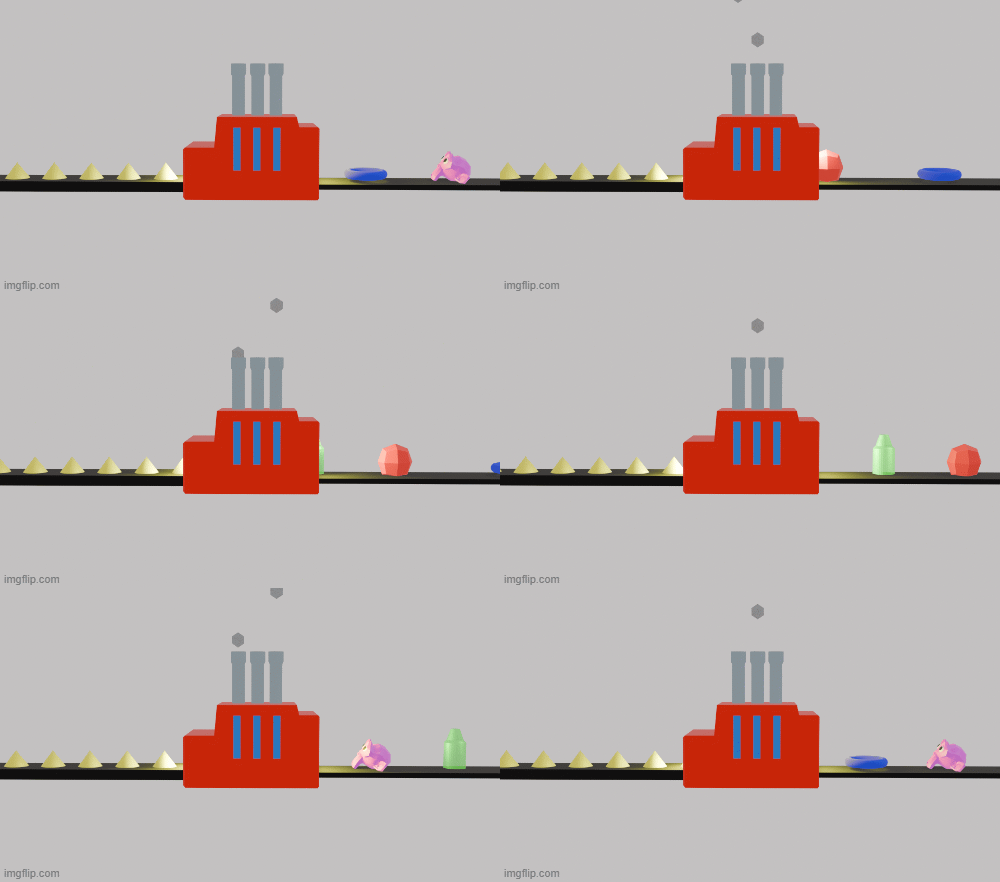
One input, one process, a variety of products.
I am interested in creating a process, in which the varying of the output is used as a form of bioart.
The basic idea is to create a biomanufacturing process in which a living system repeatedly produces different visual patterns. Each production cycle would generate several possible “artworks”. Rather than manufacturing one predetermined object, the process would produce a population of variations. Several human viewers will then select a number of results they see as desirable. The two least chosen designs are not continued, and the conditions to create the desirable artworks are then repeated with small variations. This process is repeated until one artwork remains, being statistically the most desirable of all results.
The catch to this kind of art is that the final peice is not simply the most chosen artwork but the entire tree that lead to the creation of its design.
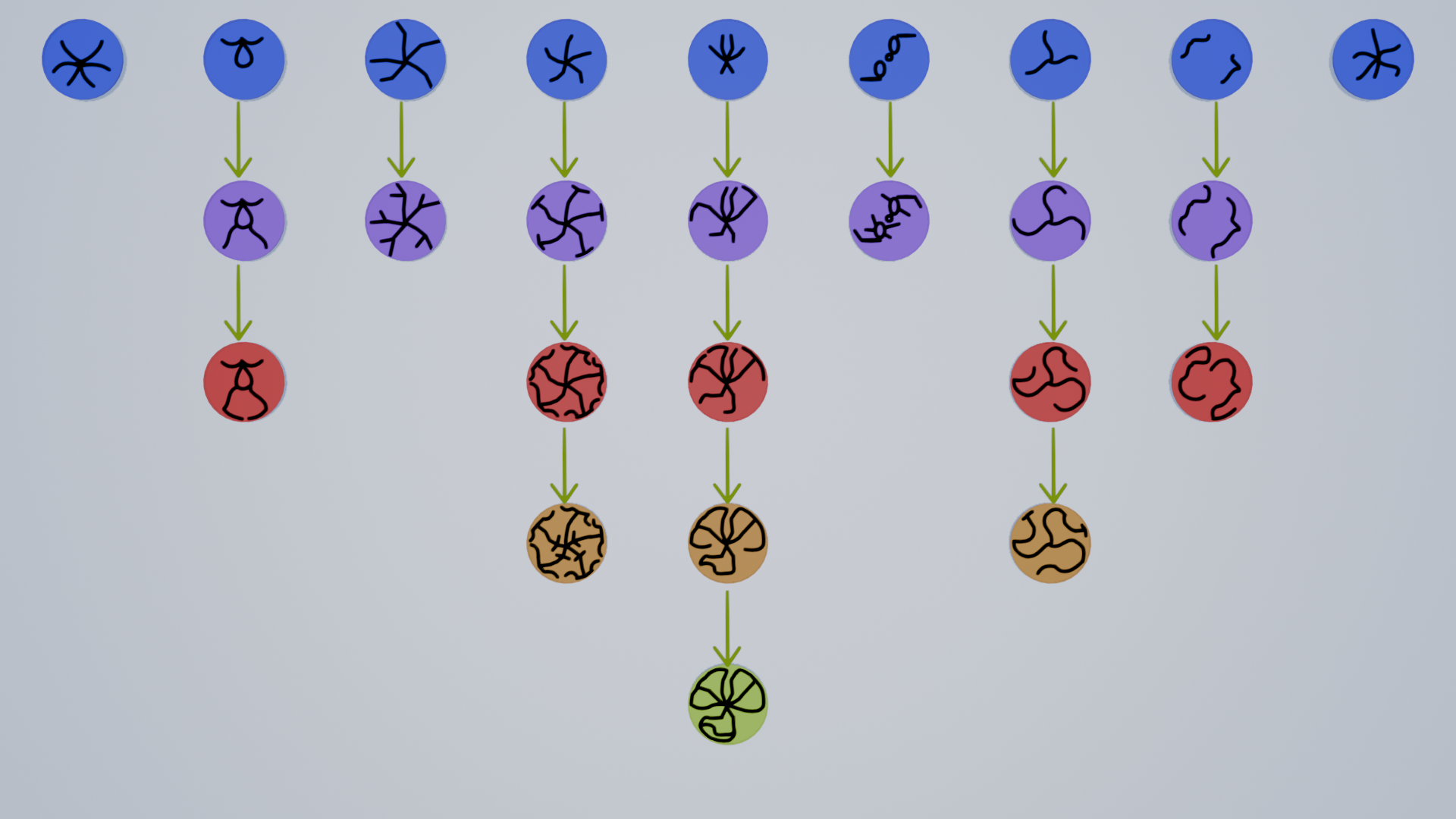
(This example is purely to show the final displayed piece and its artworks are not accurate nor related to possible designs.)
This art is simultaneously a way to show the influence of evolution, and more specifically, natural selection, in the production chains that exist today; with the added advantage of a human veiwer in the loop, leading to artificial selection. This piece also, by displaying the entrie tree leading to the most selected artwork, shows how living artwork hold both a disadvantage and an advantage in having higher chances of variation over traditional and even AI made art. In machine learning, the training of the model (towards our desired design) is hidden as a blackbox. This alternative method instead shows the thought behind the final artwork, in a way reducing the waste of the less chosen artworks.
Furthermore, this art addresses a philosophical matter as well. Does selection discover value, or create value? This is because in the creation of this bioart, there is no “intended” design immediately visable. And it is the choice and selection of the human viewers that determines if the artwork is closer to the desired design or farther from it. This can both be seen as the the opinion simply finding the value in the artworks, or, by chosing them, creating it and leading to the final artwork being leaned more towards what they found beautiful.
Lastly, I believe that this method is not simply limited to art, and can be extened in fields such as datastorage and biological computing.
The living system I would use
For my project, I would like to use swarming bacteria as my living system.
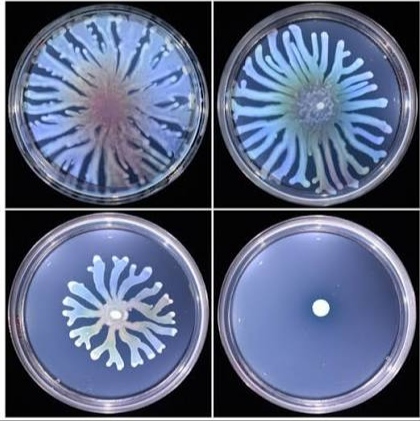
More specifically, I believe the swarming labratory strain of E-coli K-12 to be an appropriate choice. When E. coli K-12 is placed on a moderately soft agar plate, in a rich medium, cells elongate, produce more flagella, become multinucleate, and spread rapidly outward in a thin, highly motile layer.
The E. coli K-12 is nonpathogenic and catogrized under BSL1, removing the health and safety concerns that would arrise if the artwork was made using other pathogenic swarming bacteria (such as Salmonella). Moreover, Unlike in most other swarming species, cells of laboratory strains of E. coli K12 do not secrete surfactants (e.g., lipopeptides or glycolipids). Nevertheless, cells move over the surface of agar in a liquid film, under conditions in which they do not adsorb to the agar or stick to one other (Darnton et al, 2010).
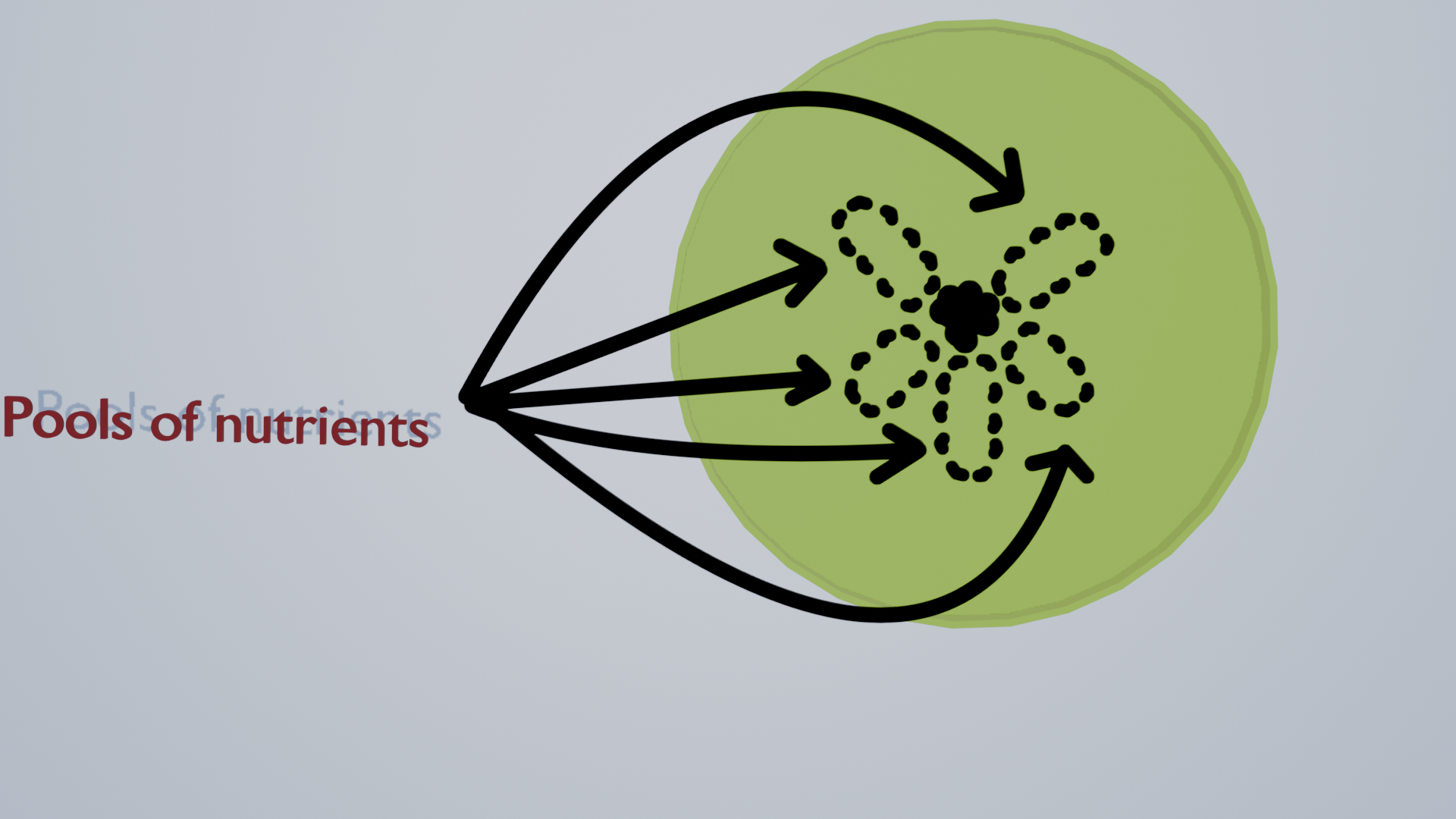
The method that I would use to create the needed artworks from these bacteria colonies is the use of nutriant concentration. I have chosen to paths to take in regards to this method:
Uncontrolled Chance: In which the nutrients are sprayed onto the plate in a random manner, inducing the bacteria to swarm to different directions and create a specific and unique artwork.
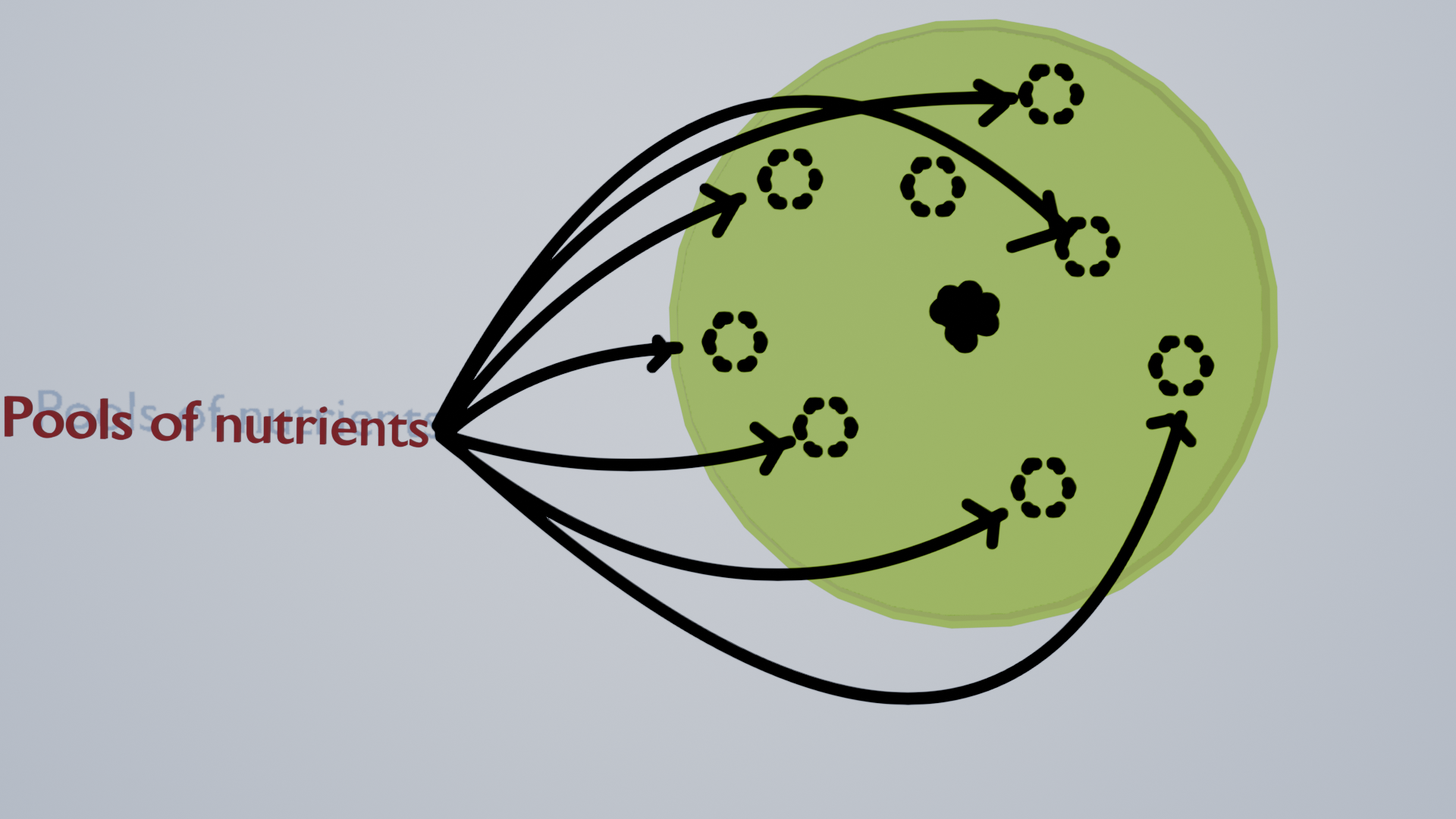
Controlled Chance: In which specific parts of the general design of future artworks are considered, and each plate has a random amount of nutreints deposited on where these parts of art would be.
The form of automation I would use
I would use automation primarily to increase the number of independent manufacturing experiments and systematically record their outputs.
A possible platform is the Opentrons Flex, which supports automated liquid handling with 1-, 8-, and 96-channel pipettes as well as automated movement of laboratory plates and other labware. For this project, automation could be used to standardize the preparation and handling of many parallel experimental inputs, while automated imaging could record the development of the resulting patterns. This is important conceptually as well as practically. I want the manufacturing process to be highly standardized while the biological output remains variable. The automation would therefore control as many non-biological variables as possible without attempting to dictate the final shape.
I would use this system to automate handling and culturing of each plate, as well as the randomness of each plate’s artwork creation.
How much I would make and how long it would take
A For a prototype of this piece, I would create 10 plates of artwork and based on the selection of the human in this loop, I will discontinue two plates and create 8 new plates in the next generation based on the 8 remaining ones of the first round. This process will be repeated until only two artworks remian in the final generation, and one is chosen as the most desirable. Therefore, in this prototype version of the art, I would need to create 30 plates of E-coli K-12 for each peice of this art.
B Given the average time needed for a colony of E. coli to grow, and the number of plates needed for each complete form of this art, I would estimate 1 to 2 weeks per generation, adding up to about 4 to 10 weeks of time needed for a full prototype of this art.
Things don’t know yet
I have not yet fully considered what each artwork would generally look like, and neither if they would be different enough with the methods I had chosen.
I would need to learn more about the process of swarming in bacteria such as E. coli, and how changing the conditions of their growth could be used to manipulate their final form. I also am not yet certain if each new chosen generation will be put in the same conditions of its previous selected design or be an average between two chosen designs.