Week 2 HW: DNA Design
Week 2 HW: DNA Design
0. Preparations:
While waiting for access to Kernel from my node, I thought of what my potential DNA design may be. I initially sought to engineer Tar, a native E. coli chemoreceptor, so that I could directly alter what chemical landscapes the bacteria responded to. I ultimately abandoned this approach because it was solving a problem that the organism already solves naturally: E. coli can detect and chemotax toward a range of nutrient-related attractants. More importantly, changing the sensory system would make the project increasingly about engineering bacterial navigation rather than about observing and recording the variability that emerges from a biological system.
My second idea was far more promising however, being to engineer E. coli to create bioluminescent proteins when exposed to chemicals within the nutrient pools that caused chemotax. This plan, while seemingly more artistic and vanitary than the first, would serve an actual purpose in the designs created by it. Not only would it serve to make each artwork have more of an appealing look, it would also leave evidence of its evolution from each stage to the next through these protiens.
The repository I have created inside of Kernel is named “Daryoosh Afshinjoo HTBAA 2026”, and the folder inside it “Afshinjoo-Factory of Accidents”.
1. Defining my expression target:
My target is a bacterial bioluminescence system encoded by the luxCDABE genes from Photorhabdus luminescens. Rather than producing a single reporter protein, this system produces a small set of proteins that work together to generate light. luxA and luxB encode the two subunits of bacterial luciferase, while luxC, luxD, and luxE encode enzymes involved in producing the aldehyde substrate required for the luciferase reaction. Together, these five genes allow a bacterial cell to generate bioluminescence autonomously.
National Center for Biotechnology Information (NCBI). Photorhabdus luminescens fatty acid reductase (luxC), acyltransferase (luxD), luciferase (luxA), luciferase (luxB), and luxE genes, complete CDS. GenBank accession M90093.1.
My host is Escherichia coli, specifically a K-12-derived laboratory chassis. I chose E. coli because its chemotaxis and motility systems are already well characterized, and because my project relies on allowing the bacteria to interact with a heterogeneous chemical environment rather than engineering movement from scratch. Moreover, E. coli is a non pathogenic BSL-1 bacteria, removing most concerns about the safety of the project.
The luxCDABE proteins need to function inside the bacterial cell, so I am designing for intracellular/cytoplasmic expression rather than secretion.
2. Designing my genetic parts:
| Layer | Part | Source | Justification |
|---|---|---|---|
| Transcription start | P_BAD / arabinose-inducible promoter | Existing pBAD/Kernel part | I chose an inducible promoter so that reporter expression is linked to an environmental chemical signal rather than being continuously active. |
| Translation start | Bacterial RBS | Existing Kernel part / pBAD backbone | I use an E. coli-compatible RBS to provide translation initiation for the reporter genes. |
| Coding sequence | luxCDABE | Photorhabdus luminescens, GenBank M90093.1 | I chose the luxCDABE system because it contains both bacterial luciferase and the enzymes needed to generate its light-producing substrate, allowing the cells to produce light autonomously. |
| Targeting | None | — | The lux proteins are intended to function within the bacterial cell, so no secretion signal or additional targeting sequence is required. |
| Transcription stop | Bacterial terminator | Existing Kernel part / pBAD backbone | I use a bacterial terminator to provide a defined endpoint for transcription of the reporter cassette. |
| Vector context | pBAD-compatible E. coli expression backbone | Existing Kernel backbone | I reuse an established bacterial expression backbone so that replication and selection are already provided rather than redesigning them from scratch. |
3. Assembling my construct:
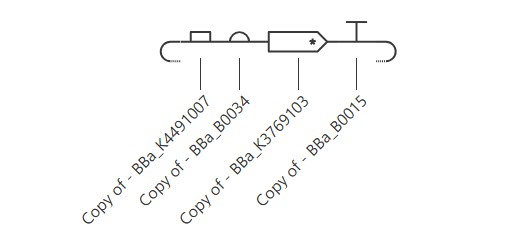
My Kernel Construct.
P_BAD -> RBS -> luxC -> luxD -> luxA -> luxB -> luxE -> Double Terminator
I assembled the construct in the 5′->3′ direction as P_BAD -> RBS -> luxCDABE -> terminator, using an E. coli-compatible expression backbone. The P_BAD promoter provides arabinose-responsive control of the reporter, while the luxCDABE cassette provides the machinery for autonomous bioluminescence. I checked that the components are in the intended orientation and that the coding regions and transcript boundaries are correctly represented in the construct map.
4. Optimizing and quality check:
A) Codon optimization:
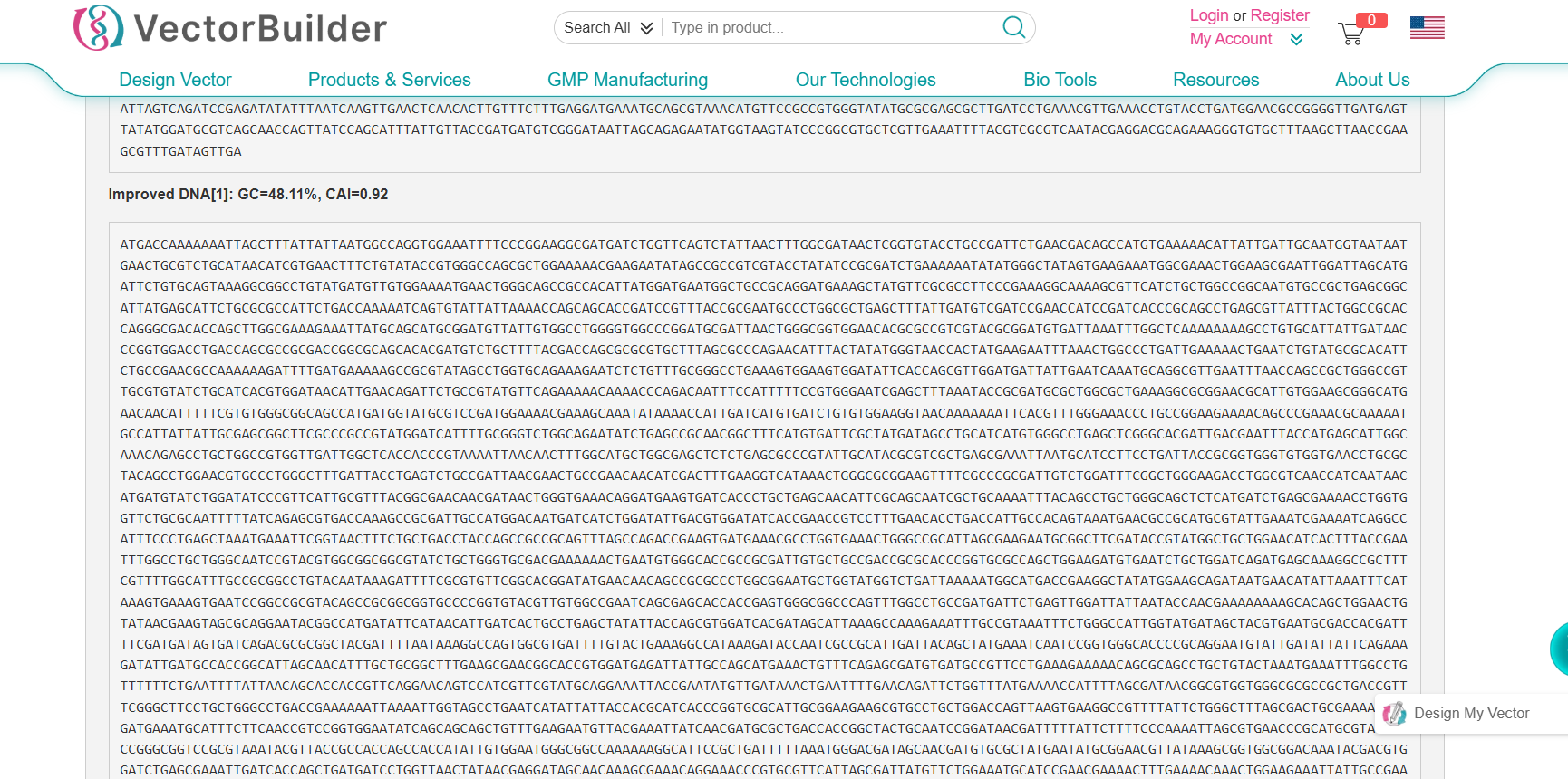
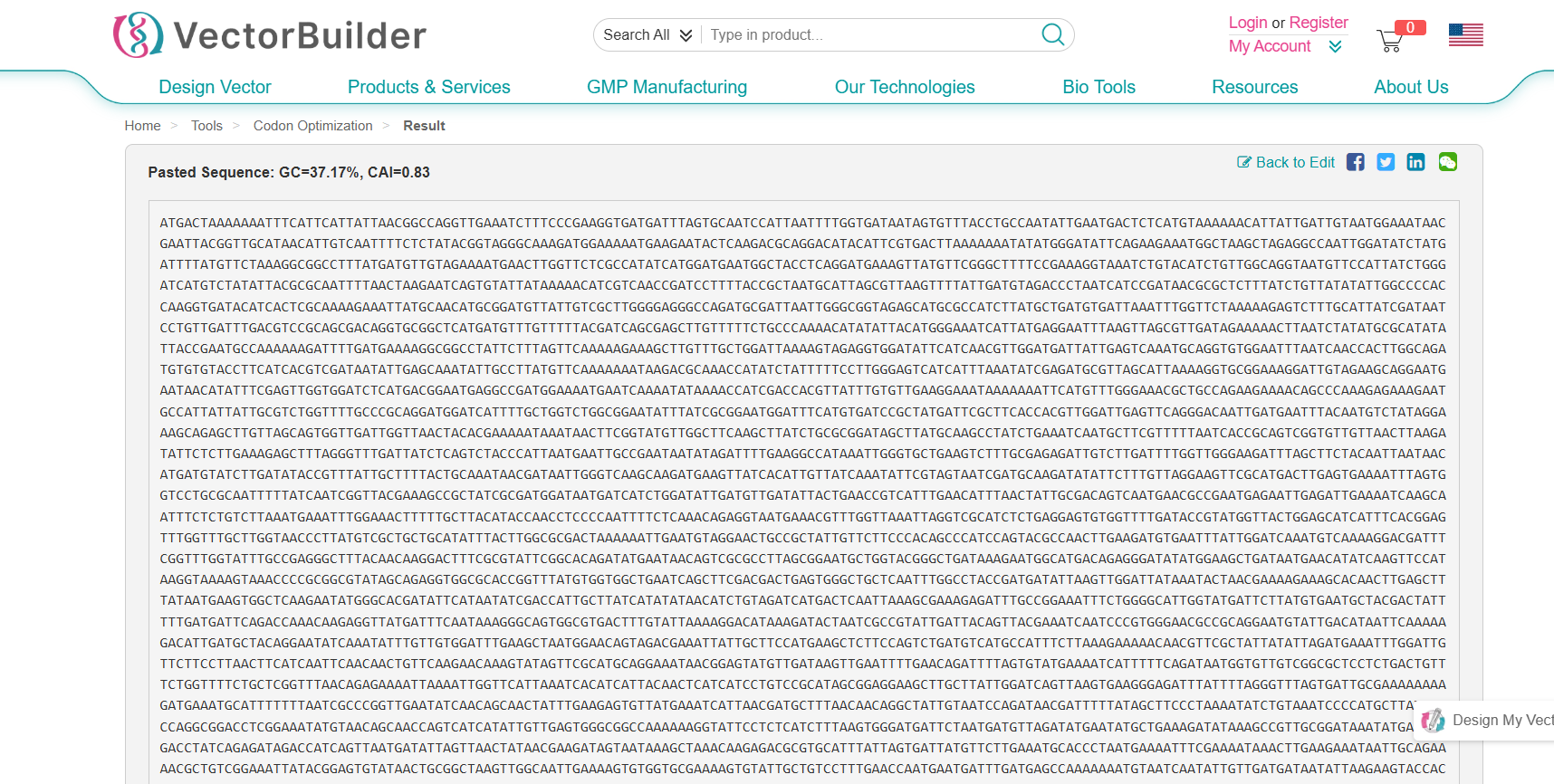
Running codon optimization in Vector Builder.
Due to my CDS being a a multigene operon containing five separate coding sequences, I could not run the optimization in Kernel. I ran the luxCDABE coding sequence through VectorBuilder’s codon optimization tool for E. coli. The original sequence had a GC content of 37.17% and a Codon Adaptation Index (CAI) of 0.83. After optimization, the sequence had a GC content of 48.11% and a CAI of 0.92. The nucleotide sequence was therefore substantially altered to better match E. coli’s preferred codon usage while preserving the encoded proteins. The increase in CAI suggests that the optimized sequence is more closely aligned with the host’s codon preferences, which may improve translation efficiency. The increase in GC content also brought the sequence closer to the GC composition more typical of E. coli. I used the tool’s standard optimization for E. coli without imposing additional custom sequence constraints.
B) BLAST:
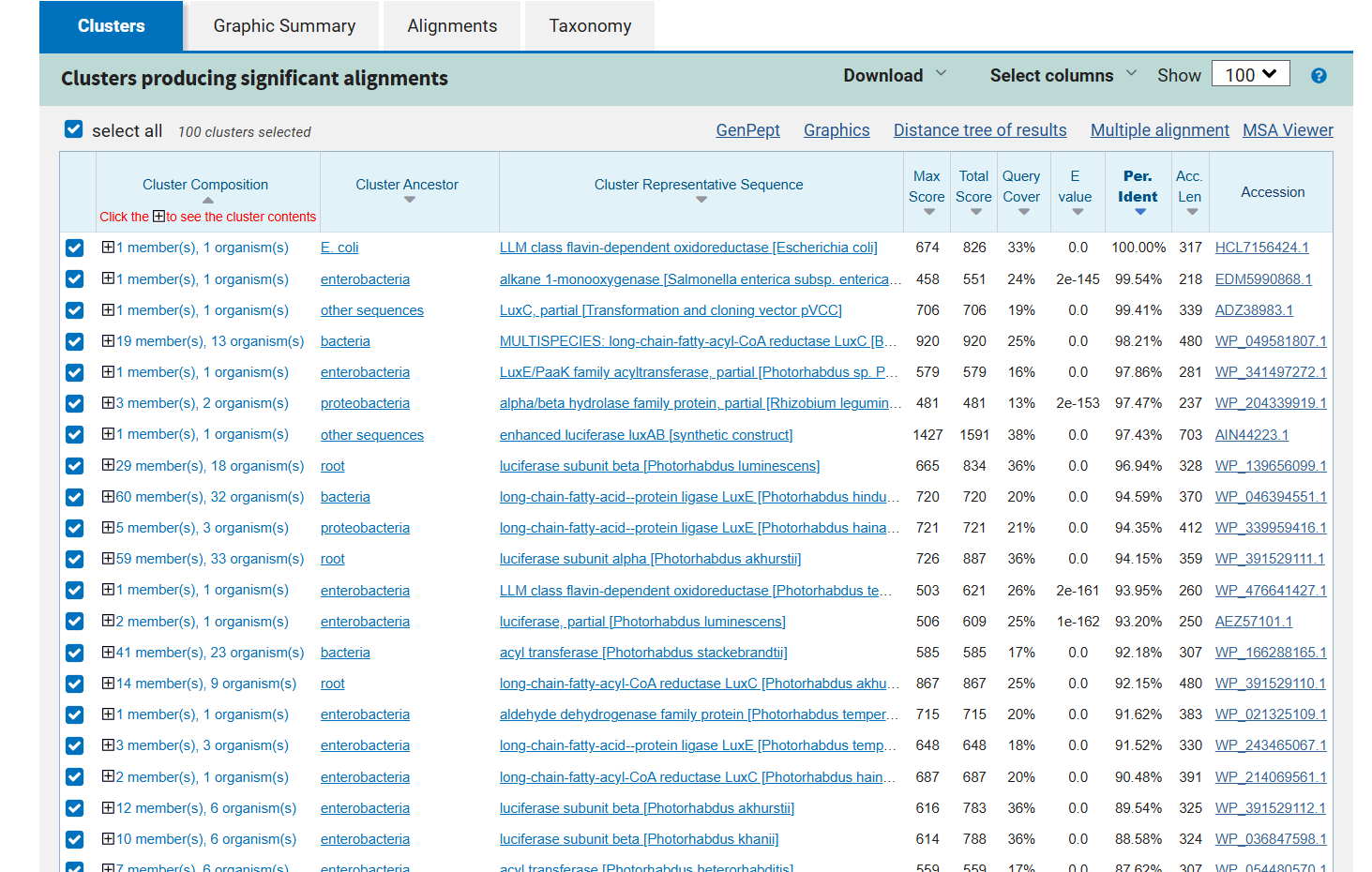
BLAST/sequence search for luxCDABE.
As it can be seen in the image above, the BLAST results for the cassette shows multiple protiens as being close to the search query. The reason behind that is that the cassete contains not only luciferase itself but also the enzymes required to synthesize its substrate, luciferin.
C) Safety screen:
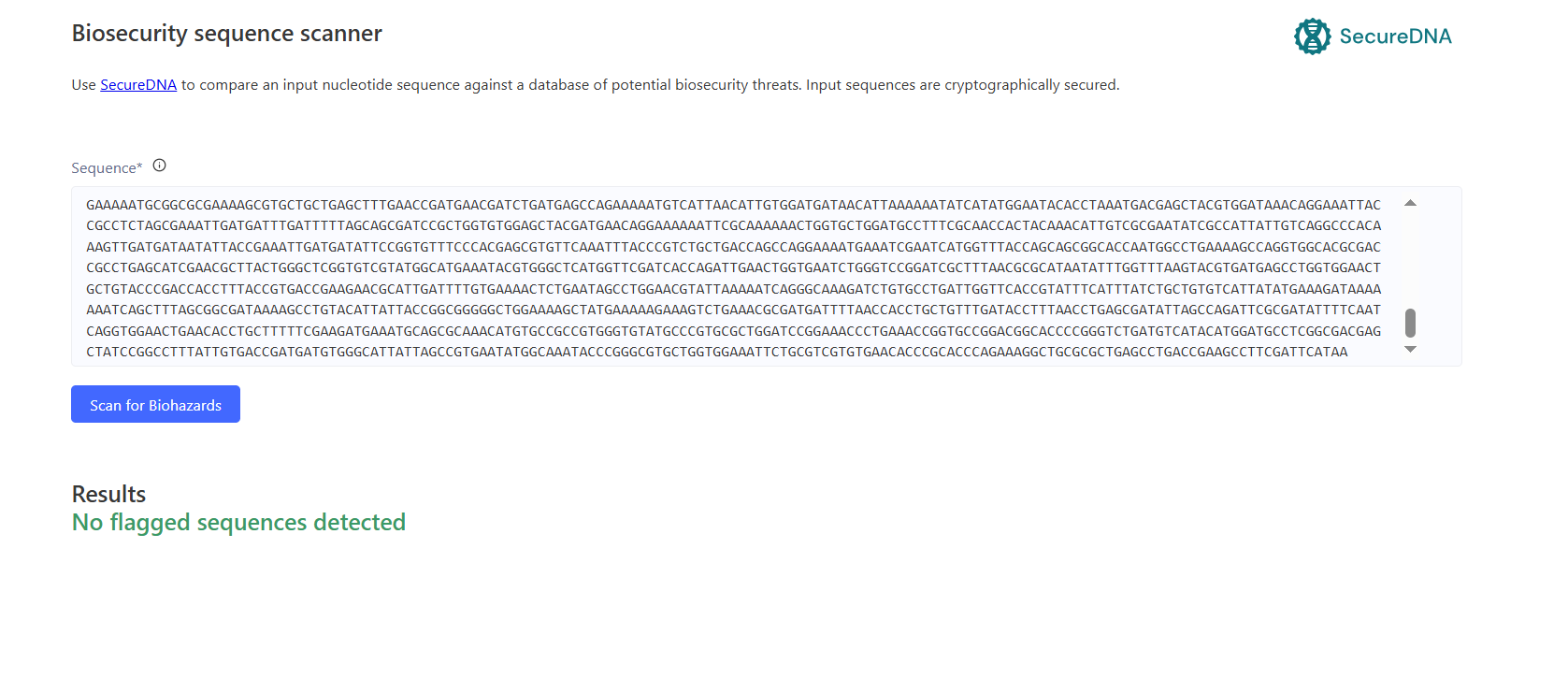
Kernel’s safety screen results.
After having done the biosecurity scan, no flagged sequences were found. Which removes the need for any specific measures for the time being.
5. From design to build:
A) How would I build it?
For the initial prototype, I would order the luxCDABE reporter as synthetic DNA rather than assembling it entirely from short oligonucleotides. My reporter cassette is approximately 5.4 kb long, so it is substantially larger than a typical single coding sequence but still modest compared with the much larger DNA assemblies demonstrated by Gibson et al. Gibson assembly provides a way to join multiple overlapping DNA fragments into a larger construct without requiring the entire sequence to be synthesized as one piece.
For my first construct, I would therefore favor direct synthesis of the reporter sequence and incorporation into an existing E. coli expression backbone. If the complete reporter proved inconvenient to synthesize as a single fragment, I would divide it into several synthetic fragments and use Gibson-style assembly to reconstruct the cassette. This would allow the design to remain modular while avoiding unnecessary redesign of the underlying sequence.
B) What does synthesis constrain?
The main constraint is sequence fidelity. Synthetic DNA is assembled from shorter oligonucleotides, and synthesis errors accumulate as sequences become longer. Carr et al. showed that sequence errors were a major limitation of de novo DNA synthesis and demonstrated protein-mediated error correction that reduced errors by more than 15-fold, illustrating why error correction becomes increasingly important as constructs grow.
My luxCDABE sequence is approximately 5.4 kb and contains five adjacent coding regions, making it more complex than a single reporter gene. However, its optimized GC content is 48.11%, compared with 37.17% for the original sequence, so the optimized version does not appear to have an especially extreme GC composition. I would still expect sequence verification to be important because an error in any of the five coding regions could affect the reporter system as a whole.
C) Prototype vs. scale
For the prototype, I would prioritize simplicity and speed: synthesize the designed reporter sequence, assemble it with the existing expression backbone, and verify the resulting construct.
At a larger scale, the main difference would be the number of constructs rather than the biological product itself. Once a successful construct had been validated, production could shift toward a standardized and repeatable DNA manufacturing workflow. If the project required many different genetic variants, chip-based oligo synthesis and parallel assembly could become more attractive because these methods are designed for high-throughput sequence generation. Kosuri et al. demonstrated this type of parallelization across dozens of genes from large oligonucleotide pools.
6. What I don’t know yet:
1- Will the P_BAD → luxCDABE system produce a useful spatial light signal?
I do not yet know whether the reporter will produce enough light, or an appropriate range of light intensities, to clearly distinguish regions with different levels of environmental exposure. P_BAD regulation and luminescence output may also be nonlinear, so I cannot assume that more arabinose exposure will produce proportionally more light.
How I would find out: I would characterize reporter output across a range of environmental conditions and compare the measured luminescence with the corresponding chemical exposure. This would tell me whether the system provides a useful dynamic range for creating the visual record I want.
2- Will the reporter interfere with the bacteria’s growth or collective movement?
The luxCDABE cassette is relatively large and requires the cell to produce several proteins. This could impose a metabolic burden and potentially change the behavior I am trying to observe. There is therefore a risk that the engineered bacteria will behave differently simply because they are carrying and expressing the reporter.
How I would find out: I would compare the engineered strain with an otherwise equivalent control and measure growth and collective spatial behavior. If expression substantially changes the phenotype, I would investigate alternative expression levels or reporter designs.
3- Will the biological pattern actually provide a meaningful “record”?
The artistic concept depends on the light pattern representing something about the population’s interaction with its environment, rather than simply representing where the bacteria grew most densely. Because arabinose can also affect bacterial physiology, it may be difficult to distinguish signal detection from changes in growth or metabolism.
How I would find out: I would compare spatial luminescence with independent measurements of bacterial distribution and environmental conditions. I would also compare different environmental configurations to determine whether the resulting light patterns consistently reflect the intended chemical landscape.